
Weiblog
Beijing Company Makes Female Staff Kiss the Boss Every Day
This so-called “team-building activity” has caused a storm of criticism on Chinese social media.

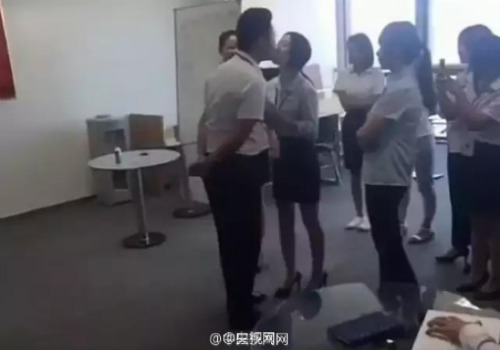
On 8 October, Chinese state broadcaster CCTV published a short article on its Sina Weibo account titled “Beijing Company Makes Female Staff Kiss the Boss Every Day.” In the attached pictures, a group of women is standing in an office-like room. One of the girls appears to be kissing a man, while the other girls are watching.

According to CCTV, the pictures were taken at a brewery company in Beijing’s Tongzhou district, where more than half of the staff is female. To create a “unique company culture” and to “promote solidarity”, the company has set the rule that every morning, the time between 9:00 and 9:30 should be dedicated to “team building”. This daily ritual includes female staff standing in line to kiss the boss.
The story soon went viral on Sina Weibo. The hashtag ‘Female Staff Must Queue Up to Kiss the Boss Everyday (#女员工须每天排队吻老板) attracted 11 million reads within one day, and has become one of the top trending topics on Weibo. A video of the “kissing ritual” is also available online.
Many netizens are outraged over the story. “Old satyr”, one netizen writes: “Just because he is the boss, he feels like he has the right to command his staff to satisfy his needs. Abnormal boss, abnormal company.”
Some people also wonder why the female staff does not stand up against the kissing ritual. Although some suggest that employees sometimes just have to do things they do not like to keep their job, others believe that kissing the boss really crosses the line.
“Is it really worth it for a bit of money?”, one netizen wonders. “If you want to motivate employees, why not learn something from Japan? Bosses bow to employees every morning as a greeting there.”
Even while there are some arguments going around that the video shows an “object-passing” circle game instead of a kissing scene, not everyone is satisfied with this explanation. “If it was an ‘object-passing game’, it would not involve one single person passing something to everyone else”, one netizen argues. “It doesn’t matter if it is a kissing or object-passing game – this is extremely dirty either way”, another person comments.
Many netizens link the story to more awareness of and opposition towards sexual harassment in the workplace. As the official magazine of China Women’s Federation (中国妇联) writes on its Weibo account: “This is institutionalized sexual harassment. However nice the excuses may sound, the bad essence of [such behavior] cannot be changed; once it is turned into a rule, it becomes blunt power abuse at the workplace.”
-By Diandian Guo
Follow on Twitter or Like on Facebook
©2016 Whatsonweibo. All rights reserved. Do not reproduce our content without permission – you can contact us at info@whatsonweibo.com.
[showad block=1]






China Digital
China Trend Watch: Hong Kong Fire Updates, Nantong’s Viral Moment & Japanese Concert Cancellations
From Hong Kong’s Wang Fuk Court fire and China’s new “family member” rule to Japanese concerts halted, the Nantong viral remark, childcare subsidy payouts, 6G trials, and top social media debates.


🔥 China Trend Watch — Week 48–49 (2025)
Part of Eye on Digital China. This edition was sent to our subscribers — subscribe to receive the next issue in your inbox.
Chongqing has been a unique experience — a city in China that has been on my to-visit list for years. Its “cyberpunk” reputation doesn’t really do it justice. There’s this beautiful tension between its old history (century-old stairs, wartime tunnels) and the full speed of the future (neon lights, incredible skyscrapers), with the streets actually smelling like hotpot – such a special mix (or is that, perhaps, just what cyberpunk actually is?!).
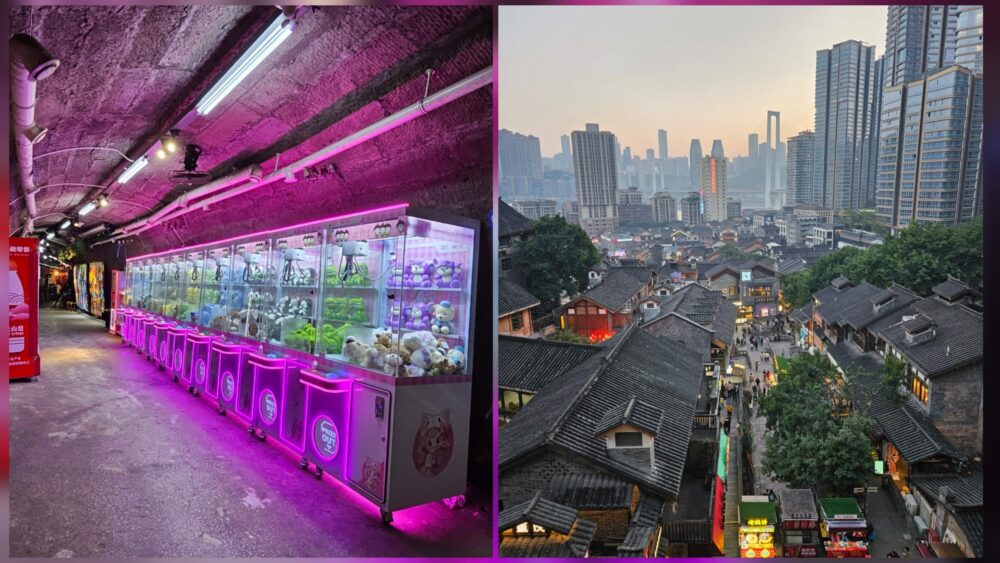
Photos by me: View over Chongqing’s Shibati area, and toymachines in a wartime bomb shelter near Libazi.
This time, it was the city’s WWII history that finally pushed me to visit, as I’m on a research trip through several major cities that played important roles in China during the Second Sino-Japanese War — a topic that has become increasingly relevant over the past few months. I’ve already visited some fascinating places, from the former residence of General Stilwell to Chiang Kai-shek’s air-raid shelters and wartime military headquarters. Today I’ll be heading to some war-related museums in Nanjing. More on that later.
I will get back into my normal routine next week when I return from travels.
Let’s dive in.
- 🇨🇳 The 2025 Mnet Asian Music Awards (MAMA), one of the biggest K-pop award shows, sparked online backlash this week after netizens discovered that the event’s voting interface listed Hong Kong and Taiwan as separate countries in its selection menu. Seen as violating the ‘One China’ principle, netizens criticized MAMA for being disrespectful to China (meanwhile, the event was actually held in Hong Kong).
- 💰 As part of a national childcare subsidy plan announced earlier this year (initiated to boost China’s dropping birth rates and support low-income families), parents across the country are now receiving their initial 3,600 yuan ($508) payouts (per child aged 0–3 per year), creating an online buzz and reminding other parents to apply if they haven’t yet.
- 👀 Move over 5G…the 6G era is nearing! China has completed its first real-world testing trial of 6G applications. Being 100x faster than 5G, it’s the future mobile standard. Commercial use is planned for 2030.
- 🎬 Zootopia 2 is everywhere right now and has broken records in China with a US$267 million box office in 5 days. But despite its success there’s also been some backlash over the decision to cast celebrity actors for the main characters in the Chinese version instead of professional voice actors. Fans of the movie felt the performances were subpar, leading fans of the celebrities to defend them.
- 🚹 The 57-year-old Chinese actor and singer Sun Hao (孙浩) made headlines this week, and not for his latest work — but for getting caught urinating in public after a dinner with friends. The incident has triggered discussions about how (un)acceptable it is to pee on the street, and how celebrities should set the right example.
- 🛸 Blending classic Chinese humor with sci-fi elements, the new Chinese urban comedy Sarcastic Family (毒舌舌家) has become an online hit. The comedy is about a mother and daughter from another galaxy who become an unconventional family on planet Earth when the daughter marries a Chinese man, joined in a household by his father and her own outer-space mom.
1. The Hong Kong Wang Fuk Court Fire

The catastrophic residential fire at Hong Kong’s Wang Fuk Court in the city’s Tai Po district (香港大埔) has become the deadliest blaze in Hong Kong in 80 years.
The fire, which broke out on Wednesday at 14:51 local time, spread so quickly that it soon covered a total of seven residential towers. Initially, news came out that the fire had killed at least 13 and injured 28, but the figures soon kept rising. At the time of writing, the official death toll is 151, with 30 people still missing. A total of eleven people have now been arrested in relation to the fire, including two directors of the consultancy firm in charge of the renovation project that was taking place at Wang Fuk Court.
On Chinese social media, the fire has been top-trending news for days. One major point of discussion has been how the fire could have spread so rapidly; what started as a smaller blaze turned into an inferno within minutes. As part of exterior maintenance work, the buildings were covered in bamboo scaffolding and protective netting. Dry weather and strong winds contributed to the rapid spread. Residents said they had repeatedly seen construction workers smoking at the site.
Online conversations initially focused on the bamboo scaffolding, which is traditionally used in construction in Hong Kong for its flexibility and fire resistance. Soon, conversations shifted, blaming the flammable material used in the netting, as well as the styrofoam insulation used to seal windows. Although there are voices speaking out against misinformation regarding the flammability of bamboo, some commenters still point to the bamboo for intensifying the fire and making rescue operations more difficult.
Another issue is the fire system. A former security supervisor alleged the estate’s fire systems were frequently switched off. The claim, reported by local media, has intensified scrutiny and public concern over estate safety management.
What stands out in these discussions on the fire is that people are also tying it to deeper-rooted issues in Hong Kong. Since it’s Hong Kong, there’s arguably some more online room for discussion on such a topic. One Weibo blogger named ‘Jinshu Sister’ wrote: “The blaze exposed two very different worlds within ‘glamorous’ (光鲜) Hong Kong: one world is the fast-moving international metropolis, a playground for capital and elites. The other world consists of citizens living in decades-old buildings. Their hopes of improving their housing have been repeatedly delayed due to practical difficulties, such as costly maintenance fees and the complicated procedures of owners’ corporations. A truly great city is not defined by how many world-class skyscrapers it has, but by whether it can protect the life and safety of every ordinary person living in it.”
2. Living Together Now Counts as “Family Members”

Image by state media outlet CNR: “Living together before marriage is also belongs to [the category of] family members.”
A new legal interpretation of what counts as a “family” has been drawing intense discussions on social media over the past week. On November 25, China’s Supreme People’s Procuratorate announced that couples in stable “premarital cohabitation relationships” — living together with the intent to marry — can now be legally recognized as family members under criminal law.
The move is meant to protect victims of domestic abuse and help prosecute abusers within the context of the Anti-Domestic Violence Law. Forms of abuse beyond physical injury (e.g. mental abuse) will also be recognized as domestic violence.
The announcement has sparked heated debates as people began worrying about their current relationships being legally defined as a de facto marriage, with various implications regarding spousal obligations, property rights, and financial issues — including concerns that partners might suddenly be treated as legally responsible for each other’s debts. In recent years, there have been increasing discussions about women marrying to shift their personal debts onto their husbands (there’s even a word for it).
But legal experts on social media say there’s no need to panic: people still need to be legally married to be designated as an official married couple, with all marital obligations and benefits. They emphasize that the current revision is mainly meant to standardize the handling of domestic violence cases nationwide — especially at a time when more young Chinese are delaying marriage and choosing to live together. In the past, there have been cases of men severely abusing their live-in girlfriends, but because they were not legally married, such incidents were treated merely as “ordinary disputes among citizens.”
In light of the many trending stories over the past years concerning domestic violence, you might expect more support for this legal revision. However, people have doubts about how cohabitation will actually be defined in court. One commenter on Weibo wrote: “How should it be defined? If you have sex once a week, is that considered cohabitation? If you stay together for one week every month, is that considered cohabitation? If you have long-term sexual relations but leave after it’s over and don’t sleep together at night, is that cohabitation? There is only one answer: discretionary power (自由裁量权). If the judge says it is cohabitation, then it is cohabitation. Since cohabitation makes you ‘family members,’ can the other party then take half of the house?”
3. Japanese Concerts in China Hit by Sino-Japanese Tensions

Over the past weekend, video footage showing how a concert by Japanese artist Maki Otsuki was suddenly and quite dramatically stopped while she was singing on stage — the lights were turned off, her mic was taken away, and she was escorted off — popped up all over WeChat and beyond (see video on X), followed by various write-ups on the incident, which were soon taken offline.
Ayumi Hamasaki, another famous Japanese artist, also saw her Shanghai concert — 14,000 tickets sold — canceled just a day before the show. Although there was not a single audience member, she performed anyway, leaving her performing alone in an empty venue. She posted about it herself (see photos), expressing sadness over the elaborate stage setup prepared by 200 staff members over several days that now had to be dismantled without the concert ever taking place.
The “lights out” moment for Otsuki, Hamasaki, and many other Japanese artists and musicians in China was attributed to “force majeure” (因不可抗力) in venue statements coming from Beijing, Hangzhou, Guangzhou, and beyond. It comes amid heightened tensions between Japan and China following Prime Minister Sanae Takaichi’s November 7 remarks suggesting that Chinese actions regarding Taiwan could prompt a military defense response from Tokyo, which infuriated China for “intervening in China’s sovereignty” and has been an ongoing major topic ever since.
On December 1, Foreign Ministry spokesperson Lin Jian responded to questions about the cancellations during a regular press briefing by saying that reporters should inquire with the Chinese organizers of these events instead — providing no comments on the official reasons behind the wave of abrupt cancellations, which appear to have stemmed from a sweeping directive from Chinese authorities to halt Japanese cultural events.
It’s not only the music and event industry that’s been affected by recent escalations. Chinese airlines have sharply reduced flights to Japan in December, and Japanese movie releases in China have been postponed as well.
There have been mixed reactions following the wave of cancellations. Despite anti-Japanese sentiments online, many people also feel this move unfairly impacts Chinese companies and consumers. Political commentator Hu Xijin addressed the issue, writing: “First, this demonstrates China’s resolve to strengthen sanctions against Japan by cancelling performances by Japanese artists coming to China, and that certainly generates a positive effect. But at the same time, Chinese performance companies will face costs from breaching contracts and from the upfront investments already made; the city of Shanghai and its transportation sector lose a piece of consumption; some audience members who had already traveled from other places to Shanghai are left with nothing; and many ticket holders, especially those who planned to travel from other cities, had their weekend plans disrupted. Taken together, all of these are losses on China’s side.”
Returning to China next week [下周回国] (xià zhōu huíguó)
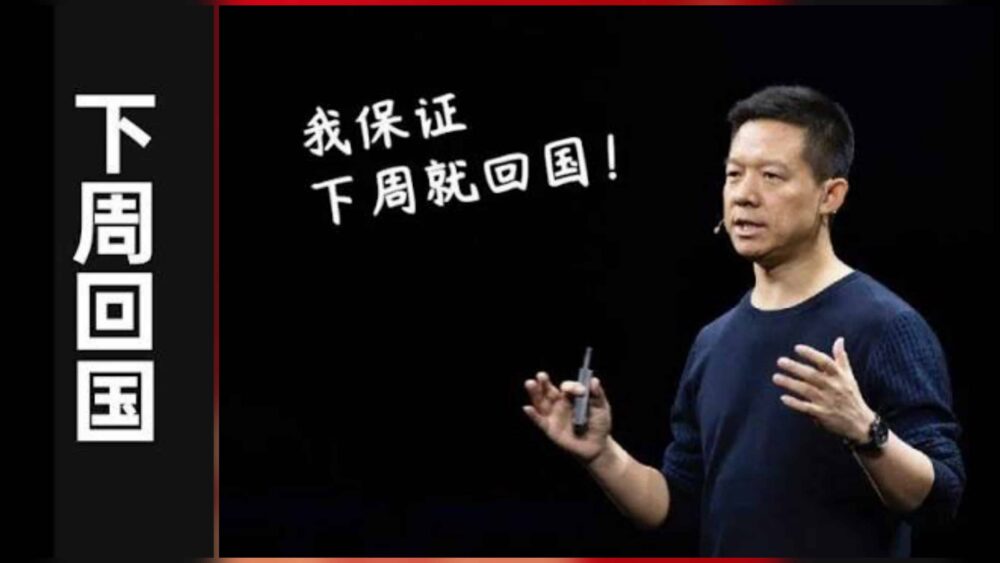
“Returning to China next week” has been a popular phrase for years in relation to tech entrepreneur Jia Yueting (贾跃亭), who departed China during the 2017 collapse of his LeEco tech company, leaving behind billions in debt.
While going on to found and lead EV startup Faraday Future (FF) in California, Jia repeatedly told Chinese audiences that he would return “next week.” When next week became next month, next year, and eventually never, “returning to China next week” became a running joke on social media, representing big promises with zero follow-up.
Now, Jia has again made headlines after announcing ambitious new plans for the future of FF and autonomous driving. Not only does Jia intend to cooperate with Tesla, he also said that FF and FX (the company’s second brand targeted at the mass market) have a five-year sales target of 500,000 cars. FF’s technology partner AIXC is the newly listed AI x Crypto company that is supposed to shake up the market. Jia’s business strategy has apparently pivoted to trying to create a tech + AI + crypto ecosystem in which each business strengthens the other.
Jia’s latest plans add to the series of grandiose promises that have made him a recurring character in Chinese online discussions. Although often mocked, there is also fascination in how Jia continues to stay in the headlines and attract new investments, seemingly without end.
Of course, after all this, netizens still wonder: “But will he still return to China next week?”
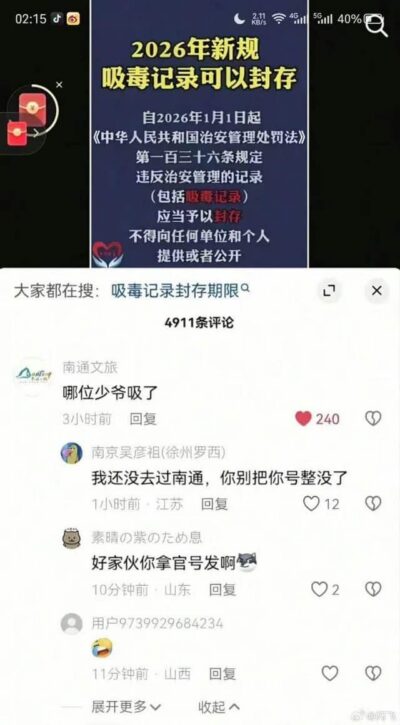
A screenshot showing a cheeky comment from an unexpected account has gone mega viral this week. The comment was made on Douyin by an official local government account in relation to a new law on sealing minor-offence records.
The revised section of the Public Security Administration Law, taking effect on January 1, 2026, adds the possibility of sealing certain administrative violations. Online, people mostly connected this to drug-related offences, wondering whether it would allow people whose names are tied to drug-related penalties to now have their records sealed.
Under a social media post about this issue, the official account of Nantong’s Culture & Tourism Bureau replied: “Which young master was caught using [drugs]?”(“哪位少爷吸了”), jokingly suggesting that the law has been introduced to protect certain individuals from powerful families.
The edgy remark sent the Nantong Tourism Bureau account’s followers up by nearly 1.5 million overnight, eventually adding a total of around 4 million new fans. And although the comment was soon deleted, it has boosted the visibility of Nantong, with some supporters suggesting that if its cultural bureau dares to make such bold remarks, the city itself might be worth a visit.
The moment shows that it only takes a tiny comment to go viral, and that, perhaps, Nantong now has a job opening for a new social media manager to entertain their millions of new followers with content that’s a bit less edgy.😅
Thanks for reading this Eye on Digital China China Trend Watch. For slower-moving trends and deeper structural analysis, keep an eye on the upcoming newsletters.
If you happen to be reading this without a paid subscription and appreciate my work, consider joining to receive future issues straight in your inbox.
Household notice: if you are receiving duplicate issues of this newsletter in your inbox, you are probably subscribed on both the main site and the Substack platform. For your own convenience, you can unsubscribe from one of them (let me know if you need help with that).
Many thanks and credits to Miranda Barnes and Ruixin Zhang for helping curate the topics in this edition.
— Manya
Spotted an error or want to add something? Comment below or
email me.
First-time commenters require manual approval.
©2025 Eye on Digital China / What’s on Weibo. Do not reproduce without permission —
contact info@whatsonweibo.com.
China Brands, Marketing & Consumers
Signals: Hasan Piker’s China Trip & the Unexpected Journey of a Chinese School Uniform to Angola
Hasan Piker’s controversial China tour, a Chinese school uniform resurfaces in Africa, a new winter hotspot, why Chinese elites ‘run’ to Tokyo, and more.

🌊 Signals — Week 47 (2025)
Part of Eye on Digital China, Signals highlights slower trends and online currents behind the daily scroll. This edition was sent to paid subscribers — subscribe to receive the next issue in your inbox.
For the coming two weeks, I’ll be traveling from Beijing to Chongqing and beyond (more on that soon) so please bear with me if my posting frequency dips a little. I’ll be sure to pick it up again soon and will do my best to keep you updated along the way. In the meantime, if you know of a must-try hotpot in Chongqing, please do let me know.
In this newsletter: Hasan Piker’s controversial China tour, a Chinese school uniform in Angola, a new winter hotspot, discussions on what happens to your Wechat after you die, why Chinese elites rùn to Tokyo, and more. Let’s dive in.
- 💰 The richest woman in China, according to the latest list by Hurun Research Institute, is the “queen of pharmaceuticals” Zhong Huijuan (钟慧娟) who has accumulated 141 billion yuan (over 19 billion USD). Women account for over 22% of Chinese billionaires (those with more than 5 billion RMB), underscoring China’s globally leading position in producing wealthy female entrepreneurs.
- 🧩 What happens to your WeChat after you die? A user who registered for NetEase Music with a newly reassigned phone number unexpectedly gained access to the late singer Coco Lee’s (李玟) account, as the number had originally belonged to her. The incident has reignited debate over how digital accounts should be handled after death, prompting platforms like NetEase and Tencent to reconsider policies on long-inactive accounts and take stronger measures to protect them.
- 📱 Although millions of viewers swoon over micro-dramas with fantasy storylines where rich, powerful men win over the “girl next door” through money and status, Chinese regulators are now stepping in to curb exaggerated plots featuring the so-called “dominant CEO” (霸道总裁) archetype, signaling stricter oversight for the booming short drama market.
- ☕ A popular Beijing coffee chain calling itself “People’s Cafe” (人民咖啡馆), with its style and logo evoking nationalist visual nostalgia, has changed its name after facing criticism for building its brand – including pricey coffee and merchandise – on Mao era and state-media political connotations. The cafe is now ‘Yachao People’s Cafe’ (要潮人民咖啡馆).
- 👀 Parents were recently shocked to see erotic ads appear on the Chinese nursery rhymes and children’s learning app BabyBus (宝宝巴士), which is meant for kids ages 0–8. BabyBus has since apologized, but the incident has sparked discussions about how to keep children safe from such content.
- 🧧The 2026 holiday schedule has continued to be a big topic of conversation as it includes a 9-day long Spring Festival break (from February 15 to February 23), making it the longest Lunar New Year holiday on record. The move not only gives people more time for family reunions, but also gives a huge boost to the domestic travel industry.
Hasan Piker’s Chinese Tour & The US–China Content Honeymoon
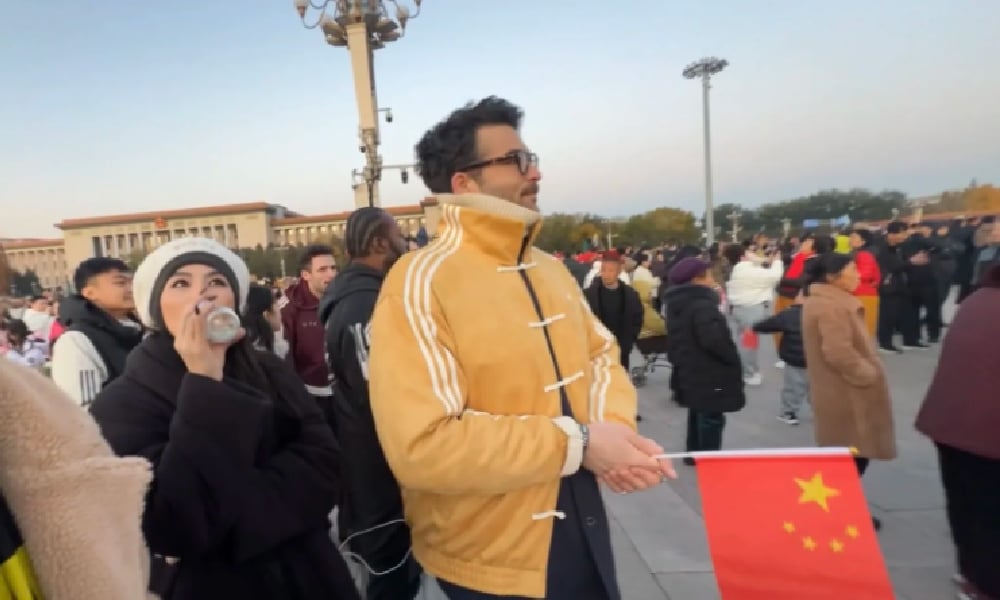
Livestreamer Hasan Piker during his visit to Tiananmen Square flag-rising ceremony.
It’s not time for the end-of-year overviews just yet – but I’ll already say that 2025 was the US–China ‘honeymoon’ year for content creation. It’s when China became “cool,” appealing, and eye-grabbing for young Western social media users, particularly Americans. The recent China trip of the prominent American online streamer Hasan Piker fits into that context.
This left-wing political commentator also known as ‘HasanAbi’ (3 million followers on Twitch, recently profiled by the New York Times) arrived in China for a two-week trip on November 11.

Piker screenshot from the interview with CGTN, published on CGTN.
His visit has been controversial on English-language social media, especially because Piker, known for his criticism of America (which he calls imperialist), has been overly praising China: calling himself “full Chinese,” waving the Chinese flag, joining state media outlet CGTN for an interview on China and the US, and gloating over a first-edition copy of Quotations from Chairman Mao (the Little Red Book). He portrays China as heavily misrepresented in the West and as a country the United States should learn from.

Hasan Piker did an interview with CGTN, posing with Li Jingjing 李菁菁.
During his livestreaming tour, Hasan, who is nicknamed “lemonbro” (柠檬哥) by Chinese netizens, also joined Chinese platforms Bilibili and Xiaohongshu.
But despite all the talk about Piker in the American online media sphere, online conversations, clicks, and views within China are underwhelming. As of now, he has around 24,000 followers on Bilibili, and he’s barely a topic of conversation on mainstream feeds.
Piker’s visit stands in stark contrast to that of American YouTuber IShowSpeed (Darren Watkins), who toured China in March. With lengthy livestreams from Beijing to Chongqing, his popularity exploded in China, where he came to be seen by many as a representative of cultural diplomacy.

IShowspeed in China, March 2025.
IShowSpeed’s success followed another peak moment in online US–China cultural exchange. In January 2025, waves of foreign TikTok users and popular creators migrated to the Chinese lifestyle app Xiaohongshu amid the looming TikTok ban.
Initially, the mass migration of American users to Xiaohongshu was a symbolic protest against Trump and US policies. In a playful act of political defiance, they downloaded Xiaohongshu to show they weren’t scared of government warnings about Chinese data collection. (For clarity: while TikTok is a made-in-China app, it is not accessible inside mainland China, where Douyin is the domestic version run by the same parent company).
The influx of foreigners — who were quickly nicknamed “TikTok refugees” — soon turned into a moment of cultural celebration. As American creators introduced themselves, Chinese users welcomed them warmly, eager to practice English and teach newcomers how to navigate the app. Discussions about language, culture, and societal differences flourished. Before long, “TikTok refugees” and “Xiaohongshu natives” were collaborating on homework assignments, swapping recipes, and bonding through humor. It was a rare moment of social media doing what we hope it can do: connect people, build bridges, and replace prejudice with curiosity.
Some of that same enthusiasm was also visible during IShowSpeed’s China tour. Despite the tour inevitably getting entangled with political and commercial interests, much of it was simply about an American boy swept up in the high energy of China’s vibrant cities and everything they offer.
Different from IShowSpeed, who is known for his meme-worthy online presence, Piker is primarily known for his radical political views. His China enthusiasm feels driven less by cultural curiosity and more by his critique of America.
Because of his stances — such as describing the US as a police state — it’s easy for Western critics to accuse him of hypocrisy in praising China, especially after a brief run-in with security police while livestreaming at Tiananmen Square.
Seen in broader context, Piker’s China trip reflects a shift in how China is used in American online discourse.
Before, it was Chinese ‘public intellectuals’ (公知) who praised the US as a ‘lighthouse country’ (灯塔国), a beacon of democracy, to indirectly critique China and promote a Western modernization model. Later, Chinese online influencers showcased their lives abroad to emphasize how much ‘brighter the moon’ was outside China.
In the post-Covid years, the current reversed: Western content creators, from TikTok influencers to political commentators, increasingly use China to make arguments that are fundamentally about America.
Between these cycles, authentic cultural curiosity gets pushed to the sidelines. The TikTok-refugee moment in early January may have been the closest we’ve come in years: a brief window where Chinese and American users met each other with curiosity, camaraderie, and creativity.
Hasan’s tour, in contrast, reflects a newer phase, one where China is increasingly used as a stage for Western political identity rather than a complex and diverse country to understand on its own terms. I think the honeymoon phase is over.
“Liu Sihan, Your School Uniform Ended Up in Angola”: China’s Second-Hand Clothing in Africa
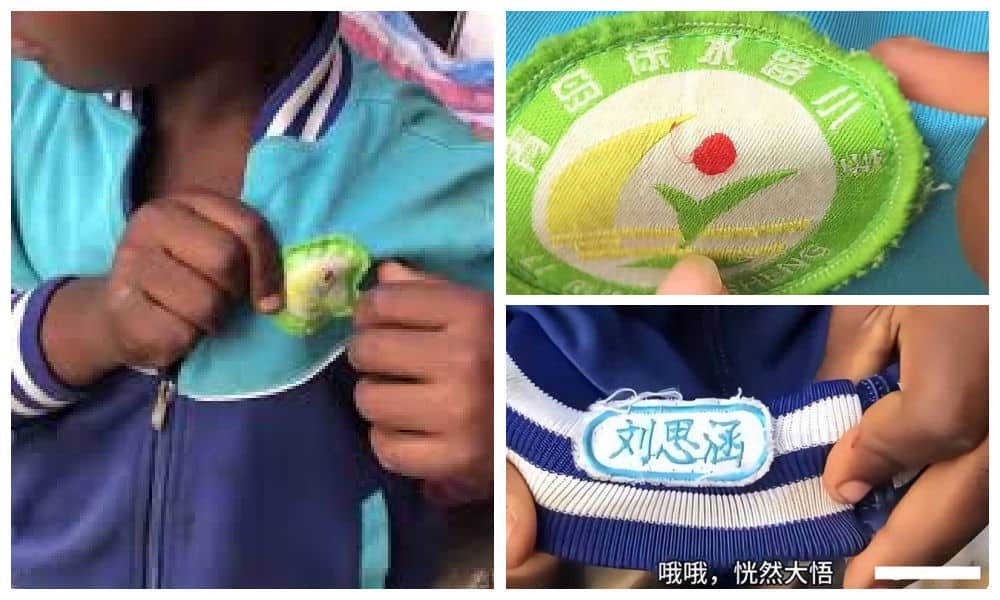
A Chinese school uniform went viral after a Chinese social media user spotted it in Angola.
“Liu Sihan, your schooluniform is hot in Africa” (刘思涵你的校服在非洲火了) is a sentence that unexpectedly trended after a Chinese blogger named Xiao Le (小乐) shared a video of a schoolkid in Angola wearing a Chinese second-hand uniform from Qingdao Xushuilu Primary School, that had the nametag Liu Sihan on it.
The topic sparked discussions about what actually happens to clothing after it’s donated, and many people were surprised to learn how widely Chinese discarded clothing circulates in parts of Africa.
Liu Sihan’s mother, whose daughter is now a 9th grader in Qingdao, had previously donated the uniform to a community clothing donation box (社区旧衣回收箱) after Liu outgrew it. She intended it to help someone in need, never imagining it to travel all the way to Africa.
In light of this story, one netizen shared a video showing a local African market selling all kinds of Chinese school items, including backpacks, and people wearing clothing once belonging to workers for Chinese delivery platforms. “In Africa, you can see school uniforms from all parts of China, and even Meituan and Eleme outfits,” one blogger wrote.
When it comes to second-hand clothing trade, we know much more about Europe–Africa and US–Africa flows than about Chinese exports, and it seems there haven’t been many studies on this specific topic yet. Still, alongside China’s rapid economic transformations, the rise of fast fashion, and the fact that China is the world’s largest producer and consumer of textiles, the country now has an enormous abundance of second-hand clothing.
According to a 2023 study by Wu et al. (link), China still has a long way to go in sustainable clothing disposal. Around 40% of Chinese consumers either keep unwanted clothes at home or throw them away.
But there may be a shift underway. Donation options are expanding quickly, from government bins to brand programs, and from second-hand stores to online platforms that offer at-home pickup.

Chinese social media users posting images of school/work uniforms from China worn by Africans.
As awareness grows around the benefits of donating clothing (reducing waste, supporting sustainability, and the emotional satisfaction of giving), donation rates may rise significantly. The story of Liu Sihan’s uniform, which many found amusing, might even encourage more people to donate. And if that happens, scenes of African children (and adults) wearing Chinese-donated clothes may become much more common than they now are.
Laojunshan: New Hotspot in Cold Winter

Images from Xiaohongshu, 背包里的星子, 旅行定制师小漾
Go to Zibo for BBQ, go to Tianshui for malatang, go to Harbin for the Ice Festival, cycle to Kaifeng for soup dumplings, or head to Dunhuang to ride a camel — over recent years, a number of Chinese domestic destinations have turned into viral hotspots, boosted by online marketing initiatives and Xiaohongshu influencers.
This year, Laojunshan is among the places climbing the trending lists as a must-visit spot for its spectacular snow-covered landscapes that remind many of classical Chinese paintings. Laojunshan (老君山), a scenic mountain in Henan Province, is attracting more domestic tourists for winter excursions.
Xiaohongshu is filled with travel tips: how to get there from Luoyang station (by bus), and the best times of day to catch the snow in perfect light (7–9 AM or around 6–6:30 PM).
With Laojunshan, we see a familiar pattern: local tourism bureaus, state media, and influencers collectively driving new waves of visitors to the area, bringing crucial revenue to local industries during what would otherwise be slower winter months.
WeChat New Features & Hong Kong Police on Douyin
🟦 WeChat has been gradually rolling out a new feature that allows users to recall a batch of messages all at once, which saves you the frantic effort of deleting each message individually after realizing you sent them to the wrong group (or just regret a late-night rant). Many users are welcoming the update, along with another feature that lets you delete a contact without wiping the entire chat history. This is useful for anyone who wants to preserve evidence of what happened before cutting ties.
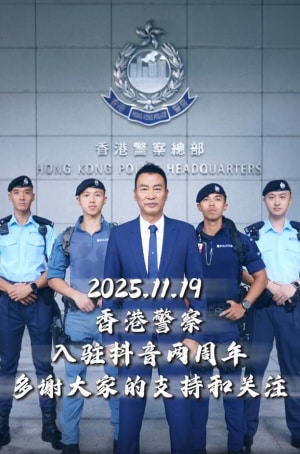
🟦The Hong Kong Police Force recently celebrated its two-year anniversary on Douyin (the Chinese version of TikTok), having accumulated nearly 5 million followers during that time. To mark the occasion, they invited actor Simon Yam to record a commemorative video for their channel (@香港警察). The presence of the Hong Kong Police on the Chinese app — and the approachable, meme-friendly way they’ve chosen to engage with younger mainland audiences — is yet another signal of Hong Kong institutions’ strategic alignment with mainland China’s digital infrastructure, a shift that has been gradually taking place. The anniversary video proved popular on Douyin, attracting thousands of likes and comments.
Why Chinese Elite Rùn to Japan (by ChinaTalk)
Over the past week, Japan has been trending every single day on Chinese social media in light of escalating bilateral tensions after Japanese PM Takaichi made remarks about Taiwan that China views as a direct military threat. The diplomatic freeze is triggering all kinds of trends, from rising anti-Japanese sentiment online and a ban on Japanese seafood imports to Chinese authorities warning citizens not to travel to Japan.
You’d think Chinese people would want to be anywhere but Japan right now — but the reality is far more nuanced.
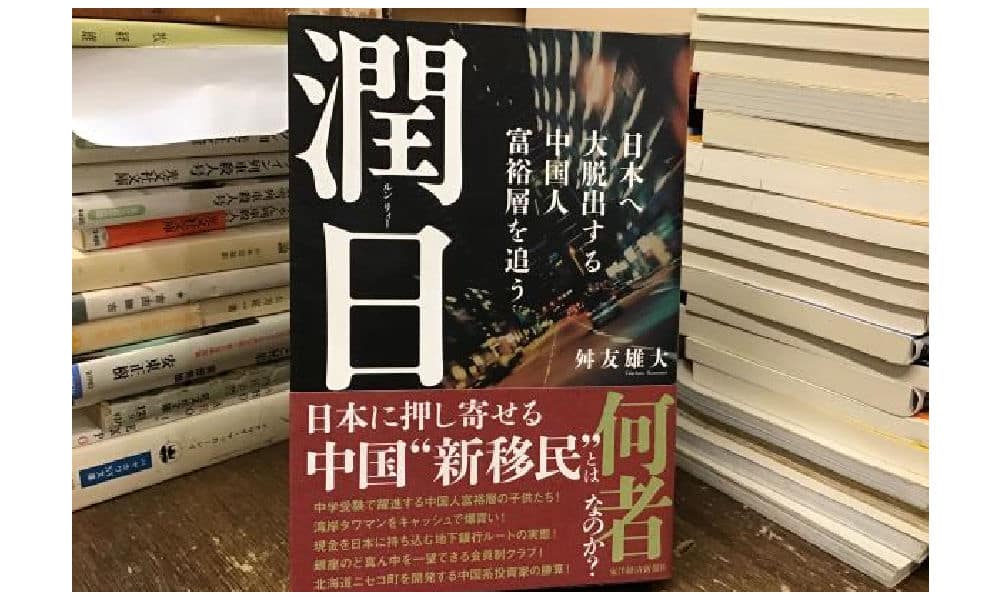
In a recent feature in ChinaTalk, Jordan Schneider interviewed Japanese journalist & researcher Takehiro Masutomo (舛友雄大) who has just published a book about Japan’s new Chinese diaspora, explaining what draws Chinese dissidents, intellectuals, billionaires, and middle-class families to Tokyo.
The book is titled Run Ri: 潤日 Following the Footsteps of Elite Chinese Escaping to Japan (only available in Japanese and Traditional Chinese for now). (The word Rùn 润/潤, by the way, is Chinese online slang and meme expresses the desire to escape the country.)
A very interesting read on how Chinese communities are settling in Japan, a place they see as freer than Hong Kong and safer than the U.S., and one they’re surprisingly optimistic about — even more so than the Japanese themselves.
Thanks for reading this Eye on Digital China Signals. For fast-moving trends and deeper dives, keep an eye on the upcoming newsletters.
And if you just so happen to be reading this without a subscription and appreciate my work, consider joining to receive future issues straight in your inbox.
A small housekeeping note:
This Eye on Digital China newsletter is co-published for subscribers on both Substack and the main site. If you’re registered on both platforms, you’ll receive duplicate emails — so if that bothers you, please pick your preferred platform and unsubscribe from the other.
Many thanks to Miranda Barnes for helping curate some of the topics in this edition.
— Manya
Spotted an error or want to add something? Comment below or email me.
First-time commenters require manual approval.
©2025 Eye on Digital China / What’s on Weibo. Do not reproduce without permission —
contact info@whatsonweibo.com.
Eye on Digital China is a reader-supported publication by
Manya Koetse (@manyapan) and powered by What’s on Weibo.
It offers independent analysis of China’s online culture, media, and social trends.
To receive the newsletter and support this work, consider
becoming a paid subscriber.


China Trend Watch: Hong Kong Fire Updates, Nantong’s Viral Moment & Japanese Concert Cancellations

Signals: Hasan Piker’s China Trip & the Unexpected Journey of a Chinese School Uniform to Angola

About Eye on Digital China — Powered by What’s on Weibo

China Trend Watch: Japan Tensions, Nexperia Fallout, Yunnan’s ‘Wild Child,’ & “Modern Opium”

Eye on Digital China: How Chinese Social Media Evolved from the Blog Era to the AI-driven Age

The Wong Kar-wai Scandal Explained: The Dark Side of ‘Blossoms Shanghai’

From Schadenfreude to Sympathy: Chinese Online Reactions to Charlie Kirk Shooting

From Nobel Farewell to ‘VIP Toilets’: What’s Trending in China

From Tents to ‘Tangping Travel”: New Travel Trends among Young Chinese

China’s “Post Parade Afterglow”: 6 Social Media Trends
-

 China Memes & Viral5 months ago
Hidden Cameras and Taboo Topics: The Many Layers of the “Nanjing Sister Hong” Scandal
-

 China Insight7 months ago
Understanding the Dr. Xiao Medical Scandal
-

 China Memes & Viral11 months ago
Our Picks: Top 10 Chinese Buzzwords and Phrases of 2024 Explained
-

 China Digital11 months ago
“Dear Li Hua”: The TikTok/Xiaohongshu Honeymoon Explained