
China Arts & Entertainment
Su Chao Fever, Mo Yan’s “Scrollable” Book, and Why Li Xiaoran is China’s New Office Icon
This week in China: Grassroots football fever, a Nobel laureate writes for the TikTok era, France’s cultural relic bill, and a 19-year-old’s blind box obsession bankrupts her father’s company.


🔥 China Trend Watch (week 16/17 | 2026) Part of Eye on Digital China by Manya Koetse, China Trend Watch is an overview of what’s trending and being discussed on Chinese social media.
Dear reader,
Hope you’re having a good week. Time for an update on what’s been trending.
In this newsletter:
👉Victor Hugo’s day has come
👉China’s grassroots football couldn’t get more viral
👉A scrollable new book by Mo Yan
👉The Chinese office meme of the moment
..and more.
Let’s dive in.
Quick Scroll
-
- 📱 China’s National Security Ministry has joined Chinese Tiktok app Douyin. The high-profile Douyin debut is part of a broader trend of Chinese government agencies and security bodies joining the app.
- 🐺 A feel-good wildlife story from Inner Mongolia: a pregnant wild wolf descended from the mountains to give birth at a wildlife conservation station where she had been previously fed. The noteworthy move shows she had apparently developed trust in the station workers, and felt safe there.
- 🐖 Pork prices hit historic lows but spare ribs still cost 20 yuan (US$3) – this became a topic of discussion this week. Despite the drop in pig prices, retail pork still feels expensive because added costs across the supply chain haven’t changed.
- 🍿 Movie alert. The May Day (五一) cinema content explosion is incoming. Seventeen films have already been slotted for the Golden Week holiday window.
- 🚔 A 31-year-old man from Guangzhou has been detained under anti-cyberbullying regulations after repeatedly posting insulting comments targeting Olympic champion diver Quan Hongchan (全红婵) on WeChat.
- 🤖 Unitree’s humanoid robot is almost as fast as Usain Bolt. The company announced that the H1 humanoid robot achieved a peak sprint speed of 10 meters per second during a 100-meter test.
- ⚡️ Another robot, “Lightning” (闪电) by Honor, also went viral because he won the Beijing Yizhuang Half Marathon on Sunday, April 19, running a half-marathon distance faster than any human ever has, completing it in 50 minutes and 26 seconds (the human record: 56:42). (See video here).
- 🎁 A 19-year-old woman from Zhengzhou has made headlines for allegedly embezzling around 17 million yuan (nearly $2.5 million) from her father’s company, spending it on blind boxes and livestream tipping (dashang 打赏). Her father, now bankrupt, ended up taking his daughter to the police himself.
What Really Stood Out
The Jiangsu Super League (Su Chao) Fever
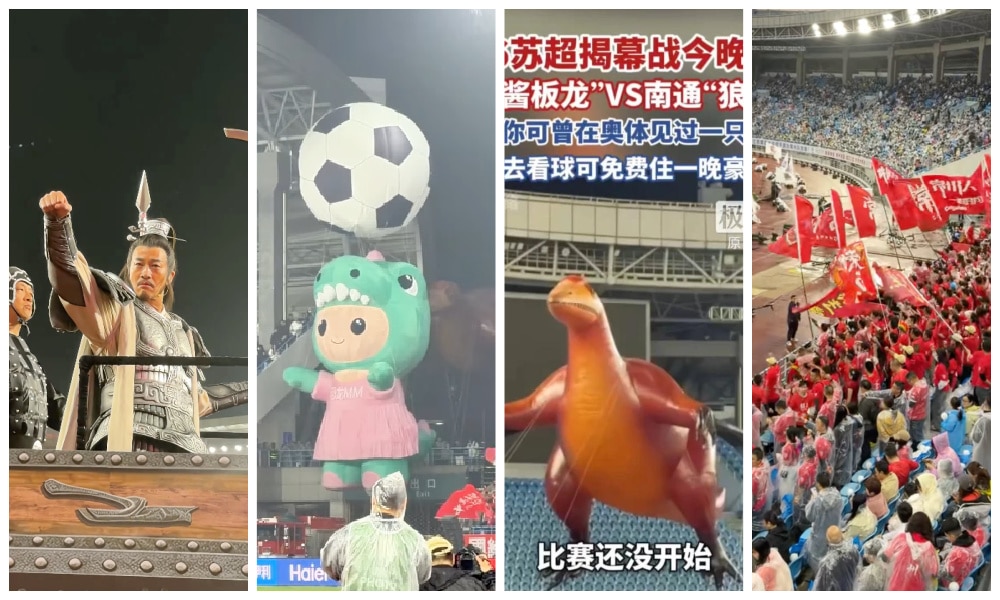
The Jiangsu…


China Brands, Marketing & Consumers
Starbucks Goes Xinjiang & The Kardashians in China
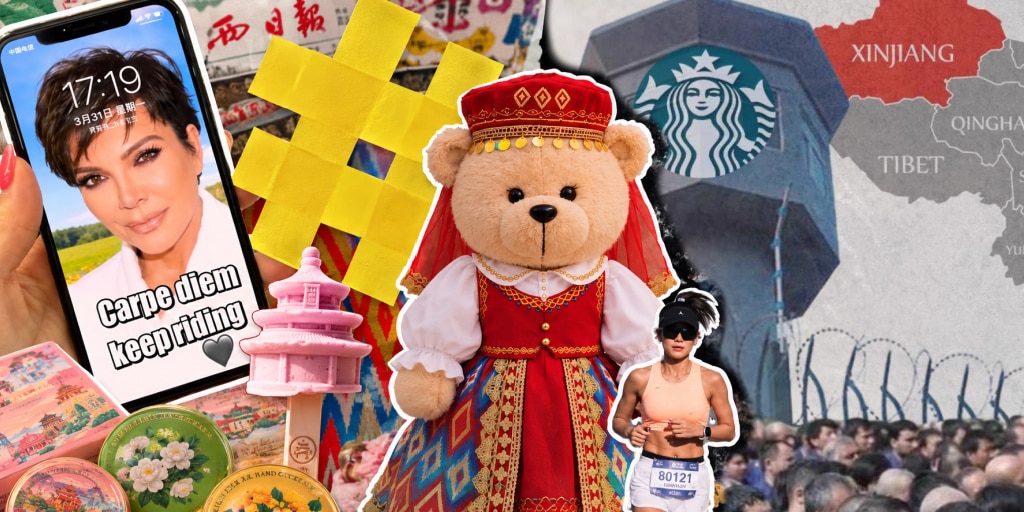
Starbucks rebrands as “Star-Bazaar” in Urumqi—what does it say about shifting perceptions of Western brands in China? Also: a cheating sports influencer and the souvenirs that became most hated.
Originally published in the Eye on Digital China newsletter on Sunday, October 4, 2026.
In this edition:
- Quick scrolls: A Chinese athlete cheated her way to the Berlin Marathon’s finish
- Zooming in: When Localization Gets Political: Starbucks Goes Xinjiang
- On the Feed: The Kardashians in China
- Phrase of the Week: The 3 souvenirs sold everywhere, but nobody wants them
🗞️ QUICK SCROLLS
🇯🇵 The National Day holiday has begun, but nobody’s going to Japan. Although Japan was the number one outbound destination for Chinese travelers during last year’s October holiday, it has now dropped out of the top ten destinations entirely. According to data from Chinese tour operator Tuniu (途牛), Indonesia, Turkey, and South Korea are among this year’s most-booked overseas destinations.
🚲 Chinese fitness influencer “Abeeeer” was caught cheating during the Berlin Marathon after she posted about running her “personal best.” The sport-blogger (530k+ followers on Xiaohongshu) was photographed riding on the back of a bicycle around the 38-kilometer mark. On Saturday, she publicly apologized and admitted that she had broken the rules and that she was “feeling unwell.”
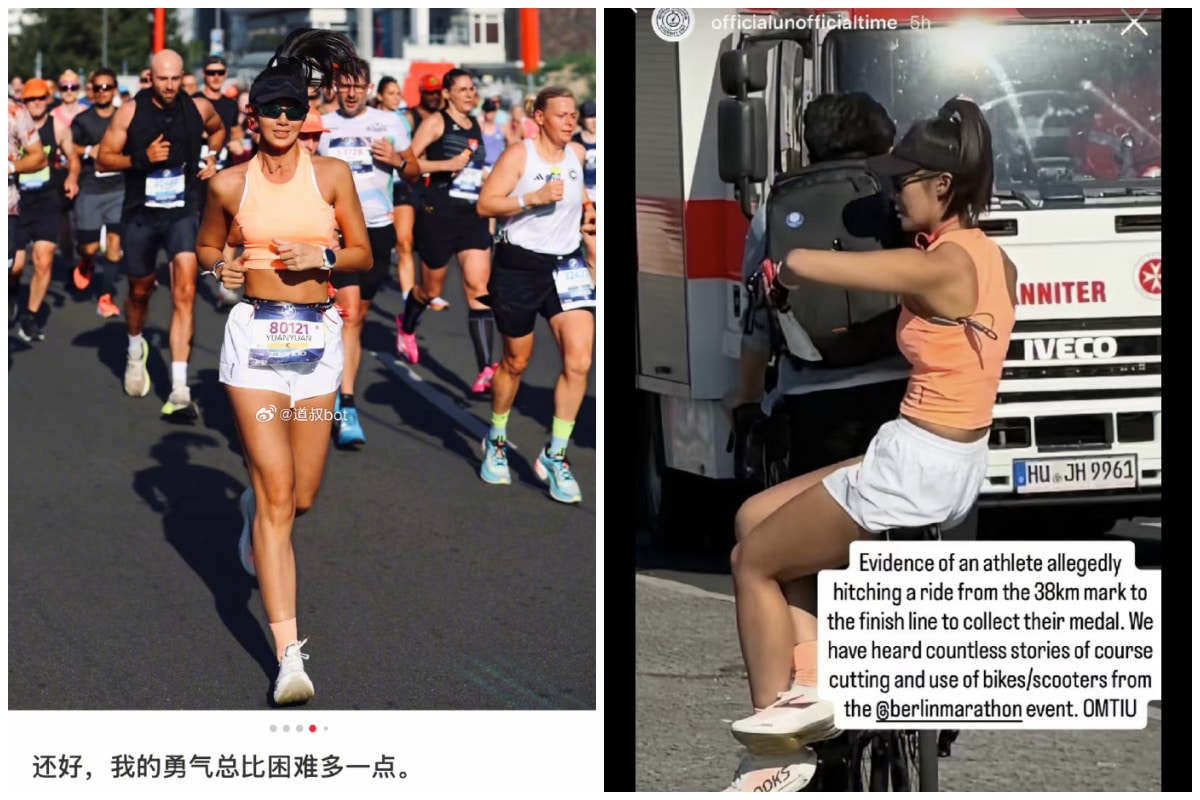
The sports influencer was caught hitching a ride to the finish line.
🏳️🌈 Japanese volleyball player Rui Takahashi came out as gay on Tuesday, saying he wanted to help others struggling with their sexuality by coming out publicly. On Douyin, many Chinese fans and commenters praised Rui for his bravery.
🤖 Former Global Times editor-in-chief Hu Xijin (胡锡进) published a National Day essay praising the country’s achievements but forgot to delete the AI chatbot’s closing follow-up question (”Would you like me to read through the whole text again and check it for omissions?”). Hu quickly deleted the AI prompt, but “Hu Xijin’s National Day AI ghostwriting fail” had already gone trending.
⚽ Chinese football produced…
Chapter Dive
The Power of Ugly: Why Niu Lai Became China’s Unlikeliest Box-Office Hit
How the two-person animated film Niu Lai turned its “ugly” visuals, dreamcore nostalgia, and remarkable cinema journey into a nationwide participatory meme.

Eye on Digital China is a reader-supported publication by
Manya Koetse (@manyapan) and powered by What’s on Weibo.
It offers independent analysis of China’s online culture, media, and social trends.
To receive the newsletter and support this work, consider
becoming a paid subscriber.


Mbappé, Mao & the Backlash on Chinese Social Media

Mbappé, Mao, and the Joke That Shall Not Be Named

The French Protests, Viewed from China: Five Narratives on Chinese Social Media

What Does 20 Yuan ($3) Mean Anymore? China’s Disappearing Living Rooms & the Great Laundry Debate

Starbucks Goes Xinjiang & The Kardashians in China

Why Japan Has So Many Surnames, China’s Back-to-School Shifts & Taiwan Pavilion Trouble

The Power of Ugly: Why Niu Lai Became China’s Unlikeliest Box-Office Hit

The Rise of “Shuaqi-ism,” Taking Starbucks to the Fields, and Pretending to Go to Work

AI Actress Ad Pulled, Baihaitun Disrupts Shanghai and Cicada Meme Bugs Huawei

Blame Games & Bad Signs: Nepal–Tibet Floods, Huawei’s Toilet Trouble, “Screwed” Graduates
-

 Chinese New Year9 months ago
Inside Chunwan 2026: China’s Spring Festival Gala
-

 China Brands, Marketing & Consumers12 months ago
Hasan Piker’s China Trip & the Unexpected Journey of a Chinese School Uniform to Angola
-

 Chapter Dive8 months ago
Inside the Great Chinese Debate Over the Iran War
-

 China Trend Watch12 months ago
Japan Tensions, Nexperia Fallout, Yunnan’s ‘Wild Child,’ & “Modern Opium”