Featured
China’s 2025 Year in Review in 12 Phrases
Andrew Methven’s favorite Chinese phrases of the year, a special feature by RealTime Mandarin.
Published
10 minutes agoon
Dear Reader,
Happy New Year! A new year is, undoubtedly, filled with new resolutions. I have a few on my list, and maybe we have some in common—like reading more books (my new e-reader is arriving from Shenzhen tomorrow!) and being more diligent about practicing my new Chinese vocabulary.
If upping your Chinese is also on your list for 2026, Andrew Methven’s newsletter, RealTime Mandarin, is a must-follow. It’s a free weekly resource that helps you improve your Mandarin in just 10 minutes a week, specifically designed for intermediate to advanced learners. I’ve been following Andrew’s work for over three years and love how he makes mastering the language more manageable, so I highly recommend giving it a follow.
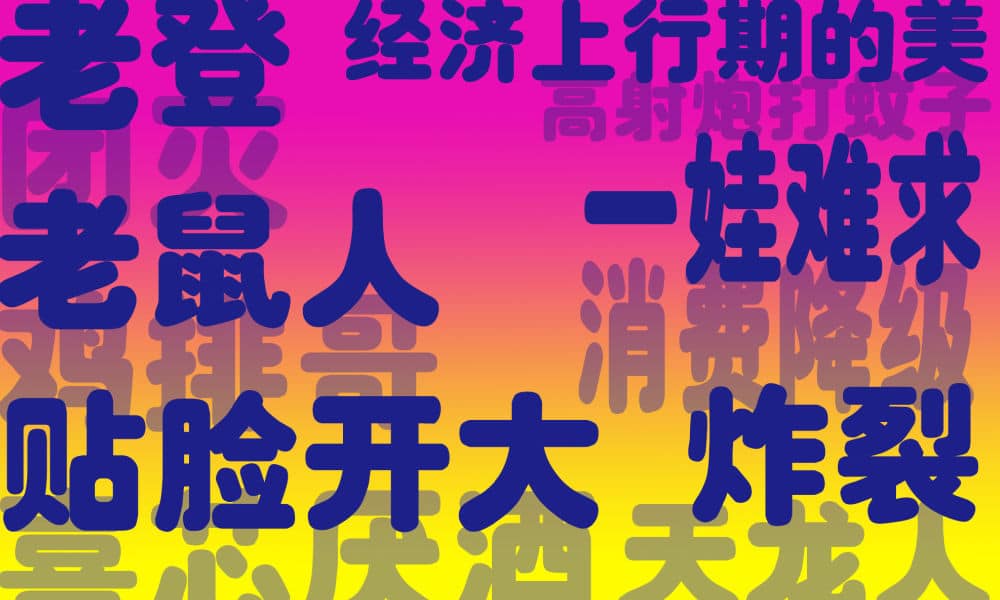
Looking back on 2025, here is Andrew’s curated pick of 12 Chinese phrases to remember.
Every year at this time, we wrap up with our own “unofficial” list of top words and phrases. These are expressions that probably didn’t exist a year ago, but have gone viral and become mainstream lingo over the last 12 months. We’ve picked 12 phrases and avoided overlap with the “official” top ten lists.
Most of these phrases were newly invented or popularised in 2025. So if you haven’t been to China this year, you probably won’t know them.
And as always, these phrases began life in the most unlikely places: from Japanese Manga to Taiwanese baseball; from American online games, to viral moments shared by Chinese students living in the UK.
As we pulled this list together, we noticed something interesting: That it’s full of contradictions. According to these 12 phrases, and the trends they represent, it seems that for any one trend you can say is happening in China right now, you could also find another one that proves the exact opposite is true.
So we decided to explain our favourite phrases of 2025 through five contradictions:
⚔️ Contradiction #1: Consumers are not buying, but are buying like crazy
In January, consumer confidence collapsed, with retail sales in Shanghai and Beijing declining steeply. The broader trend of “consumption downgrading” (消费降级) began in 2024, with policymakers pushing for “rational consumption” (理性消费).
Yet 2025 also saw unbelievable and irrational sales success stories.
“Hard to get a Labubu” (一娃难求) became a trending phrase in June following the explosion of the Labubu (拉布布), an ugly-cute, kind-of-scary toy. Other consumer successes included the move into flavoured beer by ice tea giant, Mixue Bingcheng (蜜雪冰城).
⚔️ Contradiction #2: Businesses had an awful year, but a great year
In April, as the tariff war escalated, many of China’s exporters feared the worst: a “total wipeout” (团灭) of their sales.
China’s tech darling Xiaomi (小米) started the year strong with soaring EV sales, but by the end of the year faced a string of consumer backlashes.
While another EV brand, Neta (哪吒), battled collapse rumours at the start of the year, and outdoor brand, Arc’teryx, was boycotted after its disastrous “mind-blowing” (炸裂) exploding mountain PR stunt.
China’s big three ecommerce platforms — JD, Alibaba, and Meituan — continued in their “tripartite rivalry” (三足鼎立), each invading the others’ turf in a race to the bottom on price.
Yet 2025 also saw stunning business breakthroughs, such as when chipmaker Cambricon (寒武纪), fuelled by China’s “domestic substitution” (国产替代) push, surged from loss-making startup to briefly become China’s most valuable stock, surpassing liquor brand, Moutai (贵州茅台) in the process.
With investors coining a new phrase: “choosing chips over liquor” (喜芯厌酒).
⚔️ Contradiction #3: Government policy was forward-thinking, but also backfired spectacularly
2025 was the year of “Embodied intelligence” (具身智能), after the government prioritised this technology in its Work Report in March.
The following month, Beijing hosted the world’s first “humanoid robot half marathon” (人形机器人半马). And in November, XPENG’s humanoid robot, IRON, stunned observers with its lifelike female form.
Also in March, the State Council announced measures to stamp out “involuted” work practices. And by April, some of China’s tech giants had responded with the introduction of “anti-involution” (反内卷) policies, which has been an ongoing theme throughout the year.
But other government policies backfired spectacularly.
Strict alcohol bans introduced for government officials were criticised as “bureaucratic overreach” (层层加码), the introduction of the K-visa (K签) aimed at attracting foreign talent was derided on social media as youth unemployment sat at 19%. Mosquito eradication efforts in Guangdong were criticised as “using a cannon to kill a fly” (高射炮打蚊子) following heavy-handed measures reminiscent of COVID.
And in Hangzhou, a water contamination scandal resurrected one of our top phrases from 2024 when locals blasted the city government as an “unprofessional team” (草台班子).
⚔️ Contradiction #4: Youth are lying flat, but are fighting back
In August, we discussed a new phrase which had emerged: “rat people” (老鼠人).
It started when Chinese students in the UK began sharing “low-energy rat people” (低能量老鼠人) videos of their isolated lives enduring long, dark British winters. The meme took off as young people embraced “low energy” lifestyles.
But not all youngsters were taking it easy and giving up.
A Chery Auto (奇瑞) graduate employee went into “full confrontation mode” (贴脸开大) with his employer in August after refusing to work Saturdays, citing the government’s “anti-involution” (反内卷) directive.
And earlier in the year, China National Nuclear Corporation (CNNC) faced “widespread condemnation” (千夫所指) after its tone-deaf PR campaign celebrated how it had received 1 million applications for just 8,000 graduate positions.
⚔️ Contradiction #5: Influencers are out, but influencers are in
2025 saw established celebrities fall out of favour with their fans.
High profile entrepreneurs Lei Jun (雷军) and Jia Guolong (贾国龙), were branded “out-of-touch middle-aged men” (老登).
Meanwhile, unlikely viral stars emerged from the grassroots. Director Fang (房主任), a 50-year-old divorced housewife from Shandong, became one of China’s most-watched stand-up comics.
And a street vendor selling 6-yuan fried chicken cutlets in Jingdezhen (景德镇) became “Chicken Cutlet Brother” (鸡排哥) after a customer’s Douyin video of him cooking and serving customers went viral.
Of course, some unchanging themes continued to draw attention in 2025 as in previous years.
Like the abuse of power and privilege by China’s “celestial dragons” (天龙人): the next generation of elites who “leverage family ties” (拼爹) for their own interests.
So, let’s dive in!
Our Favourite Phrases of 2025

1. Mind-blowing
炸裂 zhà liè
一个标榜户外精神的户外品牌,在最脆弱的生态环境里,搞了一场炸裂的秀。
An outdoor brand that claims to embody the spirit of nature put on a “spectacular” fireworks show in one of the most fragile ecosystems.
Background:
Internet slang which started in Japanese baseball to describe explosive performance. It gained popularity in Taiwan baseball to describe spectacular moments. In Mainland Chinese it describes stunning and sudden success — such as the overtaking of Moutai by semi chip maker, Cambricon (寒武纪).
“Mind-blowing” can also be used as an ironic statement when something goes mind-blowingly wrong, like Arc’teryx’s disastrous fireworks PR stunt in the Himalayas in September.
Related RTM content:
- Chinese AI chip maker briefly overtakes Moutai to become China’s most valuable listed company
- How the Arc’teryx fireworks fiasco is being discussed in China
- One Yuan iced water becomes China’s viral summer sensation
2. Total wipeout
团灭 tuán miè
最坏的情况下,储能在美国的业务会被“团灭”。
In the worst-case scenario, the energy storage business in the U.S. will be totally wiped out.
Background
Started as a gaming phrase in team-based video games like World of Warcraft and League of Legends to describe total team wipe outs (all members dying together). It extended beyond gaming to describe collective failures in exams, work, or daily life.
We first came across it listening in to discussions between Chinese exporters in the face of US tariffs and the growing tariff war.
Related RTM content:
- China’s exporters are feeling the pain
- 10 hot internet slang words you had no idea came from online gaming!
3. Out-of-touch middle-aged man
老登 lǎo dēng
一连串的老登翻车,不能单纯用偶然和倒霉解释。
When one boomer after another messes up, it’s not just coincidence or bad luck anymore.
Background
Originally a northern slang phrase, and a derogatory term for an old man (something like the English, “old git”). It took off this year after a number of high profile, self-inflicted PR disasters of high profile, influential male entrepreneurs. The most notable is Xiaomi founder, Lei Jun (雷军).
You can use it to describe any middle aged man who is condescending and appears out of touch with reality.
Related RTM content
4. Hard to get a Labubu
一娃难求 yì wá nán qiú
火爆到“一娃难求”的LABUBU是泡泡玛特旗下“THE MONSTER”系列的一员。
Labubu is part of Pop Mart’s “THE MONSTER” series, which has become so popular that it’s impossible to get one.
Background
One of the craziest shopping trends of 2025 — the obsession with these tiny, ugly, key ring toys made by Chinese company, Pop Mart. Since early 2025, images of Labubu filled social media feeds and become a must-have item for millions of fans and collectors in China.
Expect to see more from the Labubu in 2026.
Related RTM content:
5. “Chicken Cutlet Brother”
鸡排哥 jī pái gē
最近,景德镇有个卖鸡排的大哥突然爆火,还被广大网友封为“鸡排主理人”。
Recently, a man selling fried chicken in Jingdezhen suddenly went viral and was even dubbed the “chicken chop curator” by netizens.
Background
The “Chicken Cutlet Brother” (鸡排哥) story is one of our favourites from 2025. This 48-year-old overnight sensation is genuine, authentic, and unpolished – a refreshing change from the heavily curated content that dominated Chinese social media this year. His story echoes the “Second Uncle” (二舅) phenomenon we covered in 2022.
The sheer volume of memes and slang spawned by a single short video is staggering. Three phrases in China’s official top ten lists came directly from him. “Chicken Cutlet Brother” will likely become shorthand for authentic grassroots creators in 2026.
Related RTM content:
6. Rat person
老鼠人 lǎo shǔ rén
今年以来,“低能量老鼠人的一天”系列短视频走红社交媒体,很多年轻人热衷于自我诊断为“低能量老鼠人”。
This year, the short video series “A Day in the Life of a Low-Energy Rat Person” went viral on social media, with many young people eager to self-diagnose as such.
Background
The phrase “rat people” (老鼠人) began gaining traction in early 2025. It evolved from an earlier internet meme, “rat literature” (鼠鼠文学), a buzzword that first emerged in early 2023. By 2025, a related phrase emerged on social media: “low-energy rat people” (低能量老鼠人). It was first popularized by Chinese students in the UK, enduring long, dark winters in isolation.
It’s now become a way young people describe their low energy lifestyles.
Related RTM content:
7. Over-privileged elite
天龙人 tiān lóng rén
这的确是中国“新天龙人”的普遍特点——他们是很真诚地认为,集众美于一身的人生赛道是理所应当的。
This indeed reflects a common trait of the next generation of the privileged in China—they genuinely believe that inheriting multiple forms of privilege is their birthright.”
Background
Originates from the Japanese manga, One Piece by Oda Eiichiro, referring to the descendants of twenty kings who founded the World Government. These characters enjoy extreme privileges, and consider themselves superior to ordinary people.
In Chinese online discourse, the term has evolved into internet slang to describe privileged elites in real life who are disconnected from ordinary people, who possess power and resources, live luxurious lives, and operate above the rules that govern everyone else.
Related RTM content:
- What China’s biggest medical scandal of 2025 reveals about the deeper flaws in its healthcare system
- Social media post ignites debate over wealth, privilege, and corruption
- China reacts to Harvard graduation speech
8. Consumption downgrade
消费降级 xiāo fèi jiàng jí
也只有走上消费降级,扩大食客基础的道路。
The only way out is to embrace the consumption downgrade and broaden their customer base.
Background
Emerged around 2018 in response to economic pressures like high housing costs and slowing income growth. The explosive rise of discount e-commerce platforms like PDD (拼多多) became a symbol of this shift. The phrase represents a reversal of China’s decades-long consumption upgrade trend.
This year we’ve seen a number of major trends which fit the “consumption downgrade trend” — including the collapse of consumer confidence in Beijing and Shanghai, and incredible success of low priced convenience products like “one yuan iced cup” by tea brand, Goodme (古茗).
Related RTM content
- Consumer confidence collapses in Beijing and Shanghai
- One Yuan iced water becomes China’s viral summer sensation
9. Full confrontation mode
贴脸开大 tiē liǎn kāi dà
一名00后奇瑞校招生李某凯“贴脸开大”,在收到公司周六开会的邮件后,直接回复拒绝,并且将邮件抄送公司高层,包括集团二把手。
Li, a Gen Z Chery campus recruit, chose to confront it head-on by saying no to the Saturday meeting in an email, in which he copied the company’s senior executives, including the group’s second-in-command.
Background
Started online gaming where it describes high-risk, high-reward move of rushing directly up to an enemy and unleashing your ultimate ability at point-blank range. The phrase has evolved into internet slang to describe being direct or blunt.
It’s similar to “bringing up exactly what shouldn’t be mentioned” or being brutally frank, often used with a teasing or mocking tone. Just like a graduate employee at Chery did this year when he refused to attend Saturday training and meetings.
Related RTM content:
10. Choosing chips over liquor
喜芯厌酒 xǐ xīn yàn jiǔ
在资本市场「喜芯厌酒」情绪托举下,寒武纪摇身变新王。
Fueled by investor’s shift from liquor to chips, Cambricon is crowned the new king on the capital markets.
Background
A clever wordplay on the Chinese idiom “love the new, hate the old” (喜新厌旧), which is typically used to criticise disloyalty in relationships or fair-weather behaviour. The new version substitutes two characters while maintaining the original pronunciation: “new” (新 xīn) becomes “microchip” (芯 xīn), and “old” (旧 jiù) becomes “alcohol” (酒 jiǔ). This perfectly captures investor enthusiasm for semiconductor stocks like Cambricon while abandoning traditional alcohol companies like Moutai.
But the wordplay retains the original idiom’s critical edge, questioning whether Cambricon represents genuine long-term value or just another fleeting trend investors will abandon.
Related |RTM content:
- Chinese AI chip maker briefly overtakes Moutai to become China’s most valuable listed company
- EV maker unveils life-like humanoid robot
11. Using a cannon to kill a fly
高射炮打蚊子 gāo shè pào dǎ wén zi
重型机械来灭蚊,真有种高射炮打蚊子的既视感。
Heavy machinery for mosquitoes? Brilliant strategy, just like using a cannon to kill a fly.
Background
Literally “using anti-aircraft guns to kill mosquitoes”, which is a xiehouyu (歇后语), a traditional two-part allegorical saying where a vivid scenario delivers its punchline through absurd imagery. The phrase describes massively disproportionate responses to minor problems. While not coined in 2025, it became popular this year as commentary on heavy-handed government policies, particularly Guangdong’s extreme mosquito eradication campaigns.
It perfectly captures public frustration with bureaucratic overreach, when authorities deploy maximum force against minimal threats.
Related RTM content:
- Mosquito eradication efforts in Guangdong are going too far
- Hangzhou authorities mishandle tap water pollution incident
12. The beauty of an economic upturn
经济上行期的美 jīng jì shàng xíng qī de měi
最近刷到越来越多人开始怀念10年代经济上行期的美。
Lately, I’ve seen more and more people reminiscing online about the beauty of the economic upturn during the 2010s.
Background
This has become a viral hashtag on Chinese social media. It refers to roughly 2001-2015, when China’s economy maintained near double-digit growth and quality of life visibly improved year after year. Upward mobility felt tangible. Opportunities seemed everywhere.
This optimism defined early iterations of China’s largest online shopping festival, Double 11, launched in 2009, when it was ok to “consume and be happy” (消费即幸福).
But for many, that sense of optimism has now faded.
Related RTM content:
By Andrew Methven
Spotted a mistake or want to add something? Please let us know in comments below or email us. First-time commenters, please be patient – we will have to manually approve your comment before it appears.
©2025 Eye on Digital China/What’s on Weibo. All rights reserved. Do not reproduce our content without permission – you can contact us at info@whatsonweibo.com.
You may like
Featured
China’s 10 Biggest Social Media Stories of 2025
From top trends to platform scandals, these were the biggest online topics of the year.
Published
1 day agoon
December 30, 2025
Entering 2026, let’s take this time to reflect on a year of social media in China and the most noteworthy trending stories.
This is a list of major controversies & online moments that not only went completely viral but were also intrinsically connected to China’s social media sphere, either because they blew up on Weibo, originated on Douyin, or would not have even come to light if it weren’t for Xiaohongshu or other Chinese apps.
This is my pick of the top 10 topics and discussions that stood out most this year, capturing the broader sentiments shaping China’s social media landscape in 2025.
(PS: The items on this list are numbered chronologically and are not indicative of the importance/weight of the story.)
10. The ‘TikTok Refugee’-Xiaohongshu Honeymoon

At the beginning of 2025, a rare moment unfolded on Chinese social media. As American TikTok users faced a looming U.S. ban, they migrated to the Chinese app Xiaohongshu. This massive influx of so-called “TikTok refugees” (TikTok 难民) unexpectedly propelled Xiaohongshu to the number-one spot in app stores across the U.S. and beyond.
While the movement initially began as a tongue-in-cheek protest mocking U.S. authorities’ panic over Chinese companies stealing data, it soon turned into a genuine moment of cultural connection, as international users began building real relationships with the Chinese community on a fully domestic platform—sharing recipes, discussing culture, and practicing language.
Amid geopolitical tensions and a desire for cultural exchange, the fictional character ‘Li Hua’ unexpectedly emerged as a bridge between Chinese and American netizens. Li Hua (李华) is a familiar figure in China’s English writing exams, often used as a ‘stand-in’ for students to write letters to an imaginary foreign friend. Chinese users began digging up old exam papers and sharing the letters they had written years ago, often with captions like “Why didn’t you reply?” as a playful suggestion that Chinese students had been reaching out to foreign friends for years without ever hearing back.
Then, something extraordinary happened: Americans started replying to Li Hua. Posts appeared addressed to the fictional character, with messages like, “Dear Li Hua, I’m sorry the world kept us apart.”
These exchanges came to symbolize the distance that has long separated Chinese and American people. For many, this ‘Xiaohongshu moment’ underscored how anti-Chinese and anti-American sentiments have shaped narratives for years, fostering mutual misunderstanding. At the same time, the moment demonstrated not only the growing reach of Chinese-made platforms, but more importantly the power of online spaces to reshape relationships & create moments of unity amid a widening digital and geopolitical divide.
9. The China Tour of American Livestreamer IShowSpeed

Before March of 2025, many people in China had never heard of American livestreamer IShowSpeed. In the United States, many followers of the online celebrity, whose real name is Darren Jason Watkins Jr, knew little about China. That all changed when the YouTuber, who already had over 34 million followers at the time, toured across China and did a total of eight livestreams, filming over 43 hours of footage from, among others, Shanghai, Beijing, Chengdu, and Chongqing.
IShowspeed’s China tour was an important media moment for several reasons. In China, where the 20-year-old IShowSpeed is known as Jiǎkànggē (甲亢哥) or ‘Hyperthyroid Bro’ for overdrive being his modus operandi, his tour was seen as a huge win for China’s foreign-facing propaganda and cultural diplomacy. Watkins’ livestreams became an ultimate representation of the Chinese cultural promotion playbook, featuring traditional opera, pandas, Kung-fu, the Great Wall, and traditional medicine alongside futuristic cities, high-speed rail, dancing robots and stunning drone shows.
Outside of China, the streams filled with cultural highlights mixed with cutting-edge technology were also embraced by fans who loved seeing the encounter of a young modern American with old traditional China, and appreciated how his energetic livestreams showed an entirely different side of China than that usually highlighted in American mainstream media. The tour attracted millions of new subscribers, and boosted Watkins’ brand and global fame.
What his visit showed is that China has entered a phase in which it is becoming more skilled at letting others help tell its story in ways that resonate with a young, global, online audience, with more livestreamers and influencers now following in his footsteps through similar trips and China-focused promotions. Even if the government did not pay the YouTuber directly (as his team emphasized), the trip was clearly coordinated and fit seamlessly into China’s broader soft power strategy.
8. The Mysterious Death of Internet Celebrity Cat Wukong

Wukong became one of China’s most beloved internet celebrity cats after Douyin bikepacking vlogger Zhao Shuo (赵朔) met the stray while camping during his journey across China (video). Cold and hungry, the cat meowed outside Zhao’s tent until he let her warm up inside his sleeping bag.
Zhao named her “Wukong,” after the Monkey King from Journey to the West, and took her along on his travels through western China, winning over millions of netizens in the process.
The happy story took a dark turn in April of 2025 in Ruoqiang County, Xinjiang, when Wukong suddenly went missing from the campsite. Using her GPS collar, Zhao found her lifeless body beside a highway just two hours later. Veterinarians found no signs of trauma, ruling out a vehicle collision or accident, while GPS data suggested the cat had been moved unusually far in a short time, raising unanswered questions about what had happened.
As Zhao searched for answers, local authorities became involved. Soon after, Zhao suddenly released a video apologizing for the “negative impact” of the incident and said he would stop pursuing the matter. Online mourning over Wukong quickly turned into backlash, with many netizens accusing local officials of pressuring Zhao into an apology and prioritizing narrative control over transparency.
As the story was muted, tributes to Wukong spread across China in the form of graffiti, artwork, and memorial posts (see here). For many, Wukong became more than an internet cat: her story became a symbol of ordinary citizens searching for truth in the face of official silence. Beyond representing the limits of speaking out online, this story was above all else about the special and moving bond between a man and his cat friend.
7. The Dr. Xiao Medical Scandal of the Year

Many things came together in late April of 2025 when a letter written by the legal wife of the renowned Beijing surgeon Xiao Fei (肖飞) at the China-Japan Friendship Hospital was widely circulated from WeChat to Weibo, Zhihu, and beyond.
In the letter, addressed to the hospital’s Disciplinary Committee, the wife exposed her husband’s serious violations of professional ethics and his extramarital affairs with, among others, a head nurse and the young resident physician Dong Xiying (董袭莹). Most shockingly, she provided evidence that Xiao had left a patient on the operating table for 40 minutes during a surgery due to a dispute involving his mistress.
As the hospital verified the claims, Xiao’s employment was terminated and he was expelled from the Communist Party, briefly becoming one of the most hated figures on the Chinese internet. Public attention then shifted toward Dong Xiying and her suspicious academic rise. Netizens questioned how she managed to transition from an economics degree to becoming a “model student” at the prestigious Peking Union Medical College (PUMC) in just a few years.
The scandal intensified when PUMC, which had previously promoted Dong as a success story, suddenly deleted articles about her and edited her name out of official commencement addresses.
The entire story caused something of an earthquake—not just within medical circles, but also in academic ones and across the internet at large, where netizens were particularly concerned about the broader social issues this story touched on: from fairness in education and corruption in academia to medical negligence and moral integrity.
6. The Labubu Craze & Globalization of Chinese Designer Toys

Known and loved by tweens, teens, and (female) Gen Z consumers all over the world, Labubu became the hottest toy and fashion accessory of 2025—as well as a breakthrough success for the Chinese designer toy market at large.
Labubu is a Gremlin-like character created by renowned Hong Kong-born artist Kasing Lung (龍家昇), whose work is inspired by Nordic legends of elves. Although Labubu has been around since 2015, it wasn’t until it became part of Chinese pop culture store POP MART’s toy lineup in 2019 that it began reaching a mass audience.
And so, the story of Labubu’s success is just as much the story of the success of POP MART and that of other Chinese companies following a similar journey by covering the entire chain of trendy toys, from product development to retail and marketing. From Labubu to other dolls such as Wakuku and Baby Three (BB3), these brands managed to hit such a cultural and commercial sweet spot over the past year.
Following the global popularity of the Chinese game Black Myth: Wukong and with China’s animation hit Ne Zha 2 hitting cinemas across the world, Labubu is lauded as another example of a successful Chinese cultural export, with experts calling it ‘a benchmark for China’s pop culture’ and viewing its success as a sign of the globalization of Chinese designer toys.
5. The “Nanjing Sister Hong” Case That Shook People’s Worldview

Recently, I was talking to a group of young Chinese students in Wuhan, explaining the kind of trending topics I write about for What’s on Weibo / Eye on Digital China. I mentioned a few examples, and not all stories seemed to ring a bell, but when I said I also covered the “Nanjing Sister Hong” (南京红姐) case, every single one of them had a strong reaction—from squeaks to giggles to burying their faces in their hands. It’s clear that this is a story that not only became one of the most discussed viral topics of the year, but also one that has become part of China’s popular cultural memory, with references to the story popping up everywhere, from online memes to comedy shows and Halloween costumes.
The case centers on the 38-year-old Mr. Jiao, who posed as a woman on different Chinese dating apps. As the red-haired ‘Ahong,’ he hooked up with many men in his rented room, secretly recording these encounters and uploading all of the footage online. The scandal surfaced online in July of 2025.
The exact number of men Jiao met and filmed remains unknown. While authorities have dismissed the viral claim of over 1,600 men as exaggerated, dozens of videos spread widely online, showing Jiao engaging in various forms of sexual activity with different male partners from all walks of life, from married businessmen to fitness trainers and foreign exchange students. Some women who saw the videos recognized their own partners in them.
The story caused significant social shock; the fact that so many (married) men would be willing to hook up with a stranger online who arguably, yet obviously, wasn’t actually female shook people’s worldviews on multiple levels. Although this triggered many jokes, it also raised uncomfortable questions about how many of these men put their wives and romantic partners at risk because of these unprotected encounters.
Chinese commentators and bloggers therefore tied the case to women’s sexual health, but social media discussions around the case also touched on other issues such as privacy violations, gender identity, fluid sexuality, and marginalized communities.
4. The Maskpark Scandal That Couldn’t be Displayed

Back in 2020, an online sex crime scandal known as the “Nth Room” shook South Korea. It made global headlines after news revealed that dozens of women and underage girls had fallen victim to a network of cybersex trafficking and exploitation on Telegram.
In August 2025, the Chinese internet was hit by a similar storm. The discovery of a large-scale, anonymous Chinese-language community on the encrypted Telegram app revealed a vast network of sexual exploitation and voyeuristic content, leading many to label the case China’s own “Nth Room.”
The group, named “Maskpark,” had over 100,000 members and dozens of subchannels sharing voyeuristic footage: girls recorded with hidden cameras in bathrooms; videos leaked through private home surveillance; and women unknowingly filmed in hotels, hospitals, or on the subway. The group even had a specific term for members sharing footage of their own sisters, mothers, wives, or daughters: “offering tributes” (shàng gòng, 上供).
As Maskpark switched to private, frustration grew over the lack of official investigation into the matter. Another major issue fueling the anger was the censorship of “Maskpark Gate.” The story was kept off trending lists, and searching the hashtag on Weibo returned the message: “This topic content cannot be displayed.”
While online sleuths and victims tried to amplify their voices to force action, they instead saw their posts deleted. This left many wondering who is actually standing up for women’s safety, while others pointed out that the scandal reveals how advanced hidden camera technology has become, making this not just a women’s issue, but a national problem.
3. The Jiangyou Incident: From School Bullying to Public Protests

In August 2025, the city of Jiangyou in Sichuan became the scene of a rare, large-scale protest following public outrage over a severe bullying incident and how it was handled.
The bullying incident at the center of this story happened outside school premises, involving three girls between the ages of 13 and 15 who ganged up on a 14-year-old girl named Lai (赖). Footage of the assault, recorded by bystanders, began circulating widely on Chinese social media, sparking widespread outrage among concerned netizens and parents.
When authorities acted not only slowly but also leniently towards the bullies, public anger grew—especially because one of the bullies could be heard saying in the videos, “It’s not like I haven’t been taken in [to jail] before.” The incident sparked anger due to lenient laws for minors, the calculated moves by the brutal bullies, and the epidemic of school violence that has been ongoing in China for years, which many feel is being inadequately handled by local authorities.
The outrage in Jiangyou grew so large that it spilled from online to offline, with crowds gathering outside the municipal building. As the crowd grew, tensions escalated, leading to rare clashes between protesters and police, footage of which spread online before being censored.
The case showed that as the rising number of bullying cases continues to fuel public frustration nationwide, local anger will continue to intensify, especially if authorities fail to address and prevent school bullying. Most of all, it shows that while public protests rarely grow so big on Chinese social media, it only takes a spark to create a heated crowd.
2. The Jingdezhen “Chicken Chop Bro”

Andy Warhol’s famous “15 minutes of fame” phrase, coined around 1967, predicted that modern media & pop culture would eventually make everyone briefly famous. By now, we know there is truth to his words. While social media didn’t make everyone famous, it has proven that anyone could be, if only for a little while.
But Warhol perhaps couldn’t have predicted that the recipe for online fame in China’s 2025 isn’t about money, flashy fashion, or showbiz talent. Instead, it is about being down-to-earth and raw. One of the Chinese hot phrases of the year was “Real-Person Vibes” (huó rén gǎn, 活人感), describing people or stories that feel unpolished and unfiltered—something that has become increasingly precious in a year dominated by AI-generated content.
Around the National Day holiday, a seller of chicken chops in the town of Jingdezhen in Jiangxi became insta-famous. Not just because his chicken chops suited the tastes of locals, but mostly due to his pragmatic attitude and lively energy, along with his superspeed service and clear order of serving customers. He ran his little food stall like a serious operation, and people appreciated that.
Under the nickname “Chicken Chop Brother” (鸡排哥 jīpáigē), Li Junyong (李俊永) became an overnight viral sensation, so successful that local authorities had to implement crowd management for his stall.
While these kinds of successes aren’t always everlasting, their impacts are major. In a time when many are trying to replicate this viral formula, his story shows that for a moment to truly strike a chord with the masses, it needs to be real—and tasty, too.
1. The Kuaishou Livestream Controversy

On the night of December 22, 2025, users scrolling through livestreams on the popular short video app Kuaishou noticed something deeply disturbing: their screens suddenly filled with pornographic and violent content. Soon, millions of users scrolled into the same shocking footage. The chaos continued for approximately 90 minutes before Kuaishou—which has over 415 million daily active users, including many minors—eventually shut down its entire livestreaming function around 11:30 PM.
In a statement the following day, Kuaishou claimed the platform had fallen victim to an attack by “the underground and gray industries,” announcing that the incident had been reported to the police. The event is not just China’s worst platform-level catastrophe of the year; it is one of the most dramatic management failures in Chinese internet history, considering millions witnessed explicit content in real-time for an hour and a half.
The incident is indicative of Kuaishou’s failing security operations, particularly its slow response time and lack of emergency protocols. More significantly, it revealed the advanced techniques of the attackers. They used approximately 17,000 “zombie accounts” acquired through long-term “account farming” to exploit vulnerabilities and bypass reviews. They then pushed pre-recorded explicit files to livestream servers while simultaneously paralyzing Kuaishou’s banning system.
This serves as a massive wake-up call for both Chinese platforms and authorities. In what is already one of the most extensive & sophisticated internet censorship systems in the world, regulatory control and scrutiny will only further intensify in China’s online environment in the year to come.
By Manya Koetse
(follow on X, LinkedIn, or Instagram)
Spotted a mistake or want to add something? Please let us know in comments below or email us. First-time commenters, please be patient – we will have to manually approve your comment before it appears.
©2025 Eye on Digital China/What’s on Weibo. All rights reserved. Do not reproduce our content without permission – you can contact us at info@whatsonweibo.com.
China Society
Why Were 100,000 Pregnant Women’s Blood Samples Smuggled Out of China?
How and why fetal sex testing became a national security story
Published
6 days agoon
December 25, 2025
A noteworthy story in Chinese media recently, which also made it to the top trending lists on Kuaishou and Weibo, concerns the uncovering of a widespread criminal network that smuggled blood samples from over 100,000 pregnant women across the border, exposing a black-market chain active across all provinces of China. In this deeper dive, I look at what received far less attention: why so many pregnant women were willing to provide their blood in the first place.
The case was part of a major operation by Guangzhou’s anti-smuggling authorities following a year-long investigation and the mobilization of 265 officers. As part of the operation, two professional criminal groups specializing in the smuggling of pregnant women’s blood samples were dismantled, and a total of 26 people were arrested.
The groups earned a staggering 30 million yuan (US$4.2 million) from their blood-smuggling activities.
So far, the story reads almost like a vampire novel, especially with Chinese media detailing how the blood was smuggled: smugglers reportedly strapped tubes of blood to their bodies to cross the border. Others hid them in specially modified suitcases with concealed compartments.
Some commenters framed the story as the smuggling of “life samples carrying the genetic code of Chinese citizens,” and as the “poaching of ethnic genetic resources,” arguing that the data security implications could be serious if the blood were to be used for research by those with ulterior motives.
Other netizens suggested that “insiders within medical institutions must be involved,” possibly even through broader “cross-border project collaborations.” These suspicions were fueled by official reporting. Overall, the online media discourse surrounding the case focused on the risks these practices pose to national biosecurity, with fears that foreign entities could appropriate China’s human genetic information.
In reality, however, this story is about the widespread demand in China for prenatal blood testing for fetal sex determination.
The groups uncovered by Guangzhou authorities received blood from some 100,000 pregnant women because the women provided it themselves. The groups (illegally) advertised on social media that they offered non-invasive fetal sex identification and genetic disease screening, with clients paying fees of 2,000–3,000 yuan (US$285–US$426) for these blood tests.
According to Guancha.cn, the blood would be drawn by “acquaintances” or through online medical platforms, after which the samples would be mailed by courier to a designated address, where they were collected, concealed by smugglers, and delivered to overseas laboratories for testing.

Smuggled blood as seen in CCTV feature
Although none of the Chinese news reports on this case disclose where these “overseas labs” are actually located, the reports mention cooperation between authorities in Guangzhou, Foshan, and Shenzhen, and the details provided make it highly probable that the case concerns the mainland–Hong Kong border.
In a recent CCTV feature on the news, Zheng Zhong (郑重), Deputy Director of the Investigation Division of the Guangzhou Customs Anti-Smuggling Bureau, said:
“China has explicitly prohibited the determination of fetal sex for non-medical needs, which is a protection of the fetus’s right to life. It is also to maintain a healthy population ratio. Blood sample smuggling poses a high potential risk to public interests and national biosecurity.”
Fetal sex determination has been illegal in China since the first regulation in 1989, with later laws specifically outlawing the use of ultrasound imaging or other techniques to identify fetal sex.
Why Fetal Sex Determination Still Matters
Why did Zheng mention the prohibition of fetal sex determination tests in China to “maintain a healthy population ratio”?
Although abortion has generally been permitted in China—which has one of the most lenient abortion regimes in the world—strict controls on sex-selective abortions have been in place since the early 1990s.
One of the unintended effects of China’s one-child policy since 1979 has been the widespread occurrence of sex-selective pregnancy terminations, linked to traditional son preference. Fetal sex identification has been a precursor to these abortions, contributing to severe distortions in the country’s sex ratio. Non-medical fetal sex identification and sex-selective abortion came to be known as the “two illegitimates.”[1]
Now that China is entering its first decade since the end of the one-child policy, you might expect that these “two illegitimates” have become less pressing issues. After all, with couples now allowed to have more than one child (even three children or more), why would sex determination still be so relevant that 100,000 women would continue to submit blood samples despite the practice officially being illegal?
🔎 In reality, research suggests that the end of China’s one-child policy has not been the turning point it was perhaps expected to be. Although it has reduced pressures, its impact on son preference and sex-selective practices has been somewhat underwhelming.[2]
Since 2016, there has indeed been a rise in daughter preference and gender indifference, as well as a decline in male-to-female sex ratios at birth, but significant regional differences remain and son preference persists, alongside sex-selective abortion.[3] As a result, the sex ratio at birth remains skewed in certain provinces, especially for first births.[4]
👉 So what does this mean in practice? It means that, despite laws and regulations, expecting parents are still eager to find ways to identify fetal sex by whatever means possible (blood-based tests, ultrasound scans), and that agencies able to profit from this desire have been widespread for years.
In provinces like Jiangxi, Fujian, Guangdong, Guangxi, Hubei, and Hunan, which together with Hainan accounted for more than a third of all births in China in 2020, there is still a deeply rooted familism culture and an abnormally high number of male births.[5]
Even though Chinese authorities introduced specific measures more than a decade ago to ban the mailing of blood samples overseas for fetal sex identification, underground networks smuggling fetal blood samples to Hong Kong for gender testing have been rampant—and this goes well beyond 100,000 samples.
Framing Pregnant Women’s Blood Smuggling in Chinese State Media
It is noteworthy that Chinese coverage of this case leaves out issues related to fetal sex selection, the persistence of sex-selective practices in post–one-child China, and parents’ willingness to learn the sex of their fetus to such an extent that they are prepared to pay large sums of money for this information.
In the 8-minute CCTV feature on this case, as well as in other reports, the core narrative centers on how an organized criminal network that endangered national biological security by illegally smuggling pregnant women’s blood samples was successfully dismantled by Chinese authorities through state surveillance and coordinated law enforcement.
China has, in fact, strict laws on the protection of human genetic resources. Since 2019, regulations have specifically prohibited foreign entities from collecting genetic material within China and restricted the transfer of genetic material and related data out of China. Any research involving Chinese human genetic resources must be conducted through approved collaboration with a qualified Chinese institution (see China Law Translate).
In the CCTV report, fetal sex identification is mentioned only briefly: first, in describing how the criminal group attracted customers online, and second, by Zhong, to emphasize that the practice is illegal. This framing places the entire issue within the domains of legality, regulation, and security, while the ethical, socio-cultural, and gender dimensions that lie at the root of the practice are entirely ignored.

Word cloud generated with the assistance of AI, based on the fully transcribed and translated text of the main CCTV investigative report on the blood-smuggling case.
Instead, the case is narrated using dominant language such as “blood smuggling,” “genetic resources,” and “security.” This framing has led to some confusion online. One of the most popular search queries related to the story on Weibo was: “What is the purpose of smuggling pregnant women’s blood samples abroad?” (孕妇血液样本走私境外目的是什么).
On Xiaohongshu, some commenters similarly asked: “I just don’t understand what pregnant women’s blood is used for.” Another user replied: “They can extract genetic codes, create a virus, and kill us with it.”
There are, however, many commenters who directly connect the case to its underlying issue. One woman on Xiaohongshu asked: “Isn’t it possible to tell [the fetus’s sex] just by doing a B-ultrasound? Why would they spend so much money to draw blood?” Another commenter replied: “It takes several months before you can do an ultrasound. A blood test is faster, and you can know the result before the abortion deadline.” (In some regions of China, non-medical abortions are not permitted after 14 weeks of pregnancy.)
Demographic Anxiety and Shifts in Narratives
Chinese headlines about the uncovering of the blood-smuggling operations appeared in the same week when netizens discussed unofficial reports about China’s 2025 estimated birth rates, suggesting that the country’s fertility rate will hit another historic low and fall to second-lowest in the world (higher only than South Korea), with a total fertility rate of about 1.09.
“Let people with money have kids,” some commenters suggested. “Right now, it’s hard for young people to get a job. When you can’t even find a job, who would think of having kids?”
Another person on Weibo wrote: “I’m part of the elite social class with a PhD degree, and yet I’m miserable. I’m pessimistic and disappointed about the future. I won’t have kids, won’t buy [a house], and won’t get married.”
Over the past years, and especially recently, Chinese authorities have introduced numerous measures in attempts to boost the country’s birth rates, from child-rearing subsidies to taxes on contraceptives.
In this light, tackling illegal practices involving fetal sex identification is more relevant than ever—and pushing such news to the top of China’s trending lists, together with frightening narratives about blood thieves and biosecurity risks, serves as a warning as much to smugglers as to expecting mothers not to engage in such practices. In this context, expecting parents would not only be crossing legal red lines by testing the sex of their unborn child, but would also be framed as handing over China’s national DNA to potential foreign enemies.
🔴 In doing so, Chinese official narratives shift, yet also fall back into old habits: at a time when fertility is dramatically dropping and confidence among young people in love & marriage is eroding, the state does more than regulate or guide ideas about family planning and fetal sex determination; it changes the meanings attached to it.
But there’s also a side effect to these stories. Because official news coverage presents the case as one of potential risks of Chinese genetic data being stolen, while largely leaving out the relevant social context, some ordinary Chinese netizens have begun to worry about what happens to their blood samples at hospitals once they leave their check-up appointments.
“Can they profit from it?” some wonder, while others worry about unintentionally contributing to future biological warfare.
Ultimately, the story of “blood smuggling” is not just about smugglers or overseas laboratories. It is about how, in an era of increasing demographic anxiety, reproductive behavior is increasingly reframed through the language of security.
Luckily, many genuinely don’t see what all the fuss is about: “People would really smuggle pregnant women’s blood abroad for what? Is it really so important to know whether you’re having a boy or a girl?”🔚
📌🎬 Although I also published last week, I didn’t send that article as a newsletter. So, in case you missed it, here’s a short recap: the past year has been a tumultuous one for China’s entertainment industry, and especially for renowned director Wong Kar-wai. After the success of the TV drama Shanghai Blossoms, a former screenwriter accused Wong and his team of discrediting, exploiting, and abusing him.
The case was already explosive, but it became even more sensitive when audio recordings were leaked in which Wong criticised the Party. Almost any other celebrity would likely have been blacklisted for such remarks, yet Wong seems to have escaped that fate. Why? You can explore the case in this in-depth article by Ruixin Zhang. It’s worth the read.
👉 This piece is part of Chapters, the format I use for deeper, more analytical pieces. Alongside Chapters, I also publish Signals, which tracks slower-moving shifts in Chinese online culture and digital life, and China Trend Watch, which offers a regular overview of what has been trending across China’s digital platforms. Keep an eye on the upcoming editions to follow the thread.
By Manya Koetse
(follow on X, LinkedIn, or Instagram)
[1] Ruby Lai Yuen Shan, “The Transformation of Abortion Law in China,” in Research Handbook on International Abortion Law, edited by Mary Ziegler (Cheltenham, UK: Edward Elgar Publishing, 2023), 172–73.
[2] Xinyi Zhang, “Estimating the Effect on the Sex Ratio of the Two-Child Policy: Evidence from China,” Proceedings of the International Conference on Social Psychology and Humanity Studies 9 (2023): 1–8.
[3] Li Mei and Quanbao Jiang, “Sex-Selective Abortions over the Past Four Decades in China,” Population Health Metrics 23, no. 6 (2025): 1–16.
[4] Mengjun Tang and Jiawei Hou, “Changes of Sex Ratio at Birth and Son Preferences in China: A Mixed Method Study,” China Population and Development Studies 8 (2024): 1–27.
[5] Tang and Hou, “Changes of Sex Ratio at Birth,” 4–5.
Spotted a mistake or want to add something? Please let us know in comments below or email us. First-time commenters, please be patient – we will have to manually approve your comment before it appears.
©2025 Whatsonweibo. All rights reserved. Do not reproduce our content without permission – you can contact us at info@whatsonweibo.com.
Subscribe
Eye on Digital China is a reader-supported publication by
Manya Koetse (@manyapan) and powered by What’s on Weibo.
It offers independent analysis of China’s online culture, media, and social trends.
To receive the newsletter and support this work, consider
becoming a paid subscriber.

Get in touch
Have a tip, story lead, or book recommendation? Interested in contributing? For ideas, suggestions, or just a quick hello, reach out here.
China’s 2025 Year in Review in 12 Phrases
China’s 10 Biggest Social Media Stories of 2025
Why Were 100,000 Pregnant Women’s Blood Samples Smuggled Out of China?
When an Entertainment Scandal Gets Political: How Wong Kar-wai Survived a Nationalist Storm
China Trend Watch: Quiet Nationalism, Loud Statements, and Nanjing Memorial Day
The Wong Kar-wai Scandal Explained: The Dark Side of ‘Blossoms Shanghai’
From Nobel Farewell to ‘VIP Toilets’: What’s Trending in China
China Trend Watch: Japan Tensions, Nexperia Fallout, Yunnan’s ‘Wild Child,’ & “Modern Opium”
Eye on Digital China: How Chinese Social Media Evolved from the Blog Era to the AI-driven Age
From Tents to ‘Tangping Travel”: New Travel Trends among Young Chinese
Popular Reads
-
China Arts & Entertainment6 months agoHidden Cameras and Taboo Topics: The Many Layers of the “Nanjing Sister Hong” Scandal
-
China Insight8 months agoUnderstanding the Dr. Xiao Medical Scandal
-
China Digital12 months ago“Dear Li Hua”: The TikTok/Xiaohongshu Honeymoon Explained
-
China Insight5 months ago“Jiangyou Bullying Incident”: From Online Outrage to Offline Protest