
China History
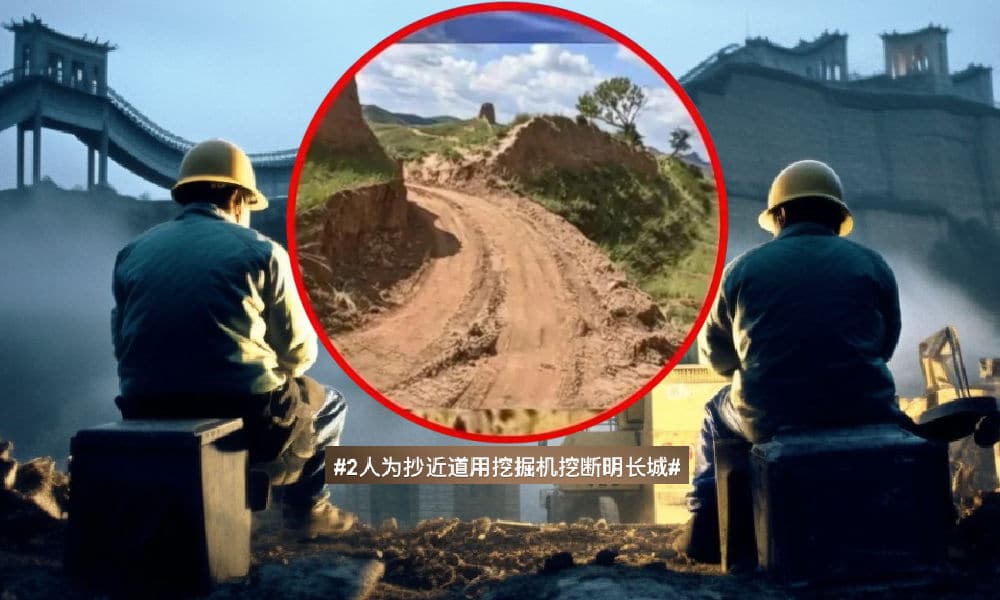
Digging through Historical Heritage: Construction Workers Damage Great Wall to Create Excavator ‘Shortcut’
Commenters on Weibo suggest the two construction workers deserve an “ancient punishment” for ruining such ancient heritage.

Chapter Dive
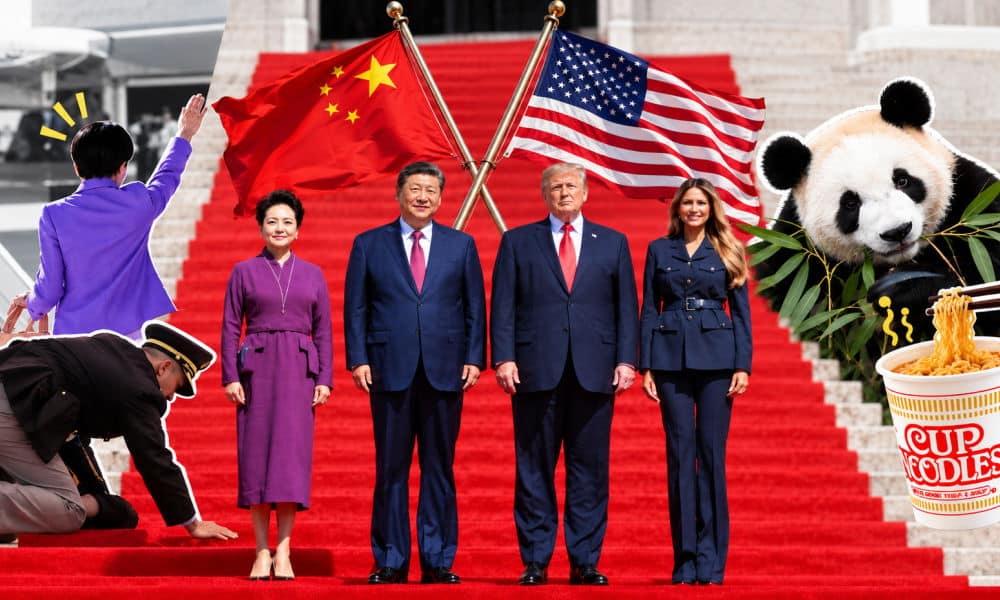
Red Carpet, Pandas, and Power: How China Read the Trump-Xi Summit
On Chinese social media, Washington’s red-carpet reception wasn’t just diplomacy but read as recognition of China’s restored status on the global stage.
Originally published in the Eye on Digital China newsletter on Sunday, September 27, 2026. Want to receive the next edition in your inbox? Become a paid subscriber here.
The past week was all about the Trump-Xi meeting in Washington. On mainstream Chinese social media feeds, much of the focus wasn’t on what was discussed, who gained what, or what was promised. It was about: How was China welcomed? How far did they go? How exceptional was the reception? And what does this say about China’s status as a major power on the world stage today?
Symbolic moments mattered more than strategic talks. Within that framework, President Trump, along with First Lady Melania Trump, hit the right notes.
The US visit by Xi Jinping and First Lady Peng Liyuan began on Wednesday (Sep 23), with Donald Trump and the First Lady personally welcoming them at Joint Base Andrews, a highly unusual move. Presidents typically receive foreign leaders at the White House; in recent decades, airport welcomes at Andrews have been reserved almost exclusively for popes. The last comparable presidential welcome was Kennedy’s 1962 greeting of British Prime Minister Harold Macmillan, a particularly close US ally at the time.
Wednesday’s welcome came with a red carpet, which members of the US military meticulously inspected and cleaned on their hands and knees right before Xi and Peng’s arrival. A photo of that scene was widely shared on Chinese social media, where many netizens seemed both bemused and struck by the sight of Americans quite literally bending over backward for their Chinese guests, with one popular Weibo account (@提刀探花在缅北) writing: “This is a scene that we will remember for decades.”
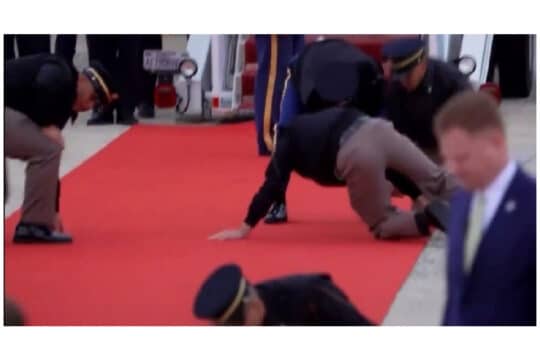
Red-carpet preparation at Joint Base Andrews
At the White House welcome ceremony on Thursday (Sep 24), where both leaders delivered remarks, Trump touched on the history of war and mentioned the American volunteer fighter group in China — the Flying Tigers — saying:
🗣️ “If we focus on our common interest, I’m confident there is much we can achieve. Throughout history, the pursuit of those common interests has connected our people across the vast oceans, across big, tremendous distances and many differences, and even made us allies in World War II. Look at the greatness we had together fighting in World War II.”
After the Washington summit concluded, Trump posted on Truth Social, calling the meeting one of “Friendship, Strength, and Success, for both China and the U.S.A.,” and adding that he looked forward to the next US-China meeting in November.
Historical Memory at the White House
But why did the special treatment given to the Chinese delegation in the US seem to matter so much in China, especially considering the ubiquitous anti-American sentiment of recent years? Not only did official media highlight it, but it also resonated strongly with netizens and became the defining story about this meeting on social media.
It goes much deeper than flattery.
Narratives of “never…
Chapter Dive
Evil Unbound (731): How a Chinese Anti-Japanese War Film Backfired
731 was China’s most anticipated war movie of the year — how could it fail so miserably to live up to public expectations?
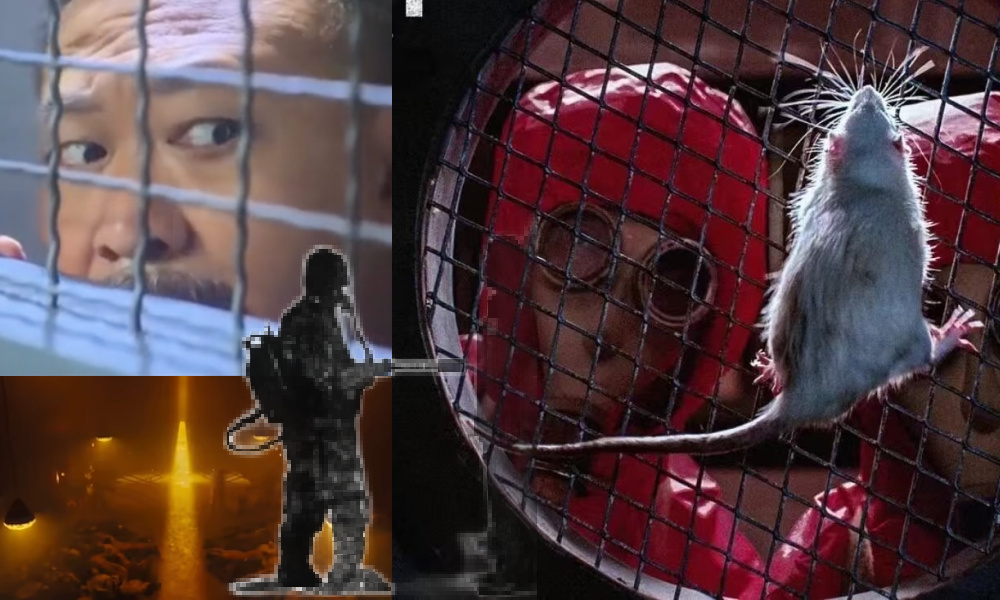
🔥 This is premium content and also appeared in the Weibo Watch newsletter. Subscribe to stay in the loop.
731 and 918, those were the numbers dominating Chinese social media over the past week. Both numbers carry heavy historical weight, but the recent discussions surrounding them reveal two parallel worlds of the official narrative vs the audience experience of a controversial new World War II film.
It was “9.18” on Thursday, when China commemorated the 94th anniversary of the September 18th Incident (九一八事变). On that day in 1931, a small explosion on a Japanese-owned railway near Shenyang (Mukden) was used as a pretext to invade Manchuria.
While many older Chinese were taught in school that the war began in 1937, recent state-led campaigns increasingly emphasize 1931 as the true beginning of China’s “14-year-long war” (1931–1945). Over the past decade, the 918 commemorations have become more prominent online, shaping public memory through nationalistic messaging.
This year, the commemoration had an extra dimension, as it wove the release of Evil Unbound (English title), also known as 731, into the patriotic media narratives around 918.
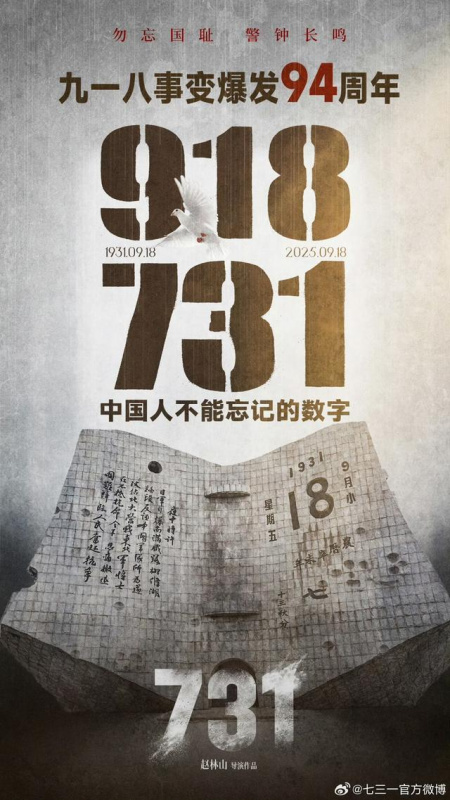
Patriotic film poster putting 918 and 731 together.
The much-anticipated war movie 731depicts the atrocities of Japan’s Unit 731 (731部队), notorious for conducting horrific biological warfare experiments in Harbin during World War II under Major General Shiro Ishii (石井四郎), a former army surgeon and biologist with a particular interest in historical plagues. Under his command, Japan’s biological warfare and human experimentation in China were carried out on a larger scale than anywhere…
Eye on Digital China is a reader-supported publication by
Manya Koetse (@manyapan) and powered by What’s on Weibo.
It offers independent analysis of China’s online culture, media, and social trends.
To receive the newsletter and support this work, consider
becoming a paid subscriber.


Red Carpet, Pandas, and Power: How China Read the Trump-Xi Summit

Keeping Score of History: The Mukden Incident and China’s Basketball Defeat to Japan

The Rise of “Shuaqi-ism,” Taking Starbucks to the Fields, and Pretending to Go to Work

Why Japan Has So Many Surnames, China’s Back-to-School Shifts & Taiwan Pavilion Trouble

Blame Games & Bad Signs: Nepal–Tibet Floods, Huawei’s Toilet Trouble, “Screwed” Graduates

“Even Pigs Have AC”: The European Heatwave Through Chinese Eyes

“God Won’t Save Us, but the PLA Will”: Floods, Faith, and Kung Fu Soccer Nostalgia

How Chinese AI Videos Turned Foreigners into Villains

The Power of Ugly: Why Niu Lai Became China’s Unlikeliest Box-Office Hit

AI Actress Ad Pulled, Baihaitun Disrupts Shanghai and Cicada Meme Bugs Huawei
-

 China Arts & Entertainment12 months ago
The Wong Kar-wai Scandal Explained: The Dark Side of ‘Blossoms Shanghai’
-

 Chinese New Year8 months ago
Inside Chunwan 2026: China’s Spring Festival Gala
-

 China Brands, Marketing & Consumers11 months ago
Hasan Piker’s China Trip & the Unexpected Journey of a Chinese School Uniform to Angola
-

 Chapter Dive7 months ago
Inside the Great Chinese Debate Over the Iran War