
Chapter Dive
Ne Zha 2: Making Donghua Great Again
Explaining why the celebration of the success of “Ne Zha 2” goes beyond box office numbers and cinema screens.







Chapter Dive
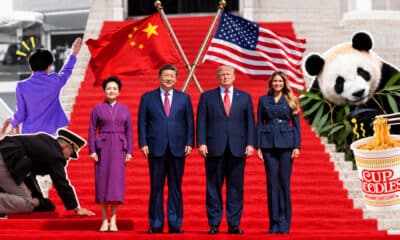
Red Carpet, Pandas, and Power: How China Read the Trump-Xi Summit
On Chinese social media, Washington’s red-carpet reception wasn’t just diplomacy but read as recognition of China’s restored status on the global stage.
Originally published in the Eye on Digital China newsletter on Sunday, September 27, 2026. Want to receive the next edition in your inbox? Become a paid subscriber here.
The past week was all about the Trump-Xi meeting in Washington. On mainstream Chinese social media feeds, much of the focus wasn’t on what was discussed, who gained what, or what was promised. It was about: How was China welcomed? How far did they go? How exceptional was the reception? And what does this say about China’s status as a major power on the world stage today?
Symbolic moments mattered more than strategic talks. Within that framework, President Trump, along with First Lady Melania Trump, hit the right notes.
The US visit by Xi Jinping and First Lady Peng Liyuan began on Wednesday (Sep 23), with Donald Trump and the First Lady personally welcoming them at Joint Base Andrews, a highly unusual move. Presidents typically receive foreign leaders at the White House; in recent decades, airport welcomes at Andrews have been reserved almost exclusively for popes. The last comparable presidential welcome was Kennedy’s 1962 greeting of British Prime Minister Harold Macmillan, a particularly close US ally at the time.
Wednesday’s welcome came with a red carpet, which members of the US military meticulously inspected and cleaned on their hands and knees right before Xi and Peng’s arrival. A photo of that scene was widely shared on Chinese social media, where many netizens seemed both bemused and struck by the sight of Americans quite literally bending over backward for their Chinese guests, with one popular Weibo account (@提刀探花在缅北) writing: “This is a scene that we will remember for decades.”
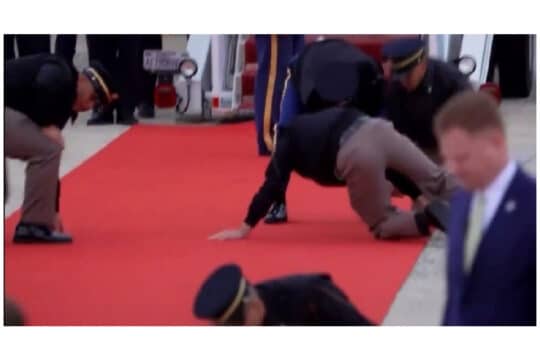
Red-carpet preparation at Joint Base Andrews
At the White House welcome ceremony on Thursday (Sep 24), where both leaders delivered remarks, Trump touched on the history of war and mentioned the American volunteer fighter group in China — the Flying Tigers — saying:
🗣️ “If we focus on our common interest, I’m confident there is much we can achieve. Throughout history, the pursuit of those common interests has connected our people across the vast oceans, across big, tremendous distances and many differences, and even made us allies in World War II. Look at the greatness we had together fighting in World War II.”
After the Washington summit concluded, Trump posted on Truth Social, calling the meeting one of “Friendship, Strength, and Success, for both China and the U.S.A.,” and adding that he looked forward to the next US-China meeting in November.
Historical Memory at the White House
But why did the special treatment given to the Chinese delegation in the US seem to matter so much in China, especially considering the ubiquitous anti-American sentiment of recent years? Not only did official media highlight it, but it also resonated strongly with netizens and became the defining story about this meeting on social media.
It goes much deeper than flattery.
Narratives of “never…
Chapter Dive
Keeping Score of History: The Mukden Incident and China’s Basketball Defeat to Japan
China’s defeat against Japan at the Asian Games trended on the same day as the commemoration of the Mukden Incident—not as a separate event, but as a painful reminder of the humiliation of war.
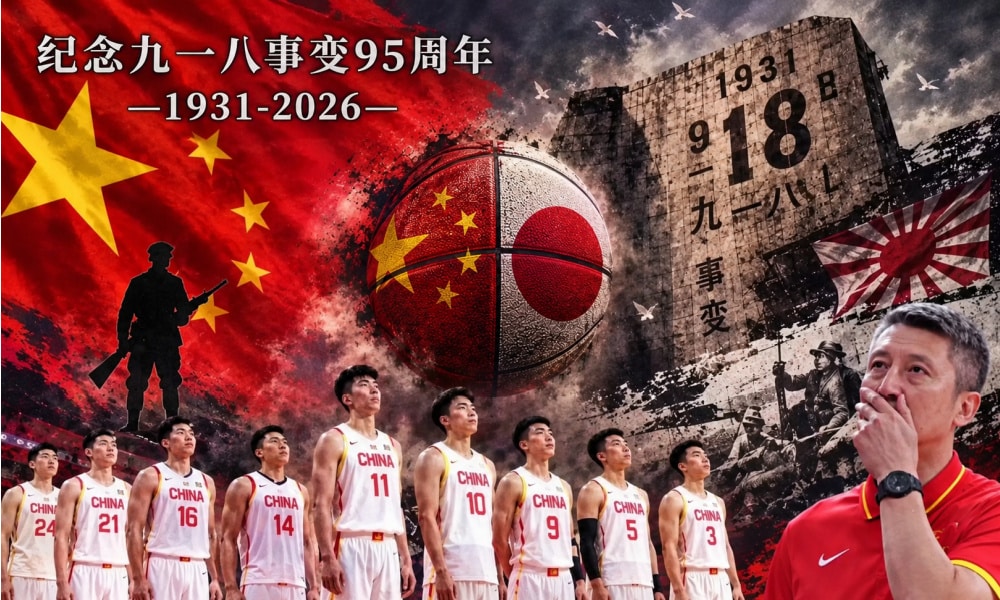
Football can be a useful way to gauge the state of nations.1 So can basketball, apparently.
One of the most discussed topics on Chinese social media on September 18 was the China vs. Japan men’s basketball semifinal at the Asian Games, a topic that was collectively viewed not merely through a sports angle, but through the lens of history and WWII – especially on an important commemoration day that was all about China’s war against Japanese aggression.
September 18 marks the anniversary of the Mukden Incident in 1931. Right next to the basketball game, that topic became one of the top keywords on Weibo and other Chinese platforms on Friday.2
The Mukden Incident —a staged explosion that damaged a section of Japanese railway in Shenyang [Mukden] on September 18, 1931—was used as a pretext for Japan’s invasion of Manchuria and has come to be widely regarded by Chinese historians and officials as the true starting point of the Second Sino-Japanese War.
On this significant day, the China vs. Japan game in Nagoya ended in a major 77-97 loss for the Chinese team, which critics attributed to a lack of speed and tactical weaknesses that left them defenseless against the Japanese team’s swift attacks. Making it worse, the Chinese had the advantage of taller players, and the Japanese weren’t even playing with their best team.
“Like a top-grade horse losing to a bottom-grade horse,” one sports columnist wrote (“是我们的上等马输给了对方的下等马”).
Prior to the game, many commenters already questioned why a China-Japan face-off should take place on such a sensitive date, while others suggested that the Chinese team “could not afford to lose on this day.”
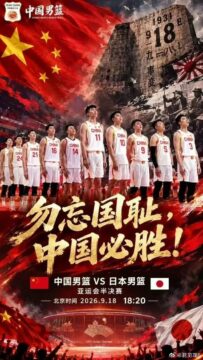
Posted by Weibo user 君见理5, this AI poster transforms…
-

 Chinese New Year8 months ago
Inside Chunwan 2026: China’s Spring Festival Gala
-

 China Brands, Marketing & Consumers11 months ago
Hasan Piker’s China Trip & the Unexpected Journey of a Chinese School Uniform to Angola
-

 Chapter Dive7 months ago
Inside the Great Chinese Debate Over the Iran War
-

 China Trend Watch11 months ago
Japan Tensions, Nexperia Fallout, Yunnan’s ‘Wild Child,’ & “Modern Opium”