
China Trend Watch
China Trend Watch: Naked Sleeping Woman Claims Depression After Being Seen by Window Cleaners
This is What’s on Weibo’s top 3 of what’s currently trending in China (Aug 23–24).


🔥What’s on Weibo’s Top 3: What’s Trending in China Today Stay updated with China Trend Watch by What’s on Weibo — your quick overview of what’s trending on Weibo and across other Chinese social media today. Trending topics all curated by me, with a little help from my AI sidekick.
Naked Sleeping Woman Suffers Depression After Being Seen by Window Cleaners
A man in Chengdu reported that his wife developed depression after being seen naked by two window cleaners at their high-end apartment in the city (成都交子荟国际公寓). The incident occurred in April, when the property management allegedly failed to inform them in advance about the windows being cleaned. The woman was sleeping naked in her bed, without the curtains closed, when two window cleaners appeared and saw her. The couple is now demanding accountability, but nearly four months later, there has been no resolution. According to the man, his wife suffers from depression and anxiety since the incident, and the couple decided to not renew the lease and move to another place.
Manya’s Take:
This is a special kind of case, which is why a related hashtag has already triggered over 160 million views on Weibo. The couple’s apartment costs about 10,000 yuan per month (around US$1,400), and apart from a 600 yuan (US$83) discount on the lease renewal, the property management has not offered any other resolution to the conflict. On Weibo, some commenters argue that the curtains should have been closed, while others place the blame on the property management. Either way, most people express more sympathy for the window cleaners than for the woman. Half-jokingly, they suggest that working at such heights, the unexpected scene may even have posed a safety risk for the cleaners, who were probably caught by surpruse. Instead of a discussion over privacy, Weibo commenters turn it more into a discussion over social class, and about drawing curtains when sleeping naked.

Twelve Dead, Four Missing in Qinghai Bridge Construction Accident
A tragic construction accident occurred at 3:10 a.m. on August 22 on the Jianzha Yellow River Grand Bridge (尖扎黄河特大桥) in Qinghai, part of the Sichuan–Qinghai Railway and China’s first railway steel truss arch bridge across the Yellow River. A snapped steel cable caused a 66-ton steel arch rib to collapse, killing at least 12 workers, with 4 others still missing. Large-scale emergency rescue operations were launched immediately after the accident. The tragedy has reignited debate over construction safety in major infrastructure projects.
Manya’s Take:
There have been many discussions in China in recent years about unsafe construction practices and regulatory bodies failing to take responsibility—choosing quick profits over human safety. I’m thinking not only of the recent deadly mine tank incident, but also tragedies such as the Changfeng hospital fire. While we still don’t know the full circumstances or the final investigation report in this case, angry comments are already surfacing online about financial profits being prioritized over human lives.
Singer Aska Yang Falls Off High Stage, Says He’s Okay
Taiwanese singer Aska Yang (杨宗纬) fell from a 2-meter-high stage during his August 23 performance in Xining. Footage of his fall went viral and top trended on Weibo, triggering concern among fans. The next day, Aska Yang posted that he is fine, thanking the staff at the venue for their help and care. He also asked his mother not to look at the hot topics on social media today. See a video of the fall here.
China Trend Watch
China Trend Watch: Digital Dementia and Why Everyone Says ‘Li Na’
In this edition: Why Chinese netizens are talking about “digital dementia,” a viral Shenyang cleaner, the tragic Yading hike, and the reality TV meme taking over everyone’s feed.
Originally published in the Eye on Digital China newsletter on Sunday, November 8, 2026.
In this edition:
⚡ Lighter scrolls: A viral shopping mall cleaner & making unpopular studies great again.
🌍 Serious scrolls: A possible Xi–Trump–Putin meeting in Shenzhen??
📱 On the Feed: Everyone’s saying Li Na.
🀄 Word of the Week: Digital dementia.
⚡ QUICK SCROLLS
—The Lighter Side—
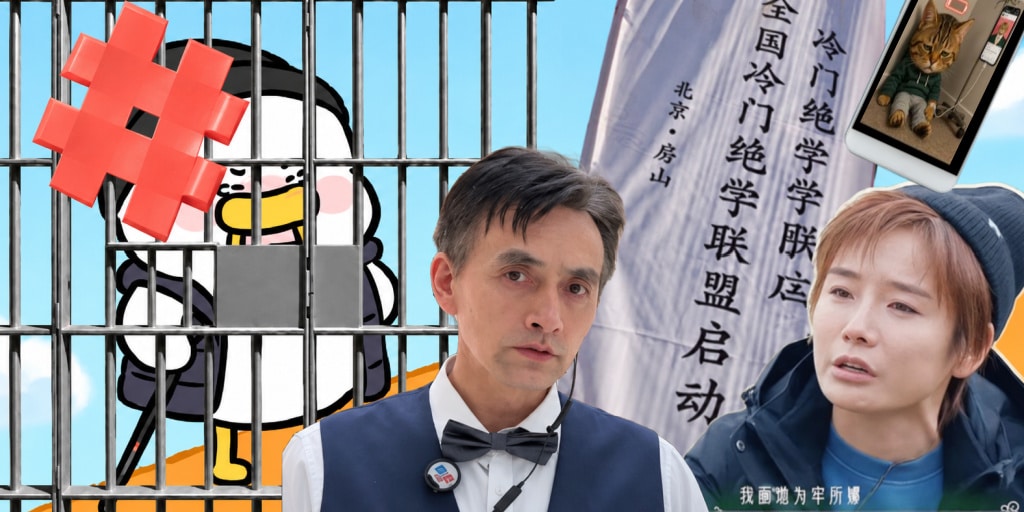
🦴 A new Chinese university college is entirely dedicated to unpopular studies. By launching its new “obscure and dying fields of study” college (冷门绝学), the Chinese Academy of Social Sciences hopes to preserve and revive research directions such as oracle-bone studies, bamboo-and-silk manuscript studies, Manchu, Tangut, and Old Turkic.
🏠 An apartment in Hegang was sold for just 11 yuan ($1.65) as part of a special Singles’ Day promotional auction on Alibaba’s asset auction platform Ali Asset (阿里资产). Singles’ Day (Nov 11) is China’s largest online shopping festival and often features doorbuster deals. The lucky new owner of the 60-plus-square-meter flat in Hegang says he will not move to the coal city, but will use it as a holiday home instead.
🗓️ 2027 is called “the most comfortable year” after the holiday arrangements for next year were released. China’s holiday design has been somewhat of a national obsession over recent years, and the Year of the Goat is going to be a good one: it will see a “longest-ever” Spring Festival break of nine consecutive days from Feb 5–Feb 13. New Year’s Day and Qingming fall on a Friday and Monday, giving people three days off twice without any swaps or make-up workdays. Some netizens call it “a step toward better holidays.”
Chen Jingfu, the viral shopping mall cleaner from Shenyang
Chen Jingfu (陈景福), the cleaner from Shenyang who went viral across Chinese social media for looking like an actor.
🧹 A 55-year-old shopping mall cleaner in Shenyang has become a viral hit after netizens noticed his striking looks and reserved demeanor – making him look more like a famous actor than a sanitation worker. It happens quite regularly that ordinary people go viral in China for something small, like a special look or funny style. The unexpected fame can put a serious strain on their lives. This time, the cleaner named Chen Jingfu (陈景福) isn’t doing sponsorship deals or livestreaming, but he did open a social media account. It’s called “Shenyang Cleaner Uncle” (沈阳保洁大叔) and features him wiping windows and mopping floors.
🤖 China’s most famous livestreamer, Li Jiaqi, used to sell lipsticks; now he’s selling AI tokens. During one of his Singles’ Day livestreams this past week, Li sold more than 100,000 membership cards for Alibaba’s Qwen model within thirty minutes. It’s a sign of the times: “tokens” have entered China’s biggest shopping festival as a new category, and are quickly becoming as popular as cosmetics and fashion.
—On a More Serious Note—
🌍 A first Xi–Trump–Putin meeting would not be a “Yalta 2.0,” argues Hu Xijin. China’s Foreign Ministry has confirmed that it is discussing a possible historic meeting of Xi Jinping, Vladimir Putin, and Donald Trump. The meeting could take place on the sidelines of the APEC Economic Leaders’ Meeting, which is scheduled for Nov. 18–19 in Shenzhen. Some have compared such a meeting to a “new Yalta,” but Chinese political commentator Hu Xijin (胡锡进) has pushed back. He argues that while Putin and Trump may have great-power politics in mind, China opposes letting a few major powers decide the world’s future.
🇯🇵 A year after Takaichi’s explosive Taiwan remarks, Sino-Japanese relations are still seriously strained. This week, Foreign Ministry spokesperson Guo Jiakun (郭嘉昆) said Japan is entirely responsible for the problematic bilateral relations. Hostile Japan coverage in Chinese media was also noticeable in the state media’s reports on a Japanese academic who called Takaichi’s cabinet “unprecedentedly dangerous” and blamed the Japanese Prime Minister for deliberately stirring up anti-Chinese feelings among the public for her own benefit.
📹 A reporter’s undercover investigation into the black market for tōupāi (偷拍, secret filming through spycams and more) has put a national figure on this voyeurism network for the first time: it is estimated that roughly 140,000 women have been secretly filmed in public bathrooms, changing rooms, or hotels across China. Victims include primary school students, with footage of minors reportedly selling at 5–10 times the price of adults.
⛰️ “Everyone watched him walk towards his death.” The death of a 21-year-old hiker on the Yading Grand Loop, at an altitude of more than 4,500 meters, has sparked online discussions on the risks people take on unofficial hiking routes and the heavy burden this places on those who have to rescue them. The man from Guangxi died of severe altitude sickness and hypothermia in spite of the rescue operation that was set up to save him, involving a nine-person team of firefighters, doctors, and guides.
🇭🇰 Joshua Wong, face of the 2019 Hong Kong pro-democracy protests, was sentenced to another 10 years in prison on November 5 for “collusion with foreign forces.” Wong, held since November 2020, has served time for protest-related offenses and “conspiracy to subvert state power.” The new sentence adds to the time he’s already serving. While this new sentence is drawing widespread condemnation in the West and also sees (quiet) solidarity in greater China, many on Chinese social media are also gloating, seeing Wong as a traitor and spy.
📱 ON MY FEED
Everyone’s Saying “Li Na”
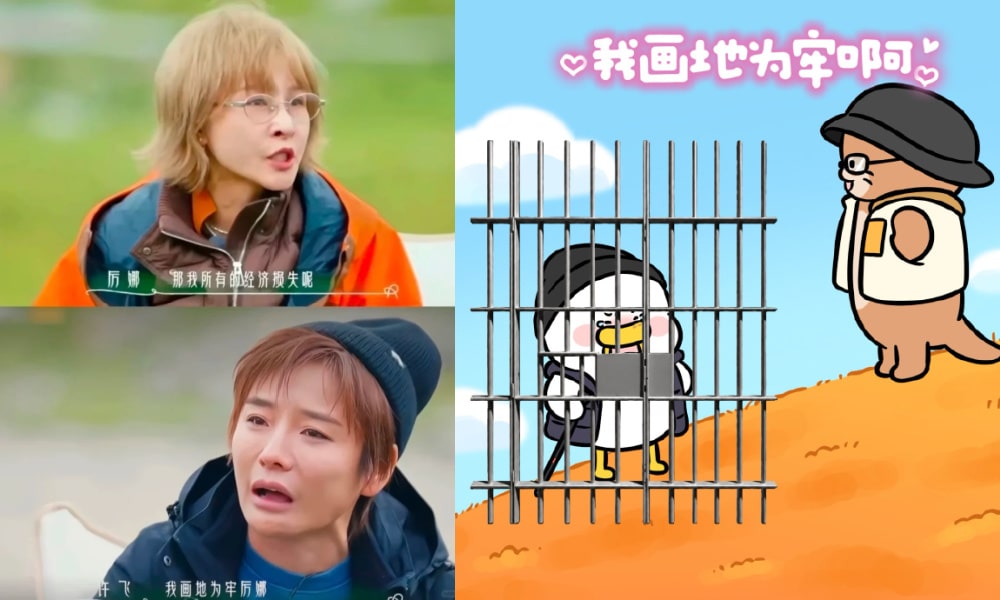
Not just on my feed, but practically everywhere, is Mango TV’s Hou Hui You Qi (后会友期). The Mango TV reality show, titled I Miss You in English, is creating a lot of noise on Chinese social media these days. The show follows four pairs of former friends, well-known celebrities who drifted apart through misunderstandings or controversy. During a trip through nature, they confront what went wrong.
One moment already ingrained in collective digital memory is the conversation between singer-songwriter Xu Fei (许飞) and singer/actress Li Na (厉娜), who became friends during the 2006 season of Super Girl (超女).
The line on everyone’s feeds is “I’ve drawn my own prison, Li Na” (我画地为牢啊,厉娜). Xu Fei says it when talking about how she just can’t move on from their friendship after all these years. Xu was blamed for leaking Li Na’s plans to leave her management company many years ago. Although the scene was emotional, Li Na didn’t really get what Xu meant. Back in her room, she was filmed asking AI, “What does it mean to ‘draw your own prison’?” and then she ordered McDonald’s.
It’s turned into a goldmine for memes, and suddenly everyone’s joking about being in their own self-drawn prison. The sentence “Xu Fei draws her own prison, Li Na eats McDonald’s” also became shorthand for one person overthinking everything in life while the other one just quickly jumps to everyday practicalities.
Because Xu Fei ended almost every sentence with “Li Na,” people started adding “Li Na” to their own sentences to make them sound deeper. Even a simple “I’m off work” sounds better when it’s “I’m off work, Li Na.”
Xu also recalled how she and Li Na, during their Super Girl days, would sit in their hotel room watching TV and eating duck tongue snacks together, a habit Li taught her to appreciate. After fans tracked down the brand, it quickly sold out all across China.
Viral social media posts claim an office worker even lost his job due to the meme. He set his WeChat status to “I’m drawing my own prison on Monday” (我画地为牢啊,周一). His manager read it as a negative attitude toward work and dismissed him.
A good reminder to be careful about what you post online, Li Na.
🀄 WORD OF THE WEEK
Doomscrolling and “Digital Dementia”
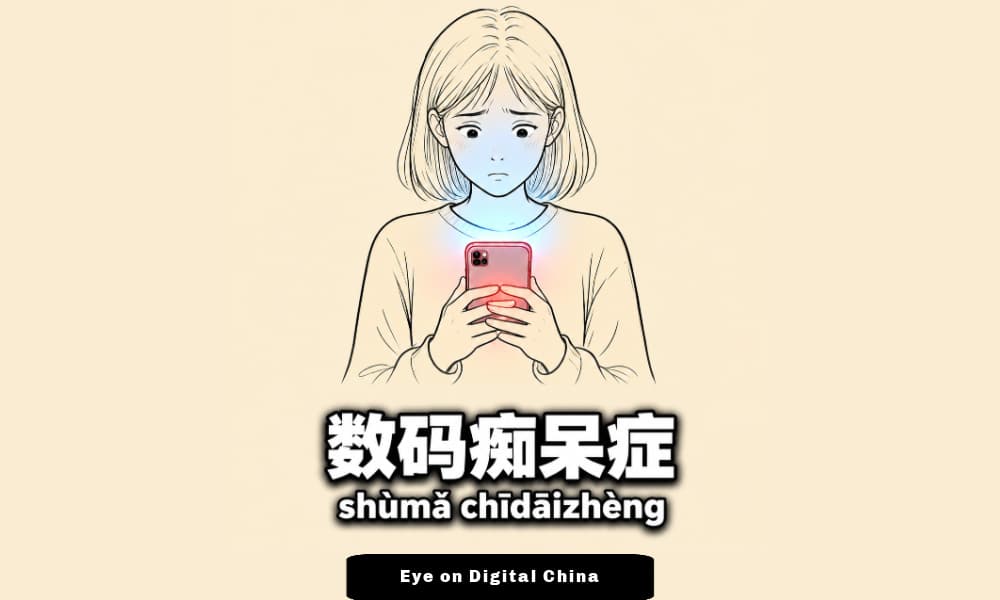
手机痴呆症: shǒujī chīdāi zhèng, “phone dementia”
数码痴呆症: shùmǎ chīdāi zhèng, “digital dementia”
The word of the week is “digital dementia” (数码痴呆症), also called “smartphone dementia” (手机痴呆症).
The topic reached number one on Weibo’s hot search list after Fuzhou Evening News reported that a 25-year-old woman from Fuzhou was diagnosed with “digital dementia” after using her phone for more than ten hours a day.
The woman reportedly spent days video-scrolling and drama-watching on her phone, while also scrolling on her phone for work, and ended up having more and more memory problems. She would lose her train of thought mid-sentence or forget tasks right after her boss assigned them. Once, when she got home from work, she even forgot which floor she lived on.
At the hospital, tests showed noticeable declines in memory and attention, but the other results were normal. Taking her work and phone habits into account, her doctor then described her symptoms as “digital dementia.”
Although this is not an official medical diagnosis and is very much different from actual types of dementia such as Alzheimer’s, spending too much time scrolling and screen watching can seriously interfere with attention and memory, with heavier short-video use being associated with poorer recognition memory and doomscrolling linked to anxiety and distress.
Other recent related online discussions are about the short drama app Hongguo (红果), which trended after users complained that the app’s design is addictive. They say it’s filled with short drama snippets with dramatic twists and cliffhangers, leading to constant dopamine stimulation that leaves them feeling mentally drained and “unable to stop” once they start.
This kind of digital behavior, especially in a year when short (AI) drama apps skyrocketed in popularity, also helps explain why “digital dementia” resonates with Chinese netizens who have noticed their own cognitive decline after excessive phone use.
“If that’s what 10 hours does to you, what am I supposed to do? I clock at least 13 a day,” one Weibo user commented.
On Xiaohongshu, another user wrote, “I get off work at five, get home at five-thirty, and spend the whole time on my phone until midnight.”
“I came back from a ten-day business trip and couldn’t remember what floor my office was on,” another Xiaohongshu user shared. Someone replied, “That’s happened to me, too. I hadn’t been to the office for a few days, and when I got in the elevator, I couldn’t remember what floor it was on.”
🔗 SEEN ELSEWHERE
🔹 Who owns a voice? As AI-generated voices become common, what remains uniquely human? When AI Learns to Speak, by Li Hang in Global Times.
🔹 China and Europe still need each other. This CASS scholar argues that as transatlantic relations face renewed strains and the international order shifts, China and Europe have strong reasons to deepen dialogue and cooperation. Via The East Is Read.
🔹 The danger of being a livestreamer in China. When a fan thinks he owns you, online entitlement can morph into real-world violence. By Lina Ma in The Diplomat.
🔹 War of words over Xinjiang erupts between Chinese and Turkish social media users. An explanation of how the debate over ethnic identity in Xinjiang has triggered an online clash between Chinese and Turkish social media users, by Laura Zhou in South China Morning Post.
🔹 Why Taipei said no to Pursuit Of Jade star Zhang Linghe. An explanation of how Chinese idol Zhang Linghe was denied entry to Taiwan after “belittling” Taiwan’s status. Via The Straits Times.
That’s a wrap, see you soon in the next one. Until then, have a great start to your week!
Best,
Manya
Eye on Digital China, by Manya Koetse, is co-published on Substack and What’s on Weibo. Both feature the same new content — so you can read and subscribe wherever you prefer. Substack offers community features, while What’s on Weibo provides full archive access.
Spotted a mistake or want to add something? Please let us know in comments below or email us. First-time commenters, please be patient – we will have to manually approve your comment before it appears.
©2026 Eye on Digital China/Whatsonweibo. All rights reserved. Do not reproduce our content without permission – you can contact us at info@whatsonweibo.com.
China Brands, Marketing & Consumers
Starbucks Goes Xinjiang & The Kardashians in China
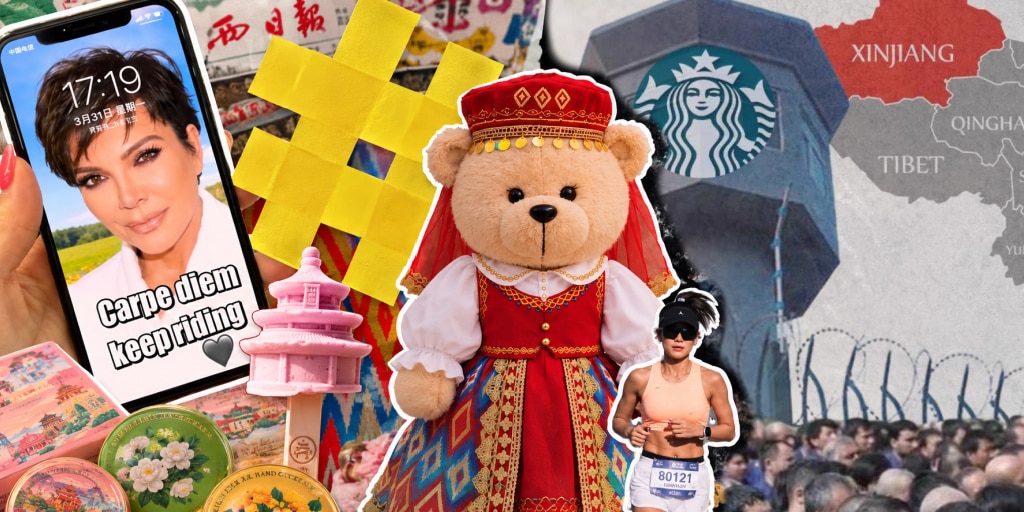
Starbucks rebrands as “Star-Bazaar” in Urumqi—what does it say about shifting perceptions of Western brands in China? Also: a cheating sports influencer and the souvenirs that became most hated.
Originally published in the Eye on Digital China newsletter on Sunday, October 4, 2026.
In this edition:
- Quick scrolls: A Chinese athlete cheated her way to the Berlin Marathon’s finish
- Zooming in: When Localization Gets Political: Starbucks Goes Xinjiang
- On the Feed: The Kardashians in China
- Phrase of the Week: The 3 souvenirs sold everywhere, but nobody wants them
🗞️ QUICK SCROLLS
🇯🇵 The National Day holiday has begun, but nobody’s going to Japan. Although Japan was the number one outbound destination for Chinese travelers during last year’s October holiday, it has now dropped out of the top ten destinations entirely. According to data from Chinese tour operator Tuniu (途牛), Indonesia, Turkey, and South Korea are among this year’s most-booked overseas destinations.
🚲 Chinese fitness influencer “Abeeeer” was caught cheating during the Berlin Marathon after she posted about running her “personal best.” The sport-blogger (530k+ followers on Xiaohongshu) was photographed riding on the back of a bicycle around the 38-kilometer mark. On Saturday, she publicly apologized and admitted that she had broken the rules and that she was “feeling unwell.”
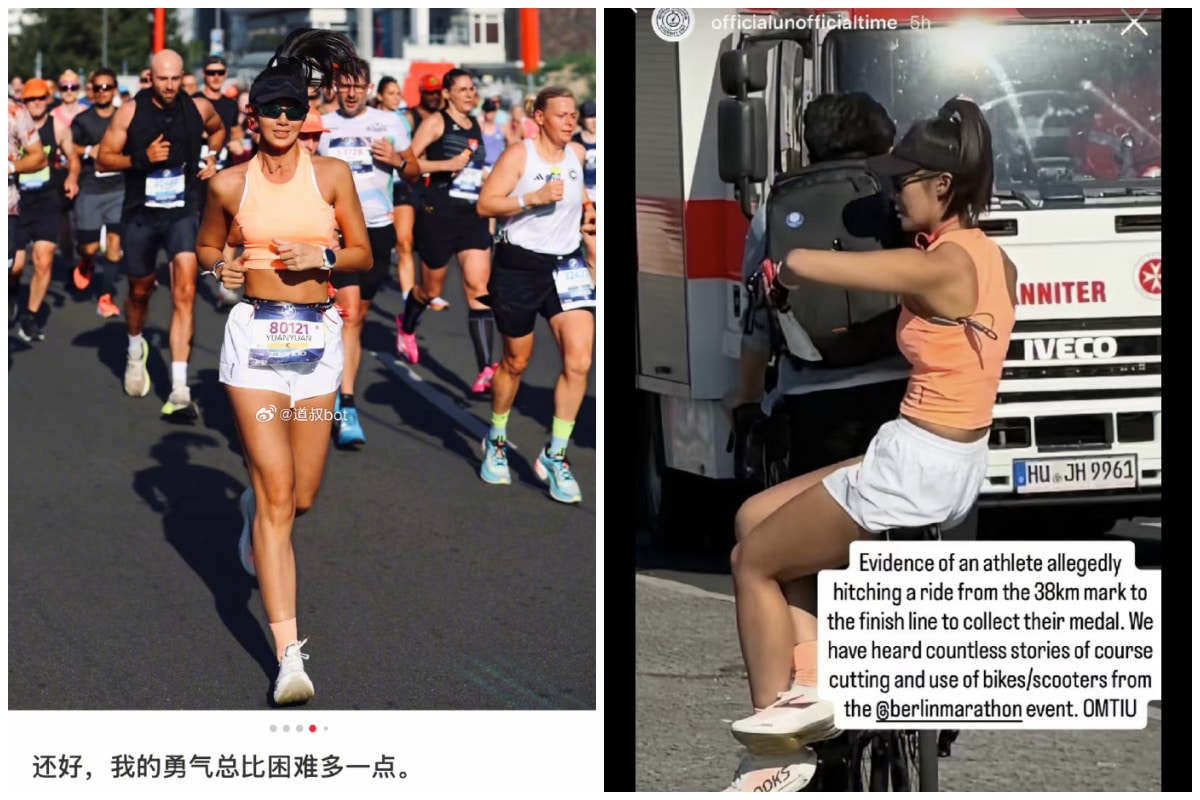
The sports influencer was caught hitching a ride to the finish line.
🏳️🌈 Japanese volleyball player Rui Takahashi came out as gay on Tuesday, saying he wanted to help others struggling with their sexuality by coming out publicly. On Douyin, many Chinese fans and commenters praised Rui for his bravery.
🤖 Former Global Times editor-in-chief Hu Xijin (胡锡进) published a National Day essay praising the country’s achievements but forgot to delete the AI chatbot’s closing follow-up question (”Would you like me to read through the whole text again and check it for omissions?”). Hu quickly deleted the AI prompt, but “Hu Xijin’s National Day AI ghostwriting fail” had already gone trending.
⚽ Chinese football produced its best and worst result of the year nineteen hours apart. On Friday, the senior men’s national team lost 0–5 to Palestine – a first-ever loss to that opponent – in a friendly in Chongqing. On Saturday, the under-23 team China took the men’s football bronze medal at the 2026 Asian Games, beating Uzbekistan 4-3 on penalties.
🎵 One of China’s most influential singers, composers and music educators has passed away. Liu Huan (刘欢) died of illness in Shanghai on September 25. Internationally, he is best remembered for singing “You and Me,” the official theme song of the 2008 Beijing Olympics.
📱 Chinese internet users now spend more time watching mini-dramas than scrolling social media. Bytedance’s Hongguo app, the short-drama platform, reports 168 million daily active users and an average of 125 minutes per user per day, exceeding Douyin (which itself overtook WeChat for the first time in July).
👁️ ZOOMING IN
Starbucks Goes Xinjiang: When Localization Gets Political
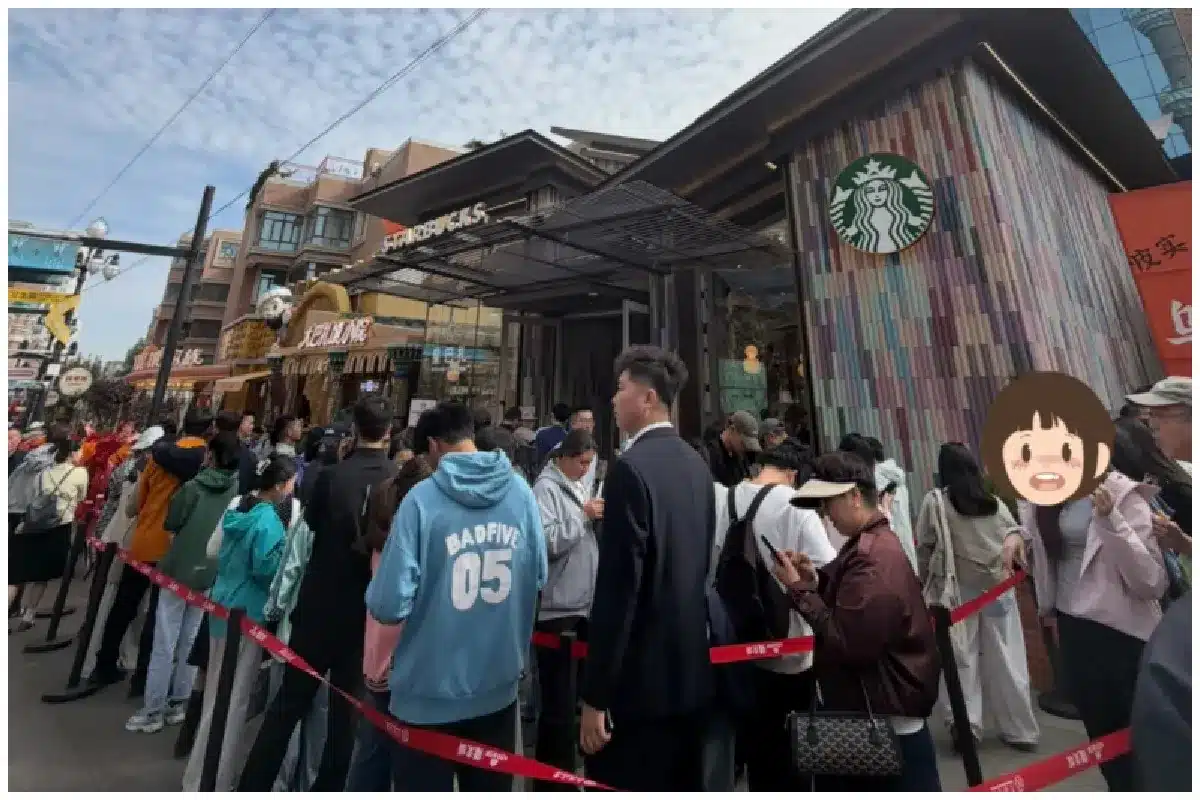
Just ahead of the National Day holiday, Starbucks opened in Xinjiang. The opening of the two stores in the capital, Urumqi, became a big topic of discussion both in China and across English-language social media, but for very different reasons, and viewed through very different lenses.
The brand’s Urumqi debut marks its first expansion into the region since entering the Chinese market over 26 years ago. Back then, Starbucks mostly targeted white-collar workers, focused on first- and second-tier cities, and, for many, symbolized cosmopolitan, urban life.
Starbucks’ move into Xinjiang comes as part of the company’s new Chinese investment and ownership structure: in April of this year, Chinese company Boyu Capital (博裕资本) became 60% owner of Starbucks’ China operations.
Starbucks Becomes ‘Starbazaar’
On Chinese social media, on the opening days of September 28–29 and in the days that followed, conversations were largely consumer-focused. The new stores, long queues, special menu, and merchandise created online excitement surrounding Starbucks’ Xinjiang debut.
The promotion of the new stores — particularly the Xinjiang International Grand Bazaar flagship store (the second store is located at Tianshan International Airport) — has also taken a distinctly local approach. Rather than emphasizing the arrival of a foreign brand in a new frontier market, Starbucks has presented itself as a brand adapting to, and becoming part of, its new local surroundings.
The flagship store incorporates Xinjiang elements throughout its design and marketing, from local patterns and music to a special menu featuring items such as baklava and lamb pastries, along with limited-edition merchandise. Its mascot is a Starbucks bear dressed in stylized Uyghur traditional attire.
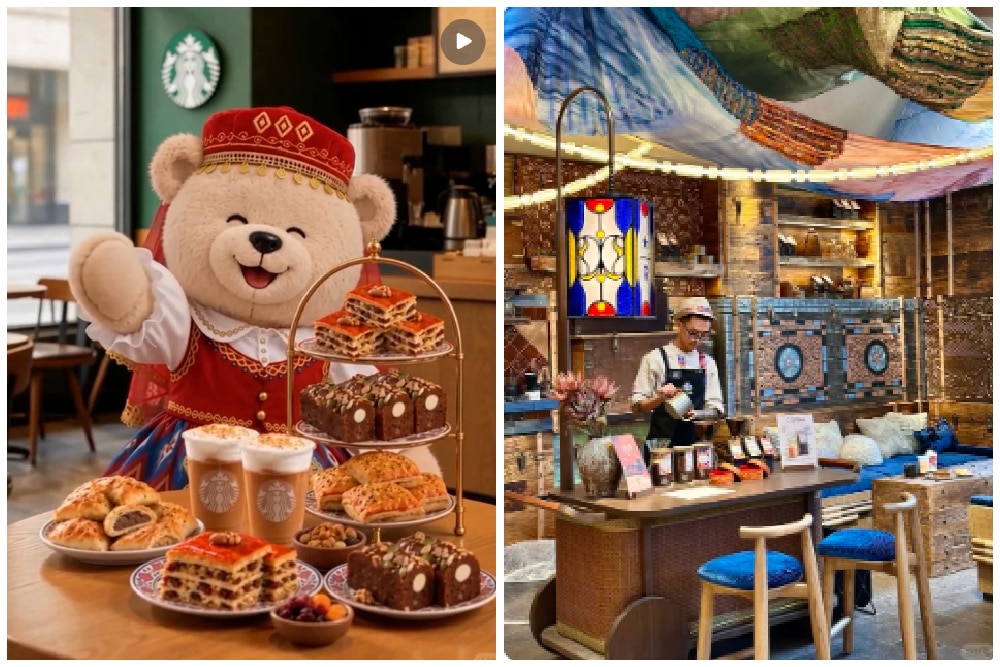
Promotional visuals by Starbucks
The Urumqi Starbucks even has a unique store name: “Star-Bazaar” (星巴扎, Xīng Bāzhā), a play on Starbucks’ Chinese name, 星巴克 (Xīngbākè), and 巴扎 (bāzhā), “bazaar.” The nickname captures this broader marketing approach: not simply bringing Starbucks to Xinjiang, but giving Starbucks a distinctly Xinjiang identity.
This distinct approach resonates with Chinese consumers, who have been posting photos of the enormous lines in front of the stores and showing off their online “check-ins” at the new local hotspot.
Over the past years, Xinjiang has acquired positive associations in various Chinese consumption contexts. At one point, “made with Xinjiang cotton” even generated a buycott and became a popular slogan among online sellers sourcing cotton from the region.
Starbucks in China apparently has a lot of confidence in the positive appeal of Xinjiang-themed products: for the National Day holiday, it is rolling out Xinjiang-themed menu items to more than 2,700 Starbucks stores across 41 Chinese cities.
From Coffee to Controversy
On X and in Western media, however, reactions to the Xinjiang Starbucks have been far less positive. The opening was framed primarily as a political and human-rights story and faced much criticism.
Among these critical voices is US Congressman John Moolenaar, who chairs the House Select Committee on China. He called it a “morally bankrupt decision” to open stores in Xinjiang amid ongoing concerns about human rights abuses in the region, and called on Starbucks to close the cafes, arguing that “every cup sold in these stores ties an iconic American brand to the CCP’s brutal campaign against the Uyghurs.”
“There is no justifiable reason for an American company to do business in a region where the Chinese Communist Party has detained more than a million Uyghurs and is stripping them of their faith, language and culture,” he said.
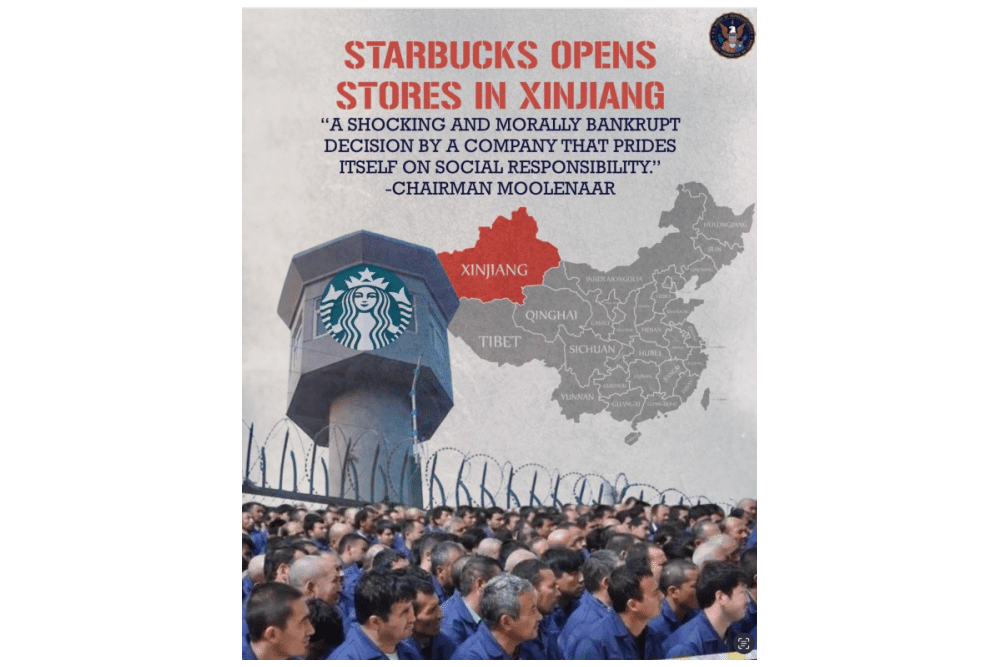
Image spread by US lawmakers
American criticism of Starbucks in Xinjiang soon reached Chinese social media, becoming a number-one trending topic on Weibo on Sunday, October 4.
“Xinjiang” used to be a highly sensitive and heavily censored word on Chinese social media, but since around 2018–2021, when the region increasingly became part of the ordinary national development agenda, online discussions have been allowed and steered in different directions.
The controversial internment camps widely reported on in Western media were officially described as “vocational skills education and training centers” (职业技能教育培训中心): “people-oriented” facilities intended to “fundamentally eliminate the environment and soil that breeds terrorism and religious extremism.”
Following the 2021 sanctions on Chinese officials over alleged human rights abuses and the Xinjiang cotton controversy — when Western brands distanced themselves from Xinjiang cotton over forced-labor concerns — Chinese online narratives surrounding the region shifted further.
A major “support Xinjiang cotton” social media campaign, launched by state media and official channels, symbolized a defense of China’s sovereignty against Western interference. International criticism was cast as an attack on China’s dignity, rallying the public around national pride. Since then, foreign criticism of policies in Xinjiang has often not been censored, but instead published and reframed as another attack on China.
This time, too, these dynamics unfolded, although in a different form. The criticism was discussed in the context of America, once again, “digging up its tired old lies about Xinjiang” (#美方又翻出老掉牙的涉疆谎言#). China’s Ministry of Foreign Affairs spokesperson Guo Jiakun said that US institutions habitually fabricate accusations and attack and smear China for political purposes, “without any credibility whatsoever.”
Netizens blamed critics for being hypocritical and for “denying the people of Xinjiang the chance to drink Starbucks.” Many others also pointed out that ‘Starbucks China’ is no longer quite the same thing as ‘Starbucks.’
Meanwhile, netizens also seem to appreciate the fact that Starbucks had not responded to the controversy — at least, not at the time of writing. Instead, its response has simply been to keep posting promotional material and videos about the Xinjiang stores, an approach some described as “defiant.”
The Starbucks opening in Xinjiang brings two very different sides of the same discussion into view. On one side, there is a consumer perspective; on the other, a human-rights angle. One emphasizes local culture, while the other focuses on international politics. And while one side stresses the responsibility of a Western multinational operating in Xinjiang, the other appreciates precisely how much this foreign company is localizing itself.
It also shows how Western rejection of Xinjiang-linked business can actually increase the symbolic value of Xinjiang-linked consumption in China. People may appreciate the local flavors, ethnic elements, colors, and design, but there is another layer to it, too: consuming Xinjiang can become an expression of national solidarity, especially when foreign criticism turns an otherwise ordinary consumer choice into something political.
In the end, perhaps the most striking thing is the shift in how Starbucks itself is perceived. When Starbucks first entered China, part of its appeal was precisely how foreign it was, offering access to an imagined Western, cosmopolitan way of life. More than two decades later, in Urumqi, Starbucks is being appreciated for almost the opposite reason: for how local it is becoming, selling an imagined Xinjiang experience back to Chinese consumers.
📱ON THE FEEDS
The Kardashians in China: “Manifesting” and Magic Mushrooms
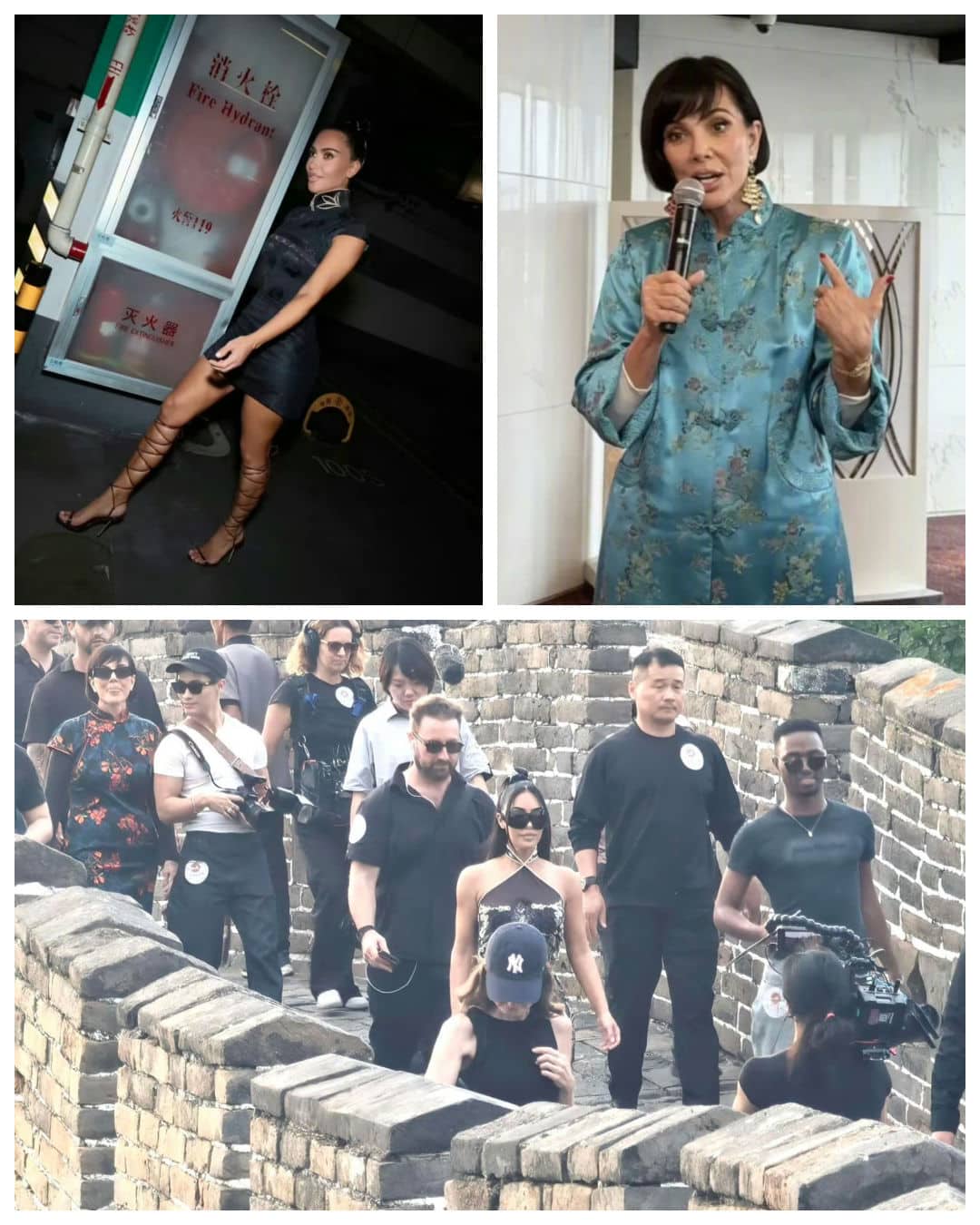
The Kardashians have been on my feeds this week due to their recent China visit.
First: the Kardashians in the US are not what they are in China. Many people in China have never heard about them, but they did reach many people in corners of the internet due to fan-subtitled uploads of Keeping Up With the Kardashians or through clips cirulating online. What also matters: Kim Kardashian was one of the first major Western celebrities to open an official Xiaohongshu account back in 2018, and also one of the first to sell products directly from there.
What attracted attention in their China visit is that, after doing sightseeing and visiting the Great Wall, Kim Kardashian – who came to China for the NikeSKIMS sportswear event in Shanghai – went for dinner with her entire entourage at the well-known Yunnan restaurant In & Out (Yī zuò Yī wàng 一坐一忘).
That is the same restaurant where US secretary Yellen had her “magic mushrooms” back in 2023. The Kardashians had those same mushrooms with their orders.
They are called jiànshǒuqīng (见手青), which literally means “see hand blue”, in reference to turning blue when handled. It is the lanmaoa asiatica mushroom species that grows in China’s Yunnan region and is considered hallucinogenic (nothing happens when properly prepared though).
The restaurant quickly tapped into the buzz by launching a “let’s manifest” or “Let’s 显化” set menu containing the dishes they had.
The Kardashians, but mostly mum Kris Jenner, is famous among netizens as a lucky charm for wealth. Jenner believes in the power of manifestation: focusing on what you want through visuals and prayer in order to actually get what you want.
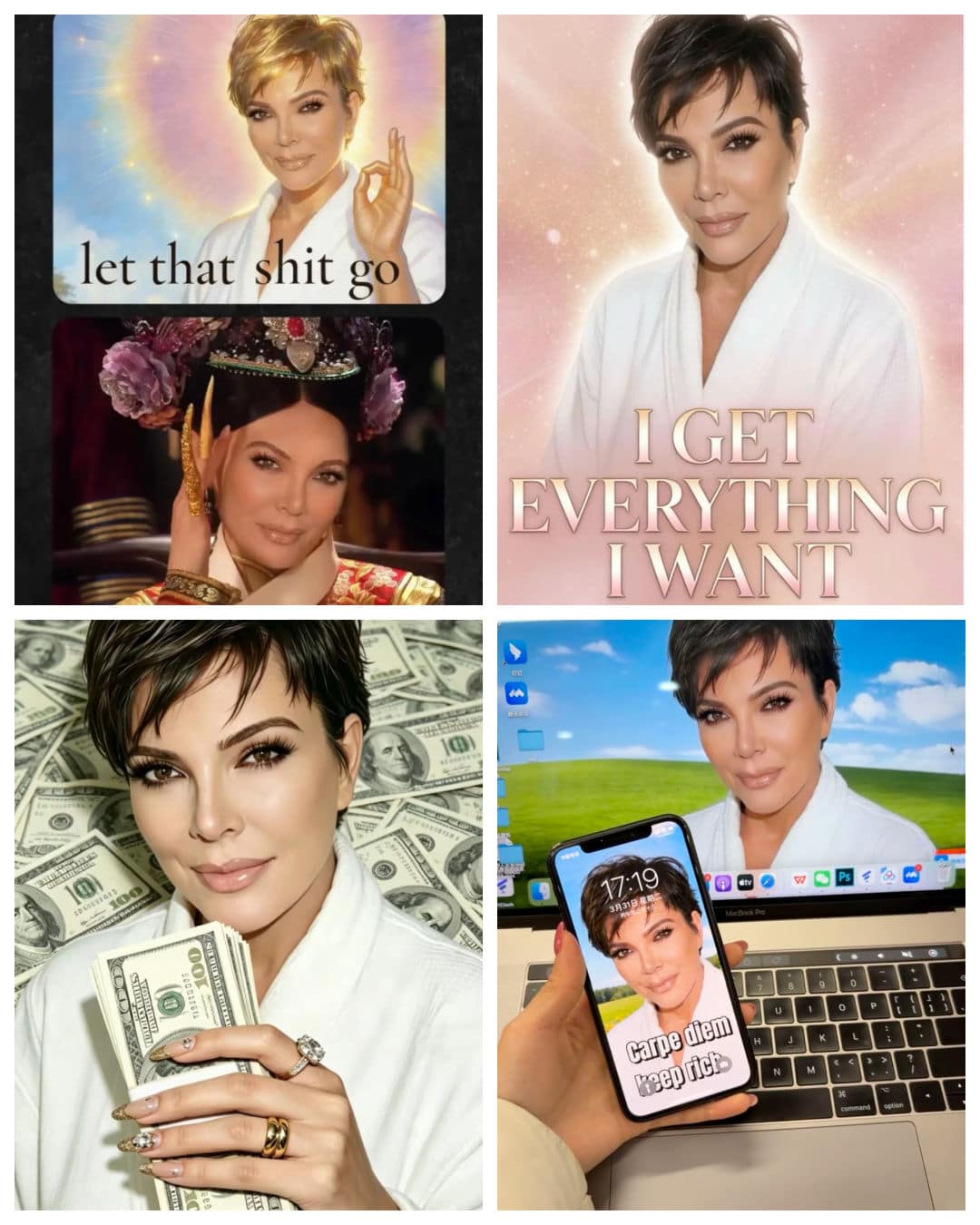
Some of the images used by Chinese netizens to “manifest” good luck through Kris Jenner visuals
The fact that mum Kris Jenner, more than Kim herself, became popular in China has to do with the perception of her as the driving force behind the family’s success, pushing everyone to where they are today and coordinating their careers. In doing so, she is the one who’s seen as the “symbol of wealth” and — through her own belief in the power of manifestation — became the perfect image for Chinese netizens to make their own wishes visible, like a digital good luck charm.
Kris wore a blue Tang suit (唐装, tángzhuāng) to the Shanghai launch event, which Chinese commentators read as a friendly gesture toward the Chinese market.
For In & Out, the “manifesting” formula seems to work. Their “Let’s Manifest” menu is popular and resonates online, where people mostly find it funny to see the restaurant capitalizing on its VIP guests so quickly.
🀄 WORD OF THE WEEK
Sucker’s Souvenirs Starter Pack: The Three Things Everyone Sells and Nobody Wants
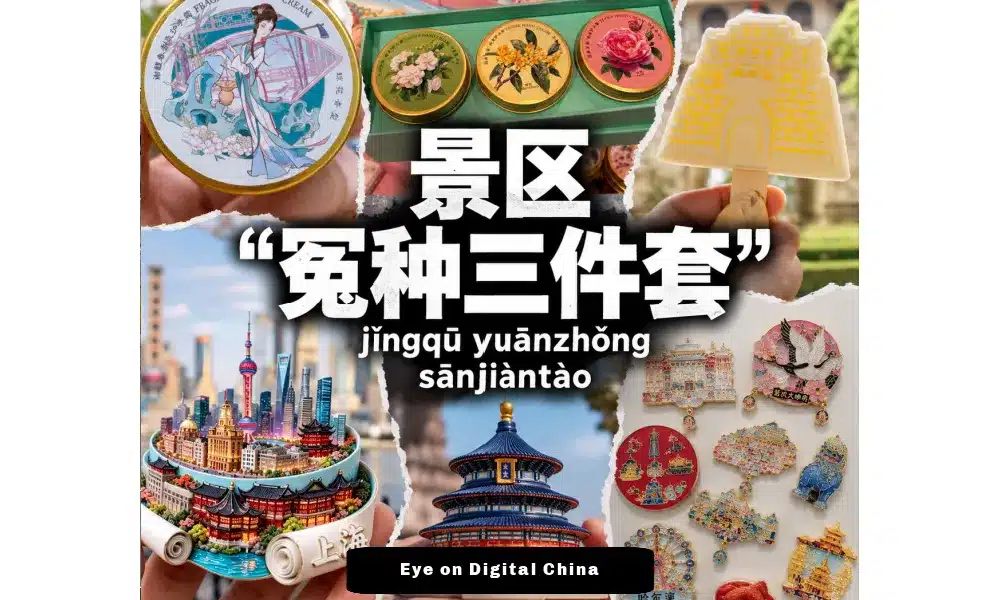
景区”冤种三件套” jǐngqū yuānzhǒng sānjiàntào
Lit.: Scenic Area Sucker’s Three-Piece Set
Meaning: The “Tourist-Trap Trio”: generic souvenirs you see everywhere
During this National Day holiday, when so many Chinese are traveling all over the country, one phenomenon being discussed (also on Zhihu) is the scenic site’s 冤种三件套 (yuānzhǒng sānjiàntào), roughly “the sucker’s three-piece set,” or more loosely, the “tourist-trap trio.”
This refers to those three things that every Chinese tourist site sells nowadays, yet nobody really wants: scenic-spot hand creams, fridge magnets, and cultural-themed ice cream.
The formula is the same everywhere, repeated in the same kinds of shops, and is part of China’s wénchuàng (文创 – culturally creative) boom that started in the 2010s, where local cultural elements and symbols are turned into commercially attractive products that aren’t even produced locally. Even though the landmarks and texts may change, they all follow the same cookie-cutter model reproduced across the country.
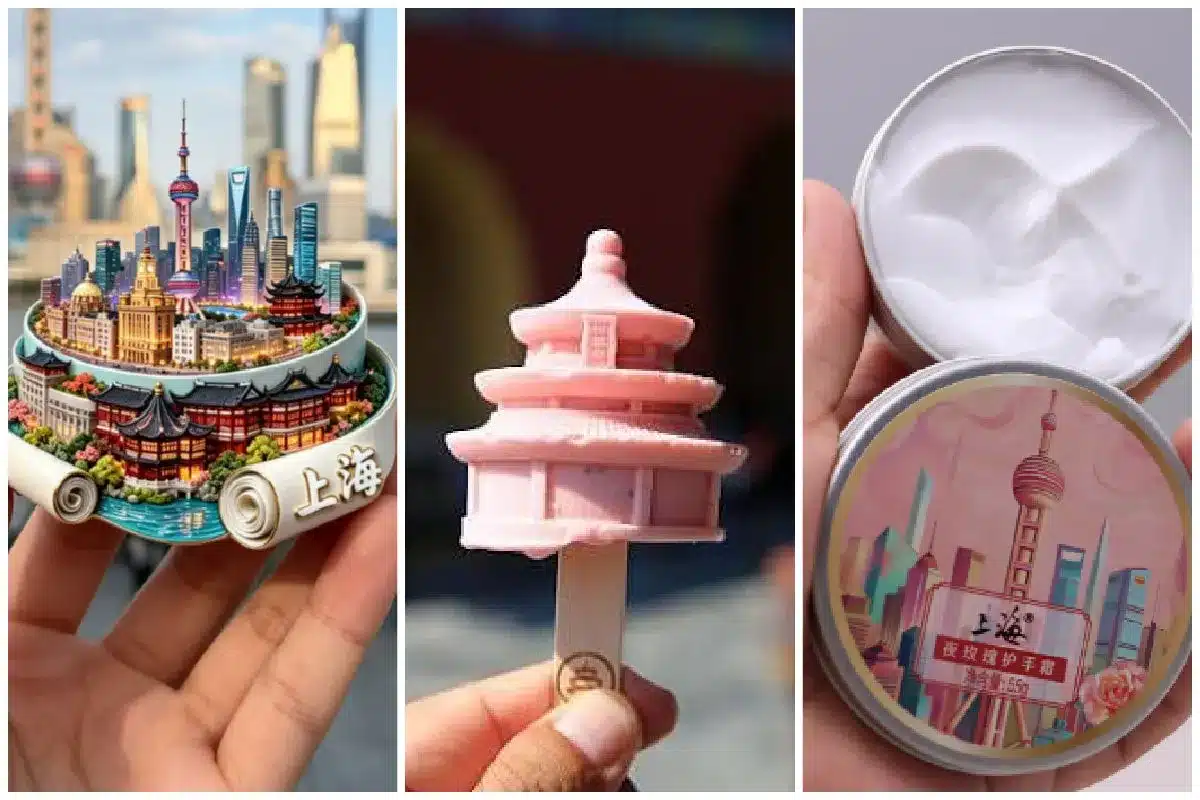
Examples of the same souvenirs sold at every scenic site.
But these kinds of common tourist-attraction purchases are becoming less popular among younger Chinese. One reason is that they are more critical of overconsumption and unwilling to buy overpriced stuff they don’t need anyway. They are willing to spend money on more genuine, locally made items, like pottery or DIY products.
Another reason is that these products have also become the ultimate sign of the lamentable homogenization of Chinese tourist sites (景区同质化), where you’ll find the same shops, foods, signs, and souvenirs whether you’re up north or down south.
Another reason is that online shopping has become so mainstream that most shoppers now recognize they can buy the same products for much less on sites like Taobao.
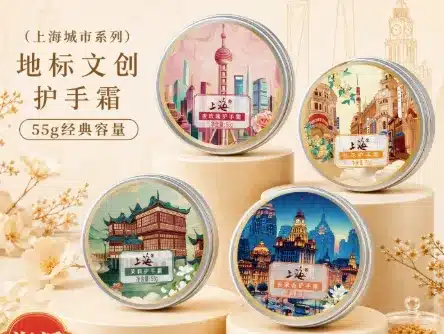
Tourist hand cream sold on Taobao.
💬 On Xiaohongshu, one commenter wrote: “A fridge magnet that costs 9.9 yuan with free shipping online suddenly sells for 28 yuan once you’re inside a tourist attraction. And the ice cream is the funniest one: five seconds to take a photo, ten seconds to melt, and whether it actually tastes good is anyone’s guess.”
💬 Another commenter on Zhihu wrote: “Really good cultural-creative products should try to put the place into the product, rather than simply putting the name of the place onto the product. Because what people really want to take home when they travel is some small connection that existed between themselves and that place. When your product can achieve that, then it truly becomes a souvenir.”
That’s a wrap!
Best,
Manya
🔚
Eye on Digital China, by Manya Koetse, is co-published on Substack and What’s on Weibo. Both feature the same new content — so you can read and subscribe wherever you prefer. Substack offers community features, while What’s on Weibo provides full archive access.
Spotted a mistake or want to add something? Please let us know in comments below or email us. First-time commenters, please be patient – we will have to manually approve your comment before it appears.
©2026 Eye on Digital China/Whatsonweibo. All rights reserved. Do not reproduce our content without permission – you can contact us at info@whatsonweibo.com.
Eye on Digital China is a reader-supported publication by
Manya Koetse (@manyapan) and powered by What’s on Weibo.
It offers independent analysis of China’s online culture, media, and social trends.
To receive the newsletter and support this work, consider
becoming a paid subscriber.

From “Pure Love Warrior” to Political Victim: Jensen Huang’s Fall on Chinese Social Media

China Trend Watch: Digital Dementia and Why Everyone Says ‘Li Na’

Mbappé, Mao & the Backlash on Chinese Social Media

Mbappé, Mao, and the Joke That Shall Not Be Named

The French Protests, Viewed from China: Five Narratives on Chinese Social Media

Why Japan Has So Many Surnames, China’s Back-to-School Shifts & Taiwan Pavilion Trouble

The Power of Ugly: Why Niu Lai Became China’s Unlikeliest Box-Office Hit

The Rise of “Shuaqi-ism,” Taking Starbucks to the Fields, and Pretending to Go to Work

Blame Games & Bad Signs: Nepal–Tibet Floods, Huawei’s Toilet Trouble, “Screwed” Graduates

Starbucks Goes Xinjiang & The Kardashians in China
-

 Chinese New Year9 months ago
Inside Chunwan 2026: China’s Spring Festival Gala
-
 China Brands, Marketing & Consumers12 months ago
Hasan Piker’s China Trip & the Unexpected Journey of a Chinese School Uniform to Angola
-

 Chapter Dive9 months ago
Inside the Great Chinese Debate Over the Iran War
-

 Chapter Dive10 months ago
Chinamaxxing and the “Kill Line”: Why Two Viral Trends Took Off in the US and China