SubscribeLog in
Connect with us

China Brands, Marketing & Consumers

Chinese Actor and State Security Ambassador Li Yifeng Detained for Soliciting Prostitutes

Li Yifeng is not exactly living up to his role as spokesperson for the Ministry of State Security.

Manya Koetse

Published

on

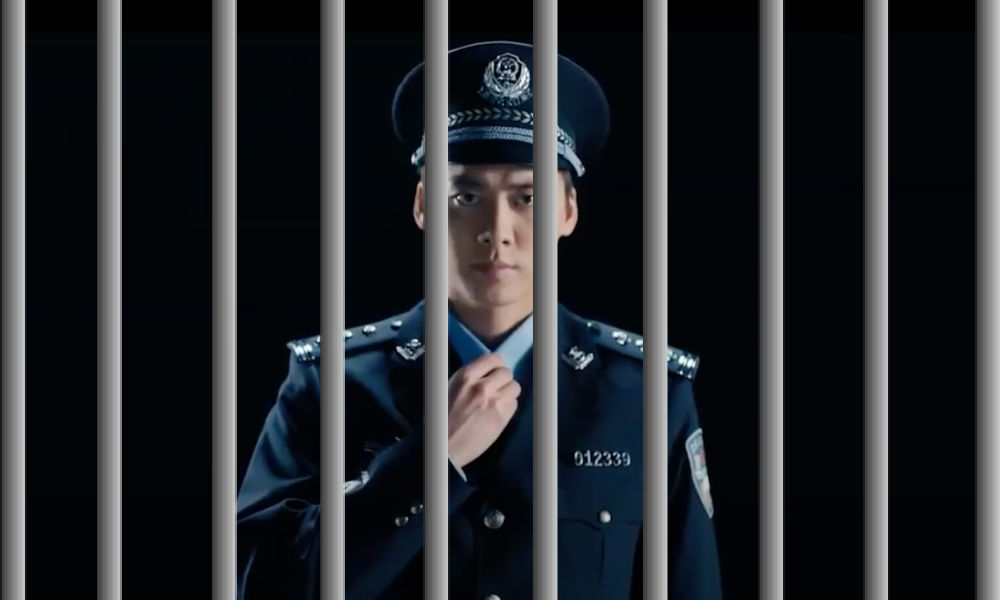
Chinese actor and singer Li Yifeng (李易峰) went top trending on Chinese social media today. The actor, who previously starred as brand ambassador for the Ministry of State Security and played Mao Zedong in The Pioneer, has been detained for visiting prostitutes.

On January 10 of 2021, China celebrated its very first National Police Day to give full recognition to the police and national security staff for their efforts. For this special day, the Ministry of State Security launched a promo video starring Chinese actor Li Yifeng as the National Police Ambassador (#李易峰国安形象传片#). But today, it turned out that Li might not have been the best man for the job.

Chinese official media reported on September 11 that the 35-year-old actor has been detained for soliciting prostitutes. The hashtag “Li Yifeng Detained for Visiting Prostitutes” (#李易峰多次嫖娼被行政拘留#) received nearly two billion views on Weibo on Sunday; the hashtag “Beijing Police Informs that Li Yifeng Solicited Prostitutes” (#北京警方通报李易峰多次嫖娼#) received a staggering three billion views.

Shortly after the news was announced, various brands for which Li served as a brand ambassador announced that they were no longer working with the actor. Lukfook Jewellery, Mengniu Dairy, Honma Golf, Panerai, Prada, Sensodyne, King To Nin Jiom, and other brands declared that they had terminated their contract with Li (#多个品牌终止与李易峰合作#).

Li rose to fame in 2007 when he participated in the Chinese My Hero talent show. He later debuted as a singer and became a successful actor, starring in various Chinese TV dramas and films. Li became especially popular after starring in Swords of Legends and won an award for his role in the 2015 Chinese crime film Mr. Six (老炮儿). He would go on to win many more awards. One of his biggest roles was starring as Mao Zedong in the 2021 blockbuster The Pioneer (革命者).

According to Global Times, Li was previously announced as one of the celebrities attending the Mid-Autumn Festival Gala on CCTV on Saturday night, but his name was later deleted from the program.

“I had never expected my idol to collapse like this,” some disappointed fans wrote on Weibo.

In a ‘super topic’ community dedicated to the star, some fans would not give up on their idol yet: “Where is the proof? Besides the Beijing police statement, where is the actual proof?”

On Li Yifeng’s Weibo page, where the actor has over 60 million fans, nothing has been posted since September 5.

The Huading Awards, a famous entertainment award in China, announced that they cancelled Li Yifeng’s title of “Best Actor in China” (#华鼎奖取消李易峰中国最佳男主角等称号#).

“He lost all he had overnight,” some commenters wrote. “Celebrities generally get cancelled for two things: one is evading taxes, the other is sleeping around,” one popular comment said: “So in a nutshell, pay your taxes and don’t sleep around.*”

“Why do you even need to see a prostitute when you’re so good-looking?” others wondered.

One Weibo user (@大漠叔叔) wrote: “Have a good head on your shoulders and just remember one thing. It does not matter how good your reputation is, or how many titles you have, how much the audience loves you, how much the fans embrace you, how many awards you get, it won’t protect you. Stay clear-headed, merit does not outweigh faults! You can’t cross the moral bottomline nor cross the boundaries of the law. You can be canceled just like that.”

By Manya Koetse 

* This comment is loosely translated here, but the Chinese is quite funny because the words ‘taxes’ and ‘sleeping’ sound similar. “明星塌房的两个主要原因:一个睡,一个税。 简而言之:该税的税,不该睡的别睡.”


Get the story behind the hashtag. Subscribe to What’s on Weibo here to receive our weekly newsletter and get access to our latest articles:

Spotted a mistake or want to add something? Please let us know in comments below or email us. First-time commenters, please be patient – we will have to manually approve your comment before it appears.

©2022 Whatsonweibo. All rights reserved. Do not reproduce our content without permission – you can contact us at info@whatsonweibo.com.

Manya is the founder and editor-in-chief of What's on Weibo, offering independent analysis of social trends, online media, and digital culture in China for over a decade. Subscribe to gain access to content, including the Weibo Watch newsletter, which provides deeper insights into the China trends that matter. More about Manya at manyakoetse.com or follow on X.

Continue Reading
Click to comment

Leave a Reply

Your email address will not be published. Required fields are marked *

China Brands, Marketing & Consumers

House of Wahaha: Zong Fuli Resigns

In the year following her father’s death, Zong Fuli dealt with controversy after controversy as the head of Chinese food & beverage giant Wahaha.

Manya Koetse

Published

on

It’s a bit like a Succession-style corporate drama 🍿.

Over the past few years, we’ve covered stories surrounding Chinese beverage giant Wahaha (娃哈哈) several times — and with good reason.

Since the passing of its much-beloved founder Zong Qinghou (宗庆后) in March 2024, the company has been caught in waves of internal turmoil.

Some context: Wahaha is regarded as a patriotic brand in China — not only because it’s the country’s equivalent of Coca-Cola or PepsiCo (they even launched their own cola in 1998 called “Future Cola” 非常可乐, with the slogan “The future will be better” 未来会更好), but also because its iconic drinks are tied to the childhood memories of millions.

Future Cola by Wahaha via Wikipedia.

There’s also the famous 2006 story when Zong Qinghou refused a buyout offer from Danone. Although the details of that deal are complex, the rejection was widely seen as Zong’s defense of a Chinese brand against foreign takeover, contributing to his status as a national business hero.

After the death of Zong, his daughter Zong Fuli, also known as Kelly Zong (宗馥莉), took over.

🔹 But Zong Fuli soon faced controversy after controversy, including revelations that Wahaha had outsourced production of some bottled water lines to cheaper contractors (link).

🔹 There was also a high-profile family inheritance dispute involving three illegitimate children of Zong Qinghou, now living in the US, who sued Zong Fuli in Hong Kong courts, claiming they were each entitled to multi-million-dollar trust funds and assets.

🔹 More legal trouble arrived when regulators and other shareholders objected to Zong Fuli using the “Wahaha” mark through subsidiaries and for new products outside officially approved channels (the company has 46% state ownership).

⚡️ The trending news of the moment is that Zong Fuli has officially resigned from all positions at Wahaha Group as chairman, legal representative, and director. She reportedly resigned on September 12, after which she started her own brand named “Wa Xiao Zong” (娃小宗). One related hashtag received over 320 million views on Weibo (#宗馥莉已经辞职#). Wahaha’s board confirmed the move on October 10, appointing Xu Simin (许思敏) as the new General Manager. Zong remains Wahaha’s second-largest shareholder.

🔹 To complicate matters further, Zong’s uncle, Zong Wei (宗伟), has now launched a rival brand — Hu Xiao Wa (沪小娃) — with product lines and distribution networks nearly identical to Wahaha’s.

As explained by Weibo blogger Tusiji (兔撕鸡大老爷), under Zong Qinghou, Wahaha relied on a family-run “feudal” system with various family-controlled factories. Zong Fuli allegedly tried to dismantle this system to centralize power, fracturing the Wahaha brand and angering both relatives and state investors.

Others also claim that Zong had already been engaged in a major “De-Wahaha-ization” (去娃哈哈化) campaign long before her resignation.

In August of this year, Zong gave an exclusive interview to Caijing (财经) magazine where she addressed leadership challenges and public controversies. In the interview, Zong spoke more about her views on running Wahaha, advocating long-term strategic growth over short-term results, and sharing her determination to not let controversy distract her from business operations. That plan seems to have failed.

While Chinese netizens are watching this family brand war unfold, many are rooting for Zong after everything she has gone through – they feel her father left her in a complicated mess after his death.

At the same time, others believe she tried to run Wahaha in a modern “Western” way and blame her for that.

For the brand image of Wahaha, the whole ordeal is a huge blow. Many people are now vowing not to buy the brand again.

As for Zong’s new brand, we’ll have to wait for the next episode in this family company drama to see how it unfolds.

By Manya Koetse

(follow on X, LinkedIn, or Instagram)

Spotted a mistake or want to add something? Please let us know in comments below or email us. First-time commenters, please be patient – we will have to manually approve your comment before it appears.

©2025 Whatsonweibo. All rights reserved. Do not reproduce our content without permission – you can contact us at info@whatsonweibo.com.

Continue Reading

China Animals

China Faces Unprecedented Donkey Shortage Crisis

“We have plenty of cattle and horses in China now — just not enough donkeys” (“目前我国牛马都不缺,就缺驴”).

Manya Koetse

Published

on

China is facing a serious donkey shortage. China’s donkey population is far below market demand, and the prices of donkey-related products continue to rise.

Recently, this issue went trending on Weibo under hashtags such as “China Currently Faces a Donkey Crisis” (#我国正面临缺驴危机#).

The Donkey Branch of China’s Livestock Association (中国畜牧业协会驴业分会) addressed this issue in Chinese media earlier last week, telling China News Weekly (中国新闻周刊): “We have plenty of cattle and horses in China now — just not enough donkeys” (“目前我国牛马都不缺,就缺驴”).

China’s donkey population has plummeted by nearly 90% over the past decades, from 11.2 million in 1990 to just 1.46 million in 2023.

The massive drop is related to the modernization of China’s agricultural industry, in which the traditional role of donkeys as farming helpers — “tractors” — has diminished. As agricultural machines took over, donkeys lost their role in Chinese villages and were “laid off.”

Donkeys also reproduce slowly, and breeding them is less profitable than pigs or sheep, partly due to their small body size.

Since 2008, Africa has surpassed Asia as the world’s largest donkey-producing region. Over the years, China has increasingly relied on imports to meet its demand for donkey products, with only about 20–30% of the donkey meat on the market coming from domestic sources.

China’s demand for donkeys mostly consists of meat and hides. As for the meat — donkey meat is both popular and culturally relevant in China, especially in northern provinces, where you’ll find many donkey meat dishes, from burgers to soups to donkey meat hotpot (驴肉火锅).

However, the main driver of donkey demand is the need for hides used to produce Ejiao (阿胶) — a traditional Chinese medicine made by stewing and concentrating donkey skin. Demand for Ejiao has surged in recent years, fueling a booming industry.

China’s dwindling donkey population has contributed to widespread overhunting and illegal killings across Africa. In response, the African Union imposed a 15-year ban on donkey skin exports in February 2023 to protect the continent’s remaining donkey population.

As a result of China’s ongoing “donkey crisis,” you’ll see increased prices for donkey hides and Ejiao products, and oh, those “donkey meat burgers” you order in China might actually be horse meat nowadays. Many vendors have switched — some secretly so (although that is officially illegal).

Efforts are underway to reverse the trend, including breeding incentives in Gansu and large-scale farms in Inner Mongolia and Xinjiang.

China is also cooperating with Pakistan, one of the world’s top donkey-producing nations, and will invest $37 million in donkey breeding.

However, experts say the shortage is unlikely to be resolved in the short term.

The quote that was featured by China News Weekly — “We have cows and horses, but no donkeys” (“牛马有的是,就缺驴”) — has sparked viral discussion online, not just because of the actual crisis but also due to some wordplay in Chinese, with “cows and horses” (“牛马”) often referring to hardworking, obedient workers, while “donkey” (“驴”) is used to describe more stubborn and less willing-to-comply individuals.

Not only is this quote making the shortage a metaphor for modern workplace dynamics in China, it also reflects on the state media editor who dared to feature this as the main header for the article. One Weibo user wrote: “It’s easy to be a cow or a horse. But being a donkey takes courage.”

By Manya Koetse

(follow on X, LinkedIn, or Instagram)

Spotted a mistake or want to add something? Please let us know in comments below or email us. First-time commenters, please be patient – we will have to manually approve your comment before it appears.

©2025 Whatsonweibo. All rights reserved. Do not reproduce our content without permission – you can contact us at info@whatsonweibo.com.

Continue Reading

Subscribe

Eye on Digital China is a reader-supported publication by
Manya Koetse (@manyapan) and powered by What’s on Weibo.
It offers independent analysis of China’s online culture, media, and social trends.

To receive the newsletter and support this work, consider
becoming a paid subscriber.

Manya Koetse's Profile Picture

Get in touch

Have a tip, story lead, or book recommendation? Interested in contributing? For ideas, suggestions, or just a quick hello, reach out here.

Popular Reads