
China and Covid19
Two Chinese Women Tied Up after Violating Guangzhou’s Anti-Epidemic Rules
On Weibo, many people held different views on the incident regarding two women being tied up after violating Guangzhou anti-epidemic rules.

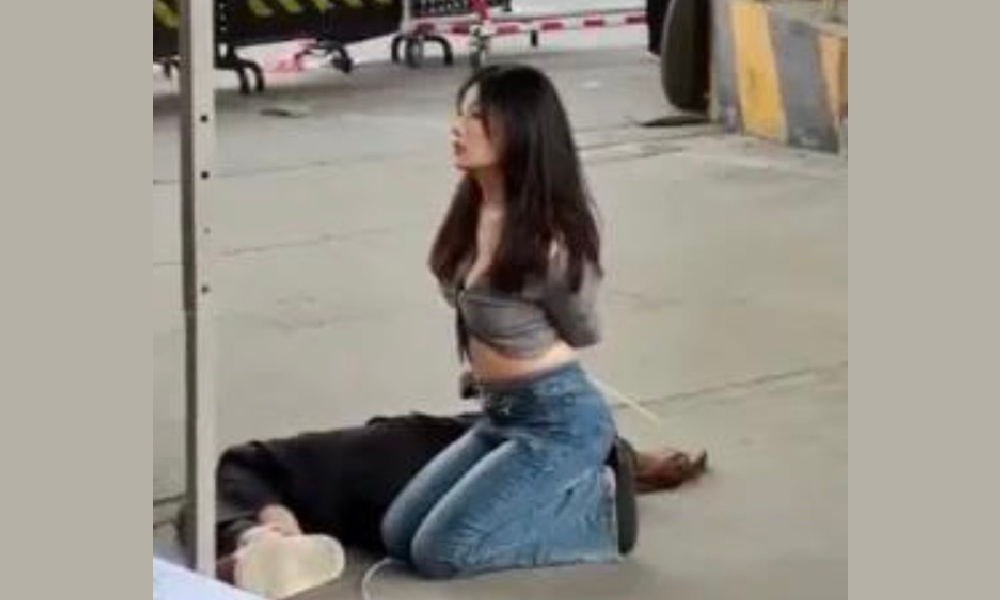
An incident involving two young women in Guangzhou went trending on Chinese social this week. A viral video showed the two women forced to the ground, their hands and feet being tied up.
The incident happened on November 17 in Guangzhou’s Haizhu District, where most of the city’s Covid cases have been reported. Since October 29, the city of almost 19 million has seen a spike in Covid cases, with the most cases – a total of 10,230 – being reported on Thursday.
The two women, both 23-year-olds from Heilongjiang, allegedly did not comply with local anti-epidemic measures, did not have recent negative nucleic acid test results, and tried to force their way out of a Covid-19 checkpoint to pick up a food delivery order. One of them was not wearing a mask.
Videos of the lead-up to the incident show the women raising their voices, arguing with anti-epidemic staff and pushing them, all while yelling profanities.
As the altercation got worse, local anti-epidemic staff and volunteers proceeded to pin the two women to the floor, tying up their hands behind their backs as well as tying up their feet.

Local police responded to the incident on November 18, stating that both women had not had an updated nucleic acid test since October 30 and therefore had a ‘yellow code’ on their health code app.
By trying to leave the area, not wearing a mask, and refusing to cooperate, the two women supposedly were not just violating anti-epidemic rules but were also disturbing the public order. The two women reportedly received administrative penalties, and the matter between them and the anti-epidemic workers has since been settled.
A related hashtag received over 260 million views on Weibo (#广州警方回应2名女子手被反绑跪地#)
On Chinese social media, there were many different views on the incident.
There were those people who blamed local anti-epidemic staff for abusing their power, saying that even if the two women were in the wrong, they should have never been tied up like that.
But others thought the women purposely created a scene and were being overly aggressive.
“Not wearing a mask, insulting anti-epidemic workers, what did you think would happen?” “They got what they deserved.”
The well-known political commentator Hu Xijin also responded to the issue on his Weibo account, suggesting that the incident, involving provocative actions by the women and an excessive response by the local anti-epidemic staff, should not be made more important than it is, since the two parties had already reached an agreement themselves without directly getting police involved.
But not everyone agreed.
“What is wrong with all of you? Whatever violations they made, whatever rules they broke, you call the police. Take them to the public security office. If they’re detained, criticized, it’s ok, but tying them up by their hands and feet, how could you ever support that?”
In light of the latest Covid outbreak, there has been ongoing unrest in the city of Guangzhou. Earlier this week, some areas saw local protests against Covid policies and various viral videos show people breaking through lockdown barriers.
For more articles on the Covid situation in China, check here.
By Manya Koetse , with contributions by Miranda Barnes
Get the story behind the hashtag. Subscribe to What’s on Weibo here to receive our newsletter and get access to our latest articles:
Spotted a mistake or want to add something? Please let us know in comments below or email us. First-time commenters, please be patient – we will have to manually approve your comment before it appears.
©2022 Whatsonweibo. All rights reserved. Do not reproduce our content without permission – you can contact us at info@whatsonweibo.com.


China and Covid19
Weibo Watch: Small Earthquakes in Wuhan
How Wuhan is shaking off its past with a new wave of innovation, the hot topics to know, and the Weibo catchphrase of the week: ‘the Three Questions of Patriotism.’

China and Covid19
Sick Kids, Worried Parents, Overcrowded Hospitals: China’s Peak Flu Season on the Way
“Besides Mycoplasma infections, cases include influenza, Covid-19, Norovirus, and Adenovirus. Heading straight to the hospital could mean entering a cesspool of viruses.”
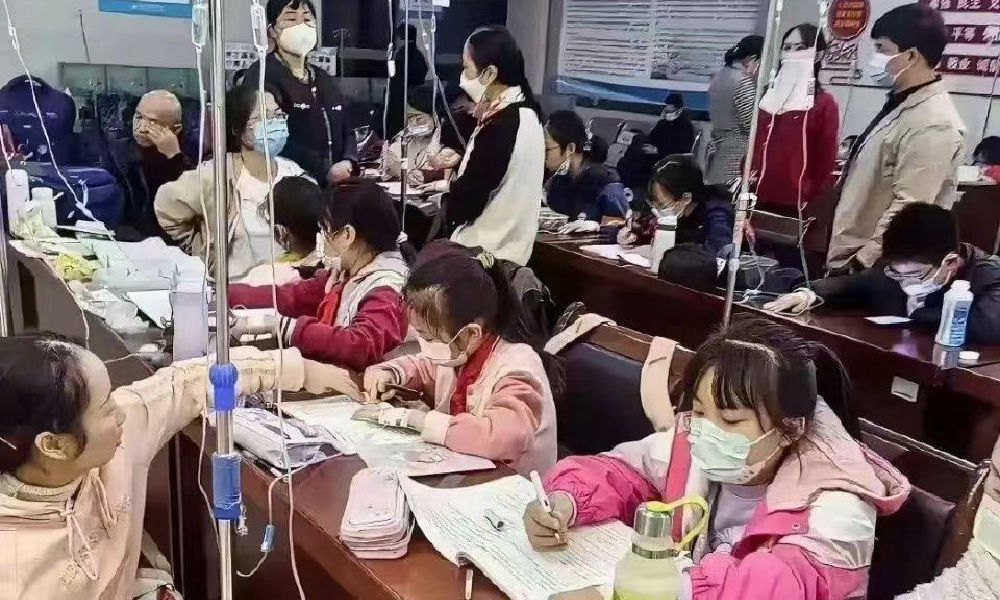
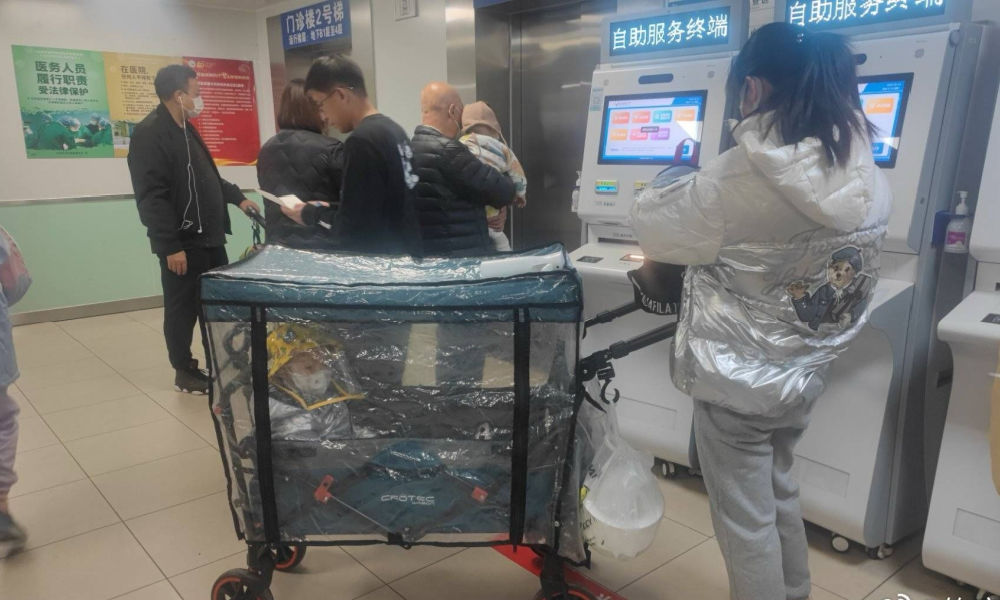
In the early morning of November 21, parents are already queuing up at Xi’an Children’s Hospital with their sons and daughters. It’s not even the line for a doctor’s appointment, but rather for the removal of IV needles.
The scene was captured in a recent video, only one among many videos and images that have been making their rounds on Chinese social media these days (#凌晨的儿童医院拔针也要排队#).
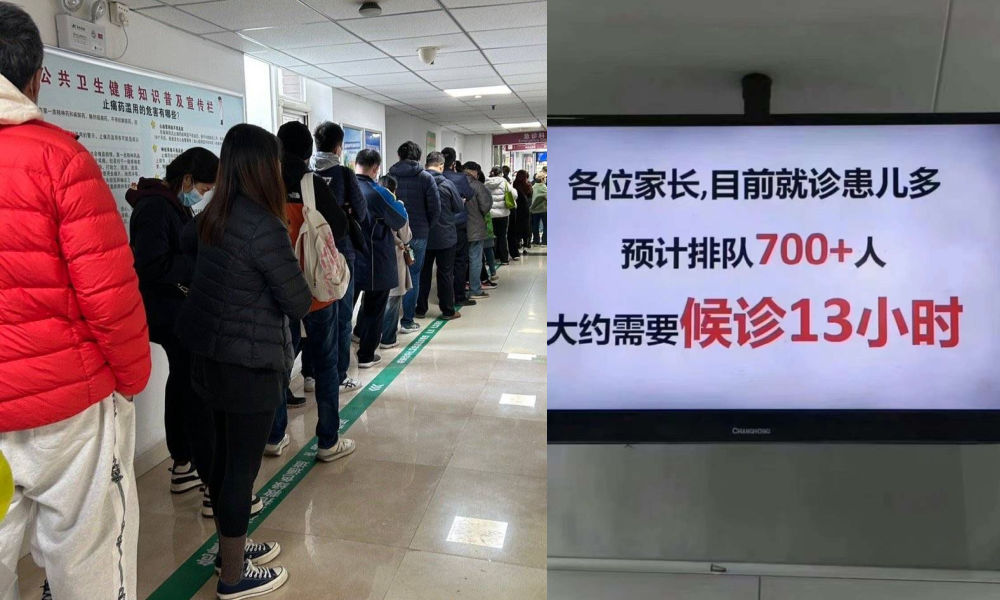
One photo shows a bulletin board at a local hospital warning parents that over 700 patients are waiting in line, estimating a waiting time of more than 13 hours to see a doctor.
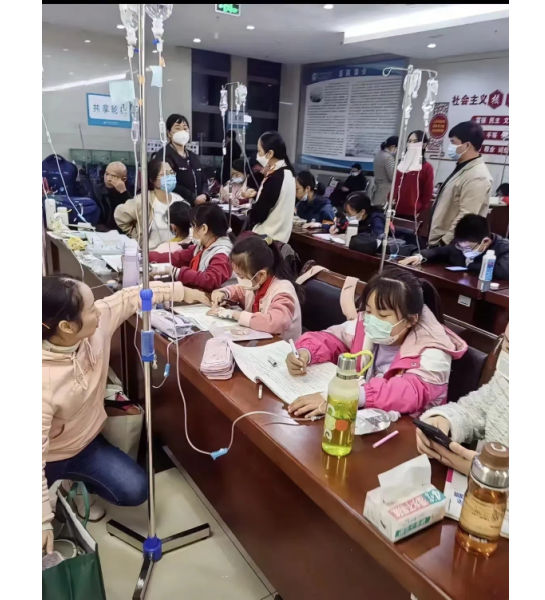
Another image shows children doing their homework while hooked up on an IV.
Recent discussions on Chinese social media platforms have highlighted a notable surge in flu cases. The ongoing flu season is particularly impacting children, with multiple viruses concurrently circulating and contributing to a high incidence of respiratory infections.
Among the prevalent respiratory infections affecting children are Mycoplasma pneumoniae infections, influenza, and Adenovirus infection.
The spike in flu cases has resulted in overcrowded children’s hospitals in Beijing and other Chinese cities. Parents sometimes have to wait in line for hours to get an appointment or pick up medication.
According to one reporter at Haibao News (海报新闻), there were so many patients at the Children’s Hospital of Capital Institute of Pediatrics (首都儿科研究所) on November 21st that the outpatient desk stopped accepting new patients by the afternoon. Meanwhile, 628 people were waiting in line to see a doctor at the emergency department.
Reflecting on the past few years, the current flu season marks China’s first ‘normal’ flu peak season since the outbreak of Covid-19 in late 2019 / early 2020 and the end of its stringent zero-Covid policies in December 2022. Compared to many other countries, wearing masks was also commonplace for much longer following the relaxation of Covid policies.
Hu Xijin, the well-known political commentator, noted on Weibo that this year’s flu season seems to be far worse than that of the years before. He also shared that his own granddaughter was suffering from a 40 degrees fever.
“We’re all running a fever in our home. But I didn’t dare to go to the hospital today, although I want my child to go to the hospital tomorrow. I heard waiting times are up to five hours now,” one Weibo user wrote.
“Half of the kids in my child’s class are sick now. The hospital is overflowing with people,” another person commented.
One mother described how her 7-year-old child had been running a fever for eight days already. Seeking medical attention on the first day, the initial diagnosis was a cold. As the fever persisted, daily visits to the hospital ensued, involving multiple hours for IV fluid administration.
While this account stems from a single Weibo post within a fever-advice community, it highlights a broader trend: many parents swiftly resort to hospital visits at the first signs of flu or fever. Several factors contribute to this, including a lack of General Practitioners in China, making hospitals the primary choice for medical consultations also in non-urgent cases.
There is also a strong belief in the efficacy of IV infusion therapy, whether fluid-based or containing medication, as the quickest path to recovery. Multiple factors contribute to the widespread and sometimes irrational use of IV infusions in China. Some clinics are profit-driven and see IV infusions as a way to make more money. Widespread expectations among Chinese patients that IV infusions will make them feel better also play a role, along with some physicians’ lacking knowledge of IV therapy or their uncertainty to distinguish bacterial from viral infections (read more here)
To prevent an overwhelming influx of patients to hospitals, Chinese state media, citing specialists, advise parents to seek medical attention at the hospital only for sick infants under three months old displaying clear signs of fever (with or without cough). For older children, it is recommended to consult a doctor if a high fever persists for 3 to 5 days or if there is a deterioration in respiratory symptoms. Children dealing with fever and (mild) respiratory symptoms can otherwise recover at home.
One Weibo blogger (@奶霸知道) warned parents that taking their child straight to the hospital on the first day of them getting sick could actually be a bad idea. They write:
“(..) pediatric departments are already packed with patients, and it’s not just Mycoplasma infections anymore. Cases include influenza, Covid-19, Norovirus, and Adenovirus. And then, of course, those with bad luck are cross-infected with multiple viruses at the same time, leading to endless cycles. Therefore, if your child experiences mild coughing or a slight fever, consider observing at home first. Heading straight to the hospital could mean entering a cesspool of viruses.”
The hashtag for “fever” saw over 350 million clicks on Weibo within one day on November 22.
Meanwhile, there are also other ongoing discussions on Weibo surrounding the current flu season. One topic revolves around whether children should continue doing their homework while receiving IV fluids in the hospital. Some hospitals have designated special desks and study areas for children.
Although some commenters commend the hospitals for being so considerate, others also remind the parents not to pressure their kids too much and to let them rest when they are not feeling well.
Opinions vary: although some on Chinese social media say it's very thoughtful for hospitals to set up areas where kids can study and read, others blame parents for pressuring their kids to do homework at the hospital instead of resting when not feeling well. pic.twitter.com/gnQD9tFW2c
— Manya Koetse (@manyapan) November 22, 2023
By Manya Koetse, with contributions from Miranda Barnes
Get the story behind the hashtag. Subscribe to What’s on Weibo here to receive our newsletter and get access to our latest articles:
Spotted a mistake or want to add something? Please let us know in comments below or email us. First-time commenters, please be patient – we will have to manually approve your comment before it appears.
©2023 Whatsonweibo. All rights reserved. Do not reproduce our content without permission – you can contact us at info@whatsonweibo.com.
Eye on Digital China is a reader-supported publication by
Manya Koetse (@manyapan) and powered by What’s on Weibo.
It offers independent analysis of China’s online culture, media, and social trends.
To receive the newsletter and support this work, consider
becoming a paid subscriber.


Red Carpet, Pandas, and Power: How China Read the Trump-Xi Summit

Keeping Score of History: The Mukden Incident and China’s Basketball Defeat to Japan

The Rise of “Shuaqi-ism,” Taking Starbucks to the Fields, and Pretending to Go to Work

Why Japan Has So Many Surnames, China’s Back-to-School Shifts & Taiwan Pavilion Trouble

Blame Games & Bad Signs: Nepal–Tibet Floods, Huawei’s Toilet Trouble, “Screwed” Graduates

“Even Pigs Have AC”: The European Heatwave Through Chinese Eyes

“God Won’t Save Us, but the PLA Will”: Floods, Faith, and Kung Fu Soccer Nostalgia

How Chinese AI Videos Turned Foreigners into Villains

The Power of Ugly: Why Niu Lai Became China’s Unlikeliest Box-Office Hit

AI Actress Ad Pulled, Baihaitun Disrupts Shanghai and Cicada Meme Bugs Huawei
-

 China Arts & Entertainment12 months ago
The Wong Kar-wai Scandal Explained: The Dark Side of ‘Blossoms Shanghai’
-

 Chinese New Year8 months ago
Inside Chunwan 2026: China’s Spring Festival Gala
-
 China Brands, Marketing & Consumers11 months ago
Hasan Piker’s China Trip & the Unexpected Journey of a Chinese School Uniform to Angola
-

 Chapter Dive7 months ago
Inside the Great Chinese Debate Over the Iran War