China in Translation
The ‘Green Tea Bitch’ – Stereotyping Chinese Women
The ‘green tea bitch’ (绿茶婊) is a new term launched over the Chinese Internet to describe a certain ‘type’ of woman. It is one amongst a series of new terms (milk tea bitch, black coffee bitch, etc) that stereotype Chinese women.
Published
13 years agoon
In the spring of 2013, a new term was launched over the Chinese Internet: ‘Green Tea Bitch’ (绿茶婊 luchabiao). According to Chinese netizens, the term is used to describe ambitious women who “pretend to be very innocent”.
Somewhere between March and April of 2013, the term “green tea bitch” (GTB) emerged on Chinese social media platforms. Weibo netizens joined in a collective effort to formulate a suitable definition of what a ‘green tea bitch’ actually is. As a result, a short essay was composed and shared online. The essay lists twenty-four different characteristics of a GTB. ‘Green tea bitch’ is not the first term to categorize young Chinese women in an overall derogatory manner. Other examples include ‘coffee bitch’, ‘black tea bitch’ or ‘milk tea bitch’.
What defines a ‘green tea bitch’ according to Chinese netizens? The list can be summarized in the following way:
“The green tea bitch appears to be very innocent. She normally has shiny long hair, but if it is not long, it is neat, straight, and parted in the middle. She has good looks, but is not exceptionally beautiful. She uses her eyes as her magic weapon to look at men with big bright eyes. She is especially energetic around her male friends, but somewhat dull around her girlfriends, complaining about how slim they look and how fat she is (although she is not). She hardly eats and gets drunk without hardly a sip of alcohol. She is overly dramatic during the night, when she complains about how hard and lonely her life is. She likes to take long walks and talk about the books she reads and the movies she sees. She loves Chinese art, literature and politics. Despite her intelligence, she will repeat how dumb she is. The GTB appears angelically innocent, harmless and pure, while she is anything but that: she is ambitious and would sell her soul for money.”
Weibo commenters mention the Chinese Lin Huiyin as the archetype of the ‘green tea bitch’. Lin Huiyin, or Phyllis Lin (1904-1955), was a famous architect, poet and writer. She was married to Liang Sicheng, who is also known as the ‘Father of modern Chinese architecture’. Lin supposedly also conquered the hearts of writer Xu Zhimo and philosopher Jin Yuelin. She is generally described as an ambitious, successful and plain woman who managed to win the love of rich and talented men, which is why Chinese netizens take her as the typical example of a green tea bitch.

The green tea bitch is one amongst many terms categorizing different ‘types’ of Chinese women. The ‘coffee bitch’ (咖啡婊) is often mentioned on Weibo and other social media platforms to describe high-end office ladies who constantly mix English with Chinese, dress according to the latest fashion craze and love to take pictures of themselves in fancy restaurants or on sunny beaches. The ‘black tea bitch’ (红茶婊) is a promiscuous girl who smokes, drinks, and likes eyeliner and low-cut clothes that show her cleavage. The ‘milk tea bitch’ (奶茶婊) is the kind of woman who talks in a girlish voice and has extremely sweet looks. She is always kind to everyone around her, but only to attract men who will give her presents that she will kindly accept.
“Not your tea, not your bitch!”
Public debates that attempt to (re-)define Chinese feminine roles have emerged since the 1990s. The decades before this era were times of political and social constraint. Under the rule of Mao, women were expected to be asexual and sacrifice themselves for the collective. The 1990s brought sexual liberation and a renewed awareness of what Chinese femininity entailed. China’s social environment was changing and increasingly influenced by the West. Female sexuality now also started to be used for commercial purposes, and new types of female identities were formed (Hung et al 2005;Evans 1995).
The discussion of female identities is nothing new, but in recent years, it seems that the online social debate has taken a derogatory tone towards women. The green tea bitch phenomenon is just one of many examples. As reported by Women’s Voice, there are small signs of resistance, as women refuse to be categorized in these terms. Their message: “Not your tea, not your bitch!” It will take more protests like theirs to get the message across. For now, it is only a matter of time before the next something-bitch pops up.
Some comments on Weibo:
Weibo user Yijinyexing (54.5174 fans) defines the term in these words: “Definition: the green tea bitch is represented by Lin Weiyin. She pretends to be a young pretty girl who is interested in art and literature. She often works as an actress/journalist/hostess/writer, and likes to talk about literature or politics to win a man’s heart. She’ll talk about how much she’s been hurt in the past, and her QQ [chat] username is that of a unique and obscure kind of flower. She is a successful lady with a chaotic private life- she has either been cheating in a relationship or has been somebody’s mistress.”
A user who calls himself ‘Summer Sailing’ (Xiari Yangfan) (965 followers), says: “Because of this whole green tea bitch thing, people say it degrades the status of women and that it is a display of male chauvinism, etc. But I feel that around me the ones who like to call women bitches or the ones who say that pretty girls are nasty from the inside- they’re all women themselves. And they also like to say that if it were not for them pointing out the sluts and the green tea bitches, the men would always be tricked by these types of girls.”
‘Women’s Voice‘ (weibo.com/genderinchina) reports: “This morning at eleven o’clock [April 8, 2013] in Xi’an, near to the Drumtower, three young women dressed as Sailor Moon [a Japanese cartoon about magical girls] held up signs saying ‘not your tea, not your bitch’, calling a halt to verbal violence against women. They stated that they protested against degrading terminology for women, and that they were hoping that society would show women more respect and create friendlier cultural climate.”
– by Manya Koetse
References
Thanks to Chen Chen for clarifying various terms.
Evans, Harriet. 1995. “Defining Difference: the “Scientific” Construction of Sexuality and Gender in the People’s Republic of China.” Signs 20(2): 357-394.
Gxdxw Website. 2013. Accessed April 9, 2013. http://www.gxdxw.cn/2008%E6%90%9E%E7%AC%91%E7%9F%AD%E4%BF%A1/gezhongbiaodeyisi.html
Kineta Hung, Yiyan Li, and Russell W. Belk. 2005. “Consumption and the Amodern Woman@ in China: a Conceptual Framework.” AP – Asia Pacific Advances in Consumer Research 6: 349-353.
Zhang Wenjing. 2013. “”绿茶婊”三亚淫乱派对走红 网友总结24项特点 [Green Tea Bitch and a Sanya Promiscuous Party become popular topics- netizens compile 24 characteristics].” Zhongguo Guangbowang, April 5. Accessed April 8, 2013. http://ent.cnr.cn/yuleyaowen/201304/t20130405_512296428.shtml
Manya is the founder and editor-in-chief of What's on Weibo, offering independent analysis of social trends, online media, and digital culture in China for over a decade. Subscribe to gain access to content, including the Weibo Watch newsletter, which provides deeper insights into the China trends that matter. More about Manya at manyakoetse.com or follow on X.
China in Translation
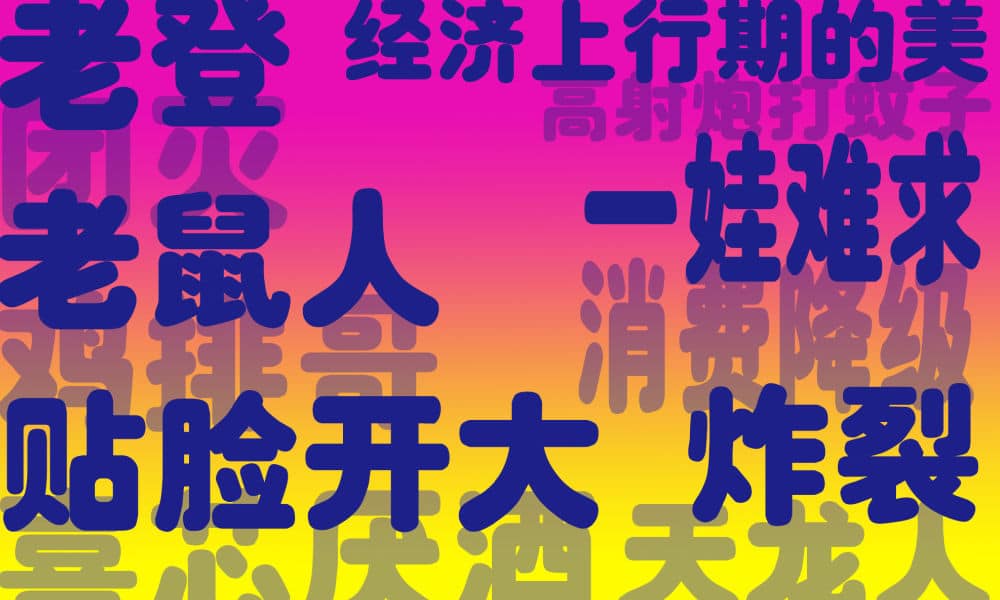
China’s 2025 Year in Review in 12 Phrases
Andrew Methven’s favorite Chinese phrases of the year, a special feature by RealTime Mandarin.
Published
2 months agoon
December 31, 2025
Dear Reader,
Happy New Year! A new year is, undoubtedly, filled with new resolutions. I have a few on my list, and maybe we have some in common—like reading more books (my new e-reader is arriving from Shenzhen tomorrow!) and being more diligent about practicing my new Chinese vocabulary.
If upping your Chinese is also on your list for 2026, Andrew Methven’s newsletter, RealTime Mandarin, is a must-follow. It’s a free weekly resource that helps you improve your Mandarin in just 10 minutes a week, specifically designed for intermediate to advanced learners. I’ve been following Andrew’s work for over three years and love how he makes mastering the language more manageable, so I highly recommend giving it a follow.
Looking back on 2025, here is Andrew’s curated pick of 12 Chinese phrases to remember.
Every year at this time, we wrap up with our own “unofficial” list of top words and phrases. These are expressions that probably didn’t exist a year ago, but have gone viral and become mainstream lingo over the last 12 months. We’ve picked 12 phrases and avoided overlap with the “official” top ten lists.
Most of these phrases were newly invented or popularised in 2025. So if you haven’t been to China this year, you probably won’t know them.
And as always, these phrases began life in the most unlikely places: from Japanese Manga to Taiwanese baseball; from American online games, to viral moments shared by Chinese students living in the UK.
As we pulled this list together, we noticed something interesting: That it’s full of contradictions. According to these 12 phrases, and the trends they represent, it seems that for any one trend you can say is happening in China right now, you could also find another one that proves the exact opposite is true.
So we decided to explain our favourite phrases of 2025 through five contradictions:
⚔️ Contradiction #1: Consumers are not buying, but are buying like crazy
In January, consumer confidence collapsed, with retail sales in Shanghai and Beijing declining steeply. The broader trend of “consumption downgrading” (消费降级) began in 2024, with policymakers pushing for “rational consumption” (理性消费).
Yet 2025 also saw unbelievable and irrational sales success stories.
“Hard to get a Labubu” (一娃难求) became a trending phrase in June following the explosion of the Labubu (拉布布), an ugly-cute, kind-of-scary toy. Other consumer successes included the move into flavoured beer by ice tea giant, Mixue Bingcheng (蜜雪冰城).
⚔️ Contradiction #2: Businesses had an awful year, but a great year
In April, as the tariff war escalated, many of China’s exporters feared the worst: a “total wipeout” (团灭) of their sales.
China’s tech darling Xiaomi (小米) started the year strong with soaring EV sales, but by the end of the year faced a string of consumer backlashes.
While another EV brand, Neta (哪吒), battled collapse rumours at the start of the year, and outdoor brand, Arc’teryx, was boycotted after its disastrous “mind-blowing” (炸裂) exploding mountain PR stunt.
China’s big three ecommerce platforms — JD, Alibaba, and Meituan — continued in their “tripartite rivalry” (三足鼎立), each invading the others’ turf in a race to the bottom on price.
Yet 2025 also saw stunning business breakthroughs, such as when chipmaker Cambricon (寒武纪), fuelled by China’s “domestic substitution” (国产替代) push, surged from loss-making startup to briefly become China’s most valuable stock, surpassing liquor brand, Moutai (贵州茅台) in the process.
With investors coining a new phrase: “choosing chips over liquor” (喜芯厌酒).
⚔️ Contradiction #3: Government policy was forward-thinking, but also backfired spectacularly
2025 was the year of “Embodied intelligence” (具身智能), after the government prioritised this technology in its Work Report in March.
The following month, Beijing hosted the world’s first “humanoid robot half marathon” (人形机器人半马). And in November, XPENG’s humanoid robot, IRON, stunned observers with its lifelike female form.
Also in March, the State Council announced measures to stamp out “involuted” work practices. And by April, some of China’s tech giants had responded with the introduction of “anti-involution” (反内卷) policies, which has been an ongoing theme throughout the year.
But other government policies backfired spectacularly.
Strict alcohol bans introduced for government officials were criticised as “bureaucratic overreach” (层层加码), the introduction of the K-visa (K签) aimed at attracting foreign talent was derided on social media as youth unemployment sat at 19%. Mosquito eradication efforts in Guangdong were criticised as “using a cannon to kill a fly” (高射炮打蚊子) following heavy-handed measures reminiscent of COVID.
And in Hangzhou, a water contamination scandal resurrected one of our top phrases from 2024 when locals blasted the city government as an “unprofessional team” (草台班子).
⚔️ Contradiction #4: Youth are lying flat, but are fighting back
In August, we discussed a new phrase which had emerged: “rat people” (老鼠人).
It started when Chinese students in the UK began sharing “low-energy rat people” (低能量老鼠人) videos of their isolated lives enduring long, dark British winters. The meme took off as young people embraced “low energy” lifestyles.
But not all youngsters were taking it easy and giving up.
A Chery Auto (奇瑞) graduate employee went into “full confrontation mode” (贴脸开大) with his employer in August after refusing to work Saturdays, citing the government’s “anti-involution” (反内卷) directive.
And earlier in the year, China National Nuclear Corporation (CNNC) faced “widespread condemnation” (千夫所指) after its tone-deaf PR campaign celebrated how it had received 1 million applications for just 8,000 graduate positions.
⚔️ Contradiction #5: Influencers are out, but influencers are in
2025 saw established celebrities fall out of favour with their fans.
High profile entrepreneurs Lei Jun (雷军) and Jia Guolong (贾国龙), were branded “out-of-touch middle-aged men” (老登).
Meanwhile, unlikely viral stars emerged from the grassroots. Director Fang (房主任), a 50-year-old divorced housewife from Shandong, became one of China’s most-watched stand-up comics.
And a street vendor selling 6-yuan fried chicken cutlets in Jingdezhen (景德镇) became “Chicken Cutlet Brother” (鸡排哥) after a customer’s Douyin video of him cooking and serving customers went viral.
Of course, some unchanging themes continued to draw attention in 2025 as in previous years.
Like the abuse of power and privilege by China’s “celestial dragons” (天龙人): the next generation of elites who “leverage family ties” (拼爹) for their own interests.
So, let’s dive in!
Our Favourite Phrases of 2025
1. Mind-blowing
炸裂 zhà liè
💬 一个标榜户外精神的户外品牌,在最脆弱的生态环境里,搞了一场炸裂的秀。
💬 An outdoor brand that claims to embody the spirit of nature put on a “spectacular” fireworks show in one of the most fragile ecosystems.
Background:
Internet slang which started in Japanese baseball to describe explosive performance. It gained popularity in Taiwan baseball to describe spectacular moments. In Mainland Chinese it describes stunning and sudden success — such as the overtaking of Moutai by semi chip maker, Cambricon (寒武纪).
“Mind-blowing” can also be used as an ironic statement when something goes mind-blowingly wrong, like Arc’teryx’s disastrous fireworks PR stunt in the Himalayas in September.
Related RTM content:
- Chinese AI chip maker briefly overtakes Moutai to become China’s most valuable listed company
- How the Arc’teryx fireworks fiasco is being discussed in China
- One Yuan iced water becomes China’s viral summer sensation
2. Total wipeout
团灭 tuán miè
💬 最坏的情况下,储能在美国的业务会被“团灭”。
💬 In the worst-case scenario, the energy storage business in the U.S. will be totally wiped out.
Background
Started as a gaming phrase in team-based video games like World of Warcraft and League of Legends to describe total team wipe outs (all members dying together). It extended beyond gaming to describe collective failures in exams, work, or daily life.
We first came across it listening in to discussions between Chinese exporters in the face of US tariffs and the growing tariff war.
Related RTM content:
- China’s exporters are feeling the pain
- 10 hot internet slang words you had no idea came from online gaming!
3. Out-of-touch middle-aged man
老登 lǎo dēng
💬 一连串的老登翻车,不能单纯用偶然和倒霉解释。
💬 When one boomer after another messes up, it’s not just coincidence or bad luck anymore.
Background
Originally a northern slang phrase, and a derogatory term for an old man (something like the English, “old git”). It took off this year after a number of high profile, self-inflicted PR disasters of high profile, influential male entrepreneurs. The most notable is Xiaomi founder, Lei Jun (雷军).
You can use it to describe any middle aged man who is condescending and appears out of touch with reality.
Related RTM content
4. Hard to get a Labubu
一娃难求 yì wá nán qiú
💬 火爆到“一娃难求”的LABUBU是泡泡玛特旗下“THE MONSTER”系列的一员。
💬 Labubu is part of Pop Mart’s “THE MONSTER” series, which has become so popular that it’s impossible to get one.
Background
One of the craziest shopping trends of 2025 — the obsession with these tiny, ugly, key ring toys made by Chinese company, Pop Mart. Since early 2025, images of Labubu filled social media feeds and become a must-have item for millions of fans and collectors in China.
Expect to see more from the Labubu in 2026.
Related RTM content:
5. “Chicken Cutlet Brother”
鸡排哥 jī pái gē
💬 最近,景德镇有个卖鸡排的大哥突然爆火,还被广大网友封为“鸡排主理人”。
💬 Recently, a man selling fried chicken in Jingdezhen suddenly went viral and was even dubbed the “chicken chop curator” by netizens.
Background
The “Chicken Cutlet Brother” (鸡排哥) story is one of our favourites from 2025. This 48-year-old overnight sensation is genuine, authentic, and unpolished – a refreshing change from the heavily curated content that dominated Chinese social media this year. His story echoes the “Second Uncle” (二舅) phenomenon we covered in 2022.
The sheer volume of memes and slang spawned by a single short video is staggering. Three phrases in China’s official top ten lists came directly from him. “Chicken Cutlet Brother” will likely become shorthand for authentic grassroots creators in 2026.
Related RTM content:
6. Rat person
老鼠人 lǎo shǔ rén
💬 今年以来,“低能量老鼠人的一天”系列短视频走红社交媒体,很多年轻人热衷于自我诊断为“低能量老鼠人”。
💬 This year, the short video series “A Day in the Life of a Low-Energy Rat Person” went viral on social media, with many young people eager to self-diagnose as such.
Background
The phrase “rat people” (老鼠人) began gaining traction in early 2025. It evolved from an earlier internet meme, “rat literature” (鼠鼠文学), a buzzword that first emerged in early 2023. By 2025, a related phrase emerged on social media: “low-energy rat people” (低能量老鼠人). It was first popularized by Chinese students in the UK, enduring long, dark winters in isolation.
It’s now become a way young people describe their low energy lifestyles.
Related RTM content:
7. Over-privileged elite
天龙人 tiān lóng rén
💬 这的确是中国“新天龙人”的普遍特点——他们是很真诚地认为,集众美于一身的人生赛道是理所应当的。
💬 This indeed reflects a common trait of the next generation of the privileged in China—they genuinely believe that inheriting multiple forms of privilege is their birthright.”
Background
Originates from the Japanese manga, One Piece by Oda Eiichiro, referring to the descendants of twenty kings who founded the World Government. These characters enjoy extreme privileges, and consider themselves superior to ordinary people.
In Chinese online discourse, the term has evolved into internet slang to describe privileged elites in real life who are disconnected from ordinary people, who possess power and resources, live luxurious lives, and operate above the rules that govern everyone else.
Related RTM content:
- What China’s biggest medical scandal of 2025 reveals about the deeper flaws in its healthcare system
- Social media post ignites debate over wealth, privilege, and corruption
- China reacts to Harvard graduation speech
8. Consumption downgrade
消费降级 xiāo fèi jiàng jí
💬 也只有走上消费降级,扩大食客基础的道路。
💬 The only way out is to embrace the consumption downgrade and broaden their customer base.
Background
Emerged around 2018 in response to economic pressures like high housing costs and slowing income growth. The explosive rise of discount e-commerce platforms like PDD (拼多多) became a symbol of this shift. The phrase represents a reversal of China’s decades-long consumption upgrade trend.
This year we’ve seen a number of major trends which fit the “consumption downgrade trend” — including the collapse of consumer confidence in Beijing and Shanghai, and incredible success of low priced convenience products like “one yuan iced cup” by tea brand, Goodme (古茗).
Related RTM content
- Consumer confidence collapses in Beijing and Shanghai
- One Yuan iced water becomes China’s viral summer sensation
9. Full confrontation mode
贴脸开大 tiē liǎn kāi dà
💬 一名00后奇瑞校招生李某凯“贴脸开大”,在收到公司周六开会的邮件后,直接回复拒绝,并且将邮件抄送公司高层,包括集团二把手。
💬 Li, a Gen Z Chery campus recruit, chose to confront it head-on by saying no to the Saturday meeting in an email, in which he copied the company’s senior executives, including the group’s second-in-command.
Background
Started online gaming where it describes high-risk, high-reward move of rushing directly up to an enemy and unleashing your ultimate ability at point-blank range. The phrase has evolved into internet slang to describe being direct or blunt.
It’s similar to “bringing up exactly what shouldn’t be mentioned” or being brutally frank, often used with a teasing or mocking tone. Just like a graduate employee at Chery did this year when he refused to attend Saturday training and meetings.
Related RTM content:
10. Choosing chips over liquor
喜芯厌酒 xǐ xīn yàn jiǔ
💬 在资本市场「喜芯厌酒」情绪托举下,寒武纪摇身变新王。
💬 Fueled by investor’s shift from liquor to chips, Cambricon is crowned the new king on the capital markets.
Background
A clever wordplay on the Chinese idiom “love the new, hate the old” (喜新厌旧), which is typically used to criticise disloyalty in relationships or fair-weather behaviour. The new version substitutes two characters while maintaining the original pronunciation: “new” (新 xīn) becomes “microchip” (芯 xīn), and “old” (旧 jiù) becomes “alcohol” (酒 jiǔ). This perfectly captures investor enthusiasm for semiconductor stocks like Cambricon while abandoning traditional alcohol companies like Moutai.
But the wordplay retains the original idiom’s critical edge, questioning whether Cambricon represents genuine long-term value or just another fleeting trend investors will abandon.
Related RTM content:
- Chinese AI chip maker briefly overtakes Moutai to become China’s most valuable listed company
- EV maker unveils life-like humanoid robot
11. Using a cannon to kill a fly
高射炮打蚊子 gāo shè pào dǎ wén zi
💬 重型机械来灭蚊,真有种高射炮打蚊子的既视感。
💬 Heavy machinery for mosquitoes? Brilliant strategy, just like using a cannon to kill a fly.
Background
Literally “using anti-aircraft guns to kill mosquitoes”, which is a xiehouyu (歇后语), a traditional two-part allegorical saying where a vivid scenario delivers its punchline through absurd imagery. The phrase describes massively disproportionate responses to minor problems. While not coined in 2025, it became popular this year as commentary on heavy-handed government policies, particularly Guangdong’s extreme mosquito eradication campaigns.
It perfectly captures public frustration with bureaucratic overreach, when authorities deploy maximum force against minimal threats.
Related RTM content:
- Mosquito eradication efforts in Guangdong are going too far
- Hangzhou authorities mishandle tap water pollution incident
12. The beauty of an economic upturn
经济上行期的美 jīng jì shàng xíng qī de měi
💬 最近刷到越来越多人开始怀念10年代经济上行期的美。
💬 Lately, I’ve seen more and more people reminiscing online about the beauty of the economic upturn during the 2010s.
Background
This has become a viral hashtag on Chinese social media. It refers to roughly 2001-2015, when China’s economy maintained near double-digit growth and quality of life visibly improved year after year. Upward mobility felt tangible. Opportunities seemed everywhere.
This optimism defined early iterations of China’s largest online shopping festival, Double 11, launched in 2009, when it was ok to “consume and be happy” (消费即幸福).
But for many, that sense of optimism has now faded.
Related RTM content:
By Andrew Methven
Spotted a mistake or want to add something? Please let us know in comments below or email us. First-time commenters, please be patient – we will have to manually approve your comment before it appears.
©2025 Eye on Digital China/What’s on Weibo. All rights reserved. Do not reproduce our content without permission – you can contact us at info@whatsonweibo.com.
China in Translation
Jiehun Huazhai (结婚化债): Getting Married to Pay Off Debts
Published
8 months agoon
July 3, 2025
🔥 A version of this story also appeared in the Weibo Watch newsletter. Subscribe to stay in the loop.
Our Weibo phrase of the week is 结婚化债 jiéhūn huàzhài. Lately, the term “结婚化债” jiéhūn huàzhài, which translates to “marriage as debt resolution” or “getting married to resolve debt” is a recurring term on Chinese social media.
The word refers to a phenomenon that has become more prevalent alongside rising debts among younger people in China due to credit card debts or personal (online) loans. Instead of resolving their debts in other ways, there are people who turn to marriage as a way to solve financial problems. It’s not a promise of love-it’s a calculated transaction.
By getting married, women in particular can demand high bride prices and make their new husbands help repay their premarital loans.
Once they’re out of debt, they quickly divorce and leave their partners both emotionally and financially ruined.
Especially in China, where there are many more men of marriage age than women, women find an easy target in marriage-minded men who might not even be aware of their partner’s debt before tying the knot.
As a result of this controversial trend, bloggers and influencers are now warning people not to rush into marriage—recommending they check for financial transparency and, if needed, hire a lawyer to conduct a premarital financial investigation.
“The practice is old, the word is new,” one Weibo commenter wrote (“旧行业新名词”).
Others also agree that the phenomenon itself is not new: “Actually, this kind of scheme has been around for a long time, I heard about it twenty years ago. It just wasn’t that widespread back then because online lending didn’t exist yet. That said, society tends to adapt. Once a particular tactic becomes too common in the market, it naturally starts to lose its effectiveness.”
In the end, the best prevention against these sorts of practices is to increase social awareness—and not get blinded by love.
Explore more Chinese buzzwords and online language trends here.
By Manya Koetse
(follow on X, LinkedIn, or Instagram)
Spotted a mistake or want to add something? Please let us know in comments below or email us. First-time commenters, please be patient – we will have to manually approve your comment before it appears.
©2025 Whatsonweibo. All rights reserved. Do not reproduce our content without permission – you can contact us at info@whatsonweibo.com.
Subscribe
Eye on Digital China is a reader-supported publication by
Manya Koetse (@manyapan) and powered by What’s on Weibo.
It offers independent analysis of China’s online culture, media, and social trends.
To receive the newsletter and support this work, consider
becoming a paid subscriber.

Get in touch
Have a tip, story lead, or book recommendation? Interested in contributing? For ideas, suggestions, or just a quick hello, reach out here.
Spring Festival Trend Watch: Gala Highlights, Small-City Travel, and the Mazu Ritual Controversy
Inside Chunwan 2026: China’s Spring Festival Gala
The Fake Patients of Xiangyang: Hospital Scandal Shakes Welfare System Trust
China Trend Watch: Takaichi’s Win, Olympic Tensions, and “Tapping Out”
Spending the Day in China’s Wartime Capital
From a Hospital in Crisis to Chaotic Pig Feasts
Trump, Taiwan & The Three-Body Problem: How Chinese Social Media Frames the US Strike on Venezuela
Hong Kong Fire Updates, Nantong’s Viral Moment & Japanese Concert Cancellations
Chinamaxxing and the “Kill Line”: Why Two Viral Trends Took Off in the US and China
China’s 2025 Year in Review in 12 Phrases
Popular Reads
-
Chapter Dive7 months agoHidden Cameras and Taboo Topics: The Many Layers of the “Nanjing Sister Hong” Scandal
-

Chapter Dive10 months agoUnderstanding the Dr. Xiao Medical Scandal
-

China Insight7 months ago“Jiangyou Bullying Incident”: From Online Outrage to Offline Protest
-

Chapter Dive10 months agoChina Is Not Censoring Its Social Media to Please the West