
Featured
Do You Know Who Li Gang Is? Anti-Corruption Official Arrested for Corruption
What? Another Li Gang?!


Do you know who Li Gang is? On April 22, 2025, it is the name that is top trending on Chinese social media platforms Weibo, Douyin, and Kuaishou, following the news that Li Gang was arrested (#李刚被逮捕#) and suspected of accepting bribes.
Li Gang is the former head of the Discipline Inspection and Supervision Office (纪检监察组) at the Central Commission for Discipline Inspection (CCDI) and the National Supervisory Commission (NSC). The CCDI (中央纪委) is China’s top internal Party watchdog, while the NSC (国家监委) is the anti-corruption agency at the state level. Together, they form the most powerful Party-state anti-corruption force in the country.
The 59-year-old Li Gang is — or rather, was — an experienced Party member and senior investigator who led the team at the Central Organization Department.
Of course, there is great irony in the fact that the very person whose job it was to act as an internal watchdog overseeing and investigating corruption among officials is now accused of accepting bribes himself. According to China Daily, Li associated with political fraudsters and resisted organizational investigations. He accepted banquets that compromised the impartial execution of his duties, illegally took money and goods, and abused his position for personal gain and to benefit others in various ways.
Li, born and raised in Sichuan Province, joined the Communist Party in 1986. Over the years, he held various positions, including Deputy Party Secretary of his native Dazhu County, Party Secretary of Zigong city, and Vice Governor of Sichuan Province. In 2023, he was appointed head of the Discipline Inspection and Supervision Office at the Central Organization Department.
Many commenters on social media call Li Gang a “traitor” or “mole” (内鬼 nèiguǐ). One Weibo blogger (@张胜军), along with one commenter (@第一球迷胖哥), wrote:
💬 “This is truly a case of breaking the law while enforcing it (执法犯法), like a thief crying ‘stop the thief’ (贼喊捉贼), and they got caught in the end.”
💬 “The case of Li Gang exposes the problem of how some officials have lost their ideals and are just hungry for power. Public opinion is calling for systematic limitations to leave less room for corruption, and to strengthen the normalization of oversight for the ‘key minority’ [the power elite].”
Besides the comments pointing out the irony of Li being caught for bribery given his position, and those calling him a disgrace to Sichuan Province, many netizens are also noting the familiarity of his name.
For many Chinese, the name Li Gang—especially in connection with power abuse—brings to mind another official associated with the famous online meme “My Dad is Li Gang.”
In October 2010, 22-year-old Li Qiming (李启铭), while driving under the influence, hit two female college students at Hebei University, killing one and seriously injuring the other. After fleeing the scene, he was arrested and infamously said: “Sue me if you dare! My dad is Li Gang!” His father, also named Li Gang, was the deputy director of the local public security bureau in Baoding.
Despite efforts by authorities to suppress the story at the time, “My Dad is Li Gang” (“我爸是李刚”) quickly went viral, becoming a nationwide meme. The phrase inspired widespread online creativity, including a contest encouraging netizens to incorporate the quote into classical Chinese poetry—drawing thousands of humorous and satirical entries.
The humor extended offline as well. Road safety signs in Guangxi read: “Dear friends, drive slowly. Your father is not Li Gang” (“朋友,开慢点, 你爸不是李刚”). Car stickers appeared with slogans like: “Don’t touch me, my dad is Li Gang” (“别碰我,我爸是李刚”).

Li Qiming was eventually sentenced to six years in prison for the accident, but the phrase “My Dad is Li Gang” lived on as a meme to expose and mock abuses of power.
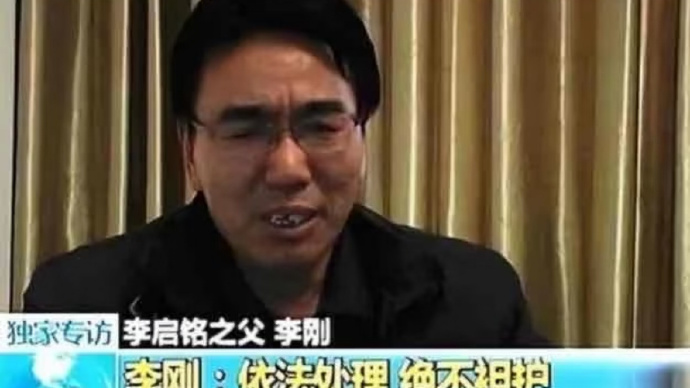
The other Li Gang tearfully apologizing for his son’s actions back in 2014.
The sentence resurfaced in June 2014, when the phrase “Do you know who my dad is?” (你知道我爸是谁啊) became a trending topic on Weibo. This followed an incident during the college entrance exams in Fuxin, where a student arrived at school in a BMW and was caught cheating on his phone. When confronted by a teacher, he attacked her, shouting: “Do you know who my dad is? You still dare to check me?”
That moment also drew comparisons to the Li Gang meme. The phrase “Do you know who my dad is?” reflects the attitude of a group often labeled as fù’èr dài (富二代, “Second-Generation Rich”) and guān’èr dài (官二代, “Second-Generation Officials”)—those who believe they are untouchable due to their parents’ status. This attitude is closely tied to fraud, corruption, and power abuse—not just by the children themselves, but by their parents as well.
The current Li Gang incident brings everything together for many people, though it has also led to some confusion: “Which Li Gang is this? Is this the Li Gang from ‘My Dad is Li Gang’?” The current Li Gang is actually much higher in position than the one from 2010.
“Again, another Li Gang,” some say. “Another corrupt official.”
Although the name Li Gang itself may not be so special—many people have an uncle or neighbor with the same name—the current trending Li Gang news story now inevitably links the name with power abuse, entitlement, and corruption, but also with the idea that eventually, those who do wrong will be punished.
As of On April 7, 2025, Li has been expelled from the Communist Party and dismissed from public office. His case has now been transferred to the procuratorate for review and prosecution.
By Manya Koetse
(follow on X, LinkedIn, or Instagram)
Spotted a mistake or want to add something? Please let us know in comments below or email us. First-time commenters, please be patient – we will have to manually approve your comment before it appears.
©2025 Whatsonweibo. All rights reserved. Do not reproduce our content without permission – you can contact us at info@whatsonweibo.com.
Follow What’s on Weibo on





China Society
China Trend Watch: From a Hospital in Crisis to Chaotic Pig Feasts
From 5,000 people crashing a rural pig feast in Chongqing to the collective effort to save Yanran Angel hospital.

🔥 China Trend Watch (1.22.26)
Part of Eye on Digital China by Manya Koetse, China Trend Watch is an overview of what’s trending and being discussed on Chinese social media. The previous newsletter was a deep dive into the Dead Yet? app phenomenon. This edition was sent to paid subscribers — subscribe to receive the next issue in your inbox.
However, there are dozens of other topics being discussed on Chinese social media that actually aren’t about the US or the shifting geopolitical landscape. From football to pig-slaughter feasts, from a Henan grandpa in Paris to the latest birth rates, there is an entire world of topics out there that’s blissfully unconnected to anything happening in Washington or Davos — with many of these discussions signaling bigger social stories unfolding in China today. Let’s dive in.
Quick Scroll
- 🐶 “Eat more dog meat,” a local Community Health Service Center in Ya’an advised in a seasonal health text, suggesting it would help people stay healthy & warm during cold weather. The message sparked controversy among dog lovers online. The center later apologized and issued a corrected version, replacing dog meat with lamb, beef, and chestnuts.
- ⚽ Chinese goalkeeper Li Hao (李昊) is the man of the moment after China’s under-23 national football team beat Vietnam (0-3) and advanced to the final of the AFC U23 Asian Cup. It marks the first time since 2004 that any Chinese men’s national team (at any level) has reached the final of a continental tournament. In the final, China will face Japan.
- 👶 China’s latest birth data for 2025 are in, showing yet another record low. The birth rate fell to 5.63 per 1,000 people, with 7.92 million babies born last year — a 17% year-on-year decline.
- 💸 An “underground” private tutoring operation in Beijing has been hit with a staggering fine of more than 67 million yuan (US$9.6 million) for offering after-school classes without official approval. It’s the highest fine so far under China’s “Double Reduction” policy, introduced in 2021 to curb private tutoring and ease academic pressure on students.
- 🕯️ He Jiaolong (贺娇龙), a Xinjiang local official who was at the forefront of Chinese officials livestreaming & promoting their regions in creative online ways, died this week after a fatal fall from a horse during work-related filming. She was 47 years old.
- 🎭 Another death that trended this week was that of renowned Chinese comedian Yang Zhenhua (杨振华, b. 1936), a crosstalk (相声) artist remembered for his classic performances and widely regarded as a cultural icon.
- 🏛️ A child abuse case that has haunted Chinese netizens for the past two years has come to a close. Xu Jinhua (许金花), the stepmother who tortured and starved her 12-year-old stepdaughter, known as “Qiqi,” to death, was executed on January 20. Xu was sentenced to death in April 2025, and her appeal was rejected last November.
What Really Stood Out This Week
1. Mass Shutdowns of Local Chinese Pig-Slaughter Feasts
Annual pig feasts are traditionally meant to be a source of community bonding and ritual exchange. But for many towns and districts, páozhūyàn (刨猪宴), traditional pig-slaughter feasts, have now become a source of concern, leading to shutdowns of local events across multiple provinces.
The story begins on January 9, when a farmer’s daughter nicknamed Daidai (呆呆) from Hezhou in Chongqing posted a lighthearted message on Douyin asking whether people could help with her family’s pig slaughter, saying her old dad would not be able to hold down the two pigs. In return, she promised to treat helpers to “pork soup and rice,” adding: “To be honest, I just want the road in front of my house to be packed with cars, even more than at a wedding. I want to finally prove myself in the village!”
Two days later, on January 11, when the pig feast took place, Daidai got more than she had asked for. Not only was the road in front of her home packed with cars — the entire village was completely blocked as over 1,000 cars and some 5,000 visitors arrived. With two pigs nowhere near enough, five pigs ended up being slaughtered. Livestreamers flooded the scene, Daidai’s name was quickly trademarked, and before she knew it, she had entered internet history — including her own Baidu page — as the girl who turned a local gathering into a national feast.
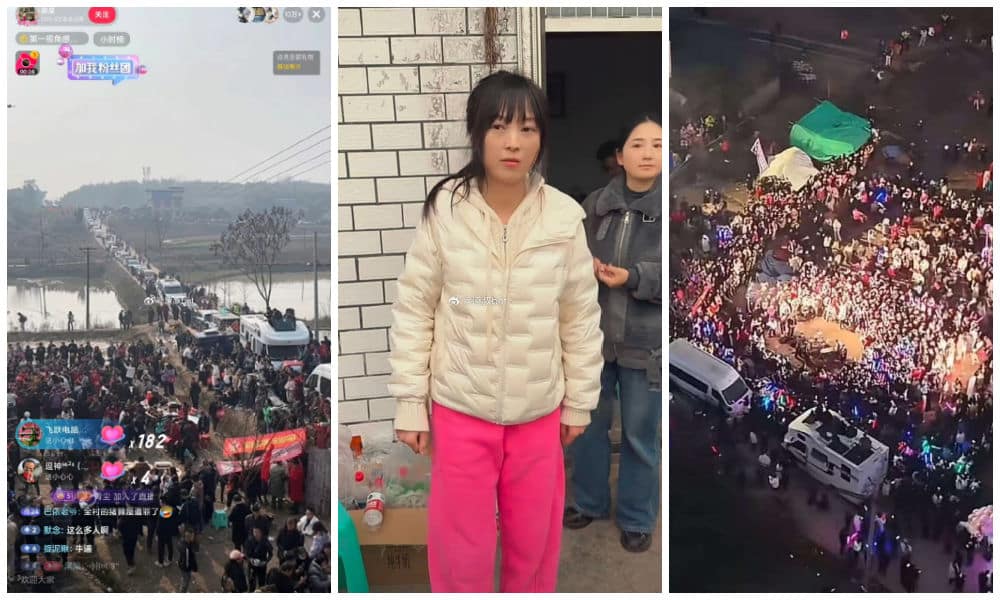
Daidai (middle) hadn’t expected her call for help with slaughtering two pigs would end up in 5000 people coming to her town.
By now, the incident has spiraled into a much bigger issue, as others in the Sichuan–Chongqing region want to replicate the viral success of Hechuan, creating chaos and sometimes unsafe situations by turning neighborhood moments into tourist activities. This has led to a series of events being canceled or shut down.
On January 14, a planned páozhūyàn, initiated by local influencer Jia Laolian (假老练) in Longquanyi District in Chengdu, had to be canceled at the last minute after thousands of people registered to attend. On January 17, an online influencer in Caijiagang Subdistrict, Chongqing, also held a free pig-slaughter feast that quickly led to potentially dangerous overcrowding. Police shut it down. Another event took place in Ziyang, where 8,000 people had registered to attend while there were only 200 parking spaces available. There were more.
The current hype surrounding these pig-slaughter events reflects a sense of urban–rural nostalgia for local traditions and human connections, but probably says more about how viral tourism in China has worked since the frenzy surrounding Zibo: at lightning speed, influencers and local tourism bureaus jump onto fast-moving trends, hoping to get their own viral moment and, quite literally, piggyback on it.
While these moments can create a moment of hype, the downsides are clear: a lack of oversight, weak crowd management, intrusion to local communities, and lives being suddenly disrupted. For now, ‘Daidai’ has gained about two million users on her social media account. She says she hopes to do “something meaningful” with her online influence and has become an organic ambassador for Hechuan. At the same time, she also wants some calm after the storm, saying:“The Zhaozhu Yan in Heichuan has concluded successfully. I hope everyone can return to their normal lives. I also hope my parents can go back to their previous life—I don’t want them dragged into the internet world.”
2. How a Hospital Crisis Won China’s Trust
Usually, when news emerges about Chinese celebrities facing debts or court papers, it signals a serious blow to their reputation. But in a case that trended over the past week involving Chinese actor/businessman Li Yapeng (李亚鹏) and singer/pop icon Faye Wong (Wang Fei 王菲), the opposite is true.
Li and Wong were previously married and are parents to a daughter born with a cleft lip and palate. Their experiences in getting treatment and surgery for their daughter led them to become deeply involved with the efforts to help other children. In 2006, they founded the Yanran Angel Foundation (嫣然天使基金). A few years later, they established the Yanran Angel Children’s Hospital (嫣然天使儿童医院), China’s first privately-operated non-profit children’s hospital, providing surgeries, orthodontics, speech therapy, and other support to thousands of children—many of them at no cost for underprivileged families.
For the first ten years that Li and his team leased the hospital location, the landlord provided them with heavily discounted rent as a sign of his goodwill. In 2019, that agreement ended, and the rent doubled to market value at 11 million yuan per year (over US$1.5 million). But then Covid hit, and while the hospital still had all of its staffing and lease costs, surgeries were postponed.
On January 14 this year, Li Yapeng posted a lengthy video on his Douyin account titled “The Final Confrontation” (最后的面对), in which he explains how they fell behind on their rent since 2022, now finding themselves in a debt of 26 million yuan (over US$1.5 million) and facing a court judgement that leaves them with little choice but to vacate the premises and shut the hospital down.
Something that struck a chord with netizens is how Li, who bears joint liability for the unpaid rent, made no excuses and openly acknowledged his legal obligations, while at the same time emphasizing his personal sense of responsibility to ensure that children waiting for surgery would still receive the help that had been promised to them.
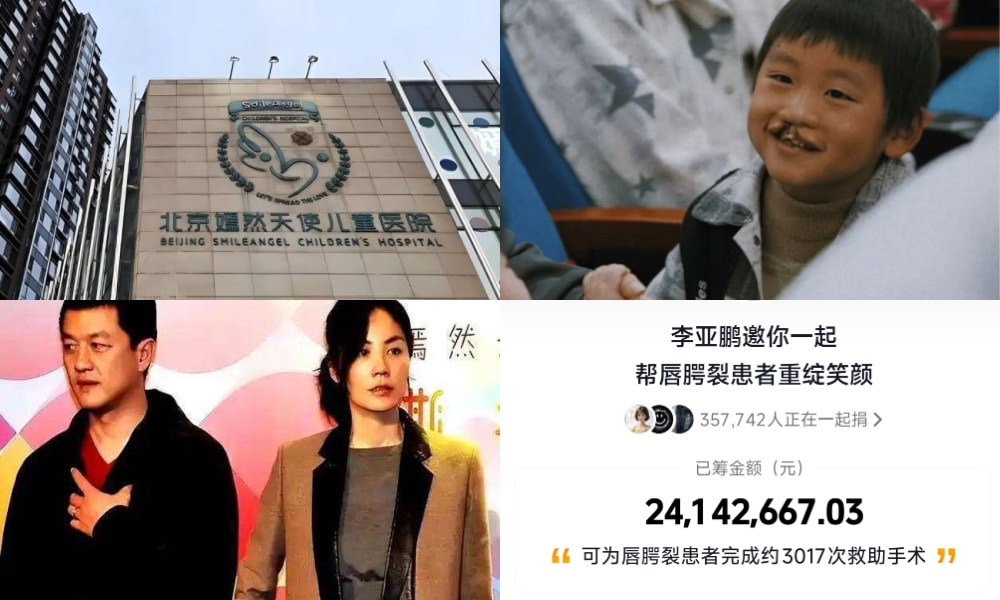
Public perception of Li Yapeng, who was previously seen as a failed businessman, transformed overnight. He was suddenly hailed as a hero who had quietly devoted himself to charity all this time, while accumulating personal debts.
Donations started flooding in. Within two days, over 180,000 people had donated a total of 9 million yuan (US$1.3 million), and by January 19 this had grown to more than 310,000 people supporting the hospital with nearly 20 million yuan (US$2.8 million). Beyond direct donations, netizens also supported Li Yapeng by tuning into his e-commerce livestreams. One businessman from Jiangsu even offered 30,000 square meters of free space for the hospital to relocate.
Meanwhile, netizens began wondering why Faye Wong, Li’s ex-wife with whom he had founded the foundation and hospital, was staying quiet. Just as some started to label her a diva who no longer cared about the cause, a 2023 audit report revealed that since divorcing Li Yapeng in 2013, she had been anonymously donating to the fund every year for a decade, totaling more than 32.6 million yuan (US$4.6 million) to cover rent and staff salaries.
There are many aspects to this story that have caused it to go viral, and that make it particularly noteworthy. It is not just the turnaround in public sentiment regarding Li and Faye Wong, but also the fact that people are more willing to donate to a cause they genuinely believe in. Although Li and Wong’s foundation technically falls under the Red Cross system, that organization has faced significant criticism and public distrust in China over the years.
What also helps are the personal stories shared on social media by those who have had direct experience with the hospital, or who know people working there. These include deeply moving accounts from families who saw all their savings depleted while trying to get proper care for their three-year-old child born with a cleft lip, then traveling for days from Gansu to Beijing with little more than a sliver of hope—only to learn that their child would not only receive surgery for free, but that the hospital would also help cover temporary lodging and travel costs. Many feel that causes like this are rare, and deserve to continue.
After years of stories about celebrities evading taxes, good causes misspending money, and corruption getting mixed up with charity, this is a story that restores trust — showing that some celebrities truly care, that some charities do turn every penny into help for those in need, and that netizens can genuinely make a difference. “This is the most heartwarming news at the start of the year,” one Weibo commenter wrote.
For now, it remains unclear whether the hospital can remain at its current location, but operations continue, and negotiations are ongoing. Fundraising has been paused for the time being, as annual donation targets have already been exceeded.
3. The Sudden Death of a 32-Year-Old Programmer and the Renewed Debate Over China’s Tech Overtime Culture
The sudden death of a 32-year-old programmer who worked at a tech company in Guangzhou is sparking discussion these days, as his death is being linked to the extreme overtime work culture in China’s tech sector.
The story is attracting online attention mainly because his wife, using the nickname “Widow” (遗孀), has been documenting her grieving journey on social media, sharing stories about how she misses her late husband and the things she wishes had gone differently. He was always working late, and she often asked him to come home when he still hadn’t returned by 10:00, 11:00 p.m., or even midnight.
Gao Guanghui (高广辉) worked as a software engineer and department manager. Despite his “seriously overloaded” working schedule, his now-widowed wife describes their life together as “very happy.”
On Saturday, November 29, 2025, the day of his passing, Gao mentioned that although he was feeling unwell, he still had work matters with approaching deadlines to handle. Browser records show that he accessed the company’s internal system at least five times that morning before fainting and experiencing sudden urinary incontinence.
While preparing to go to the hospital, Gao reportedly urged his wife to bring his laptop with them so that he could finish his tasks. However, he collapsed before the two had even gotten into the car. Despite an ambulance arriving at 9:14 a.m. and efforts to save him, he passed away two hours later. He died of cardiac arrest, and hospital records note his high-pressure, long-hour work schedule.
Even in the final moments of his life, work continued to intrude. Gao was added to a work WeChat group at 10:48 a.m., while hospital staff were still attempting to resuscitate him. Hours after his death was declared, colleagues continued to send him work messages, including one at 9:09 p.m. asking him to urgently fix an issue.
Making matters worse, Gao’s widow says that in the second week after his death, his company had already processed his resignation and disposed of his belongings. The items that were sent to her were crushed and poorly packed. To this day, she says she has received no apology, no compensation, no replacement items, and none of her husband’s missing belongings.

Visuals dedicated to Gao, shared on Xiaohongshu.
On social media, people are angry. Reading about Gao’s life story — and how he was always a hard worker, sometimes working two jobs at a time — many comments indicate that it is often the most dedicated ones who get pressured the most. They see him as a victim of tech companies like CVTE that go against official guidelines and perpetuate a work culture where working overtime becomes the norm, only leading to more workload.
This is not the first time such a story has gone viral. In 2021, the death of an employee who worked at Pinduoduo triggered similar discussions about strenuous “996” schedules (working 9 a.m. to 9 p.m., six days per week).
Similar deaths include the 2011 case of 25-year-old PwC auditor Pan Jie, whose story went viral on Sina Weibo after doctors concluded that overwork may have played a crucial role in her death. Likewise, the at-desk death of a 24-year-old Ogilvy employee in Beijing and the 2016 death of Jin Bo, deputy editor-in-chief of one of China’s leading online forums, also prompted calls for greater public awareness of the risks of overwork — especially among young professionals.
On the Feed
“Paris Without the Filter”
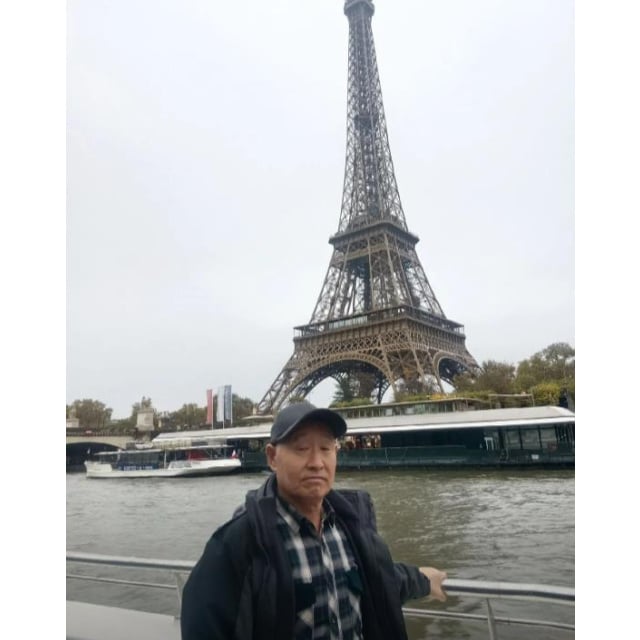
“Filter-Free Paris,” or “Paris without a filter” (素颜巴黎), unexpectedly went viral after a grandpa from China’s Henan province, traveling with a senior tour group, shared his unfiltered and casual photos of rainy Paris. In an age when European travel photos are often heavily filtered and glamorized on Chinese social media, many found the grandpa’s grey, plain images of the “City of Romance” not only amusing but also refreshingly honest.
Seen Elsewhere
• A Chinese state media editorial framed the Greenland dispute as a “wake-up call” for Europe to reduce its reliance on the US. (CHINA DAILY)
• Why Western “Chinamaxxing” and “very Chinese time” memes say more about a “decay of the American dream” than about China itself. (WIRED)
• WIRED seems to be at a “very Chinese time” itself, and also launched its China issue, introducing 23 ways you’re already living in the ‘Chinese Century.’ (WIRED)
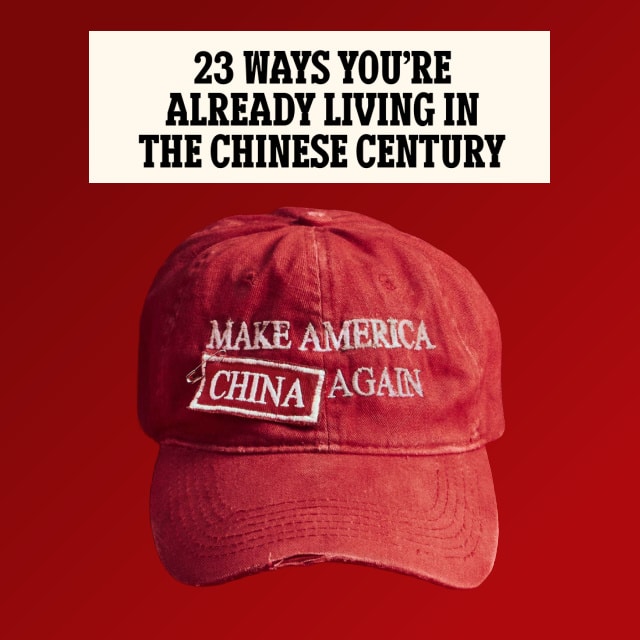
Title/Image via Wired, Andria Lo
• As Trump sows division, China says it’s the calm, dependable leader the world needs. (CNN)
• Nostalgia for the Cultural Revolution has become one of the few legally viable means of resistance, according to Shijie Wang. (CHINATALK)
That’s a wrap! Thanks for reading.
If you happen to be reading this without a subscription and appreciate my work, consider joining to receive future issues straight in your inbox.
See you next edition!
— Manya
Eye on Digital China, by Manya Koetse, is co-published on Substack and What’s on Weibo. Both feature the same new content — so you can read and subscribe wherever you prefer. Substack offers community features, while What’s on Weibo provides full archive access. If you’re already subscribed and want to switch platforms, just get in touch for help. If you no longer wish to receive these newsletters, or are receiving duplicate editions, you can unsubscribe at any time.
China World
Trump, Taiwan & The Three-Body Problem: How Chinese Social Media Frames the US Strike on Venezuela
How Chinese social media is making sense of the first geopolitical shockwaves of 2026.

2026 hasn’t exactly seen a peaceful start. In a shocking turn of geopolitical events, Venezuelan leader Nicolás Maduro was captured by the US on Saturday. Facing narco-terrorism charges, he was flown to New York, where he is still being held in custody alongside his wife, Cilia Flores. President Trump announced that the United States would be taking control in Venezuela, stating they are going to “get the oil flowing.”
Maduro has pleaded not guilty to the charges during an initial hearing in federal court. Meanwhile, Maduro ally Delcy Rodríguez was formally sworn in as Venezuela’s interim president, while up to 50 million barrels of oil resources are set to go to the US.
Further shaking up geopolitical tensions were Donald Trump’s comments suggesting an American takeover of Greenland, arguing that the US needs to control Greenland to ensure the security of the NATO territory in the face of rising threats from China and Russia in the Arctic.
On Chinese social media, these developments have been dominating trending lists, with “Greenland” (格陵兰岛), “military force” (武力), “Trump” (特朗普), “Venezuela” (委内瑞拉), and “Maduro” (马杜罗) among the hottest keywords across various platforms from January 6 to today.
So what is the main gist of these discussions? From official reactions to dominant interpretive frames used by Chinese commentators and bloggers, there are various angles that are highlighted the most. I’ll explore them here.
🔴 China’s Official Response: Stressing Sovereignty & Strategic Ties
Chinese officials strongly condemned the capture of the Venezuelan president. Foreign Minister Wang Yi (王毅) stated in Beijing on Sunday that China has never accepted the idea that any country has the right to act as an “international police” or an “international judge.” The Ministry of Foreign Affairs called for Maduro’s immediate release.
Spokesperson Lin Jian (林剑) described the strikes on Venezuela as “a grave violation of international law and the basic norms governing international relations,” while spokesperson Mao Ning (毛宁) condemned what she called the United States’ “long-standing and illegal sanctions” on Venezuela’s oil sector.
These statements match the broader trajectory of China–Venezuela relations.
Over the past decades, particularly since Xi Jinping’s leadership began, the relationship between the two countries has evolved from a basic economic partnership into a more strategically significant one.
During Maduro’s 2023 visit to Beijing, the two sides elevated China–Venezuela ties to a so-called “all-weather strategic partnership” (全天候战略伙伴关系), signaling close, deep, and broad bilateral relations that go beyond a general partnership, with oil cooperation as a central pillar. (In 2025 alone, Venezuela exported around 470,000 barrels per day of crude oil to China.)
Following China’s condemnation of the US actions, Venezuelan Foreign Minister Gil expressed gratitude for China’s support, underscoring their bilateral friendship.
Beyond the official response to the recent developments, there are three main frameworks within which the ‘Trump turmoil’ is discussed on Chinese social media.
🔴 Three Main Angles in China’s Online Debate
🔷 1. Major Power Politics & US Aggression
Chinese media commentators are calling Trump’s capture of Maduro a potential “major turning point” for the world. While many described the developments as a sign that “the world has gone crazy” (这个世界太疯狂了), those trying to make sense of what happened see the US move as a warning: that relatively weak countries may increasingly become playgrounds for major powers & potential targets of US aggression.
Within this reading, China is portrayed as the most stable and peaceful superpower, increasingly important in a future multipolar world order.
On the popular podcast Qiánliáng Hútòng FM (钱粮胡同), recent developments were discussed as part of America’s dominant behavior on the world stage over decades. The hosts argued that, unlike previous US leaders, Trump is far less secretive about his goals and, in this case, no longer even follows the process of seeking UN authorization or congressional approval.
Similar views appeared elsewhere, including in a trending Bilibili video by the political commentary channel Looking at America from the Inside (内部看美国), which described the Venezuela raid not as an endpoint, but as a “signal” of what is yet to come, as the US, sensing structural decline, increasingly acts reactively rather than strategically.
Zhihu author Fēng Lěng Mù Shī (枫冷慕诗), whose post rose in the platform’s popularity charts on Wednesday, also framed the moment as pivotal. While the US may once have held the upper hand, they argue, other countries now have an actual choice in which side to take in a world ruled by superpowers. They write:
💬 “If the US truly had the strength to crush everyone and dominate everything completely, it might still be able to control global affairs. But now, with the rise of China, countries bullied by the US have new choices. If you were one of them, what would you choose? To cooperate with a bandit who might kill you with an axe at any moment? Or to cooperate with a reasonable businessman who follows the rules? I believe any rational person would make the obvious choice.“1

Social media posts made with AI featuring “Know-It-All Trump” or “The King of Understanding.”
At the same time, US behavior also became a source of banter. Some netizens, from Bilibili to Xiaohongshu, posted about “The Know-It-All King” (懂王 Dǒng Wáng—a Chinese nickname for Trump reflecting his often-quoted claims to understand complex issues better than anyone) as a comical villain on a shopping spree for new territories to conquer.

Weibo post: a creative solution to the Greenland issue?
One poster offered a creative solution to the Greenland issue:
💬 “Regarding Greenland, a simple diplomatic solution would be for Barron Trump [Trump’s son, b. 2006] to marry Princess Isabella [of Denmark, b. 2007], with Greenland given to the United States as the dowry. 😁”
🔷 2. The Taiwan Parallel
Taiwan also quickly entered the discussion. In English-language media, some commentators suggested that the raid on Venezuela could smooth and accelerate Beijing’s path toward taking Taiwan.
China’s Taiwan Affairs Office firmly rejected such comparisons. Spokesperson Chen Binhua (陈斌华) emphasized that the Taiwan issue is China’s internal affair and fundamentally different from Venezuela’s situation. Many social media commenters also argued that comparing Venezuela to Taiwan makes little sense, stressing that Venezuela is a sovereign state while Taiwan is considered a province of China.
Even so, Taiwan continues to surface in discussions on Venezuela in various ways. Some users jokingly suggested that the US has now provided a “copy-paste example” of what a tactically impressive raid might look like, while others more seriously draw comparisons between the arrest of Maduro and a hypothetical arrest of Taiwanese President Lai Ching-te.
The central question in these debates, also raised by Taiwanese media commentator Hou Han-ting (侯汉廷), is this: if Lai Ching-te were captured alive in Beijing today, what right would the United States have to object? A common view in these discussions is that Trump’s actions lower the threshold for such scenarios and implicitly pave the way for China’s ‘reunification’ with Taiwan.
This reading seems to sharply contrast Washington’s own framing. In a speech on Monday, US Defense Secretary Hegseth described China as the US’s primary competitor and claimed that America is “reestablishing deterrence that’s so absolute and so unquestioned that our enemies will not dare to test us.”
On Chinese social media, however, this claim is openly questioned: does the raid on Venezuela actually deter China or Russia, or does it instead give them greater freedom of action?
💬 As political commentator Hu Xijin wrote on Weibo: “Americans might do well to ask the Taiwan authorities, and look at the global media commentaries, if the US military action in Venezuela has made the Democratic Progressive Party authorities pushing Taiwan independence feel more secure, or more anxious?”2
🔷 3. Little Europe and the Big Striped Wolf
A third major angle centers on Europe’s role. Hu Xijin has been particularly active in commenting on these developments, especially after Tuesday’s joint statement by the leaders of seven European countries pushing back against Trump’s Greenland remarks.
Hu described the moment as one of “unprecedented turmoil within the Western bloc” and, with Denmark (including Greenland) being a NATO member, as a signal of “the collapse of the so-called ‘values alliance’.”3 This idea was further strengthened by Trump’s withdrawal from the UN Framework Convention on Climate Change, alongside exits from 65 other organizations, which he described as “contrary to the interests of the United States.”
On Chinese social media, Europe is, on the one hand, seen as one of the weakest actors in this geopolitical episode, while at the same time being criticized as the biggest “hypocrite.”
This week’s joint statement—and Europe’s broader position—are framed as weak due to Europe’s structural dependence on the US.
Weibo commentator Zhang Jun (@买家张俊) argues that Europe leans on a “rules-based international order” which, in reality, would amount to little more than a “US-based order” should Trump succeed in taking Greenland. At the same time, the European statement lacked economic sanctions or concrete follow-up measures, amounting to little more than mere rhetoric.
💬 As one nationalistic account put it: “Europe wonders why, even after kneeling down and licking America’s shoes, it still ends up getting hit.”4
Europe is mainly criticized for being “hypocritical” for remaining largely silent on Venezuela, while forcefully defending Greenland’s sovereignty once Trump turned his attention there.
Britain, in particular, has been singled out in Chinese media narratives surrounding the developments in Venezuela. Guancha ran a piece accusing the BBC of instructing journalists not to use the word “kidnap” when describing Maduro’s capture, suggesting the broadcaster was “whitewashing” the US’s illegal actions. It also pointed to Prime Minister Keir Starmer’s response in a BBC interview, describing his comments on US actions against Venezuela as “playing tai chi” (打起了太极)—a Chinese idiom for being evasive and dodging the question.
One Weibo user (@突破那一天) noted that a Jan 5 speech by Foreign Secretary Cooper appeared to frame US actions as contextually justified, while simultaneously stressing that Greenland’s future is a matter solely for Greenlanders and Danes—accusing her of applying a double standard on sovereignty and speaking out clearly only when the target is a Western ally.
Other users summed up Europe’s role as one of “deceiving others and deceiving themselves” (自欺欺人).
Another commenter suggested that Europe has been so focused on perceived threats from Russia and China while throwing itself into America’s arms, that it failed to notice the real danger. “Oh Europe, little piggy Europe,” they mocked. “You’ve let the wolf into the house.”
🔴 “You Think the US Invasion of Venezuela is None of Your Concern?”
How unexpected was the American military operation in Venezuela, really? One final aspect that trended online was how eerily familiar it all felt.
In the second book of the popular 2008 Chinese sci-fi trilogy The Three-Body Problem, author Liu Cixin (刘慈欣) described a scenario in which Venezuela, ruled by the fictional President Manuel Rey Diaz, is attacked by the US. That Venezuela storyline from the sci-fi novel has become widely discussed for its parallels to the current developments.

The Three Body Problem from 2008 featured a storyline about the US invading Venezuela.
The famous Japanese anime series Black Jack (怪医黑杰克) by Osamu Tezuka (1928–89) also went trending for featuring a fictional plot that many netizens see as strikingly similar to what happened in Venezuela.
It involves the president of the United Federation, named Kelly, citing “global justice” to justify cross-border airstrikes on the presidential residence of the small, oil-rich fictional country Republic of Aldiga, before arresting its leader, General Cruz. Some netizens noted how the blond President “Kelly” even somewhat resembles Trump.

Scenes from Black Jack (怪医黑杰克) by Osamu Tezuka
(Some commenters argued that Osamu Tezuka was not predicting the future so much as drawing on an already familiar pattern of US interventions abroad, and that the character “Kelly” was more likely modeled on Ronald Reagan.)
In Liu Cixin’s Three-Body Problem, there’s a classic line told by retired Beijing teacher Yang Jinwen to former construction worker Zhang Yuanchao, who dismisses world news as “irrelevant”. In the book, Yang tells him:
📖 “Every major national and international issue, every major national policy, and every UN resolution is connected to your life, through both direct and indirect channels. You think the US invasion of Venezuela is none of your concern? I say it has more than a penny’s worth of lasting implications for your pension.”5
In the current situation, some netizens think that the quote needs to be rewritten. In 2026, it would be:
💬“Do you really think the US arresting Venezuela’s president Maduro, conflicts in the Middle East, tensions across the Taiwan Strait, or Europe’s energy crisis are none of your concern? Don’t be naive. They drive up electricity bills, food prices, and mortgage rates. In the end, what gets drained is both your wallet and your future retirement security.”
It’s clear that many people are, in fact, deeply concerned about these geopolitical developments. As some have noted, science fiction is not always about distant futures. Sometimes, it turns out, we are already living in them.
In Liu Cixin’s version of the story, ‘Rey Diaz’ drives the Americans away through a united fight of the people, breaking the streak of victories by major powers over developing countries and turning the Venezuelan president into a hero of his time.
This story, I suspect, is going to end very differently. For now, it is still being written.🔚
By Manya Koetse
(follow on X, LinkedIn, or Instagram)
1 “如果说美国人有实力碾压一切,彻底的一家独大,那或许他还可以继续操控世界的局势,但如今随着咱们的崛起,全世界被美国欺凌的国家就有了新的选择,假如你是他们,你会做出什么样的决定? 是和一个随时会砍死你的强盗合作?还是和一个讲道理讲规则的生意人合作?我觉得所有的正常人都会做出合理的判断.”
2 “美国人最好问一问台湾当局,也看一看世界媒体的评论:美军在委内瑞拉的行动究竟让推动“台独”的民进党当局更加安心了,还是更加惶恐不安了?”
3 “欧洲7国领导人和丹麦领导人共同发表声明,反对美国吞并格陵兰岛,这标志着西方集团前所未有的内乱以及 它们的所谓”价值同盟”面临崩溃.”
4 “欧洲:我都跪下舔美国鞋子了、你为什么还要打我.”
5 “我告诉你老张,所有的国家和世界大事,国家的每一项重大决策,联合国的每一项决议,都会通过各种直接或间接的渠道和你的生活发生关系。你以为美国入侵委内瑞拉与你没关系?我告诉你,这事儿对你退休金的长远影响可不止半分钱”
Spotted a mistake or want to add something? Please let us know in comments below or email us. First-time commenters, please be patient – we will have to manually approve your comment before it appears.
©2025 Eye on Digital China/What’s on Weibo. All rights reserved. Do not reproduce our content without permission – you can contact us at info@whatsonweibo.com.
Eye on Digital China is a reader-supported publication by
Manya Koetse (@manyapan) and powered by What’s on Weibo.
It offers independent analysis of China’s online culture, media, and social trends.
To receive the newsletter and support this work, consider
becoming a paid subscriber.


China Trend Watch: From a Hospital in Crisis to Chaotic Pig Feasts

The “Are You Dead Yet?” Phenomenon: How a Dark Satire Became China’s #1 Paid App

Trump, Taiwan & The Three-Body Problem: How Chinese Social Media Frames the US Strike on Venezuela

China’s 2025 Year in Review in 12 Phrases

China’s 10 Biggest Social Media Stories of 2025

China Trend Watch: Japan Tensions, Nexperia Fallout, Yunnan’s ‘Wild Child,’ & “Modern Opium”

Eye on Digital China: How Chinese Social Media Evolved from the Blog Era to the AI-driven Age

Signals: Hasan Piker’s China Trip & the Unexpected Journey of a Chinese School Uniform to Angola

China Trend Watch: Hong Kong Fire Updates, Nantong’s Viral Moment & Japanese Concert Cancellations

About Eye on Digital China — Powered by What’s on Weibo
-

 China Arts & Entertainment7 months ago
Hidden Cameras and Taboo Topics: The Many Layers of the “Nanjing Sister Hong” Scandal
-
 China Insight9 months ago
Understanding the Dr. Xiao Medical Scandal
-
 China Insight6 months ago
“Jiangyou Bullying Incident”: From Online Outrage to Offline Protest
-
 China Insight9 months ago
China Is Not Censoring Its Social Media to Please the West