
China History
“Oppenheimer” in China: Highlighting the Story of Qian Xuesen
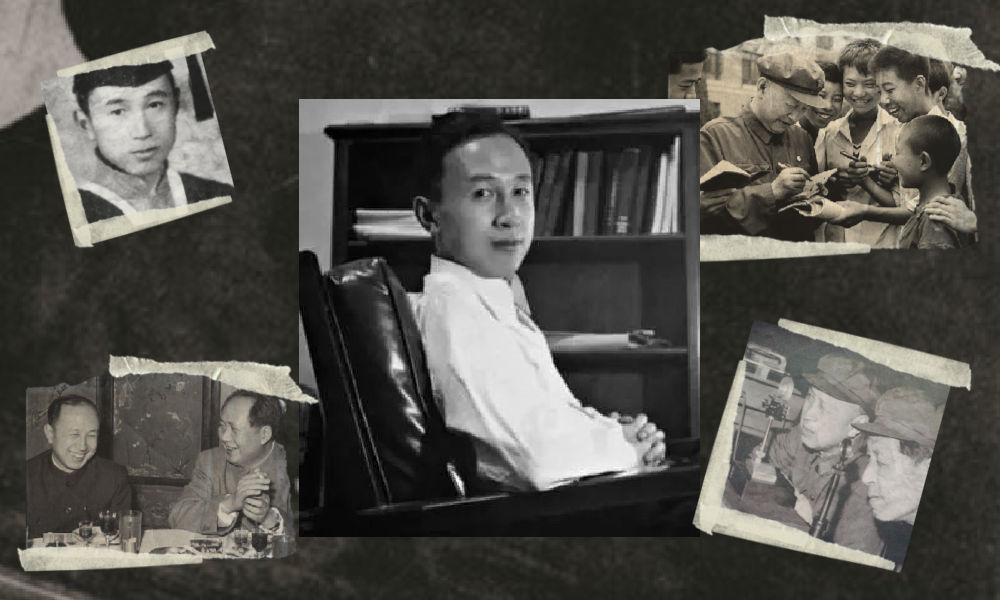
Qian Xuesen is a renowned Chinese scientist whose life shares remarkable parallels with Oppenheimer’s.

In late August, the highly anticipated U.S. movie Oppenheimer finally premiered in China, shedding light on the life of the famous American theoretical physicist J. Robert Oppenheimer (1904-1967).
Besides igniting discussions about the life of this prominent scientist, the film has also reignited domestic media and public interest in Chinese scientists connected to Oppenheimer and nuclear physics.
There is one Chinese scientist whose life shares remarkable parallels with Oppenheimer’s. This is aerospace engineer and cyberneticist Qian Xuesen (钱学森, 1911-2009). Like Oppenheimer, he pursued his postgraduate studies overseas, taught at Caltech, and played a pivotal role during World War II for the US.
Qian Xuesen is so widely recognized in China that whenever I introduce myself there, I often clarify my last name by saying, “it’s the same Qian as Qian Xuesen’s,” to ensure that people get my name.
Some Chinese blogs recently compared the academic paths and scholarly contributions of the two scientists, while others highlighted the similarities in their political challenges, including the revocation of their security clearances.
The era of McCarthyism in the United States cast a shadow over Qian’s career, and, similar to Oppenheimer, he was branded as a “communist suspect.” Eventually, these political pressures forced him to return to China.
Although Qian’s return to China made his later life different from Oppenheimer’s, both scientists lived their lives navigating the complex dynamics between science and politics. Here, we provide a brief overview of the life and accomplishments of Qian Xuesen.
Departing: Going to America
Qian Xuesen (钱学森, also written as Hsue-Shen Tsien), often referred to as the “father of China’s missile and space program,” was born in Shanghai in 1911,1 a pivotal year marked by a historic revolution that brought an end to the imperial dynasty and gave rise to the Republic of China.
Much like Oppenheimer, who pursued further studies at Cambridge after completing his undergraduate education, Qian embarked on a journey to the United States following his bachelor’s studies at National Chiao Tung University (now Shanghai Jiao Tong University). He spent a year at Tsinghua University in preparation for his departure.
The year was 1935, during the eighth year of the Chinese Civil War and the fourth year of Japan’s invasion of China, setting the backdrop for his academic pursuits in a turbulent era.
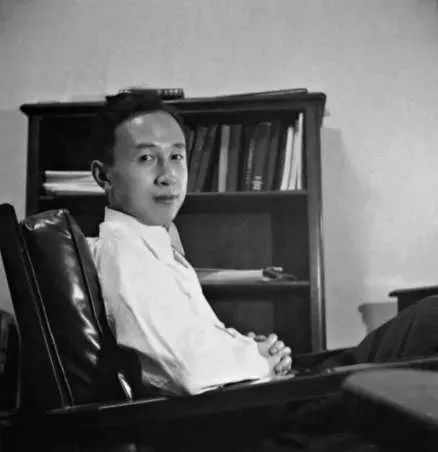
Qian in his office at Caltech (image source).
One year after arriving in the U.S., Qian earned his master’s degree in aeronautical engineering from the Massachusetts Institute of Technology (MIT). Three years later, in 1939, the 27-year-old Qian Xuesen completed his PhD at the California Institute of Technology (Caltech), the very institution where Oppenheimer had been welcomed in 1927. In 1943, Qian solidified his position in academia as an associate professor at Caltech. While at Caltech, Qian helped found NASA’s Jet Propulsion Laboratory.
When World War II began, while Oppenheimer was overseeing the Manhattan Project’s efforts to assist the U.S. in developing the atomic bomb, Qian actively supported the U.S. government. He served on the U.S. government’s Scientific Advisory Board and attained the rank of lieutenant colonel.
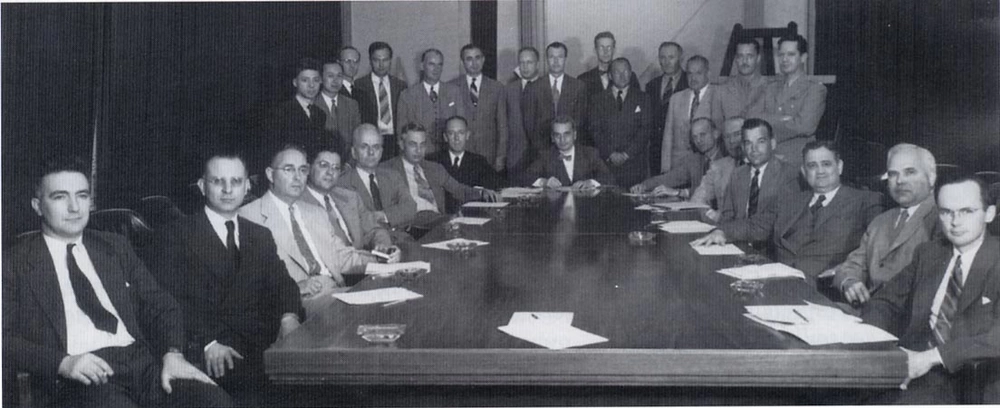
The first meeting of the US Department of the Air Force Scientific Advisory Board in 1946. The predecessor, the Scientific Advisory Group, was founded in 1944 to evaluate the aeronautical programs and facilities of the Axis powers of World War II. Qian can be seen standing in the back, the second on the left (image source).
After the war, Qian went to teach at MIT and returned to Caltech as a full-time professor in 1949. During that same year, Mao Zedong proclaimed the establishment of the People’s Republic of China (PRC). Just one year later, the newly-formed nation became involved in the Korean War, and China fought a bloody battle against the United States.
Red Scare: Being Labeled as a Communist
Robert Oppenheimer and Qian Xuesen both had an interest in Communism even prior to World War II, attending communist gatherings and showing sympathy towards the Communist cause.
Qian and Oppenheimer may have briefly met each other through their shared involvement in communist activities. During his time at Caltech, Qian secretly attended meetings with Frank Oppenheimer, the brother of J. Robert Oppenheimer (Monk 2013).
However, it was only after the war that their political leanings became a focal point for the FBI.
Just as the FBI accused Oppenheimer of being an agent of the Soviet Union, they quickly labeled Qian as a subversive communist, largely due to his Chinese heritage. While the government did not succeed in proving that Qian had communist ties with China during that period, they did ultimately succeed in portraying Qian as a communist affiliated with China a decade later.
During the transition from the 1940s to the 1950s, the Cold War was underway, and the anti-communist witch-hunts associated with the McCarthy era started to intensify (BBC 2020).
In 1950, the Korean War erupted, with the People’s Republic of China (PRC) joining North Korea in the conflict against South Korea, which received support from the United States. It was during this tumultuous period that the FBI officially accused Qian of communist sympathies in 1950, leading to the revocation of his security clearance despite objections from Qian’s colleagues. Four years later, in 1954, Robert Oppenheimer went through a similar process.
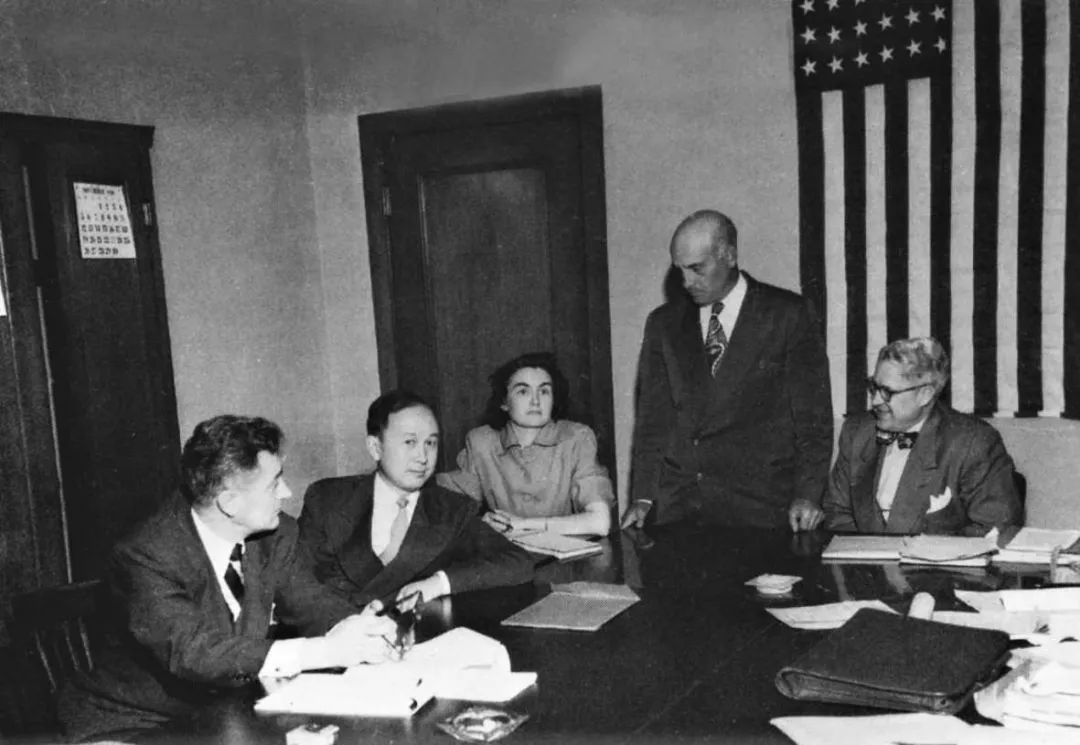
The 1950’s security hearing of Qian (second left). (Image source).
After losing his security clearance, Qian began to pack up, saying he wanted to visit his aging parents back home. Federal agents seized his luggage, which they claimed contained classified materials, and arrested him on suspicion of subversive activity. Although Qian denied any Communist leanings and rejected the accusation, he was detained by the government in California and spent the next five years under house arrest.
Five years later, in 1955, two years after the end of the Korean War, Qian was sent home to China as part of an apparent exchange for 11 American airmen who had been captured during the war. He told waiting reporters he “would never step foot in America again,” and he kept his promise (BBC 2020).
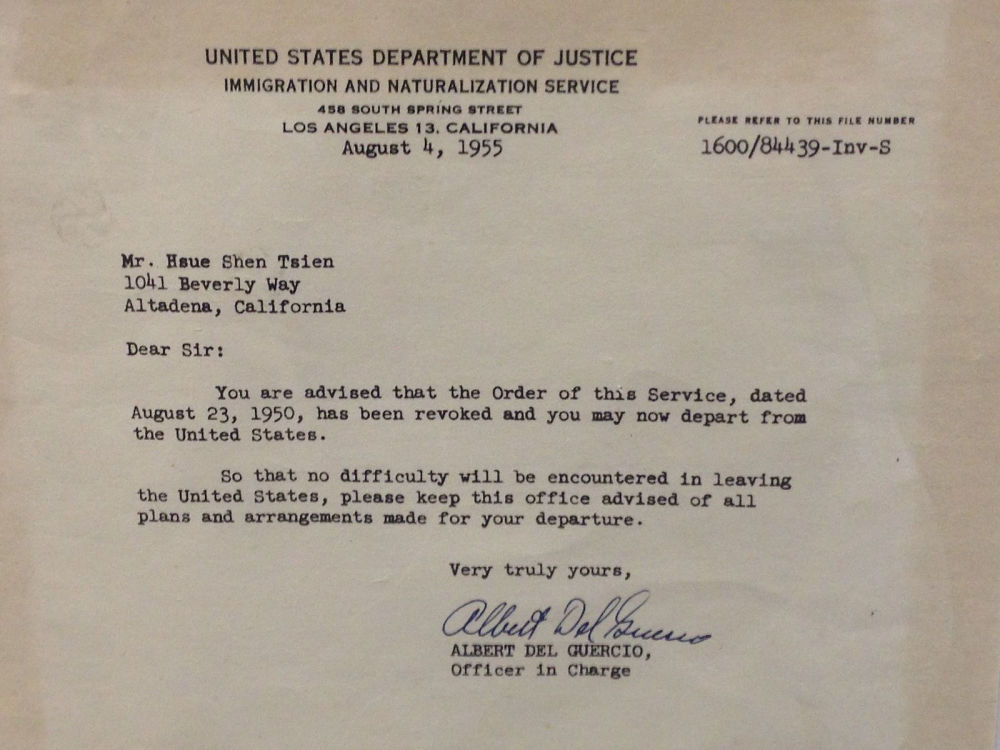
A letter from the US Immigration and Naturalization Service to Qian Xuesen, dated August 4, 1955, in which he was notified he was allowed to leave the US. The original copy is owned by Qian Xuesen Library of Shanghai Jiao Tong University, where the photo was taken. (Caption and image via wiki).
Dan Kimball, who was the Secretary of the US Navy at the time, expressed his regret about Qian’s departure, reportedly stating, “I’d rather shoot him dead than let him leave America. Wherever he goes, he equals five divisions.” He also stated: “It was the stupidest thing this country ever did. He was no more a communist than I was, and we forced him to go” (Perrett & Bradley, 2008).
Kimball may have foreseen the unfolding events accurately. After his return to China, Qian did indeed assume a pivotal role in enhancing China’s military capabilities, possibly surpassing the potency of five divisions. The missile programme that Qian helped develop in China resulted in weapons which were then fired back on America, including during the 1991 Gulf War (BBC 2020).
Returning: Becoming a National Hero
The China that Qian Xuesen had left behind was an entirely different China than the one he returned to. China, although having relatively few experts in the field, was embracing new possibilities and technologies related to rocketry and space exploration.
Within less than a month of his arrival, Qian was welcomed by the then Vice Prime Minister Chen Yi, and just four months later, he had the honor of meeting Chairman Mao himself.
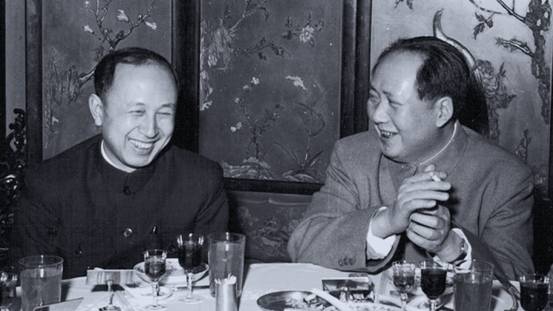
Qian and Mao (image source).
In China, Qian began a remarkably successful career in rocket science, with great support from the state. He not only assumed leadership but also earned the distinguished title of the “father” of the Chinese missile program, instrumental in equipping China with Dongfeng ballistic missiles, Silkworm anti-ship missiles, and Long March space rockets.
Additionally, his efforts laid the foundation for China’s contemporary surveillance system.
By now, Qian has become somewhat of a folk hero. His tale of returning to China despite being thwarted by the U.S. government has become like a legendary narrative in China: driven by unwavering patriotism, he willingly abandoned his overseas success, surmounted formidable challenges, and dedicated himself to his motherland.
Throughout his lifetime, Qian received numerous state medals in recognition of his work, establishing him as a nationally celebrated intellectual. From 1989 to 2001, the state-launched public movement “Learn from Qian Xuesen” was promoted throughout the country, and by 2001, when Qian turned 90, the national praise for him was on a similar level as that for Deng Xiaoping in the decade prior (Wang 2011).
Qian Xuesen remains a celebrated figure. On September 3rd of this year, a new “Qian Xuesen School” was established in Wenzhou, Zhejiang Province, becoming the sixth high school bearing the scientist’s name since the founding of the first one only a year ago.
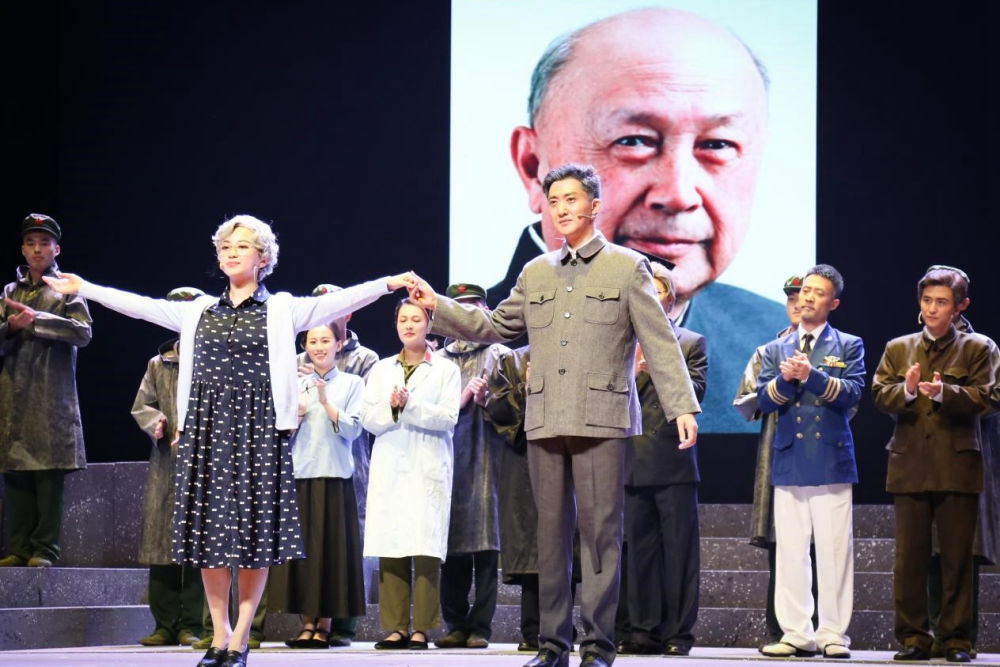
In 2017, the play “Qian Xuesen” was performed at Qian’s alma mater, Shanghai Jiaotong University. (Image source.)
Qian Xuesen’s legacy extends well beyond educational institutions. His name frequently appears in the media, including online articles, books, and other publications. There is the Qian Xuesen Library and a museum in Shanghai, containing over 70,000 artefacts related to him. Qian’s life story has also been the inspiration for a theater production and a 2012 movie titled Hsue-Shen Tsien (钱学森).2
Unanswered Questions
As is often the case when people are turned into heroes, some part of the stories are left behind while others are highlighted. This holds true for both Robert Oppenheimer and Qian Xuesen.
The Communist Party of China hailed Qian as a folk hero, aligning with their vision of a strong, patriotic nation. Many Chinese narratives avoid the debate over whether Qian’s return was linked to problems and accusations in the U.S., rather than genuine loyalty to his homeland.
In contrast, some international media have depicted Qian as a “political opportunist” who returned to China due to disillusionment with the U.S., also highlighting his criticism of “revisionist” colleagues during the Cultural Revolution and his denunciation of the 1989 student demonstrations.
Unlike the image of a resolute loyalist favored by the Chinese public, Qian’s political ideology was, in fact, not consistently aligned, and there were instances where he may have prioritized opportunity over loyalty at different stages of his life.
Qian also did not necessarily aspire to be a “flawless hero.” Upon returning to China, he declined all offers to have his biography written for him and refrained from sharing personal information with the media. Consequently, very little is known about his personal life, leaving many questions about the motivations driving him, and his true political inclinations.
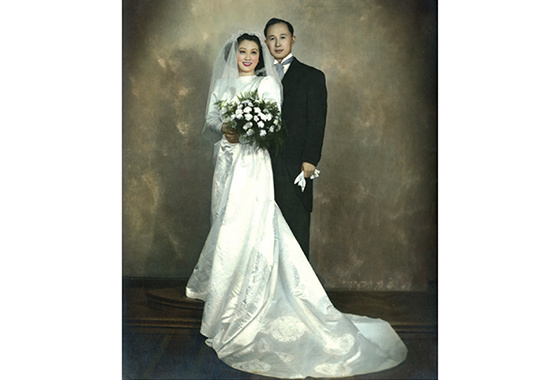
The marriage photo of Qian and Jiang. (Image source).
We do know that Qian’s wife, Jiang Ying (蒋英), had a remarkable background. She was of Chinese-Japanese mixed race and was the daughter of a prominent military strategist associated with Chiang Kai-shek. Jiang Ying was also an accomplished opera singer and later became a professor of music and opera at the Central Conservatory of Music in Beijing.
Just as with Qian, there remain numerous unanswered questions surrounding Oppenheimer, including the extent of his communist sympathies and whether these sympathies indirectly assisted the Soviet Union during the Cold War.
Perhaps both scientists never imagined they would face these questions when they first decided to study physics. After all, they were scientists, not the heroes that some narratives portray them to be.
Also read:
■ Farewell to a Self-Taught Master: Remembering China’s Colorful, Bold, and Iconic Artist Huang Yongyu
■ “His Name Was Mao Anying”: Renewed Remembrance of Mao Zedong’s Son on Chinese Social Media
By Zilan Qian
Follow @whatsonweibo
1 Some sources claim that Qian was born in Hangzhou, while others say he was born in Shanghai with ancestral roots in Hangzhou.
2The Chinese character 钱 is typically romanized as “Qian” in Pinyin. However, “Tsien” is a romanization in Wu Chinese, which corresponds to the dialect spoken in the region where Qian Xuesen and his family have ancestral roots.
This article has been edited for clarity by Manya Koetse
References (other sources hyperlinked in text)
BBC. 2020. “Qian Xuesen: The man the US deported – who then helped China into space.” BBC.com, 27 October https://www.bbc.com/news/stories-54695598 [9.16.23].
Monk, Ray. 2013. Robert Oppenheimer: A Life inside the Center, First American Edition. New York: Doubleday.
Perrett, Bradley, and James R. Asker. 2008. “Person of the Year: Qian Xuesen.” Aviation Week and Space Technology 168 (1): 57-61.
Wang, Ning. 2011. “The Making of an Intellectual Hero: Chinese Narratives of Qian Xuesen.” The China Quarterly, 206, 352-371. doi:10.1017/S0305741011000300
Get the story behind the hashtag. Subscribe to What’s on Weibo here to receive our newsletter and get access to our latest articles:
Spotted a mistake or want to add something? Please let us know in comments below or email us. First-time commenters, please be patient – we will have to manually approve your comment before it appears.
©2023 Whatsonweibo. All rights reserved. Do not reproduce our content without permission – you can contact us at info@whatsonweibo.com.


Chapter Dive
Evil Unbound (731): How a Chinese Anti-Japanese War Film Backfired
731 was China’s most anticipated war movie of the year — how could it fail so miserably to live up to public expectations?

🔥 This is premium content and also appeared in the Weibo Watch newsletter. Subscribe to stay in the loop.
731 and 918, those were the numbers dominating Chinese social media over the past week. Both numbers carry heavy historical weight, but the recent discussions surrounding them reveal two parallel worlds of the official narrative vs the audience experience of a controversial new World War II film.
It was “9.18” on Thursday, when China commemorated the 94th anniversary of the September 18th Incident (九一八事变). On that day in 1931, a small explosion on a Japanese-owned railway near Shenyang (Mukden) was used as a pretext to invade Manchuria.
While many older Chinese were taught in school that the war began in 1937, recent state-led campaigns increasingly emphasize 1931 as the true beginning of China’s “14-year-long war” (1931–1945). Over the past decade, the 918 commemorations have become more prominent online, shaping public memory through nationalistic messaging.
This year, the commemoration had an extra dimension, as it wove the release of Evil Unbound (English title), also known as 731, into the patriotic media narratives around 918.
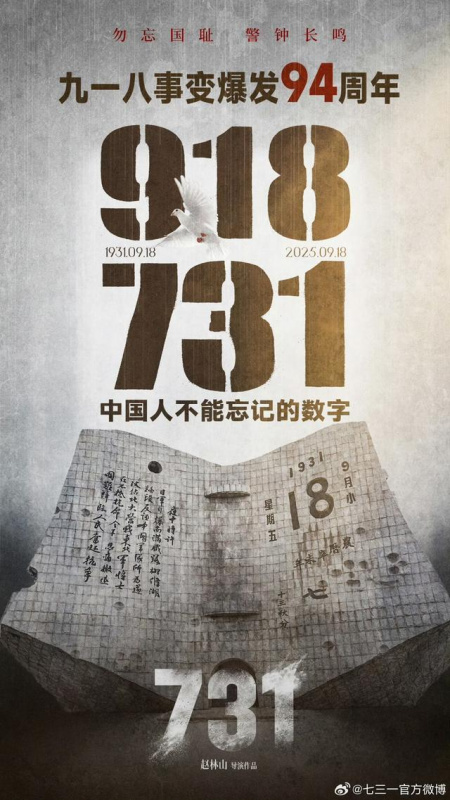
Patriotic film poster putting 918 and 731 together.
The much-anticipated war movie 731 depicts the atrocities of Japan’s Unit 731 (731部队), notorious for conducting horrific biological warfare experiments in Harbin during World War II under Major General Shiro Ishii (石井四郎), a former army surgeon and biologist with a particular interest in historical plagues. Under his command, Japan’s biological warfare and human experimentation in China were carried out on a larger scale than anywhere else between the 1930s and 1940s.
After the war, because the US felt his knowledge on bioweapons was of great value, Ishii was granted political immunity deal and was never brought to trial.
Together with the Nanjing Massacre, Unit 731 has come to symbolize the peak horrors of Japan’s wartime atrocities. Public attention for this history has grown in recent years, especially since the 2015 opening of the Harbin-based Museum of Evidence of War Crimes by Unit 731.
It was around that same time, about a decade ago, when Chinese director Zhao Linshan (赵林山) started working on the movie Evil Unbound (731), produced by Changchun Film Group in collaboration with the Propaganda Departments of Shandong, Jilin, Heilongjiang, and Harbin.
It finally premiered nationwide on Thursday, ‘9.18’ at exactly 9:18 and shattered 10 box office records on its opening day. Screened 258,000 times in a single day, it rapidly surpassed 200 million yuan (US$28 million) in ticket sales. After three days, the box office exceeded 1 billion yuan (US$140 million).
The film focuses on Unit 731 in the final days before Japan’s defeat in 1945, portraying how local salesman Wang Yongzhang (王永章, played by Jiang Wu 姜武) is imprisoned together with other civilians. They are promised freedom in exchange for “health checks and epidemic prevention cooperation,” and are subjected to frostbite experiments, poison gas, and vivisections.
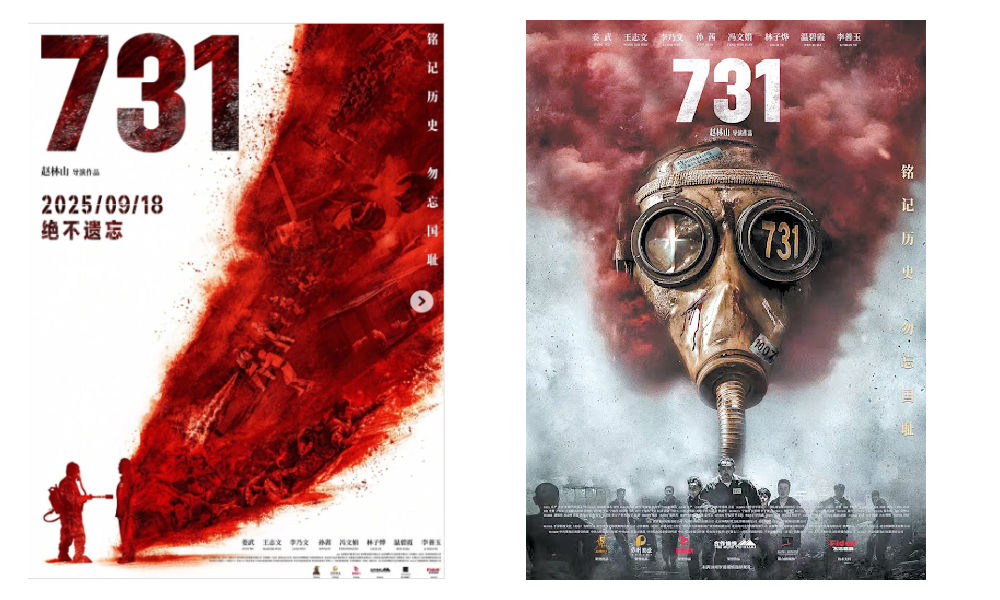
Official film posters for Evil Unbound/731.
“What we made is not a movie — it is historical evidence,” director Zhao said about the film.
A state-orchestrated hashtag ecosystem is currently amplifying the film’s ‘success.’ Similar to previous viral war film hits such as The Battle at Lake Changjin (长津湖) and Nanjing Photo Studio (Dead to Rights 南京照相馆), the media campaigns highlight the film’s commercial performance, its educational and historical value, the ‘authenticity’ of its production process, and its emotional reception and overseas recognition.
Recent trending hashtags, from Kuaishou to Weibo and beyond, include:
- 电影731票房再创新高 – “Film 731 sets another box office record”
- 没有人能在看731时不流泪 – “No one can watch 731 without crying”
- 观众掩面哭泣 / 哭到没法接受采访 – “Audiences cover faces in tears” or “Audiences too moved to be interviewed”
- 观众自发起立唱国歌 – “Audience spontaneously stand up to sing national anthem”
- 海外观众看731不停抹泪 – “Overseas audiences weeping when seeing 731”
- 9岁小孩看完731后泪奔 – “9-year-old child burst into tears after watching 731”
- 日本观众看完电影731后情绪崩溃 – “Japanese audiences having emotional breakdown after watching 731”
- 让731这段历史不再沉默 – “The history of 731 can no longer be silenced”
There are hundreds of other hashtags contributing to this official narrative, that portrays Evil Unbound as an absolute patriotic and commercial triumph.
From Anticipation to Backlash: 731 Between Shawshank and Squid Game
Outside of this official narrative, however, audiences are telling a very different story. Despite months of anticipation, the film has been met with overwhelmingly negative reviews.
On Weibo, the hashtag “731 Film Review” (#731影评#) was pulled offline. On Douban, the movie’s ratings meter was switched off entirely (“暂无评分”). On IMDb, the film is currently rated 3.1.
Usually, criticism of patriotic films is a slippery slope. People have been censored, blocked, or even detained for criticizing war films. But criticism of this film is so widespread, and so ubiquitous across social media platforms, that it is barely containable.
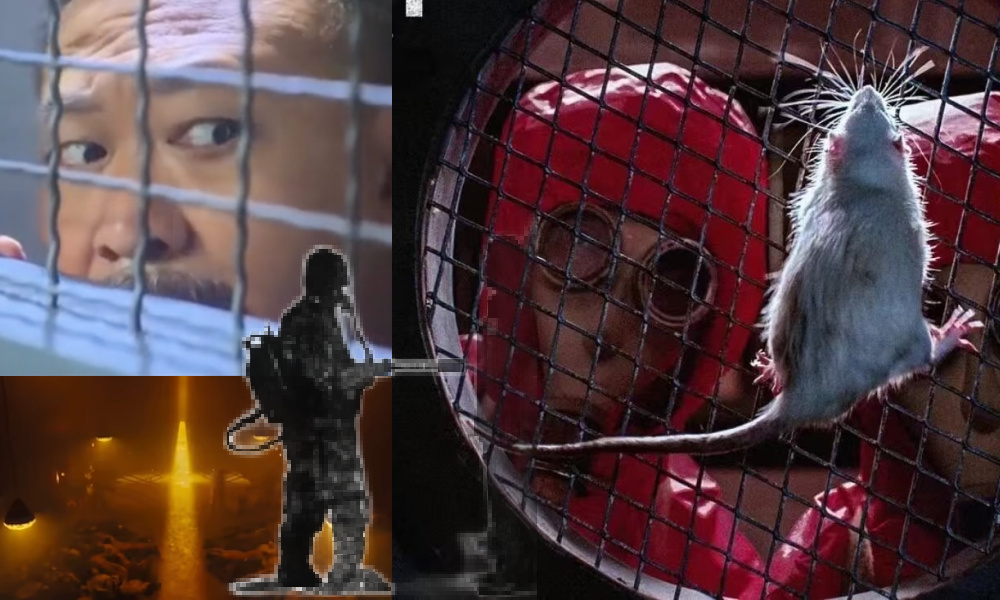
Many viewers called the movie “trash,” while others said they felt “defrauded”.[1] One commenter suggested the director tried to make The Shawshank Redemption but ended up with Squid Game.[2] Others called it “bizarre”[3], or concluded: “The short review section doesn’t even allow enough characters to describe how unbearable this movie is.”[4]
Viewing the film, I must admit I also felt confused – the movie is nothing like you would expect after the state-led promotion of the film.
The opening minutes quickly set a messy historical context, leaping from the 1925 Geneva Protocol to China’s 1943 counteroffensives, to Iwo Jima, and to Japan’s “Operation PX” plan (Operation Cherry Blossoms at Night), a scheme to attack the United States with biological weapons—before landing in Harbin and Unit 731 in the year 1945.
About ten minutes in, the movie seems to switch tracks and take inspiration from Squid Game, the 2021 South Korean survival drama.
Some details appear almost one-to-one from the Netflix show: the cold speaker voice, characters labeled by numbers, stylized lighting (including the Japanese flag’s red dot turned into menacing red spotlight), and eerily sterile sets that create a cold, clinical atmosphere stripped of humanity.
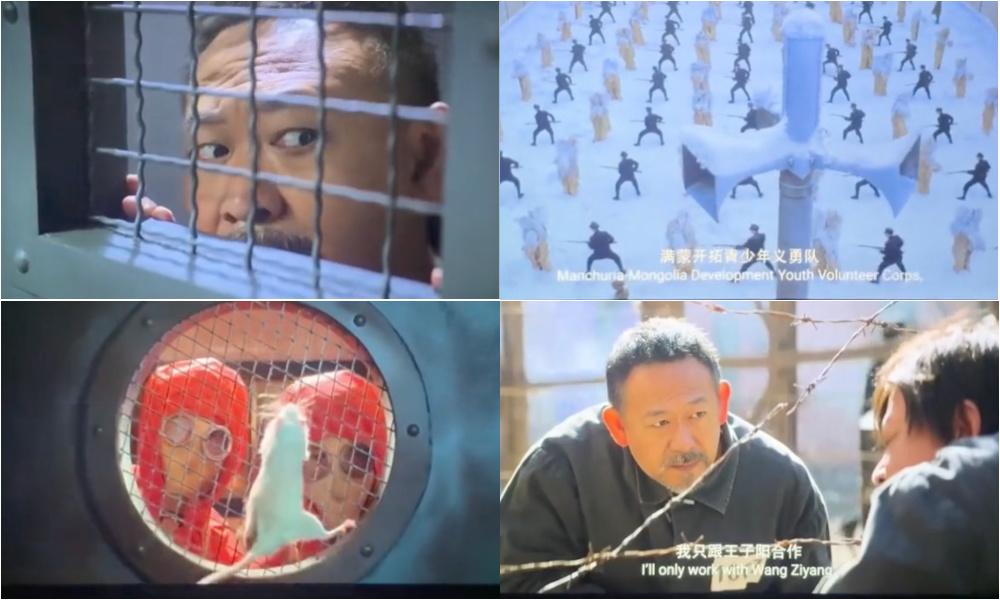
Scenes from 731.
Narrative elements also echo Squid Game’s deadly competitions, including an actual life-or-death rope pulling game. In 731, “winners” are promised freedom (but actually sent for experiments) and “losers” surviving slightly longer, until even these rules seemingly disappear, leaving viewers just as lost as the characters.
Beyond these echoes of Squid Game and The Shawshank Redemption (with their themes of prison break, brotherhood, and hope), where horror meets drama and occasionally even comedy, I also thought I saw traces of The Green Mile (there’s even a befriended mouse), The Shining, One Flew Over the Cuckoo’s Nest, and even Kill Bill.
If this all sounds like a fever dream, that’s about right.
While the film undoubtedly has artistic value in its visual references and symbolism, at times it seems more intent on presenting itself as an arthouse production than on telling a coherent historical war story.
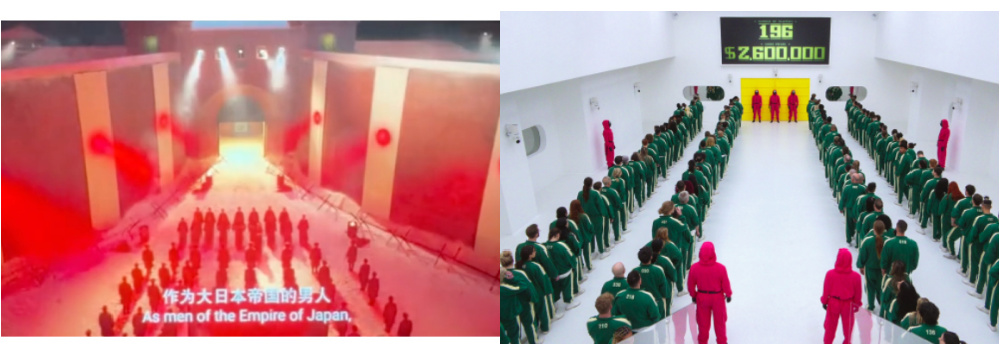
731 scene showing Japanese flags with red lasers/spotlights one the left. Some of the movie’s camera angle points, color use, narrative elements and settings show some similarities with Squid Game (image on right).
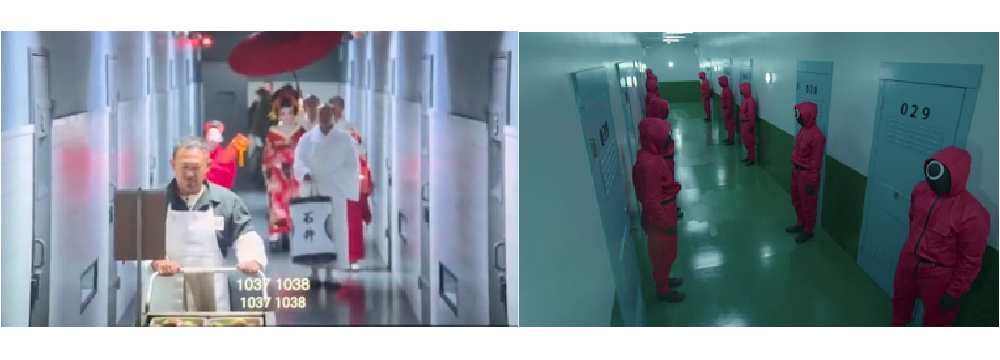
731 (left), Squid Game (right)
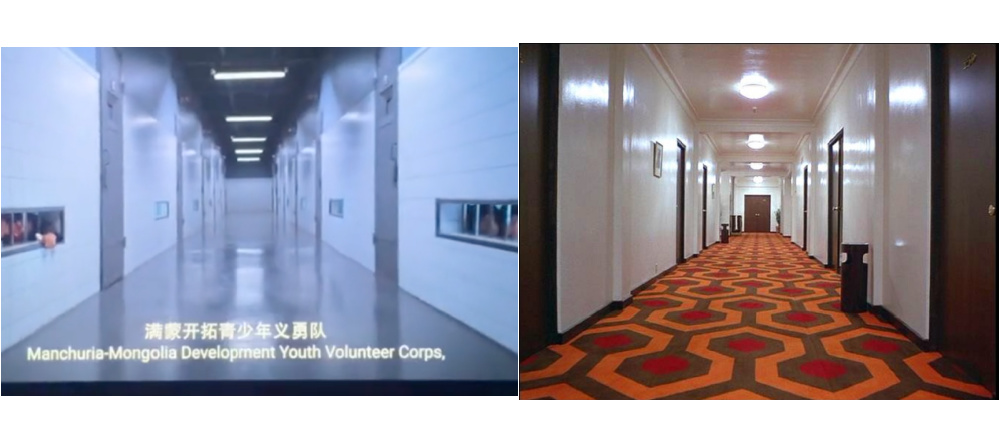
Scene from 731, which I thought sometimes had some echoes from The Shining.
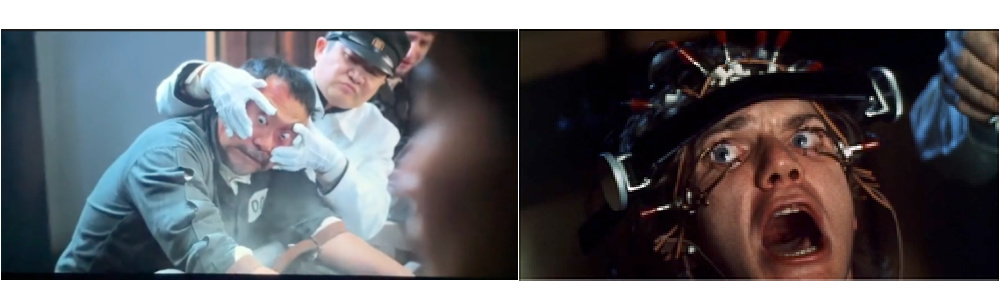
Another reference to Stanley Kubrick? 731 on the left, Clockwork Orange on the right.
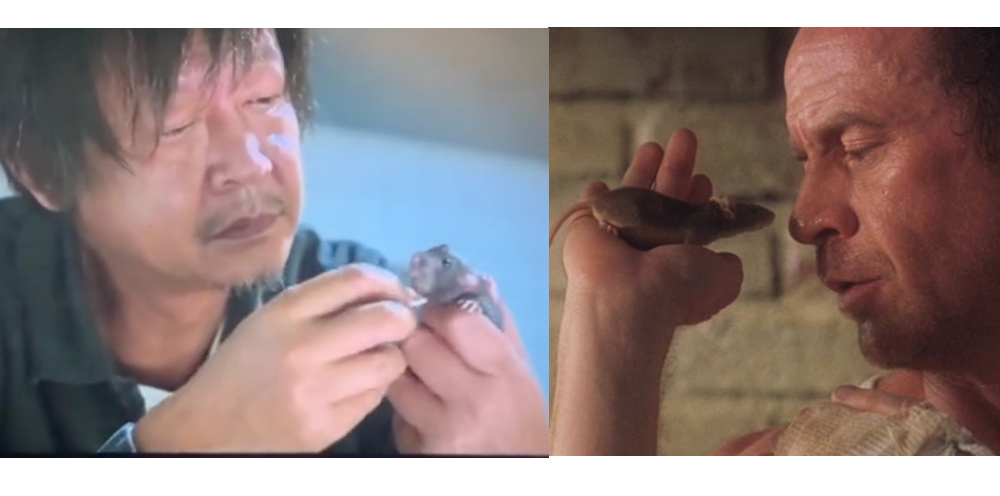
Prison mouse friend. 731 (left) and The Green Mile (right).
And that is also what most of the online critique is about – people feel that while the movie is supposed to be about creating awareness of a particularly horrific part of Chinese war history, the actual factual history seems to have ended up in the background.
One commenter from Harbin wrote:[5]
💬 “For Harbin, 731 is the most painful chapter of history. This movie uses a mass of absurd visuals and music to tell a story that has almost nothing to do with real history. All the information that truly should have been shown is brushed over in passing words, and in the end it just tells audiences ‘never forget history’? This tramples on the history of 731. Stupid and vulgar.”
Others are also upset over historical inaccuracies in the film — from the makeup to the sets, the props, and the biological experiments. Even the toilet paper used by the prisoners isn’t very realistic, with some commenters saying these kinds of details ‘drove them crazy’:
💬 “I’m born after 1990, and even I grew up with worse toilet paper than what the aggressors in those years apparently gave to their prisoners. Theirs was so high-quality you could fold it into bows and baby shoes. Must have been strong, durable, and waterproof.”[6]
One other reviewer on Douban wrote:
💬 “As a prison break film it’s not exciting, as a historical film it’s too careless, and as a drama it’s too fragmented.”[7]
Douban reviewer Qingyun (青云) noted that it jumps from relatively calm scenes to intense emotional outbursts or extreme cruelty without any buildup — instead of moving viewers to tears, it alienates them from the story and its characters.
He adds:
💬 “The film wants to exploit history’s seriousness to entertain the public, but also fears the theme is too depressing and will affect the box office, so it stuffs in commercial gimmicks (jokes, fantasy, spectacle). This opportunism sacrifices the solemnity that is rewired for the historical topic, while also failing to provide as qualified entertainment. The result: it offends history and disappoints audiences.”[8]
Most of these disappointed reviewers argued that the chance to tell the story of Unit 731 was wasted by a director and script that offered little context to the subject, with some even suggesting that another, 37-year-old film (Men Behind the Sun, 黑太阳731, 1988) did a better job of conveying the history of Japan’s biological warfare in China.
A ‘Masterful Cult Film,’ But a ‘Total Failure’ as a War Movie
Despite the wave of strongly negative feedback, there are also those who did find the film moving, giving it five-star reviews — some from those who stress the film’s value as a reminder to “never forget national humiliation,” while others genuinely appreciate its creative vision.
Douban commenter ‘Bat Lord’ (蝙蝠君) called it a “masterful cult film” with the film’s aesthetics being “built on a foundation of Western stereotypical Orientalism of Japan and layered with Christian martyrdom.”[9]
As an example, Bat Lord describes a recurring scene in which prisoners are taken from their cells toward “freedom,” only to be taken to lethal human experiments. They are escorted by Japanese guards in traditional kimonos with samurai swords, led by a geisha carrying a bright red umbrella and wearing impossibly high okobo clogs, followed by Edo-period guards with topknots and white kimono. Bat Lord calls it “Orientalist punk seen through a Western gaze” (“有一种西方视角的东方主义朋克的味道”).
The reviewer also interprets the main characters, the Chinese prisoners, as representations of Christian martyrdom. Cross symbols are indeed everywhere in the film, with prisoner No. 017 constantly drawing crosses on the wall, and an ingenious escape plan hidden in a dictionary as a series of crosses.
At the climax, after battling guards in kimonos with wooden swords, the prisoners flee toward a crematorium resembling a cathedral of light, where crosses formed from pure white beams symbolize freedom. But behind the cross loom the Japanese executioners. After a bloody massacre, the survivors are captured and executed — tied to crosses arranged around a pit, with fleas dropped on them from above as Japanese officers watch from a grandstand.
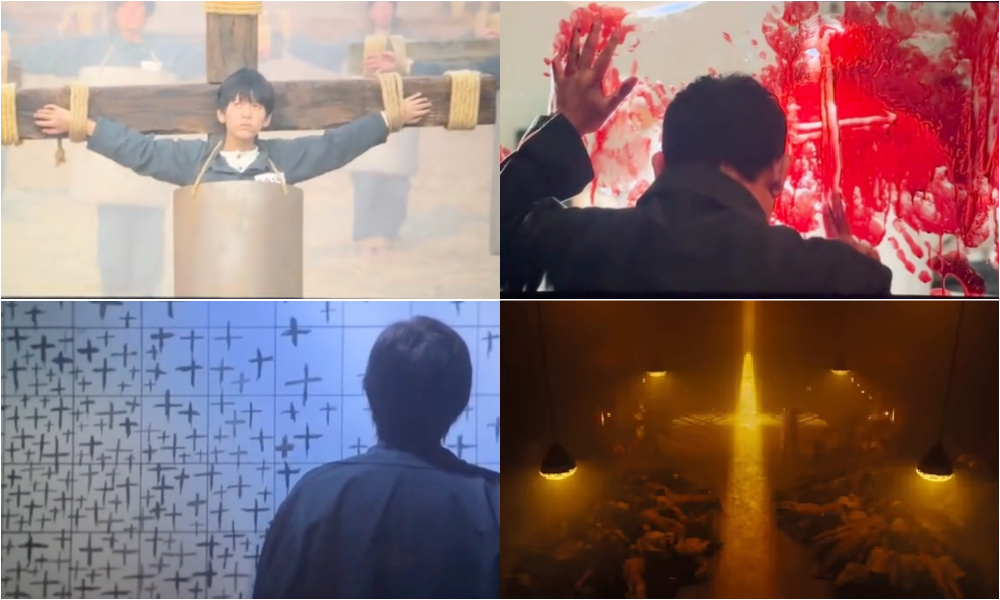
Cross symbols appear throughout the film.
💬 “It’s clearly a direct homage to Christian martyrs who were sacrificed in the Colosseum during the ancient Roman Empire. In the end, all the protagonists die martyrs’ deaths,” Bat Lord writes.[10]
He concludes that the film is “4/5 as an art house film, but zero points as a war movie”:
💬 “As a mainstream patriotic commercial blockbuster, it is a complete and utter failure (..) But as a niche cult prank film, it actually has some positive points (…) – built on exaggerated Orientalist visions of Japan, it feels strangely authentic. This kind of deconstruction of Japanese culture isn’t something the Japanese themselves could do — only the West or China, as seen in works like The Last Samurai, Ghost of Tsushima, and Shogun.” [11]
He adds:
💬 “The biggest problem is the subject matter. Using 731 — such a solemn, tragic history — only to hollow out its pain, exploit national emotions, and repackage it as a cult prank film disguised as a patriotic blockbuster, inevitably backfires. If it had been framed as a semi-fictional low-budget black comedy, the backlash wouldn’t be so severe.”[12]
“No Japanese in Heaven”: Over-‘Othering’ the Enemy
How could 731 have failed so miserably to live up to public expectations?
In recent years, Chinese museums, books, and popular culture have made many attempts to revitalize the history of war and make it more relevant to younger generations. In many cases, this has been successful, from popular war dramas to blockbuster films.
But Unit 731 is perhaps an especially difficult subject to adapt into a commercially successful film for a broad audience, especially since it chose to leave out the kind of contextualization that Oppenheimer provided in exploring the history, process, and character development that led to the atomic bomb.
Like the gas chambers of Auschwitz or Mengele’s brutal experiments, its history is so gruesome that there is little to focus on beyond the suffering of the victims and the cruelty of the perpetrators. (The film had already been postponed once, as it allegedly failed to pass official screenings due to its graphic scenes.)
War films in China are expected to reflect — or help shape — national identity. In 731, this means boosting national unity by focusing on Japan as the ultimate “Other,” the ‘constructed outsider’ against which the own national identity is defined.
The entire nation is cast as an enemy, depicted through exaggerated cultural symbols — geishas, kimonos, samurai, and cherry blossoms — regardless of whether they belonged in the actual prison setting. Japan’s national colors and imagery are fused with scenes of bloody and barbaric slaughter, turning Japanese cultural identity itself into a target.
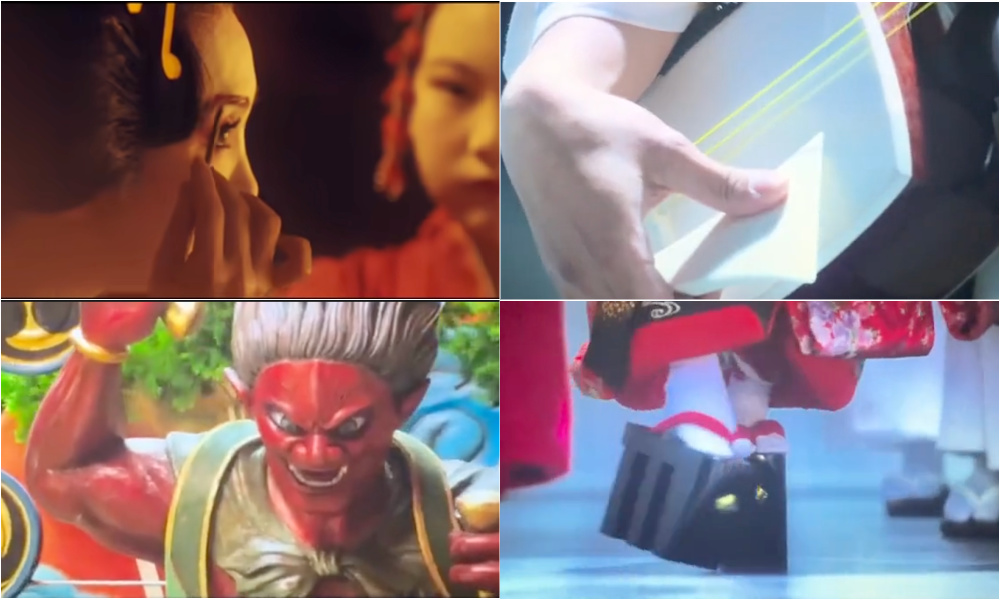
References to Japanese cultural symbols in the film.
In doing so, the film not only holds Japan as a whole responsible for its wartime aggression, but also strengthens Chinese identity by defining it in opposition to Japan, visually contrasting “good” versus “evil” through opposing characters, colors, and symbols.
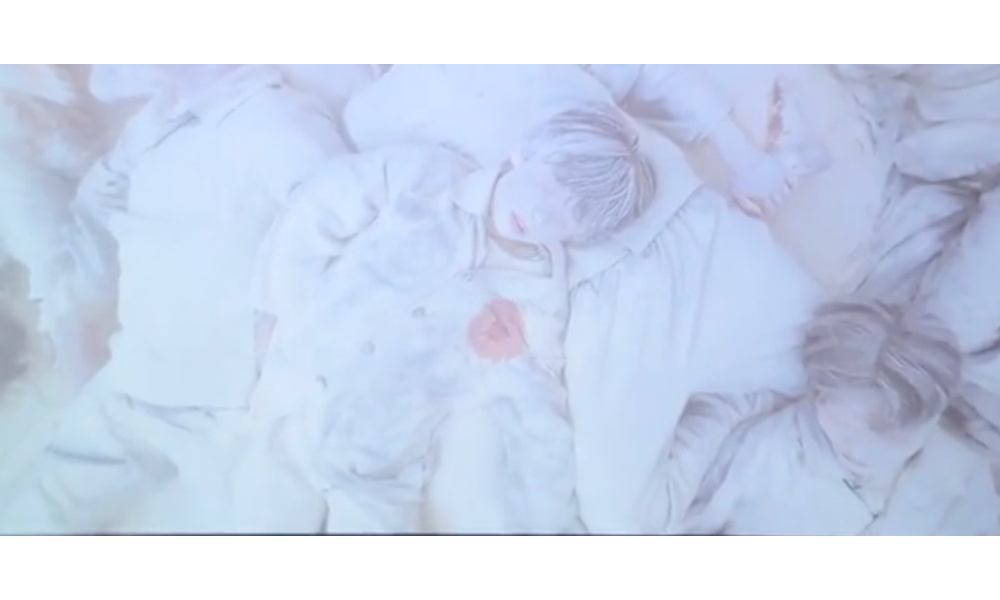
Clear visual symbols: dead Chinese bodies covered in white dust. With the red circle of blood, the scene resembles a Japanese flag.
This contrast is also made explicit in dialogue: at the beginning of the film, for instance, a young boy enters the stark white prison halls and asks, “Master, are we in heaven?” to which the older Chinese man replies, “Nonsense, how could there be Japanese in heaven?”
In promoting the film, director Zhao Linshan (赵林山) reinforced the image of Japan as the eternal “Other” by explaining that he had insisted none of the Japanese roles could have possibly played by Chinese actors, suggesting they would not be able to convey their evilness. Despite the difficulty of bringing over more than 80 Japanese actors during China’s ‘zero Covid’ era, when 731 was largely filmed, Zhao maintained that “only the Japanese can play this dual nature.”
While Chinese social media is often filled with anti-Japanese sentiment, many viewers criticized the depiction of “Japan” and the Unit 731 staff — not because of the anti-Japanese angle, but because they felt it trivialized history. They argued that Unit 731 was already so horrific that it needed no added gimmicks, tropes, or exaggerated villains to make it look bad.
As Douban reviewer Qingyun wrote:
💬 “Portraying devils as clowns diminishes their true guilt. The real criminals were rational, organized, and intelligent, embodying the will of Japanese militarism as a systematic project. Making them idiots (..) greatly underestimates the danger and organization of militarism, and is a severe simplification of history.”[13]
This critique goes further, suggesting the film both weakens its warning value (“the true terror is that advanced civilization and barbarism can coexist”) and cheapens the victims’ suffering (“if the enemy is so stupid, the tragedy seems less grave”).
On Weibo, one commenter criticized this one-sided approach:
💬 “I saw an auntie in Hangzhou who, after watching the movie 731, said she hated the Japanese devils so much — that she would hate them for her entire life. But this elderly woman, brainwashed by hatred education for a lifetime, doesn’t stop to think that (..) so many other brutal slaughters happened throughout Chinese history. If you only speak of hate, can your hate keep up with all of them? Shouldn’t we instead explore and reflect more deeply on the underlying causes of these events? Better to talk less of hate and more of love — because only the most genuine love from the depths of the human heart can ultimately prevent such tragedies from happening again.”[14]
Some viewers who appreciated the film, however, disagreed. One Weibo user wrote: “I watched the film with my husband and on our way home we scolded the Japanese, wishing we could throw two more atomic bombs on them. It was a good film.”
Between the history and the hate, the official narrative, the polarized audience reactions, and disagreements over the film’s message, 731 has brought more controversy than clarity.
But beyond the debate and confusion, one message remains clear. As one viewer wrote:
“The film wasn’t what I expected, but I’m not sure what I even expected? A good story? More like a documentary? There’s one thing I can say for sure: this movie is just a shell — the history itself is the soul.”[15]
By Manya Koetse
Spotted a mistake or want to add something? Please let us know in comments below or email us. First-time commenters, please be patient – we will have to manually approve your comment before it appears.
References
- “看完有种被诈骗的感觉” (source: Douban).
- “一句话评价《731》,导演按照《肖申克的救赎》拍出了《鱿鱼游戏》” (source: Xiaohongshu).
- “令人非常迷惑” (source: Douban).
- “短评骂的字数不够了实在是忍不了了” (source: Douban).
- “作为一个哈尔滨人,去过至少三次纪念馆,731对于哈尔滨就是最沉痛的一段历史,这个电影用大量极其荒诞的镜头和音乐,讲述一个基本跟真实历史毫无关系的故事,所有真正需要拍出来的信息全部是文字一笔带过,最后却告诉观众勿忘历史?这是对731这段历史的践踏。弱智且下流” (Source: comment section Sina).
- “作为一个90后,我出生的那个年代卫生纸质量都达不到侵略者给实验体使用的,纸的质量太好了,又是编蝴蝶结,又是编鞋子的,我猜应该是坚韧又耐用,透水都不断的那种吧” (Source: Douban long reviews).
- “或许是删减太多或许是各种局限,当做越狱不精彩,当做历史片太随意,当做剧情片太碎片”(Source: Douban).
- “影片既想利用沉重历史的严肃性作为宣传噱头,又担心题材过于压抑影响票房,于是强行注入商业娱乐元素(搞笑、幻想、刺激场面)。这种“既要…又要…”的投机心态导致影片既失去了历史题材必需的敬畏感,又未能提供合格的娱乐体验。最终,它既冒犯了历史,也辜负了观众”(Source Douban, review by Qingyun (青云).
- “西方刻板印象东方主义日本与基督殉难的碰撞,cult片的杰出之作”(Source: Douban, review by ‘Bat Lord’ (蝙蝠君).
- “很明显也在致敬古罗马帝国时期殉道在斗兽场的圣徒们。最终主角团全员殉道,无一幸免。”
- “这个片作为主流主旋律商业大片是完全的,彻头彻尾的失败,彷佛那纯纯的依托!甚至从预告片开始这电影就没有任何一丝一毫的符合历史,我从一开始就完全没有抱任何期望的去看,结果发现这片作为小众邪典整蛊片却颇有可取之处(。。)当你不认为这片是正常电影之后,这片表达出的那股子真的是超正宗的外国视角下的刻板印象东方主义日本美学、东方朋克味,这种对日本文化的魔怔向的解构其实我个人还真感觉挺不错的。这种解构日本人是搞不出来的,目前只有欧美和中国能搞出来,代表作就是《最后的武士》、《对马岛》、《幕府将军》之类的作品,里面的日本文化,日本武士道精神一个赛一个魔怔,欧美是往骑士幻想的那个路子去走的,我们是往黑暗邪典的路子去走的“
- “所以这片的最大问题还是选择了731这个严肃题材,完全在消解历史的悲痛,消费民族的情感,拍了个小众邪典整蛊片后,还按照主流商业片来包装和宣发,如果他拍成半架空的超小成本黑色喜剧我觉得反噬恐怕不会有这么大”(Source: Douban).
- “它美化了真正的邪恶:将恶魔塑造成小丑,实际上减轻了他们的罪责。真实的731部队不是一群疯癫的傻瓜,而是清醒的、有组织的、高智商的罪犯。他们的行为是日本军国主义国家意志的体现,是一个系统性的工程。把他们拍得弱智,仿佛这场悲剧只是一群笨蛋造成的意外,这极大地低估了军国主义的危害性和组织性,是对历史的严重简化”(source: Douban).
- “看到一位杭州阿姨看完电影731后讲太恨日本鬼子了,要一辈子一辈子的恨。这个被仇恨教育洗脑一辈子的老太太,您也不思考一下,嘉定三屠,江东六十四屯,南京大屠杀等等一系列的野蛮屠杀事件在中国历史上发生的太多了,光讲恨您恨的过来吗?不应该是更多的探究和反省发生这些事的深层原因嘛!还是少谈恨多讲爱吧,只有发自心底人类最真实的爱才能最后解决这些惨案在人类世界的发生吧”(Source: Weibo).
- Weibo user “红屋顶上的猫”: “我不知道该怎么评。首先在这个忙乱的日子里安排自己去看这个电影,我也说不清楚我是想铭记那段历史,还是想比较小时候看过的《荒原城堡731》,还有那部《黑太阳》。其次我也不知道电影从越狱视角切入,写实和魔幻风格交替,是好还是不好?但它和我想象的不一样,可我也不知道自己想看到的到底是什么样?甚至我也说不清我对这场电影的期待是什么?讲好故事?还是拍成纪录片?我只能确定,电影只是个壳子,那段历史才是灵魂。”
©2025 Whatsonweibo. All rights reserved. Do not reproduce our content without permission – you can contact us at info@whatsonweibo.com.
Follow What’s on Weibo on


Chapter Dive
Dialogues Across Time: Remembering War in a New China
“We are not friends, and have never been,” is a line that went viral recently in light of the heightened focus on war in Chinese media and popular culture.

🔥 This column also appeared in the Weibo Watch newsletter. Subscribe to stay in the loop.
“Comrade, are you from the new China?”
A man in a blood-stained 1940s PLA uniform sits in the grass beside a modern Chinese soldier in full combat gear, staring at him with quiet intensity. When told he is indeed from the “new China,” the old soldier leans closer and asks: “So… did we win?”

“We did,” the soldier replies, reaching for his phone to show China’s victory over Japan. But before he can reveal the proof, the old soldier has already transformed — his body bursting into a cloud of red dust from which dozens of pigeons rise into the sky

This short video was posted on Douyin earlier in August by a creator and ex-serviceman named “Comrade Pang Gangqi” (@彭港琦同志), together with “Combat Team’s A Sheng” (@战斗班阿生), a former firefighter. They are part of a growing nationalist circle of online creators producing videos with military and patriotic themes, often incorporating AI elements to stage imagined encounters where wartime fighters get to see modern-day China.
A recurring motif in these videos is that today’s soldiers “free” the spirits of those who fought in the 1930s and 1940s—either by telling them of China’s victory or by taking up their flag to continue the struggle.
Using AI, they merge past & present, tagging their content with the hashtag “Dialogue with New China Across Time” (跨时空对话新中国) (see some of the videos here).

Although the exact content of the videos vary, the format rarely does: WWII soldiers meet present-day servicemen or ordinary citizens and find release in the knowledge that their sacrifice helped build a prosperous China.

While it is unclear whether some of these creators post entirely independently or with official backing, their videos nonetheless became part of the state propaganda apparatus this month when major outlets — such as People’s Daily and Global Times — reposted them and promoted related hashtags onto Weibo’s hot lists.
One such hashtag, “Netizens Use AI to Talk Across Time and Space with Revolutionary Martyrs” (#网友用AI与先烈跨时空对话#), is just one among dozens of war-related topics dominating Chinese social media over the past two weeks.
This summer, memories of World War II—more specifically, the Second Sino-Japanese War (1937–1945), known in China as the War of Resistance Against Japan (抗日战争)—have occupied a central place in online narratives. Discussion peaked on August 15, the 80th anniversary of Japan’s surrender announcement.
The year’s weight in China’s collective memory is reflected not only in state media narratives but also in popular culture and online discourse.
The last time that the war was so ubiquitous on Chinese social media was probably in 2015, when the 70th anniversary of the end of the World War II in Asia was commemorated with a parade at Tiananmen as the first national, large-scale public commemoration of China’s role in the Second world War (Mitter 2020, 3).
Over the past two weekends, overnight drills for another major Tiananmen Square commemoration of the 80th anniversary of the end of WWII went viral. Spectacular videos of the military parade were widely shared by state media ahead of the official event scheduled for September 3, 2025, the day Japan formally surrendered. Around 22,000 people took part in the initial rehearsal, and the upcoming parade will be livestreamed to millions of viewers.
Further fueling online discussions about wartime history are two major new Chinese blockbusters centered on the Japanese invasion of China.
Although the Second Sino-Japanese War has long played a significant role in Chinese popular culture, it is rare—if not unprecedented—for two major WWII films to see an overlap in theatrical release. Over the past two weeks, both films have trended on Chinese social media, focusing on some of the most gruesome episodes of Japan’s full-scale aggression against China.
Nanjing Photo Studio: Painful Proof of a Massacre
Dead to Rights (official English title) or Nanjing Photo Studio (南京照相馆) revolves around the Nanjing Atrocities, commonly referred to in China as the Nanjing Massacre (南京大屠杀, Nánjīng Dàtúshā).
On December 13, 1937, after weeks of intense fighting in Shanghai, Japanese troops invaded Nanjing, then China’s capital, and over several weeks unleashed unprecedented violence: massacring civilians, including children and the elderly, raping women, looting, and burning the city. During those winter weeks of 1937–1938, an estimated 300,000 Chinese people were killed.
Nanjing Photo Studio, directed by Shen Ao (沈嚣), follows a group of young Chinese civilians and soldiers who seek refuge in a photography studio during the Japanese invasion and brutal occupation of Nanjing.
The story centers on Ah Chang, a postman (played by Liu Haoran 刘昊然) who assumes the role of a photo developer for the Japanese army to survive. When a Japanese military photographer requests him to develop film, Ah Chang and the others uncover the horrific atrocities happening beyond the studio walls, capturing war crimes through their own darkroom.

Dead to Rights/Nanjing Photo Studio Film promotion material
Although the photo studio storyline is fictional, the film is inspired by the real story of a Nanjing teenager named Luo Jin (罗瑾), who was only 15 or 16 years old in 1937–1938.
At the time, he worked as a clerk at the Huadong Photo Studio when a Japanese officer brought in two rolls of film for development. As Luo processed them, he discovered shocking images of Japanese soldiers looting and killing Chinese civilians. Luo secretly made a duplicate set of the atrocity photos and preserved them in a small booklet, which remained hidden until the end of the war. These photographs later served as “Evidence No. 1” (京字第一号证据) at the Nanjing Tribunal (Berry 2011, 117).
Dead to Rights premiered in late July, and this week it was announced that its theatrical run would be extended until September 24 (#南京照相馆密钥延期#). The film currently holds an 8.7 rating on Douban, where many commenters not only praise the production but also express strong anti-Japanese sentiments.
Dead to Rights is by no means the first film centered on the Nanjing atrocities. The first major feature film about the Nanjing Massacre was released in 1987: Massacre in Nanjing (屠城血证), directed by Luo Guanqun (罗冠群). That film also included a subplot about a photo studio owner who secretly developed photographs of atrocities and ultimately sacrificed his life to smuggle the evidence out.
As Michael Berry has noted in his discussion of the film, much of the Chinese discourse on the Nanjing atrocities has revolved around the need to “prove” that the massacre actually happened. Evidence—particularly photographs—plays a central role because since the 1970s, Japanese revisionists have actively disputed or outright denied what occurred in Nanjing.
Some deny the death toll of 300,000, claiming that as few as 10,000 perished, while others argue the entire event was fabricated. The emphasis on death tolls, photographs, and “evidence” has thus become a persistent thread in Chinese narratives about Nanjing, aimed simultaneously at domestic audiences, Japanese revisionists, and the international community.
Regarding the 1987 film, Berry wrote in 2011:
📰✍️ “The true tragedy of the film is that just as the characters struggle to prove that the massacre actually happened, so Massacre in Nanjing (..) is still struggling with the same issues—only now the film itself replaces the photographs as the chosen vehicle.”
This observation remains strikingly relevant for a movie made nearly forty years later, as so much discussion of the atrocities still focuses on the evidence—above all, the photographs—and how they were preserved to show the world the unimaginable violence and destruction that occurred in Nanjing.
Never Forget “731”
The second film fueling online discussion this month is 731 (七三一), directed by Zhao Linshan (赵林山), which focuses on the atrocities committed by Japan’s biological warfare Unit 731.
The film has already had a lot of online buzz and some anger over its original preview date of July 31st being postponed (delayed due to failure to obtain official approval, allegedly due to some gruesome scenes); but it is now officially scheduled for nationwide release on September 18.
That premiere date of September 18 carries great symbolic significance, as it marks the 94th anniversary of the Mukden Incident in 1931. That event—an explosion that damaged a section of Japanese railway—triggered Japan’s invasion of Manchuria and, rather than July 7, 1937, is regarded by many Chinese historians and officials as the true starting point of the Second Sino-Japanese War, making it a 14-year battle that merged into World War II after Japan’s attack on Pearl Harbor in December 1941.
Japan’s bacteriological activities that are at the center of this story are a particularly grim part of the Second Sino-Japanese War. The Japanese had a number of military units specialized in biological weapon research, of which Unit 731, based in Harbin, was the most notorious.
Established in 1936, the unit consisted of 150 different buildings and a staff of 3,000 that conducted research using both animals and imprisoned human subjects.
It is estimated that around 10,000 people in China and Manchuria died in these experiments. Apart from the research conducted in the units, the Japanese were also involved in ‘field tests’ that included large-scale contamination of water and food supplies. There were outbreaks of plague, cholera, and typhus due to aerial spraying and the dropping of bombs that consisted of infected fleas (Klietmann & Ruoff 2001; Koetse 2012).

Two film posters for 731, one announcing the original release date and the other the new release date (September 18).
The 731 movie, produced by Changchun Film Group in collaboration with the Propaganda Departments of Shandong, Jilin, Heilongjiang, and Harbin, will focus on ordinary people becoming victims of the Unit 731 experiments, and carries a strong message on its poster: “Never forget” (绝不遗忘).
Similarly, some of the film posters for Dead to Rights show a big slogan saying: “Remember history, never forget national humiliation” (铭记历史 勿忘国耻).
“We Are Not Friends”
Emotional AI videos, WWII blockbusters, and spectacular rehearsals for an unprecedented victory parade — what to make of this summer’s national remembrance of the Second Sino-Japanese War?
There are a few things I’ve noted while following the media campaigns and online responses to WWII discussions on Chinese social media these weeks.
🔹 War memory as nationalism. The memory of war, as an important part of popular culture, is being used as a vehicle for China’s new nationalism. This is not unique to China — it can also be seen in other countries, most famously in the US. But the focal points of remembrance shift with the times, as do the main messages surrounding these narratives. Right now, it is increasingly clear that painful war memories are being tied to positive messages about China’s bright future and its role as a great power, moving the emphasis from collective suffering to collective victory.
🔹 From national to transnational memory. There is an increasing emphasis on “letting the world know” (让全世界知道那段历史真相) about the Second Sino-Japanese War, especially gruesome chapters such as the Nanjing Atrocities and Unit 731. This reflects frustration that, in the West, the Sino-Japanese War is often taught as “China’s war with Japan” rather than part of the global conflict. As China’s international role grows, so does the drive to reframe these memories as part of world history.
🔹 From memory to justice. Hand in hand with the focus on collective suffering, victory, and China’s role in the Second World War, there is also a strong emphasis on past injustices and future justice. These narratives are closely tied to Japan’s official handling of the postwar era, as well as the ongoing denialism and revisionism among Japanese right-wing politicians and netizens.
Playing into all of these elements — nationalism, transnational memories of the Sino-Japanese War, and the search for justice — is actually a third Chinese WWII movie this summer titled Dongji Island (东极岛).
Dongji Island premiered in cinemas on August 8 and is based on the 1942 Lisbon Maru Incident. The Lisbon Maru was a Japanese cargo ship carrying — in terrible conditions — 1,816 British POWs from Hong Kong to Japan for forced labor. En route, the ship was torpedoed by a US submarine near the waters of Dongji Island, Zhejiang.
As the vessel slowly sank, the Japanese left the ship but sealed the prisoners inside the holds to die. Even those who managed to escape and jump into the sea came under Japanese gunfire. Despite this, Zhoushan fishermen risked their lives in small boats to rescue about 384 British prisoners of war. In total, 828 POWs died.

Chinese and international film poster of Dongji Island.
In a recent interview, the film’s director Fei Zhenxiang (费振翔) said: “Some Japanese even claim that it was they who rescued the British soldiers. History should be verified, so that the whole world knows the truth!”
China’s current heightened focus on the Second Sino-Japanese War right now is not exactly improving Sino-Japanese relations.
“We are not friends, and have never been” (我们不是朋友,一直都不是) is a line delivered by Liu Haoran in Nanjing Photo Studio while speaking to his Japanese enemy (in Japanese: 私たちは友達じゃない,絶対に).
The line has since gone viral, taken up by countless netizens who use it not just as a reckoning with history but also as a nationalist slogan and an expression of anti-Japanese sentiment.
It is clear that while China’s past is increasingly being remembered by bringing past fighters and present-day citizens together through the power of cinema and AI, and grand parades, the distance between Chinese and Japanese only seems to grow.
As long as the ways the war is remembered remains worlds apart, history will never bring them closer.
– By Manya Koetse
References:
Berry, Michael. 2011. “A History of Pain: Trauma in Modern Chinese Literature and Film.” United Kingdom: Columbia University Press.
Klietmann, Wolfgang F. and Kathryn L. Ruoff. 2001. “Bioterrorism: Implications for the Clinical Microbiologist.” American Society for Microbiology 14(2): 364–381.
Koetse, Manya. 2012. The ‘Magic’ of Memory – Chinese and Japanese Re-Remembrances of the Sino-Japanese War (1937-1945). Mphil Thesis, Leiden University.
Mitter, Rana. 2020. “China;s Good War: How World War II is Shaping a New Nationalism. Cambridge, Massachusetts: The Belknap Press of Harvard University Press.
Spotted a mistake or want to add something? Please let us know in comments below or email us. First-time commenters, please be patient – we will have to manually approve your comment before it appears.
©2025 Whatsonweibo. All rights reserved. Do not reproduce our content without permission – you can contact us at info@whatsonweibo.com.
Follow What’s on Weibo on
Eye on Digital China is a reader-supported publication by
Manya Koetse (@manyapan) and powered by What’s on Weibo.
It offers independent analysis of China’s online culture, media, and social trends.
To receive the newsletter and support this work, consider
becoming a paid subscriber.


Chinese Postdoc Death Raises Questions as Key Details Remain Missing

“Auntie Mei” Captured After 20 Years, China’s Train-Stain Scandal, and Zhang Xuefeng’s Final Lesson

Raising Lobsters, 6G Coming, and China’s DIY Deity Trend

Two Sessions, a Celebrity Meltdown, and the Rise of China’s “Forget It” Mindset

Inside the Great Chinese Debate Over the Iran War

Inside Chunwan 2026: China’s Spring Festival Gala
Inside the Great Chinese Debate Over the Iran War

Chinamaxxing and the “Kill Line”: Why Two Viral Trends Took Off in the US and China

Spring Festival Trend Watch: Gala Highlights, Small-City Travel, and the Mazu Ritual Controversy

From a Hospital in Crisis to Chaotic Pig Feasts
-

 Chapter Dive9 months ago
Hidden Cameras and Taboo Topics: The Many Layers of the “Nanjing Sister Hong” Scandal
-

 China Insight8 months ago
“Jiangyou Bullying Incident”: From Online Outrage to Offline Protest
-
 Chapter Dive11 months ago
Understanding the Dr. Xiao Medical Scandal
-

 China Arts & Entertainment6 months ago
The Wong Kar-wai Scandal Explained: The Dark Side of ‘Blossoms Shanghai’