SubscribeLog in
Connect with us

China Trend Watch

Raising Lobsters, 6G Coming, and China’s DIY Deity Trend

Chinese netizens “raising lobsters,” farmer pensions emerging as a key Two Sessions talking point, and humanoid robots running through Beijing — what you need to know about Chinese social media discussions this week.

Manya Koetse

Published

on

🔥 China Trend Watch (week 11 | 2026) Part of Eye on Digital China by Manya Koetse, China Trend Watch is an overview of what’s trending and being discussed on Chinese social media. This edition was sent to paid subscribers — subscribe to receive the next issue in your inbox.

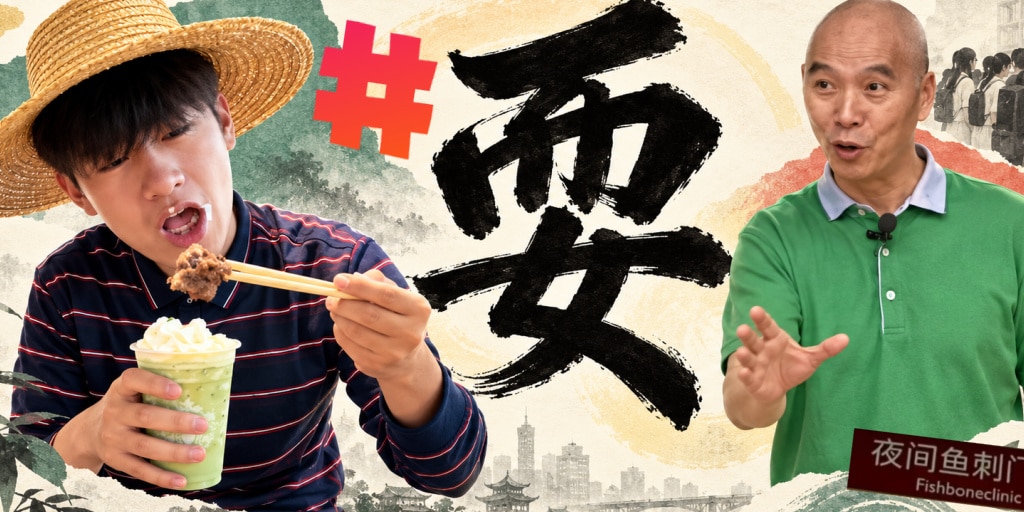
“It became a memorable moment in China’s meme culture recently: the popular fictional online character “Purple Potato Spirit” (紫薯精) has an emotional breakdown and is offered food for comfort by her male co-worker, who says: “If the whole world condemns you, I’ll take you to eat Liu Wenxiang” (如果全世界都指责你,我就带你去吃刘文祥).

The scene, from a short-video series by Douyin creator Zhou Xiaonao (周小闹), unexpectedly made the Chinese restaurant chain Liu Wenxiang (刘文祥) go viral, turning it into an internet hit as the trend resonated with overworked young workers who enjoyed the mix of cathartic online meme culture & affordable comfort food.

The viral moment caused immediate chaos. Liu Wenxiang stores across the country were overwhelmed by two-hour queues, ingredients sold out, and the “order explosions” (爆单) forced some locations to temporarily suspend operations altogether.

Who could have expected a Douyin comedy creator to catapult a long-standing Chinese brand back into the spotlight so suddenly — not through its own marketing, not through a brand collaboration, but because a fictional online persona is obsessing over its malatang (spicy skewer soup)? It’s very much China’s online culture.

While I’m writing this newsletter, however, China’s 3.15 Consumer Rights Day is dominating Chinese social media. Earlier tonight, the 36th edition of China’s annual consumer rights show (3·15晚会) aired — a joint production by CCTV and government agencies that aims to educate the public on consumer rights while exposing violations and holding companies accountable.

Tonight, Liu Wenxiang suddenly saw its image crumble as the show exposed that multiple franchise locations across the country had been substituting duck meat for the advertised beef and pork in various menu items. According to the report, staff knowingly misled customers even when they knew beef or lamb was not actually being delivered — a practice reportedly involving thousands of orders per location each month.

The price gap helps explain why: pure beef rolls cost ¥28 (about US$4) per 500 grams, while duck rolls cost just ¥7 (about US$1) — a fourfold difference.

Public opinion is currently in full swing, rapidly turning against the brand that people had embraced so enthusiastically over the past few weeks.

And that, too, is a sign of this social media age. Unofficial sources can make you go viral in a minute, but when you’re officially exposed for essentially scamming customers, it becomes very difficult to recover. I wonder whether “Purple Potato Spirit” will still be treated to Liu Wenxiang malatang after this scandal.

(For more on China’s consumer day show, see last year’s post here.)

Let’s dive into the other trends that were widely discussed on Chinese social media this week.

(Short note: if you’re reading this and appreciate the newsletter but are not yet a paying subscriber, please consider supporting it. Eye on Digital China is fully independent and reader-funded. Your subscription helps keep this work going.)


Quick Scroll

    • 🏎️ F1 Fever All eyes were on the F1 Chinese Grand Prix in Shanghai this weekend, especially given the cancellation of the Bahrain and Saudi Arabian races. The race was completely sold out, and Chinese media noted a marked increase in Chinese F1 fans, especially among women, with China’s current F1 fanbase exceeding 150 million.
    • 🥢Swallowed Chopstick A 46-year-old man named Wang from Dalian gained attention after visiting the doctor for a sore throat, and it was found that a 12-centimeter metal chopstick had been lodged in his pharynx for eight years. Wang told the doctors he had accidentally swallowed it during a meal but was too afraid of surgery to seek treatment. The chopstick has now been removed, and Wang is fine — the chopstick remains intact as well.
    • 📚 Iron Rice Bowl This weekend, 5.87 million people took the provincial civil service exams, known as the  Shěngkǎo (省考), across 23 provinces, competing for 126,000 positions in provincial and local government offices — an average of 47 applicants per job (with some desirable positions attracting as many as 1,900 applicants for a single post!).
    • 🚆 Boarding for Pyongyang Earlier this week, a train from China arrived in North Korea. As of March 12, the China–North Korea international passenger train operates four times a week between Beijing and Pyongyang. The train service, which remains highly restricted for ordinary travelers, had been suspended for years during and after the pandemic.
    • 🏛️ Mao Under Construction From this week until the end of August, the Chairman Mao Memorial Hall (毛主席纪念堂) at Tiananmen Square, which houses the embalmed body of Mao Zedong, will undergo internal renovation and construction work and will be closed to the public. The site, opened in 1977, draws millions of domestic visitors each year.
    • 🇨🇳🇺🇸 US–China Talks High-level US–China talks commenced in Paris on March 15. The discussions, led by US Treasury Secretary Scott Bessent and Chinese Vice Premier He Lifeng (何立峰), carry added significance because of their timing: right after the Two Sessions concluded and China’s 15th Five-Year Plan was approved, and before Trump’s anticipated China visit from March 31 to April 2 (although Beijing has not yet officially confirmed it).
    • 🌹 Steel Roses Victory China’s women’s national football team, officially nicknamed the Steel Roses (钢铁玫瑰), became one of the most-discussed sports topics on Chinese social media this week after the team secured their spot at the 2026 FIFA Women’s World Cup in Brazil, defeating Chinese Taipei in the AFC Women’s Asian Cup. The celebration in football balanced the online disappointment over the elimination of China’s table tennis champion Wang Chuqin (王楚钦) from the World Table Tennis (WTT) Champions Chongqing tournament after losing 2–4 to 18-year-old Japanese player Matsushima Sora.


What Really Stood Out This Week

Why Everyone in China Is Talking About “Raising Lobsters”

[#养龙虾为什么爆火#]

This week, everyone is talking about raising lobsters.

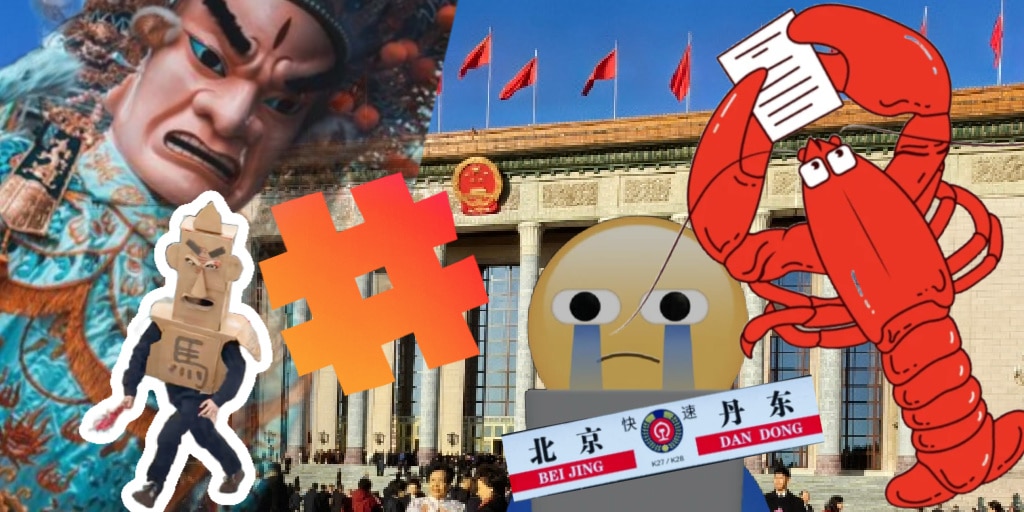
“Raising lobsters” in Chinese is yǎng lóngxiā (养龙虾), and it’s now widely used as a term for deploying AI agents. The reference to the lobster comes from the lobster-like creature that serves as the logo of the AI agent OpenClaw, formerly known as Clawdbot, developed by Austrian computer programmer Peter Steinberger and released in November 2025.

OpenClaw describes itself as a “Personal AI Assistant” or “the AI that actually does things,” such as sorting out your inbox, sending emails, managing your calendar, checking in for flights – all through the chat apps you already use.

So why is the open-source AI tool such a major success in China, going well beyond developer niche communities? One of the reasons so many people are talking about and using OpenClaw is that installing it has become a niche profession in itself.

Caiwei Chen at MIT Technology Review recently described how small companies and independent entrepreneurs in China, such as the young Chinese developer Feng Qingyang (冯庆阳), have directly contributed to the tool’s success by helping others install it. Feng began offering “OpenClaw installation support” in late January this year, and what started as a side gig has now grown into a full-fledged professional operation with more than 100 employees.

While in Western countries the comments by analyst firm Gartner, which described OpenClaw as an “unacceptable cybersecurity risk” last month, were still resonating, the AI tool’s popularity in China has surged in recent weeks. Companies like Feng’s have mushroomed across the country, with unofficial OpenClaw installation events drawing crowds in many cities. Larger corporate events are also attracting attention, such as a recent installation event at Tencent’s headquarters in Shenzhen that drew hundreds of participants.

By now, virtually all of China’s major tech companies have jumped on the hype. From ByteDance to JD.com, companies are offering a range of OpenClaw products and services.

Success stories quickly went viral, including a claim that an OpenClaw agent completed three weeks’ worth of work for six employees in just 24 hours. But the hype has also brought concerns, with online rumors circulating about people’s credit cards being charged unexpectedly or local files and emails being deleted.

Chinese authorities have now restricted state-run enterprises and government agencies from running OpenClaw AI apps on office computers, while official cybersecurity agencies have warned about potential security risks.

In the RealTime Mandarin newsletter, Andrew Methven explained the rise of the online phrase “one lobster, three ways” (龙虾三吃), a play on the name of a popular Chinese dish. With the latest security concerns, Chinese business-oriented programmers are spotting yet more money-making opportunities; In addition to OpenClaw installation services, some now also offer “uninstallation services.” In other words, people are now making lobster money in three ways with OpenClaw: installing the AI, training people how to use it, and uninstalling it when things go wrong.

Viral Weibo commentary from one blogger (@菜刀曦曦) neatly captured the hype cycle:

How fast the world changes these days. Yesterday I was scrolling Weibo and everyone was raising lobsters, paying to get it installed, and honestly I was tempted too. Today what I’m seeing is that the lobster is basically a Trojan horse, and now people are paying to uninstall it. Install: 500 yuan [US$72]. Uninstall: 299 yuan [US$43]. Those of us who didn’t follow the trend have effectively saved 799 yuan [US$115].”

—-

From 6G Dreams to Pension Debates: The Viral Topics of the Two Sessions

[#6G网要来了#] [#两会声音##] [#微观两会# ​]

In last week’s newsletter, I already discussed some of the main social media trends coming out of the Two Sessions. In the final days of China’s annual parliamentary meetings, which ended on March 12, several more noteworthy topics went trending.

📍 “6G Is Coming” (#6G网要来了#) became a hot-search phrase, as 6G was explicitly included both in this year’s Government Work Report and in the 15th Five-Year Plan, which lays out China’s strategic vision for the period from 2026 to 2030.

The report stated that China would nurture future industries, including 6G, quantum technology, and embodied AI, positioning itself as a global leader in 6G development. In November 2025, news emerged that China had completed its first real-world testing trial of 6G applications. Being roughly 100 times faster than 5G (you’ll be able to download a 4K movie in just one second), 6G is expected to become the future mobile standard, with commercial use in China planned for around 2030.

Beyond what was mentioned in the official reports or what happened in the corridors, it was mostly the policy suggestions and proposals from NPC delegates and CPPCC members that trended in public online debates.

📍 NPC delegate Tang Lijun (唐利军) proposed a “nighttime silence” for short video platforms, calling for a mandatory break from scrolling during 1 AM-5 AM to protect both children and adults from “unhealthy” social media use.

Although I believe it’s unlikely that such a measure would be enforced for everyone (for one, it could harm China’s digital economy), it might suggest that China’s current social media rules for children could be further tightened or even expanded to include individuals over 18.

📍 Overall, it’s clear that rest was a recurring theme during the Two Sessions. As discussed last week, there were discussions about adjusting Chinese public holidays and working fewer hours. NPC delegate and Xiaomi CEO Lei Jun (雷军) triggered all kind of discussions, one of them related to a comment he made during an interview with China News Weekly (中国新闻周刊), where he suggested that in the AI era people might no longer need to work eight hours a day or five days a week, and could perhaps work three days a week, two hours a day—dramatically improving quality of life.

Another proposal came from NPC delegate Zhong Baoshen (钟宝申), who suggested reducing the standard workday from 8 hours to 7 hours while significantly increasing overtime pay standards. This idea was not necessarily applauded online; many commenters argued that an extra day off would make more sense and expressed skepticism about whether shorter hours would actually happen, given that the current eight-hour day already often results in overwork.

📍Then there were the welfare-related proposals that went viral. Delegate Zheng Gongcheng (郑功成), also president of the China Social Security Society (中国社会保障学会), called for establishing a “Mother’s Pension System” (母亲养老金制度).

The proposal suggests that during child-rearing years, mothers would continue to accrue pension benefits for old age without reductions for time spent away from work.

This proposal resonated with many female netizens. One popular comment said:

Having children, raising them, caring for them… we spend countless sleepless nights and give up many work opportunities and personal time for it. Most of a lifetime’s energy ends up devoted to family and children. (…) Giving women who have given birth an additional pension subsidy is not an extra privilege; it is a recognition of the many years of sacrifice and effort we have made.

📍Other popular proposals were not about the gender pension gap, but about the rural–urban pension gap. At least nine proposals focused on how China’s farmers contributed enormously to the country’s development over the decades—submitting grain to the state even when hungry during the Mao years, or performing obligatory labor (义务工) building railways, reservoirs, and other infrastructure through the commune system.

Despite these contributions, many argue that rural residents have historically not been treated fairly under China’s national welfare system, and that their contributions mean the state now owes them a decent safety net in old age.

These proposals received waves of support online. China Digital Times archived one post from WeChat public account “Reflections on the Past” (往事随想录) by author Peng Yuanwen (彭远文), who called China’s rural pension dilemma “the hottest issue at this year’s Two Sessions,” one that “overshadowed everything else, almost giving the impression that this year’s Two Sessions had only one real topic.” He added: “In my twenty years of observation, this is unprecedented.”

Although the pension was raised by only 20 yuan (about US$2.90) this year, there is now a growing wave of voices—from politics, academia, and the media- calling for substantial increases to bring pensions for urban and rural residents closer to the lower level of the urban employee pension.

Peng sees this as the clearest signal that change may be coming:

Look around—the fields are already lush and green. Friends, can the autumn harvest still be far away?


On the Feed

DIY Deities

A traditional Fujianese folk ritual in which deity figures are paraded through the streets, accompanied by music, drums, crowds, and incense smoke, has been popping up on Chinese feeds in unexpected ways.

Recently (still ongoing today), dozens of netizens have gone viral on Douyin by jokingly recreating the Fujian “deity parade” (福建游神) ritual at home, at their workplace, or even in parking lots, using DIY deities and creative ways of throwing the “divination cups” (for example, tossing slippers instead).

From Sichuan to Henan, these creative netizens joke that “you don’t need to go to Fujian to see the deity procession.”

This year, a controversy over the selection of a spirit medium at a Mazu goddess procession—which I also covered in a previous newsletter—pushed these kinds of deity processions further into the mainstream than ever before. Suddenly, millions of people who had never paid close attention to these rituals were reading about divination cups, spirit possession, and the rules surrounding sacred selection.

Although that incident likely helped spark the current playful DIY deity trend, other figures appearing in these rural parades—also called “tagu” (塔骨)—had already gone viral before. One example is Zhang Shizi (张世子), a handsome figure in a rural deity procession who gained a sizable online fanbase, along with the subordinate “divine generals” (神将) that appear before and after the main deity, swaying and swinging their arms with attitude, and sometimes even bumping into spectators.

Going even further back is the trend of the “Electric-Techno Neon Gods” (电音三太子), which began years ago when Taiwanese temple youth groups started mixing sacred imagery with pop culture. They used the Nezha figure (哪吒, the Third Prince, 三太子) with a giant head, dancing to techno and house music instead of traditional percussion.

These current memes similarly blend religious ritual with pop culture, gamifying old customs in the social media age by treating participation in the folk ritual trend as a “cultivation path toward godhood.” Although it is all very tongue-in-cheek, there is also a clear appreciation of folk ritual aesthetics and spiritual customs behind it.

See videos here.


One More Thing

Humanoid Robots Spotted Running in Beijing Streets

Some Beijingers who were up and about early this weekend witnessed a surreal scene: humanoid robots walking through the streets of Beijing. From the evening of March 14 to the early morning of March 15, the humanoid robot half marathon held its first test run.

The robots will participate in the 2026 Beijing Yizhuang Half Marathon, scheduled for April 19 in Beijing’s Yizhuang Economic Development Zone. The race features a “human-robot co-run” (人机共跑) format: human athletes and humanoid robots will start together on the same route, with robots running in a separate designated lane.

See video of the early morning practice here.


That’s a wrap.

See you next edition!

Best,

Manya


Eye on Digital China, by Manya Koetse, is co-published on Substack and What’s on Weibo. Both feature the same new content — so you can read and subscribe wherever you prefer. Substack offers community features, while What’s on Weibo provides full archive access. If you’re already subscribed and want to switch platforms, just get in touch for help. If you no longer wish to receive these newsletters, or are receiving duplicate editions, you can unsubscribe at any time.

Manya Koetse is a sinologist, writer, and public speaker specializing in China’s social trends, digital culture, and online media ecosystems. She founded What’s on Weibo in 2013 and now runs the Eye on Digital China newsletter. Learn more at manyakoetse.com or follow her on X, Instagram, or LinkedIn.

Continue Reading
Click to comment

Leave a Reply

Your email address will not be published. Required fields are marked *

China Memes & Viral

A Chinamaxxing Brand, a Stressed-Out Possum, and Japan’s Lost Decades

How Adidas won and Nike lost, Japan’s lost decades as a mirror for China, and why a possum is the new workplace spirit animal.

Manya Koetse

Published

on

🔥 China Trend Watch (week 23-24 | 2026) Part of Eye on Digital China by Manya Koetse. Here I track and explain the stories, memes, debates, and viral moments shaping online conversations in China, so you don’t have to. This edition was sent to paid subscribers — subscribe to receive the next issue in your inbox.

 
What’s in this newsletter?

  • How Adidas turned a translation mistake into one of China’s most successful marketing campaigns.
  • Nike is trending for all the wrong reasons.
  • 10 quick scrolls: summer snow, a hidden-camera scandal, and the goose leg lady who sold duck legs all along.
  • Why Chinese readers are looking to Japan’s “Lost Decades” for answers.
  • Meet China’s newest workplace spirit animal.
  • Why Henan’s farmers are begging thieves to steal their crops.

Just five years ago, Adidas was one of the most criticized foreign brands in China. Now, it seems to have become one of the most celebrated. Ironically, the brand’s biggest China success yet started out with a mistake it made last month.

In 2021, Adidas – along with Nike and other foreign brands – faced severe backlash and boycotts in China for participating in the Better Cotton Initiative (BCI) move to stop sourcing cotton from the Xinjiang region, which Chinese consumers viewed as a hostile anti-Chinese political stance (and was framed that way by state media and official channels).

Chinese livestreamers for the brands were scolded online, Adidas employees were brought to tears, and stores across the country saw their sales drop. People began posting videos of themselves burning their Nike Air Jordans on Weibo. For the brands involved, it became a marketing nightmare.

Screenshot of SCMP report about the Nike sneakers being burnt, Adidas employees facing backlash back in 2021.

But now, Adidas has managed to completely turn its image around in mainland China, where it is being praised for its top-of-game PR skills.


Adidas: Heading to Town to Take Care of Business


Over the past few years, Adidas has increasingly embraced “New Chinese Style” (新中式), a design direction that blends Chinese aesthetics with contemporary fashion. The October 2025 launch of its “Chinese New Year Jacket”—combining tang suit-inspired elements with classic Adidas sportswear—became a huge hit, not just in China but globally.

The Adidas Chinese New Year that became a huge hit in 2025. On the left: American influencer Hasan Piker wearing the jacket while visiting Tiananmen Square in Beijing.

But that was only the beginning of Adidas’s social media success in China.

In late May, some netizens spotted a machine-translated text on the Adidas website that immediately went viral for its unintentional humor.

A jacket promoted in English with the unremarkable phrase “pair it with jeans for errands around town“ appeared on the Chinese website as the clunky “pair it with jeans to handle business in the city“ (搭配牛仔裤,在城里办事 zài chénglǐ bàn shì).

The original English text and the clunky machine translation on the right.

More than a simple mistake, it was a cultural mistranslation. Running some errands is not the same as 办事 bàn shì in Chinese, which is more formal, bureaucratic language for handling affairs, such as going to the bank, notary, or police station—not a quick run to buy some eggs and milk.

For many Chinese netizens, the phrase evoked an image of an old villager cycling into the county town for official business, all while wearing an Adidas jacket.

Although the website was quickly adjusted, the meme was already snowballing and evolved into the more playful “off to town to take care of business” (进城办事 jìn chéng bàn shì).

One popular comment played on the rural-to-city associations of the phrase:

💬 “While you’re back in the village talking trash about me, I’m already wearing Adidas and heading into town to take care of business.”

Adidas responded with surprising speed and wit.

Instead of apologizing for the mistake, they posted a video showing their own “off to town to do business” T-shirt, which quickly became available for sale online and at flagship stores in Beijing, Shanghai, and Chengdu.

Chinese actor and Adidas ambassador Li Xian (李现) was later spotted wearing a “handling business” T-shirt, and the comment sections exploded.

Adidas read the room and went on to launch a marketing campaign featuring China’s popular possum meme wearing one of its jackets alongside slogans such as “Wear Adidas, Handle Serious Affairs” and “Wear Adi, Handle Big Things“—a nod to the original mistranslation and a series of viral wordplays built around the brand’s Chinese name (including “穿Adi办大事” and “穿Adi, 办das”, with das meaning dàshì 大事, “important business” here).

They also put up signs labeling some of their stores as “Adidas Errands Office” (阿迪办事处).

Rather than distancing itself from the joke, Adidas amplified it, becoming even funnier than the netizens themselves. Other brands even jumped in on the hype and referenced Adidas in their campaigns.

Because the response felt effortless, authentic, and on-brand, it greatly boosted Adidas’s popularity and appeal among young Chinese consumers.


Nike’s Grass is No Longer Greener


Sportswear giant Nike also became a major trending topic in China over the past week, but for entirely different reasons. Nike hasn’t been doing all that well recently, and the brand’s decline went viral in the same week that Adidas’s success was evident.

Nike became a top trending topic under the hashtag “Chinese consumers are abandoning Nike faster than anyone expected” (中国消费者抛弃耐克比想象中更快) after reports that a pair of sneakers originally sold for 899 yuan (US$132) are now selling for 429 yuan ($63) and still failing to attract buyers.

Nike’s decline is noteworthy because the brand was once booming in China. As with many other Western brands, it symbolized quality, prestige, and a cosmopolitan future for much of the 1990s and 2000s.

In a 2011 study of Chinese consumer aspirations, one respondent imagined a future in which she would drive a Mercedes-Benz, wear Nike, and eat KFC—a vision of modernity built around foreign brands. Another person dreamt of wearing “Nike clothes and Nike shoes (…) on the green grass, swinging golf clubs under the golden sunshine.”[1]

But Nike’s grass is no longer greener. Chinese commenters largely agree that much of the trust and desire surrounding the brand has eroded.

Many former Nike consumers now prefer Chinese brands such as Anta, Li-Ning or ERKE. Multiple posts on Chinese social media cite the Xinjiang cotton controversy as a turning point from which Nike never fully recovered.


The Localization Dilemma: A Strategic Catch-22?


The contrasting fortunes of Nike and Adidas reveal something important about the position of foreign brands in China today.

As domestic brands improved and narratives of national rejuvenation and the “Chinese Dream” gained prominence under Xi Jinping, consumer sentiment toward Western brands shifted dramatically, especially amid a growing number of controversies involving them.

From a Dolce & Gabbana campaign deemed racist to a witch hunt for Western brands listing Hong Kong and Taiwan as separate countries, international brands increasingly started struggling to find their place between politics, patriotism, and consumers who are choosing “Made in China” over global consumer culture.

As Zhihong Gao[2] observed as early as 2012, the rise of cultural confidence and renewed appreciation for Chinese traditions created a dilemma for foreign brands.

They find themselves caught in a strategic catch-22: if they localize too much, they risk losing the distinctiveness that made their brands attractive in the first place, while also reinforcing consumer preference for local cultural elements; yet if they remain too foreign, they risk appearing culturally tone-deaf and disconnected from Chinese consumers.

This is where Adidas appears to have found a sweet spot.

Unlike Nike, which seems to be living off its past success while showing little urgency in adapting to the Chinese market, Adidas has fully embraced Chinese digital culture, local humor, wordplay, and youth trends without abandoning its own identity.

Rather than pretending to be Chinese, Adidas is participating in Chinese culture as a distinctly foreign brand. By celebrating the unique elements of Chinese culture, both in tradition and modernity, it is boosting both its own image and the cultural pride it is tapping into. That is Chinamaxxing in a nutshell.


[1] Kelly Tian and Lily Dong, Consumer-Citizens of China: The Role of Foreign Brands in the Imagined Future China (London: Routledge, 2011), 70–71.

[2] Zhihong Gao, “Chinese Grassroots Nationalism and Its Impact on Foreign Brands,” Journal of Macromarketing 32, no. 2 (2012): 184–185.


10 Quick Scrolls


🎓 Gaokao. From June 7-9, the Chinese 2026 Gaokao (高考, national college entrance exams), took place and dominated every major Chinese platform. One viral joke reflected a growing fear among young Chinese that a university degree no longer guarantees meaningful employment: “If you fail the exams, you could be a delivery driver in four days. If you pass the exams, you could be a delivery driver in four years.

❄️ Snow. One day it’s air conditioning; the next it’s snow. Beijing saw a rare case of “summer snow” on June 6, when a cold front and rain sent temperatures tumbling, leading to unexpected snowfall in the Yanqing Olympic Park area.

📸 Voyeurism. A hidden camera was discovered by students in a women’s restroom at the Shanghai University of Political Science and Law. The camera, pointed at a toilet stall, was linked to an account livestreaming footage to illegal voyeuristic groups. Police have detained a suspect: a 33-year-old male student at the university.

🐯 Corruption. Wei Xiaodong (魏小东), a veteran official whose career spanned more than four decades and included top positions in Beijing’s political establishment, is now under investigation for suspected serious violations of Party discipline and law. He is the seventh full ministerial-rank official placed under investigation so far in 2026.

🏢 Real Estate. A man in Xi’an who bought a presale apartment on the 34th floor was shocked to discover, when it came time to take possession, that the building had only been constructed up to the 32nd floor. Despite winning in court, he still has not recovered all of his money because the developer reportedly has no assets left.

🍔 Fast Food. Is there room for another player in China’s crowded fast-food market? The US chain Wendy’s is planning a major expansion into China, with a reported target of 1,000 stores over the next ten years.

📱 Extravagance. A Chinese man who paid 297,000 yuan ($43,900) for a luxury Vertu phone back in 2015 has gone viral after revealing it no longer works in mainland China because it only supports 2G. The alligator leather-and-diamond phone has effectively become a very pricey paperweight. “If I’d bought gold instead, it’d be worth five times as much today,” he lamented.

💙 Awkward. Blued (蓝色), China’s largest gay dating app, was temporarily down on June 9. As the app’s name appeared on Weibo’s trending charts, people were cracking up over the comments from women innocently asking what kind of app it is, since their husbands seem to be on it all the time.

🚀 Space Diplomacy. During Xi Jinping’s welcome banquet in Pyeongyang, images of Chinese astronauts were displayed on a giant screen. With every single moment orchestrated, the prominent display of China’s space achievements got some Chinese commentators talking about the possibility of a North Korean astronaut one day joining a mission to China’s Tiangong space station.

🦆 Duck legs. “Goose Leg Auntie” (鹅腿阿姨), the Beijing street vendor who went viral in 2023 for her mouthwatering roasted goose legs, has run into trouble with local regulators. Turns out she was selling duck legs all along.


What China’s Reading

Japan’s “Lost Decades” as China’s Mirror

As slower economic growth becomes the new normal in China, and anxieties about the future, employment, and AI disruption increasingly shape everyday conversations, many Chinese are looking back at the period following Japan’s economic bubble burst and asking what lessons China can learn from it.

This is why Japan as a Mirror: A Survival Guide for the Economic Downturn (以日为镜:经济下行期穿越指南) by author Wang Xiwei (王熙威) has become so popular. The non-fiction work, first published on WeRead on May 21, quickly climbed into the platform’s top rankings.

Wang, a China-born graduate of Peking University and the University of Tokyo who has lived in Japan for more than twenty years, uses a series of narrative case studies to explore how ordinary Japanese people navigated the country’s post-bubble stagnation, from the early 1990s onward.

The book zooms in on personal stories: elite university graduates working in convenience stores, a salaryman who becomes an internet café drifter, families trapped by decades-long mortgages, housewives embracing minimalism, and professionals forced to reinvent themselves after career setbacks.

By focusing on individual experiences during Japan’s so-called “Lost Decades,” Wang seeks to offer Chinese readers perspectives on coping with uncertainty and adapting to economic change. The book presents Japan as a mirror for contemporary China, which is also facing economic slowdown, demographic pressures, and reduced social mobility, and widespread online discussions about neijuan (”involution”), tangping (”lying flat”), and consumption downgrading.

One 5-star review on Weibo said:

💬 “Many feel that, as individuals, we can’t change the broader environment. But what we can do is look at how different industries in Japan changed during periods of economic decline—and the new opportunities that emerged from those changes—and use those experiences as a reference when making our own plans. In doing so, we may be able to prevent our own lives from slipping into a “downturn period” of their own (下行期).”


On the Feed

Possum Staring Out Window: China’s New Meme Spirit Animal

Chinese social media has been taken over by a little opossum staring out of a window with its hands behind its back. Standing there, the little creature seems to be contemplating life. The image is often accompanied by self-deprecating one-liners such as:

– “I may not have made any money, but at least I exhausted myself.

– “When I handle something, you definitely shouldn’t feel reassured.

The “hands-behind-back opossum” (背手负鼠) has become an unexpected social media star and emotional spokesperson for young people in China. They appreciate the ugly-cute animal because, although it looks calm and collected on the outside, they imagine it is actually exhausted and anxious on the inside (appropriately enough, the opossum’s most famous defense mechanism is pretending to be dead). They relate because it’s how many of them feel in their daily lives and at work.

It’s unclear where the original photograph came from, but since it was first adapted as a meme, it has exploded from WeChat to Xiaohongshu and beyond.

By now, its use has become highly versatile, and the opossum itself has become a mood—especially when it comes to frustrating workplace dynamics:

– “Received. Cannot be done.”

– “This matter is not urgent, but it definitely needs to be done fast.”

– “As for tomorrow’s matters, you’ll know the day after tomorrow.


The Online Phrase to Know

“Want Some Garlic Scapes?”

· 你要蒜苔吗?Nǐ yào suàntái ma?

· or: 要蒜苔不? Yào suàntái bù?

Henan’s meme of the year started because farmers have so many garlic scapes, they’re practically begging people to take them away.

Since May, “Want some garlic scapes?” has become a local joke and alternative greeting in China’s Henan province — and a sign of the sympathy many people feel for struggling farmers.

Garlic scapes, the curly green shoots of the garlic plant that are eaten as a vegetable, have seen such an oversupply that prices fell below the cost of harvesting them. Yet farmers couldn’t simply leave them in the fields, because that would reduce the yield of the garlic bulbs themselves.

In other words: farmers didn’t want the garlic scapes, but they couldn’t afford not to harvest them either.

The situation quickly became meme material. One Henan farmer went viral on Douyin after saying: “I hope 50 thieves come today and steal all my garlic scapes. If you don’t know how to steal, I’ll teach you…”

Image: A meme showing two sad-looking dogs standing in farm fields, each trying to attract garlic-scape thieves. One dog shouts, “Come steal from my field first!”

Another running joke is that people have started secretly hanging bundles of garlic scapes on their neighbors’ door handles before running away. Home security cameras, one article joked, are no longer being used to catch thieves. Instead, they’re being used to identify anonymous garlic-scape givers so the vegetables can be returned.

The memes keep coming, with AI-generated images imagining garlic-scape fashion, garlic-scape artwork, and even questionable inventions such as garlic-scape-flavored lattes or beer.

Behind the humor lies a harsher reality. According to Lanjing News, many farmers can no longer afford to hire workers to harvest the crop. Some families that previously earned around 30,000 yuan (US$4,200) a year from garlic scapes alone may make only a third of that this year.

Part of the problem is that strong garlic prices encouraged farmers to increase production. But bumper harvests across multiple regions all reached the market during the same April–May period, worsening the oversupply and pushing prices down even further.

The situation is an economic nightmare for many farmers. On the bright side, besides having plenty of garlic scapes, Henan now also has plenty of online jokes.


That’s a wrap!


Continue Reading

China Arts & Entertainment

The Reunification with Taiwan is Hitting Chinese Cinemas This Summer

A new state-backed epic about the Qing conquest of Taiwan is stirring debate. Plus: the Shanxi mine disaster, a controversial prison film, hukou reform, and China’s top 5 rising books.

Manya Koetse

Published

on

🔥 China Trend Watch (Week 21–22 | 2026) Part of Eye on Digital China by Manya Koetse, China Trend Watch is an overview of what’s trending and being discussed on Chinese social media.


In this edition:

  • China’s upcoming Taiwan reunification blockbuster
  • 8 Quick Scrolls to Know
  • The Liushenyu coal mine disaster exposes hidden tunnels, “yin-yang maps,” and systemic safety failures
  • A controversial prison film starring a convicted killer is pulled from cinemas
  • China announces major hukou reforms
  • China’s Top 5 Rising Books
  • Why everyone is saying: “I genuinely did feel uncomfortable”


Chinese cinema is “riding the winds of history.”[1] While the biggest films of the 2025 summer movie season focused on the Second Sino-Japanese War, this year, it is China’s military campaign to take Taiwan that is heading to the big screen.

The movie Battle of Penghu (澎湖海战), scheduled to premiere in mainland China on July 25, is a state-backed historical epic centered on the major naval battle that ultimately led to the Qing conquest of Taiwan.

Over the past week, the film held its first full preview screenings, released its theatrical trailer, unveiled a series of posters, and triggered online discussions.

The film’s narrative and promotional slogans make clear that its timing is neither coincidental nor merely historical. The movie is deeply entangled with contemporary cross-strait politics and Beijing’s message that unification with Taiwan is inevitable and “unstoppable.”

The “Battle of Penghu”, also known as the Battle of the Pescadores, took place in 1683, when Qing dynasty admiral Shi Lang (施琅) defeated the forces of the Zheng regime in Taiwan, which was basically the last big Ming loyalist center after Beijing had already fallen in 1644. Shi Lang’s victory at sea led to the Zheng regime’s surrender and the Qing annexation of Taiwan, formalized in 1684 when Taiwan was incorporated as a prefecture of Fujian province.

Over the past decade, China has increasingly fused Hollywood-style commercial filmmaking with state propaganda goals. Although Xi-era patriotic blockbusters had appeared earlier, the 2021 Korean War epic The Battle at Lake Changjin marked a turning point: it showed that a visually spectacular film could become both a massive commercial success and an effective vehicle for state messaging.

Beyond serving as spectacular propaganda and a nationalist boost, The Battle at Lake Changjin also became a platform for promoting a new narrative about China’s role in the Korean War. The film helped breathe new life into these narratives among younger Chinese moviegoers, who bought merchandise, checked in online while watching the film, and even posted photos of themselves eating frozen potatoes — echoing scenes from the movie based on the real experiences of soldiers on the battlefield.

The victory the Chinese soldiers achieved on the battlefield in Korea against the Americans was a reminder of Chinese courage and pride at a time of heightened Sino-American tensions.

Battle at Lake Changjin caused a real social media frenzy surrounding its merchandise and people eating frozen potatoes to share in the hardships felt by those on the battlefield.

Last year, similar dynamics unfolded when Dead to Rights (Nanjing Photo Studio, 南京照相馆) hit theaters, focusing on the Japanese invasion of Nanjing and the atrocities that followed. Together with Unit 731 and Dongji Island (东极岛), it formed part of a broader cinematic re-narration of the Sino-Japanese War (read more here).

The films were accompanied by a wider state media campaign emphasizing how China’s War of Resistance against Japan, as an integral part of World War II, represented China’s major contribution and sacrifice in the global fight against fascism, underscoring the country’s important role in shaping the postwar world order.

Now, this upcoming Taiwan-focused blockbuster seems to follow a similar playbook.

The movie is directed by award-winning Hong Kong filmmaker Cheang Pou-soi (郑保瑞). Wang Xueqi (王学圻), one of China’s most respected veteran actors, stars as Admiral Shi Lang, while the super-popular Jackson Yee (易烊千玺), the TFBOYS pop idol who turned into an acclaimed actor, plays the young Emperor Kangxi. Other major names starring in the movie include Zhao Liying (赵丽颖), one of China’s most renowned female stars, and Geng Le (耿乐), who also starred in Battle at Lake Changjin.

Promo posters for Battle at Penghu.

Besides the cast, the other details surrounding the production of the film are also impressive.

The crew reportedly spent 34 months in preparation, constructing 50 ancient warships, including twelve battleships of nearly 40 meters long, allegedly the largest historical naval replicas ever built in China. Most of them were destroyed during filming. We can expect some spectacular scenes.

Although this summer blockbuster appears to have the right formula for another Battle at Lake Changjin-like success, criticism is surfacing online.

Many netizens argue that the film should never have celebrated Admiral Shi Lang as its hero, and that it would have been more appropriate to focus on Zheng Chenggong (鄭成功, Koxinga) instead, since he is the one who expelled a foreign colonial power, the Dutch VOC, in 1662 and established the first Han Chinese governance on Taiwan. Due to this story of resistance against Western imperialism, many see Zheng Chenggong as the true hero.

💬 As one commenter writes: “Zheng Chenggong [Koxinga] drove out the Dutch colonizers and recovered Taiwan — what does that have to do with Shi Lang? Instead of making a film about Zheng Chenggong, they chose to make one about the traitor Shi Lang.

Adding to this criticism, others wondered why a movie celebrating the Qing dynasty’s defeat of the Ming loyalist Zheng regime — framed by some netizens as “Manchu forces defeating Han Chinese” — should be treated as part of Chinese history worth celebrating.

Shi Lang’s backstory makes him a contested figure in Chinese history. Originally, he was a general under Koxinga until he switched allegiances and ultimately surrendered to the Qing, leading some critics to label him a traitor (“汉奸”) rather than a hero.

One relevant study by Ronald C. Po [2] into the historical commemoration of Shi Lang argues that Shi Lang’s image has been continuously reconstructed since the Qing dynasty to serve shifting political agendas.

In this case, Shi Lang is framed as the admiral who “unified” Taiwan with China, making him an important historical anchor for the one-China narrative.

In the end, that’s what it’s all about — and the movie’s official tagline is clear about that: “What is isolated must return; what is divided must unite” (“孤悬必归、分疆必合”). Its trailer closes with the slogan “Unifying Taiwan is unstoppable” (“统一台湾,势不可挡”).

Whether Battle of Penghu will become as big a box office hit as Battle at Lake Changjin remains to be seen, but I doubt it, since we know that it’s putting reunification with Taiwan on mainland cinema screens this summer in a way many Chinese find flawed.

One critical reviewer, popular Weibo account @释不归, says:

💬 “The core historiographical flaw of Battle of Penghu does not lie in its ‘choice of the Qing dynasty’s perspective,’ but in its systematic concealment through a ‘unification narrative’ (统一叙事) that forcibly whitewashes a history full of moral grey zones into a binary confrontation between justice and evil.

For this reason, some say they will boycott the film, while others are celebrating it as a blockbuster promoting unification with Taiwan. Either way, it promises to spark a debate worth watching, and it’s one I’ll certainly be following this summer 👀🍿. I will report back to you after I’ve seen it!

There’s a lot more to catch up on, so keep reading to see which stories dominated online conversations in China over the past two weeks.


Quick Scrolls

  • 🌧️ Severe rainstorms and extreme weather triggered flash floods in Chongqing’s Yongchuan District, leaving nine people dead and eleven missing.
  • 🏪 The “Father of the Convenience Store,” 7-Eleven founder Toshifumi Suzuki (铃木敏文), is being remembered on Chinese social media following his passing in Tokyo at the age of 93. Netizens praised Suzuki for bringing 24-hour convenience culture to Asia and reshaping global retail.
  • 🇷🇸 The first-ever China state visit by Serbian President Aleksandar Vučić became a major talking point on social media, where many netizens refer to Vučić as “577” because his Chinese name sounds similar to “5-7-7” (五七七 wǔ qī qī). Vučić said he was aware of the nickname and perfectly happy being “577.”
  • 🎬 The Chaoshan-dialect film Letters to Grandma (阿嬷的情书) surpassed 10 billion yuan ($1.38 billion) at the box office within 25 days. With a 9.1 rating on Douban, the underdog production has become one of the biggest surprise hits of 2026, achieving massive success without major stars or blockbuster budgets.
  • 🏛️ Wuhan University recently opened its campus to the public without requiring reservations. Although not everyone is happy about visitors roaming the grounds and taking photos, the move has sparked broader discussions about how Chinese university campuses, as important cultural and public spaces, should be made more accessible.
  • 🚀 After nearly seven months in orbit, the Shenzhou-21 crew welcomed the incoming Shenzhou-23 astronauts aboard Tiangong. The docking marked the eighth “space meetup” in Chinese spaceflight history and the first time an astronaut from Hong Kong entered the space station.
  • 🛵 Olympic swimmer Sun Yang (孙杨) went viral after grabbing his phone during a TV interview to order food delivery. One related Weibo hashtag — “Sun Yang suddenly starts ordering food during interview” (#孙杨采访时突然开始点餐) — received over 61 million views. Some commenters described him as a typical post-90s-generation personality who simply does whatever he feels like.
  • ☠️ One of China’s most sensational corporate crime cases has come to an end. Xu Yao (许垚), former CEO of Santi Universe, the company holding the rights to the hugely successful The Three-Body Problem IP, was executed on May 21, two years after being convicted of poisoning gaming tycoon Lin Qi in 2020. Xu used a deadly mix of pufferfish toxin and amatoxin and also poisoned four other colleagues with methylmercury.
  •  


The Week’s Key Stories

Hidden Back Doors, Yin-Yang Maps: The Liushenyu Coal Mine Disaster

The catastrophic gas explosion at the Liushenyu Coal Mine (留神峪煤矿) in Qinyuan County, Shanxi, has dominated Chinese news discussions over the past week. The explosion, which occurred on the evening of May 22, killed at least 82 people, while 123 others were hospitalized with injuries of varying severity. Two people remain missing.

This is the worst coal mine incident in China since 2009, when an explosion at the Xinxing coal mine (新兴煤矿) in Heilongjiang killed 108 people.

Soon after the incident in Qinyuan, discussions began focusing on safety violations, especially after the reported numbers failed to add up. At the time of the explosion, 247 workers were reportedly underground, yet the company operating the mine, Tongzhou Group, had recorded only 124 names in the entry log, meaning around 123 workers had entered the mine without following required protocols.

During rescue operations, emergency workers soon discovered that the mine’s official maps did not match the actual underground layout. Tongzhou Group had apparently been operating with so-called “yin-yang maps” (阴阳图纸): two versions of the mine plan — one official version shown to inspectors, and another real version used in practice.

In a May 26 Xinhua report, it was revealed that the mine even had camouflage doors (假门) — constructed from steel mesh wire and woven sacking to resemble tunnel rock walls — to conceal unauthorized tunnels from safety inspectors. When inspectors arrived, workers inside would reportedly seal the door and smear it with coal dust to make it indistinguishable from the surrounding tunnel walls.

In this way, the mine could maximize output and produce extra coal outside official quotas without reporting it. But it also meant these hidden areas fell outside formal oversight and safety protocols, which is why they are referred to as “invisible bombs” (隐形炸弹) within the mining system: gas could accumulate due to insufficient ventilation.

The mine had already been listed in 2024 by China’s mine safety regulator as a site with “serious hazards.”

On social media, the disaster has sparked anger over systemic failures surrounding a mine disaster many viewed as preventable, and over management’s apparent disregard for the lives and safety of its contracted workers, who already occupy some of the most dangerous and lowest-status positions in China’s labor market.

In multiple ways, the Liushenyu Coal Mine disaster shows similarities to the recent Liuyang fireworks factory explosion, which also occurred in May.

Although the two disasters took place in very different industries and locations, they reveal a similar pattern: there had been explicit prior warnings in official records that went unaddressed; inspections identified problems but failed to halt production; hidden production conditions/mechanisms were involved; and both disasters killed dozens of vulnerable migrant workers employed through informal labor arrangements.

One comment pretty much rounds up a general sentiment:

💬 “For the sake of enormous profits, they completely disregarded safety and basic human morality, and showed utter contempt for human life, which is an unforgivable crime! The leadership must receive the death penalty!


Award-Winning Prison Film Starring Convicted Killer Pulled in China

A Chinese film that was supposed to premiere in mainland cinemas on May 30 has backfired and been pulled following days of controversy and intense online discussion.

The movie, titled Mom from Prison (监狱来的妈妈) in Chinese and using the English title Her Heart Beats in Its Cage, was marketed as a domestic violence film “based on a true story,” with the convicted killer in the movie played by the actual person involved — Zhao Xiaohong (赵箫泓).

Zhao was sentenced to 15 years in prison for killing her husband in 2009 during a domestic violence incident in which she stabbed him with a fruit knife.

Director Qin Xiaoyu (秦晓宇) and famous TV host and producer Wang Han (汪涵) then developed a film around Zhao’s story, presenting it as a sympathetic anti-domestic violence narrative about a woman who suffered long-term abuse, finally struck back, accidentally killed her husband, and later tried to repair her relationship with her son while in prison.

Although the film received approval to be screened in China and performed well at various foreign film festivals, including the San Sebastián International Film Festival, everything fell apart when Chinese netizens collectively criticized the gap between the movie’s narrative and the legal realities of the case. How “true” was this story if the killing was never legally ruled as self-defense, and if the judgment explicitly stated that no domestic abuse had been recognized or evidenced in the case?

Beyond that, many pointed out that Zhao was still formally serving restrictions tied to her prison sentence while participating in a commercial film production, raising questions about how a convicted killer could end up starring in a feature film about her own crime.

Moreover, when the project began in 2019, the production team reportedly applied for permission to film inside prisons under the category of a “public-interest correctional education documentary” (公益教育改造纪录片), which many commenters — including those in this Zhihu thread — considered deceptive.

Although domestic violence has received increasing public attention and sympathy in China in recent years, many argued that this particular project crossed an ethical line and used “feminist-coded content” (女权话题) to glamorize the story of a convicted killer.

“If they had simply used another actress and treated the story as artistic adaptation, perhaps things would never have become this serious,” one Zhihu commenter wrote.

Following the overwhelmingly negative public reaction, Zhao Xiaohong’s social media accounts were silenced, while the film bureau announced that screenings had been suspended due to public complaints and an ongoing investigation. Wang Han also apologized for becoming involved in the project without properly researching its background and content, and announced he had cut ties with the film.

This is one movie that definitely won’t be getting a sequel.


Hukou Reform Announced: Public Services Will Now “Follow the Person”

China’s Household Registration System won’t be as important anymore – that’s the message that was reiterated across Chinese social media by state media, becoming top news on Weibo, Toutiao, and Baidu News on May 27 (#户口以后没那么重要了#)

This comes after China’s State Council, for the very first time, has issued a national-level directive to decouple basic public services from household registration (户口, hùkǒu).

The hukou or ‘household registration’ system is China’s registered permanent residence policy that has been in place in China since 1958. A hukou is assigned at birth and basically works like an official place-based ID. China’s hukou system, among others, separates rural and urban citizens and is essential for access to social services, including education and healthcare.

Because the hukou is tied to one’s registered place of origin rather than to an actual place of residence, it creates problems for the estimated 250 million people in China who have moved elsewhere to live and work. When their children’s access to public schools is closed off, many families choose to leave children behind in their native, more rural areas to live with grandparents or other caregivers. These “leftover children” are just one of many broader problems of urban-rural inequality behind the hukou system, particularly regarding access to public benefits and healthcare.

In this new policy, filed on May 18 and presented at a May 26 press conference, social services, basic benefits, and protections will follow the person, not the hukou. That means that as long as a person resides in and is legally employed in a place, has registered a residence permit, and has paid social insurance, they are entitled to equal access to basic public services as local hukou holders.

In the aftermath of the announcement, social media commenters seem cautiously positive yet skeptical, and still have many questions about the practicalities and the extent to which this will actually change things.

One important question revolves around the gaokao (高考) system – China’s national college entrance exam. Traditionally, one’s hukou affects where a child can go to school and where they can take the gaokao. If this were to change, it would essentially change the rules of the playbook that matters most to many students and their families, as it’s the main doorway to university in China, and university access is tied to later life and career chances.

Some people also express anxiety about the knock-on effects on urban property markets and school enrollment: they think cities like Beijing or Shanghai will get even more crowded in the near future. Who knows how many people will rush there to work now for their kids’ sake?

The optimism about the policy does shimmer through most comments, like one person writing:

💬 “It’s important to be realistic: while the policy lowers the barriers, high-quality public resources remain limited. Achieving complete equality will still take time. But at least the overall direction has changed. Treatment is no longer determined by a piece of paper called a hukou. If we work hard and build our lives in a city, we should be able to enjoy the corresponding protections and services there. And that is the most meaningful source of security this policy provides.”


What China’s Reading

Top 5 Rising Books in China This Week


📚1. Work, Consumerism and the New Poor by Zygmunt Bauman | 工作、消费主义和新穷人

Work, Consumerism and the New Poor is rising on China’s popular book and reading charts this week. The 1998 work by Polish sociologist Zygmunt Bauman (translated into Chinese in 2021) argues that poverty in consumer society is defined not by joblessness but by the inability to participate in consumption — that the “new poor” are marked not by exclusion from work but by exclusion from the marketplace of goods and identities. A relevant topic for Chinese social media users in 2026, with issues like youth unemployment and middle-class downward mobility popping up in all kinds of discussions nowadays. 🔗 Link to the book in English / in Chinese.


📚2. The Protagonist by Chen Yan | 主角

The Protagonist (主角) is a long novel by Chen Yan (陈彦) that previously won China’s most prestigious literary fiction award, the Mao Dun Literature Prize, and became one of the top titles on WeChat’s reading platform this week. That is no coincidence: the renewed attention follows the release of the CCTV/Tencent Video television adaptation starring Zhang Jiayi (张嘉益) and Liu Haocun (刘浩存). The novel tells the story of female Qinqiang opera performer Yi Qine and follows more than four decades of her life on and off the stage amid major personal, social, and national transformations. 🔗 Link to Chinese edition.


📚 3. The Second Chief by Huang Xiaoyang | 二号首长

The Second Chief (二号首长) is a Chinese political novel by Huang Xiaoyang, which was originally published in 2011 and recently reissued. It follows the protagonist, Tang Xiaozhou, a veteran journalist from Fudan University who is at a low point in his life when he is appointed as the personal secretary to a new provincial party secretary, Zhao Deliang. Although the book offers a (fictional) glimpse into Chinese provincial politics, some social media users say it’s more like a guide to navigating the workplace and life. 🔗 Link to Chinese version.


📚 4. Fortunate That You All Comfort My Life | 幸得诸君慰平生

Fortunate to Have You All Comfort My Life” is a collection of warm, light, and easy-to-read essays by the author writing under the pen name “Before the Storms in the Old Garden” (故园风雨前). Originally published in 2022, the book belongs to the popular “slow life” literary genre and focuses on small everyday details, family, flowers, friendship, and fleeting encounters that add warmth, meaning, and vividness to ordinary life. 🔗 Link to Chinese version.


📚5. The Klein Bottle by Okajima Futari | 克莱因壶

The Klein Bottle is a 1989 Japanese mystery novel by the duo Okajima Futari (冈岛二人) was ahead of its time in telling the story of a writer who signs up to test an experimental VR game and gradually loses the ability to distinguish virtual experiences from reality, as people around him begin to disappear or deny shared memories. The book’s renewed popularity in China lately is largely driven by social media discussions about the increasingly murky boundaries between simulated and real experiences in the AI era. 🔗 Link to Chinese version.


The Word of the Week

I genuinely did feel uncomfortable” 我想说当确实不舒服

Everyone and their cousin has been talking about Wang Hedi (王鹤棣), aka Dylan Wang, over the past week. The Chinese actor recently appeared in the celebrity reality show Dear Inn (亲爱的客栈), in which celebrities run a guesthouse together. Wang served as the manager, while his former Meteor Garden (流星花园) co-star Shen Yue (沈月) was also part of the cast.

During the final episode, the celebrities handed out playful awards to each other. Wang received the “Best You’re Just Wang Hedi Award” (“最佳你只是个王鹤底奖”), where the “Di” (棣) character from his real name was replaced with the similarly pronounced character 底, meaning “bottom.”

Many viewers felt the “funny” reward wasn’t actually so funny, especially after rumors surfaced that the cast members had a separate group chat without Wang in it. Fans felt he was being purposely excluded and mocked.

As discussions escalated online, Wang responded on Weibo, writing:

At the time I thought I was just being oversensitive, but after reading everyone’s analysis for a whole day, I want to say that I genuinely did feel uncomfortable back then.”

That response only made the situation blow up. Shen Yue later issued a public apology, explaining that “You’re just Wang Hedi” had been meant as an inside joke among the cast, encouraging Wang to step down from his manager role and relax into being himself again. But by then, the phrase had already taken on a life of its own online.

By now, “I genuinely did feel uncomfortable back then” has become a meme for admitting that something actually bothered you, even if it initially seemed too trivial to mention and only started nagging at you later.

It is now being used in completely unrelated contexts, and “At the time I thought I was just being oversensitive… I want to say that I genuinely did feel uncomfortable back then.”
(“当时以为是我敏感了……我想说当时确实不舒服”) has become a template for expressing all kinds of grievances and annoyances about things that happened in the past.


That’s a wrap, have a great weekend!

Best,

Manya

[1] “天下大s,乘风而来” is the slogan on the themed teaser poster of Battle of Penghu (澎湖海战》

[2] Ronald C. Po, “Hero or Villain? The Evolving Legacy of Shi Lang in China and Taiwan,” Modern Asian Studies 53, no. 5 (2019), https://doi.org/10.1017/S0026749X17000737.

By Manya Koetse
(follow on X, LinkedIn, or Instagram)

Spotted a mistake or want to add something? Please let us know in comments below or email us. First-time commenters, please be patient – we will have to manually approve your comment before it appears.

©2026 Eye on Digital China/Whatsonweibo. All rights reserved. Do not reproduce our content without permission – you can contact us at info@whatsonweibo.com.

Continue Reading

Subscribe

Eye on Digital China is a reader-supported publication by
Manya Koetse (@manyapan) and powered by What’s on Weibo.
It offers independent analysis of China’s online culture, media, and social trends.

To receive the newsletter and support this work, consider
becoming a paid subscriber.

Manya Koetse's Profile Picture

Get in touch

Have a tip, story lead, or book recommendation? Interested in contributing? For ideas, suggestions, or just a quick hello, reach out here.

Popular Reads