SubscribeLog in
Connect with us

China Arts & Entertainment

The Wong Kar-wai Scandal Explained: The Dark Side of ‘Blossoms Shanghai’

Whenever reports surfaced about the harsh conditions on Wong Kar-wai’s sets, mainstream media and fans often brushed off his tyrannical habits as the quirks of a genius. This time, it feels different.

Ruixin Zhang

Published

on

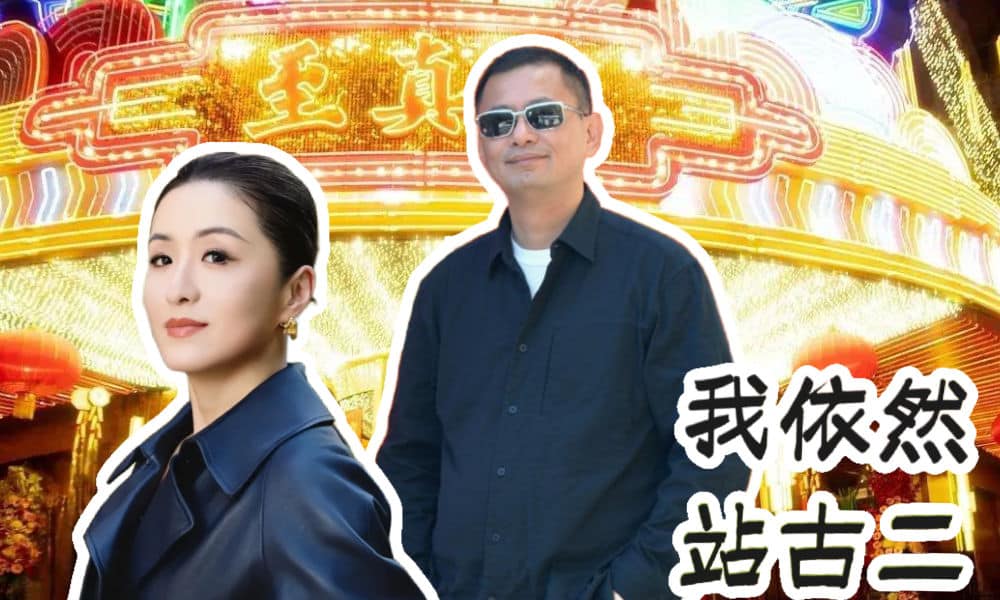
After renowned director Wong Kar-wai was accused of exploiting a young writer during the production of the hit TV drama Blossoms Shanghai, a scandal unfolded that may be one of the biggest stories in China’s entertainment industry this year.

Even if you don’t recognize him by face, you most likely know him by name: Wong Kar-wai (王家卫, 1958), the internationally acclaimed Hong Kong movie director.

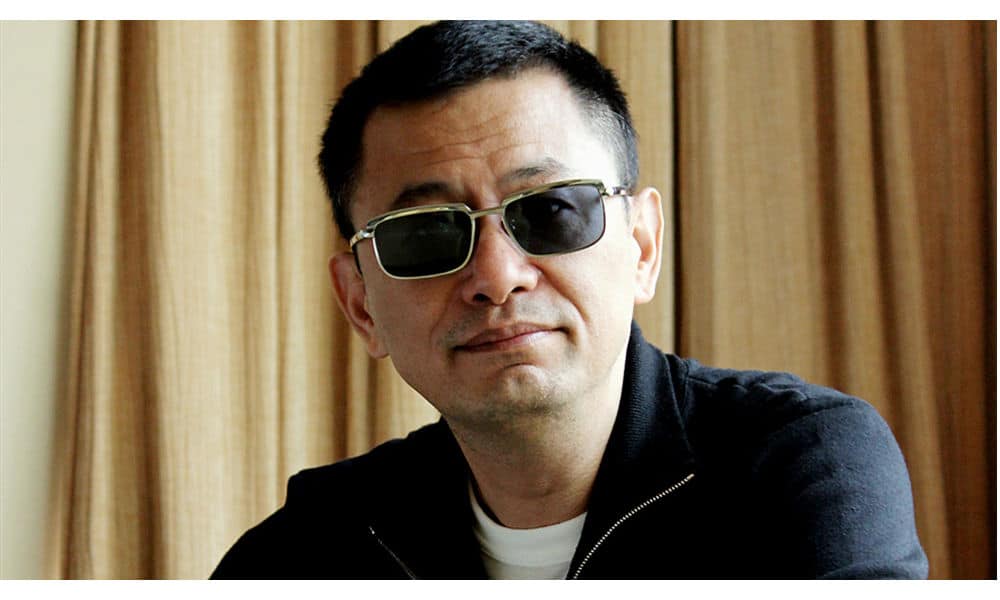
Director Wong Kar-wai, characteristically in sunglasses. (Image via Iazimao).

In late 2023, Wong Kar-wai released his first television series, Blossoms Shanghai (繁花), which was referred to a being the third part of an informal Wong Kar-wai trilogy that started with his films In the Mood for Love and 2046. Thanks to its superior production quality, star-studded cast, and Wong Kar-wai’s signature visual style, it became one of the most talked-about Chinese TV dramas of the time.

Scenes from Shanghai Blossom.

Adapted from Jin Yucheng’s award-winning novel, Blossoms Shanghai is set in 1990s Shanghai and tells the story of a young man, A Bao (played by Hu Ge 胡歌), who aspires to become a successful businessman and self-made millionaire during China’s booming reform era. The series contrasts the protagonist’s troubled past with the city’s vibrant present—and even sparked a wave of visitors to Shanghai landmarks featured in the show.


“Overnight, the headline “Wong Kar-wai Suspected of Exploiting Employees” became the biggest story in Chinese entertainment news”


However, in September, screenwriter Gu Er (古二,real name Cheng Junnian 程骏年) stirred controversy when he published a post on his WeChat official account, @GuErNewWords (古二新语), accusing Wong Kar-wai and lead writer Qin Wen (秦雯) of serious exploitation during the production of Blossoms Shanghai.

Qin Wen, image via Tencent News.

Overnight, the headlineWong Kar-wai Suspected of Exploiting Employees” (王家卫《繁花》被爆疑似压榨员工) became the biggest story in Chinese entertainment news.

Gu Er is an experienced young screenwriter. After earning a master’s degree from the New York Film Academy, he returned to China, where he worked in theater and dabbled in online films. Though he never became a household name, he had carved out a modest presence in the entertainment industry.

According to a series of diaries he began sharing on WeChat in 2022, Gu Er first joined the Blossoms production team in 2019.

Example of Gu Er’s writings, where he talked about the difficult conditions of working on the Blossoms production.

He described the experience as “powered purely by love” (用爱发电)—in other words, long hours, meager pay, and sheer passion keeping him afloat. These early posts detailed many interactions with Wong Kar-wai and lead scriptwriter Qin Wen, but since the drama had not yet aired, his satirical, lightly veiled critiques attracted little attention.


“When the credits rolled, Gu Er’s name was nowhere to be found under the screenwriting slot”


In 2023, upon the premiere of the series, Gu Er published an article titled “The Truth Behind the Writing of Blossoms” (《繁花》剧本的创作真相). In it, he claimed to have written substantial portions of the storyline and character arcs—work that, he said, had been personally approved by Wong.

He also shared chat screenshots and presented several key concepts he had pitched, many of which viewers later recognized in the broadcast series.

Yet when the credits rolled, his name was nowhere to be found under the screenwriting slot. Instead, he was listed only as “preliminary editor” (前期责编), buried at the very end of the credits in a position so minor it was almost negligible.

For Gu Er, this was humiliating. He believed that his field research, character development, and story-building should have earned him recognition as at least one of the principal writers. The post sparked some discussion, but once again, the controversy quickly faded.

Cheng Junnian is Gu Er’s real name, and in the later recordings he posted, Wong Kar-wai also called him by his real name.

It wasn’t until September 16, 2025—nearly two years later—that Gu Er released another definitive essay, “My Experience as a Screenwriter for Blossoms: A Summary” (《我给〈繁花〉做编剧的经历——小结》).

This time, he laid bare every painstaking detail of his creative process for the main female character’s storyline. He claimed that the production refused to reimburse any of his research and interview expenses—not even for meals or books. He recalled one particular moment: “Once I spent 100 yuan [$7], and the Hong Kong producer immediately scolded me in public: ‘How does writing cost any money?’”


“It’s just a few thousand yuan; he is an assistant and can also write the script—it’s a bargain”


Besides writing duties, Gu Er said he also had to cook meals and run endless errands for Wong Kar-wai. In fact, Gu Er suffers from Kennedy’s disease, a motor neuron illness similar to ALS but slower in progression. Like ALS patients, he is gradually losing strength in his limbs. The intense, high-pressure work environment on set made his condition much worse. When he first told Wong Kar-wai about his health, Wong allegedly responded with nothing but suspicion: “What do you want from me?”

Gu Er, image from the time he was a guest chef at Dee Hsu’s reality show.

Wong Kar-wai wasn’t the only person Gu Er accused of exploitation. He also named lead screenwriter Qin Wen, one of the most prominent figures in Chinese television, known for hit dramas such as The First Half of My Life (我的前半生) and My Heroic Husband (赘婿). Qin is also credited as the screenwriter of Blossoms. According to Gu Er, once his draft script was handed to Qin Wen, she “made a few revisions,” and it was then presented as her work.

He further alleged that Qin tried to push him out of the production team, but Wong Kar-wai intervened, saying: “It’s just a few thousand yuan; he is an assistant and can also write the script—it’s a bargain.”

This post finally drew widespread attention. While the public was shocked by the alleged misconduct of a beloved director, many also questioned Gu Er’s credibility.

The Blossoms production team quickly issued a statement, asserting that more than 2,000 crew members had all been properly credited, and later clarified that Gu Er had only been part of the early-stage research team.


“The very type of boss you’d be too afraid to confront in your own workplace”


However, netizens began combing through Gu Er’s WeChat account and discovered that, in recent months, he had uploaded a series of audio recordings of conversations among the production staff—including Wong and Qin.

These recordings became crucial evidence in Gu Er’s defense. In one recording, a producer admitted that Qin had used ghostwriters and that several major plotlines had, in fact, been written by Gu Er. She also acknowledged that it would be difficult for him to receive proper credit.

Other tapes revealed the director’s harsh treatment of crew members; in one instance, Gu Er himself was publicly humiliated and accused of being “a dog using its master’s power” (狗仗人势).

On September 22, Gu Er released another recording. This time, it featured Wong Kar-wai and Qin Wen gossiping about several well-known actors; when the conversation ended, they asked Gu Er to serve them their food.

Having studied at Le Cordon Bleu in San Francisco, Gu Er had apparently been cooking for Wong without pay. Netizens were particularly angered by how arrogant and condescending Wong sounded in the recording, which many said reminded them of the very type of boss they had been too afraid to confront in their own workplaces.

At the same time, netizens dug up a 2024 report from Hong Kong’s Ming Pao (明报), which detailed how a female screenwriter’s script for Blossoms had also allegedly been exploited by Wong Kar-wai. That writer, too, reportedly suffered from depression as a result.


“The Gu Er incident is a snapshot of class solidification”


On September 23, Gu Er’s WeChat account was taken down, rendering all of his articles and audio recordings inaccessible.

Since both WeChat and the parent company of Blossoms’ production house, Tencent Pictures, are owned by Tencent, netizens immediately speculated that the platform had silenced Gu Er to contain the scandal. The move only fueled public suspicion that Wong had indeed exploited young writers—and calls grew louder for an official response from Wong Kar-wai.

As the controversy spread, screenwriter Qin Wen posted a denial on Weibo, insisting that she had been slandered.

Oscar-winning cinematographer Peter Pau (鲍德熹), who worked on Blossoms, also weighed in, saying that all responsibilities had been clearly outlined in the contracts and accusing Gu Er of deliberately stirring trouble. Hong Kong director Wong Jing (王晶) likewise voiced his support for Wong Kar-wai.

However, the broader public—the majority of netizens as well as many within the industry—stood by Gu Er.

The film news account Qiangbaoshan (@誓要抢包山) commented that regardless of the exact truth of Gu Er’s claims, it was already alarming and unjust that major figures in the film industry had banded together to discredit him while his own platform was banned.

Commenters on Xiaohongshu wrote thousands of posts in defense of Gu Er, calling the incident “a snapshot of class solidification,” or writing: “I also stand with Gu Er. Either you hire a proper chef, or you clearly define the work. If someone contributes ideas and creativity, then give them the pay and credit they deserve.”

Gu Er’s friend Ma Nong (玛侬) also published an article on her WeChat official account in his defense, sharing new photos of Gu Er at work and on set to prove that he had indeed played an important role in the Blossoms production.

Yet through it all, to this day, Wong Kar-wai himself has not uttered a single word in response.


“Because of his cinematic achievements, the media and fans often laughed off his tyrannical behavior as the eccentric quirks of a genius”


Some netizens, after learning the details, were puzzled by Gu Er’s behavior. They criticized him as weak and overly servile, suggesting that what he faced now was partly the result of his own personality flaws.

Yet this very dynamic may be why the public’s anger toward Wong Kar-wai ran so deep. Wong is arguably one of the most influential directors in Chinese cinema. Works such as In the Mood for Love, Chungking Express, and Happy Together have left an indelible mark on world cinema and inspired generations of filmmakers. For a relative ‘nobody’ like Gu Er, Wong Kar-wai would have seemed an idol—a god-like figure (Gu Er also expressed his love and admiration for Wong in his previous articles). And it may have been precisely this sense of awe and worship that left Gu Er vulnerable to workplace bullying and manipulation.

Wong Kar-wai’s harsh treatment of his actors and crew has actually never been a secret. Famous actors who previously worked with him, such as Leslie Cheung and Tony Leung, have spoken openly about his extreme working methods. After filming Happy Together, Leslie Cheung announced that he would never work with Wong again, later revealing that he felt the director had exploited his sexuality. During the shoot of Ashes of Time (东邪西毒), Cheung nearly died from poisoning in the desert. Even in their earlier collaborations, he was often tormented by Wong’s constant changes and endless demands.

Wong’s obsessive pursuit of his own has repeatedly come at the expense of those around him. While filming The Grandmaster, he reportedly withheld actress Song Hye-kyo’s passport and kept her on set for months, only to use a handful of shots in the final cut.

Yet, because of his cinematic achievements, the media and fans often laughed off his tyrannical behavior as the eccentric quirks of a genius.

After the Gu Er controversy, however, many began to re-examine the man behind the perpetual sunglasses—not as an untouchable auteur, but as an employer accountable for his power. Wong Kar-wai has long been known for procrastination, perfectionism, and “torturing actors,” but the stakes of this reputation now feel different.

Meanwhile, Gu Er’s WeChat account remains banned. It is difficult to imagine why a man already battling a degenerative illness would continue to fight so publicly for recognition, unless he felt he had nothing left to lose.

Writer Shuimuding (水木丁) raised deeper concerns about Gu Er’s desperate, all-or-nothing stance, reminding readers of the darker history of the Chinese film industry, where young talent has been pushed to despair—and sometimes even to death—by powerful figures. The most haunting example is Hu Bo (胡波), the brilliant director of An Elephant Sitting Still (大象席地而坐), who took his own life after facing similar pressures.

This is why the Wong Kar-wai scandal matters. No matter how talented the director, actual exploitation can never be justified for the sake of the project. Perhaps it is time to stop using exceptional artistic talent as an excuse for unacceptable workplace dynamics.

By Ruixin Zhang

Independently covering digital China for over a decade. Like what we do? Support us and get the story behind the hashtag by subscribing:

edited for clarity by Manya Koetse

Spotted a mistake or want to add something? Please let us know in comments below or email us. First-time commenters, please be patient – we will have to manually approve your comment before it appears.

©2025 Whatsonweibo. All rights reserved. Do not reproduce our content without permission – you can contact us at info@whatsonweibo.com.

Ruixin is a Leiden University graduate, specializing in China and Tibetan Studies. As a cultural researcher familiar with both sides of the 'firewall', she enjoys explaining the complexities of the Chinese internet to others.

Continue Reading
Click to comment

Leave a Reply

Your email address will not be published. Required fields are marked *

China Arts & Entertainment

The Reunification with Taiwan is Hitting Chinese Cinemas This Summer

A new state-backed epic about the Qing conquest of Taiwan is stirring debate. Plus: the Shanxi mine disaster, a controversial prison film, hukou reform, and China’s top 5 rising books.

Manya Koetse

Published

on

🔥 China Trend Watch (Week 21–22 | 2026) Part of Eye on Digital China by Manya Koetse, China Trend Watch is an overview of what’s trending and being discussed on Chinese social media.


In this edition:

  • China’s upcoming Taiwan reunification blockbuster
  • 8 Quick Scrolls to Know
  • The Liushenyu coal mine disaster exposes hidden tunnels, “yin-yang maps,” and systemic safety failures
  • A controversial prison film starring a convicted killer is pulled from cinemas
  • China announces major hukou reforms
  • China’s Top 5 Rising Books
  • Why everyone is saying: “I genuinely did feel uncomfortable”


Chinese cinema is “riding the winds of history.”[1] While the biggest films of the 2025 summer movie season focused on the Second Sino-Japanese War, this year, it is China’s military campaign to take Taiwan that is heading to the big screen.

The movie Battle of Penghu (澎湖海战), scheduled to premiere in mainland China on July 25, is a state-backed historical epic centered on the major naval battle that ultimately led to the Qing conquest of Taiwan.

Over the past week, the film held its first full preview screenings, released its theatrical trailer, unveiled a series of posters, and triggered online discussions.

The film’s narrative and promotional slogans make clear that its timing is neither coincidental nor merely historical. The movie is deeply entangled with contemporary cross-strait politics and Beijing’s message that unification with Taiwan is inevitable and “unstoppable.”

The “Battle of Penghu”, also known as the Battle of the Pescadores, took place in 1683, when Qing dynasty admiral Shi Lang (施琅) defeated the forces of the Zheng regime in Taiwan, which was basically the last big Ming loyalist center after Beijing had already fallen in 1644. Shi Lang’s victory at sea led to the Zheng regime’s surrender and the Qing annexation of Taiwan, formalized in 1684 when Taiwan was incorporated as a prefecture of Fujian province.

Over the past decade, China has increasingly fused Hollywood-style commercial filmmaking with state propaganda goals. Although Xi-era patriotic blockbusters had appeared earlier, the 2021 Korean War epic The Battle at Lake Changjin marked a turning point: it showed that a visually spectacular film could become both a massive commercial success and an effective vehicle for state messaging.

Beyond serving as spectacular propaganda and a nationalist boost, The Battle at Lake Changjin also became a platform for promoting a new narrative about China’s role in the Korean War. The film helped breathe new life into these narratives among younger Chinese moviegoers, who bought merchandise, checked in online while watching the film, and even posted photos of themselves eating frozen potatoes — echoing scenes from the movie based on the real experiences of soldiers on the battlefield.

The victory the Chinese soldiers achieved on the battlefield in Korea against the Americans was a reminder of Chinese courage and pride at a time of heightened Sino-American tensions.

Battle at Lake Changjin caused a real social media frenzy surrounding its merchandise and people eating frozen potatoes to share in the hardships felt by those on the battlefield.

Last year, similar dynamics unfolded when Dead to Rights (Nanjing Photo Studio, 南京照相馆) hit theaters, focusing on the Japanese invasion of Nanjing and the atrocities that followed. Together with Unit 731 and Dongji Island (东极岛), it formed part of a broader cinematic re-narration of the Sino-Japanese War (read more here).

The films were accompanied by a wider state media campaign emphasizing how China’s War of Resistance against Japan, as an integral part of World War II, represented China’s major contribution and sacrifice in the global fight against fascism, underscoring the country’s important role in shaping the postwar world order.

Now, this upcoming Taiwan-focused blockbuster seems to follow a similar playbook.

The movie is directed by award-winning Hong Kong filmmaker Cheang Pou-soi (郑保瑞). Wang Xueqi (王学圻), one of China’s most respected veteran actors, stars as Admiral Shi Lang, while the super-popular Jackson Yee (易烊千玺), the TFBOYS pop idol who turned into an acclaimed actor, plays the young Emperor Kangxi. Other major names starring in the movie include Zhao Liying (赵丽颖), one of China’s most renowned female stars, and Geng Le (耿乐), who also starred in Battle at Lake Changjin.

Promo posters for Battle at Penghu.

Besides the cast, the other details surrounding the production of the film are also impressive.

The crew reportedly spent 34 months in preparation, constructing 50 ancient warships, including twelve battleships of nearly 40 meters long, allegedly the largest historical naval replicas ever built in China. Most of them were destroyed during filming. We can expect some spectacular scenes.

Although this summer blockbuster appears to have the right formula for another Battle at Lake Changjin-like success, criticism is surfacing online.

Many netizens argue that the film should never have celebrated Admiral Shi Lang as its hero, and that it would have been more appropriate to focus on Zheng Chenggong (鄭成功, Koxinga) instead, since he is the one who expelled a foreign colonial power, the Dutch VOC, in 1662 and established the first Han Chinese governance on Taiwan. Due to this story of resistance against Western imperialism, many see Zheng Chenggong as the true hero.

💬 As one commenter writes: “Zheng Chenggong [Koxinga] drove out the Dutch colonizers and recovered Taiwan — what does that have to do with Shi Lang? Instead of making a film about Zheng Chenggong, they chose to make one about the traitor Shi Lang.

Adding to this criticism, others wondered why a movie celebrating the Qing dynasty’s defeat of the Ming loyalist Zheng regime — framed by some netizens as “Manchu forces defeating Han Chinese” — should be treated as part of Chinese history worth celebrating.

Shi Lang’s backstory makes him a contested figure in Chinese history. Originally, he was a general under Koxinga until he switched allegiances and ultimately surrendered to the Qing, leading some critics to label him a traitor (“汉奸”) rather than a hero.

One relevant study by Ronald C. Po [2] into the historical commemoration of Shi Lang argues that Shi Lang’s image has been continuously reconstructed since the Qing dynasty to serve shifting political agendas.

In this case, Shi Lang is framed as the admiral who “unified” Taiwan with China, making him an important historical anchor for the one-China narrative.

In the end, that’s what it’s all about — and the movie’s official tagline is clear about that: “What is isolated must return; what is divided must unite” (“孤悬必归、分疆必合”). Its trailer closes with the slogan “Unifying Taiwan is unstoppable” (“统一台湾,势不可挡”).

Whether Battle of Penghu will become as big a box office hit as Battle at Lake Changjin remains to be seen, but I doubt it, since we know that it’s putting reunification with Taiwan on mainland cinema screens this summer in a way many Chinese find flawed.

One critical reviewer, popular Weibo account @释不归, says:

💬 “The core historiographical flaw of Battle of Penghu does not lie in its ‘choice of the Qing dynasty’s perspective,’ but in its systematic concealment through a ‘unification narrative’ (统一叙事) that forcibly whitewashes a history full of moral grey zones into a binary confrontation between justice and evil.

For this reason, some say they will boycott the film, while others are celebrating it as a blockbuster promoting unification with Taiwan. Either way, it promises to spark a debate worth watching, and it’s one I’ll certainly be following this summer 👀🍿. I will report back to you after I’ve seen it!

There’s a lot more to catch up on, so keep reading to see which stories dominated online conversations in China over the past two weeks.


Quick Scrolls

  • 🌧️ Severe rainstorms and extreme weather triggered flash floods in Chongqing’s Yongchuan District, leaving nine people dead and eleven missing.
  • 🏪 The “Father of the Convenience Store,” 7-Eleven founder Toshifumi Suzuki (铃木敏文), is being remembered on Chinese social media following his passing in Tokyo at the age of 93. Netizens praised Suzuki for bringing 24-hour convenience culture to Asia and reshaping global retail.
  • 🇷🇸 The first-ever China state visit by Serbian President Aleksandar Vučić became a major talking point on social media, where many netizens refer to Vučić as “577” because his Chinese name sounds similar to “5-7-7” (五七七 wǔ qī qī). Vučić said he was aware of the nickname and perfectly happy being “577.”
  • 🎬 The Chaoshan-dialect film Letters to Grandma (阿嬷的情书) surpassed 10 billion yuan ($1.38 billion) at the box office within 25 days. With a 9.1 rating on Douban, the underdog production has become one of the biggest surprise hits of 2026, achieving massive success without major stars or blockbuster budgets.
  • 🏛️ Wuhan University recently opened its campus to the public without requiring reservations. Although not everyone is happy about visitors roaming the grounds and taking photos, the move has sparked broader discussions about how Chinese university campuses, as important cultural and public spaces, should be made more accessible.
  • 🚀 After nearly seven months in orbit, the Shenzhou-21 crew welcomed the incoming Shenzhou-23 astronauts aboard Tiangong. The docking marked the eighth “space meetup” in Chinese spaceflight history and the first time an astronaut from Hong Kong entered the space station.
  • 🛵 Olympic swimmer Sun Yang (孙杨) went viral after grabbing his phone during a TV interview to order food delivery. One related Weibo hashtag — “Sun Yang suddenly starts ordering food during interview” (#孙杨采访时突然开始点餐) — received over 61 million views. Some commenters described him as a typical post-90s-generation personality who simply does whatever he feels like.
  • ☠️ One of China’s most sensational corporate crime cases has come to an end. Xu Yao (许垚), former CEO of Santi Universe, the company holding the rights to the hugely successful The Three-Body Problem IP, was executed on May 21, two years after being convicted of poisoning gaming tycoon Lin Qi in 2020. Xu used a deadly mix of pufferfish toxin and amatoxin and also poisoned four other colleagues with methylmercury.
  •  


The Week’s Key Stories

Hidden Back Doors, Yin-Yang Maps: The Liushenyu Coal Mine Disaster

The catastrophic gas explosion at the Liushenyu Coal Mine (留神峪煤矿) in Qinyuan County, Shanxi, has dominated Chinese news discussions over the past week. The explosion, which occurred on the evening of May 22, killed at least 82 people, while 123 others were hospitalized with injuries of varying severity. Two people remain missing.

This is the worst coal mine incident in China since 2009, when an explosion at the Xinxing coal mine (新兴煤矿) in Heilongjiang killed 108 people.

Soon after the incident in Qinyuan, discussions began focusing on safety violations, especially after the reported numbers failed to add up. At the time of the explosion, 247 workers were reportedly underground, yet the company operating the mine, Tongzhou Group, had recorded only 124 names in the entry log, meaning around 123 workers had entered the mine without following required protocols.

During rescue operations, emergency workers soon discovered that the mine’s official maps did not match the actual underground layout. Tongzhou Group had apparently been operating with so-called “yin-yang maps” (阴阳图纸): two versions of the mine plan — one official version shown to inspectors, and another real version used in practice.

In a May 26 Xinhua report, it was revealed that the mine even had camouflage doors (假门) — constructed from steel mesh wire and woven sacking to resemble tunnel rock walls — to conceal unauthorized tunnels from safety inspectors. When inspectors arrived, workers inside would reportedly seal the door and smear it with coal dust to make it indistinguishable from the surrounding tunnel walls.

In this way, the mine could maximize output and produce extra coal outside official quotas without reporting it. But it also meant these hidden areas fell outside formal oversight and safety protocols, which is why they are referred to as “invisible bombs” (隐形炸弹) within the mining system: gas could accumulate due to insufficient ventilation.

The mine had already been listed in 2024 by China’s mine safety regulator as a site with “serious hazards.”

On social media, the disaster has sparked anger over systemic failures surrounding a mine disaster many viewed as preventable, and over management’s apparent disregard for the lives and safety of its contracted workers, who already occupy some of the most dangerous and lowest-status positions in China’s labor market.

In multiple ways, the Liushenyu Coal Mine disaster shows similarities to the recent Liuyang fireworks factory explosion, which also occurred in May.

Although the two disasters took place in very different industries and locations, they reveal a similar pattern: there had been explicit prior warnings in official records that went unaddressed; inspections identified problems but failed to halt production; hidden production conditions/mechanisms were involved; and both disasters killed dozens of vulnerable migrant workers employed through informal labor arrangements.

One comment pretty much rounds up a general sentiment:

💬 “For the sake of enormous profits, they completely disregarded safety and basic human morality, and showed utter contempt for human life, which is an unforgivable crime! The leadership must receive the death penalty!


Award-Winning Prison Film Starring Convicted Killer Pulled in China

A Chinese film that was supposed to premiere in mainland cinemas on May 30 has backfired and been pulled following days of controversy and intense online discussion.

The movie, titled Mom from Prison (监狱来的妈妈) in Chinese and using the English title Her Heart Beats in Its Cage, was marketed as a domestic violence film “based on a true story,” with the convicted killer in the movie played by the actual person involved — Zhao Xiaohong (赵箫泓).

Zhao was sentenced to 15 years in prison for killing her husband in 2009 during a domestic violence incident in which she stabbed him with a fruit knife.

Director Qin Xiaoyu (秦晓宇) and famous TV host and producer Wang Han (汪涵) then developed a film around Zhao’s story, presenting it as a sympathetic anti-domestic violence narrative about a woman who suffered long-term abuse, finally struck back, accidentally killed her husband, and later tried to repair her relationship with her son while in prison.

Although the film received approval to be screened in China and performed well at various foreign film festivals, including the San Sebastián International Film Festival, everything fell apart when Chinese netizens collectively criticized the gap between the movie’s narrative and the legal realities of the case. How “true” was this story if the killing was never legally ruled as self-defense, and if the judgment explicitly stated that no domestic abuse had been recognized or evidenced in the case?

Beyond that, many pointed out that Zhao was still formally serving restrictions tied to her prison sentence while participating in a commercial film production, raising questions about how a convicted killer could end up starring in a feature film about her own crime.

Moreover, when the project began in 2019, the production team reportedly applied for permission to film inside prisons under the category of a “public-interest correctional education documentary” (公益教育改造纪录片), which many commenters — including those in this Zhihu thread — considered deceptive.

Although domestic violence has received increasing public attention and sympathy in China in recent years, many argued that this particular project crossed an ethical line and used “feminist-coded content” (女权话题) to glamorize the story of a convicted killer.

“If they had simply used another actress and treated the story as artistic adaptation, perhaps things would never have become this serious,” one Zhihu commenter wrote.

Following the overwhelmingly negative public reaction, Zhao Xiaohong’s social media accounts were silenced, while the film bureau announced that screenings had been suspended due to public complaints and an ongoing investigation. Wang Han also apologized for becoming involved in the project without properly researching its background and content, and announced he had cut ties with the film.

This is one movie that definitely won’t be getting a sequel.


Hukou Reform Announced: Public Services Will Now “Follow the Person”

China’s Household Registration System won’t be as important anymore – that’s the message that was reiterated across Chinese social media by state media, becoming top news on Weibo, Toutiao, and Baidu News on May 27 (#户口以后没那么重要了#)

This comes after China’s State Council, for the very first time, has issued a national-level directive to decouple basic public services from household registration (户口, hùkǒu).

The hukou or ‘household registration’ system is China’s registered permanent residence policy that has been in place in China since 1958. A hukou is assigned at birth and basically works like an official place-based ID. China’s hukou system, among others, separates rural and urban citizens and is essential for access to social services, including education and healthcare.

Because the hukou is tied to one’s registered place of origin rather than to an actual place of residence, it creates problems for the estimated 250 million people in China who have moved elsewhere to live and work. When their children’s access to public schools is closed off, many families choose to leave children behind in their native, more rural areas to live with grandparents or other caregivers. These “leftover children” are just one of many broader problems of urban-rural inequality behind the hukou system, particularly regarding access to public benefits and healthcare.

In this new policy, filed on May 18 and presented at a May 26 press conference, social services, basic benefits, and protections will follow the person, not the hukou. That means that as long as a person resides in and is legally employed in a place, has registered a residence permit, and has paid social insurance, they are entitled to equal access to basic public services as local hukou holders.

In the aftermath of the announcement, social media commenters seem cautiously positive yet skeptical, and still have many questions about the practicalities and the extent to which this will actually change things.

One important question revolves around the gaokao (高考) system – China’s national college entrance exam. Traditionally, one’s hukou affects where a child can go to school and where they can take the gaokao. If this were to change, it would essentially change the rules of the playbook that matters most to many students and their families, as it’s the main doorway to university in China, and university access is tied to later life and career chances.

Some people also express anxiety about the knock-on effects on urban property markets and school enrollment: they think cities like Beijing or Shanghai will get even more crowded in the near future. Who knows how many people will rush there to work now for their kids’ sake?

The optimism about the policy does shimmer through most comments, like one person writing:

💬 “It’s important to be realistic: while the policy lowers the barriers, high-quality public resources remain limited. Achieving complete equality will still take time. But at least the overall direction has changed. Treatment is no longer determined by a piece of paper called a hukou. If we work hard and build our lives in a city, we should be able to enjoy the corresponding protections and services there. And that is the most meaningful source of security this policy provides.”


What China’s Reading

Top 5 Rising Books in China This Week


📚1. Work, Consumerism and the New Poor by Zygmunt Bauman | 工作、消费主义和新穷人

Work, Consumerism and the New Poor is rising on China’s popular book and reading charts this week. The 1998 work by Polish sociologist Zygmunt Bauman (translated into Chinese in 2021) argues that poverty in consumer society is defined not by joblessness but by the inability to participate in consumption — that the “new poor” are marked not by exclusion from work but by exclusion from the marketplace of goods and identities. A relevant topic for Chinese social media users in 2026, with issues like youth unemployment and middle-class downward mobility popping up in all kinds of discussions nowadays. 🔗 Link to the book in English / in Chinese.


📚2. The Protagonist by Chen Yan | 主角

The Protagonist (主角) is a long novel by Chen Yan (陈彦) that previously won China’s most prestigious literary fiction award, the Mao Dun Literature Prize, and became one of the top titles on WeChat’s reading platform this week. That is no coincidence: the renewed attention follows the release of the CCTV/Tencent Video television adaptation starring Zhang Jiayi (张嘉益) and Liu Haocun (刘浩存). The novel tells the story of female Qinqiang opera performer Yi Qine and follows more than four decades of her life on and off the stage amid major personal, social, and national transformations. 🔗 Link to Chinese edition.


📚 3. The Second Chief by Huang Xiaoyang | 二号首长

The Second Chief (二号首长) is a Chinese political novel by Huang Xiaoyang, which was originally published in 2011 and recently reissued. It follows the protagonist, Tang Xiaozhou, a veteran journalist from Fudan University who is at a low point in his life when he is appointed as the personal secretary to a new provincial party secretary, Zhao Deliang. Although the book offers a (fictional) glimpse into Chinese provincial politics, some social media users say it’s more like a guide to navigating the workplace and life. 🔗 Link to Chinese version.


📚 4. Fortunate That You All Comfort My Life | 幸得诸君慰平生

Fortunate to Have You All Comfort My Life” is a collection of warm, light, and easy-to-read essays by the author writing under the pen name “Before the Storms in the Old Garden” (故园风雨前). Originally published in 2022, the book belongs to the popular “slow life” literary genre and focuses on small everyday details, family, flowers, friendship, and fleeting encounters that add warmth, meaning, and vividness to ordinary life. 🔗 Link to Chinese version.


📚5. The Klein Bottle by Okajima Futari | 克莱因壶

The Klein Bottle is a 1989 Japanese mystery novel by the duo Okajima Futari (冈岛二人) was ahead of its time in telling the story of a writer who signs up to test an experimental VR game and gradually loses the ability to distinguish virtual experiences from reality, as people around him begin to disappear or deny shared memories. The book’s renewed popularity in China lately is largely driven by social media discussions about the increasingly murky boundaries between simulated and real experiences in the AI era. 🔗 Link to Chinese version.


The Word of the Week

I genuinely did feel uncomfortable” 我想说当确实不舒服

Everyone and their cousin has been talking about Wang Hedi (王鹤棣), aka Dylan Wang, over the past week. The Chinese actor recently appeared in the celebrity reality show Dear Inn (亲爱的客栈), in which celebrities run a guesthouse together. Wang served as the manager, while his former Meteor Garden (流星花园) co-star Shen Yue (沈月) was also part of the cast.

During the final episode, the celebrities handed out playful awards to each other. Wang received the “Best You’re Just Wang Hedi Award” (“最佳你只是个王鹤底奖”), where the “Di” (棣) character from his real name was replaced with the similarly pronounced character 底, meaning “bottom.”

Many viewers felt the “funny” reward wasn’t actually so funny, especially after rumors surfaced that the cast members had a separate group chat without Wang in it. Fans felt he was being purposely excluded and mocked.

As discussions escalated online, Wang responded on Weibo, writing:

At the time I thought I was just being oversensitive, but after reading everyone’s analysis for a whole day, I want to say that I genuinely did feel uncomfortable back then.”

That response only made the situation blow up. Shen Yue later issued a public apology, explaining that “You’re just Wang Hedi” had been meant as an inside joke among the cast, encouraging Wang to step down from his manager role and relax into being himself again. But by then, the phrase had already taken on a life of its own online.

By now, “I genuinely did feel uncomfortable back then” has become a meme for admitting that something actually bothered you, even if it initially seemed too trivial to mention and only started nagging at you later.

It is now being used in completely unrelated contexts, and “At the time I thought I was just being oversensitive… I want to say that I genuinely did feel uncomfortable back then.”
(“当时以为是我敏感了……我想说当时确实不舒服”) has become a template for expressing all kinds of grievances and annoyances about things that happened in the past.


That’s a wrap, have a great weekend!

Best,

Manya

[1] “天下大s,乘风而来” is the slogan on the themed teaser poster of Battle of Penghu (澎湖海战》

[2] Ronald C. Po, “Hero or Villain? The Evolving Legacy of Shi Lang in China and Taiwan,” Modern Asian Studies 53, no. 5 (2019), https://doi.org/10.1017/S0026749X17000737.

By Manya Koetse
(follow on X, LinkedIn, or Instagram)

Spotted a mistake or want to add something? Please let us know in comments below or email us. First-time commenters, please be patient – we will have to manually approve your comment before it appears.

©2026 Eye on Digital China/Whatsonweibo. All rights reserved. Do not reproduce our content without permission – you can contact us at info@whatsonweibo.com.

Continue Reading

China Arts & Entertainment

Su Chao Fever, Mo Yan’s “Scrollable” Book, and Why Li Xiaoran is China’s New Office Icon

This week in China: Grassroots football fever, a Nobel laureate writes for the TikTok era, France’s cultural relic bill, and a 19-year-old’s blind box obsession bankrupts her father’s company.

Manya Koetse

Published

on

🔥 China Trend Watch (week 16/17 | 2026) Part of Eye on Digital China by Manya Koetse, China Trend Watch is an overview of what’s trending and being discussed on Chinese social media.

Dear reader,

Hope you’re having a good week. Time for an update on what’s been trending.

In this newsletter:

👉Victor Hugo’s day has come
👉China’s grassroots football couldn’t get more viral
👉A scrollable new book by Mo Yan
👉The Chinese office meme of the moment

..and more.

Let’s dive in.

Quick Scroll

    • 📱 China’s National Security Ministry has joined Chinese Tiktok app Douyin. The high-profile Douyin debut is part of a broader trend of Chinese government agencies and security bodies joining the app.
    • 🐺 A feel-good wildlife story from Inner Mongolia: a pregnant wild wolf descended from the mountains to give birth at a wildlife conservation station where she had been previously fed. The noteworthy move shows she had apparently developed trust in the station workers, and felt safe there.
    • 🐖 Pork prices hit historic lows but spare ribs still cost 20 yuan (US$3) – this became a topic of discussion this week. Despite the drop in pig prices, retail pork still feels expensive because added costs across the supply chain haven’t changed.
    • 🍿 Movie alert. The May Day (五一) cinema content explosion is incoming. Seventeen films have already been slotted for the Golden Week holiday window.
    • 🚔 A 31-year-old man from Guangzhou has been detained under anti-cyberbullying regulations after repeatedly posting insulting comments targeting Olympic champion diver Quan Hongchan (全红婵) on WeChat.
    • 🤖 Unitree’s humanoid robot is almost as fast as Usain Bolt. The company announced that the H1 humanoid robot achieved a peak sprint speed of 10 meters per second during a 100-meter test.
    • ⚡️ Another robot, “Lightning” (闪电) by Honor, also went viral because he won the Beijing Yizhuang Half Marathon on Sunday, April 19, running a half-marathon distance faster than any human ever has, completing it in 50 minutes and 26 seconds (the human record: 56:42). (See video here).
    • 🎁 A 19-year-old woman from Zhengzhou has made headlines for allegedly embezzling around 17 million yuan (nearly $2.5 million) from her father’s company, spending it on blind boxes and livestream tipping (dashang 打赏). Her father, now bankrupt, ended up taking his daughter to the police himself.

What Really Stood Out

The Jiangsu Super League (Su Chao) Fever

[#苏超开幕式] [#何润东项羽造型亮相苏超观后感#]

The Jiangsu Football City League, better known as the Su Chao (苏超: “the Su Super”), has become a major source of trending topics, memes, and news analyses over the past week.

The “Su Super” is a provincial amateur football tournament launched in 2025 that features 13 teams, one representing each of Jiangsu’s 13 prefecture-level cities. Teams consist predominantly of amateur players, from primary school teachers to office employees, but it’s been seriously successful: last year, some games regularly drew crowds of over 30,000, with a record 60,396 fans for a Nanjing–Suzhou match.

This year, the season’s opening on April 11 was sensational, almost like a mini Spring Festival Gala of its own, with 300 robots from tech company Magic Atom (魔法原子) performing a perfectly synchronized routine—unbothered by the heavy rain—and popular pop singer Zhou Shen (周深) delivering a much-discussed live performance where he hit some incredibly high notes.

It’s the entertainment and creative memes that seem to matter more than the sport itself.

⚽ When Changzhou won 3–0 in its opening match against Nantong, in a stadium filled with more than 40,800 people, the running joke was that the city of “Changzhou” (常州) could add more “strokes” to its name. This is all part of a bigger meme that started last year, when netizens would ‘deduct’ a character stroke from Changzhou’s name after every time it lost, with its Chinese name going from 常州 to 巾州 to 丨州, until netizens joked there were no strokes left to remove (0州)—Changzhou performed quite terribly.

The “chang” character kept losing strokes as Changzhou lost in the 2025 Su Chao (edited image by netizens).

But with this year’s unexpected win, Changzhou struck back, and the official city account flipped the joke by temporarily renaming itself 常洲, with the three-water-drop radical added to the zhou 州, symbolizing its three goals scored (#常州暂时改名常洲#).

⚽ More than that, Changzhou city officials announced a one-day citywide holiday on April 12, with free public buses and metro for all residents. It was almost like a New Year’s night: major landmarks also stayed lit throughout the night.

⚽ Another meme sprang from a giant inflatable dinosaur that was set up before the match, part of Changzhou’s dino-city branding (it is home to China Dinosaur Park). It was meant to look cool and majestic, but netizens thought it resembled a shiny, greasy, reddish-brown soy-braised duck (酱板鸭) instead, leading to the “Soy-braised dragon” meme (酱板龙).

The dino that looked more like a soy-braised duck and “soy-braised dragon” merchandise sold on Taobao.

⚽ During the Suqian vs. Nanjing match on April 18, another highlight featured actor He Rundong (何润东), who appeared dressed in full armor and surrounded by guards and horses, revisiting his famous role as the ancient warlord Xiang Yu (项羽)—the historical figure associated with Suqian as his birthplace. He shouted “Xiang Yu has returned!” (“我项羽回来啦”), a moment that became even more significant after Suqian won 2–0.

⚽ What also stands out in the marketing surrounding the Su Chao is how, alongside the official mascots, Jiangsu media, companies, and fans have been producing AI-generated “city personification” figures featured in images and short videos, with storylines about winning, losing, friendship, and rivalry between the 13 cities in a virtual world. Changzhou is a little dino, Nanjing is a little duck, Nantong is a wolf, etc.

The success of the Jiangsu Super League does not appear out of nowhere: for the past few years, China’s grassroots football has seen a wave of success, with local governments and companies using these leagues and matches to boost local cultural identity and community cohesion, while city-vs-city rivalry and banter consistently trends on social media.

Within this bigger picture, the Village Super League (村超, Cun Chao)—a community football tournament held in Rongjiang County in Guizhou—is a frontrunner. What started as a self-organized village event in 2023 became one of the most-watched grassroots sports stories in recent years.

With China’s national football plagued by underperformance, corruption, and other scandals, more voices are suggesting that the future of Chinese soccer might lie in regional and local super leagues.

Regardless of whether that is true, it is undeniable that phenomena like the Su Chao are bringing a lot of online fun, memes, banter, commercial success, and positive community energy. In doing so, they generate more authentic online engagement than any professional league matches currently do.

France Returning Cultural Relics: “Hugo’s Day Has Come”

[#法国将不义之财归还被抢掠的中国#] [#雨果写的文字成真了#]

It is not often that the French National Assembly goes trending in China, but it did after unanimously passing a cultural restitution bill that makes it easier to return looted colonial-era objects.

The new bill allows countries to request the return of objects taken between 1815 and 1972, provided they can show the items were acquired by force or other illegitimate means. It marks a shift from the previous, slower, case-by-case restitution system, where every single return required a separate parliamentary vote.

In Chinese media, the news was highlighted through a quote by French politician Jérémie Patrier-Leitus, who in his speech cited Victor Hugo’s famous 1861 letter about the sacking of the Old Summer Palace (Yuanmingyuan), in which he expressed hope that a renewed France would one day return the goods it had plundered from China. Patrier-Leitus said: “The day Hugo longed for has finally arrived.”

Screenshot of the tweet by Jérémie Patrier-Leitus, in translation.

For Chinese audiences, the story carries strong emotional resonance. The looting of the Old Summer Palace in 1860 by French and British forces is widely taught at school as part of the so-called “Century of Humiliation,” the period from the mid-1800s to the mid-1900s during which China was attacked, weakened, and torn by foreign powers. The four-character slogan “wù wàng guóchǐ” (勿忘国耻), “Never forget national humiliation”, is frequently repeated in Chinese media, museums, schools, documentaries, and popular culture.

Besides state media and nationalist commentary, other discussions also emerged online. Some threads focused on which artifacts could potentially be returned to China, mainly linked to the burning of the Old Summer Palace in 1860 and the 1908 Dunhuang removals (although this remains contested as “looting”: it concerns French scholar Paul Pelliot, who acquired thousands of invaluable ancient manuscripts and artworks from a monk guarding a cave at Dunhuang for very little money, and took them to Paris, where they have remained ever since).

Other comments expressed hope that France would set an example for other countries.

Although the news went big in China, French media coverage itself did not mention China at all and instead focused on Benin, Senegal, Côte d’Ivoire, Mexico, and Algeria.

On the Feed

A Scrollable New Book by Mo Yan

Mo Yan (莫言), China’s first Nobel laureate in literature, has been praised as a “meme king” for quickly adapting to China’s online Xiaohongshu community since joining the app in November 2025.

Now, the famous author—known for epic works like Red Sorghum (红高粱)—has again become a hot topic for publishing a new book inspired by his own social media and short-video scrolling “addiction.”

The novel, titled Oh, People (Rén Na 人呐), is his first new fiction in six years and immediately hit the top of major bestseller lists upon release. It’s a collection of 81 ultra-short pieces, the briefest of which runs just 200 characters, and is designed, in Mo Yan’s own description, so that readers can “scroll through it” the way they scroll TikTok.

This format is sparking discussion across Chinese social media, especially because it comes from a writer of Mo Yan’s stature.

One core question is whether a Nobel laureate should be writing “fast literature” that mimics short-video logic, and whether this suggests that even China’s most lauded authors are giving in to platform-driven attention economics.

Others argue that the book’s format is not entirely new, and could just as easily be traced back to classical Chinese literary traditions rather than the TikTok era.

These debates may be precisely the point of Mo Yan’s new book. Is it merely scrollable, or is it serious? Through these discussions, his work already engages with two important aspects of contemporary Chinese society: the country’s changing reading culture and the dominance of short-video platforms.

Word of the Week

The Office Li Xiaoran

The phrase of the week is “the Office Li Xiaoran” (Bàngōngshì Lǐ Xiǎorǎn 办公室李小冉).

The phrase comes from the 7th season of the super popular reality/talent show Sisters Who Make Waves (乘风2026), where the 50-year-old Chinese actress Li Xiaoran (李小冉) performed with her group, which also included Olympic skater Wang Meng (王濛).

Li Xiaoran was completely and painfully off-key, off-tempo, forgetting lyrics, and stiff in her choreography — but she stayed calm and cheerfully smiled through it all.

The dreadful performance of the song—officially titled “Wish Sticky Note” (心愿便利贴)—was soon dubbed Wantong Jingutai (万通筋骨贴) by netizens, referring to a Chinese medicinal patch for joint pain. (It’s a wordplay on the title, sharing the same final character: “这不是心愿便利贴,这是万通筋骨贴”).

Ironically, Li was professionally trained at the prestigious Beijing Dance Academy, but dropped out to become an actress—prompting some netizens to joke that instead of saying “the dance world lost a great talent,” it “lost someone completely irrelevant” (#舞蹈界失去了一个无关紧要的人#).

But it wasn’t all meant in a mean way. Because people actually very much appreciated Li Xiaoran’s performance. Although it didn’t go very well, she seemed unbothered and positive, which is why viewers eventually voted her to the number one spot on the show that night.

In the aftermath, office workers started collectively joking that they’ve been “diagnosed as the Office Li Xiaoran.”

The phrase “Office Li Xiaoran” (bàngōngshì Lǐ Xiǎorǎn, 办公室李小冉) has become a viral self-label for workers who feel they are underperforming and barely surviving, but maintain a smile and stoically carry on regardless.

There’s now also a trend where people in the office signal to colleagues that they’re “Office Li Xiaoran” by putting a sign on their chairs.

In the example below it says:

Officially diagnosed as ‘Office Li Xiaoran
First to arrive every day, last to leave. Submit my work, and the boss asks: ‘What is this even supposed to be?’
Me: ‘No lip-syncing, not afraid of the stage, not pretending, doesn’t sound good—but I really did try!’

In a way, Li Xiaoran has become the perfect vehicle for office emotional catharsis—an unexpected idol for how to carry on in stressful situations. The ultimate lesson she taught us: even if everything’s going wrong, a good attitude, a splash of confidence, and a bright smile can take you surprisingly far.

See the videos here.


That’s a wrap.

See you next edition.

Best,

Manya


Eye on Digital China, by Manya Koetse, is co-published on Substack and What’s on Weibo. Both feature the same new content — so you can read and subscribe wherever you prefer. Substack offers community features, while What’s on Weibo provides full archive access. If you’re already subscribed and want to switch platforms, just get in touch for help. If you no longer wish to receive these newsletters, or are receiving duplicate editions, you can unsubscribe at any time.

Continue Reading

Subscribe

Eye on Digital China is a reader-supported publication by
Manya Koetse (@manyapan) and powered by What’s on Weibo.
It offers independent analysis of China’s online culture, media, and social trends.

To receive the newsletter and support this work, consider
becoming a paid subscriber.

Manya Koetse's Profile Picture

Get in touch

Have a tip, story lead, or book recommendation? Interested in contributing? For ideas, suggestions, or just a quick hello, reach out here.

Popular Reads