
China Brands, Marketing & Consumers
An Introduction to Sina Weibo: Background and Status Quo
Sina Weibo, often referred to as ‘Weibo’, is one of the biggest social media platforms of China. A short introduction to China’s most popular micro-blogging service.


Sina Weibo is China’s most popular social media platform. This is What’s on Weibo’s Sina Weibo File: an introduction to Sina Weibo, with regularly updated facts and stats.
What’s on Weibo’s Weibo File:
1. What is Sina Weibo? A Short Intro
2. Weibo Dead? Au Contraire!
3. Sina Weibo in Numbers
4. Weibo’s Biggest Stars
1.What is Sina Weibo?
A Short Intro
Sina Weibo (新浪微博), often simply called ‘Weibo’ (pronounce as way-bo), is one of the biggest social media platforms of China. ‘Weibo’ literally means ‘micro-blog.’
Weibo is often explained as the Chinese equivalent of Twitter or Facebook, two services that are blocked in mainland China. The year that Sina Weibo was launched (2009) was a pivotal year for China in terms of micro-blogging. Besides Twitter, domestic social media sites such as Zuosa, Fanfou and Taotao were rapidly gaining popularity. Following the Urumqi riots in 2009, Chinese authorities blamed the free flow of information for the surge of social unrest and put a stop to Twitter, Facebook and many local microblogs (Sullivan 2012, 775). Sina Weibo was introduced as a new social media platform that would keep the stream of incoming posts under control by tracking and blocking ‘sensitive’ content (ibid. 2012, 775-776).
There are multiple sites in China that offer micro-blogging services, but Sina Weibo is still the most popular one around the Chinese web. Three years after its launch, it already had 503 million registered users (Chen et al 2012, 1; Zhao et al 2014, 613); a significant majority of the 640 million Internet users that China holds.
Sina Weibo is often called the “Chinese Twitter”, but actually it is more versatile. The platform functions as what could be said to be a combination of Facebook and Twitter, but ultimately is unique.
Weibo has a 140 character limit to each post and users are part of a “follower-followee network” (Gao et al 2012, 88). The relationship between followers and followees is unidirectional; one can ‘follow’ an individual and read their ‘weibos’ (posts), like and share them, without being followed back. It is possible for users to upload videos, images, and gifs.
Research shows that there are quite some differences between how Weibo is used in China and Twitter is used in other countries. Not only do users of Sina Weibo publish more posts than those on Twitter, they also tend to disclose more personal information about themselves. They are more active in reacting on other people and sharing their views (Gao et al 2012, 93; Sullivan 2012, 774). While topics discussed on Twitter are often linked to institutions and companies, users of Sina avoid talking about (political) organizations or other institutions (Gao et al 2012, 96). The idea that Weibo is used in a more ‘personal’ way is supported by the fact that Sina Weibo users publish 19% more posts during the weekends. This in contrast to Twitter, where people post 11% less tweets on weekends than they do on weekdays (ibid. 2012, 98).
China is in the midst of a “microblogging revolution” (Sullivan 2012, 773). Online government regulations and censorship have not turned Chinese Internet or Weibo into a social media prison. On the contrary, the Chinese Internet could be called “one of the most vibrant economic and social cyberspaces in the world” (Yeo&Li 2012, 7). The intense online discussions on corrupt officials or multiple food scandals have demonstrated that the relationship between the censors and the world of Weibo is not black and white. Although there are many limits to what can be posted, and control is strict, Weibo does offer a national platform to ordinary Chinese netizens where they can enjoy a relatively free online environment (Sullivan 2012, 774; Magistad 2012). Weibo is a place of continuous negotiation between citizens and government on what the boundaries are, and to what extent they can be stretched. In this way Weibo is a highly politicized space. It is clear that Weibo is a significant phenomenon to present Chinese society that will keep buzzing on the net for a long time to come.
2.Weibo Dead?
Au Contraire!
Recently, many different media have stated that Weibo is dying as a consequence to 2015 rules that required users to register with their real names. More people allegedly switched from the more public Weibo to the more private messaging app Weixin, media argued, and Weibo would soon be on the way out as online free speech becomes more and more limited.

Although Weibo is not the more ‘private’ platform it used to be, it is still very much alive. Its daily active users are still on the increase, with 34% more in 2015 than in 2014. Its mobile monthly active users grew 57% in 2015.The private dimension of Weibo (talking amongst friends) has made room for Weixin, where P2P is the most important form of interaction. In December 2016, Weibo had 313 million monthly active users.
Sina Weibo is now a public social media platform and China’s most dominant source of news content, where netizens come for information acquisition, sharing and commenting. They also have added additional features to the platform (such as ‘Radar‘) to keep Weibo users coming back.
Weibo still has over 500 million registered users; and with over 212 million of them actively using the platform in 2015, and monthly active users reaching 390 million in September of 2016, Weibo is more alive than ever. Those who said Weibo was dead, were too soon to judge: WeChat has not killed Weibo and users are not leaving (yet). A number one trending topic still has up to 800 million page views and 4.9 million comments.
3.Sina Weibo
in Numbers
*Sina Weibo has more than 500 million registered users.
*There are 313 million monthly active users.
*85% of them use Weibo on their mobile.
*There are over 100 million messages posted by users each day.
*70% of Weibo’s active users are at university level.
*50.10% of Weibo users are male, 49.90% are female.
*With 90 million followers, actress Xie Na is the number 1 Weibo celebrity.
4.Weibo’s
Biggest Stars
Some of Weibo’s top celebrities have more ‘followers’ than any other star in the world. The top 10 celebrities from mainland China with the biggest fan base changes every now and then but the top five has been pretty stable for the past year.
What is noteworthy about this list is that it does not contain any ‘internet celebrities’ (网红 wanghong), meaning people who have become self-made online influencers through the internet, for which Weibo has become known over the past 1-2 years. One example is comedian Papi Jiang, who became famous by posting funny videos of herself. Nevertheless, the biggest Weibo stars are still the ‘traditional celebrities’ in the sense that they have made their big breakthrough through TV or cinema.
Many of them simply have become so big on Weibo because they were among the first celebrities to join the platform since its beginning in 2009. Big names in this list, including Yao Chen, Chen Kun, and Guo Degang, already had over 54 million followers on the platform in 2013.
Here we go with our updated list of Weibo’s biggest stars of 2017:
1. Xie Na 谢娜
90.485.623 followers.
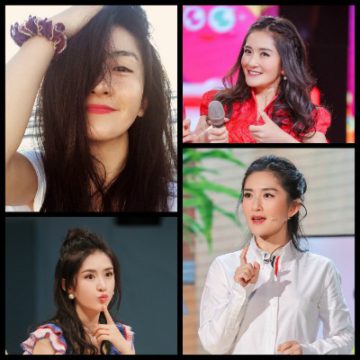
The absolute number one this list is the ‘Queen of Weibo’ Xie Na (1981), also nicknamed ‘Nana’ – an extremely popular Chinese singer, actress and designer. One of the reasons she has become so famous in mainland China is that she is the co-host of Happy Camp (快乐大本管), which is one of China’s most popular variety TV shows. She presents the show together with, amongst others, colleague He Jiong, who is the number two in this list.
Xie Na stars in many popular Chinese films and television series. She has also released several albums, founded a personal clothing line, and published two books.
Before getting married to Chinese singer Zhang Jie, Xie Na was in a 6-year relationship with her Happy Camp colleague Liu Ye.
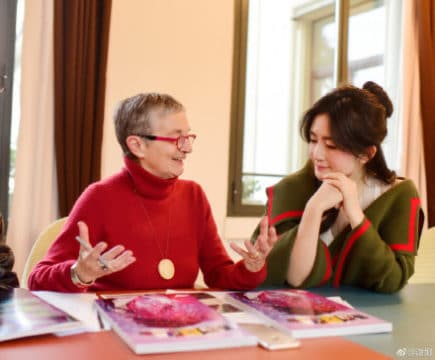
Xiena made headlines in March 2017, becoming #1 trending topic on Weibo, when she announced she would go to Italy as an overseas student to study design.
2. He Jiong 何炅
83.883.937 followers

He Jiong (1974) has been the host of China’s popular Happy Camp TV show for over ten years. He is also a singer, actor, and used to be an Arabic teacher at Beijing’s Foreign Studies University. Chinese media have called He Jiong “a key figure in China’s entertainment industry.”
‘Happy Camp’ (快乐大本馆) is a prime time variety show aired by Hunan TV. It is one of China’s most popular TV shows in China. With a viewership of tens of millions, it often holds first place in China’s total viewing ratings.
3. Chen Kun 陈坤
81.067.976 followers.
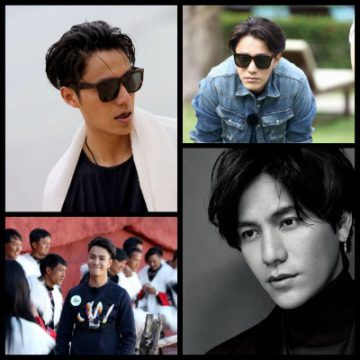
Chinese top actor and singer Chen Kun (1979, Chongqing) is known for his roles in, amongst others, Painted Skin and Balzac and the Little Chinese Seamstress.
Chen Kun, sometimes also known as Aloys Chen, is not only popular because of his acting work, but also for his looks – he is known to have a large gay fanbase. He is not shy about his looks, and likes to post a lot of photos of himself on his Weibo page.
4. AngelaBaby 杨颖
80.660.742 followers.
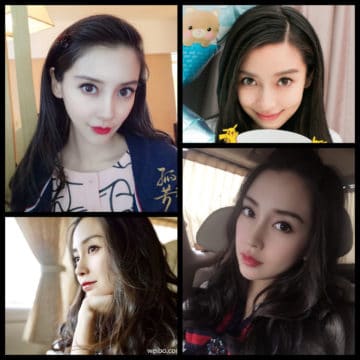
‘Angelababy’ (nickname for Yang Ying, 1989) has practically become a household name in China over the past few years. The actress and model started her acting career in 2007 and has taken on many roles in different movies and TV dramas.
Angelababy especially made headlines when she married Chinese famous actor Huang Xiaoming in 2015 and took extravagant pre-wedding photos in Paris. In the same year, she also set off a firestorm of debate when she underwent a medical examination to prove that she did not have facial plastic surgery to defend herself in a court case against a beauty clinic.
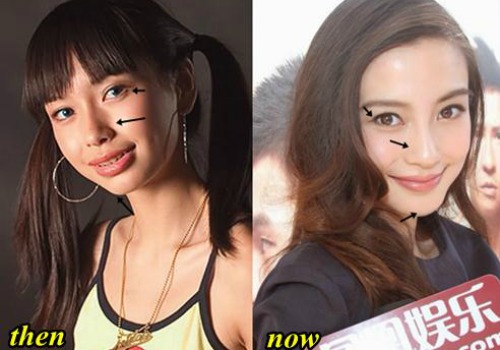
Angelababy is one of China’s “New Four Dan Actresses” according to the 2013 Southern Metropolis Daily, meaning she is generally perceived as one of China’s most bankable actresses.
5. Yao Chen 姚晨
80.570.259 followers.
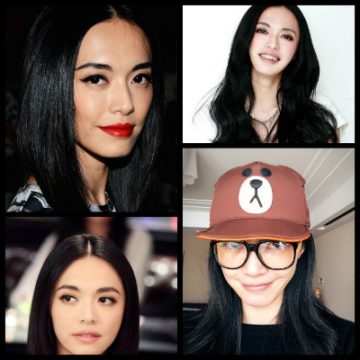
In our 2015 list of Weibo’s biggest celebrities, Yao Chen was ranking first with 78 million followers. Although she has gained two million fans since then, she has dropped a few places in this list.
Fujian-born Yao Chen (1979) is a Chinese actress and Weibo celebrity, who was mentioned as the 83rd most powerful woman in the world by Forbes magazine in 2014. Being the first-ever Chinese UNHCR Goodwill Ambassador, she is also called ‘China’s answer to Angelina Jolie’ (Telegraph).
Yao Chen was featured on the 2016 Pirelli Calendar.
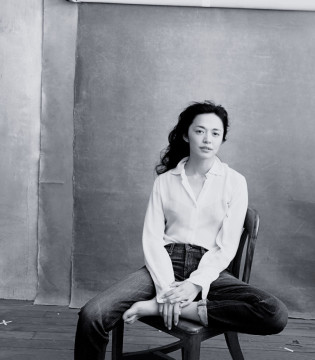
Yao Chen is not necessarily China’s number one actress, but she was one of the first celebrities to share her personal life on Weibo since 2009, and interact with her fans. On Weibo, she talks about her everyday life, family, news-related issues, work, and fashion. She posts personal pictures every day.
The combination of her popularity due to acting work, combined with her frequent Weibo updates and closeness to her fans, have made Yao Chen a huge Weibo celebrity.
For the full list check out our 2017 top 10 of Weibo celebrities.
By Manya Koetse
Follow @WhatsOnWeibo
References
Chen Zhaoqun, Pengfei Liu, Xiaohan Wang and Yuantao Gu. 2012. “Follow Whom? Chinese Users Have Different Choice.” Paper, Department of Electronic Engineering, Tsinghua University. Available online at http://arxiv.org/abs/1212.0167 (Accessed February 28, 2013).
Gao, Qi, Fabian Abel, Geert-Jan Houben and Yong Yu. 2012. “A Comparative Study of Users’ Microblogging Behavior on Sina Weibo and Twitter.” In: Masthoff, J.; Mobasher, B.; Desmarais, M.; Nkambou, R. (Eds.), User Modeling, Adaptation, and Personalization: 20th International Conference, UMAP 2012, Montreal, Canada, July 16-20, 2012 Proceedings, 88-101. Heidelberg: Springer Berlin Heidelberg.
Lunden, Ingrid. 2012. “Analyst: Twitter Passed 500M Users In June 2012.” Techcrunch.com (July 30). Available online at http://tcrn.ch/OdtB41 (Accessed February 28, 2013).
Magistad, Mary Kay. 2012. “How Weibo is Changing China.” Yale Global (Aug 9). Available online at http://yaleglobal.yale.edu/content/how-weibo-changing-china (Accessed February 28, 2013).
Millward, Steven. 2015. “Weibo hits 212M monthly active users, most now on mobile.” Tech in Asia, Aug 19 https://www.techinasia.com/weibo-212-million-active-users/ [8.9.15].
Sullivan, Jonathan. 2012. “A Tale of Two Microblogs in China.” Media Culture Society (34): 773-783.
Yeo, George and Eric X. Li. 2012. “Yin and Yang: Sina Weibo and the Chinese State.” New Perspectives Quarterly 29(2): 7-9.
Zhao, J., Wu, W., Zhang, X., Qiang, Y., Liu, T., & Wu, L. 2014. “A Short-Term Trend Prediction Model of Topic over Sina Weibo Dataset.” Journal of Combinatorial Optimization (28):613-625.
(Image: http://charliewang.me/a-close-look-at-the-sina-weibo-phenomenon)
Article by Manya Koetse for What’s on Weibo. 2013-2015.
©2015 Whatsonweibo. All rights reserved. Do not reproduce without permission – you can contact us at info@whatsonweibo.com.


China Brands, Marketing & Consumers
Quack Like a Goose: Why Beijing Street Vendor “Auntie Goose Legs” Sparked a Nationwide Debate
After the first complaints surfaced, Auntie Goose Legs admitted the truth about her business: she ha been selling duck legs all along.

My premium newsletter covering the stories, memes, debates, and viral moments shaping online conversations in China. Subscribe here to receive future editions.
If it walks like a duck and quacks like a duck, it might still be a goose – or the other way around. That, at least, is the takeaway from two stories that recently went viral on Chinese social media.
The woman at the center of it all is Beijing street-food vendor Chen Xiufeng (陈秀凤), better known as “Auntie Goose Legs” (鹅腿阿姨). Over the years, she became something of a local celebrity in Beijing’s university district. Originally from Jiangsu, the migrant vendor had been selling her famous roasted goose legs to students since 2011.
She skyrocketed to national fame in 2023 , but became the target of widespread criticism last week after it was revealed that her celebrated goose legs – sold for 16 yuan ($2.20) per piece – were actually duck meat all along.
The controversy came up after the vendor ventured beyond the university area into Beijing’s business district. At the universities, she enjoyed a loyal customer base and dedicated WeChat groups. In her new market, however, customers proved more skeptical. Some noticed that the meat looked suspiciously duck-like; others complained that the color seemed off.
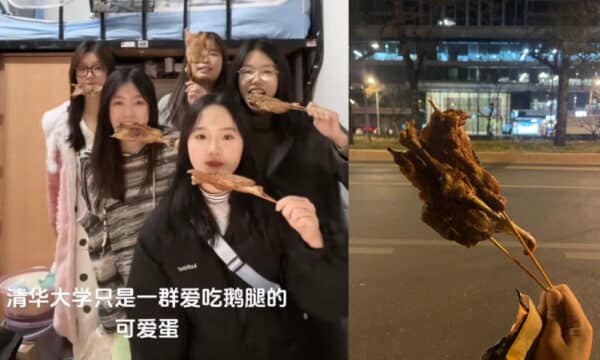
In the university district, Auntie Goose Legs she enjoyed a loyal customer base and dedicated WeChat groups.
After the first complaints surfaced, Auntie Goose Legs admitted the truth on WeChat on June 9.
“The ingredients I originally used were goose legs,” she wrote, “but they have been out of stock for more than fifteen years. The current ingredient is duck legs.”
It turned out that she had only sold goose legs, the product that made her famous, for two months back in 2011 before switching to the much cheaper duck. “Did geese become extinct without us knowing?” some netizens joked.
The revelation quickly exploded online. The hashtag “What Auntie Goose Legs is Selling Turns Out to be Duck Legs” (#鹅腿阿姨卖的是鸭腿#) became the top trending on Weibo for an entire day, with millions of people discussing the topic.
Why did millions of people become so outraged over a single Beijing street vendor selling duck instead of goose?
Piggybacking on the debate, Anhui-based commentators pointed out that a beloved regional specialty has the exact opposite ‘problem.’ Wuwei smoked duck (无为板鸭) is branded as duck, but is usually goose. According to local standards, however, goose products may be sold under this name, prompting discussions about “hanging up a goat’s head, while selling dog meat“ (挂羊头卖狗肉): advertising one thing while selling another.
Because geese are more expensive than ducks in China, and generally considered tastier, the Anhui duck-is-goose story, unlike the Auntie Goose Legs controversy, did not provoke online anger. Instead, many people saw it as an example of sellers prioritizing flavor over cost. Auntie Goose Legs is seen as doing the exact opposite.
But why did millions of people actually become so outraged over a single Beijing street vendor selling duck instead of goose, especially when there were no indications that anyone became ill? The answer has little to do with poultry and everything to do with trust.

Auntie Goose Legs during the prime time in Beijing’s University District in late 2023 (image via Lianhe Zaobao 联合早报).
Food fraud and mislabeling have been longstanding concerns in China. Earlier surveys found that food safety worries even outweighed concerns about public security and environmental issues, and while China’s food safety record has improved in recent years, public trust remains fragile.
Part of these concerns are immediate and practical. Major scandals in the past involving melamine-tainted infant formula or recycled “gutter oil” have posed serious risks to public health. But the issue goes beyond health risks alone.
If a goose can be a duck, then what exactly is the duck?
Whereas food safety concerns in many Western countries often focus on contamination, Chinese consumers are frequently just as concerned with economic deception. It is unfair to pay for a more expensive goose and receive a duck. Even if no one gets sick, Chinese consumer law still treats it as fraud.
More important, however, is what such deception does to confidence in the broader food system. If a goose can be a duck, then what exactly is the duck?
As a major 2023 college canteen scandal demonstrated, the build-up of deceit can reach a breaking point among the public. During that somewhat Kafkaesque “rat head or duck neck” (鼠头or鸭脖”事件) controversy, officials insisted a rat head found in a student’s rice was merely a “duck neck,” even though everyone could clearly see the snout and teeth of a rodent.
This kind of gaslighting shatters social trust and reinforces a generalized sense that, as a consumer, you are entirely on your own. When regulators fail to step in honestly, even a seemingly isolated incident comes to symbolize more dangerous forms of systemic food fraud.
And this is where the Auntie Goose Legs story stings the most.
People did not come to her simply because her food was good. Over the years, she had become part of local student life, and she felt safe and authentic. Her pink scooter helmet, which she continued to wear while working, became an iconic symbol of her no-nonsense and humble image. Her success was built on word of mouth and, above all, on the trust her customers placed in her.
That this particular “auntie” deceived her customers by selling a different product than the one she advertised is no longer really about her. If duck is goose, goose is duck, and your local auntie has deceived you for years, then who can you trust anymore?
- Read more about how Auntie Goose Legs rose to fame in 2023 here.
By Manya Koetse
(follow on X, LinkedIn, or Instagram)
Spotted a mistake or want to add something? Please let us know in comments below or email us. First-time commenters, please be patient – we will have to manually approve your comment before it appears.
©2026 Eye on Digital China/Whatsonweibo. All rights reserved. Do not reproduce our content without permission – you can contact us at info@whatsonweibo.com.
Chapter Dive
My Mum Has Two Husbands: The OPPO Mother’s Day Fiasco and 7 Other Gender Marketing Fails in China
Inside OPPO’s Mother’s Day PR fiasco and other failed marketing campaigns in China’s gender minefield
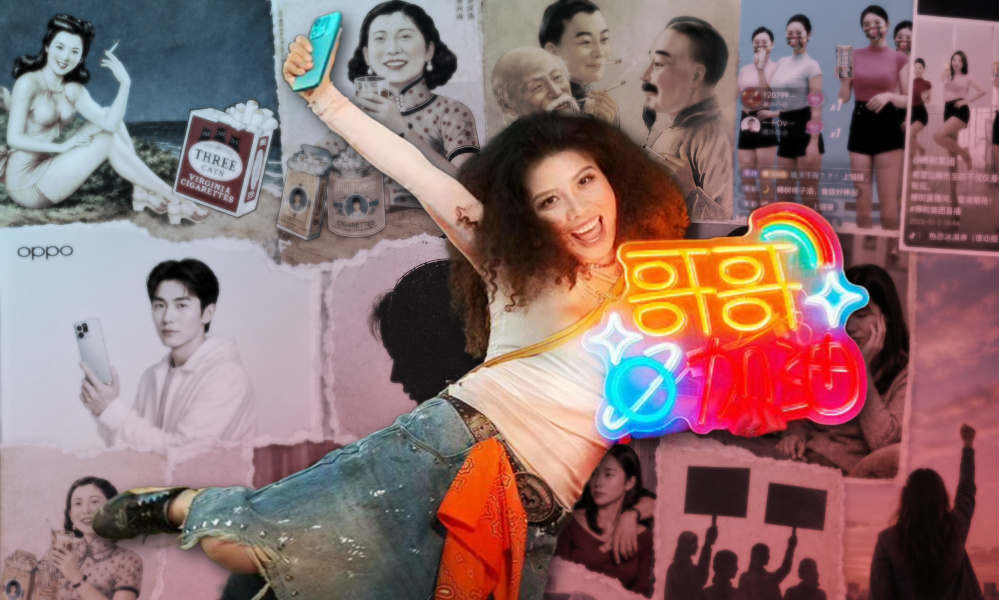
Mother’s Day is over, but OPPO is still recovering. The Chinese smartphone brand went viral over the weekend for a Mother’s Day marketing campaign that failed spectacularly. In the campaign, OPPO used the slogan: “My mom has two ‘husbands.’”
The accompanying text read:
“My mom has two ‘husbands.’ One is my dad, and the other one she sees twice a year. She barely dresses up for dates with my dad, but when she sees the other one, she’d wear a wedding dress if she could.” (“我妈有两个‘老公’,一个是我爸,另一个一年见两回。跟我爸约会基本不打扮,见另一个,她恨不得穿婚纱。”)

The OPPO ad was published online on May 8, 2026.
With this ad, OPPO was likely trying to tap into digital culture and resonate with younger consumers by using online slang.
In Chinese fandom subcultures, female fans sometimes refer to their idols as their “husband” (老公, lǎogōng) to express their devotion. It is part of a broader online joke, with some fans even incorporating life-size cardboard cutouts of their favorite celebrities into their weddings.
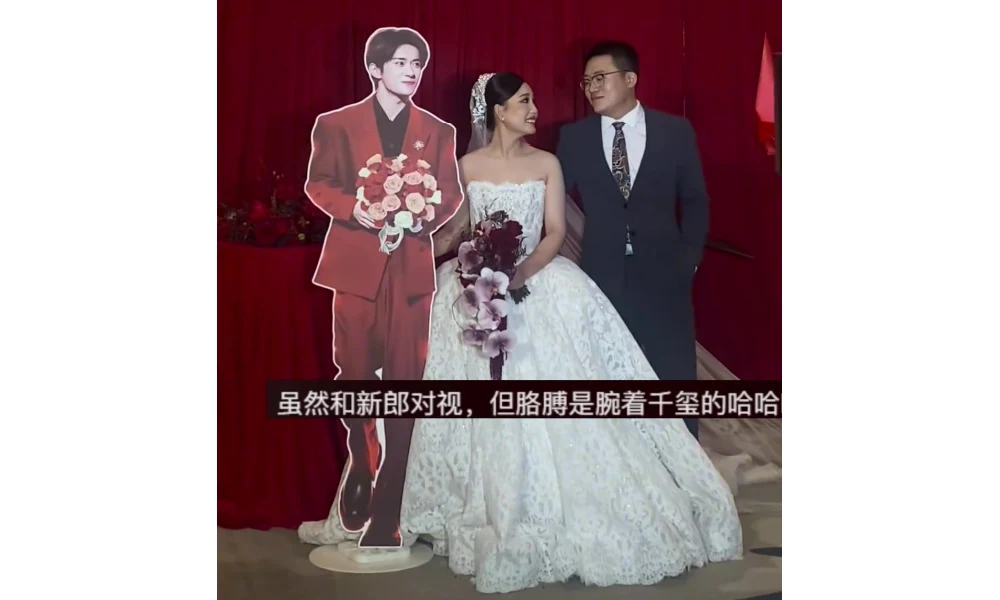
The phrase “real husband” (真老公) gained wider mainstream attention in late 2025 after a young Chinese bride unexpectedly ran into rapper and singer Jackson Wang on her wedding day and posted:
💬 “Who understands this? I met my real husband on my wedding day!” (“谁懂啊!婚礼当天遇到了真老公!!”)

The ‘real husband’ post that went viral in late 2025 and early 2026.
Although some commenters found it funny, the bride was heavily criticized for publicly calling a celebrity her “real husband” on her wedding day, using the same word (老公) that refers to her literal spouse, as if she were placing her idol above her actual groom.
💬 “This makes it seem as though she does not truly regard the man she is legally marrying as her husband at all,” one among many commenters wrote.
While OPPO was probably aiming for a tongue-in-cheek campaign featuring an energetic and youthful mother who adores her idol, the company appears to have badly misread the room.
After the ad was posted on Weibo and other social media channels ahead of Mother’s Day, backlash quickly followed.
Many netizens were confused and did not understand the reference to fan culture. Some said they were simply “baffled” by what they saw as an inappropriate message suggesting that mom was cheating—and on Mother’s Day, no less!
💬 “Without reading the comments, I thought the ad was saying the mother was cheating and didn’t love her husband, but had a side lover she was crazy about,” one Xiaohongshu commenter wrote.
Others asked whether the creators would have been willing to run a similar Father’s Day campaign with the line: “My dad has two wives.”
Fan culture remains far removed from the everyday experience of many ordinary Chinese netizens, creating not just a gender divide but also a generational and social one.
Even when people understand that an “idol husband” is purely fictional, the term 老公 (lǎogōng) still carries the literal meaning of “husband” and implies emotional devotion to someone outside the marriage. For some, that feels disrespectful.
Many also questioned the contrast at the heart of the campaign: why does mum barely dress up for dates with her husband, yet would supposedly wear a wedding dress to see a celebrity?
Others believe celebrity fandom in China has already gone too far, and felt that using this language in a mainstream advertising campaign was especially misplaced.
As one marketing commentator on Xiaohongshu Cathy聊品牌热点) put it, OPPO had managed to offend almost every relevant audience: male consumers who saw the ad as disrespectful to husbands, fandom communities who did not want their inside jokes dragged into mainstream advertising, women who support gender equality, and many others who hold strong views about traditional family values.
Emotional Infidelity as a Form of Female Self-Expression
The brand quickly took the campaign offline and apologized. But in their initial apology post, OPPO explained that it had merely intended to challenge gender stereotypes and present a “more diverse and multi-dimensional image of today’s mothers,” women who can enjoy celebrity fandoms and pursue hobbies beyond their roles as wives and mothers.
OPPO’s first apology: “Our original intention was to break stereotypes and present a more diverse and multi-dimensional image of today’s mothers.”
That explanation sparked another wave of criticism, with many arguing that OPPO had completely missed the point. Few people objected to the idea that mothers can have celebrity idols or personal passions. What many found problematic was the suggestion of romantic involvement outside the marriage.
One Weibo commenter (@甲申鬼友), who called the entire episode a “PR disaster”, suggested that the problem was that OPPO framed emotional infidelity as a form of female self-expression.
They wrote:
💬 “The controversial slogan “My mom has two husbands” was not about challenging stereotypes about mothers. Instead, it glorified the tacky behavior of a married woman calling a celebrity “husband” and wanting to wear a wedding dress to see him, presenting it as a form of female self-expression. Implicitly, it suggested that a real husband should unconditionally accept his wife’s “emotional infidelity.” (…). The message conveyed by the campaign was clear enough: it alienated men and mothers who still value loyalty and commitment in relationships.”
It soon became clear that OPPO’s handling of the issue was turning into a bigger problem than the ad itself.
As netizens continued to criticize the campaign, the controversy was amplified by blogs, mainstream media, and state-affiliated organizations.
The China Advertising Association (CAA), the country’s leading advertising body operating under state supervision, weighed in, along with the All-China Women’s Federation (ACWF), China’s main state-linked women’s organization.
Both organizations echoed familiar Party messaging, criticizing marketing that crosses the boundaries of public morality, deviates from core socialist values, violates traditional family ethics, or “misleads the public, especially young people, about social values.”
As the controversy escalated, attention also turned to OPPO’s China region brand strategy director, Yu Siyue (余思月), a graduate of Wuhan University’s School of Chinese Language and Literature.
The university itself then entered the discussion by posting a statement on Weibo saying it was “shocked” by the campaign. It said it “strongly disagrees with the content (..) and the values conveyed,” distancing itself from both the campaign and its alumna. (In a detail I found unintentionally amusing, the statement also noted that Yu had once been praised for helping an elderly passenger on a bus.)
Wuhan University itself was also criticized for inserting itself into a controversy that had little to do with the university. Chinese media outlet Yicai asked: “Who forced Wuhan University into this disastrous move?” Even political commentator Hu Xijin called the statement an overreaction and a sign of “public opinion anxiety syndrome” (舆情焦虑症).
In the end, OPPO apologizedc a second time on Monday, this time stating that both the campaign and its initial response reflected serious shortcomings in the company’s values and judgment. The company said it had lost sight of “upholding the boundaries of China’s core socialist values.”
OPPO said the incident had led to disciplinary measures against those responsible, and the company promised it would ensure that future campaigns better align with “mainstream values.”
Lessons to Be Learned
There are a few things to be learned from OPPO’s PR nightmare:
🔍 1. Marketing fails are often about the response
Once a marketing controversy breaks out, the company’s response often matters more than the original mistake. If the response fails to address the actual criticism, the fallout can become much worse than the initial problem.
🔍 2. In China, PR controversies quickly become political issues
In China, public relations is inherently political. What begins as criticism from netizens can quickly be amplified by state media and official organizations. In the process, a relatively minor marketing controversy can be reframed as a broader debate about morality and family values. Once that happens, the issue is no longer just about a poorly judged advertisement but becomes a tool for boosting official narratives and reinforcing broader Party priorities.
🔍 3. In China’s cancel culture, everyone rushes to distance themselves
Chinese online backlash can be intense and unforgiving. Once a controversy takes off, everyone rushes to distance themselves from it. The fact that OPPO’s brand director became a target, and that even Wuhan University felt compelled to issue a public statement, illustrates this dynamic. At the same time, such overreactions can backfire, especially when an organization emphasizes that it is “not involved” by publicly engaging in the controversy. Sometimes, silence really is golden.
🔍 4. Gender-related marketing in China is a minefield
This episode is another reminder of how difficult it can be for brands to engage with gender-related themes in China. Companies eager to appear youthful and relatable may underestimate just how sensitive these issues are, and how quickly a seemingly playful campaign can turn into a major controversy.
Not Just OPPO: When Gender-Related Marketing Goes Wrong
OPPO is far from alone.
In recent years, language, jokes, and messaging related to gender, feminism, and male-female relationships have become some of the most sensitive issues in Chinese advertising.
In a rapidly changing China, gender roles are evolving, identities are shifting, and ideas about what is considered feminine or masculine are increasingly contested.
Expectations around what female consumers want and what male consumers value are also in flux. Younger and older generations, and especially male and female netizens, often disagree about what is socially acceptable amid women’s growing assertiveness, persistent patriarchal attitudes, and changing global trends.
For advertisers and creative directors, this creates a particularly difficult environment. Brands are trying to tap into consumers’ purchasing power and keep up with shifting social norms, while also staying within the bounds of official values and political priorities. As a result, it is easy to misread the mood and miss the mark.
Campaigns can inadvertently reinforce traditional gender hierarchies, sexualize women, portray men in ways that spark backlash, or rely on outdated stereotypes.
And, as the OPPO case shows, even campaigns that genuinely aim to challenge stereotypes can end up provoking criticism instead.
Below are seven other examples of brand campaigns in China that backfired over the past decade.
💥 #1 Blue Moon: Mother’s Day Marketing Backfires
Marketing campaign (2024): “Let Mom Do the Laundry More Easily”
Main problem: Reinforcing outdated gender stereotypes
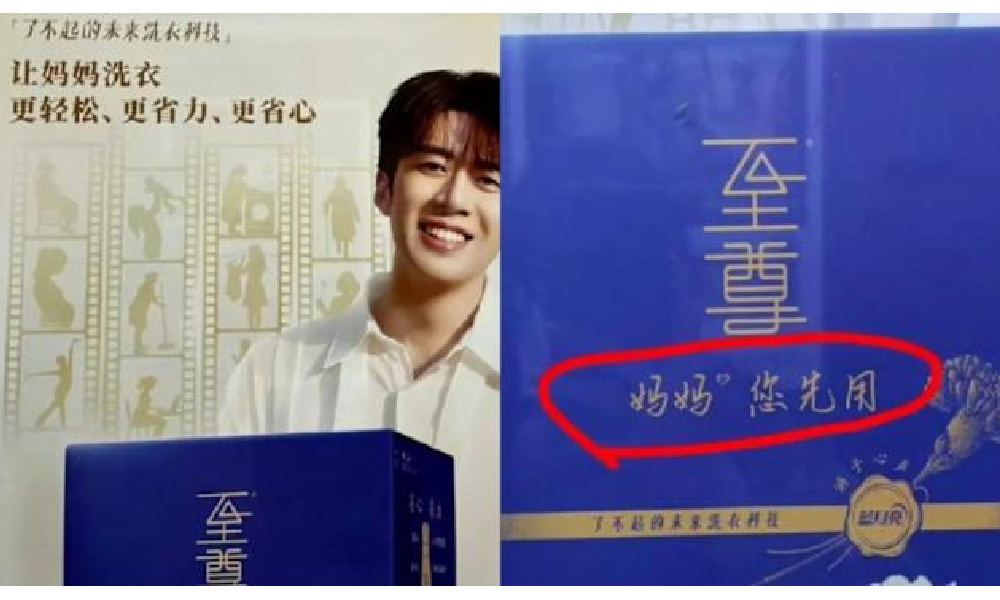
China’s household cleaning giant Blue Moon (蓝月亮) also found itself at the center of a marketing controversy after a 2024 Mother’s Day elevator ad campaign promoting its premium laundry detergent with the slogans “Let mom do the laundry more easily” (“让妈妈洗衣更轻松”) and “Mom, you use it first” (“妈妈您先用”).
Many users objected to the message, arguing that it portrayed doing laundry as something that naturally belongs to mothers and reinforced traditional gender stereotypes. As part of a Mother’s Day campaign, critics said the messaging was particularly inappropriate.
As in OPPO’s case, Blue Moon’s crisis management made matters worse. The company’s initial response suggested the controversy was merely a “misunderstanding” and said the campaign was intended to express gratitude to mothers. Many netizens disagreed, arguing that Mother’s Day and mothers doing the laundry had nothing to do with each other.
💥 #2 Fuyanjie: “Too Dark and Stinky”
Marketing campaign (2022): “83% of men are unwilling to go down on their partner because it’s too dark and stinky”
Main problem: Straightforwardly sexist
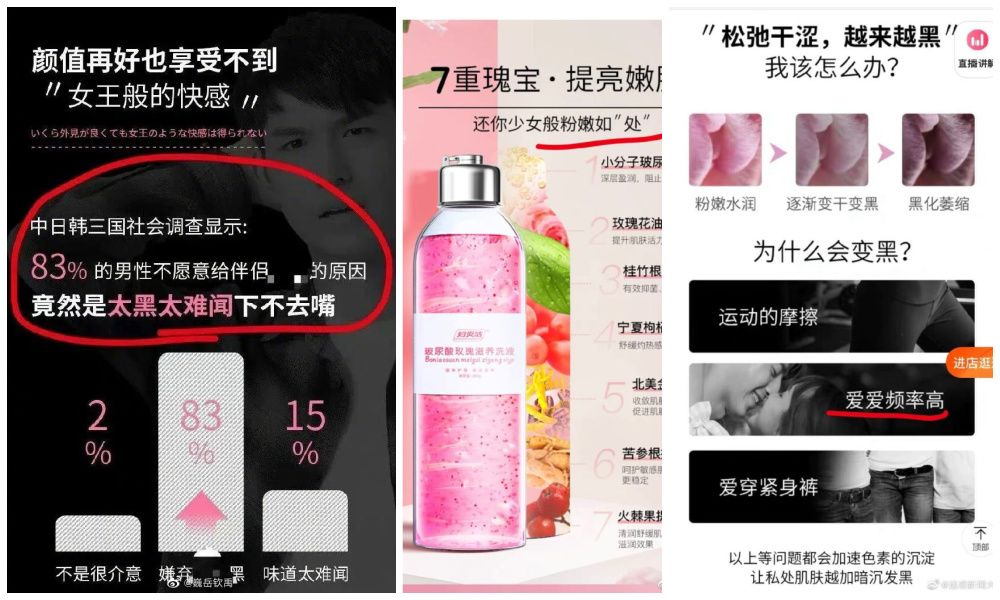
In 2022, the well-known Chinese feminine hygiene brand Fuyanjie (妇炎洁) promoted a pink-colored intimate wash by claiming that “surveys show that 83% of men from South Korea, Japan, and China are unwilling to go down on their partner because it’s too dark and stinky” (“中日韩三国社会调查显示:83%的男性不愿意给伴侣口爱的原因竟然是太黑太难闻下不去嘴”).
Besides promising to make the genital area pinker, the campaign also suggested that hyperpigmentation could be caused by wearing tight pants and having too much sex.
The brand drew widespread criticism for being vulgar, insulting to women, and completely unscientific. Some netizens suggested that the ad makers should focus on turning their own penises pink instead.
Fuyanjie apologized and took both the campaign and the product offline.
(Remarkably, this was the brand’s second major controversy. In 2016, one of its intimate wash products carried the slogan: “I can’t wash away your past, but I can wash your future clean” (“我不能洗掉你的过去,但我能洗干净你的未来”), a line widely criticized as slut-shaming.)
💥 #3 Coconut Palm: Big Boobs, Short Skirts, and a Marketing Strategy Built on Controversy
Marketing campaign (2022): Busty women in tight tops and shorts dancing on livestream
Main problem: Objectification of women & crossing official lines
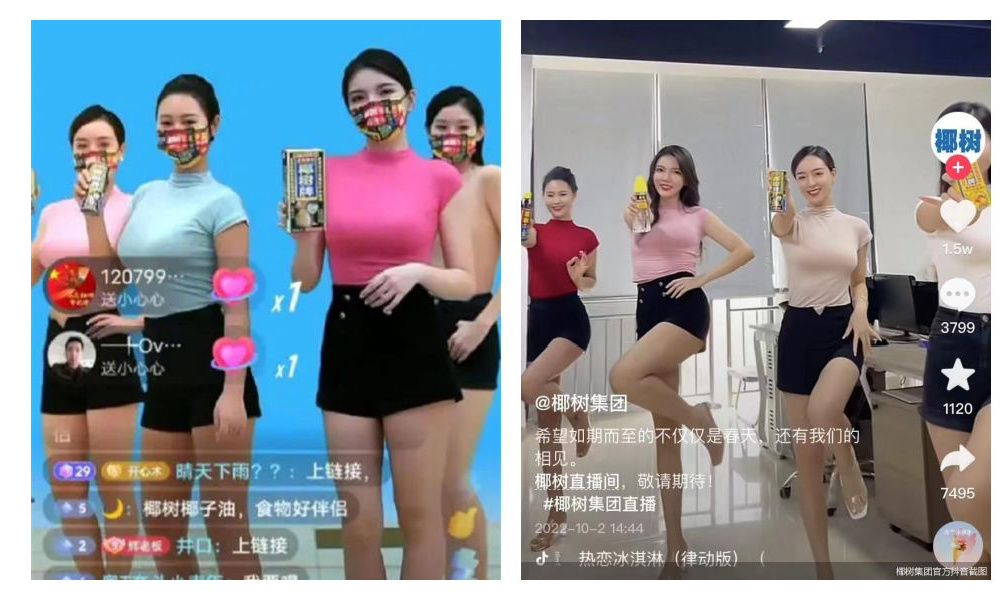
During China’s National Day holiday in the 2022 Covid & livestream year, Chinese coconut drink brand Coconut Palm (椰树椰汁) found itself at the center of controversy over a series of promotional streams on Douyin.
The company had already been fined twice by authorities for advertisements and packaging suggesting that drinking Coconut Palm could promote breast enlargement.
The 2022 livestreams featured several attractive, busty women in tight tops and short shorts dancing in front of the camera. The broadcasts drew even more attention when they were repeatedly interrupted and cut off by the platform.
There was little new about the campaign. Coconut Palm’s marketing has revolved around voluptuous women and sexually suggestive slogans for more than 25 years.
One of the company’s most famous slogans was “I’ve been drinking it since I was little” (“我从小喝到大”). While literally meaning “I’ve been drinking it since childhood,” the phrase can also be interpreted as “I grew big [breasts] by drinking it.”
The livestreams reignited debate on Chinese social media about the objectification of women in advertising and online culture. Coconut Palm is the only example on this list where controversy appears to be a core part of the brand’s marketing strategy. And while regulators have repeatedly taken issue with its approach, many consumers seem to appreciate the brand precisely for its refusal to change.
💥 #4 Ubras: “Underwear That Helps Women Win in the Workplace”
Marketing campaign (2021): Underwear so comfortable that it can “help women lie down and win in the workplace”
Main problem: Sexist and offensive

Popular talk show host and comedian Li Dan (李诞) sparked controversy on Chinese social media in 2021 over a promotional slogan for the Chinese women’s underwear brand Ubras. Their slogan (“让女性轻松躺赢职场”) can be loosely translated as “make it easy for women to win in the workplace lying down.”
The phrase was widely interpreted as suggesting that women could use their bodies or sexuality to gain an advantage at work. According to the brand, the intended message was simply that Ubras bras are so comfortable that women could “lie down and win.” The full slogan was: “一个让女性躺赢职场的装备” — “equipment that helps women lie down and win in the workplace.”
Many people felt it was inappropriate not only for a male celebrity to promote women’s underwear, but also for the campaign to draw a connection between lingerie and workplace success.
Ubras and Li Dan both apologized for the “inappropriate wording,” and all related promotional content was removed.
💥 #5 Intel: When a Brand Ambassador Becomes the Controversy
Marketing campaign (2021): “Intel’s standards are even higher than mine when choosing a partner”
Main problem: Caught in China’s gender wars

Tech company Intel sparked controversy in 2021 by appointing Chinese comedian Yang Li (杨笠) as a brand ambassador in China. Yang Li had become a polarizing figure because of her jokes about men, including her famous line: “Men are adorable, but mysterious. After all, they can look so average and yet be so full of confidence.”
In Intel’s campaign, Yang said: “Intel’s standards are so high — even higher than mine when choosing a partner.” (“英特尔的眼光太高了,比我挑对象的眼光都高。”)
The line itself was relatively harmless. What triggered the backlash was Yang’s public persona.
Some male netizens accused Yang of being sexist and argued that Intel, a company selling laptops and computer chips, should not be represented by a comedian known for mocking men — especially when men were seen as a key target audience.
Intel subsequently deleted the advertisement from its social media channels and ended its collaboration with Yang Li.
That decision, however, sparked a second wave of criticism. Many female netizens accused Intel of caving to online pressure and asked what had happened to the company’s commitment to diversity and inclusion. Others mocked Intel for changing its marketing strategy to appease China’s “ordinary yet confident” men.
💥 #6 Juewei Duck Neck: “Tender, Juicy — Want Some?”
Marketing campaign (2017): Sexually suggestive Singles’ Day poster
Main problem: Vulgar and objectifying
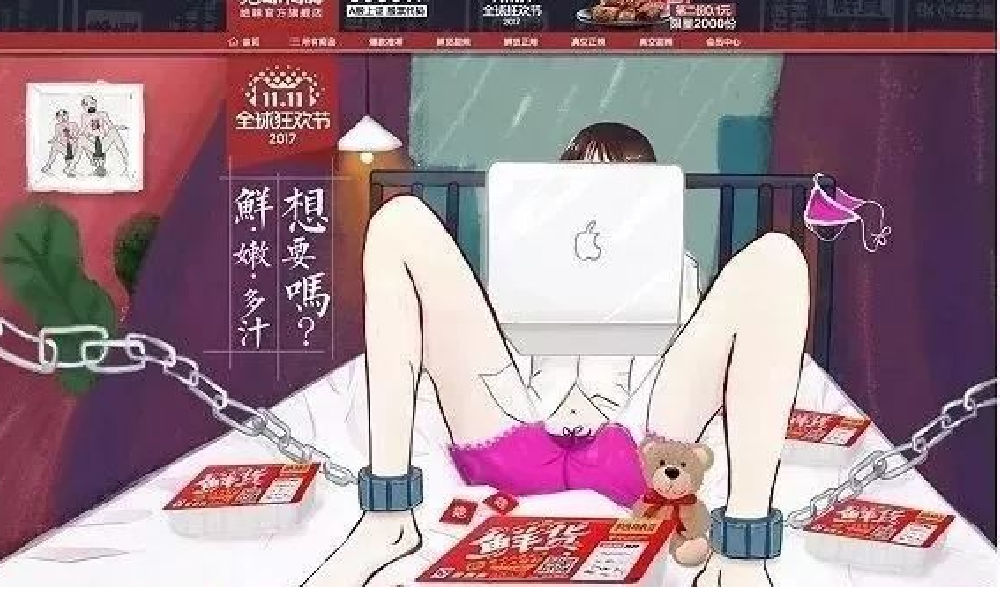
Ahead of the 2017 Singles’ Day shopping festival, Chinese snack chain Juewei Duck Neck (绝味鸭脖), one of China’s largest duck neck and marinated meat brands, published a promotional poster on its Tmall store showing a cartoon woman in short shorts lying on a bed with chains around her ankles and her legs spread apart, with one of the company’s products placed in front of her.
The slogan read: “Tender, juicy — want some?” (“鲜嫩多汁,想要吗”). The sexually suggestive image triggered immediate controversy and widespread criticism.
Juewei Duck Neck later issued a nationwide apology, and both the company and the advertising agency responsible for the campaign were fined 600,000 yuan (approximately US$88,000) each.
💥 #7 IKEA: “If You Don’t Bring Back a Boyfriend, Don’t Call Me Mom”
Marketing campaign (2017): Turning parental pressure to marry into a lifestyle ad Main problem: Reinforcing social pressure on unmarried women
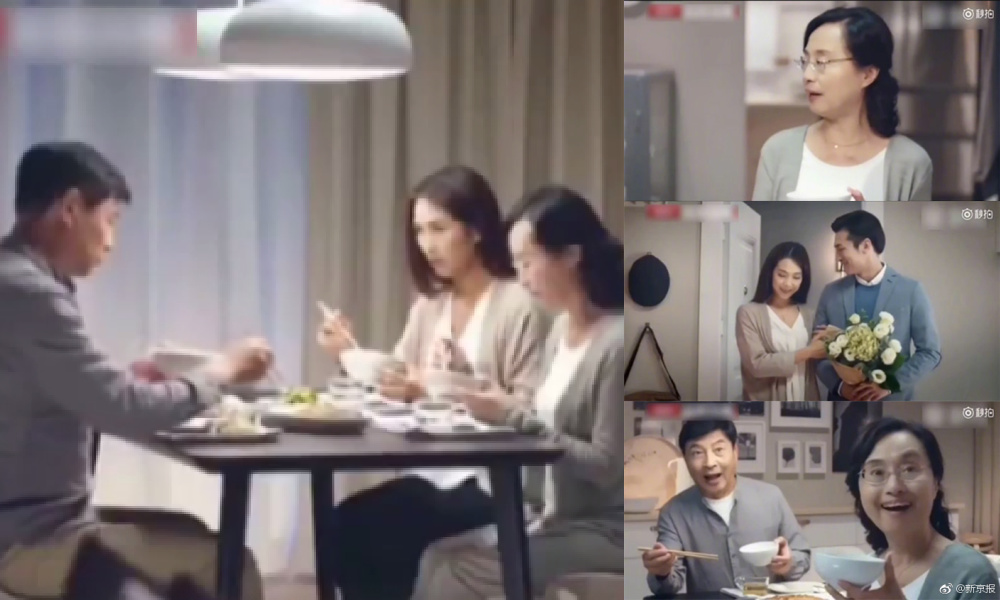
A 30-second IKEA commercial sparked controversy in China in 2017 for portraying parental pressure on an unmarried daughter to find a boyfriend.
In the ad, a mother tells her daughter at the dinner table: “If you don’t bring back a boyfriend next time, then don’t call me Mom.” (“再不带男朋友回来,就别叫我妈,”)
The doorbell then rings, and a young man holding flowers appears. The parents immediately brighten, make the living room more welcoming, and set out IKEA tableware for a celebratory meal. The tagline reads: “Celebrate everyday life easily” (“轻松庆祝每一天”).
The ad drew widespread criticism, especially because it aired at a time when many women in China were pushing back against intense social pressure to marry by a certain age. Critics argued that IKEA was trivializing this while reinforcing outdated expectations about marriage and filial duty.
IKEA apologized and removed the commercial.\
Eye on Digital China, by Manya Koetse, is co-published on Substack and What’s on Weibo. Both feature the same new content — so you can read and subscribe wherever you prefer. Substack offers community features, while What’s on Weibo provides full archive access.
Eye on Digital China is a reader-supported publication by
Manya Koetse (@manyapan) and powered by What’s on Weibo.
It offers independent analysis of China’s online culture, media, and social trends.
To receive the newsletter and support this work, consider
becoming a paid subscriber.


“God Won’t Save Us, but the PLA Will”: Floods, Faith, and Kung Fu Soccer Nostalgia

“Even Pigs Have AC”: The European Heatwave Through Chinese Eyes

China’s CITIC Tower Crash: The Story That Never Trended

Quack Like a Goose: Why Beijing Street Vendor “Auntie Goose Legs” Sparked a Nationwide Debate

Auntie Goose Legs, China’s Shrinking Condom Market, and DeepSeek’s AI Blind Spot

Comrade Trump Returns: The 2026 Trump–Xi Summit on Chinese Social Media
Auntie Goose Legs, China’s Shrinking Condom Market, and DeepSeek’s AI Blind Spot
China’s CITIC Tower Crash: The Story That Never Trended
Quack Like a Goose: Why Beijing Street Vendor “Auntie Goose Legs” Sparked a Nationwide Debate

My Mum Has Two Husbands: The OPPO Mother’s Day Fiasco and 7 Other Gender Marketing Fails in China
-
 China Insight12 months ago
“Jiangyou Bullying Incident”: From Online Outrage to Offline Protest
-

 China Arts & Entertainment10 months ago
The Wong Kar-wai Scandal Explained: The Dark Side of ‘Blossoms Shanghai’
-
 Chinese New Year6 months ago
Inside Chunwan 2026: China’s Spring Festival Gala
-
 China Society12 months ago
The Rising Online Movement for Smoke-Free Public Spaces in China
Harald Gottschling
October 12, 2016 at 11:05 pm
I´m looking for shouse-brand “chou sen” , thank you
Harald Gottschling
Mandy
October 6, 2017 at 10:05 pm
Good article. Thanks for sharing.
Japan
April 13, 2018 at 7:22 pm
Pretty! This has been a really wonderful post. Thank you for
providing this information.
Borhan Brihan
October 7, 2018 at 8:59 am
The followers of top ten celebrities are insane! A perfect article with handy statistics.
longUrl
May 20, 2019 at 8:52 pm
Why people still use to read news papers when in this technological globe everything is available on net?