
China Arts & Entertainment
Top 30 Classic TV Dramas in China: The Best Chinese Series of All Time
This year marks 60 years of Chinese TV drama. These are the best Chinese TV dramas of all time.

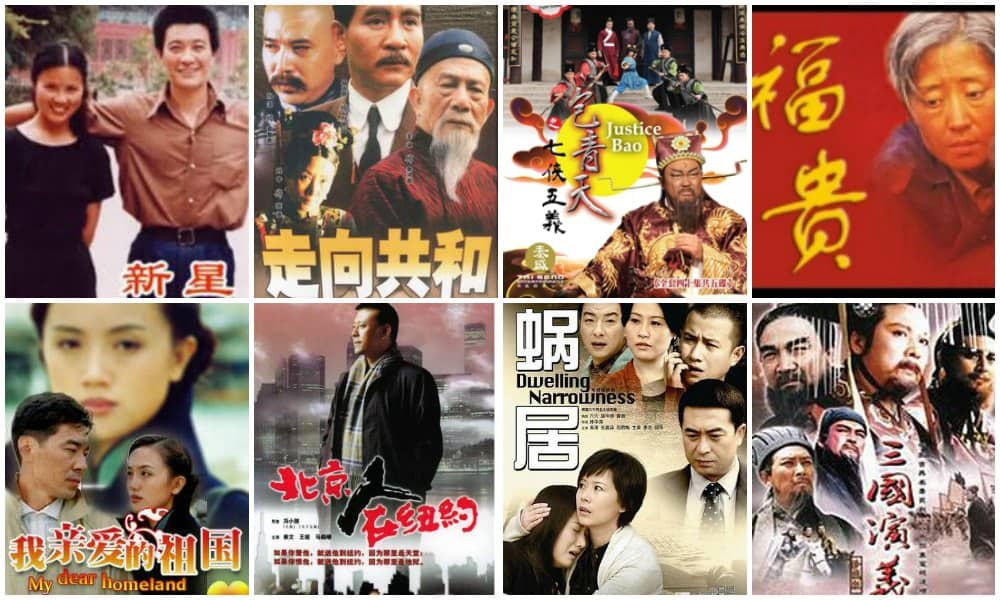
PREMIUM CONTENT ARTICLE
First published
This year marks the 60th anniversary of Chinese TV drama since the airing of the very first (one-episode) drama A Mouthful of Vegetable Pancakes (一口菜饼子) in 1958 – the same year in which the very first Chinese television station started broadcasting (Bai 2007, 77).
The drama, live broadcasted by Beijing Television, sent out a message of frugality, as one young girl warns her sister not to waste food by remembering her of their difficult past and brave mother, who died of hunger while even refusing to eat the last bit of food, a vegetable pancake.
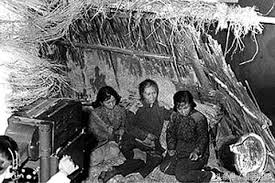
A Mouthful of Pancakes aired in 1958.
Much has changed within those sixty years. After a time when the production of TV dramas practically came to a standstill during the Cultural Revolution, the late 1970s and early 1980s saw a boom in the popularity of television dramas, along with a spike in households that owned their own TV. From 1980 to 1990, the number of household television sets in China increased from 5 to 160 million (Wang & Singhal 1992, 177).
Since the 1980s, mainland China has gone from a country where most television dramas were imported from outside the country, to one that has the most thriving domestic TV drama industry in the world.
Some TV dramas in this list have become classics through time, some are fairly new but have already become classics within their genre.
This list has been fully compiled by What’s on Weibo, based on popularity charts on Chinese search engine Sogou’s top tv drama listings of all time, together with ranking on Douban, a big Chinese social networking service and influential media review website, and also based on academic sources that note the importance of some of these TV classics.*1 We will list a recommendation list of relevant books at the end of this article.
Most of these series will have links redirecting to available versions on Youtube or elsewhere – unless written otherwise, they do not have English subtitles. Please share English subtitled versions in the comment section if you found them, we’ll add them to the list.
This article is focused on those classics that have been important for the TV drama industry and audiences of mainland China. Although several of them were produced in Hong Kong or Taiwan, the majority is from the PRC. These dramas are listed in chronological order of appearance, not listed based on rankings.
Here we go!
#1 The Bund / The Shanghai Bund (上海滩)
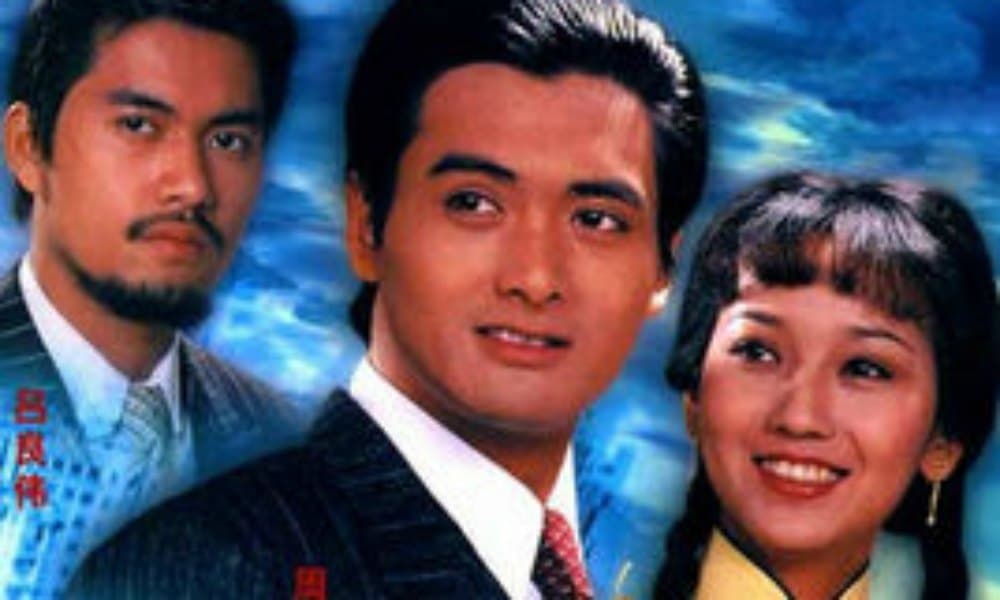
Year: 1980
Episodes: 25
Genre: Action
Produced in Hong Kong
Noteworthy: “The Godfather of the East”
This TV drama became such a sensation across China in 1980, that it also became known as the Chinese equivalent to the classic Godfather series.
Actors Angie Chiu and Chow Yun-Fat star in this Hong Kong drama, that is set in the underworld society of 1920s Shanghai, and revolves around the tumultuous love story between Feng Chengcheng and Xu Wenqiang.
The series has become such a classic that it still plays an important role in popular culture of China today, with newer films and TV dramas also being based on the original series (the 2007 mainland China TV series Shanghai Bund, for example, is a remake of the 1980 original). If you ever go to karaoke, you’re probably already familiar with the shows’ famous theme song ‘Seung Hoi Tan’ (上海滩) by Frances Yip (see here).
#2 Eighteen Years in the Enemy’s Camp (敌营十八年)
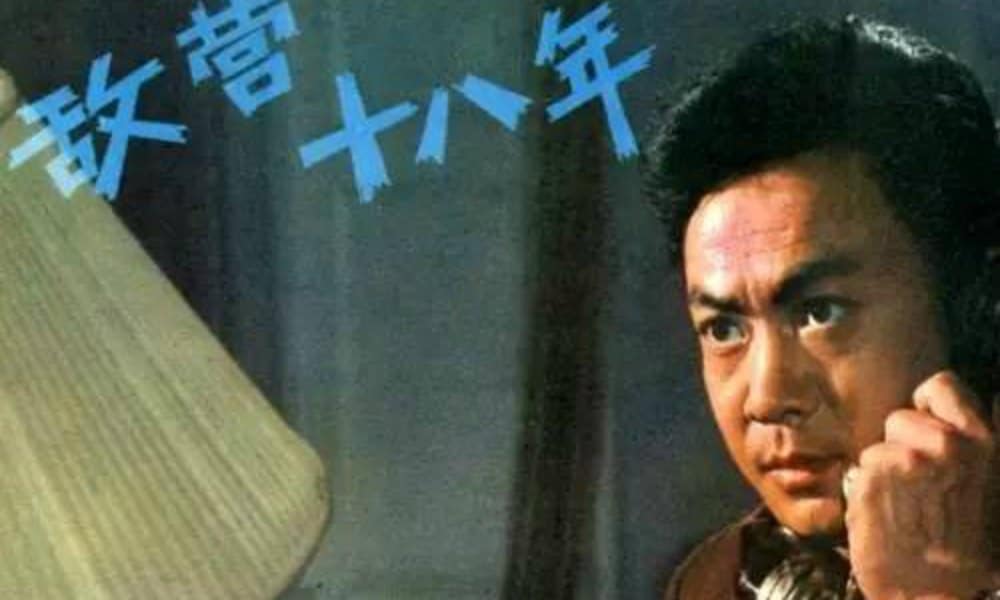
Year: 1981
Episodes: 9
Genre: War Drama
Watch the first episode here on Youtube.
Noteworthy: “The first TV drama produced by CCTV”
Eighteen Years in the Enemy’s Camp is somewhat of a cult classic in China. Despite the fact that the TV drama itself was somewhat poorly produced, it still gets high ratings on sites such as QQ Video or Douban today.
At a time when the Chinese TV drama market was still dominated by imported television series (from Hong Kong, US, and other places), Eighteen Years in the Enemy’s Camp was the first drama series made by CCTV (Bai 2007, 80), directed by Wang Fulin (王扶林) and Du Yu (都郁).
The story revolves around the Communist Party member Jiang Bo (江波), who spends 18 years undercover in the “tiger’s den” (虎穴), the enemy’s camp, as a National Army officer, thwarting the Nationalists’ plans until the 1949 victory of the Communists.
Fun fact by Ruoyun Bai (see references): despite the fact that the entire show is about the Nationalists Army, not a single Nationalist Army uniform could be found for the cast. The uniforms that were used, were not up to par: the main character had to leave his coat’s collar unbuttoned because it was too tight, and always has his hat in his hands because it was actually too small to fit his head (2007, 80-81).
#3 Ji Gong (济公)
Year: 1985
Episodes: 12
Genre: Fantasy
Directed by Zhang Ge (张戈)
All episodes can be watched here on YouTube.
Noteworthy: “Influenced by Charlie Chaplin”
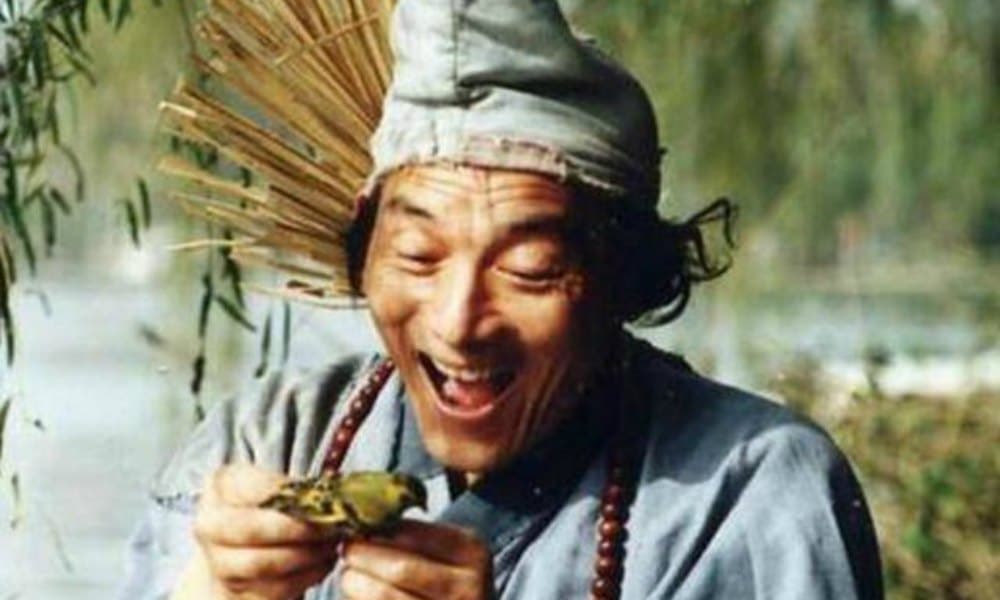
This popular TV series is centered around Ji Gong, the folk hero and Chan Buddhist monk who lived in the Southern Song and, according to legend, had supernatural powers and spent his whole life helping the poor.
The main role is played by renowned Chinese artist and mime master You Benchang (游本昌). In an interview with CRI, the actor once said that he was heavily influenced by his idol Charlie Chaplin for this role, sometimes even imitating some of Chaplin’s gestures.
#4 Chronicles of The Shadow Swordsman (萍踪侠影)
Year: 1985
Episodes: 25
Genre: Wuxia/Martial
Directed by: Wang Xinwei (王心慰)
Produced in Hong Kong
Episodes available on Youtube here.
Noteworthy: “Perfect Chemistry between Leading Actors”
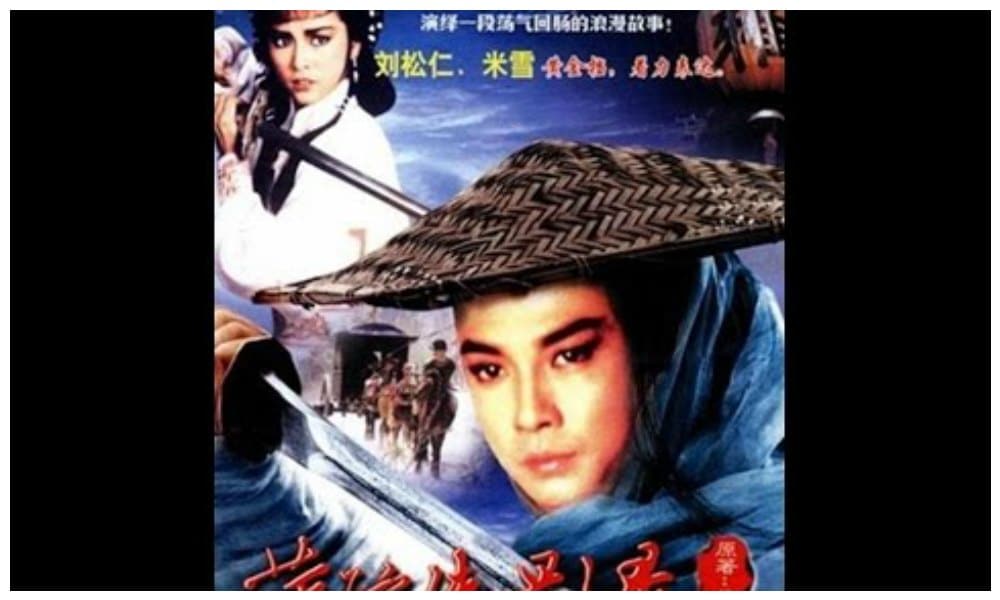
This classic TV drama features actors Damian Lau as Zhang Danfeng and Michelle Yim as Yun Lei, whom are often praised by drama lovers for their perfect chemistry in these series. Of the many adaptations there are of Liang Yusheng’s wuxia novel Chronicles of The Shadow Swordsman, many say this is their favorite.
#5 New Star (新星)

Year: 1986
Episodes: 12
Directed by: Li Xin (李新)
Noteworthy: “A drama anyone over 50 will remember”
This CCTV mini-drama, based on the novel by Ke Yunlu (柯云路), tells the story of a young Party secretary fighting against corruption. Before Heaven Above (later in this list), it is thus one of the very first dramas to focus on corruption as a theme, and it also caused a buzz at the time for doing so – most people over 50 in China today will probably remember this TV series today.
#6 Journey to the West (西游记)
Year: 1986
Episodes: 25 for season one, 16 episodes for season 2
Directed by Yang Jie (杨洁)
Watch on Youtube (with English subtitles!) here.
Noteworthy: “Shot with one camera”
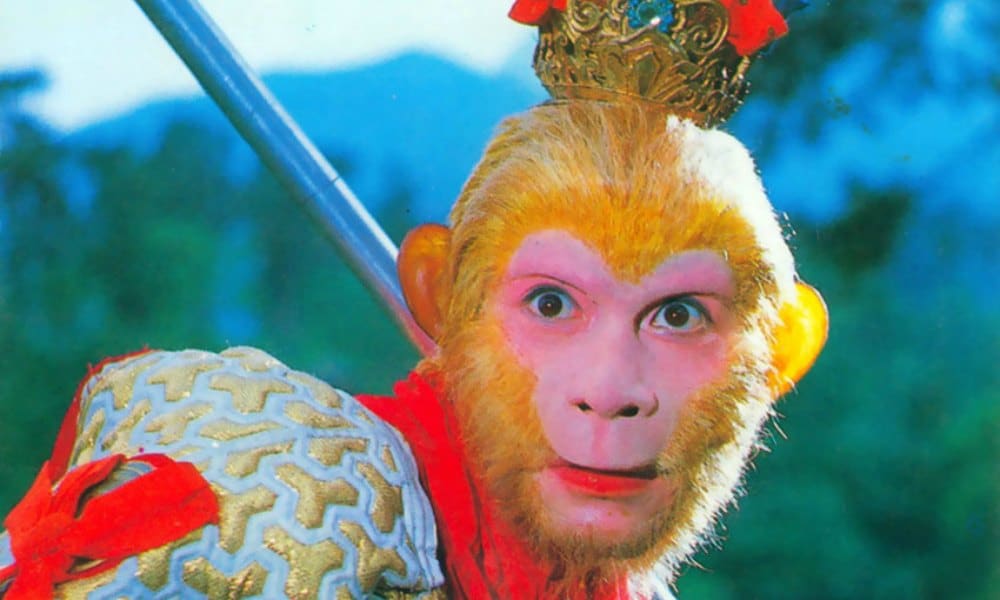
This is an all-time favorite TV series in China that is still rated with a 9.5 on the TV drama database of search engine Sogou. It has been an instant classic from the moment it was first broadcasted by CCTV in October of 1986.
Journey to the West (Xīyóu jì 西游记), published in the 16th century (Ming dynasty), is one of the most important classical works in the history of Chinese literature, and tells the story of the long journey to India of the Tang Monk Xuánzàng, who is on a mission to obtain Buddhist sutras. He is joined by three disciples, the pig demon Zhū Bājiè, the river demon Shā Wùjìng, and Sūn Wùkōng, who is better known as the Monkey King in the West.
The Monkey in the series is played by Zhang Jinlai (章金莱), also known as Liu Xiao Ling Tong, who recently recalled in an CGTN article that: “it was 30 years ago and we’d got only one camera. We walked around China’s picturesque areas and took 17 years to make 41 episodes. 17 years equals Monk Xuanzang’s pilgrimage for the Buddhist scriptures.”
#7 “The Dream of Red Chambers” (红楼梦)
Year: 1987
Episodes: 36
Directed by: Wang Fulin (王扶林)
Watch with English subtitles on YouTube here.
Noteworthy: “The first entry of Chinese tv drama into the global market”
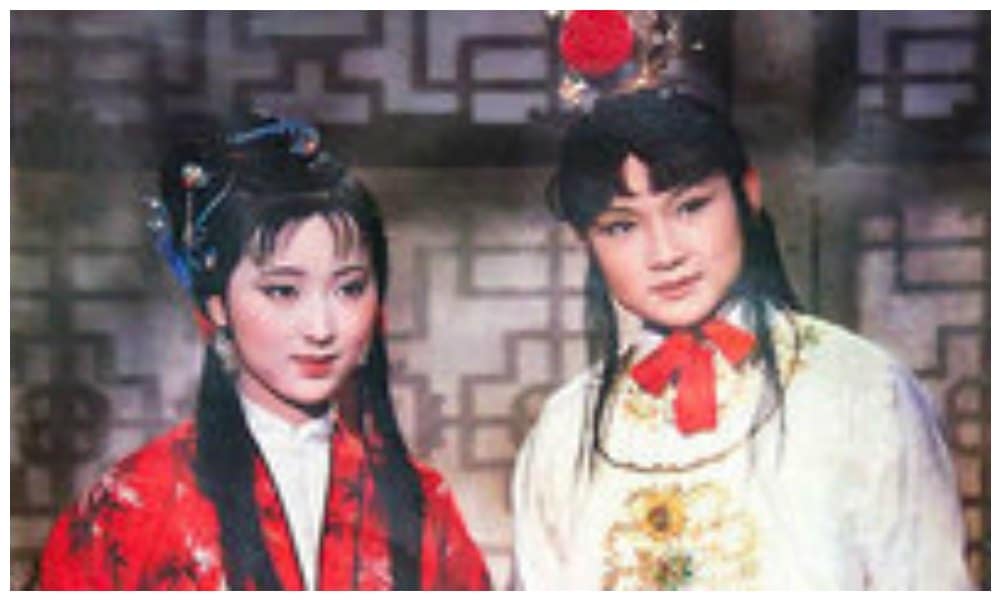
Even today, this CCTV TV series from 1987 is still rated as one of the best Chinese television series of all time on Sogou, where viewers rate it with a 9.6.
Like other series in this list, this is an adaptation from a classic literary work; Dream of the Red Chamber (Hónglóumèng), one of China’s Four Great Classical Novels, which was written by Cao Xueqin in the mid-18th century during the Qing.
In June of 1987, this TV drama became the first Chinese television series to be exported to Malaysia and West-Germany, making it “the first entry of Chinese tv drama into the global market” (Hong, 32).
#8 The Investiture of the Gods (封神榜)
Year: 1990
Episodes: 36
Genre: Fantasy/Costume Drama
Directed by: Guo Xinling (郭信玲)
The first episode is available on YouTube here.
Noteworthy: “Based on the classical novel Fengshen Yanyi“
This TV series is based on the classical novel Fēngshén Yǎnyì (封神演義), also known as Investiture of the Gods or Creation of the Gods), written by Xu Zhonglin and Lu Xixing. Famous Chinese actor and painter Lan Tianye (蓝天野) was praised for his role as Jiang Ziya in this drama.
The (female) director Guo Xinling (1936-2012) was a Party member who worked on many televised works during her career.
Just as many others of the series in this list based on classic novels, there are remakes of these series in recent times.
#9 Yearnings / Kewang (渴望)
Year: 1990
Episodes: 50
Genre: Family drama
Directed by Lu Xiaowei (鲁晓威) and Zhao Baoguang (赵宝刚).
Noteworthy: “China’s first soap opera – a national craze”
Yearnings is also known as China’s real first soap opera, which caused a sensation across the nation – sales of TV sets surged, and streets were empty when it aired.
The story’s time spans from the Cultural Revolution until the 1980s reform period. The series, set in Beijing, tells the story of working-class woman Liu Huifang and her unlikely marriage to the middle-class Wang Husheng, a university graduate who comes from a family of intellectuals. When Huifang finds an abandoned baby, she adopts it against the will of her husband.
As the first TV series that focused on the hopes and dreams of ordinary Chinese people, the success of Yearnings was unprecedented, and it formed the beginning of Chinese television drama as we know it today.
#10 River of Gratitude (江湖恩仇录)
Year: 1989
Episodes: 20
Genre: Wuxia/Martial
Directed by: Mao Yuqin (毛玉勤)
Watch first episode on Youtube here
Noteworthy: “A true classic – it’s nostalgia!”
One of the main stars in this series is actress and producer Wenying Dongfang (东方闻樱), who also starred in A Dream in Red Mansion (1987).
By commenters on Douban, this series is described as a “cult classic.” Although some say the quality of the series, now, looking back, is somewhat substandard or silly, according to many, the nostalgia of seeing it in the early 1990s and being excited about it seems to play a major factor in why people still grade this one as a true classic – it’s nostalgia!
#11 Wan Chun (婉君)
Year: 1990
Episodes: 18
Produced in Taiwan
Noteworthy: “The first Taiwanese TV series filmed in mainland China”
Wan Chun is a 1990 Taiwanese television series about a girl named Wan Chun and her three adoptive brothers, that is based on the 1964 novel “Wan-chun’s Three Loves” (追尋) by Taiwanese writer and producer Chiung Yao, and which is set in Republican era Beijing.
This is the first cross-strait co-production, as a Taiwanese TV series filmed in mainland China. Wan Chun was followed up by the 1990 Taiwanese television drama series Mute Wife based on Chiung Yao’s 1965 novelette of the same name.
#12 The Legend of Qianlong (戏说乾隆)
Year: 1991
Episodes: 41
Genre: Imperial drama
Produced in Taiwan (Taiwan-mainland co-production)
Watch on Youtube here
Noteworthy: “The beginning of a genre”
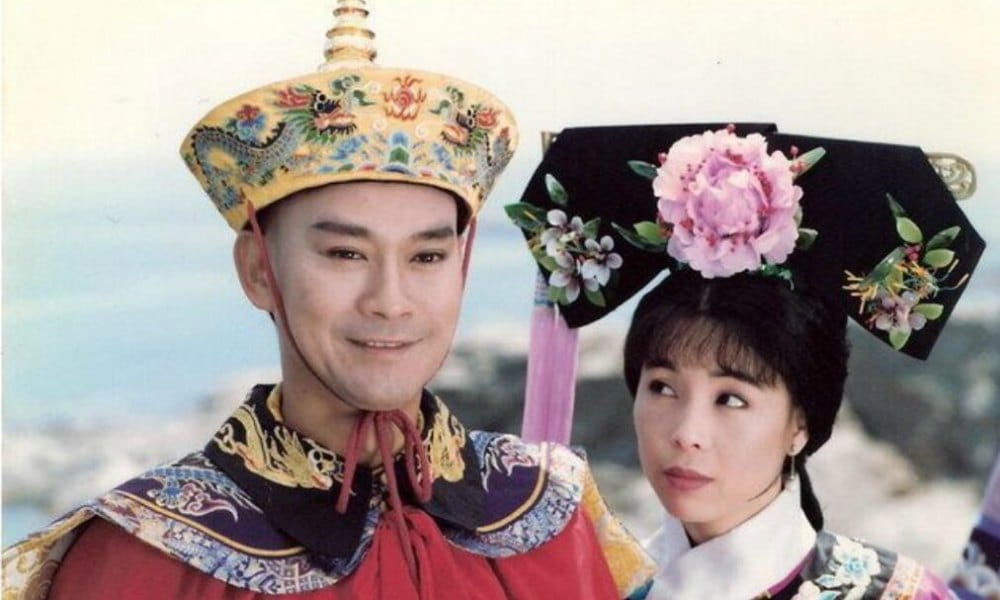
In today’s TV drama environment of China, dramas that focus on life during the imperial era are ubiquitous, with titles from the Imperial Doctress to Story of Yanxi Palace being everywhere.
But when this drama aired in the early 1990s, it was something quite new. The Legend of Qianlong, also known with the English translation A Fanciful Account of Qianlong, tells the (fictional) stories of the Emperor Qianlong’s Tours of Southern China.
It was the beginning of a drama genre that turned out to be hugely popular, with many new television series focusing on emperors and empresses in their youth or their tumultuous lives during the height of their power (Barme 2012, 33). Perhaps, this 1991 series will always be a classic just because it was one of the first within its genre.
#13 The Legend of the White Snake (新白娘子传奇)
Year: 1992
Episodes: 50
Genre: Fantasy
Produced in Taiwan
Noteworthy: “One of the most replayed TV series”
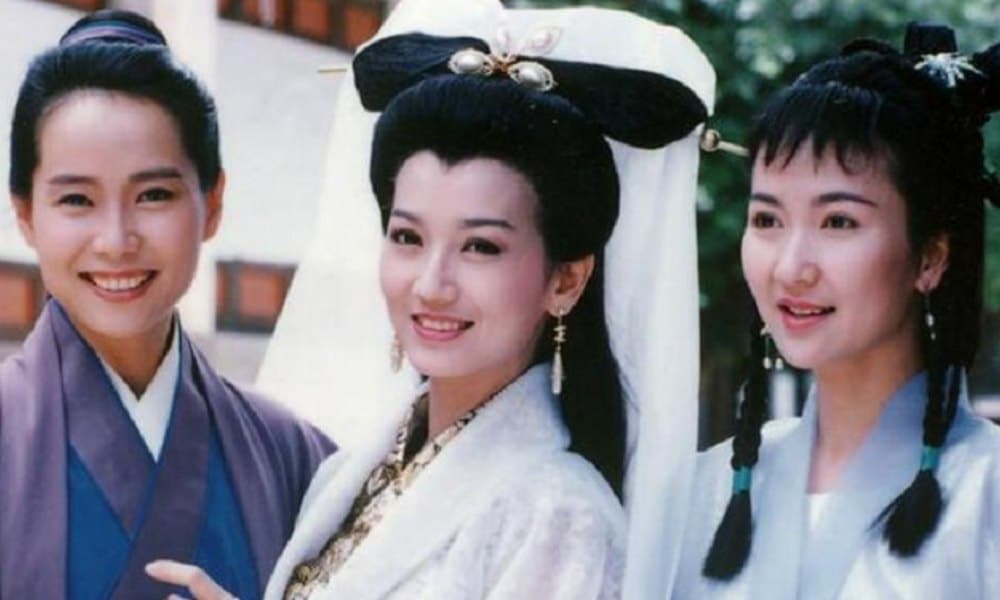
As many of the classics in this list, this hit TV series is also based on a folk legend, namely that of Madame White Snakee, a mythical snake-like spirit who strives to be human, which is a source for many major Chinese operas, films.
The 1992 TV series stars Angie Chiu and Cecilia Yip. In 2016, it was still one of the most replayed TV series. Even on IMDB, it is rated with an 8.2.
#14 Beijinger in New York (北京人在纽约)
Year: 1993
Episodes: 21
Watch: YouTube
Buy novel (in English): Beijinger in New York

Noteworthy: “The first Chinese-language TV show to be shot in the United States”
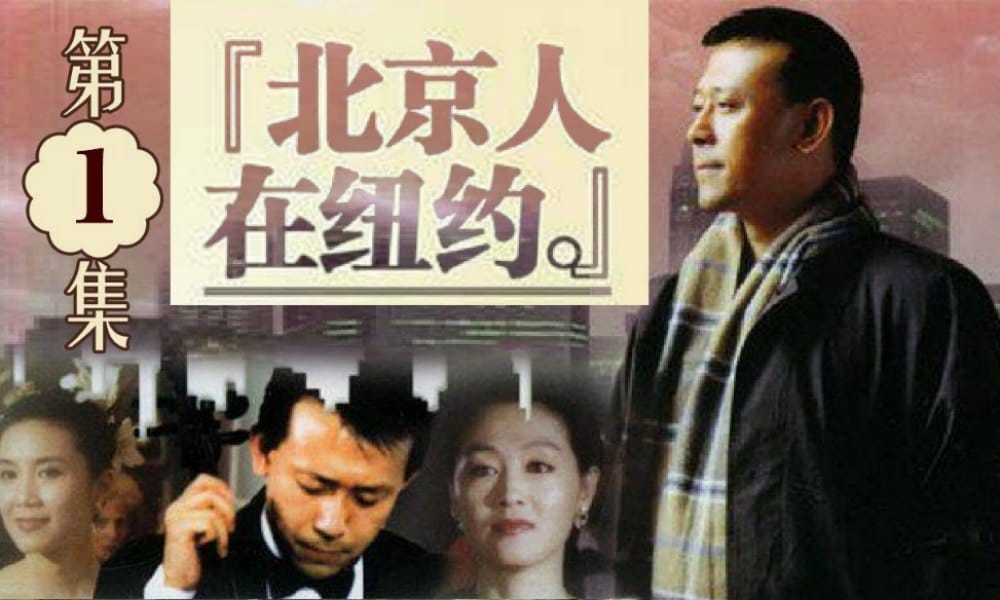
The TV series Beijinger in New York, also known as A Native of Beijing in New York, based on the novel by Glen Cao (Cao Guilin), was a hit when it was first broadcasted broadcast nightly on CCTV and watched by millions of Chinese.
The story follows the immigrant life of cello player and Beijinger Wang Qiming (王起明), who arrives in New York in 1980 together with his wife, and begins working as a dishwasher the next day.
The TV series marks a first in several aspects. It was the first Chinese-language TV show to be shot in the United States, but it was also the first time ever for the production of a Chinese TV drama that a bank loan was used in order to make it possible (Bai 2007, 83); in other words, it also marks the start of a more commercialized TV drama environment. FYI: the bank loan that was used was a total of US$1.3 million.
#15 I Love My Family (我爱我家)
Year: 1993
Genre: Comedy
Episodes: 120
Directed by Ying Da (英达) et al
First episodes on Youtube here.
Noteworthy: “First Mandarin-language sitcom”
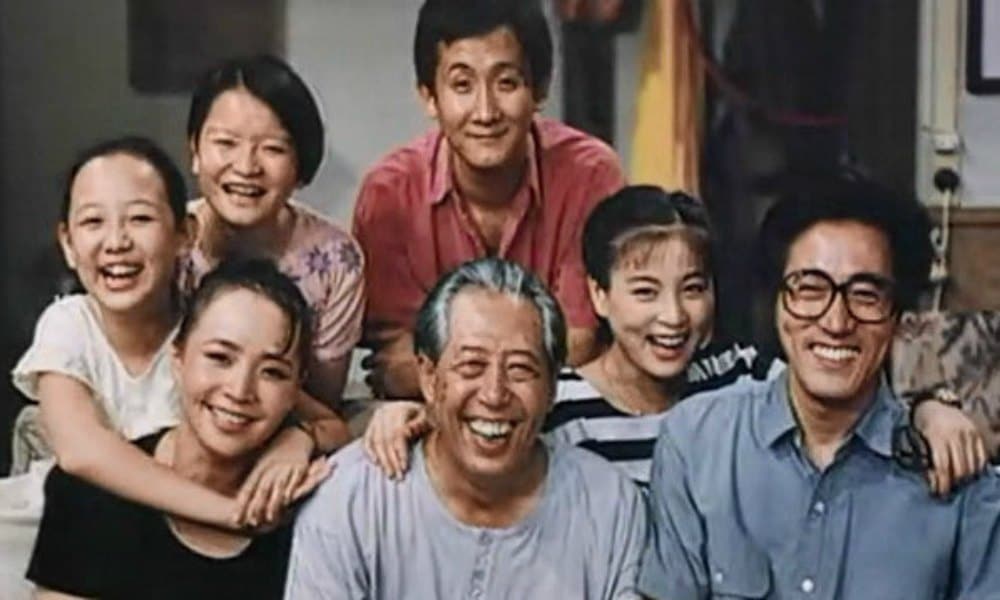
I Love My Family (Wǒ ài wǒjiā) is one of China’s first popular sitcoms, and the first Mandarin-language and multi-camera sitcom, that aired from 1993 to 1994. It has since been rerun on local channels countless of times.
One of the show’s central stars is Wen Xingyu (文兴宇), who was a popular comedian and director in mainland China.
At the time of I Love My Family, sitcoms were mostly characterized by their low production cost; three episodes were made within five working days (Di 2008, 122).
#16 Justice Pao (包青天)
Year: 1993
Episodes: 236
Genre: Historical drama
Produced in Taiwan
Some episodes on Youtube here.
Noteworthy: “From 15 to 236 episodes”
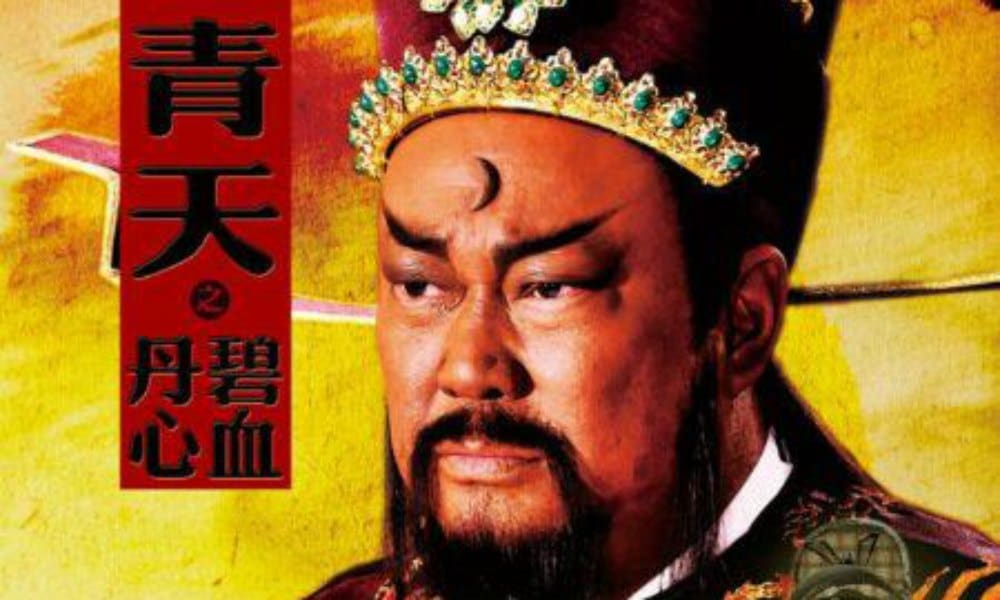
This series is themed around Bao Zheng (包拯), a government official who lived during China’s Song Dynasty, from 999 to 1062, and who was known for his extreme honesty and uprightness. Award-winning Taiwanese actor Jin Chao-chun (金超群) plays this role.
The series was originally scheduled for just 15 episodes, but was received so well when it aired on Chinese Television System, that it was eventually expanded to 236 episodes.
The story of Justice Bao is still a recurring topic in the popular culture of mainland China, Hong Kong, and Taiwan. There was the 2008 Chinese series Justice Bao, and the 2010 New Justice Bao, that also starred Jin Chao-chun.
#17 Romance of the Three Kingdoms (三国演义)

Year: 1994
Episodes: 84
Genre: Historical drama
Directed by: Wang Fulin (王扶林)
Buy original novel here: The Romance of the Three Kingdoms
Some episodes available with English subtitles here.

Noteworthy: “400,000 people involved in the production”
This is another classic TV series produced by the CCTV, and that is also adapted from a classical novel (same title, written by Luo Guanzhong). Its director, Wang Fulin (王扶林), also directed the CCTV’s first TV drama Eighteen Years in the Enemy’s Camp, and A Dream of Red Mansions.
The production of Romance of the Three Kingdoms is especially noteworthy because the productions costs broke all kinds of records at the time; the production of the 84 one-hour episodes took four years, total costs were over 170 million RMB (±US$25 million), and around 400,000 people were involved – the larghest number of people involved in a production in the history of Chinese television. THe show has been watched by some 1,2 billion people around the world (Hongb 2007, 127).
#18 Heaven’s Above (苍天在上)
Year: 1995
Episodes: 17
Genre: Corruption drama (or ‘anti-corruption drama’ 反腐剧)
Directed by: Zhou Huan (周寰)
Noteworthy: “First drama about high-level official corruption”
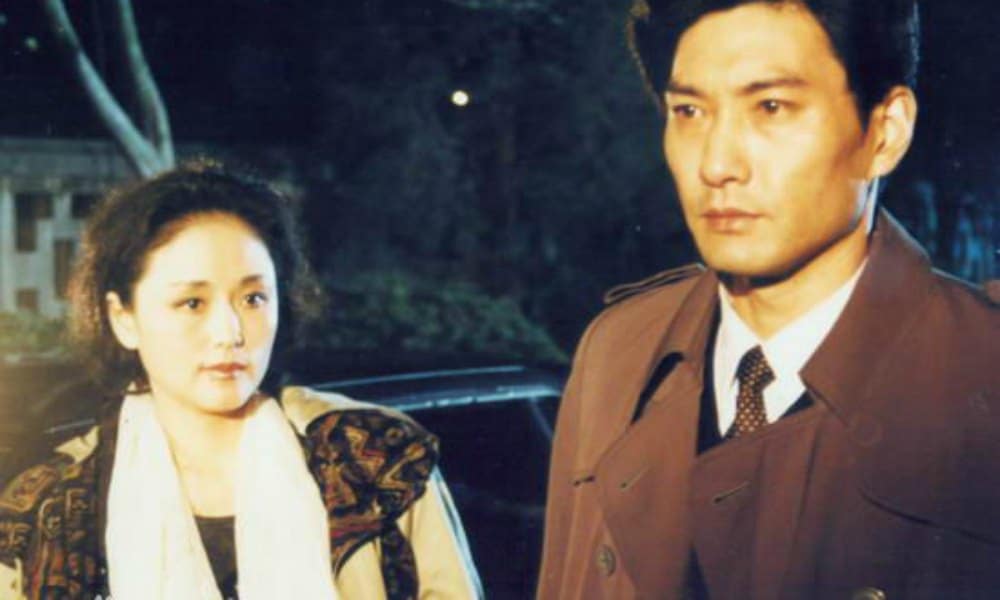
In late 1995, the CCTV drama Heaven Above (Cāngtiān zài shàng) debuted on Chinese TV as the first TV series about high-level official corruption in the PRC.
It would certainly not be the last, as ‘corruption dramas’ became wildly popular – it is the entire focus of the 2014 book Staging Corruption by scholar Ruoyun Bai.
#19 Foreign Babes in Beijing (洋妞在北京)
Year: 1995
Genre: Urban drama
Episodes: 20
Noteworthy: “Foreign women in Chinese dramas”
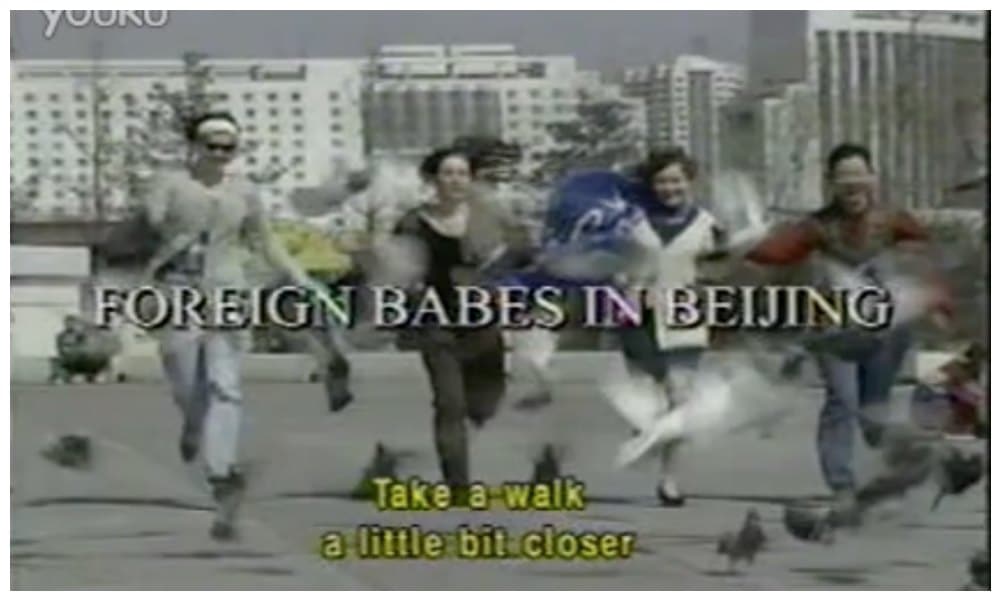
Foreign Babes in Beijing (Yáng niū zài Běijīng) was one of the new kinds of dramas that featured foreigners in China. This series focues on two Chinese men and two American women, of which one seduces one of the Chinese (married) men. The show was a big hit in the mid-1990s.
One of the show’s actresses, Rachel Dewoskin, later wrote the recommended book Foreign Babes in Beijing: Behind the Scenes of a New China
#20 My Dear Motherland (我亲爱的祖国)
Year: 1999
Episodes: 21
Genre: History/War
Directed by: Liu Yiran (刘毅然)
Watch on Billibilli here, QQ, or on Youtube.
Noteworthy: “Rated with a 9.1”
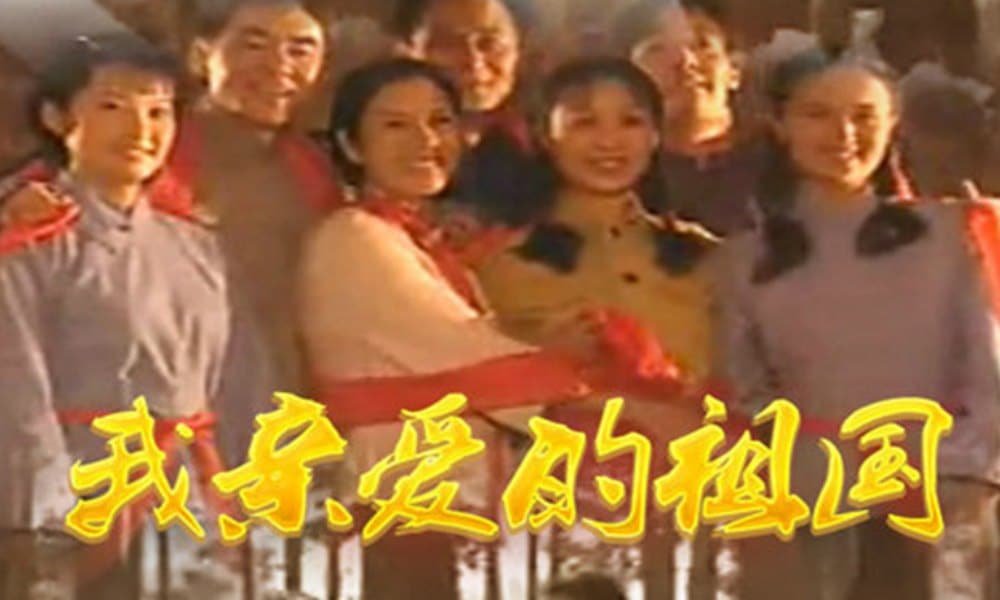
This 1999 series is still rated with a 9.1 on Douban today. The series tells the experiences and hardships of three generations of Chinese intellectuals during the tumultuous (war)history of China’s 20th century, starting during the May Fourth Movement in 1919.
Chen Jianbin (陈建斌) is one of the famous actors starring in this TV drama as Fang Xuetong.
#21 Yongzheng’s Dynasty (雍正王朝)
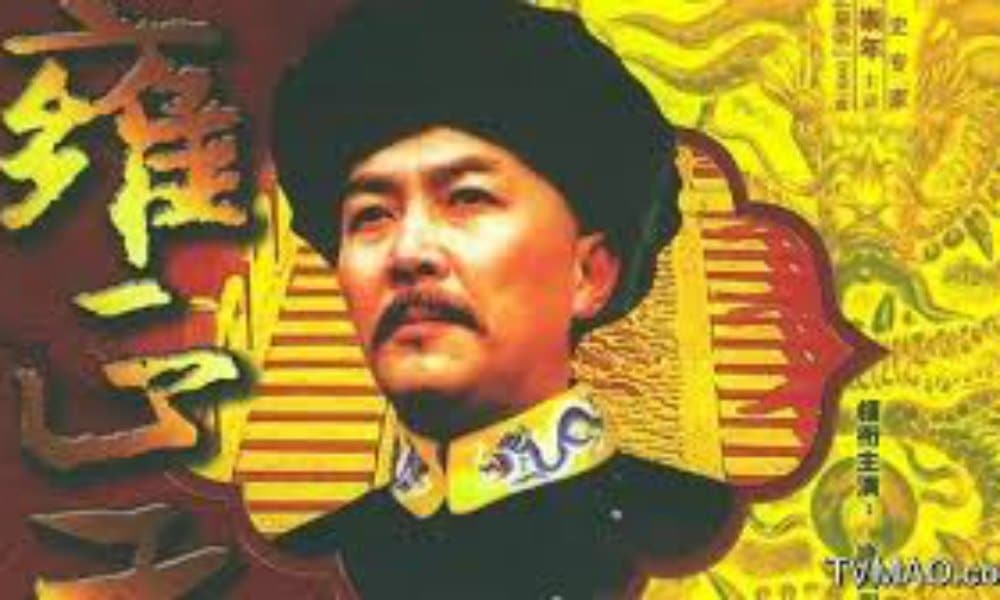
Year: 1999
Episodes: 44
Genre: History/Costume
Noteworthy: “Qing drama as export product”
Yongzheng Dynasty is one of many so-called “Qing dramas” – TV dramas that focus on palace life during the 1644-1911 Qing Dynasty. According to scholar Zhu (2008), one of the reasons that dynasty dramas such as these became so enormously popular in mainland China is that (1) certain social and political issues can be discussed in the shape of stories and settings that are very much removed from modern-day China, allowing for more relaxed censorship policies on storylines and dialogues, and (2) that the reconstruction of “history” allows room for artistic interventions (22).
This epic TV drama was loosely based on historical events in the reigns of the Kangxi and Yongzheng Emperors, and became one of the most watched television series in mainland China of the 1990s. Also outside of China the show became very popular, making the so-called ‘Qing dramas’ an export product.
#22 Towards the Republic (走向共和)
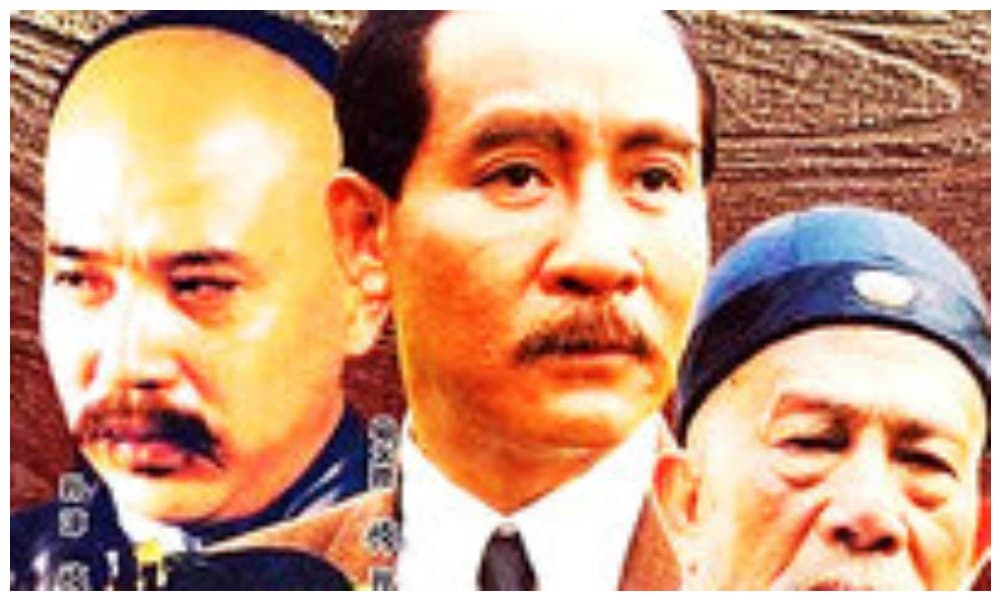
Year: 2003
Episodes: 59 (one hour per episode)
Genre: Historical drama
Directed by: Zhang Li (张黎)
Watch on Youtube , buy on Amazon with English subtitles.
Noteworthy: “59 hours of historical drama”
This is one of the most important TV series in this list. On Sogou ratings, Towards the Republic, which is also known as For the Sake of the Republic (Zǒuxiàng gònghé), is one of netizens’ top all-time favorite series, rated with a 9.7.
The CCTV TV drama tells the story of the historical events in China from 1890 to 1917 – the time during which the Qing Dynasty collapsed, and the Republic of China (1912-1949) was founded. Important historical events such as the First Sino-Japanese War (1894–1895), the Hundred Days’ Reform (1898), the Boxer Rebellion (1900) and the Xinhai Revolution (1911) are all featured in this epic drama, that mainly focuses on the lives of Li Hongzhang (Chinese general in late Qing), Empress Dowager Cixi, Sun Yat-Sen, and Yuan Shikai.
The historical drama was not without controversy, and some parts of it have been censored in mainland China. The original series had 60 episodes, which was later brought down to 59. The TV drama has also been a fruitful topic for scholars for its representation of history. In the 2007 book Representing History in Chinese Media: The TV Drama Zou Xiang Gonghe (Towards the Republic) by Gotelind Mueller, the entire series is analyzed in how history is portrayed and narrated.
#23 Crimson Romance (血色浪漫)
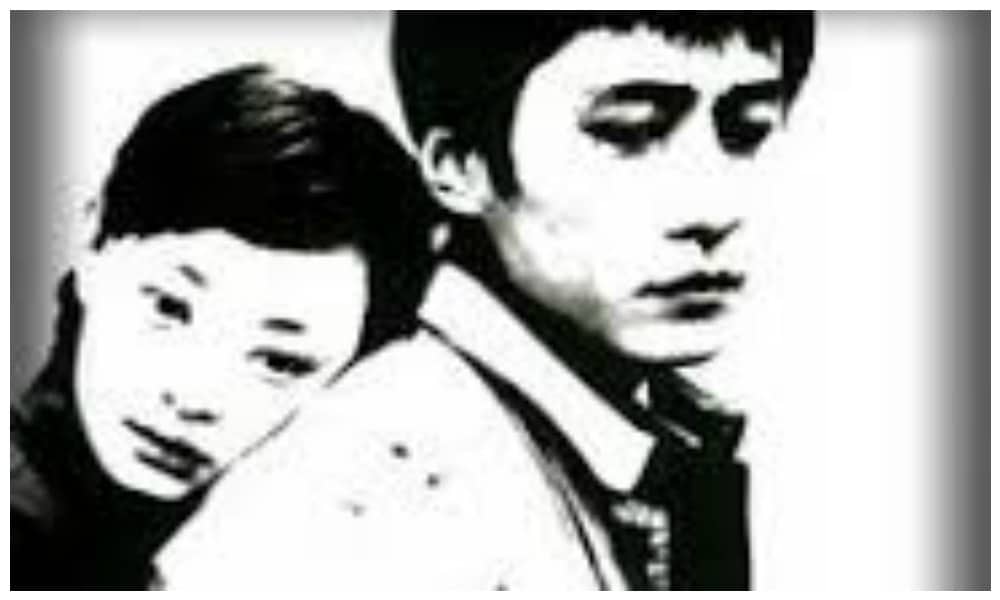
Year: 2004
Episodes: 32
Genre Youth drama
Directed by: Teng Wenji (滕文骥)
Watch on Youtube here.
Noteworthy: “Romantizing the Cultural Revolution”
There are almost 40,000 netizens ranking this 2004 TV drama on Douban, where it scores a 8.7.
The TV drama, which is also known as Romantic Life in English, dramatizes memories of the Cultural Revolution, focusing on a group of friends, their hopes and dreams, and their romantic life. It is set in Beijing in the late period of the Cultural Revolution (1966-1976).
#24 Fu Gui (福贵)
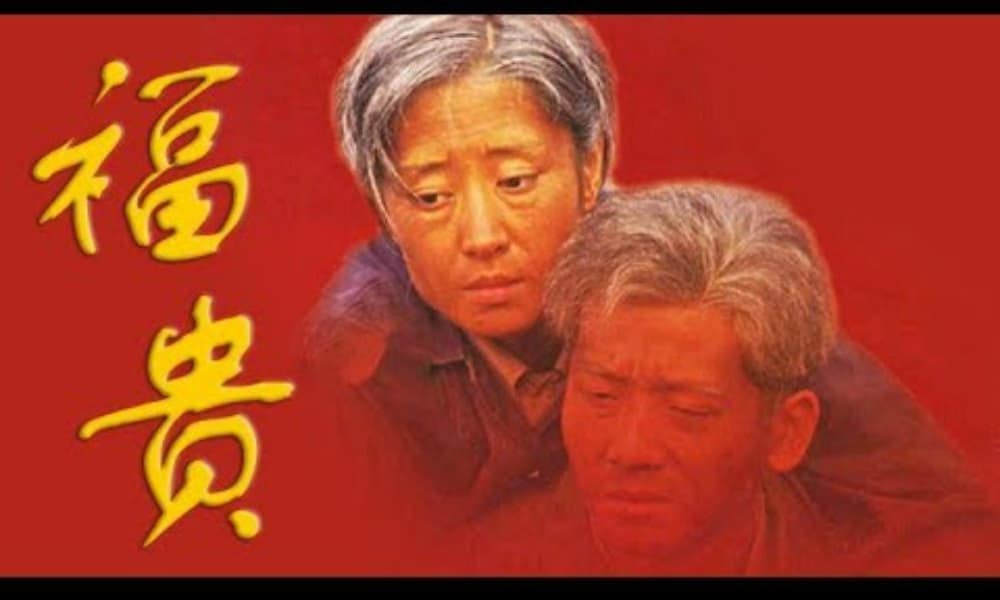
Year: 2005
Episodes: 33
Genre: Family drama
Directed by Zhu Zheng (朱正)
Original novel: To Live: A Novel
Watch on Youtube.

Noteworthy: “Based on the novel To Live“
Chuang Chen (陈创), Liu Mintao (刘敏涛), and Li Ding (李丁) star in this family drama, which is ranked with a 9.4 on Sogou, and 4,5 stars or a 9,4 on Douban (more than 5500 voters).
The drama is based on the 1993 novel by Yu Hua (余华) To Live (活着), which focuses on the struggles of the son of a wealthy land-owner, Xu Fugui, amidst the tumultuous times of the Chinese Revolution. The story became well-known by the movie of the same title by Zhang Yimou, which became an international success.
#25 Ming Dynasty in 1566 (大明王朝1566)

Year: 2007
Episodes: 46
Genre: Historical drama
Directed by: Zhang Li (张黎)
Available with English subtitles on Youtube
Noteworthy: “Scoring a 9.7 on Douban, rated by 55,000 users”
Ming Dynasty in 1566 (Dàmíng wángcháo), starring Chinese actor Chen Baoguo (陈宝国), is a Chinese television series based on historical events during the reign of the Jiajing Emperor (1507-1567) of the Ming dynasty. It was first broadcast on Hunan TV in China in 2007.
On Douban, more than 55000 people have reviewed this movie at time of writing, coming up with a score of 9.7, one of the highest in this list. The drama was also broadcasted in other countries, such as South Korea.
#26 Dwelling Narrowness (蜗居)
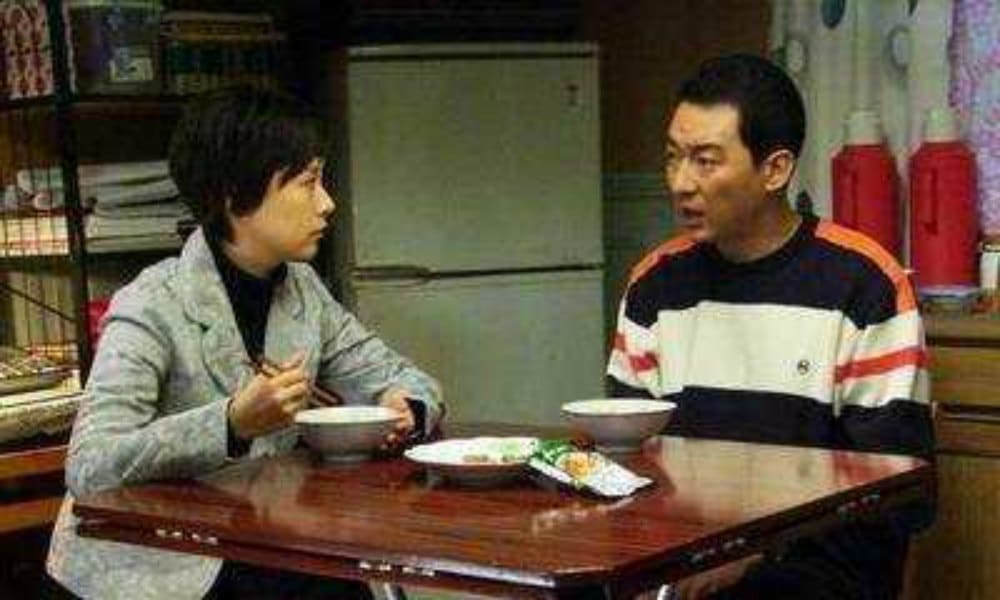
Year: 2009
Episodes: 35
Genre: Urban Drama
Directed by: Teng Huatao (滕华涛)
Watch on Youtube here.
Noteworthy: “Focusing on China’s urban real estate bubble”
Also known as Snail House, this TV drama was all the rage back in 2009 for its focus on the crazy housing market in urban China and the lives of ordinary Chinese who are struggling to survive in the city while living in small spaces. Dwelling Narrowness, based on a novel by the same name, tells the story of two sisters with very different lifestyles who are looking to find a home in Shanghai (or actually, the fictional city of Jiangzhou, that basically represents Shanghai), and improve their quality of life, each in their own way.
The real estate bubble is a major theme throughout these series, and the TV drama was much-discussed within the frame of Chinese urban dwellers becoming “house slaves” (房奴). In the year of its broadcast, Wall Street Journal featured an article dedicated to the series and the discussions it triggered online.
#27 The Red (红色)
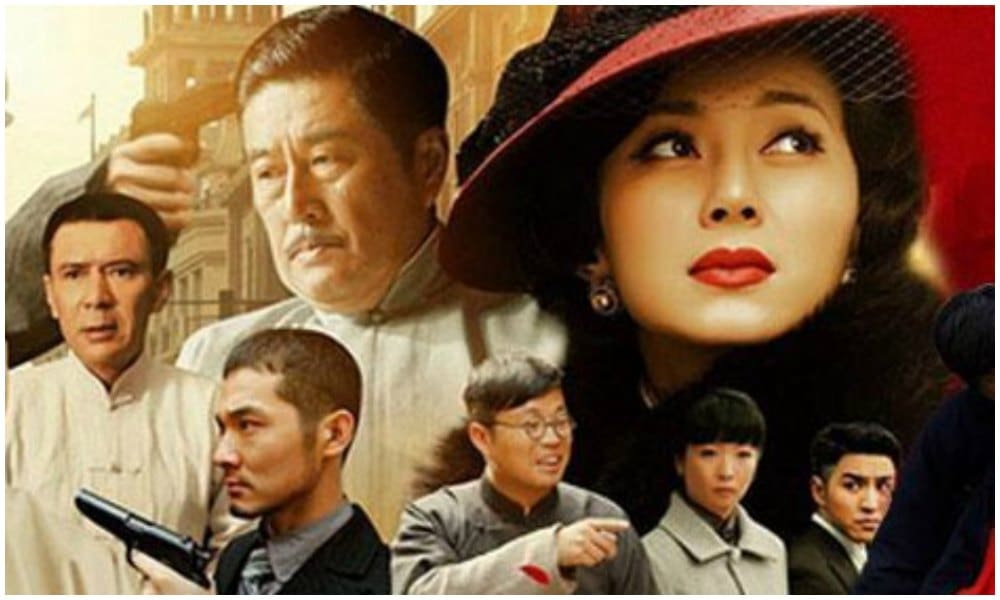
Year: 2014
Episodes: 48
Genre: War drama
Directed by Yang Lei (杨磊)
Noteworthy: “Patriotism as its key theme”
War drama The Red (Hóngsè) receives a 9.2 on Sogou, showing its success over the last four years.
Edward Zhang (Zhang Luyi 张鲁一) stars in this drama as an ordinary worker in Shanghai who gets caught up in underground circles at the start of the Second Sino-Japanese War, and unexpectedly becomes part of a decisive moment in Chinese modern history. Perhaps unsurprinsginly, ‘Patriotism’ is a key theme throughout The Red.
#28 Moral Peanuts – Final Season (毛骗 终结篇)
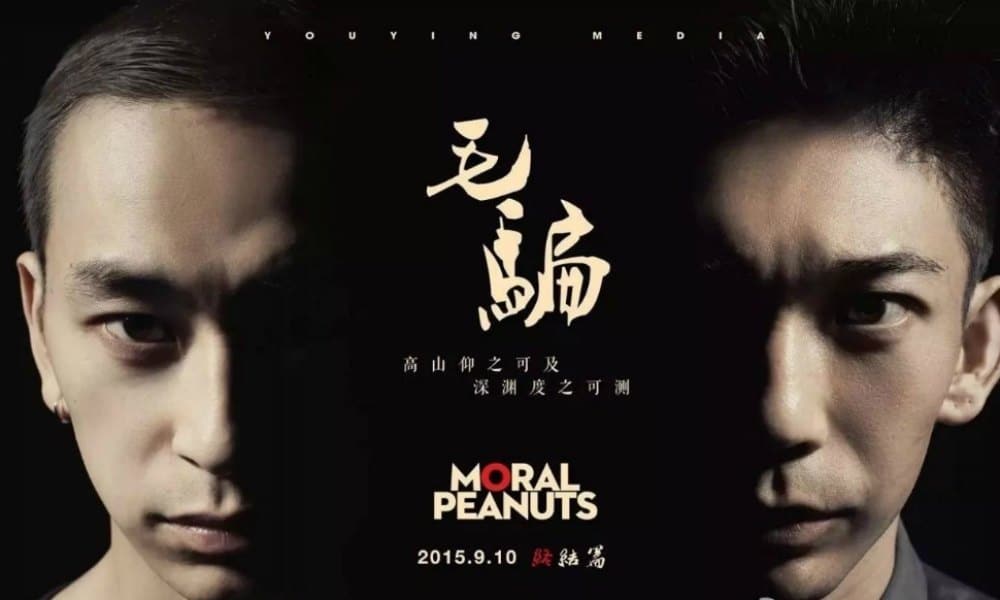
Year: 2015
Episodes: 10 (in this season)
Genre: Crime/Suspense
Directed by: Li Hongchou (李洪绸)
Watch on Youtube here.
Noteworthy: “A gang of friends who con people out of their money”
Rated with a 9.6 on Sogou and a 9.6 by more than 26,000 people on Douban, this TV drama has already become somewhat of a classic in the few years since its airing.
Moral Peanuts is a multiple season series (started in 2010), that follows a gang of five young friends who live together and earn their living in a fraudulent way. The series is characterized by its cliffhanger endings and its ‘grey’ portrayals of its characters.
#29 In the Name of the People (人民的名义)
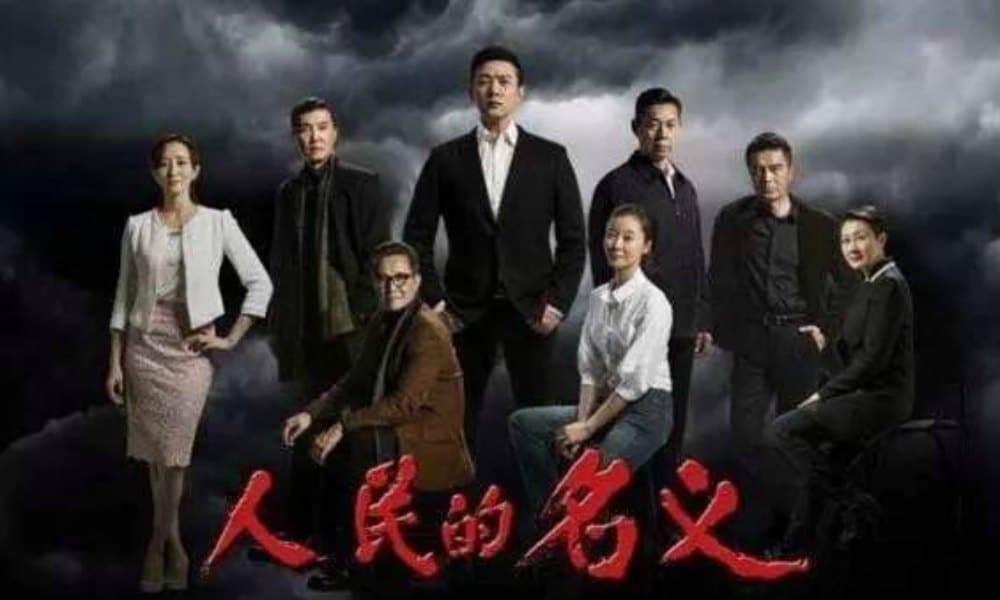
Year: 2017
Episodes: 55
Genre: Corruption drama
Directed by: Li Lu
Available with English subtitles here.
Noteworthy: “The Chinese ‘House of Cards'”
In the Name of the People is a 2017 highly popular Chinese TV drama series based on the web novel of the same name by Zhou Meisen (周梅森). Its plot revolves around a prosecutor’s efforts to unearth corruption in a present-day fictional Chinese city by the name of Jingzhou.
In 2017, this TV drama became a true craze on Chinese social media and received a lot of coverage in (international) media for being comparable to the American political drama House of Cards. The BBC described it as “the latest piece of propaganda aimed at portraying the government’s victory in its anti-corruption campaign.”
#30 White Deer Plain (白鹿原)
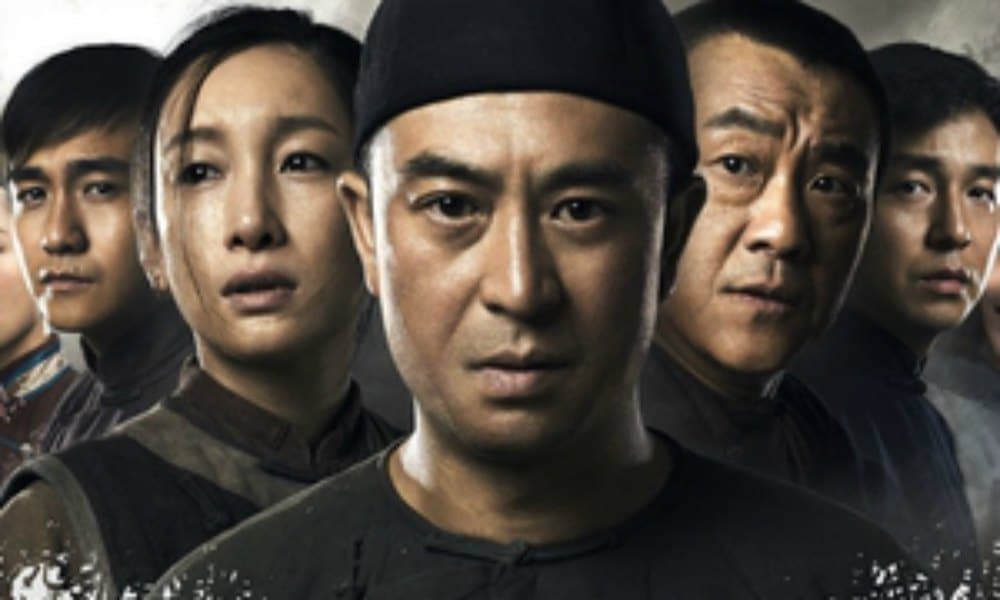
Year: 2017
Genre: Contemporary historical drama
Episodes: 85
Directed by: Liu Jin (刘进)
WAtch with English subs at New Asian TV here.
Noteworthy: “The epic TV drama took nearly 17 years to prepare and produce “
This TV drama has consistently been ranking number one in Baidu’s and Weibo’s popular drama charts last year, and is now ranked with an 8.8 score on sites such as Douban. Although it is somewhat tricky to call such a present-day drama a ‘classic’, we’ll take the chance.
White Deer Plain is based on the award-winning Chinese literary classic by Chen Zhongshi (陈忠实) from 1993. The preparation and production of this series reportedly took a staggering 17 years and a budget of 230 million yuan (US$33.39 million).
The success of the novel this TV drama is based on, has previously been compared to that of One Hundred Years of Solitude by Gabriel García Márquez. White Deer Plain follows the stories of people from several generations living on the ‘White Deer Plain,’ or North China Plain in Shaanxi province, during the first half of the 20th century. This tumultuous period sees the Republican Period, the Japanese invasion, and the early days of the People’s Republic of China. The series is great in providing insights into how people used to live, from dress to daily life matter. The scenery and sets are beautiful.
Some Book Recommendations Based on This List:


* Staging Corruption: Chinese Television and Politics (Contemporary Chinese Studies)


* TV Drama in China (TransAsia: Screen Cultures)


* Media in China: Consumption, Content and Crisis


Want to know more? Check out our various Top 10s of popular Chinese TV Dramas from 2013 to present here.
By Manya Koetse
Follow @whatsonweibo
*1(We kindly ask not to reproduce this list without permission – please link back if referring to it).
References
Bai, Ruoyun. 2007. “TV Dramas in China – Implications of the Globalization.” In Manfred Kops and Stefan Ollig (eds), Internationalization of the Chinese TV sector, 75-99. Berlin: LIT Verlag.
Bai, Ruoyun. 2014. Staging Corruption: Chinese Television and Politics. Vancouver: University of British Columbia Press.
Barmé, Geremie. 2012. “Red Allure and the Crimson Blindfold.” China Perspectives, 2012/2, 29-40.
Di, Miao. 2008. “A Brief History of Chinese Situation Comedies.” In Ruoyun Bai, Ying Zhu, Michael Keane (eds), TV Drama in China, 117-129. Hong Kong: Hong Kong University Press.
Hong, Junhao. 2007. “The Historical Development of Program Exchange in the TV Sector.” In Manfred Kops and Stefan Ollig (eds), Internationalization of the Chinese TV sector, 25-40. Berlin: LIT Verlag.
–. 2007b. “From Three Kingdoms the Novel to Three Kingdoms the Television Series: Gains, Losses, and Implications.” In Kimberly Besio and Constantine Tung (eds), Three Kingdoms and Chinese Culture, 125-143. Albany: State University of New York Press.
Zhu, Ying. 2008. “Yongzheng Dynasty and Totalitarian Nostalgia.” In Bai R, Keane M, Zhu Y. (eds), TV Drama in China, 21-33. Hong Kong: Hong Kong University Press; 2008
Wang, Min and Arvind Singhal. 1992. “Kewang, A Chinese Television Soap Opera With A Message.” Gazette 49: 177-192.
Directly support Manya Koetse. By supporting this author you make future articles possible and help the maintenance and independence of this site. Donate directly through Paypal here. Also check out the What’s on Weibo donations page for donations through creditcard & WeChat and for more information.
Spotted a mistake or want to add something? Please let us know in comments below or email us.
©2018 Whatsonweibo. All rights reserved. Do not reproduce our content without permission – you can contact us at info@whatsonweibo.com



China Arts & Entertainment
“Auntie Mei” Captured After 20 Years, China’s Train-Stain Scandal, and Zhang Xuefeng’s Final Lesson
The major talking points on Chinese social media this week: from the capture of a notorious child trafficker and unexpected death of Zhang Xuefeng, to one of the most expensive Chinese music video ever made.

🔥 China Trend Watch (week 12½ | 2026) Part of Eye on Digital China by Manya Koetse, China Trend Watch is an overview of what’s trending and being discussed on Chinese social media. This edition was sent to paid subscribers — subscribe to receive the next issue in your inbox.
This is about “Teacher Zhang Xuefeng” (张雪峰老师, 1984), the man who carved out a big place for himself in China’s online landscape over the past decade by focusing on a sweet spot that virtually all Chinese parents and their children care about: how to choose majors strategically to ensure future employment prospects.
Among Zhang’s common questions: “What kind of salary do you want your child to have in the future?”
Besides the relevance of his focus, Zhang’s northeastern accent, comic remarks, blunt criticism, and talent for triggering controversy also amplified his online appeal, ensuring that his name frequently became part of China’s public discourse.
Like that time when he advised China’s young people against studying journalism, even stating that if he were a parent, he would “definitely knock the child unconscious if they insisted on studying journalism,” deeming it a major that lacks depth and prospects. Although it became a major controversy at the time, a poll of 42,000 voters showed that 39,000 agreed with Zhang.
Zhang capitalized on the collective anxiety in China surrounding the gaokao (高考), the national university entrance exam that determines future paths, as well as concerns that even graduates from top universities may face unemployment if they choose majors with limited practical value. Zhang’s view: choice is more important than effort.

This Tuesday evening, news emerged that Zhang Xuefeng had died on the afternoon of March 24 at the age of 41, after suffering sudden cardiac arrest.
His death has had a huge impact on Chinese social media, where many people are responding with disbelief and shock.
It’s not just that Zhang was widely known (and while not everyone liked him, many respected him)—it’s perhaps also the fact that he spent so much of his life advising others on how to control their careers and income, building great personal wealth in the process, only to die so young, at the peak of his career, with no strategy to protect him.
Besides being “chronically overworked,” Zhang also pushed himself to exercise and run frequently. Adding to this, he had been under pressure since last fall, when he became a target of official criticism and platform regulators.
Isn’t it ironic that, in the end, the most important takeaway Zhang might leave behind is not his advice on choosing majors or making smart career moves, but rather the reminder to sometimes step away from the rat race and appreciate everyday life and health, because you never know when it might all end.
Zhang leaves behind his wife and 11-year-old daughter.
Let’s dive into some of the other trends that have been major talking points this week.
Quick Scroll
-
- 🧠 China has approved a coin-sized brain–computer implant for commercial use in people with spinal cord injuries. Developed by Shanghai-based company Neuracle Medical Technology (博睿康) in collaboration with Tsinghua University, the so-called “NEO” is the world’s first market-approved brain implant designed to help people with severe paralysis regain hand motor function.
- 🚨 Lei Siwei (雷思维), Vice-Governor of Gansu and member of the provincial Party Standing Committee, is under investigation as of March 17, with the notice issued by China’s top anti-corruption body citing “serious violations of discipline and law.” The case is the latest in an ongoing series of provincial-level anti-corruption actions that’ve been continuing into 2026.
- 📚 Several Chinese provinces and cities are removing biology and geography from high school entrance exams starting from next year, as part of a broader government-initiated campaign to reduce pressure on students and put a stop to “educational involution” (教育内卷).
- 👀 Taiwanese actor-singer Jerry Yan (言承旭), best known as Dao Mingsi from Meteor Garden and a member of F4, is at the center of somewhat of an authenticity crisis after fans photographed his concert teleprompter showing not just lyrics, but scripted emotional cues for his performance like “your eyes slightly reddening” and “now you take a deep breath.”
- 🎮 More than 100 Chinese universities are offering esports majors nowadays, sparking online discussions this week. These programmes go far beyond just playing video games, covering esports operations, management, data analytics, game design, etc, reflecting the growing professionalisation of China’s esports industry.
- 🎓 A feature by Chinese magazine Sanlian Life Weekly (三联生活周刊) went trending for highlighting a sharp gender shift in China’s higher education demographics, with female students now outnumbering men at universities. Female undergraduate enrollment grew by 348% between 2002 and 2022.
- 🧪 A laboratory explosion at Chongqing University on March 20 killed one student and injured three. Initial findings point to improper handling of chemicals.
- 💔 China’s superfamous actress Yao Chen (姚晨) and filmmaker Cao Yu (曹郁) jointly announced their separation on Weibo in a poetic way, using classical Chinese language: “A journey through mountains and rivers, a blessing for three lifetimes. Fate comes and goes, all is joy” (山水一程,三生有幸。缘来缘去,皆是欢喜). A related hashtag received 300 million views.
What Really Stood Out This Week
Chinese Woman Who Sold Abducted Toddlers Captured After Two Decades

A woman who played a key role in a series of China’s notorious child trafficking cases, causing relentless suffering for many families, has finally been caught after being on the run for two decades. The arrest of the woman, referred to as “Mei Yi” or “Auntie Mei” (梅姨), has dominated Chinese social media over the past week, ever since Guangzhou police announced on March 21 that they had finally captured her.
This story touches upon multiple issues that have turned it into such a major topic.
Mei Yi was involved in a series of child trafficking crimes carried out by a gang led by Zhang Weiping (张维平) and Zhou Rongping (周容平) across multiple areas in Guangdong province between 2003 and 2005. She acted as a middleman responsible for transferring and selling abducted children, mostly toddler boys. In just over two years, the group abducted and trafficked nine young children.
The parents of these boys never stopped searching for them, while Chinese authorities worked for years to crack the case. In 2016, eleven years after the last abduction, police arrested five core gang members, including Zhang, who later confessed and revealed that the person reselling the children was a local elderly woman nicknamed “Mei Yi.” However, her real identity and whereabouts remained unknown for years. Zhang Weiping and Zhou Rongping were both sentenced to death and executed in 2023.
Thanks to new technologies—from digital tracking systems to DNA matching—the abducted children were located one by one and reunited with their biological families over the years: the first in 2019 and the last in 2024. By then, the boys were roughly between 14 and 21 years old, meaning they had spent nearly their entire childhoods with the families who had bought them.
Evading Capture by Being Ordinary
One aspect of this case drawing attention is not just how Mei Yi was caught, but how she managed to evade arrest for so long. The crimes took place more than twenty years ago, in factories, rental housing, and other areas with dense migrant populations, leaving very little traceable evidence. It is also unclear how accurate the composite sketch of Mei Yi—circulating since 2017 and updated in 2019—actually was. Authorities have not released a confirmed photo following her arrest, and it is possible her real appearance differed significantly from the sketch.
A lawyer close to the case told Chinese media outlet The Paper that what made her so hard to catch was probably not how clever her tactics were, but that she appeared so normal to those around her, who might have never guessed she was a criminal. Besides arranging illegal “adoptions,” Mei Yi also acted as a local matchmaker and fortune teller, and she even lied about her identity and used aliases with someone who was her partner for two years.
Official media do not disclose exactly how Mei Yi was eventually tracked down, but it’s clear that the authorities got much closer after all the abducted children were found in October 2024, undoubtedly leading to important clues that connected all the cases.
Not Such a Happy Ending
Chinese state media have largely framed the case as a story of justice served: Mei Yi as a long-sought villain, the police as persistent heroes, and China’s advancing technology as the key to solving the case. A kind of “happy ending.”
But the truth seems more complicated, with a loud silence surrounding nine families where the abducted boys spent their entire childhoods. Their willingness to pay for a male child is part of a broader issue linked to China’s one-child policy, relatively light penalties for buyers of trafficked children (or even legal limitations due to statutes of limitation), and a deeply rooted son-preference culture that was especially strong in those years 2003- 2005.
Some online commentators did argue to “not let those hypocritical ‘adoptive parents’ off the hook.” Yet the situation is complicated by the fact that some of the boys still consider these families their parents, and in some cases choose to stay with them rather than return to biological families they barely remember.
The fact is that Mei Yu is just one chapter in a much larger story that is far from finished.
Just earlier this week, the story of another abduction case also went trending. It concerns a man named Du Jun (杜军), who was abducted in 1991 at the age of 3 while playing outside a shop with his sister. Du Jun, who spent 35 years separated from his biological family, finally reunited with his biological mother following a successful identification process that is part of a continuing series of long-separated family reunions facilitated by China’s expanding DNA-matching and digital tracking systems.
Du, now 38, had not known he was trafficked as a child, nor that his biological family had searched for him for years. He became an orphan at a young age and built a life for himself. He was found through online search efforts, the dedication of volunteers, DNA research, and a specific detail only his biological family knew: that he had a bend at the joint of his left middle finger because of an accident as a toddler.
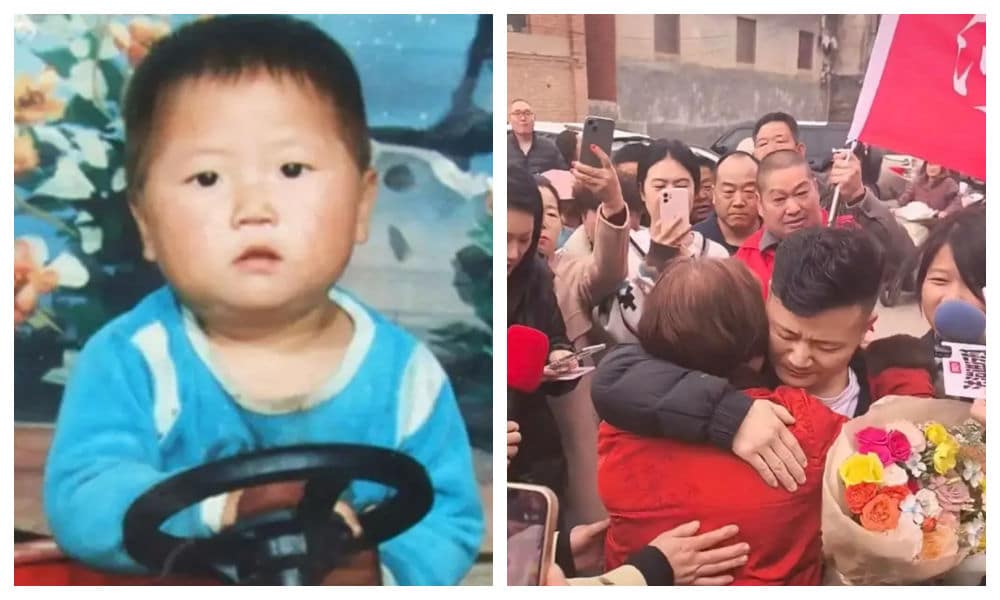
Du Jun as a young child before his abduction, and Du Jun reunited with his biological mother in 2026. Images via Hongxing Xinwen.
As with the nine abducted boys, Du Jun’s reunion with his family does bring light to a long, dark tunnel – but it doesn’t bring back the missed childhood, the shattered families, and the endless, tear-filled years.
Let’s hope many more “Mei Yis” will be brought to justice in the years ahead.
A Censored Menstruation Train-Incident

Another story that became a major talking point on Chinese social media this week involves a woman named Ms. Zhang, who was charged 180 yuan (US$26) after accidentally staining a bedsheet on a sleeper train. The woman unexpectedly got her period while traveling overnight to Lanzhou and was unable to obtain any sanitary products on board. A train attendant asked her to either wash the bedsheet herself or pay compensation.
The woman, who ended up washing the sheets herself by hand in cold water, later shared her experience on social media and suggested that all trains should sell sanitary pads. Her post resonated with many, and even though she took it offline, it was quickly picked up by Chinese media.
After the post went viral, Lanzhou Railway issued an official statement on March 20, presenting its version of events and challenging some of the woman’s claims.
The statement included details that depicted staff as helpful, such as an attendant allegedly offering to wash the sheets and a conductor searching for sanitary pads (but finding none). At the same time, it used seemingly accusatory language, repeatedly describing the woman’s menstruation as having “contaminated” (污染) the bedding as well as two other spots where she had sat.
Zhang did not accept this explanation and again turned to social media (under the username @勇敢小狐不怕困难) to reveal what she said had been happening behind the scenes. She shared that someone from Lanzhou Railway had repeatedly messaged her privately, asking her to delete her posts, claiming that employees’ jobs were at risk because of the incident, and even offering her money—which she refused, despite ultimately taking the post down.
Zhang further suggested that her posts were “disappearing as soon as they were published,” that the media narrative was being controlled, and that she had been pressured into silence.
On Xiaohongshu and Weibo, many users sided with Zhang. The wording used by Lanzhou Railway struck a chord, particularly the framing of menstruation as “contamination” while simultaneously blaming Zhang for staining multiple areas, despite not providing any sanitary products.
“Where exactly was she supposed to sit?” one Xiaohongshu user asked. “In the aisle? On a suitcase? Squatting by the toilet door? Lying on the floor?”
One major reason why this debate exploded online is not just the media discourse itself, but the way it taps into broader frustrations among Chinese women over social taboos and structural shortcomings surrounding menstruation in public spaces.
Over the years, various incidents involving menstrual products have gone viral and sparked grassroots efforts to change the current situation.
In 2022, a female passenger also expressed her frustration online about sanitary pads on high-speed trains, drawing online attention. Many commenters, mostly men, argued that pads weren’t “essential items” and shouldn’t take up retail space onboard. The railway authority’s official response—describing sanitary pads as “personal items” that don’t need to be sold—only worsened online outrage.
For many women, these kinds of incidents, from trains and schools to planes, highlight how little society apparently understands or respects their basic needs.
On the Feed
“The Most Expensive Music Video in the History of Mandopop”

Whenever there’s new music by the Taiwanese producer, actor, composer, singer-songwriter, and ‘King of Mandopop’ Jay Chou (周杰伦), it goes trending.
Not only does his music bring back memories of the early 2000s – when he first rose to prominence and became super popular – but his catchy tunes and lyrics also resonate with younger audiences.
But it’s not just the music that makes waves – it’s also the music videos that have become artistic and sometimes spectacular productions by themselves. “Other artists just make a music video, he turns it into a movie,” some commenters wrote after the release of his 2022 Greatest Work of Art video.
On March 24, the music video (MV) for the lead single Children of the Sun (太阳之子) dropped, a production made in collaboration with Wētā Workshop, the New Zealand-based visual effects studio known for its work on Avatar and The Lord of the Rings.
The music video shows Jay Chou in a fictional European world spanning from the 16th to the 20th century, filled with references to famous art, from Vincent van Gogh and Dali to Mona Lisa, Ophelia, and The Anatomy Lesson of Dr. Nicolaes Tulp by Rembrandt (Jay Chou appears in the painting himself).
The cost of the music video production reportedly exceeded 20 million yuan (US$2.9 million), and some commentaries described it as the most expensive MV in the history of Mandarin-language pop music.
Chapter Dive
When an Entertainment Scandal Gets Political: How Wong Kar-wai Survived a Nationalist Storm
The 2025 scandal surrounding Wong Kar-wai shows that public outrage only produces consequences when it aligns with official interests.


It’s safe to say that 2025 wasn’t the best year for Wong Kar-wai (王家卫, 1958), one of the most famous Chinese-language film directors in the world. The Hong Kong movie director is known for classic works like Chungking Express and In the Mood for Love. Besides his work, his iconic sunglasses are also famous – he rarely goes without them and is even nicknamed ‘Sunglasses’ (墨镜) or ‘Sunglass King’ (墨镜王) on Chinese social media.
But this year, discussions about Wong Kar-wai have gone well beyond his talent and looks. He became embroiled in what would turn into one of China’s biggest entertainment scandals of the year after a former staff member set out to expose him for exploitation and misconduct. Once the controversy spilled from entertainment into political territory, however, the dynamics of the story changed entirely.
A Fight for Credit
This story begins with the young Chinese screenwriter Gu Er (古二, real name Cheng Junnian 程骏年). He is the one who publicly accused Wong of exploitation and unethical work standards on social media (a story which we previously covered here).
Gu Er, a New York Film Academy graduate, returned to China after his studies and began building a career. In 2019, he joined the production team of Wong’s popular TV series Blossoms Shanghai, working long hours for meager pay, despite suffering from Kennedy’s disease, a motor neuron illness similar to ALS.

Cheng Junnian 程骏年, better known as Gu Er
In 2023, after the show premiered, Gu posted an article on Chinese social media titled “The Truth Behind the Writing of Blossoms” (《繁花》剧本的创作真相). He argued that he should have been credited as one of the principal writers but was instead listed only as a “preliminary editor,” buried at the end of the credits. The post sparked some discussion, but the controversy quickly faded.
It was not until last September that Gu Er released another essay titled “My Experience as a Screenwriter for Blossoms: A Summary” (我给《繁花》做编剧的经历——小结), which drew widespread attention. In the piece, he accused Wong Kar-wai of exploitation and detailed his creative work on the series, while also claiming that he was required to cook meals and run personal errands for Wong.
At one point, Gu Er describes how lead screenwriter Qin Wen (秦雯) allegedly tried to remove him from the production team after presenting his draft script as her own. According to Gu, Wong Kar-wai responded dismissively: “It’s just a few thousand yuan; he’s an assistant and can also write the script, it’s a bargain!”
Throughout 2025, Gu Er used his WeChat account to document his experiences and to upload audio recordings of conversations with members of the production team, including Wong Kar-wai and Qin Wen. These recordings were presented as evidence supporting his claims of exploitation, verbal abuse, and the denial of screenwriting credit.
In response to the controversy, the official account of the Blossoms Shanghai television series issued multiple statements denying that Gu Er deserved screenwriting credit and accusing him of abusing his position to secretly record private conversations among staff. The production team vowed to take legal action, and Gu Er’s entire WeChat account was soon shut down.
Leaked Recordings and Growing Backlash
Although his WeChat presence was erased, Gu Er refused to stay silent. In early November of 2025, he opened a new Weibo account (@古二新语) and, seemingly burning all of his bridges, continued releasing recordings involving Wong Kar-wai and members of the Blossoms Shanghai production team, triggering an unexpected shockwave over the past few weeks.
Gu Er released a series of audio recordings featuring Wong Kar-wai and others, including screenwriter Qin Wen and her assistant Xu Siyao (许思窈). In some of these recordings, they are heard mocking Gu Er; Qin appears to struggle to recall plot details she allegedly wrote herself; and Xu Siyao openly admits that an important storyline in Blossoms Shanghai originated from Gu Er’s writing.

Visuals from Blossoms Shanghai.
Wong Kar-wai and Qin Wen also spend a surprising amount of time ridiculing figures across the Chinese film and television industry, from respected senior veterans to obscure streaming-film directors, dismissively labeling them as “fake.”
What stunned the public even more were Wong Kar-wai’s crude remarks about actresses. In one recording, he comments on actress Jin Jing’s breasts and jokes, “I must get her” (“我一定要搞金靖”). Jin is not a major star, and in the final cut of Blossoms Shanghai, all of her scenes were removed. In another clip, Wong addresses screenwriter Qin Wen in a sexually suggestive and harassing tone, saying that if she had a body like Jin’s, she would not have “survived” her early years in the industry as a writer, because “I would definitely have taken you” (“我一定收你”).
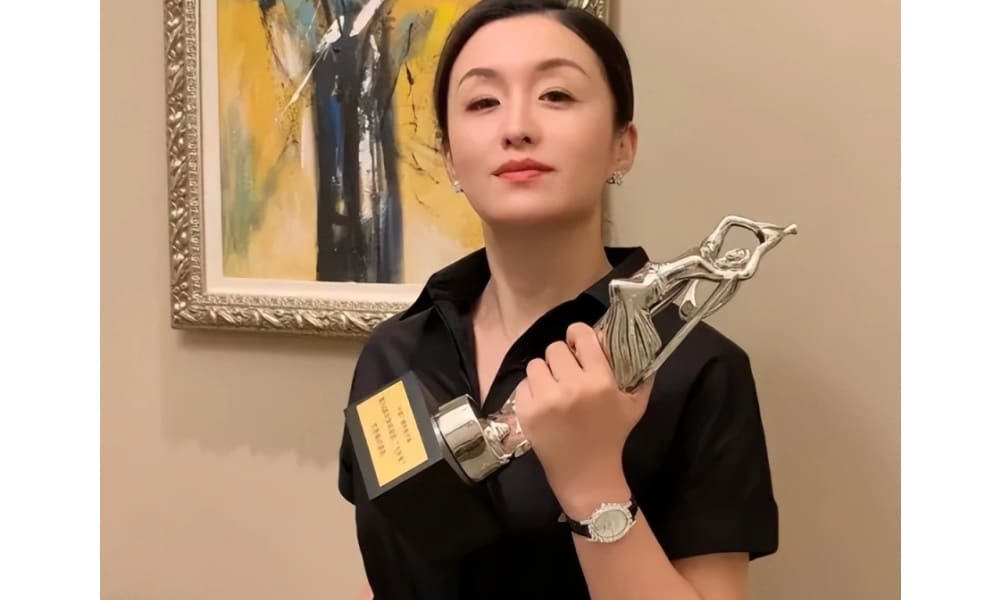
Qin Wen
After this wave of leaks, the recordings—together with Gu Er’s earlier accusations—spread widely across major Chinese social media platforms. Many netizens expressed disapproval of the misogyny, gossip, and backbiting revealed in the recordings and began reevaluating Wong Kar-wai as a person, as well as his past works. Others questioned the legitimacy of Gu Er’s methods, particularly the recordings and leaks. Legal experts noted that secretly recording conversations could violate privacy laws, and that selectively edited clips might even constitute defamation.
Crossing the Red Line
Then, on November 8, Gu Er released a new recording that fundamentally altered the nature of the incident. The audio features a conversation among Wong Kar-wai, Blossoms Shanghai co-director Li Shuang (李爽), and producer Peng Qihua (彭绮华), in which they discuss COVID controls, Japan, and China’s political system.
In the recording, Wong says that the Communist Party only wants “chives” (jiǔcài, 韭菜) to harvest and describes China as a “greedy one-party state.” In Chinese internet slang, jiǔcài refers to ordinary people who are repeatedly exploited, compared to chives that are cut and grow back, only to be harvested again. When Li mentions his collection of Japanese katanas and samurai outfits, Wong jokes that, given China’s current tensions with Japan, if the collection were discovered, Li would be publicly denounced and paraded, much like during the Cultural Revolution.
Wong even suggested: “If they find [the samurai swords], just put a Chinese flag on them and say you really hate those Japanese devils.”
The Weibo post was deleted within minutes, but the recordings spread quickly.
Nationalist netizens flooded Wong’s comment section, calling him a hànjiān (汉奸, traitor to the Chinese nation), and demanding that he “get out of China.” Some conspiracy-minded users even claimed that the title of Wong’s famous TV series Blossoms (繁花 fánhuā) was intentionally chosen because it sounds like “anti-China” (反华 fǎnhuá), alleging that Wong had embedded a subversive message in the title.
Suddenly, many who had previously viewed the scandal as mere entertainment began taking sides—calling for the show to be taken down and for investigations into Wong, Li, and others involved.
Unusual Twist in a Familiar Script
In China’s public sphere, once criticism touches on the state or the Party, everything becomes more complicated. Many began questioning whether Gu Er had gone too far in leaking these conversations, and whether this was a political terror tactic disguised as personal justice.
Weaponizing nationalism to ruin a public figure is actually nothing new.
Ten years ago, CCTV host Bi Fujian (毕福剑) was recorded at a private dinner mocking Mao Zedong and was immediately fired, vanishing from public life. In 2021, actor Zhang Zhehan (张哲瀚) was canceled after taking photos near the controversial Yasukuni Shrine in Tokyo—a site that honors Japan’s war dead, including convicted war criminals. In 2022, writer Yan Geling (严歌苓) was erased from the Chinese internet almost overnight after calling Xi Jinping a “human trafficker” in commentary about a trafficking case.
Given this history, and the fact that Wong has remained silent since the leaks began, mainland audiences now fear that Wong Kar-wai could join China’s celebrity “blacklist.” Some even worry they might never see In the Mood for Love again, others fear a broadcast ban for Blossoms.
Will Wong Kar-wai become the Next Bi Fujian? All past punishment-for-speech cases have followed a familiar script: a leak emerges, nationalists erupt, official mouthpieces like Xinhua step in to shape the narrative, and punishment follows swiftly. In Bi Fujian’s case, for example, the Central Commission for Discipline Inspection issued a public condemnation within a week.
But this time, although nationalists are already outraged on social media and calling for Wong’s “anti-China” remarks to be punished, not a single major central media outlet has echoed their anger. In fact, shortly after Gu released the new recordings, the Blossoms team issued a statement accusing him of fabrication and malicious slander—and The Paper, a state-affiliated Shanghai outlet, amplified it. That was the first signal of how authorities might lean.
Too Valuable to Cancel?
Does this all mean China has become more tolerant of political criticism? Is the red line for what can and can’t be said shifting? Some believe the only reason Wong escaped harsher consequences is that he didn’t mention specific leaders by name, which is the quickest way to get into serious trouble. While that’s plausible, another reason may carry more weight: Wong Kar-wai is useful to the state’s cultural agenda.
Despite the comments in the recordings, Wong’s stance toward the authorities is not overtly hostile. In recent years, he has cooperated with state-backed projects. Blossoms, in particular, is part of Shanghai’s cultural branding campaign, with full support from Party-led propaganda departments. It received major state funding and was included as a central project on CCTV’s 2024 slate.
Wong is also a globally recognized auteur with real prestige in the West, making him valuable to China’s propaganda strategy of “telling China’s story well” (讲好中国故事).
Dropping such a cultural asset over a scandal stirred up by a disgruntled writer would be politically and culturally costly. This might explain why the official response has been unusually mild.
Many observers mistakenly assume that in China, once public outrage reaches a certain level, authorities will respond accordingly. But that’s only true when popular opinion and official interests are aligned. When they’re not—when the Party-state sees strategic value in protecting someone—public outcry changes nothing. If the Party believes Wong is worth keeping, then some of his comments will simply be forgiven.
The Cost of Speaking Out
At the center of this entire story is Gu Er. Was he wrong to weaponize nationalist outrage? Were his methods excessive or dangerous? Reactions are mixed. Some argue that leaking private recordings (especially political ones) is troubling and contributes to a climate of fear and self-censorship. Others sympathize, believing that Gu Er, who has suffered so much both physically and emotionally, shouldn’t be judged too harshly.
In the well-known Fanpai Yingping (反派影评) podcast, film journalist Bomi argued that Gu didn’t intentionally politicize the conflict; rather, he was responding within a system that had already politicized his case. Wong’s team never approached the issue as a civil labor dispute. They had enough opportunities to negotiate or settle, but instead, but chose not to . Perhaps it was arrogance. Or perhaps a confidence that the show, backed as a state-supported “main melody” (主旋律) production tied to enormous interests, would never be abandoned.
There seems to have been a clear mission to silence Gu Er. After shutting down his WeChat account, members of staff allegedly tried to intimidate him by visiting the house of his 90-year-old grandmother to deliver legal letters.
In the November 8 statement by the team, they accused him of “inciting social division” (“煽动社会对立”) and “manipulating negative emotions” (“诱导负面情绪”) and claimed he was “evading domestic legal investigation” (“逃避国内司法调查和认定”) by staying overseas—all language that is reminiscent of official state announcements. Some netizens even suggested it evoked the tone of old-school ideological and political denunciation—strong on rhetoric but lacking in substantive legal action. They frame this entire story into the context of a powerful production crew violating labor law treating a powerless writer like a political criminal.
The repercussions of this controversy are far from over, and to what extent it will have consequences for both Wong Kar-wai and Gu Er remains to be seen. Will Wong ever speak out? Will Gu Er be silenced forever?
Regardless, it is clear that Wong’s reputation has suffered. Long regarded as a “hero” of Chinese cinema, this incident has changed how many in mainland China now perceive the famous “Sunglasses.” Some call him a misogynist; others denounce him for exploiting staff. Still others see him as a hypocrite, suggesting that although he criticizes authoritarianism in the leaked recordings, he operates and thrives within that very system. One Weibo commenter wrote that the “Sunglasses King turned out to be the villain of the story.”
Although Gu Er has also received criticism for his actions, he has encouraged others through his insistence on standing up to those in power who bullied and discredited him. Recently, another screenwriter posted on Xiaohongshu about a similar experience: after independently completing the full script for a Chinese drama, he discovered that the boss had listed themself as Head Screenwriter in the end credits. The post was tagged “Gu Er” and received hundreds of comments, with many users sharing their own stories of being exploited as scriptwriters.
Even turning the dispute into a political issue failed to bring Gu Er any justice or revenge on his exploitative former employer. Still, he has gained something else: recognition from others, for whom his resistance has become a source of inspiration. Even if it was not the kind of recognition he originally sought, Gu Er still gets his credit in the end.
By Ruixin Zhang edited for clarity by Manya Koetse
Independently covering digital China for over a decade. Like what we do? Support us and get the story behind the hashtag by subscribing:
Spotted a mistake or want to add something? Please let us know in comments below or email us. First-time commenters, please be patient – we will have to manually approve your comment before it appears.
©2025 Eye on Digital China, powered by Whatsonweibo. All rights reserved. Do not reproduce our content without permission – you can contact us at info@whatsonweibo.com.
Eye on Digital China is a reader-supported publication by
Manya Koetse (@manyapan) and powered by What’s on Weibo.
It offers independent analysis of China’s online culture, media, and social trends.
To receive the newsletter and support this work, consider
becoming a paid subscriber.

Chinese Postdoc Death Raises Questions as Key Details Remain Missing

“Auntie Mei” Captured After 20 Years, China’s Train-Stain Scandal, and Zhang Xuefeng’s Final Lesson

Raising Lobsters, 6G Coming, and China’s DIY Deity Trend

Two Sessions, a Celebrity Meltdown, and the Rise of China’s “Forget It” Mindset

Inside the Great Chinese Debate Over the Iran War

Inside Chunwan 2026: China’s Spring Festival Gala
Inside the Great Chinese Debate Over the Iran War

Spring Festival Trend Watch: Gala Highlights, Small-City Travel, and the Mazu Ritual Controversy

Chinamaxxing and the “Kill Line”: Why Two Viral Trends Took Off in the US and China

From a Hospital in Crisis to Chaotic Pig Feasts
-

 Chapter Dive9 months ago
Hidden Cameras and Taboo Topics: The Many Layers of the “Nanjing Sister Hong” Scandal
-
 China Insight8 months ago
“Jiangyou Bullying Incident”: From Online Outrage to Offline Protest
-
 Chapter Dive11 months ago
Understanding the Dr. Xiao Medical Scandal
-

 China Arts & Entertainment6 months ago
The Wong Kar-wai Scandal Explained: The Dark Side of ‘Blossoms Shanghai’
Ben
November 16, 2018 at 10:33 am
In the picture for “#18 Heaven’s Above (苍天在上)”, the character seems to be holding a smartphone – possibly an iPhone given what looks to be an apple on the back side. That would be anachronistic for a 1995 series I think?
Admin
November 16, 2018 at 10:41 am
Well spotted, Ben! You’re right! That was an image from a modern remake mini-series of Heaven’s Above (苍天在上), not the 1995 version. We’ve now replaced with an image from the original show. Thanks for the heads up 🙂
autraka
November 22, 2018 at 6:59 am
Wish you included 武林外传、还珠格格 and more TV dramas based on 金庸‘s novels.
Brown
January 2, 2019 at 10:58 am
Chinese TVs set in Qing Dynasty are an amazing series for me. I love the Story of Yanxi Palace especially. I have found the top 10 related Qing Dynasty TVs from here
https://chinausual.com/top-10-chinese-tv-series-set-in-qing-dynasty/
Jason
February 23, 2019 at 9:57 am
Actually “White Deer Plain” 白鹿原 is in Shaanxi(陕西). Not Shanxi(山西)。