
China Local News
Shiny Big Eyelids, Pouty Red Lips? You Might Have Been to the Wrong Terracotta Army
Thought you visited the Terracotta Army, one of the great wonders of the world? You might have been tricked.


Recently, one Chinese travel review attracted many readers on Douban, a Chinese social media network. In the blog, titled “Xi’an is a fun city: both its tourist sites and its scammers,” the writer tells how he went through a challenging game of outwitting cunning “tour guides” during his travels in Xi’an.
The netizen shared how he painstakingly defeated all the ‘bosses’ and finally managed to see the REAL Terracotta Army instead of its poor replica.
The ‘game’ began once the blogger had stepped out of the train at Xi’an station, where a fake policeman lured him to the wrong bus. A man in black then tried to convince him that the Terracotta Army pits were so far that he had to take another bus, and a free shuttle bus offered to take him to the real pit.
If it is your first time in Xi’an, and you haven’t done much preparation before the trip, you might fall into the trap and be guided to the “famous sites”: a Terracotta Army pit, an “Eight Wonders of the World” museum, and some other sites where famous historical events supposedly took place.
Here is what you will be seeing when you go to the “famous sites”:
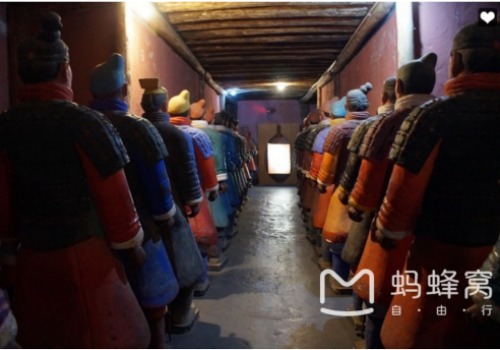
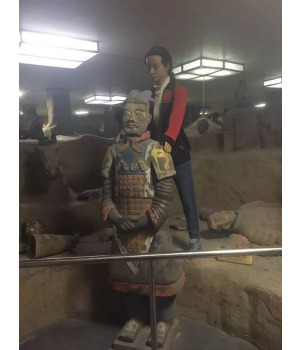
• Shiny terracotta warriors with pouty red lips. Their color, despite what archaeologists say about the paint fading in open air, is vividly preserved. Sometimes they even have a modern-looking girl in their company. [Site: Underground Place of Qin, 秦陵地宫]
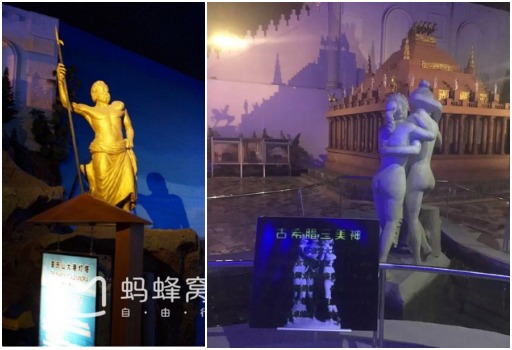
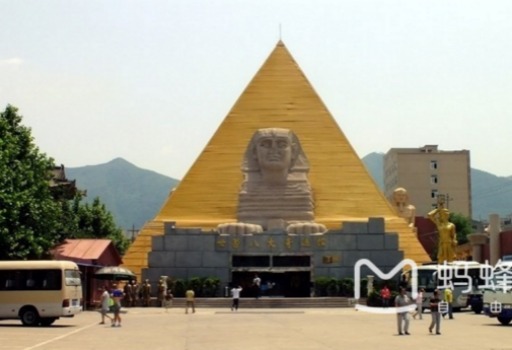
• The “Eight Wonders of the World,” where you will see things such as the tomb of Tutankhamen, Egyptian pyramids, or the three goddesses of ancient Greece. [Site: Eight Wonders of the World Museum, 世界八大奇迹馆]
• Or paintings and wax figures depicting people’s lives in the past. [Site: Eight Wonders of the World Museum; Relics of Feast at Hong Gate, 鸿门宴遗址]
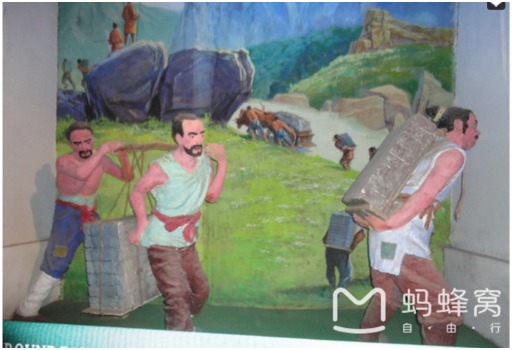
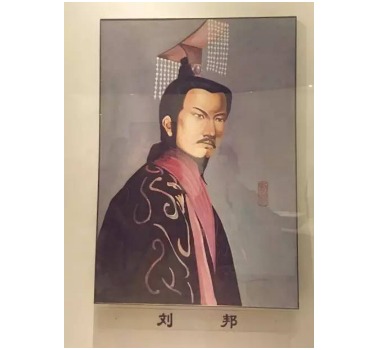
Portrait of Liu Bang, a king in the Three Kingdoms Period
(You can also click on the video to experience the trip).
Although visitors might feel confused and disappointed after such a trip, they often do not not dwell on it for too long; after all, the above three places are officially recognized tourist sites by the Shaanxi Tourism Administration (陕西旅游政务), and have existed for decades.
But since last year, tourists’ complaints have grown louder, especially after the October Golden Week holiday when millions of people came to Xi’an to see the historical wonders of the city. Many were angered that they got to see cheap replicas instead.
The problem is that replica attractions used to be officially recognized tourist spots in the same way as real historical sites were. According to Mr. Zhang, an insider interviewed by Pear Video, the tourist sites with poorly replicated relics were constructed in the 1980s, when tourist resources were still scarce.
The ‘fake’ sites were used to satisfy the curiosity of visitors, so that they could see ‘historical relics’ they would otherwise never have a chance to see.
Although these replicas might have been of acceptable quality 30 years ago, they now seem crude, cheap, and very much outdated.
But more importantly, many historical sites have now become much more accessible to visitors than they were in the 1980s. On one single day in October 2016 alone, the Emperor Qinshihuang’s Mausoleum had 120,000 visitors. Now that the ‘real’ sites are open for visitors, tourists no longer want to see replicas.
Nevertheless, tourists are still lured to go to these replica sites, only later finding out that they are at the wrong place. According to Mr. Zhang, the operators of these ‘fake’ sites spare no means to cooperate with illegal travel agencies to bring more visitors to their premises.
As a result of the rising complaints, the Xi’an Tourism Board has disqualified the above-mentioned three sites as of September 2016.
Yet according to Chinese netizens and daily newspaper Dushi Kuaibao (@都市快报), the scamming “travel guides” are still ubiquitous in Xi’an, tricking ignorant visitors every day.
Despite all the controversies, Xi’an is still worth a visit. Take this kind advice of a Xi’an netizen who warns travelers not to waste money on cheap scams:
“We always welcome guests to Xi’an. If your budget is low, prepare your trip in advance. If your budget is high, stay at a 5-star hotel and rent a car. As long as you do not travel on the cheap, you won’t be cheated. The point of traveling is spending money for enjoyment. If you spend your money at the right place, you will get the most out of it.”
-By Diandian Guo
Follow on Twitter or Like on Facebook
©2016 Whatsonweibo. All rights reserved. Do not reproduce our content without permission – you can contact us at info@whatsonweibo.com.




China Local News
Six Chinese Students Dead After Falling Into Flotation Tank During Mine Visit
After six students drowned in a mine tank, social media users question safety precautions and media framing.


🔥 Quick Take: Trending in China
This is a brief update from our curated roundup of what’s trending in China this week. A version of this story also appears in the Weibo Watch newsletter. Subscribe to stay in the loop.
The tragic death of six Chinese students during a visit to the Wunugetushan Copper-Molybdenum Mine (乌努格吐山铜钼矿) in Inner Mongolia has been trending on Chinese social media this week.
The students, who study mineral processing engineering at the School of Resources & Civil Engineering Northeastern University (东北大学), visited the site as part of their studies on Wednesday, July 23.
The facility, which operates under the state-owned China National Gold Group Corporation (中国黄金集团), includes a mineral processing plant where ore is crushed and processed using flotation cells to separate copper and molybdenum concentrate from waste rock.
The students were standing on a metal grate above a deep industrial tank used for mineral processing. The grate then suddenly collapsed, and they fell into the flotation tank, which was filled with mineral slurry (see this video to better understand the situation).
The tank was deep, and once inside, the slurry made it impossible to swim.
By the time the students were taken out of the tank, they had already drowned. They were all aged between 20 and 22. One of their teachers was injured in the incident.
According to Sohu News, citing a preliminary accident investigation report, the direct cause of the incident was a pre-existing crack in the grate above the tank, which caused the entire panel to flip and fall off. The grates had been replaced in February but were not properly tested. The site also lacked warning signs about load capacity and reportedly did not restrict the number of people allowed to stand on it.
Three people responsible for safety measures at the site, including the deputy general manager, have now been placed under criminal detention.
Besides the many questions surfacing online about how such a gruesome accident could have occurred, there is also criticism of how the media has reported on the incident. Some outlets mentioned that the 45 other intern students—presumably also present during the visit—were “emotionally stable,” and that the teacher who was injured was in a “good mental state.”
One blogger criticized these phrases, which are often used in media reports following similar incidents. While they appear to describe the psychological condition of survivors or bystanders, the author argued that they are more political than psychological: their real function is to signal to readers that—despite the loss of life—the situation remains under control.
After the online criticism, the Weibo hashtag “45 Intern Students from Northeastern University Are Emotionally Stable” (#东北大学45名实习学生情绪平稳#) has since been taken offline.
At the time of writing, the official website of Northeastern University has been changed to black and white.
By Manya Koetse
(follow on X, LinkedIn, or Instagram)
Spotted a mistake or want to add something? Please let us know in comments below or email us. First-time commenters, please be patient – we will have to manually approve your comment before it appears.
©2025 Whatsonweibo. All rights reserved. Do not reproduce our content without permission – you can contact us at info@whatsonweibo.com.
Follow What’s on Weibo on


🔥 Quick Take: Trending in China – Week 18
This is a brief update from our curated roundup of what’s trending in China this week. A version of this story also appears in the Weibo Watch newsletter. Subscribe to stay in the loop.
An enormous fire that happened at a restaurant in Liaoning’s Liaoyang on the afternoon of April 29 (see video) has gone top trending on Chinese social media, mainly due to the fact that it caused so many fatalities.
By 7pm, Chinese official media reported that the fire, which happened at 12:25 in the city’s Baita district, had killed 22 people. Three people were injured.
The fire started on the second floor of the restaurant Sanli Chuniang (三里厨娘/Sanli Chef’s Daughter) on Minzhu Road (民主路) and quickly spread throughout the entire two-story brick-concrete structure, which covers an area of about 260 square meters. The windy weather also played a part in how quickly the fire spread. The fire broke out around lunchtime, when there were many customers.

The restaurant before and after the fire.
Some sources on Xiaohongshu report that, according to witnesses, toxic smoke filled the entire building in less than five minutes. The thick smoke, small spaces inside the two-story building, and limited escape routes — some of which were allegedly blocked — all contributed to the high number of fatalities. Some victims were reportedly just ten meters away from the exit, yet still failed to escape.
According to Caixin, the restaurant’s second floor had several private rooms without windows.
To make matters worse, some nearby vehicles were not moved in time, hindering the rescue operations.
Sanli Chuniang was a locally popular restaurant serving various Chinese dishes, snacks, and dumplings. It was in business since 2016.
On social media, many commenters are expressing shock and sadness over the deadly fire. They also want answers into why there seemed to have been little to no fire safety precautions at the establishment.
The last time a restaurant fire with many fatalities made major headlines in China was in 2023, when a gas explosion inside a BBQ restaurant in Yinchuan resulted in 31 deaths. Nine people, including the restaurant owner, were later arrested in connection with the fire and the lack of safety precautions.
Some reports on the Liaoyang restaurant fire have now been removed, but it appears that the restaurant had been operating illegally since 2023 and that its fire safety inspections were not up to date.
Guancha reported that while the cause of the fire is still under investigation, the restaurant owner has been taken into custody.
🔄 Update 1: Chinese leader Xi Jinping issued a statement regarding the devastating fire, calling on local authorities to hold those responsible accountable and to properly handle matters related to the victims and console their families.
Premier Li Qiang also emphasized that local authorities across China should screen for fire hazards and strengthen safety measures to prevent such major accidents from occurring.
🔄 Update 2: Preliminary investigations have ruled out arson or gas leakage as the cause of the fire. The specific cause of the incident is still under investigation, focusing on leftover cigarette butts that might have started the fire or possible electrical faults. The restaurant’s furniture and interior materials were highly flammable, and strong winds outside caused the fire to spread quickly and block the exits. This made it difficult for those trapped inside to escape. Most victims died from asphyxiation after inhaling large amounts of toxic smoke in a short time.
As definite results have not yet been issued at the time of writing (May 6), some netizens are wondering: “When can we expect to hear more?”
By Manya Koetse
(follow on X, LinkedIn, or Instagram)
Spotted a mistake or want to add something? Please let us know in comments below or email us. First-time commenters, please be patient – we will have to manually approve your comment before it appears.
©2025 Whatsonweibo. All rights reserved. Do not reproduce our content without permission – you can contact us at info@whatsonweibo.com.
Follow What’s on Weibo on
Eye on Digital China is a reader-supported publication by
Manya Koetse (@manyapan) and powered by What’s on Weibo.
It offers independent analysis of China’s online culture, media, and social trends.
To receive the newsletter and support this work, consider
becoming a paid subscriber.


Two Sessions, a Celebrity Meltdown, and the Rise of China’s “Forget It” Mindset

Inside the Great Chinese Debate Over the Iran War

Spring Festival Trend Watch: Gala Highlights, Small-City Travel, and the Mazu Ritual Controversy

Inside Chunwan 2026: China’s Spring Festival Gala

The Fake Patients of Xiangyang: Hospital Scandal Shakes Welfare System Trust
Inside Chunwan 2026: China’s Spring Festival Gala

Chinamaxxing and the “Kill Line”: Why Two Viral Trends Took Off in the US and China

From a Hospital in Crisis to Chaotic Pig Feasts

Trump, Taiwan & The Three-Body Problem: How Chinese Social Media Frames the US Strike on Venezuela

China’s 2025 Year in Review in 12 Phrases
-

 Chapter Dive8 months ago
Hidden Cameras and Taboo Topics: The Many Layers of the “Nanjing Sister Hong” Scandal
-

 China Insight7 months ago
“Jiangyou Bullying Incident”: From Online Outrage to Offline Protest
-

 Chapter Dive10 months ago
Understanding the Dr. Xiao Medical Scandal
-

 China Arts & Entertainment5 months ago
The Wong Kar-wai Scandal Explained: The Dark Side of ‘Blossoms Shanghai’
Yapa
July 25, 2017 at 3:55 am
Thanks for going to the Museum and take pics.