
China Memes & Viral
Meet Sister Zhang and the Heilongjiang College Room Inspection Gang
The “six cadre members” of the dorm inspection team take college standards for cleanliness very seriously.

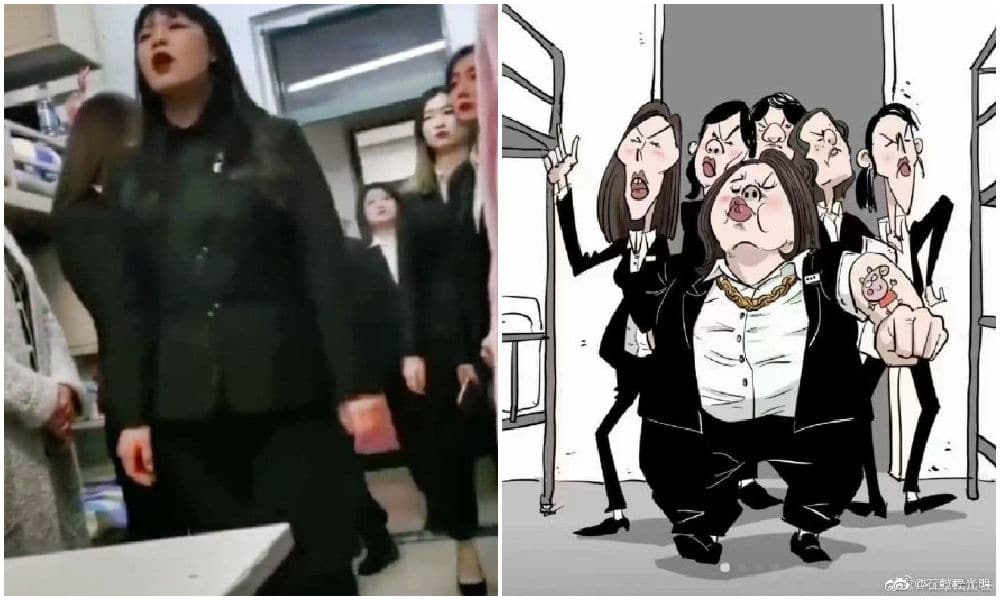
A video showing the arrogant and authoritarian way in which a team of female students inspects the dorms at a vocational college in Heilongjiang, China, has gone viral on Chinese social media.
In the video, several girls wearing black suits can be seen stepping into one of the female students’ dorms as ‘the room inspection team’ and announcing their arrival like army inspectors, giving a special mention to their leader Zhang.
“Clearly look at the faces of the six of us, we’ve come to inspect the beds,” one of the young women says.
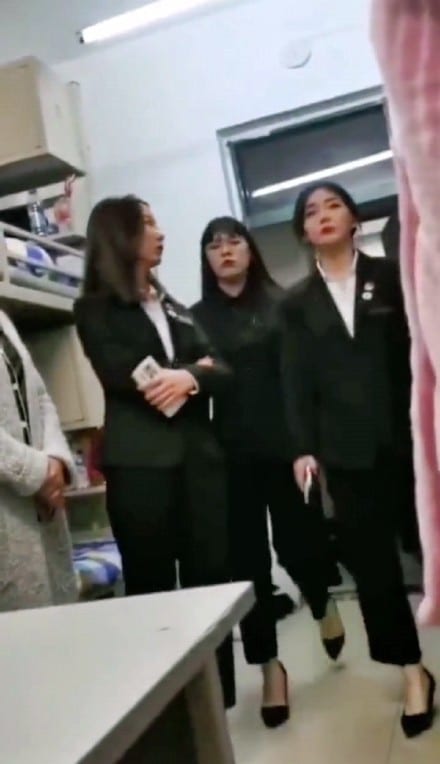
The team leader Zhang then brushes some of the other inspection members aside as she steps forwards and critically glances around the dorm room.
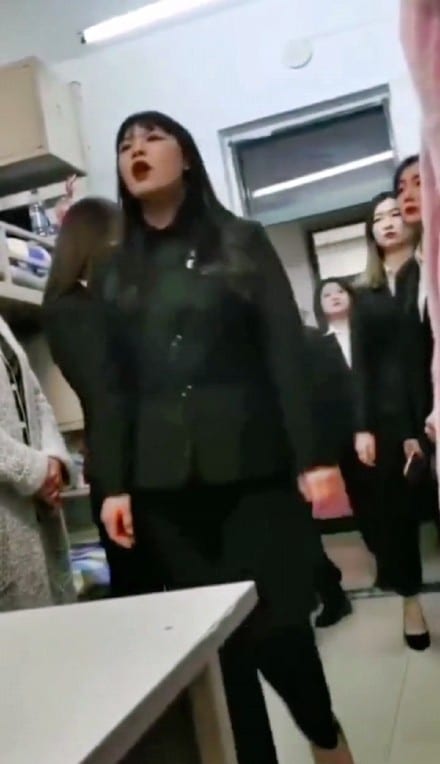
They then begin to give instructions to the female students in the room who stand by in their pajamas and humbly reply “OK,” and “understood.”


The snobbish room inspection ‘tyrants’ comment on the dust bins, the walls, telling the students they need to adhere to the “highest standards” of dorm cleanliness before exiting the dorm room again.

Some online commenters thought that all that was missing from the scene was a cigarette dangling from the team leader’s mouth.

After the video leaked online on social media, as it was secretly recorded by one female students, it caused somewhat of a social media storm focused on the “six cadre members” of the dorm inspection team.
It did not take long before the first illustrations were created to ridicule the ‘dorm sisters.’
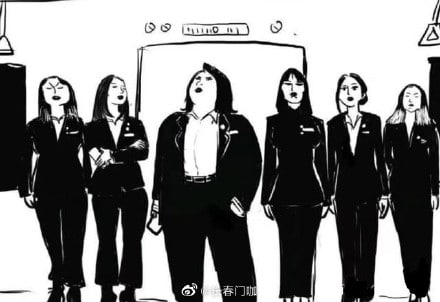
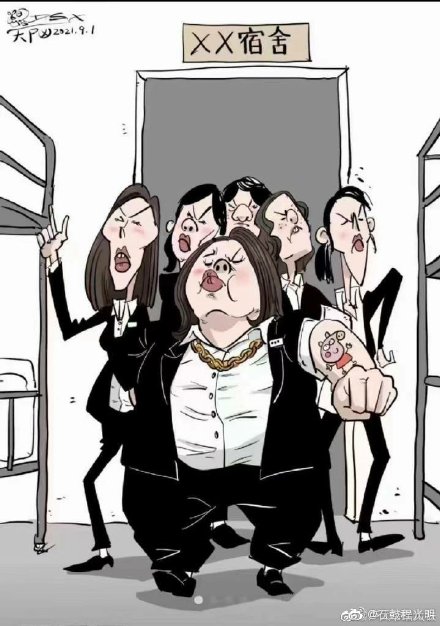
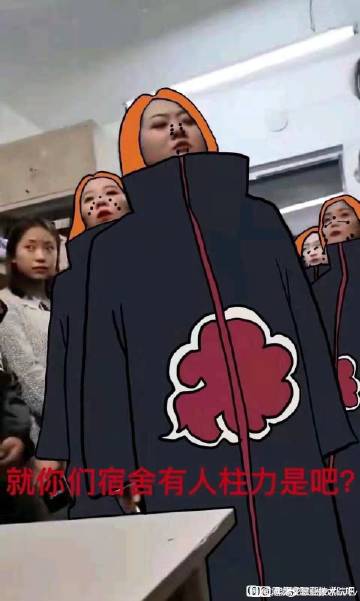
One of the reasons the scene caused such a viral storm was because it perfectly illustrated the hierarchy within the dorm inspection team, with lady A first appearing, without much to say, and lady B being most familiar with all the guidelines relating to bed-checking, and ‘Sister Zhang’ having the final say in all of it, having the power to silence everyone else in the room.
After the video became a viral hit, the Heilongjiang Vocational College issued a statement saying that the video was actually recorded in October of last year and that the six student members involved have since been informed of all the criticism and corrected their behavior.
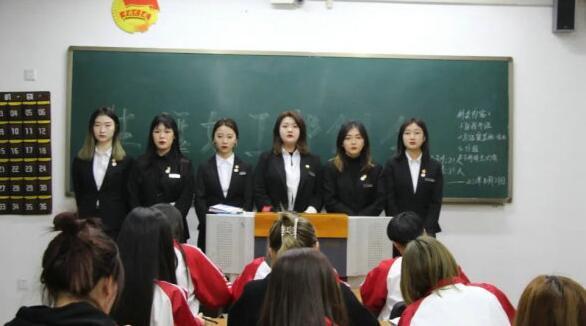
The video also led to some media articles diving deeper into the history of student unions in Chinese college campus life, with student-led organization becoming more professional and more rigorous throughout the decades; some even require written tests and interviews before fresh students are allowed to join.
Sometimes, students in certain leadership positions feel a sense of superiority and self-righteousness.
In this case, leader Zhang displayed the most extreme and dramatic ‘bad boss behavior,’ turning her into an overnight internet celebrity.
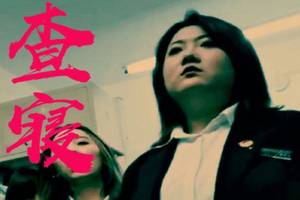
According to one entertainment blog (金牌娱乐) on Sohu.com, team leader Zhang Meiyu (张美玉) has temporarily left the campus and went home to escape all the attention.
Meanwhile, some hashtags related to the video (#黑龙江职业学院回应查寝视频#) have already received 150 million views on Weibo.
By Manya Koetse, with contributions by Miranda Barnes
Spotted a mistake or want to add something? Please let us know in comments below or email us. First-time commenters, please be patient – we will have to manually approve your comment before it appears.
©2021 Whatsonweibo. All rights reserved. Do not reproduce our content without permission – you can contact us at info@whatsonweibo.com.



China Memes & Viral
Two Sessions, a Celebrity Meltdown, and the Rise of China’s “Forget It” Mindset
Inside this week’s trends: Two Sessions talking points, a massive celebrity meltdown, and a pet gym in Shanghai charging $275 a month.

🔥 China Trend Watch (week 10 | 2026) Part of Eye on Digital China by Manya Koetse, China Trend Watch is an overview of what’s trending and being discussed on Chinese social media. The previous newsletter was a chapter dive into the Chinese online discourse surrounding the Iran war. This edition was sent to paid subscribers — subscribe to receive the next issue in your inbox.
Besides Taiwan, Wang Yi spoke about the Iran war (“should not have happened”), Palestine (“two-state solution”), Sino-American relations (“mutual respect”), and more. Although there are undoubtedly many things to disagree on, one thing Wang mentioned more than once is just how turbulent the world we live in today has become – I think we all agree about that.
If you missed Wednesday’s newsletter about China’s online discourse on the Iran war, you can find it here. In this edition, let’s dive into other trending topics beyond that conflict, which dominated much of the discussion this week.
Quick Scroll
-
- 🌸 Women’s Day, March 8, falls on a Sunday in 2026, which ironically means women are not entitled to their usual half-day off under China’s national holiday regulations this time.
- 🤖 China has released its first national standards framework for humanoid robots and embodied AI, unveiled at an industry conference in Beijing. The move signals Beijing’s push to accelerate commercialization and large-scale production as China positions itself as a global leader in humanoid robotics.
- 🎬 Zhang Yimou’s latest crime thriller Scare Out (惊蛰无声), about national security officers battling enemy spies and produced under the guidance of China’s Ministry of State Security, has become the highest-grossing crime film of the Spring Festival season at the Chinese box office.
- 🚗 A Chinese Lynk & Co Z20 car owner recently crashed into a road divider at night after asking the car’s voice assistant to turn off all reading lights, but the system mistakenly turned off the headlights instead. When he tried to turn them back on, the AI assistant replied, “I can’t do that yet.” The company has since apologized, but the incident has sparked criticism of automakers putting smart features ahead of safety.
- 🐶 A pet gym in Shanghai charging around 2,000 yuan ($275) for a monthly membership shows just how hot China’s pet economy is becoming. At the upscale gym, dogs can walk on treadmills, swim, get massages, and receive one-on-one training.
- 🍑 The latest costume drama Pursuit of Jade (逐玉), which premiered on iQIYI and Tencent Video on March 6, has become a breakout success during its opening weekend, setting a record for the fastest-rising drama on Weibo, driven by a massive fandom known as the “Peach Blossom Chasers” (桃花逐理人).
- 🚆 A Chinese student suffered cardiac arrest after traveling 31 hours in a hard-seat train back to school after Spring Festival. She survived, with doctors diagnosing ‘economy-class syndrome’ (经济舱综合征): blood clots caused by prolonged immobile sitting.
- 📱 The Chinese Honor brand came out with the world’s thinnest Android tablet this week. The MagicPad 4 measures just 4.8mm thick, making it thinner than the iPad Pro or Samsung Galaxy Tab. As it also debuted OpenClaw collaboration technology, becoming the first commercial device to officially support running open-source AI agents, the device became a much-discussed ‘wannahave.’
What Really Stood Out This Week
Holiday Debt, Bride Prices, and Meme CEOs: What’s Trending from China’s Two Sessions

The annual Two Sessions—China’s National People’s Congress (NPC) plenary and the Chinese People’s Political Consultative Conference (CPPCC)—are convening from March 4 to March 11. As usual, they’ve become a major topic of discussion on Chinese social media this week, alongside the ongoing developments in Iran.
This year, topics such as pensions, holidays, healthcare, tech, and AI have been receiving special attention. Here are three talking points that have generated considerable online discussion.
📍 One issue that netizens especially seemed to care about is the phenomenon of China’s “compensatory working day” system (调休 tiáoxiū), which allows people longer holiday blocks (such as seven days for the National Day holiday, or nine days for the recent Spring Festival) but requires people to make up for some of those days by working weekend days on either side of the holiday.
NPC delegate Tian Xuan (田轩) has proposed reducing or avoiding the use of these “make-up days,” and instead increasing the number of public holidays. The proposal is receiving strong support from workers who have long been frustrated by this system of “borrowing” free days, which creates a sense of being in holiday “debt.”
📍 Another proposal that went viral concerns child safety and stricter punishment for sex offenders. Female NPC delegate Fang Yan (方燕) suggested that convicted sex offenders against minors should be banned from professions involving close contact with children, prohibited from entering kindergartens and schools, and subjected to mandatory electronic location monitoring after serving their sentence.
📍 NPC delegate Zhang Qiang (张强) put forward another proposal that generated online discussions, focusing on the topic of China’s bride prices (彩礼 cǎilǐ), payments made by the groom’s family to the bride’s family. The issue has been widely debated for years as bride prices have been skyrocketing in rural China, where there are more men of marriageable age than women.
Zhang proposes that, in line with village rules, bride prices should be capped at no more than 20,000 yuan (US$ 2,900). Zhang spoke from experiences from his own village, where some bride prices rose to a staggering 188,000 yuan (US$27,260) – which allegedly almost made the marriage fall apart before it even started. Although many agree that there should be measures to break the cycle that puts rural families in debt, others think that the government shouldn’t intervene in private family customs.
📍 The most discussed NPC delegates are Xiaomi CEO Lei Jun (雷军) and Zhou Yunjie (周云杰), top executive at the Haier Group. Xiaomi is one of China’s leading smartphone and electronics makers, while Haier is one of the country’s largest home-appliance groups. The two delegates already appeared together at the Two Sessions last year, when their contrasting roles drew attention: one representing China’s younger, fast-moving digital companies, the other the face of China’s older, traditional manufacturing industry.
This year, the two appearing together has become a source of memes, often portraying Lei Jun as the more playful, younger figure leading Zhou Yunjie into the world of social media. The stark difference between the two business leaders is what strikes a chord—Zhou is seen as the more serious, traditional senior business leader. The pair is affectionately called the “HaiMi Brothers” (海米兄弟) by netizens.

Many netizens hope that beyond the Two Sessions, Lei and Zhou will continue to hang out and collaborate more by combining their strengths and expertise.
The Celebrity Drama Taking Over Chinese Social Media

Earlier this week, I promised to update you on the juicy celebrity story that almost managed to rival the Iran war as one of the most talked-about topics of the week—despite being entirely insignificant in comparison (which, of course, is exactly what makes it so irresistible🍿).
At the heart of the story is a decade-old celebrity feud involving singer Joker Xue (薛之谦 Xue Zhiqian) that was reignited by his messy former girlfriend Li Yutong (李雨桐). On March 2, she posted a chaotic online rant filled with grievances against Xue, who left her in 2017 before reconciling with his ex-wife. Apparently, there is still a lot of unprocessed grief from those days, because there is no other obvious reason to explain why Li decided to share her since-deleted meltdown with millions of Chinese netizens earlier this week.
In more than 20 posts of threats and dirty laundry—from “I will expose everything” to accusing Xue of forcing her into an abortion and filing a public police report against him for bigamy—Li dragged her ex down while also mentioning details about Xue being nasty toward celebrity colleagues. Among them, she referenced mean remarks about Chinese pop star Zhang Jie (张杰), also known as Jason Zhang. With more than 81 million Weibo followers and record-breaking ticket sales for 12 consecutive concerts at Beijing’s National Stadium, he is about as famous as you can get. His wife, Xie Na (谢娜), is arguably the most recognizable female television host in China.
The situation then spiraled into a much bigger controversy when fans began linking Li’s claims about Joker Xue’s remarks to a 2017 comedy roast program (吐槽大会 Tǔcáo Dàhuì). Soon after, Xie Na published an open letter on her personal Weibo directly addressing Joker Xue and demanding a formal apology to her husband Zhang Jie for the remarks—essentially accusing him of belittling Zhang’s supposedly “low-class” singing style.
As if that wasn’t enough, another ex-girlfriend entered the scene with a Weibo post. Duan Xi (段曦), seemingly triggered by Xie Na’s intervention, asked: if people are publicly demanding apologies now—“can I have one too?” In a lengthy message, she recounted how she fell into loneliness and depression after Xie Na entered the life she had shared with Zhang Jie more than two decades ago, suggesting that their past behavior might not have been entirely clean either.
Should we care about this story? Not at all. But it contains all the elements of a soap drama. Former lovers seeking revenge, bitter jealousy, and long-standing feuds. Reality, in this case, is hardly less dramatic than a scripted series. Above all, it offers a glimpse into the lives of China’s rich and famous. Although they often seem far removed from ordinary netizens, these occasional meltdown moments reveal something much more familiar: fragile egos, messy relationships, and very public outbursts.
There is also a commercial side to it. Besides other celebrities jumping in to boost their own online visibility and renew their relevance, the entire spectacle is lucrative for Weibo, once the central stage of China’s celebrity culture. Even though regulators have spent years trying to curb celebrity gossip and “vulgar” online content on platforms like Weibo, it remains exactly the kind of content that generates the most traffic and clicks.
In between news about the war in Iran and China’s Two Sessions, it is stories like these that keep people returning to social media—not for foreign news or state media narratives, but for drama.
On the Feed
The Little “Coal Mining” Panda
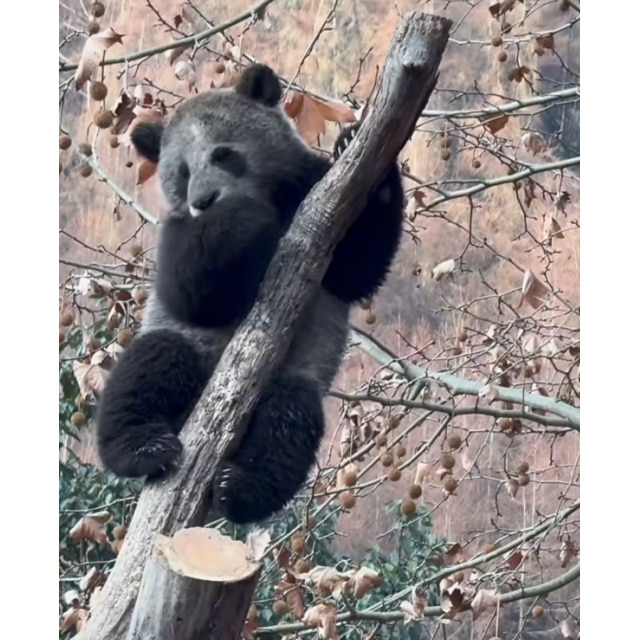
One little panda cub born last summer at a conservation base in Sichuan has recently gone viral for its muddy black appearance, with some joking that it’s “cosplaying” a black bear and others calling it the “coal mining bear” (挖煤小熊). The cub, now often referred to as the “Su Jin cub” (苏锦崽) since giant panda Su Jin is its mother, has quickly become a crowd favorite. Although there has been a lot of speculation about its color, the explanation is simple: even though staff wipe it down every day, little Su Jin just loves rolling through the mud.
Word of the Week
“算了型人格” (suànle xíng rénge — “forget-it personality type”)
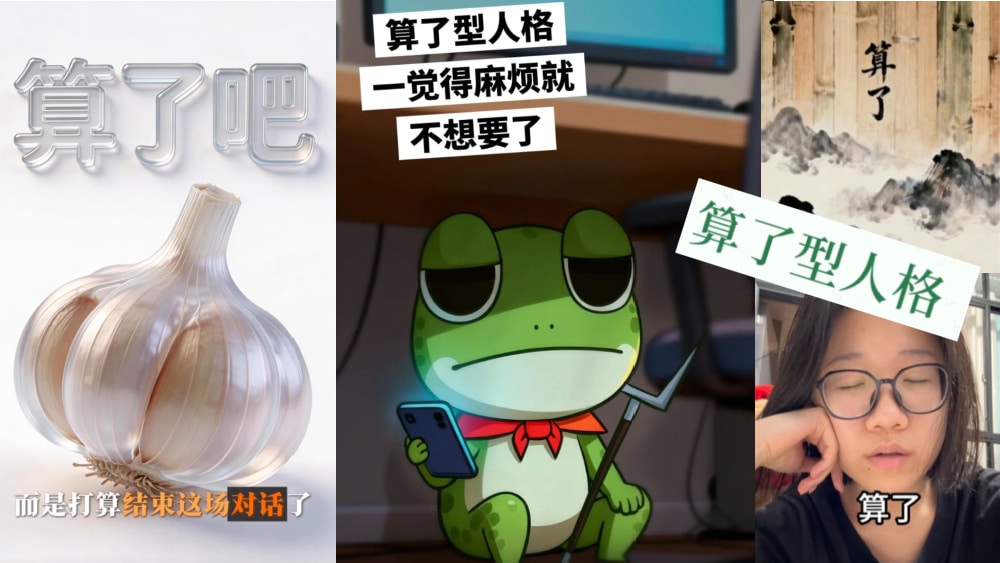
The “forget-it personality” can be seen as a kind of coping strategy for younger generations navigating modern life, where they face information overload and decision fatigue. In that sense, it can be added to the list of other self-labeling terms we’ve seen in Chinese youth culture before, from “lying flat” (躺平 tǎng píng) to “rat people” (老鼠人 lǎoshǔrén).
The “forget-it personality,” however, is somewhat more pragmatic: it reflects a day-to-day attitude in which someone decides it’s simply not worth the trouble to fuss over something. You say “forget it” because you already have enough on your plate.
One thing these terms have in common is a sense of emotional exhaustion, yet adopting such an attitude is not necessarily about giving up; for some people it has even become something to aspire to.
One Douyin user wrote:
“I like browsing online, but sometimes comments make me so angry that I want to reply. Then I think about how many words I’d have to type and how much I’d have to think about the response, and suddenly I’m too lazy to comment. My temper is bad, but I also hate hassle.”
—That’s a wrap.
See you next edition.
Best,
Manya
Eye on Digital China, by Manya Koetse, is co-published on Substack and What’s on Weibo. Both feature the same new content — so you can read and subscribe wherever you prefer. Substack offers community features, while What’s on Weibo provides full archive access. If you’re already subscribed and want to switch platforms, just get in touch for help. If you no longer wish to receive these newsletters, or are receiving duplicate editions, you can unsubscribe at any time.
China Memes & Viral
Spring Festival Trend Watch: Gala Highlights, Small-City Travel, and the Mazu Ritual Controversy
Some stories going viral during the holiday season seem to exist in a recurring social cycle of their own.

🔥 China Trend Watch (week 8 | 2026) Part of Eye on Digital China by Manya Koetse, China Trend Watch is an overview of what’s trending and being discussed on Chinese social media. The previous newsletter was a chapter dive into the story of China’s latest hospital scandal. This edition was sent to paid subscribers — subscribe to receive the next issue in your inbox.
The 26-year-old, who described her own family background as “pretty good,” shared her experience on social media. She said she had already known that her new handsome boyfriend came from a lower-income family. But after traveling to his hometown in Jiangxi for the Spring Festival and seeing what his mother had prepared for the New Year’s dinner, she was so shaken that she immediately booked a train ticket back to Shanghai.
Here is a screenshot of her post and the picture of the dinner she posted:
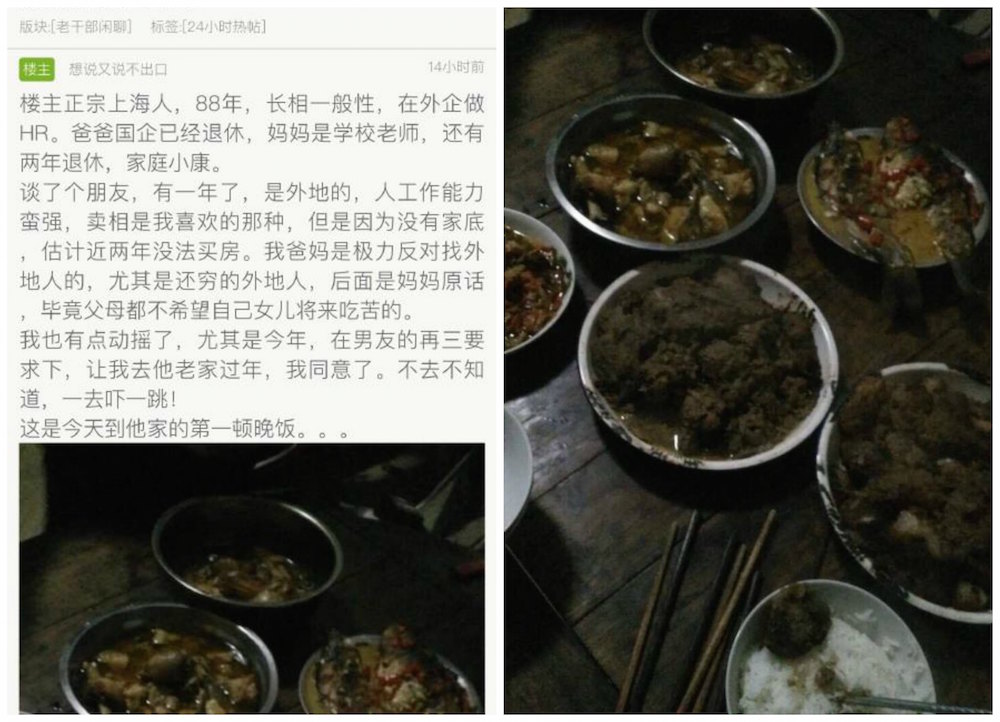
This is actually a story that exploded on Chinese social media back in 2016, and its virality is quite typical of the period surrounding Chinese New Year — it is always a very special time when it comes to the kinds of trends that unfold.
It often feels as though stories simmering in the background suddenly boil over during the holiday season. Digital shifts become more visible, cultural traditions take on new meanings, consumer hypes mushroom across the country, and seemingly insignificant social topics can grow enormous: a road rage incident, a noteworthy TV moment, or that one family’s New Year’s dinner.
What’s perhaps most striking is that the story of that Shanghai woman (who really did break up with her boyfriend after that dinner) could have easily been a trending topic during this year’s Spring Festival, and she would likely face the same backlash today (people found her disrespectful and snobbish). In fact, some stories that went viral during the holiday season years ago still resurface today, as if they exist in a recurring social cycle of their own.
Take the nagging questions from family and nosy neighbors about why the single sons & daughters returning to their hometowns for the New Year are still not married, for example; it’s a topic that somehow comes up every Spring Festival. The pressure caused by these “interrogations” have led some single people to rent a boyfriend or girlfriend to bring home to meet the parents — a story covered by the media for years.
People still “rent a partner” to avoid another year of awkward questions about their (non-existent) love life. What has changed is the price. Ten years ago, one could rent a boyfriend or girlfriend for about 500 yuan (around $75). This week, social media reports suggested that these so-called “life actors” (生活演员) — who rent out their services as a pretend partners — now charge up to 3,000 yuan per day (about $435) (#深圳除夕当天租男友3000元一天#).
All of this unfolds because so much happens around Chinese New Year (春节 Chūnjié) at once. While China is transforming rapidly, some things remain remarkably consistent. The holiday is not just a peak moment for consumer culture and travel, it is also the year’s major moment for the box office and for China’s largest live televised event, the Spring Festival Gala, which reflects what matters not only to commercial sponsors but especially to the Communist Party. At the same time, it is a period of family reunions and homecomings for those who may not have other chances during the year to visit their hometowns.
From living rooms to long train rides, from fear-of-missing-out to social media memes, from pressures and expectations to fun and traditions, this period offers a concentrated snapshot of China’s current momentum, revealing social anxieties, political priorities, and pop culture obsessions all at once.
Let’s dive into some of the other trends that have been especially noteworthy during this year’s Spring Festival.
Quick Scroll
-
- 🧊 China’s short track speed skating, historically one of China’s strongest Olympic teams, has exited the 2026 Milan Olympics with what’s called “the worst results in 28 years.”
- 🥇 Meanwhile, the gold medals for Xu Mengtao (徐梦桃) & Wang Xindi (王心迪) in freestyle ski aerials, Su Yiming (苏翊鸣) in snowboard slopestyle, and Ning Zhongyan (宁忠岩) in 1500m speed skating were widely celebrated online.
- 🇺🇸 The much-discussed Trump–Xi meeting has been confirmed for late March, scheduled from March 31 to April 2. Trump’s planned trip will mark the first U.S. presidential visit to China since his own 2017 visit.
- 🍿 China’s 2026 Spring Festival box office has surpassed the 4 billion yuan (US$550 million) mark. The February 15–23 holiday window — one of the most important periods for the Chinese film market — saw racing comedy Pegasus 3 (飞驰人生3) top the charts this year.
- 🎬 One article called it the “hell yeah!” movie of the year. Blades of the Guardians (镖人) by Xu Xianzhe (许先哲) is the hardcore martial arts film that outperformed its opening-day numbers and became an audience favorite.
- 🏮 Beijing’s Yuanmingyuan (Old Summer Palace) has become a viral hit for its 4.6 km illuminated route with thousands of lanterns lighting up at 17:30 each evening.
- 🌕 Less popular: yellow lanterns used for New Year decorations in various cities triggered criticism online for looking “unfestive” or even representing “mourning colors,” leading local authorities to order a swap back to traditional red after the backlash.
- 🕯️ Two explosions in Jiangsu and Hubei brought the total number of deaths from fireworks-related incidents for the first week of the 2026 Spring Festival holiday to at least 20.
What Really Stood Out This Week
The Highlights of the 2026 Spring Festival Gala
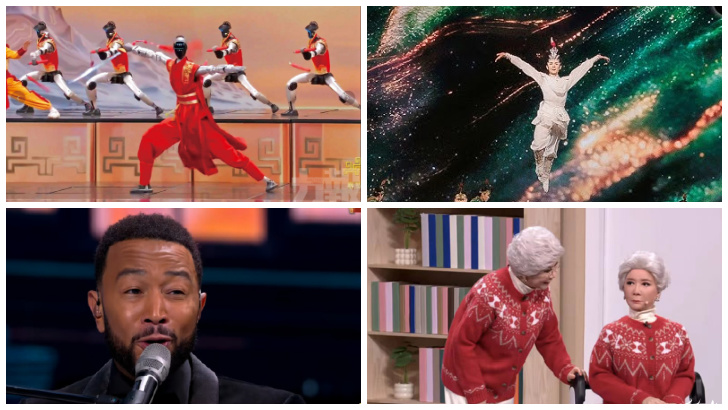
Earlier this week, the 44th edition of the China Media Group Spring Festival Gala took place (see our liveblog of the entire show here). At its peak, an estimated 400 million people were simultaneously watching the 4.5-hour show, which, as usual, contained a variety of performances ranging from dance and song to comedy and acrobatics.
So, what was different this year?
In case you’re not an avid watcher of the Gala—which I fully get—let’s get one thing straight first: the show overall is highly predictable and follows comparable year-on-year patterns. There is always a performance featuring different ethnicities; besides the mainland entertainment elite, there must be a variety of older and younger singers from Hong Kong, Taiwan, and Macao; there is a military song; there is a traditional opera element; and there is always a comic skit that everyone finds cringeworthy. In these respects, 2026 was right on track with previous years.
However, there were definitely some noteworthy aspects to this year’s Gala. Some are significant because they mark a subtle, broader shift, while others are more obvious.
✦ First, the theme. The show was titled “Galloping Steeds, Unstoppable Force” (骐骥驰骋 势不可挡). Every year has a theme, often nodding to the zodiac sign and usually focusing on messaging such as “a thriving nation,” “reunion,” or, as in 2020, “Together Realizing the Moderately Prosperous Dream.” This year’s theme felt less modest, aligning with a larger narrative about China’s role on the world stage today as an “unstoppable force.”
✦ The role of the director. The influence of the show’s director seems to have been somewhat overlooked in coverage of the Gala. Yu Lei (于蕾, b. 1979) is not only the first female director in the show’s 44-year history but also the first to lead the production for four consecutive years. As chief director, Yu Lei has established a very identifiable aesthetic framework, perfecting a style of show that merges Chinese tradition with high technology. Outstanding examples of this include the beautiful and innovative 2024 “Koi Carp” (锦鲤) dance, and the 2022 “painting” dance “Only This Green” (只此青绿) inspired by a famous Chinese handscroll.
This year featured even more segments blending traditional inspiration with state-of-the-art technology, from the creative “Celebrating the Flower Goddess” (贺花神, watch here) to the Xinjiang Dance Troupe’s “Silk Road Ancient Rhymes” (丝路古韵, watch) and dancer Zhang Han’s beautiful performance of “Chasing Shadows” (追影) (link).
These performances align with the broader Guochao (国潮) trend—literally “national trend”—and the promotion of traditional culture seen over the past years. Under Yu Lei’s guidance, this cultural pride is fused with technological innovation to create a new kind of Chinese aesthetic that is indeed “unstoppable.” If we don’t recognize this as the trend of today, it will certainly be the new normal of tomorrow.
✦ Then the global outreach. This is the first time I’ve seen the show so deliberately cater to foreign audiences. A promo added to the YouTube livestream explicitly stated: “This is where it gets cool, this is where the future meets timeless Eastern aesthetics. This is where we feel warmth, where everyone belongs. When the CMG Spring Festival Gala begins, you are coming home.”

This past year was a turning point where China became “cool” among younger Western audiences (see my piece on Becoming Chinese) — this soft-power effect is being fully embraced by Chinese state media, and the Gala is part of this. Beijing is increasingly positioning the event as a global celebration rather than just a national one, which explains the inclusion of more foreign performers—from Lionel Richie and John Legend to Hélène Rollès, Westlife, the Hungarian National Folk Ensemble, Spanish dancer Jesús Carmona, and the Austrian acrobatic troupe Jonglissimo.
✦ Lastly, AI and robotics. Perhaps the most obvious shift was the heavy use of AI and robotics, which became a major talking point on X and in foreign media. While the Gala has already incorporated robots for two decades (!), this year marked the first time they participated across almost every genre, from dance and comedy sketches to martial arts and short films.
The abundance of robots was driven by a historical first: four domestic humanoid robot companies—Unitree Robotics (宇树科技), Noetix Robotics (松延动力), MagicLab (魔法原子), and Galbot (银河通用)—all appeared as official corporate partners. We also saw the world’s first martial arts performance by a fully autonomous humanoid robot cluster.
Although the robots were a highlight, they were also a point of online critique for being a bit “overdone.” Judging by social media comments, many viewers still preferred the classic, iconic performers—like pop superstar Faye Wong (王菲) or the legendary comedian Cai Ming (蔡明), who has performed at the Gala for decades.
So despite all the new technological developments and the clear look into the future, audiences still seemed to love the performances that leaned toward the past, highlighting a bit of a ‘battle’ between innovation and nostalgia.
The Travel Trends to Know
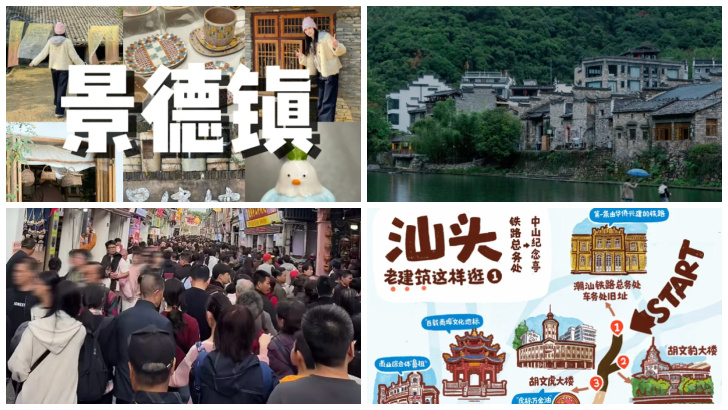
There are two moments in the year that are the major travel periods for China, reflecting the current trends of the tourism industry: the National Day holiday and the Spring Festival holiday. These periods usually reveal trends that were either simmering and have now expanded, or upcoming trends surfacing for the first time.
Some things don’t really change, such as cities like Beijing, Chengdu, Chongqing, and Shanghai being among the most popular domestic destinations. (As for international locations, Seoul, Bangkok, Singapore, Kuala Lumpur, Ho Chi Minh City, and Bali top those lists).
These are some noticeable trends for this moment:
✦ A big love for small cities has been noticeable among China’s younger travelers recently. This is a different trend from what used to be the post-Covid “special forces travel” (特种兵), which was the kind of tourism where travelers would do as much as possible within a short time and limited budget, almost like crossing destinations off a bingo card.
Now, travelers are turning more to “hidden gems” or what have been called “dark horse destinations” in Chinese media (黑马目的地). The goal is not just to cross them off a list, but to slow down and experience local culture. Folk culture, markets, and arts & crafts have seen a rise in popularity.
Some examples are Jieyang and Chaozhou which, together with Shantou, lie in eastern Guangdong. Some of these places are seeing the fastest tourism growth rates in the entire country, thanks to strong local folk customs and food culture, with people preferring homestays or Airbnb-style holiday rentals for an authentic, local experience.
Cities like Jingdezhen, Kaifeng, Quanzhou, and Zigong—all previously not particularly known as top destinations—are also new “breakout” cities this season.
Another example is Chongzuo in Guangxi, located along the China–Vietnam border, with its Zhuang ethnic minority culture, karst mountains, rivers, and rural scenery.
All of this represents a big shift in China’s domestic tourism industry, offering new experiences to Chinese travelers while also boosting the local economies of these places.
While these new destinations all sound lovely and peaceful, posts on Xiaohongshu show that the viral nature of these “hidden gems” have also caused them to be exceptionally busy during this season.
✦ Reverse Spring Festival (反向过年) has been a trend for several years, but it has been especially prominent this year. It is the trend where, instead of children traveling from big cities to visit parents in their hometowns, the parents are coming to celebrate the New Year with their kids in medium-sized or larger cities. This has also led to the rising popularity of Guangzhou as a Spring Festival destination.
What you also see are families all traveling together to a third location outside of both their hometowns and work-based cities.
✦ “Going the opposite way” is also a popular travel trend that has particularly emerged this year, with people from China’s south traveling to the north and people from the north traveling to the south—one group seeking an experience of ice and snow, while the other wants warmth and sunshine.
The locations that stand out for this are Harbin in the north, with its Harbin Ice and Snow World (哈尔滨冰雪大世界) holding a spot in the national top-ten scenic spots (although, unfortunately, Harbin has seen rising temperatures this winter, leading to melting snowmen).
The tourists from the south who come to visit Habrin are nicknamed “Little Southern Potatoes” (南方小土豆) for being all bundled up in brand-new puffy coats.
In the south, Yunnan’s Kunming has seen a surge in popularity, along with Lijiang, Xishuangbanna, and Dali, which all saw a drastic increase in bookings.
Especially Noteworthy Online Discussions
Door-to-door Pet Sitting as Emerging Business Model
✦ During China’s 2026 Spring Festival travel rush, a specific phenomenon gained traction on Chinese social media in this pet-loving era: “door-to-door pet-sitting” (上门喂宠). This emerged as one of the holiday’s most surprisingly profitable side gigs after Shanghai pet sitter Huan Cong (桓聪) told Jiupai News (九派新闻) that his five-person team would complete some 2,000 jobs within the twenty-day holiday period, with an expected revenue of 160,000 yuan ($22,120).
Huan is not the only one profiting from this lucrative business—pet sitters across the country are cashing in during the Spring Festival. This trending story reflects the massive scale of China’s pet economy, an industry growing year-on-year as those born in the post-90s and post-00s now comprise the majority of pet owners.
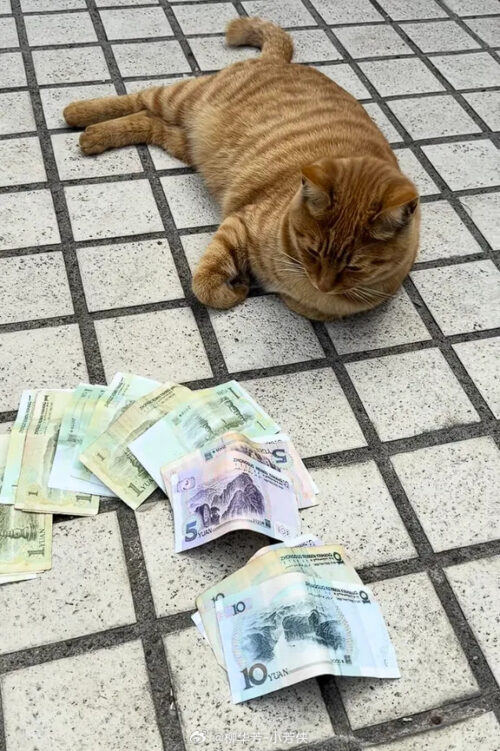
At the same time, digging a bit deeper reveals the reality behind the trend. While relatively lucrative, the work is tiresome; Huan sometimes visits 55 households in a single day to ensure he and his team can feed all their customers’ dogs and cats. It might be good business, but it’s certainly not easy.
An Unusually Bad Karma Story
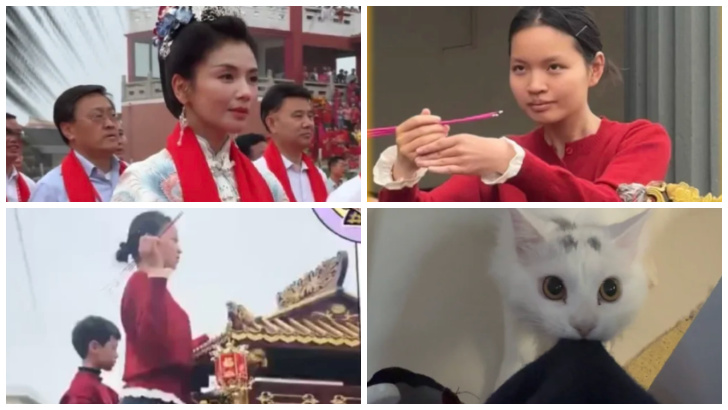
✦ One story that has been especially noteworthy this week involves a religious ceremony dedicated to honoring the Chinese sea goddess Mazu (妈祖). A protector of fishermen and sailors, Mazu has millions of worshippers in eastern and southeastern parts of the Chinese mainland and Taiwan; regions where people have traditionally relied on the ocean for their livelihoods.
On February 18, the second day of the Chinese New Year, something unusual happened during the annual Mazu procession in Shishi Village (拾石村) in Zhanjiang, Guangdong province.
A unique local tradition involves the divine selection of a Mazu “messenger,” a child believed to serve as a vessel for the goddess’s spirit during the procession. This is decided through the ritual of shèngbēi (圣杯) throws or “divination cup” tosses: children throw crescent-shaped wooden blocks, and based on how they land, the child believed to have the closest connection to Mazu is selected to take the place of the statue during the parade.
For the past eight years, the same girl, now 14 years old, had reportedly been selected as the spirit medium through this sacred ritual.
However, this year, a wealthy businessman surnamed Xu (许)—the financial sponsor of the procession—suddenly replaced the chosen girl with his own son. That is where things started going wrong.
According to local reports, the boy seemed unfamiliar with ceremony protocols. He misaligned offerings on the ritual table, stood in the wrong position at the start of the procession, and accidentally stepped on a ritual spot reserved for divine generals, which living participants are forbidden from entering.
Most importantly, the shèngbēi ritual, in which the boy had to seek Mazu’s approval through the blocks, kept giving the same negative result (nùbēi 怒杯) for no less than eight consecutive times. There are three possible outcomes, and the statistical chance of throwing the same negative result eight times in a row was seen as a sign of extreme divine disapproval. People were eventually too afraid to let the boy try a ninth time.
As a result, with no “green light” from Mazu, the bearers of the sedan chair needed for the procession refused to lift it, and the entire ritual halted.
Seeing no other choice, organizers got the girl to come back. Upon her first shèngbēi throw, a valid result was immediately obtained and the sedan chair was reportedly lifted without any difficulties. The procession then proceeded with both children riding the sedan chair together (which also prompted criticism from locals for being a further deviation from tradition). After the procession concluded, the girl was visibly distressed.

As this story has gone viral, many see it as a sign that wealth cannot buy a way into a sacred ritual—the gods simply do not agree, and money cannot buy everything.
Consequently, Mazu and the shèngbēi ritual have unexpectedly become hot topics.
The actress Liu Tao (刘涛), who once played Mazu in a popular television drama, has resurfaced as a “lucky meme” during this holiday. Liu Tao’s relationship to Mazu goes beyond just her role in the series. During the filming, she allegedly also went to the temple and performed the traditional divination ritual and got three positive throws in a row, which was seen as a positive omen for her taking the role.
She’s become a celebrity ambassador for Mazu culture, something that is now highlighted by netizens as the Shishi Village story trends. People have begun using Liu Tao’s image as Mazu as an auspicious phone wallpaper.
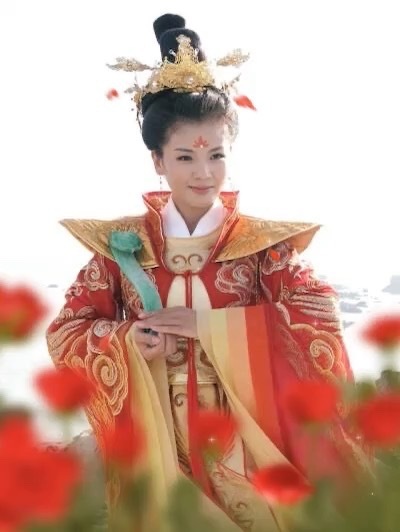
The irony, of course, is that the Xu family spent a fortune trying to force Mazu’s blessing, while millions of ordinary netizens are now getting their “lucky fix” for free through their Liu Tao meme. How very “Spring Festival” is that? 🏮
—That’s a wrap. Many thanks to Ruixin Zhang and Miranda Barnes for their input on this newsletter, and for managing to watch the full 4.5 hours of the Spring Festival Gala together with me!
I’m taking a few days off now for some travel, but expect to be back with a new trend newsletter for you next weekend.
See you next edition.
Best,
Manya
Eye on Digital China, by Manya Koetse, is co-published on Substack and What’s on Weibo. Both feature the same new content — so you can read and subscribe wherever you prefer. Substack offers community features, while What’s on Weibo provides full archive access. If you’re already subscribed and want to switch platforms, just get in touch for help. If you no longer wish to receive these newsletters, or are receiving duplicate editions, you can unsubscribe at any time.
Eye on Digital China is a reader-supported publication by
Manya Koetse (@manyapan) and powered by What’s on Weibo.
It offers independent analysis of China’s online culture, media, and social trends.
To receive the newsletter and support this work, consider
becoming a paid subscriber.


Quick Eye: XChat, Orbán, and a Very Questionable Tripe-Strawberry Hotpot

Cancel-Proof: The Rise of China’s AI Actors

Chinese Postdoc Death Raises Questions as Key Details Remain Missing

“Auntie Mei” Captured After 20 Years, China’s Train-Stain Scandal, and Zhang Xuefeng’s Final Lesson

Raising Lobsters, 6G Coming, and China’s DIY Deity Trend

Inside Chunwan 2026: China’s Spring Festival Gala

Inside the Great Chinese Debate Over the Iran War

Chinamaxxing and the “Kill Line”: Why Two Viral Trends Took Off in the US and China

Spring Festival Trend Watch: Gala Highlights, Small-City Travel, and the Mazu Ritual Controversy

From a Hospital in Crisis to Chaotic Pig Feasts
-

 Chapter Dive9 months ago
Hidden Cameras and Taboo Topics: The Many Layers of the “Nanjing Sister Hong” Scandal
-
 China Insight8 months ago
“Jiangyou Bullying Incident”: From Online Outrage to Offline Protest
-

 Chapter Dive12 months ago
Understanding the Dr. Xiao Medical Scandal
-

 China Arts & Entertainment7 months ago
The Wong Kar-wai Scandal Explained: The Dark Side of ‘Blossoms Shanghai’