
China Food & Drinks
When White People Discovered China’s ‘White People Food’ Trend
A month after the ‘white people food’ trend first became popular, Chinese netizens reflect on how the trend gained international attention.

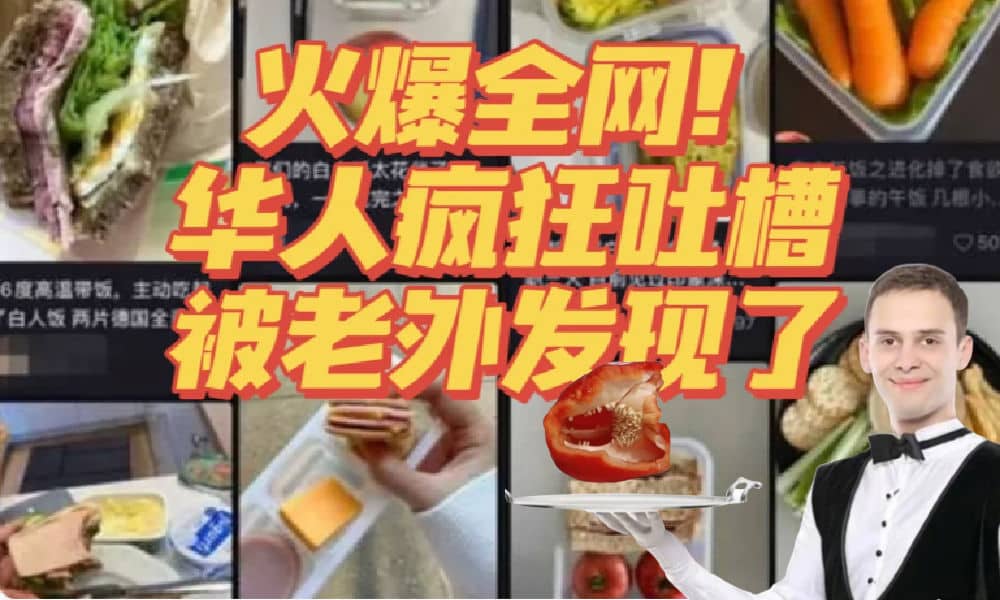
Earlier this month, the term ‘white people food’ (白人饭 báirénfàn) gained significant attention in English-language media after it became a trend on the Chinese social media platform Xiaohongshu.
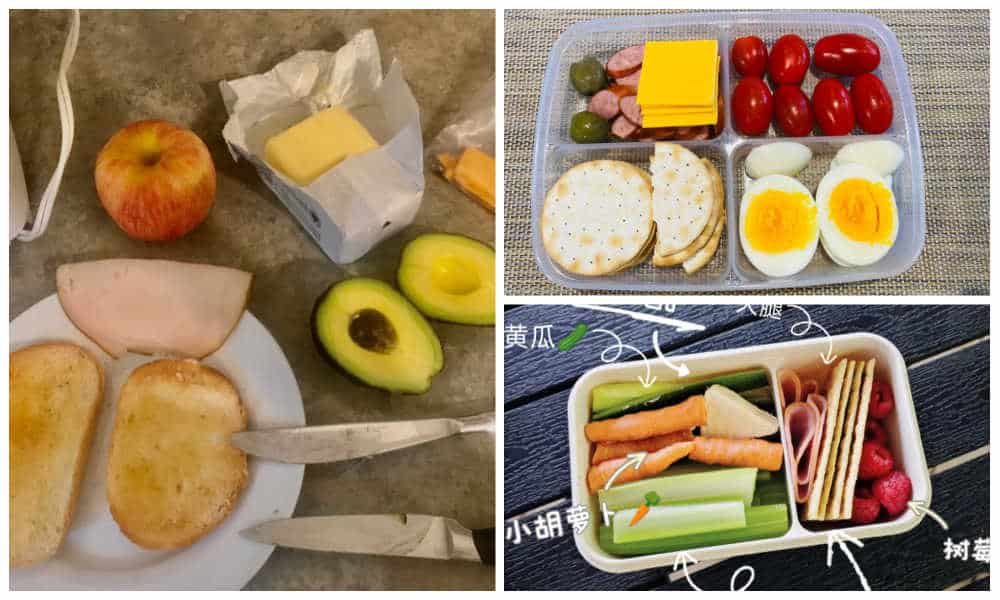
“White people food” mainly refers to simple meals that are easy to prepare, prioritizing convenience over taste. Examples include crackers and cheese, celery with dip, boiled egg with cucumber, ham sandwiches, or pasta with tomatoes.
Mocking unappetizing, cold, and barely seasoned ‘white people food’ became popular among overseas Chinese posting photos on Xiaohongshu and others criticizing the bland lunchboxes brought to work by white colleagues.
Although the ‘white people food’ term itself is not new, it became particularly popular in late May of 2023 when a Chinese netizen posted a video of a white woman in Switzerland preparing her lunch on a train with just lettuce and ham.
The video symbolized the significant cultural differences between China and many Western countries, particularly in terms of food and lunch habits. A typical office lunch box consisting of bread, cheese, fruit, and a granola bar is not considered a ‘real’ meal by many Chinese — they argue it lacks warmth, spices, ginger, garlic, rice, noodles, veggies, etc.
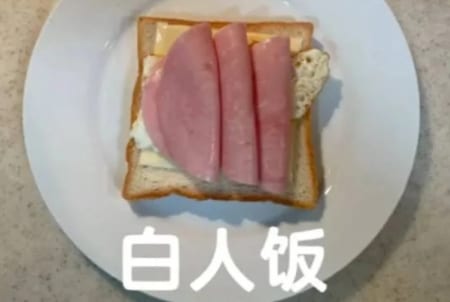
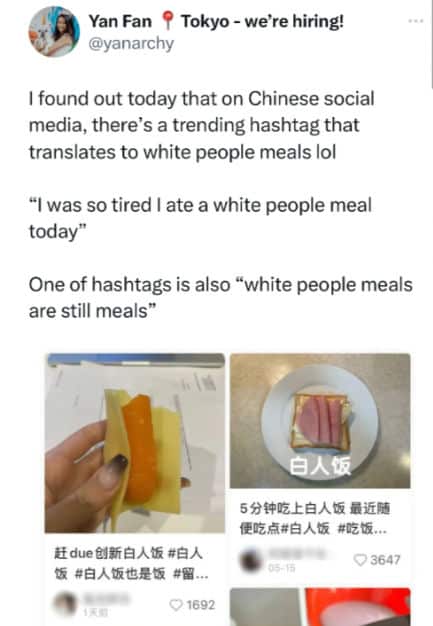
As a response to the trend, an online challenge emerged where people attempted to recreate their own version of a white people lunch. This mini-trend caught the attention of English-language media outlets, including Buzzfeed, after a viral tweet by Ya Fan (@yanarchy) went viral.
Not all Chinese social media users criticize the quick and uninspiring lunch style commonly seen in the West. What started as a trend to ridicule the food eventually took on a positive note, with many young Chinese professionals praising the simplicity and convenience of these meals.
For busy office workers, preparing a homemade lunch and sitting down for a larger, warm meal can be time-consuming. Opting for a sandwich or salad is quick, efficient, and leaves more time and energy after lunch or at the end of a workday.
One Xiaohongshu user wrote about her salad with mozzarella, nuts, berries, and ham, stating, “After work, this can be prepared in just three minutes, no need to wait, it can be finished extremely quickly.”
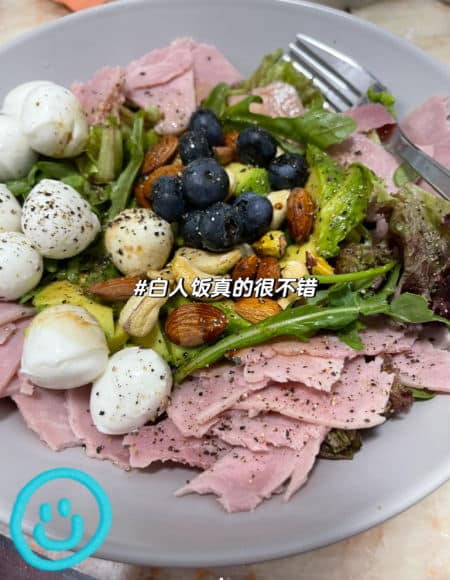
Hashtag “White people food is really not bad at all.”
In this sense, ‘white people food’ also aligns with the concept of a ‘worker’s lunch’ (打工人午餐).
The phrase and hashtag “White people food is also food” (#白人饭也是饭) emerged in response to this trend. It carries a pun that references the Chinese translation of “Black Lives Matter” (“Black people’s lives are also lives 黑人的命也是命”) and the controversial phrase “White Lives Matter,” which gained attention in the context of the BLM movement and further garnered attention in China and beyond when Kanye West wore a “White Lives Matter” t-shirt (translated as “White people’s lives are also lives 白人的命也是命”).
The notion that “White people food is also food” is not solely sarcastic, as some social media users interpret it in a different light. They express a preference for incorporating these simple meals into their daily diet, not just due to a busy work schedule, but also because it aligns with a lifestyle that involves consuming smaller meals, exercising, and trying out new things.
“They discovered the white people food trend”
Now that the trend has extended beyond Xiaohongshu to foreign platforms, this very aspect has sparked further online discussions.
Chinese media outlet Phoenix News has also gathered opinions and comments from foreign users on social media regarding this trend, with the majority of them finding the trend amusing and humorous. They titled their post “The White People Food Popular Among Chinese Young People Has Been Discovered by White People” (“中国年轻人流行“白人饭”,被白人发现了”), hashtagged “White people food has been discovered by white people” (#白人饭被白人发现了#).
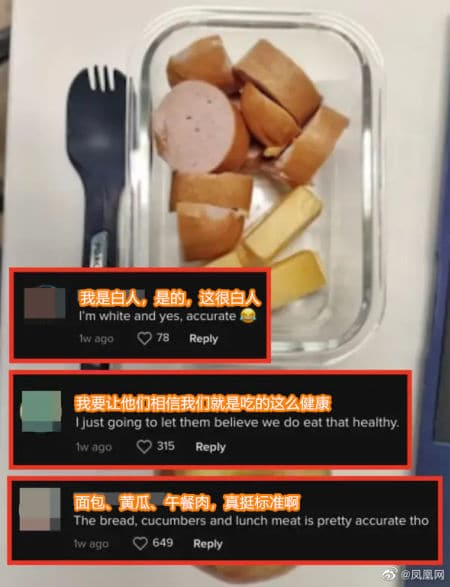
Although many Chinese netizens find it funny that the Chinese trend of eating style has gained popularity overseas, there are still those who question whether Western people truly enjoy this way of eating.
“It’s really how it is,” one Xiaohongshu user wrote. “I remember the first time my ‘homestay mom’ prepared lunch for me [as an exchange student]. When she gave me a ham sandwich, I thought she was teasing me, but later I found out that the entire family ate like this. It’s important to note that they were actually a Black family.”
Meanwhile, on TikTok (the foreign version), another trend called ‘Girl Dinner’ is gaining momentum. This trend refers to simple dinner plates featuring ingredients like cheese, cucumber, ham, pickles, olives, and other items. Although they are not labeled as such, these plates align with what is called ‘White People Food’ on Chinese social media. Many TikTok users praise these meals for their simplicity and view them as a form of luxury and indulgence.
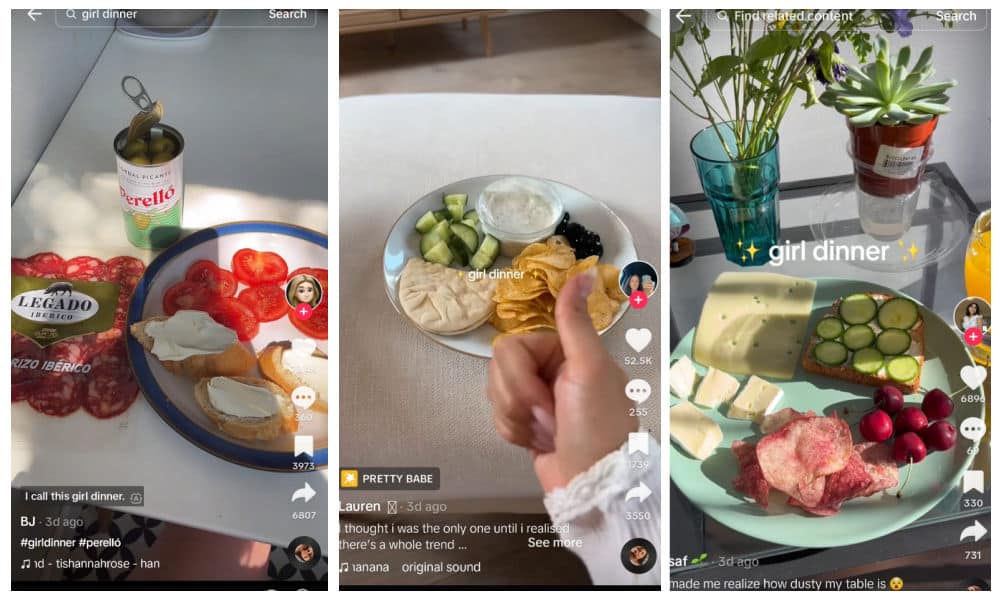
“Girl Dinner” on Tiktok is just like “White People Food” on Xiaohongshu.
For many Chinese individuals, the latest ‘White People Food’ trend may be a convenient way to eat, but they do not perceive it as a form of indulgence. “White people food is truly magical. Just four pieces of sliced bread with some veggies, fruits, and meat sauce, and I already feel full after eating two. I have white people food for lunch every day to save time, but it doesn’t bring me any joy. It’s merely a survival-oriented way of eating.”
By Manya Koetse
Get the story behind the hashtag. Subscribe to What’s on Weibo here to receive our newsletter and get access to our latest articles:
Spotted a mistake or want to add something? Please let us know in comments below or email us. First-time commenters, please be patient – we will have to manually approve your comment before it appears.
©2023 Whatsonweibo. All rights reserved. Do not reproduce our content without permission – you can contact us at info@whatsonweibo.com.

China Animals
China Faces Unprecedented Donkey Shortage Crisis
“We have plenty of cattle and horses in China now — just not enough donkeys” (“目前我国牛马都不缺,就缺驴”).
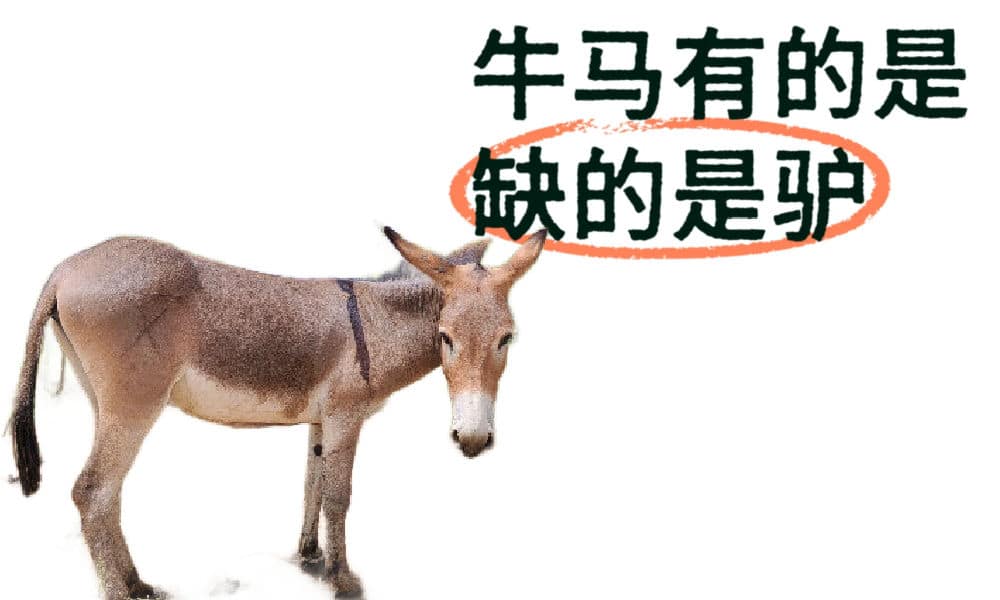
China is facing a serious donkey shortage. China’s donkey population is far below market demand, and the prices of donkey-related products continue to rise.
Recently, this issue went trending on Weibo under hashtags such as “China Currently Faces a Donkey Crisis” (#我国正面临缺驴危机#).
The Donkey Branch of China’s Livestock Association (中国畜牧业协会驴业分会) addressed this issue in Chinese media earlier last week, telling China News Weekly (中国新闻周刊): “We have plenty of cattle and horses in China now — just not enough donkeys” (“目前我国牛马都不缺,就缺驴”).
China’s donkey population has plummeted by nearly 90% over the past decades, from 11.2 million in 1990 to just 1.46 million in 2023.
The massive drop is related to the modernization of China’s agricultural industry, in which the traditional role of donkeys as farming helpers — “tractors” — has diminished. As agricultural machines took over, donkeys lost their role in Chinese villages and were “laid off.”
Donkeys also reproduce slowly, and breeding them is less profitable than pigs or sheep, partly due to their small body size.
Since 2008, Africa has surpassed Asia as the world’s largest donkey-producing region. Over the years, China has increasingly relied on imports to meet its demand for donkey products, with only about 20–30% of the donkey meat on the market coming from domestic sources.
China’s demand for donkeys mostly consists of meat and hides. As for the meat — donkey meat is both popular and culturally relevant in China, especially in northern provinces, where you’ll find many donkey meat dishes, from burgers to soups to donkey meat hotpot (驴肉火锅).
However, the main driver of donkey demand is the need for hides used to produce Ejiao (阿胶) — a traditional Chinese medicine made by stewing and concentrating donkey skin. Demand for Ejiao has surged in recent years, fueling a booming industry.
China’s dwindling donkey population has contributed to widespread overhunting and illegal killings across Africa. In response, the African Union imposed a 15-year ban on donkey skin exports in February 2023 to protect the continent’s remaining donkey population.
As a result of China’s ongoing “donkey crisis,” you’ll see increased prices for donkey hides and Ejiao products, and oh, those “donkey meat burgers” you order in China might actually be horse meat nowadays. Many vendors have switched — some secretly so (although that is officially illegal).
Efforts are underway to reverse the trend, including breeding incentives in Gansu and large-scale farms in Inner Mongolia and Xinjiang.
China is also cooperating with Pakistan, one of the world’s top donkey-producing nations, and will invest $37 million in donkey breeding.
However, experts say the shortage is unlikely to be resolved in the short term.
The quote that was featured by China News Weekly — “We have cows and horses, but no donkeys” (“牛马有的是,就缺驴”) — has sparked viral discussion online, not just because of the actual crisis but also due to some wordplay in Chinese, with “cows and horses” (“牛马”) often referring to hardworking, obedient workers, while “donkey” (“驴”) is used to describe more stubborn and less willing-to-comply individuals.

Not only is this quote making the shortage a metaphor for modern workplace dynamics in China, it also reflects on the state media editor who dared to feature this as the main header for the article. One Weibo user wrote: “It’s easy to be a cow or a horse. But being a donkey takes courage.”
By Manya Koetse
(follow on X, LinkedIn, or Instagram)
Spotted a mistake or want to add something? Please let us know in comments below or email us. First-time commenters, please be patient – we will have to manually approve your comment before it appears.
©2025 Whatsonweibo. All rights reserved. Do not reproduce our content without permission – you can contact us at info@whatsonweibo.com.
China Food & Drinks
China’s Prefab Storm Explained: Luo Yonghao vs. Xibei & the Great Yùzhìcài Debate
A big debate over yùzhìcài — pre-made food — has boiled over on Chinese social media after a Xibei food review by Luo Yonghao pushed the issue into the spotlight.
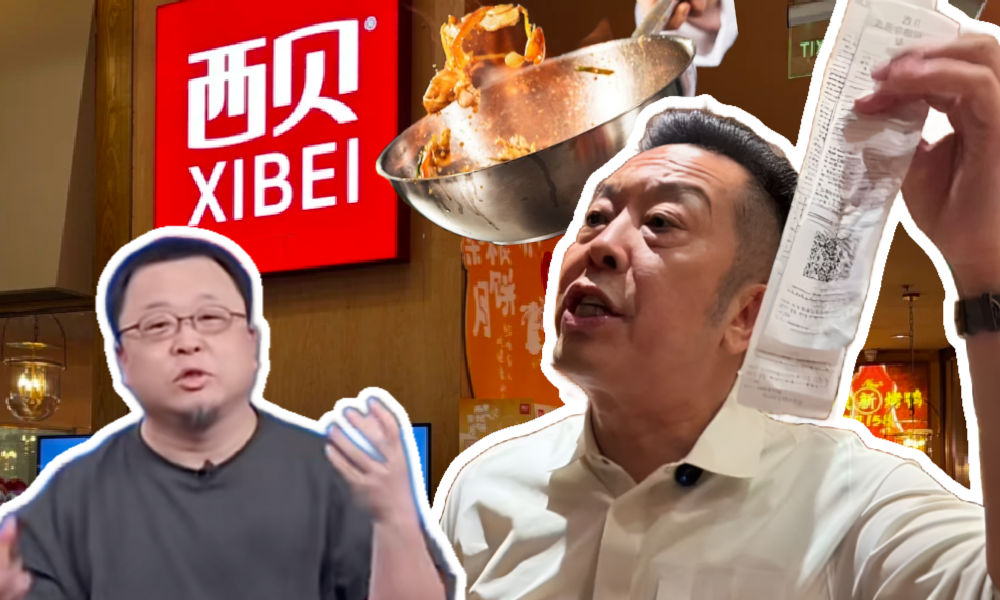
A major discussion that first broke out on Chinese social media two years ago is being picked up again this month – and it’s completely blown up.
It is all about “yùzhìcài” (预制菜), ‘pre-fabricated meals’ or ‘pre-made food.’
From School Cafeterias to Restaurants
Back in 2023, there was widespread discussion over prefab meals when the new school season started and parents discovered that their children’s school cafeterias had transitioned from freshly prepared meals to ready-made ones.
Although the shift to “yùzhìcài” is part of a broader trend in China that has gained more attention over recent years, there has also been significant resistance to this change due to concerns over the meals lacking nutrition, containing too many additives, and not being safe enough. These issues become especially relevant when it’s about the meals being served to kids, and many people called for more legislation on the issue.
Now, in 2025, the resurfaced prefab food discussion is more focused on the restaurant industry than campus cafeteria.
This ‘prefab storm’ started when well-known entrepreneur and influencer Luo Yonghao (罗永浩) went out for dinner on September 10 with some friends at Xibei (西贝), a major Chinese restaurant chain specializing in northwestern Chinese cuisine.
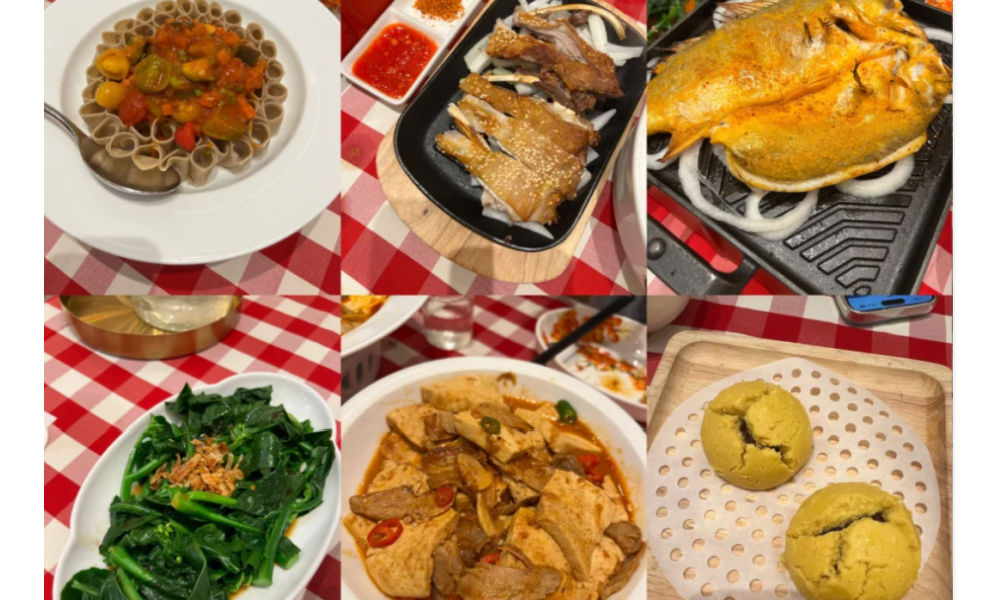
Example of Xibei dishes (not by Luo, but by a Xiaohongshu user).
On his Weibo account (@罗永浩的十字路口), he wrote about the disappointing experience:

His post immediately set off a nationwide storm of discussions.
What Is Yùzhìcài?
A large party of the online discussion was about what exactly counts as yùzhìcài.
After all, the entire process of making tofu, for example, from soybean to final product, is a form of pre-processing that’s been part of Chinese cuisine for centuries.
According to China’s State Administration for Market Regulation, the term “yùzhìcài” applies to food that’s been prepped in advance using large-scale methods such as marinating, stir-frying, steaming, and then packaged for transport and sale to consumers or use in restaurant service. They’re not ready to eat as-is and must be heated or cooked before serving.
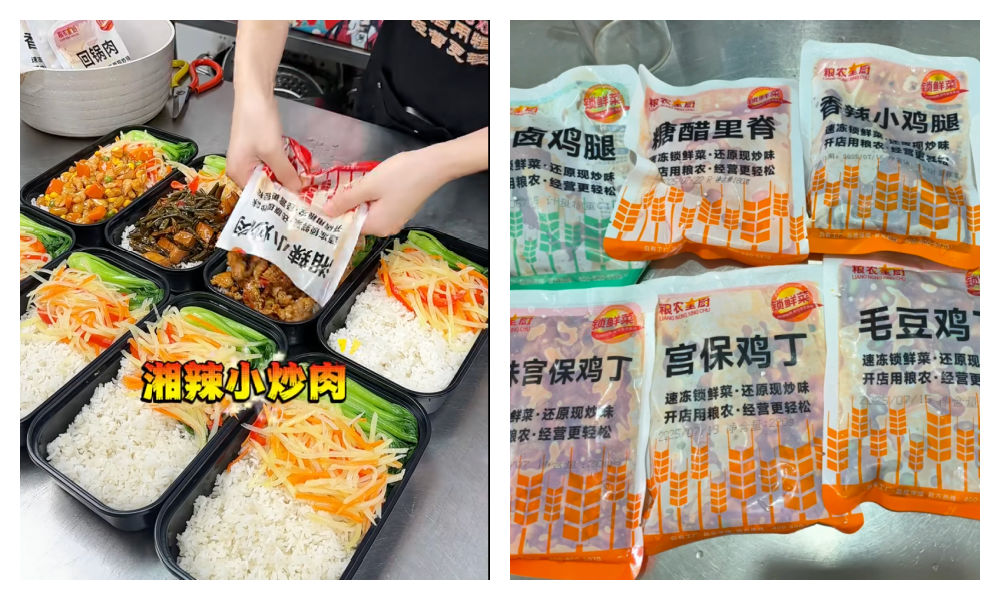
Examples of yuzhicai, pre-made food.
Still, many netizens wonder: does using a central kitchen qualify as yùzhìcài? Do frozen ingredients or factory-processed foods fall into the same category?
Many people aren’t necessarily opposed to pre-made dishes — some even associate them with better hygiene, especially when produced in regulated facilities, compared to meals prepared in smaller restaurant kitchens. At the same time, however, many object to pre-made food, assuming it is less healthy, or even unhealthy.
The “Pre-made War”
Luo’s criticism also wasn’t mainly about pre-made food in general, but about the high price and lack of disclosure about what’s being served.
Like one comment said: “I don’t mind pre-made food, but I do mind when the price doesn’t match.”
What made Luo’s comments particularly explosive was his choice of words — calling it “truly disgusting.”
When Chinese media contacted Xibei for comment, a spokesperson denied their food was pre-made and stressed that stir-fried dishes are cooked on-site, noodles are hand-kneaded, and beef marrow bones are freshly boiled each morning (#西贝回应被吐槽是预制菜#).
In response, Luo jokingly wrote: “…and their plastic bags are freshly cut, the microwave freshly opened, their prepared scripts freshly read…”
Xibei chairman Jia Guolong (贾国龙) clearly was not amused.
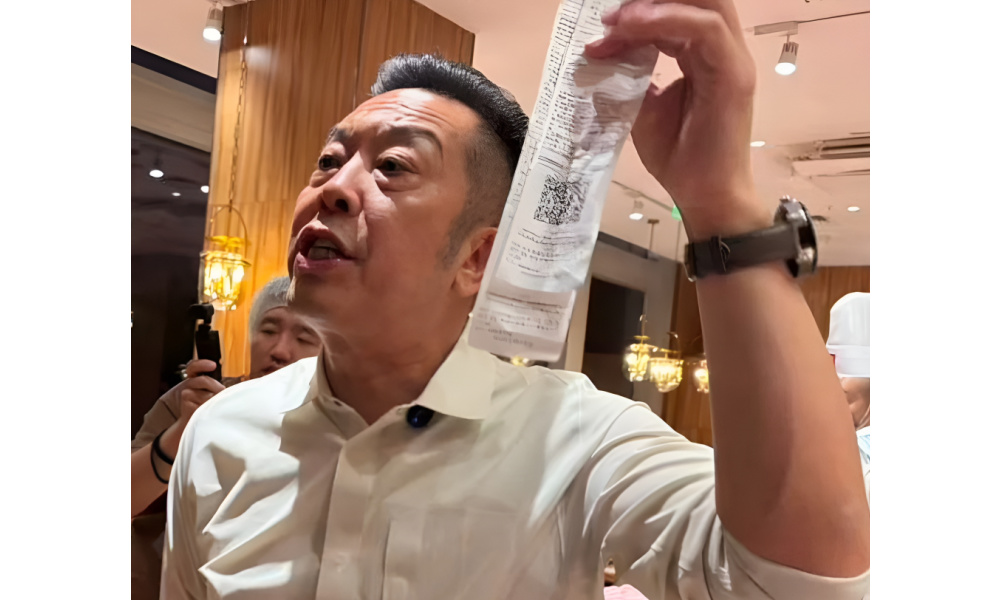
Xibei’s founder, Jia Guolong, was emotional about the controversy, which deeply affected the Xibei brand.
On September 11, he made a statement, saying:
Jia not only announced plans to sue Luo Yonghao, he even promised to launch a special “Luo Yonghao Menu” (罗永浩菜单) in Xibei restaurants.
Again, Luo responded:
But he didn’t leave it at that — the “pre-made war” was on. Luo even offered a RMB 100,000 ($14,000) reward for proof that Xibei uses pre-made food (an offer he later admitted was “impulsive”).
He also livestreamed, highlighting how Xibei’s children’s meals used frozen broccoli with a shelf life of up to two years, questioning whether such ingredients can be considered fresh, and criticizing the practice of selling “pre-made” vegetables at fresh food prices.

Luo’s livestream.
He further showed images of packaged sea bass used in Xibei kitchens, noting that the ingredients list included food additives sodium tripolyphosphate and sodium hexametaphosphate, and that the fish had a shelf life of up to 18 months.
Xibei Apologizes
Xibei, meanwhile, experienced what they called the largest external crisis since the founding of their company, with daily revenues dropping dramatically.
Trying to win back consumer trust, Xibei announced that all stores nationwide would open their kitchens to customer visits, actually launched their “Luo Yonghao Menu,” and made a promise: “If it doesn’t taste good, you don’t pay.”
But so far, Xibei hasn’t been able to fully win back the public’s favor. After all, it turns out that Xibei does use a central kitchen where food is prepared (meat is cut, vegetables washed), but because Chinese regulations do not count central kitchens making semi-finished or finished dishes for their own restaurants as yùzhìcài, many feel Jia Guolong is making use of a loophole.
Most people don’t care about the legal definition of yùzhìcài. What they care about is that the food is free of additives, fairly priced, tasty, and above all — fresh. Some argue that central kitchens and factories that make prefab food follow almost identical processes in essence.
In hopes of calming the PR crisis, Xibei also issued a public apology on September 15 in which they expressed regret for not meeting customer expectations and announced some changes to their company, including ensuring that more meals — including children’s meals — would be fully made in-store.
The Xibei Controversy: Consequences & Takeaways
The heated confrontation between Luo and Xibei has far-reaching consequences.
▪️ Legal Consequences
One of those consequences is a legal one. Although already underway, the public attention on prefab food might have quickened the process of regulation.
On September 13, the National Health Commission announced a draft law of the National Food Safety Standard for Pre-Made Dishes (预制菜食品安全国家标准). Once finalized, China will have a unified definition of “prefab food,” and for the first time, restaurants will be required to disclose whether and how they use it.
Luo Yonghao applauded the move, and while cheering for the upcoming regulations, he also said that the Xibei matter could be put to rest for now — after all, he suggested that legal clarity was one of his main goals.
▪️ Industry-Wide Impact
Seeing the dramatic impact this controversy has had on Xibei, other Chinese restaurant brands have begun to anticipate the yùzhìcài issue.

The Green Tea Restaurant quietly removed its signs saying all of its food is freshly made.
The Chinese dining chain Green Tea Restaurant (绿茶餐厅), for example, apparently wanted to avoid a PR crisis of its own and quietly removed its storefront sign that read: “No pre-made food, all dishes freshly made.” On their delivery packaging, they also blacked out the “no pre-made food” sentence, according to some media.

Livestreaming from the kitchen as a way to build consumer trust.
The controversy is also being used to the advantage of some restaurants, which have now begun live broadcasting their kitchens to show dishes being prepared in real time (后厨现炒, 后厨直播) — something that many Chinese restaurants, like Haidilao (海底捞), already did previously, and which is now being promoted as another way to build consumer trust.
▪️ A Win for Consumers
For consumers, the controversy has brought much more awareness about food preparation processes, with more people demanding transparency about the food they are served.
“Prefab Food Transparency” (预制菜透明化) has become a buzzword of the week, along with “Freshly Cooked, Freshly Stir-Fried” (现制现炒) as a way to win over diners.
Notably, there is one Chinese restaurant chain that is not being scrutinized this week.
Saizeriya (萨莉亚), a popular Japanese chain selling “Italian” food, is known as the “king of pre-made food.”
The reason Saizeriya has avoided public backlash despite being known for its yùzhìcài is because it is very affordable, and it has never pretended to be a “freshly made” restaurant — what you see is what you get.
That transparency, in the end, is what consumers are looking for — preferring consistency, honesty, and affordability over a more high-end restaurant like Xibei that presents itself as fresh while secretly using frozen ingredients.
In the end, that’s perhaps the lesson that can be learned from this whole ordeal for other restaurant chains: don’t pretend to be freshly made if you’re not, don’t be vague about your use of yùzhìcài, don’t mess with children’s food, and remember that in China’s dining culture and online environment, consumer trust is hard-won, and easily lost.
By Manya Koetse
Thanks to Miranda Barnes
(follow on X, LinkedIn, or Instagram)
Spotted a mistake or want to add something? Please let us know in comments below or email us. First-time commenters, please be patient – we will have to manually approve your comment before it appears.
©2025 Whatsonweibo. All rights reserved. Do not reproduce our content without permission – you can contact us at info@whatsonweibo.com.
Eye on Digital China is a reader-supported publication by
Manya Koetse (@manyapan) and powered by What’s on Weibo.
It offers independent analysis of China’s online culture, media, and social trends.
To receive the newsletter and support this work, consider
becoming a paid subscriber.


China Trend Watch: From a Hospital in Crisis to Chaotic Pig Feasts

The “Are You Dead Yet?” Phenomenon: How a Dark Satire Became China’s #1 Paid App

Trump, Taiwan & The Three-Body Problem: How Chinese Social Media Frames the US Strike on Venezuela

China’s 2025 Year in Review in 12 Phrases

China’s 10 Biggest Social Media Stories of 2025

China Trend Watch: Japan Tensions, Nexperia Fallout, Yunnan’s ‘Wild Child,’ & “Modern Opium”

Eye on Digital China: How Chinese Social Media Evolved from the Blog Era to the AI-driven Age

Signals: Hasan Piker’s China Trip & the Unexpected Journey of a Chinese School Uniform to Angola

Trump and Takaichi: The Unexpected Love Affair

China Trend Watch: Hong Kong Fire Updates, Nantong’s Viral Moment & Japanese Concert Cancellations
-

 China Arts & Entertainment7 months ago
Hidden Cameras and Taboo Topics: The Many Layers of the “Nanjing Sister Hong” Scandal
-
 China Insight9 months ago
Understanding the Dr. Xiao Medical Scandal
-

 China Insight6 months ago
“Jiangyou Bullying Incident”: From Online Outrage to Offline Protest
-
 China Insight9 months ago
China Is Not Censoring Its Social Media to Please the West