
China Brands, Marketing & Consumers
China’s Best Fast-Food Restaurants: These Are the 11 Most Popular Chains in the PRC
These are China’s most popular fast-food chains and the most important trends in the industry.

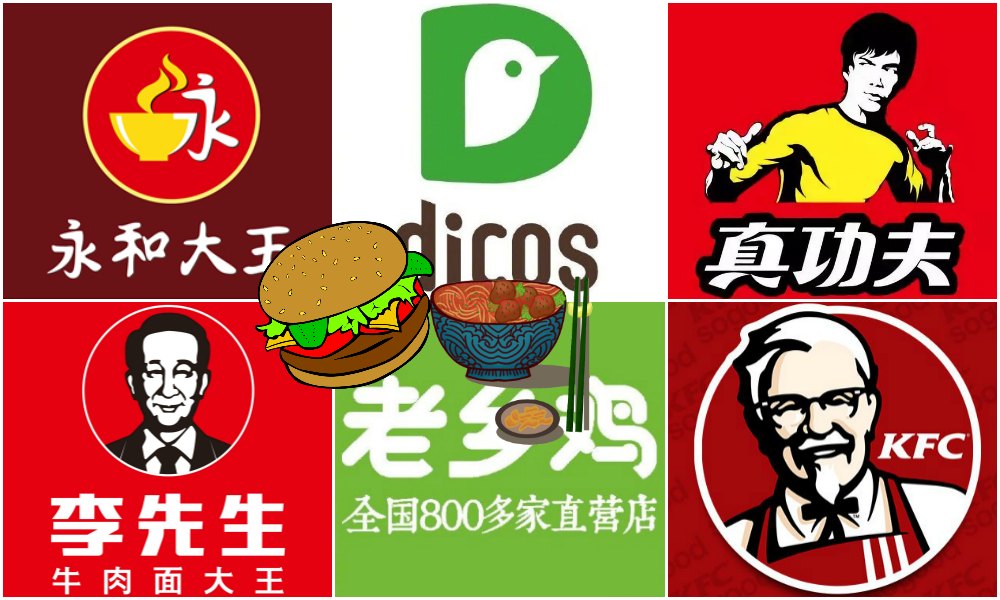
Fast food has been trending on Chinese social media this week after the China Cuisine Association (综合自中国烹饪协会, CCA) issued a new ‘best brands’ report during its 23rd China Fast Fast-Food Convention.
The report by the CCA found two major trends within China’s fast-food industry.
Firstly, fast-food brands, in general, are becoming more and more popular within mainland China. The industry has seen rapid growth over the past decade, with the first half of this year already seeing a 9.4% increase compared to last year.
In the period from January to August of 2019 alone, China’s restaurant industry had a total sales revenue of 2.8 trillion yuan (355 billion US dollars) – making it one of the country’s fastest-growing industries according to Sina Finance.
Second, Chinese-style fast food brands are rising in popularity. Although KFC, McDonald’s, and Burger King still dominate the top three chart, Chinese players such as Laoxiangji (老乡鸡), Dicos (德克士), and Real Kungfu (真功夫) are becoming favorite fast-food restaurants among Chinese consumers.
On Weibo, some commenters suggest that it is inevitable for foreign players to still rule the top lists since they were the first fast-food chains to arrive in China. China’s own homegrown brands followed later and needed more time to grow, but, they predict, will only become more popular in the years to come.
Fast-food first arrived in China in the 1980s, with Kentucky Fried Chicken launching in the PRC in 1987 and McDonald’s following in 1990. The very first fast-food restaurant in China was actually not KFC, but ‘Yili’s Fast Food Shop’ (义利快餐厅), a brand established in 1906 by Scottish businessman James Neil and taken over by Chinese managers in the 1940s.
So what currently are China’s most popular fast-food chains? The list as issued by the CCA actually contains the 70 strongest fast-food companies of China.
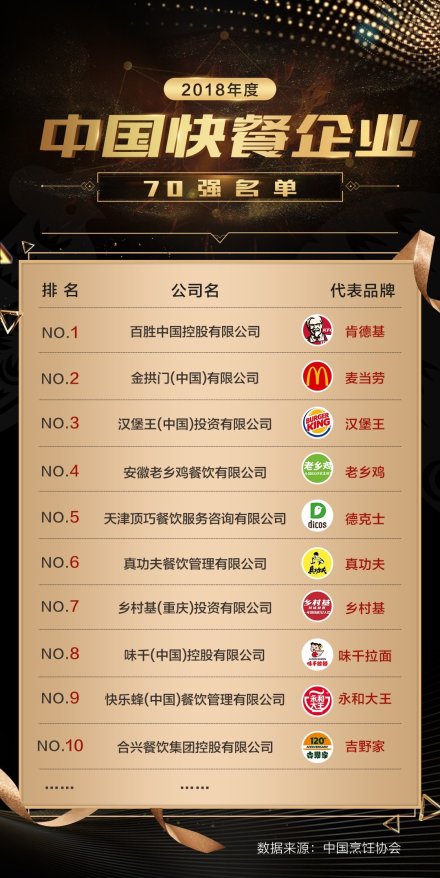
For the scope of this article, we highlight the top-ranking 11 fast-food companies of China for you, starting with number one.
#1: Kentucky Fried Chicken (肯德基)
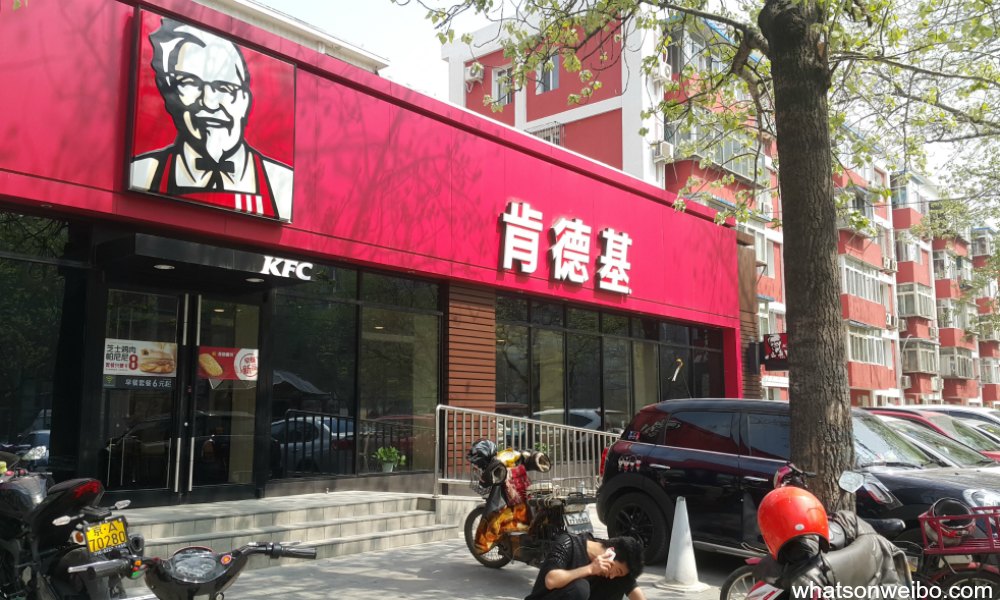
Kentucky Fried Chicken (KFC) is the major brand by Yum China (百胜中国), China’s leading restaurant company that spun off from the American Yum! Brands in 2016. Yum China has the exclusive right to operate KFC, Pizza Hut, and Taco Bell in China, and also owns the Little Sleep hotpot concept. The KFC official Weibo account almost has 2.5 million fans.
People outside of China are sometimes surprised to find that KFC is so hugely popular in the mainland. Its success story goes back to 1987, when the restaurant opened its first doors near Tiananmen Square in Beijing. Within a decade, KFC already had 100 different restaurants in China.
The question of how an American fast-food chain succeeded in becoming the number one in China, outnumbering McDonald’s, is at the center of the book KFC in China: Secret Recipe for Success. Some reasons that contribute to KFC’s success in China is the popularity of chicken in China, the chain’s management system, and the restaurant’s adaptation to local taste.
#2: McDonald’s (麦当劳)
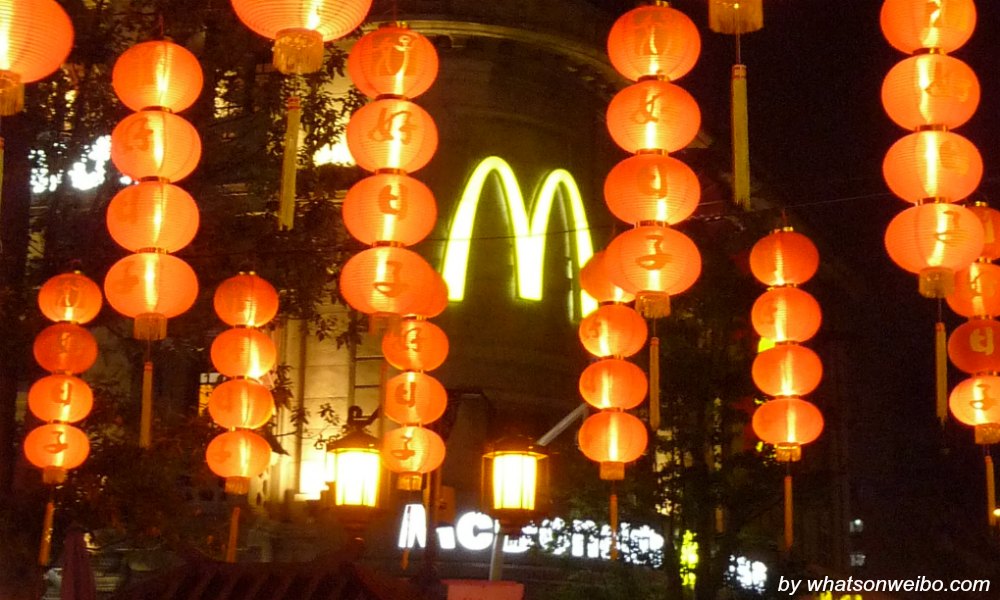
Twenty-nine years ago, McDonald’s opened China’s first restaurant in Shenzhen under the name ‘Màidāngláo’ (麦当劳), a Chinese rendering of the name.
Since 2017, the restaurant’s official name change to ‘Jīn Gǒngmén’ (金拱门), literally meaning ‘Golden Arches’, made headlines both in- and outside China. The name as displayed on the restaurants, however, has always remained the same; ‘Golden Arches’ is just the formal Chinese name of the mother company.
Despite its rocky journey in China – McDonald’s has always faced strong competition within the Chinese fast food market and had to deal with a 2014 food scandal – the American fast-food chain is still popular among Chinese, with many sharing fond memories of their first McDonald’s experience.
The Weibo account now has 1,1 million fans.
The chain still has more room for growth in the PRC, and is looking at new ways to franchise on the mainland. McDonald’s is also always adapting to local tastes. The Chinese menu offers products such as Cola Chicken wings or big chicken cutlet rice bowls.
#3: Burger King (汉堡王)
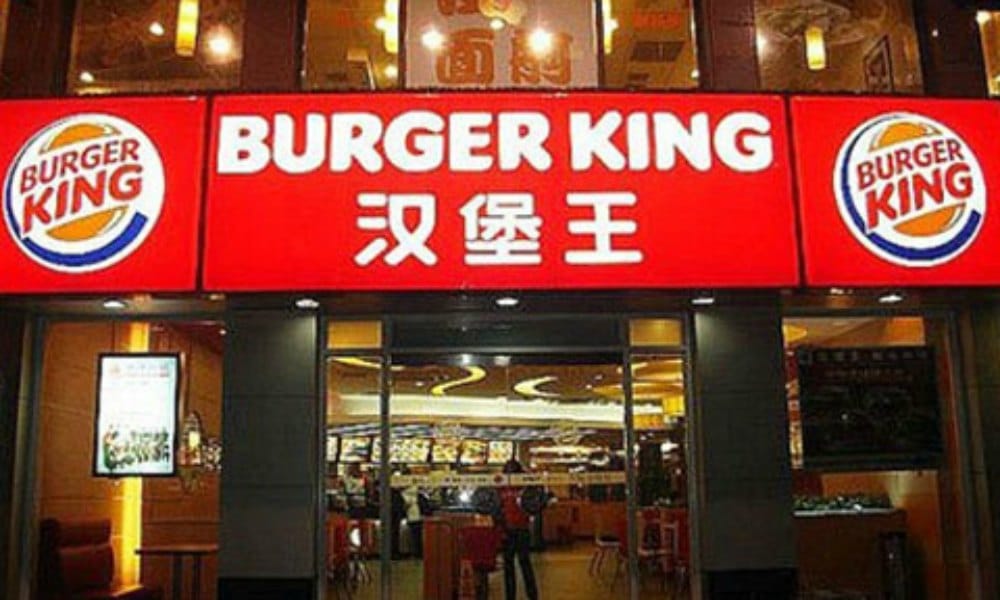
Compared to KFC or McDonald’s, Burger King is somewhat of a newcomer to the Chinese market, but its growth is also rapid: the first restaurant in China opened in 2005, and its 1000th already opened in 2018.
China’s fast-growing middle class has helped the American brand to flourish on the mainland, as did McDonald’s former president of greater China, Peter Tan, who became Burger King’s senior vice president.
Burger King has a wide and strong social media presence in China, with various official Weibo accounts actively promoting Burger King in various cities. The accounts have a personal approach and often post jokes and funny videos.
#4: Home Original Chicken / Laoxiangji (老乡鸡)
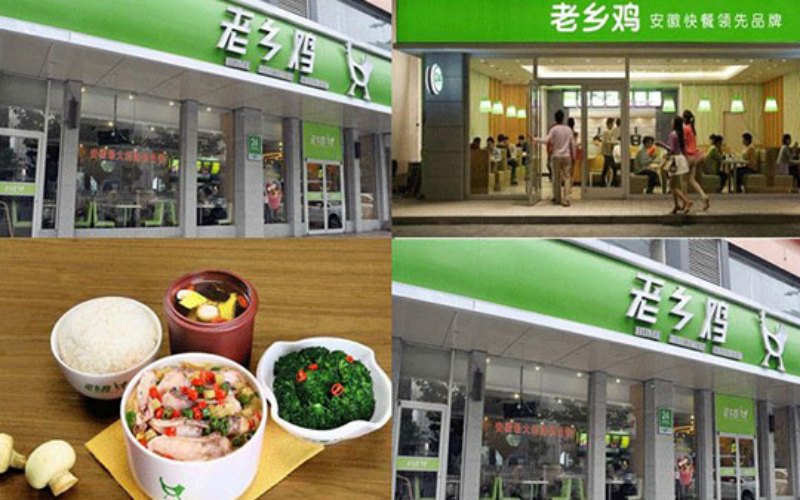
Home Original Chicken currently is the most popular Chinese-style fast-food chain in the PRC. To celebrate this fact, various restaurants around the country held some promotional events this week, even giving out lunch for free in some of its 800+ locations across the country. The promotion went trending on Weibo, with the hashtag ‘Laoxiangji invited the whole country for dinner’ (#老乡鸡宴请全国#) getting 280 million views.
The short history of the restaurant goes back to 2003 when chicken breeder Shu Congxuan opened the first location in Hefei, Anhui province. The chain’s menu items look completely different from the top 3 in this list; ‘Laoxiangji’ serves some classic pork meatballs, meatballs wrapped in fried gluten, hot and sour fish, or steamed eggplant with chili and sour sauce.

A combi meal as promoted by Laoxiangji.
The ‘Laoxiangji’ Weibo account now has over 360,300 followers.
#5: Dicos (德克士)
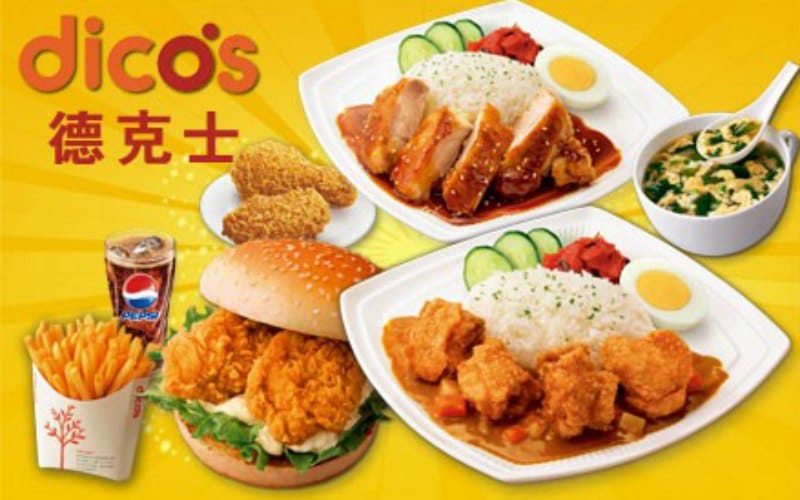
Dicos, founded in 1994, is one of the biggest Chinese-style fast-food chains in the PRC. It was founded in Chengdu and serves fried chicken and different fried chicken rice bowls, among other things. It already opened its 2000th store in 2013.
Tianjin Ding Qiao Food Service owns Dicos. In a way, you could say Dicos is one of KFC’s biggest competitors in the PRC as it is also famous for its fried chicken buckets.
The restaurant’s Weibo account has over 727,000 fans. Besides promoting fried chicken dishes, the account also regularly promotes the Dicos brands’ various sweet desserts.
#6: Real Kungfu (真功夫)
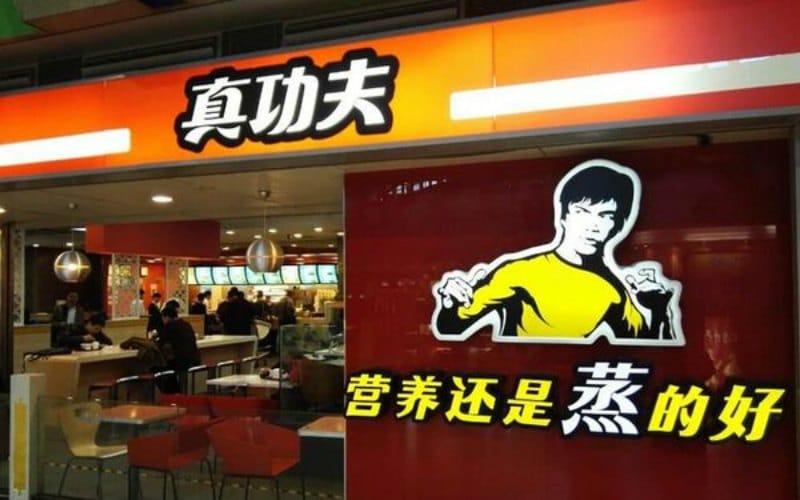
Real Kungfu is probably the fast-food restaurant with the coolest logo – which looks like an image of Bruce Lee- and brand name here.
The restaurant is headquartered in Guangzhou and opened its first restaurant in 1990. The restaurant serves various meal sets at very reasonable prices, usually including a rice bowl, soup, boiled lettuce, and a meat main dish.
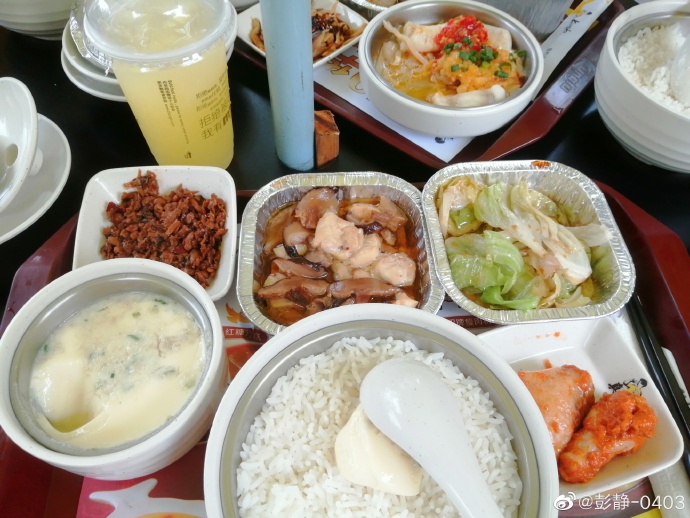
Photo of Zhen Kungfu order by Weibo user.
Weibo account @Zhengongfu has more than 188,000 followers. The account often posts about movies or series, with the chain associating itself with Chinese popular culture.
#7: Country Style Cooking (乡村基)
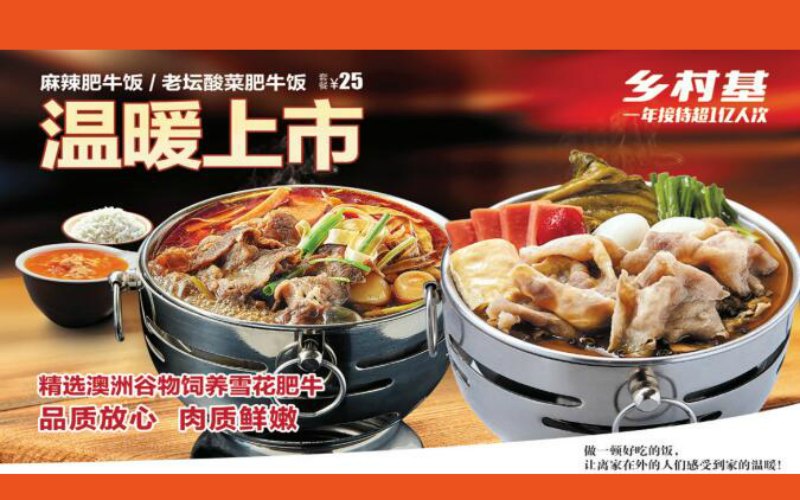
Country Style Cooking (Xiāngcūnjī, 乡村基) is originally a Chongqing restaurant that opened its first restaurant in 1996 under the name ‘Country Style Chicken’ (乡村鸡). It now has over 600 restaurants throughout China.
The restaurant’s name is literally also its theme: providing real ‘home-style’ cooking from the country to its customers. It serves some classic stir-fry dishes such as the Kung Pao Chicken (宫保鸡丁).
The brand is still relatively small on Chinese social media, having some 39000 fans on its Weibo account.
#8: Ajisen Ramen (味干拉面)
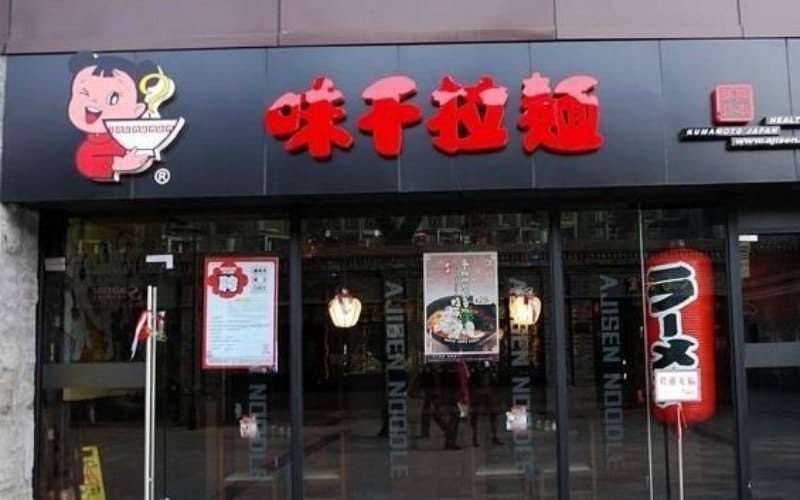
Ajisen Ramen is the first Japanese chain in this list, which focuses on Japanese ramen noodle soup dishes. It operates more than 700 noodle restaurants in Hong Kong and mainland China, but also has restaurants in other countries across the world.
Its history goes all the way back to 1968, but its franchise endeavors started later.
The chain has no presence on Weibo.
#9: Yonghe King (永和大王)
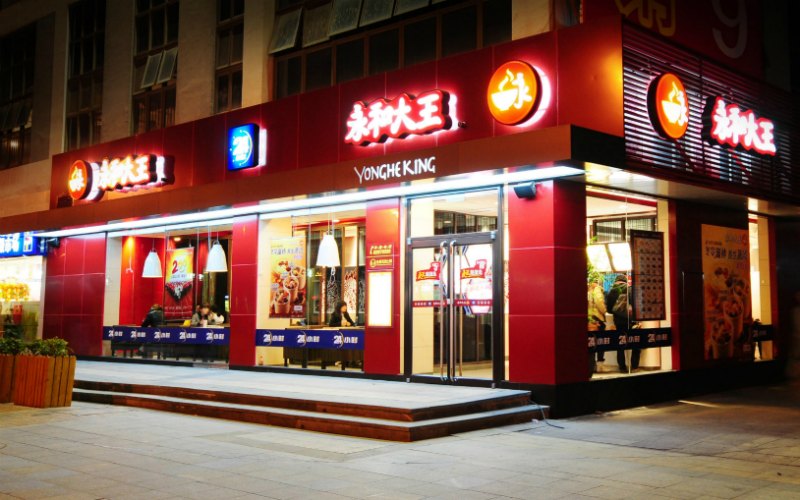
Yonghe King is another Chinese-style fast-food chain that, like Ajisen, also focuses on noodles. Its first restaurant was opened in 1995 in Shanghai.
The brand is not fully Chinese anymore, as it merged with Jollibee Foods Corporation (JFC), the biggest fast-food company in the Philippines, in 2004. Since 2016, Jollibee is 100% owner of Yonghe King.
Yonghe King’s menu is diverse, as it offers various breakfast items, meal sets with noodles or rice, and desserts. It promotes its breakfast as the perfect start of the day for busy people who have to get to work early and have no time to prepare a meal.
With almost 409,000 fans on Weibo, Yonghe King is pretty popular on Chinese social media.
#10: Yoshinoya (吉野家)
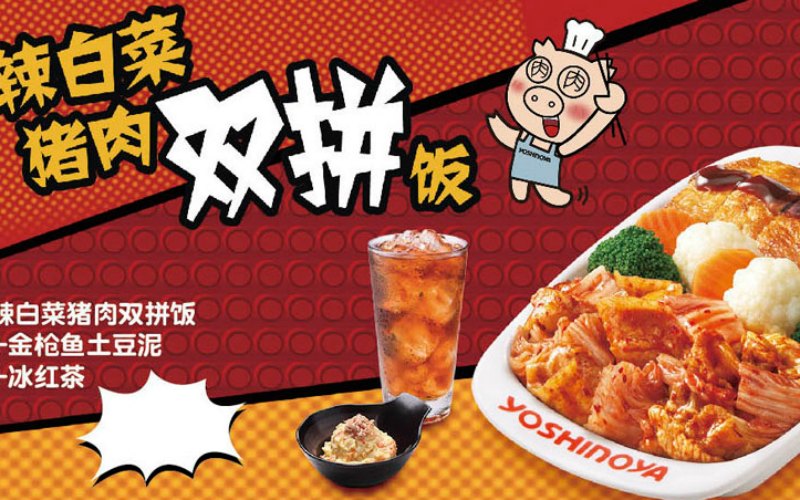
Yoshinoya is the second Japanese chain in this list and it is the oldest brand, going back all the way to 1899.
Although Yoshinoya is a ‘fast food’ chain because, some of the items on its menu are not as fast to eat. The restaurant is known for its beef bowls, but how about a one-person hotpot set?

Hop Hing Group, based in Hong Kong, is the licensed operator of Yoshinoya in Hong Kong and Mainland China. The restaurant has recently become a target of violence during the Hong Kong Protests, as it was labeled as being a Beijing supporter.
#11: Mr. Lee California Beef Noodle King (李先生加州牛肉面大王)
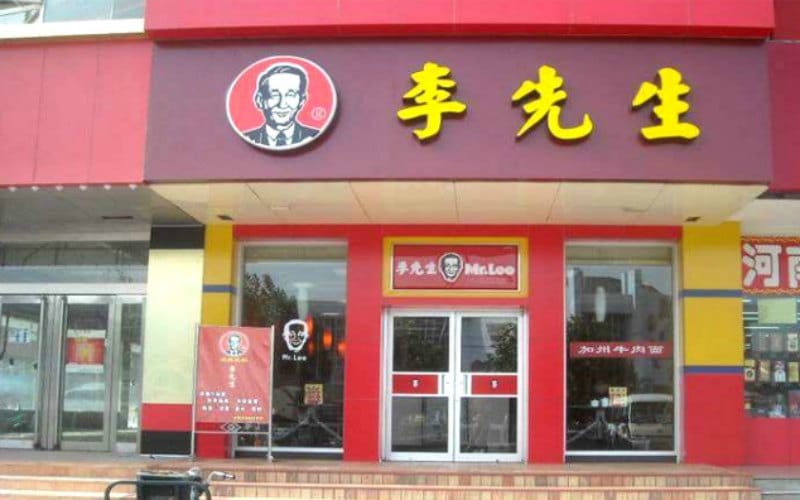
The Beijing brand Mr. Lee is a popular fast-food chain in mainland China that specializes in beef noodle soup. Its first store was opened in 1988.
The ‘California’ part in its time comes from the Californian Chinese-American businessman Li Beiqi (李北祺) who started the company – hence the restaurant’s name (Mr. ‘Li’ in pinyin).
Besides the beef noodle soup, the restaurant also offers rice meals, dumplings, sweets, evening snacks and more. The Mr. Lee’s Weibo account has over 55000 fans.
By Manya Koetse
Spotted a mistake or want to add something? Please let us know in comments below or email us. First time commenters, please be patient – we will have to manually approve your comment before it appears.
©2019 Whatsonweibo. All rights reserved. Do not reproduce our content without permission – you can contact us at info@whatsonweibo.com.

China Brands, Marketing & Consumers
Starbucks Goes Xinjiang & The Kardashians in China
Starbucks rebrands as “Star-Bazaar” in Urumqi—what does it say about shifting perceptions of Western brands in China? Also: a cheating sports influencer and the souvenirs that became most hated.
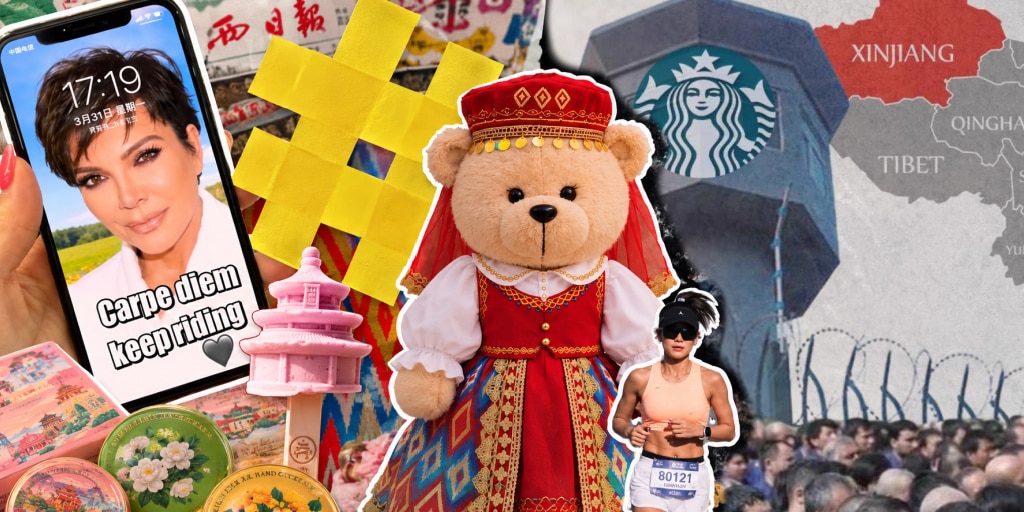
Originally published in the Eye on Digital China newsletter on Sunday, October 4, 2026.
In this edition:
- Quick scrolls: A Chinese athlete cheated her way to the Berlin Marathon’s finish
- Zooming in: When Localization Gets Political: Starbucks Goes Xinjiang
- On the Feed: The Kardashians in China
- Phrase of the Week: The 3 souvenirs sold everywhere, but nobody wants them
🗞️ QUICK SCROLLS
🇯🇵 The National Day holiday has begun, but nobody’s going to Japan. Although Japan was the number one outbound destination for Chinese travelers during last year’s October holiday, it has now dropped out of the top ten destinations entirely. According to data from Chinese tour operator Tuniu (途牛), Indonesia, Turkey, and South Korea are among this year’s most-booked overseas destinations.
🚲 Chinese fitness influencer “Abeeeer” was caught cheating during the Berlin Marathon after she posted about running her “personal best.” The sport-blogger (530k+ followers on Xiaohongshu) was photographed riding on the back of a bicycle around the 38-kilometer mark. On Saturday, she publicly apologized and admitted that she had broken the rules and that she was “feeling unwell.”
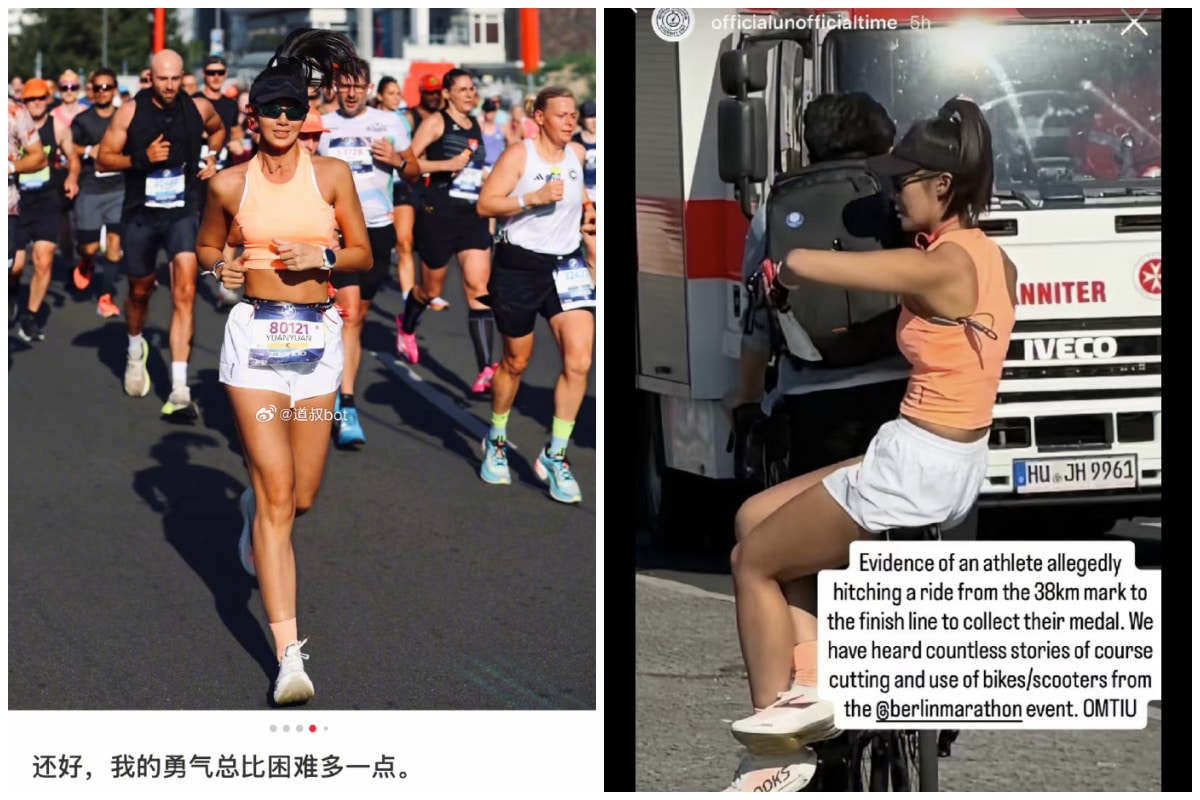
The sports influencer was caught hitching a ride to the finish line.
🏳️🌈 Japanese volleyball player Rui Takahashi came out as gay on Tuesday, saying he wanted to help others struggling with their sexuality by coming out publicly. On Douyin, many Chinese fans and commenters praised Rui for his bravery.
🤖 Former Global Times editor-in-chief Hu Xijin (胡锡进) published a National Day essay praising the country’s achievements but forgot to delete the AI chatbot’s closing follow-up question (”Would you like me to read through the whole text again and check it for omissions?”). Hu quickly deleted the AI prompt, but “Hu Xijin’s National Day AI ghostwriting fail” had already gone trending.
⚽ Chinese football produced its best and worst result of the year nineteen hours apart. On Friday, the senior men’s national team lost 0–5 to Palestine – a first-ever loss to that opponent – in a friendly in Chongqing. On Saturday, the under-23 team China took the men’s football bronze medal at the 2026 Asian Games, beating Uzbekistan 4-3 on penalties.
🎵 One of China’s most influential singers, composers and music educators has passed away. Liu Huan (刘欢) died of illness in Shanghai on September 25. Internationally, he is best remembered for singing “You and Me,” the official theme song of the 2008 Beijing Olympics.
📱 Chinese internet users now spend more time watching mini-dramas than scrolling social media. Bytedance’s Hongguo app, the short-drama platform, reports 168 million daily active users and an average of 125 minutes per user per day, exceeding Douyin (which itself overtook WeChat for the first time in July).
👁️ ZOOMING IN
Starbucks Goes Xinjiang: When Localization Gets Political
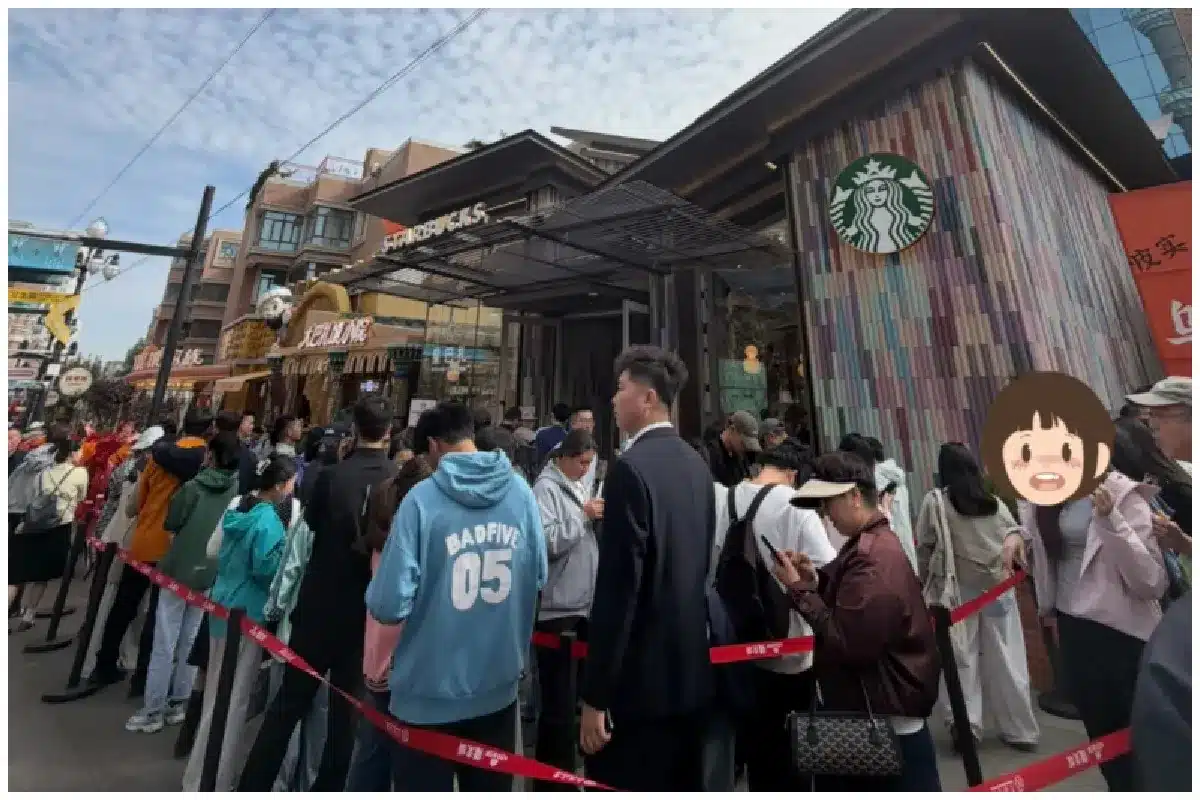
Just ahead of the National Day holiday, Starbucks opened in Xinjiang. The opening of the two stores in the capital, Urumqi, became a big topic of discussion both in China and across English-language social media, but for very different reasons, and viewed through very different lenses.
The brand’s Urumqi debut marks its first expansion into the region since entering the Chinese market over 26 years ago. Back then, Starbucks mostly targeted white-collar workers, focused on first- and second-tier cities, and, for many, symbolized cosmopolitan, urban life.
Starbucks’ move into Xinjiang comes as part of the company’s new Chinese investment and ownership structure: in April of this year, Chinese company Boyu Capital (博裕资本) became 60% owner of Starbucks’ China operations.
Starbucks Becomes ‘Starbazaar’
On Chinese social media, on the opening days of September 28–29 and in the days that followed, conversations were largely consumer-focused. The new stores, long queues, special menu, and merchandise created online excitement surrounding Starbucks’ Xinjiang debut.
The promotion of the new stores — particularly the Xinjiang International Grand Bazaar flagship store (the second store is located at Tianshan International Airport) — has also taken a distinctly local approach. Rather than emphasizing the arrival of a foreign brand in a new frontier market, Starbucks has presented itself as a brand adapting to, and becoming part of, its new local surroundings.
The flagship store incorporates Xinjiang elements throughout its design and marketing, from local patterns and music to a special menu featuring items such as baklava and lamb pastries, along with limited-edition merchandise. Its mascot is a Starbucks bear dressed in stylized Uyghur traditional attire.
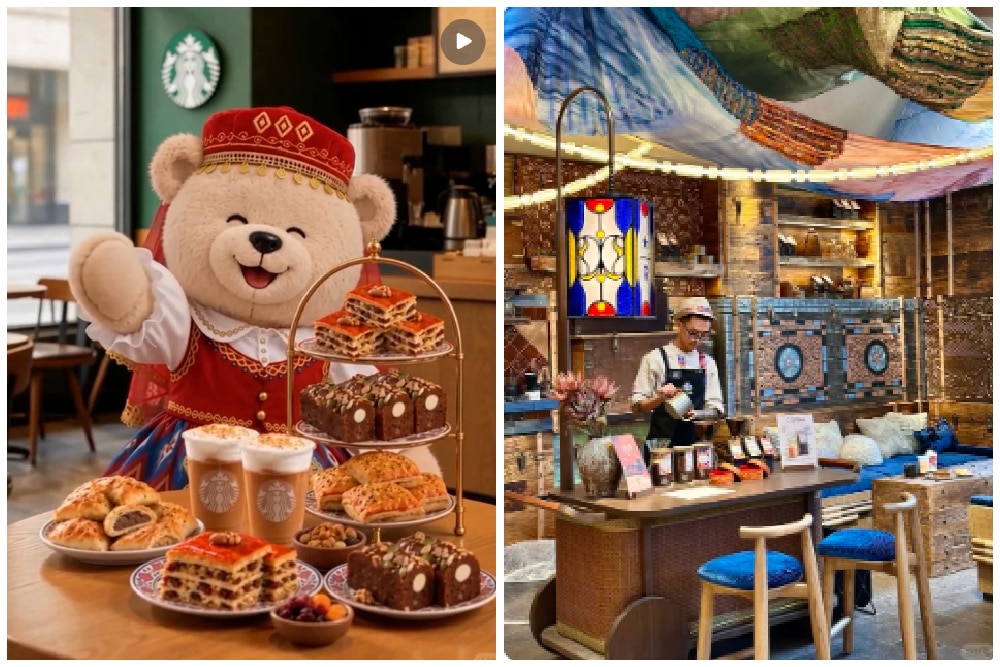
Promotional visuals by Starbucks
The Urumqi Starbucks even has a unique store name: “Star-Bazaar” (星巴扎, Xīng Bāzhā), a play on Starbucks’ Chinese name, 星巴克 (Xīngbākè), and 巴扎 (bāzhā), “bazaar.” The nickname captures this broader marketing approach: not simply bringing Starbucks to Xinjiang, but giving Starbucks a distinctly Xinjiang identity.
This distinct approach resonates with Chinese consumers, who have been posting photos of the enormous lines in front of the stores and showing off their online “check-ins” at the new local hotspot.
Over the past years, Xinjiang has acquired positive associations in various Chinese consumption contexts. At one point, “made with Xinjiang cotton” even generated a buycott and became a popular slogan among online sellers sourcing cotton from the region.
Starbucks in China apparently has a lot of confidence in the positive appeal of Xinjiang-themed products: for the National Day holiday, it is rolling out Xinjiang-themed menu items to more than 2,700 Starbucks stores across 41 Chinese cities.
From Coffee to Controversy
On X and in Western media, however, reactions to the Xinjiang Starbucks have been far less positive. The opening was framed primarily as a political and human-rights story and faced much criticism.
Among these critical voices is US Congressman John Moolenaar, who chairs the House Select Committee on China. He called it a “morally bankrupt decision” to open stores in Xinjiang amid ongoing concerns about human rights abuses in the region, and called on Starbucks to close the cafes, arguing that “every cup sold in these stores ties an iconic American brand to the CCP’s brutal campaign against the Uyghurs.”
“There is no justifiable reason for an American company to do business in a region where the Chinese Communist Party has detained more than a million Uyghurs and is stripping them of their faith, language and culture,” he said.
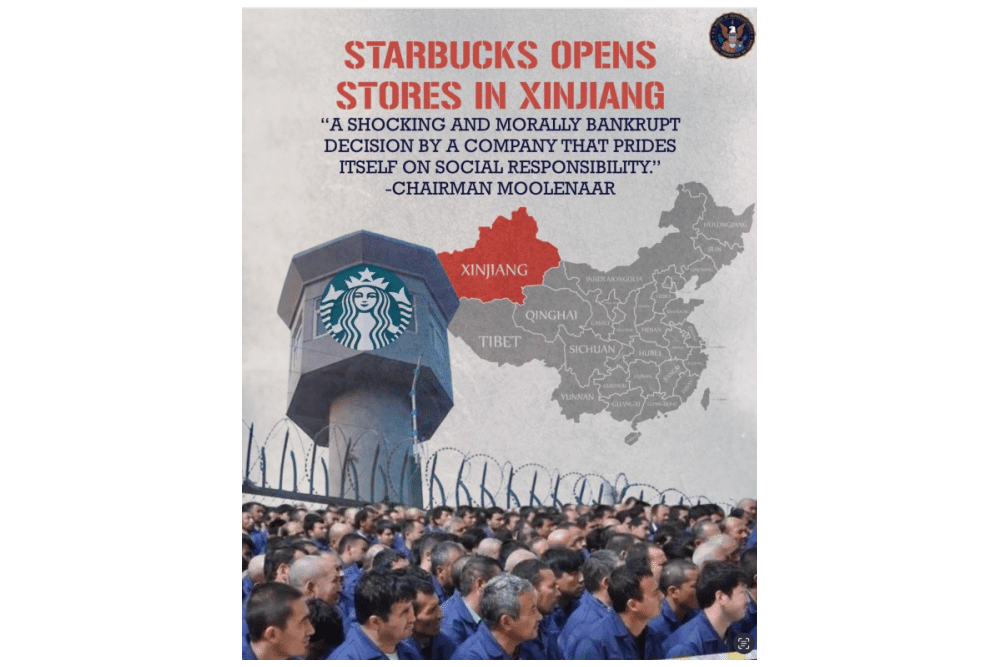
Image spread by US lawmakers
American criticism of Starbucks in Xinjiang soon reached Chinese social media, becoming a number-one trending topic on Weibo on Sunday, October 4.
“Xinjiang” used to be a highly sensitive and heavily censored word on Chinese social media, but since around 2018–2021, when the region increasingly became part of the ordinary national development agenda, online discussions have been allowed and steered in different directions.
The controversial internment camps widely reported on in Western media were officially described as “vocational skills education and training centers” (职业技能教育培训中心): “people-oriented” facilities intended to “fundamentally eliminate the environment and soil that breeds terrorism and religious extremism.”
Following the 2021 sanctions on Chinese officials over alleged human rights abuses and the Xinjiang cotton controversy — when Western brands distanced themselves from Xinjiang cotton over forced-labor concerns — Chinese online narratives surrounding the region shifted further.
A major “support Xinjiang cotton” social media campaign, launched by state media and official channels, symbolized a defense of China’s sovereignty against Western interference. International criticism was cast as an attack on China’s dignity, rallying the public around national pride. Since then, foreign criticism of policies in Xinjiang has often not been censored, but instead published and reframed as another attack on China.
This time, too, these dynamics unfolded, although in a different form. The criticism was discussed in the context of America, once again, “digging up its tired old lies about Xinjiang” (#美方又翻出老掉牙的涉疆谎言#). China’s Ministry of Foreign Affairs spokesperson Guo Jiakun said that US institutions habitually fabricate accusations and attack and smear China for political purposes, “without any credibility whatsoever.”
Netizens blamed critics for being hypocritical and for “denying the people of Xinjiang the chance to drink Starbucks.” Many others also pointed out that ‘Starbucks China’ is no longer quite the same thing as ‘Starbucks.’
Meanwhile, netizens also seem to appreciate the fact that Starbucks had not responded to the controversy — at least, not at the time of writing. Instead, its response has simply been to keep posting promotional material and videos about the Xinjiang stores, an approach some described as “defiant.”
The Starbucks opening in Xinjiang brings two very different sides of the same discussion into view. On one side, there is a consumer perspective; on the other, a human-rights angle. One emphasizes local culture, while the other focuses on international politics. And while one side stresses the responsibility of a Western multinational operating in Xinjiang, the other appreciates precisely how much this foreign company is localizing itself.
It also shows how Western rejection of Xinjiang-linked business can actually increase the symbolic value of Xinjiang-linked consumption in China. People may appreciate the local flavors, ethnic elements, colors, and design, but there is another layer to it, too: consuming Xinjiang can become an expression of national solidarity, especially when foreign criticism turns an otherwise ordinary consumer choice into something political.
In the end, perhaps the most striking thing is the shift in how Starbucks itself is perceived. When Starbucks first entered China, part of its appeal was precisely how foreign it was, offering access to an imagined Western, cosmopolitan way of life. More than two decades later, in Urumqi, Starbucks is being appreciated for almost the opposite reason: for how local it is becoming, selling an imagined Xinjiang experience back to Chinese consumers.
📱ON THE FEEDS
The Kardashians in China: “Manifesting” and Magic Mushrooms
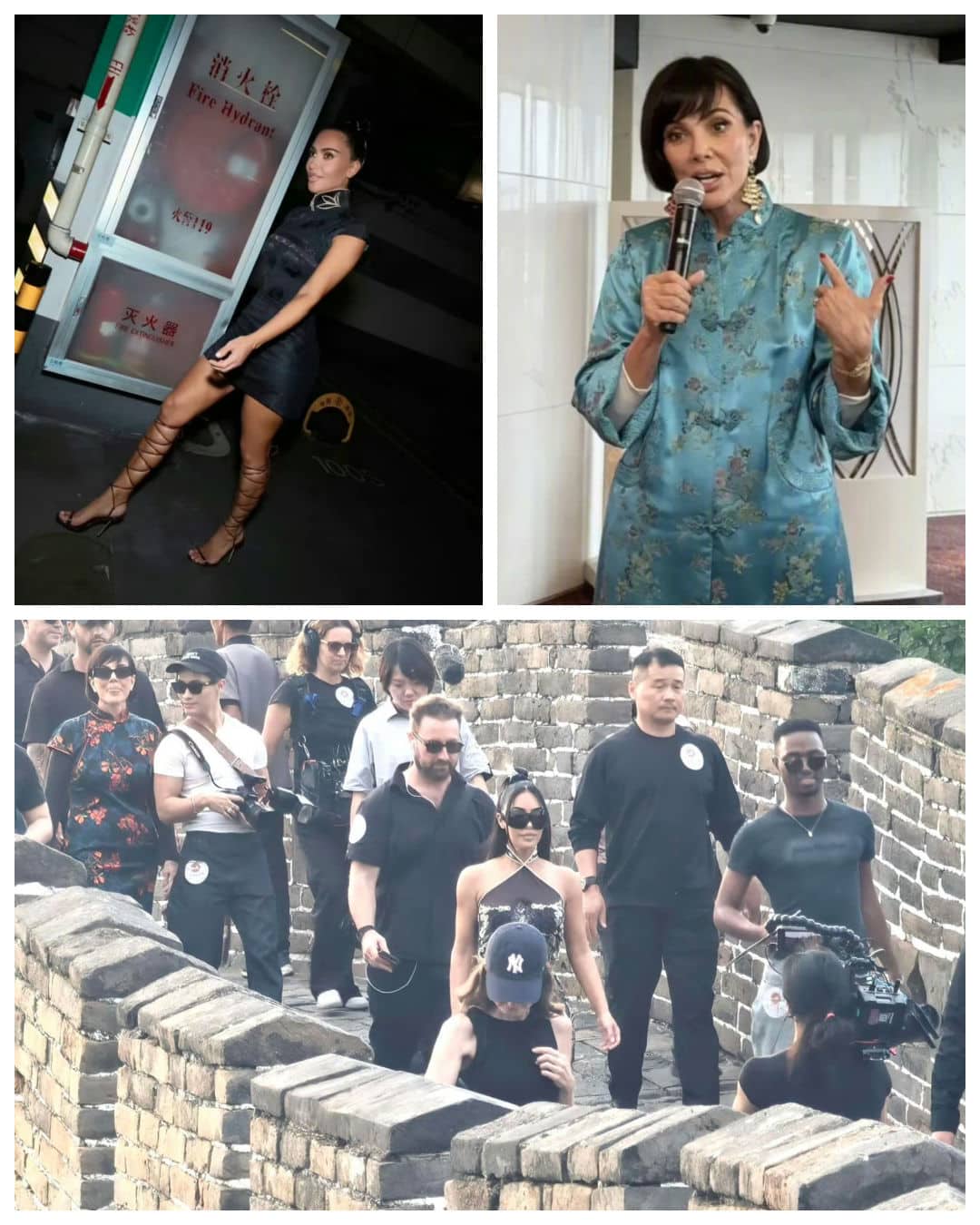
The Kardashians have been on my feeds this week due to their recent China visit.
First: the Kardashians in the US are not what they are in China. Many people in China have never heard about them, but they did reach many people in corners of the internet due to fan-subtitled uploads of Keeping Up With the Kardashians or through clips cirulating online. What also matters: Kim Kardashian was one of the first major Western celebrities to open an official Xiaohongshu account back in 2018, and also one of the first to sell products directly from there.
What attracted attention in their China visit is that, after doing sightseeing and visiting the Great Wall, Kim Kardashian – who came to China for the NikeSKIMS sportswear event in Shanghai – went for dinner with her entire entourage at the well-known Yunnan restaurant In & Out (Yī zuò Yī wàng 一坐一忘).
That is the same restaurant where US secretary Yellen had her “magic mushrooms” back in 2023. The Kardashians had those same mushrooms with their orders.
They are called jiànshǒuqīng (见手青), which literally means “see hand blue”, in reference to turning blue when handled. It is the lanmaoa asiatica mushroom species that grows in China’s Yunnan region and is considered hallucinogenic (nothing happens when properly prepared though).
The restaurant quickly tapped into the buzz by launching a “let’s manifest” or “Let’s 显化” set menu containing the dishes they had.
The Kardashians, but mostly mum Kris Jenner, is famous among netizens as a lucky charm for wealth. Jenner believes in the power of manifestation: focusing on what you want through visuals and prayer in order to actually get what you want.
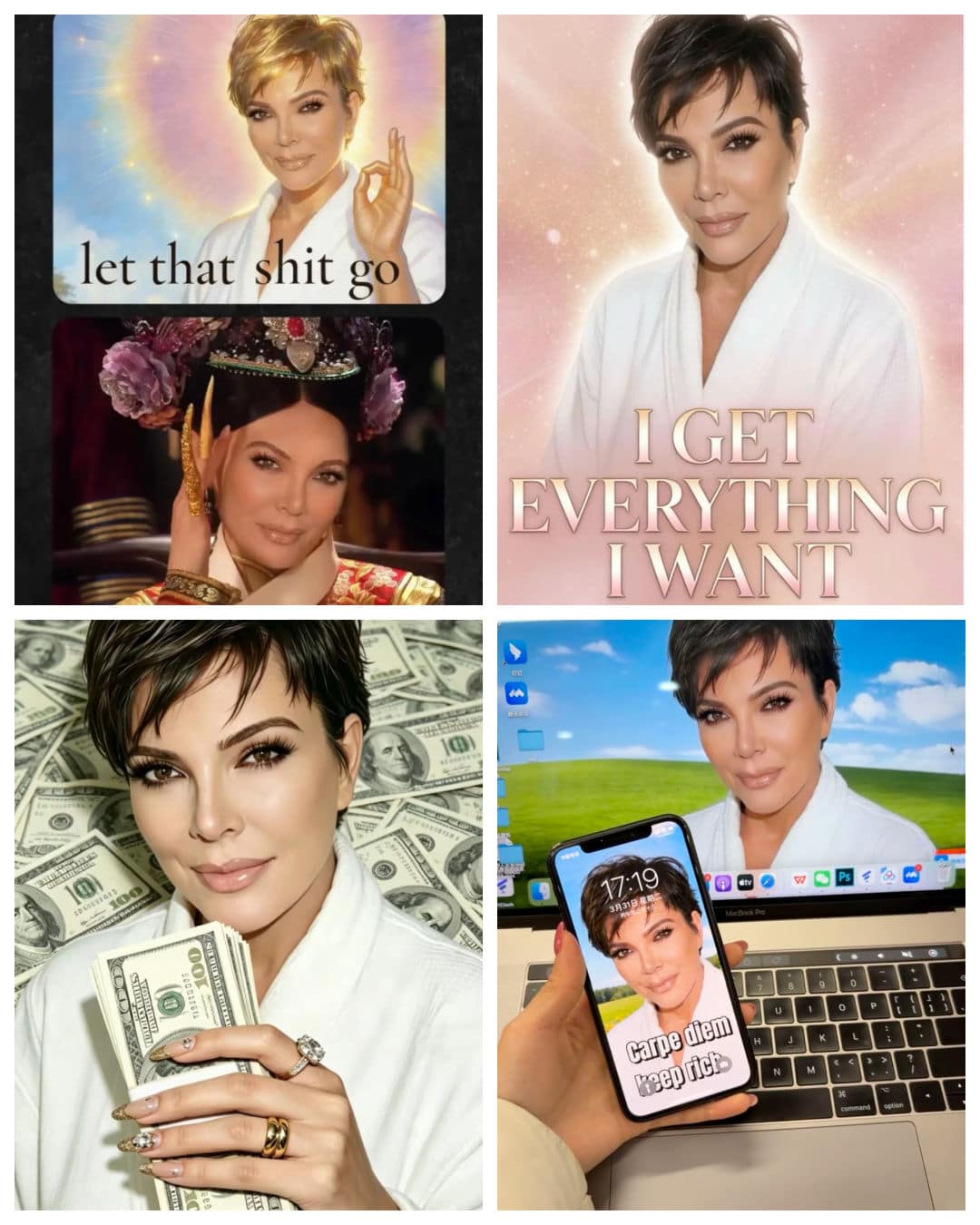
Some of the images used by Chinese netizens to “manifest” good luck through Kris Jenner visuals
The fact that mum Kris Jenner, more than Kim herself, became popular in China has to do with the perception of her as the driving force behind the family’s success, pushing everyone to where they are today and coordinating their careers. In doing so, she is the one who’s seen as the “symbol of wealth” and — through her own belief in the power of manifestation — became the perfect image for Chinese netizens to make their own wishes visible, like a digital good luck charm.
Kris wore a blue Tang suit (唐装, tángzhuāng) to the Shanghai launch event, which Chinese commentators read as a friendly gesture toward the Chinese market.
For In & Out, the “manifesting” formula seems to work. Their “Let’s Manifest” menu is popular and resonates online, where people mostly find it funny to see the restaurant capitalizing on its VIP guests so quickly.
🀄 WORD OF THE WEEK
Sucker’s Souvenirs Starter Pack: The Three Things Everyone Sells and Nobody Wants
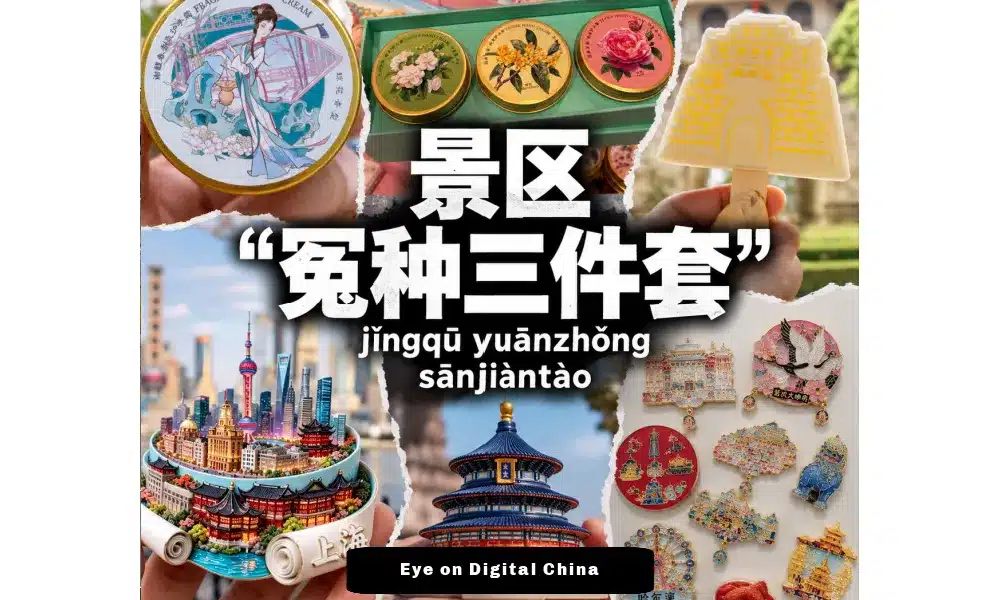
景区”冤种三件套” jǐngqū yuānzhǒng sānjiàntào
Lit.: Scenic Area Sucker’s Three-Piece Set
Meaning: The “Tourist-Trap Trio”: generic souvenirs you see everywhere
During this National Day holiday, when so many Chinese are traveling all over the country, one phenomenon being discussed (also on Zhihu) is the scenic site’s 冤种三件套 (yuānzhǒng sānjiàntào), roughly “the sucker’s three-piece set,” or more loosely, the “tourist-trap trio.”
This refers to those three things that every Chinese tourist site sells nowadays, yet nobody really wants: scenic-spot hand creams, fridge magnets, and cultural-themed ice cream.
The formula is the same everywhere, repeated in the same kinds of shops, and is part of China’s wénchuàng (文创 – culturally creative) boom that started in the 2010s, where local cultural elements and symbols are turned into commercially attractive products that aren’t even produced locally. Even though the landmarks and texts may change, they all follow the same cookie-cutter model reproduced across the country.
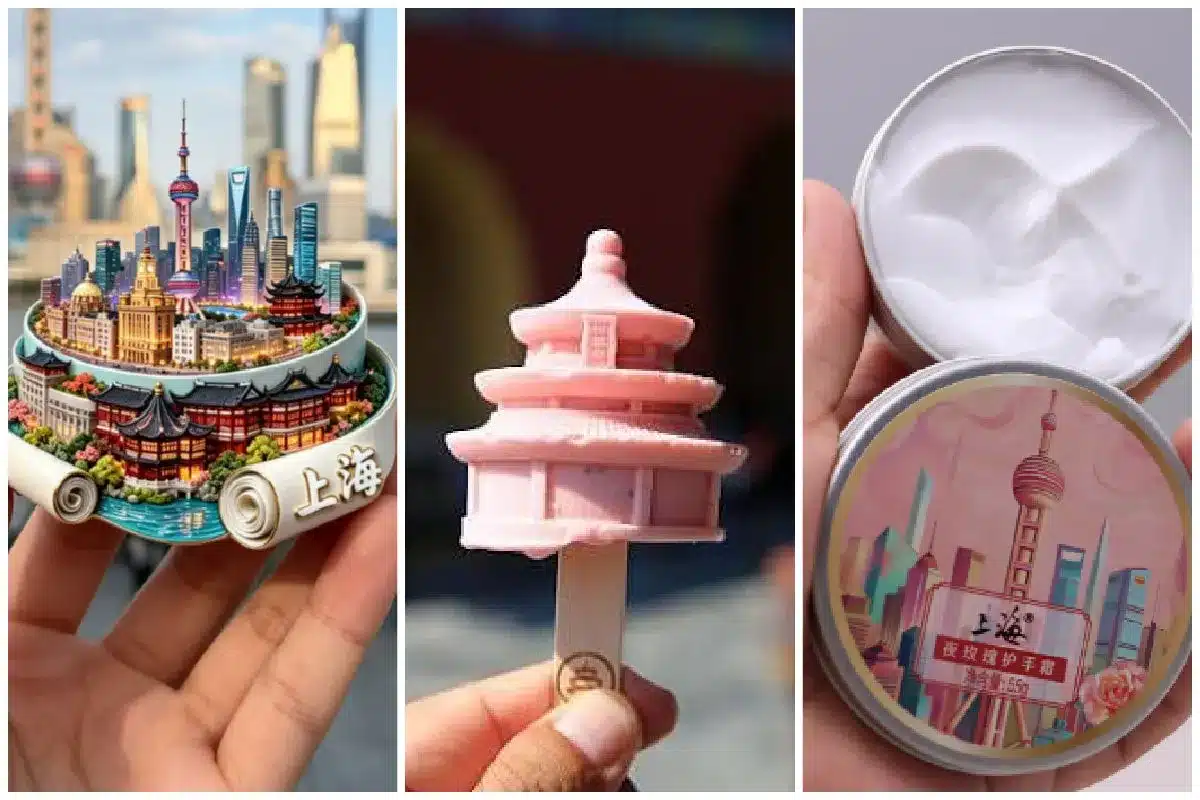
Examples of the same souvenirs sold at every scenic site.
But these kinds of common tourist-attraction purchases are becoming less popular among younger Chinese. One reason is that they are more critical of overconsumption and unwilling to buy overpriced stuff they don’t need anyway. They are willing to spend money on more genuine, locally made items, like pottery or DIY products.
Another reason is that these products have also become the ultimate sign of the lamentable homogenization of Chinese tourist sites (景区同质化), where you’ll find the same shops, foods, signs, and souvenirs whether you’re up north or down south.
Another reason is that online shopping has become so mainstream that most shoppers now recognize they can buy the same products for much less on sites like Taobao.
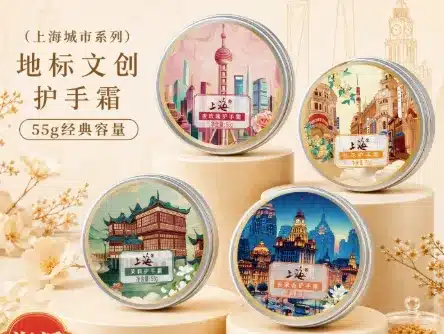
Tourist hand cream sold on Taobao.
💬 On Xiaohongshu, one commenter wrote: “A fridge magnet that costs 9.9 yuan with free shipping online suddenly sells for 28 yuan once you’re inside a tourist attraction. And the ice cream is the funniest one: five seconds to take a photo, ten seconds to melt, and whether it actually tastes good is anyone’s guess.”
💬 Another commenter on Zhihu wrote: “Really good cultural-creative products should try to put the place into the product, rather than simply putting the name of the place onto the product. Because what people really want to take home when they travel is some small connection that existed between themselves and that place. When your product can achieve that, then it truly becomes a souvenir.”
That’s a wrap!
Best,
Manya
🔚
Eye on Digital China, by Manya Koetse, is co-published on Substack and What’s on Weibo. Both feature the same new content — so you can read and subscribe wherever you prefer. Substack offers community features, while What’s on Weibo provides full archive access.
Spotted a mistake or want to add something? Please let us know in comments below or email us. First-time commenters, please be patient – we will have to manually approve your comment before it appears.
©2026 Eye on Digital China/Whatsonweibo. All rights reserved. Do not reproduce our content without permission – you can contact us at info@whatsonweibo.com.
China Brands, Marketing & Consumers
Quack Like a Goose: Why Beijing Street Vendor “Auntie Goose Legs” Sparked a Nationwide Debate
After the first complaints surfaced, Auntie Goose Legs admitted the truth about her business: she ha been selling duck legs all along.

My premium newsletter covering the stories, memes, debates, and viral moments shaping online conversations in China. Subscribe here to receive future editions.
If it walks like a duck and quacks like a duck, it might still be a goose – or the other way around. That, at least, is the takeaway from two stories that recently went viral on Chinese social media.
The woman at the center of it all is Beijing street-food vendor Chen Xiufeng (陈秀凤), better known as “Auntie Goose Legs” (鹅腿阿姨). Over the years, she became something of a local celebrity in Beijing’s university district. Originally from Jiangsu, the migrant vendor had been selling her famous roasted goose legs to students since 2011.
She skyrocketed to national fame in 2023 , but became the target of widespread criticism last week after it was revealed that her celebrated goose legs – sold for 16 yuan ($2.20) per piece – were actually duck meat all along.
The controversy came up after the vendor ventured beyond the university area into Beijing’s business district. At the universities, she enjoyed a loyal customer base and dedicated WeChat groups. In her new market, however, customers proved more skeptical. Some noticed that the meat looked suspiciously duck-like; others complained that the color seemed off.
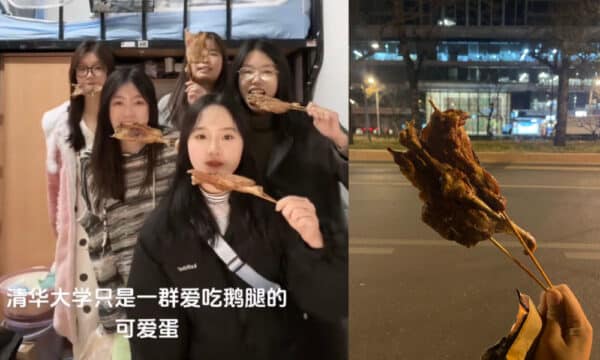
In the university district, Auntie Goose Legs she enjoyed a loyal customer base and dedicated WeChat groups.
After the first complaints surfaced, Auntie Goose Legs admitted the truth on WeChat on June 9.
“The ingredients I originally used were goose legs,” she wrote, “but they have been out of stock for more than fifteen years. The current ingredient is duck legs.”
It turned out that she had only sold goose legs, the product that made her famous, for two months back in 2011 before switching to the much cheaper duck. “Did geese become extinct without us knowing?” some netizens joked.
The revelation quickly exploded online. The hashtag “What Auntie Goose Legs is Selling Turns Out to be Duck Legs” (#鹅腿阿姨卖的是鸭腿#) became the top trending on Weibo for an entire day, with millions of people discussing the topic.
Why did millions of people become so outraged over a single Beijing street vendor selling duck instead of goose?
Piggybacking on the debate, Anhui-based commentators pointed out that a beloved regional specialty has the exact opposite ‘problem.’ Wuwei smoked duck (无为板鸭) is branded as duck, but is usually goose. According to local standards, however, goose products may be sold under this name, prompting discussions about “hanging up a goat’s head, while selling dog meat“ (挂羊头卖狗肉): advertising one thing while selling another.
Because geese are more expensive than ducks in China, and generally considered tastier, the Anhui duck-is-goose story, unlike the Auntie Goose Legs controversy, did not provoke online anger. Instead, many people saw it as an example of sellers prioritizing flavor over cost. Auntie Goose Legs is seen as doing the exact opposite.
But why did millions of people actually become so outraged over a single Beijing street vendor selling duck instead of goose, especially when there were no indications that anyone became ill? The answer has little to do with poultry and everything to do with trust.

Auntie Goose Legs during the prime time in Beijing’s University District in late 2023 (image via Lianhe Zaobao 联合早报).
Food fraud and mislabeling have been longstanding concerns in China. Earlier surveys found that food safety worries even outweighed concerns about public security and environmental issues, and while China’s food safety record has improved in recent years, public trust remains fragile.
Part of these concerns are immediate and practical. Major scandals in the past involving melamine-tainted infant formula or recycled “gutter oil” have posed serious risks to public health. But the issue goes beyond health risks alone.
If a goose can be a duck, then what exactly is the duck?
Whereas food safety concerns in many Western countries often focus on contamination, Chinese consumers are frequently just as concerned with economic deception. It is unfair to pay for a more expensive goose and receive a duck. Even if no one gets sick, Chinese consumer law still treats it as fraud.
More important, however, is what such deception does to confidence in the broader food system. If a goose can be a duck, then what exactly is the duck?
As a major 2023 college canteen scandal demonstrated, the build-up of deceit can reach a breaking point among the public. During that somewhat Kafkaesque “rat head or duck neck” (鼠头or鸭脖”事件) controversy, officials insisted a rat head found in a student’s rice was merely a “duck neck,” even though everyone could clearly see the snout and teeth of a rodent.
This kind of gaslighting shatters social trust and reinforces a generalized sense that, as a consumer, you are entirely on your own. When regulators fail to step in honestly, even a seemingly isolated incident comes to symbolize more dangerous forms of systemic food fraud.
And this is where the Auntie Goose Legs story stings the most.
People did not come to her simply because her food was good. Over the years, she had become part of local student life, and she felt safe and authentic. Her pink scooter helmet, which she continued to wear while working, became an iconic symbol of her no-nonsense and humble image. Her success was built on word of mouth and, above all, on the trust her customers placed in her.
That this particular “auntie” deceived her customers by selling a different product than the one she advertised is no longer really about her. If duck is goose, goose is duck, and your local auntie has deceived you for years, then who can you trust anymore?
- Read more about how Auntie Goose Legs rose to fame in 2023 here.
By Manya Koetse
(follow on X, LinkedIn, or Instagram)
Spotted a mistake or want to add something? Please let us know in comments below or email us. First-time commenters, please be patient – we will have to manually approve your comment before it appears.
©2026 Eye on Digital China/Whatsonweibo. All rights reserved. Do not reproduce our content without permission – you can contact us at info@whatsonweibo.com.
Eye on Digital China is a reader-supported publication by
Manya Koetse (@manyapan) and powered by What’s on Weibo.
It offers independent analysis of China’s online culture, media, and social trends.
To receive the newsletter and support this work, consider
becoming a paid subscriber.

From “Pure Love Warrior” to Political Victim: Jensen Huang’s Fall on Chinese Social Media

China Trend Watch: Digital Dementia and Why Everyone Says ‘Li Na’

Mbappé, Mao & the Backlash on Chinese Social Media

Mbappé, Mao, and the Joke That Shall Not Be Named

The French Protests, Viewed from China: Five Narratives on Chinese Social Media

Why Japan Has So Many Surnames, China’s Back-to-School Shifts & Taiwan Pavilion Trouble

The Power of Ugly: Why Niu Lai Became China’s Unlikeliest Box-Office Hit

The Rise of “Shuaqi-ism,” Taking Starbucks to the Fields, and Pretending to Go to Work

Blame Games & Bad Signs: Nepal–Tibet Floods, Huawei’s Toilet Trouble, “Screwed” Graduates

Starbucks Goes Xinjiang & The Kardashians in China
-
 Chinese New Year9 months ago
Inside Chunwan 2026: China’s Spring Festival Gala
-
 China Brands, Marketing & Consumers12 months ago
Hasan Piker’s China Trip & the Unexpected Journey of a Chinese School Uniform to Angola
-

 Chapter Dive9 months ago
Inside the Great Chinese Debate Over the Iran War
-

 China Trend Watch12 months ago
Japan Tensions, Nexperia Fallout, Yunnan’s ‘Wild Child,’ & “Modern Opium”