
China Brands, Marketing & Consumers
China’s Growing e-Commerce Graveyard: These Companies Already Failed in 2017
“When there’s enough wind, even a pig can fly” (当风来了, 猪也会飞起来) does not hold true for all online businesses.


PREMIUM CONTENT
It is still early in the year, but already some big online companies have exited China’s chaotic world of e-commerce. The release of an ‘e-commerce dead list’ (#2017电商死亡名单#) became top trending on Chinese social media on February 22, and triggered discussions on the status-quo of the market.
“One by one they collapse, one by one they pop up,” one netizen (@逛吃秦皇岛) says. With an ever-growing Chinese online population and the world’s largest e-commerce market, more companies seek to join, hoping to find a goldmine. Instead, many of them soon end up on the e-commerce graveyard. The popular idea about China’s e-market that “when there’s enough wind, even a pig can fly” (当风来了, 猪也会飞起来) does not seem to hold true for all online businesses.
Their collapse does not necessarily mean the end – for many, it is just a new beginning. “This whole business is like gambling,” one Weibo commenter responds. Another micro-blogger says: “E-commerce companies all soon become like conventional businesses. The large online companies are just too strong. It is easy to join [the market], but hard to survive.”
Let’s take a look at 3 big companies that have already collapsed this year, and what experts say goes wrong in their approach to the Chinese online market.
“China’s 2017 e-Commerce Dead List”
Along with other Chinese media, China’s influential online e-commerce magazine Ebrun.com recently released a list of big companies that have closed their doors this year. We have selected the 3 biggest ones.
1. Dingfangbao 订房宝

Business: Online Hotel Bookings
With the slogan “You only sleep ten hours, why would you spend all your money for the day on it?” (只睡十小时,为何要花整天的钱), Dingfangbao was an up-and-coming online hotel booking site (app + website) selling high-class hotel rooms at low prices, focused at offering clients a luxurious room for the night.
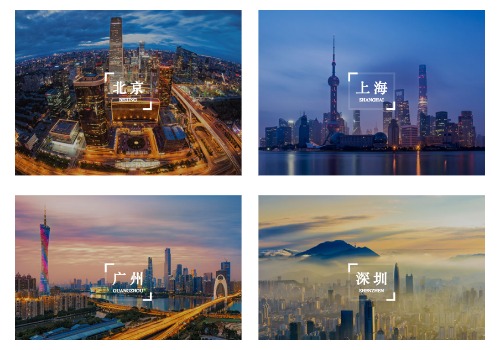
The company started in late 2014 with its own formula that allowed customers to search for available hotel rooms after 6 pm. Through the Dingfangbao app and site, four and five-star hotels in big cities such as Beijing, Shanghai, Guangzhou, and Shenzhen could offer their rooms at competitive prices if they were not occupied or reserved by 6 pm. A win-win situation: Dingfangbao users could get a top room for a cheap price, and hotels wouldn’t be left with empty hotel rooms.
The Dingfangbao service (Dingfangbao literally meaning ‘booking treasure’) was especially aimed at business travelers who won’t arrive at their hotels until the evenings due to late meetings and leave again early in the morning.
With Japanese nude model/(adult) film actress Sola Aoi (苍井空) as their company ambassador, it seemed that Dingfangbao was also aiming at luring customers to luxurious hotels at nighttime for other purposes – similar to the ‘love hotels’ in Japan.

Japanese sexy actress Sola Aoi was Dingfangbao’s spokesperson.
Dingfangbao had a promising take-off in 2014, with various fundings and an initial angel investment of 6 million RMB (±870K$), followed by second- and third-round funding of a total of 13 million RMB (±1.9M$) in 2015 and 2016.
But on 27 January 2017, Dingfangbao announced that it would be stopping its services. CEO Sun Jianrong (孙建荣) told the media that although there certainly is a market for the Dingbaofang formula, the frequency with which its clients used these services was too low and not enough to cover their operational costs.
On Weibo, the company still has around 19000 followers. Sola Aoi, who has a staggering 17 million fans on her Weibo page, announced on February 8 that she would step down as the company’s spokesperson. A day later, the company officially closed its doors, although its website is still live at the time of writing.
2. Greenbox 绿盒子

Business: O2O Children’s Clothing

Online trendy children’s clothing brand Greenbox (绿盒子) was a success story when it first entered China’s O2O (online-to-offline) retail market in 2010. The company was already established by businesswoman Wu Fangfang (吴芳芳) years before, but it made a conscious shift from offline to e-commerce when Wu realized the potential of middle-class moms spending more time shopping for their kids on the internet.
In 2010, Greenbox received two rounds of funding from Trust Bridge Partners (TBP) of 20 million RMB (3M$), and of 100 million (14.5M$) from DCM. Children clothing brands such as Miss de Mode, M.I.L. Boy, Jenny Bear, and a special Disney brand all belonged to Greenbox, which soon was named one of China’s top 10 e-retailers.
Greenbox tapped into the children’s clothing at the right time, as this retail segment has become especially booming business over the past few years. Together with the surge in other children-related products, there has been a shift to bigger sales of these ‘non-traditional products’ that show that China’s ‘Mummy Economy’ (妈妈经济) has become increasingly more relevant.

Wu Fangfang, the founder of Greenbox.
Soon after the brand was established, it became one of the most popular children’s clothing brands (ranking no.1 for three years in a row) on Alibaba’s online malls Tmall and Taobao. But Greenbox was not solely sold through Alibaba; it was also available through other online shopping platforms such as JD.com and Dangdang. The brand also had its own shop on WeChat.
In 2015, Greenbox started opening up physical stores besides its online ones. It had around 100 (flagship) stores in China’s first-tier cities, solely focused on online sales for the second- and third-tier cities. Was the company taking on more than it could? According to some Chinese media, the brand was “blindly expanding” and growing too fast, too soon, which led to recurring financial difficulties throughout the years. Their financial problems severely worsened in 2016, as the children’s clothing became increasingly competitive. In January 2017, the brand finally announced its bankruptcy.
On Weibo the brand still has 76000 fans, but it has been inactive for months. Some netizens are surprised that the well-known brand has quit, and wonder what this means for the future of other successful ‘Taobao brands.’
3. An Home 安个家

Business: Online Real Estate
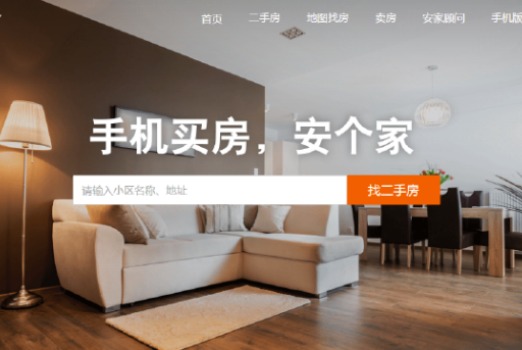
An Home (安个家) was established in April of 2015. Headquartered in Shanghai, it was independently funded (10 million RMB, 1.5M$) by CEO Liang Weiping (梁伟平). Its business offered online real estate services with a focus on its mobile app, attempting to rival with traditional real estate services.
Different from offline realtors, An Home aimed to be an online (mobile) platform where its home-seekers, homeowners, and consultants could connect with each other, making the process of buying and selling a house less time-consuming and more efficient.
An Home was a promising start-up for which Liang Weiping gathered a team coming from prosperous companies such as Tencent and Alibaba.
But by late December of 2016, Liang admitted to Chinese media that the company was facing financial hardships, and that they had not succeeded in finding the right way to compete with their offline rivals through online channels. As booming as all corners of China’s e-commerce market might seem, people might not be ready for O2O when it comes to real estate.
One of the reasons for its failure was that eventually, no matter online or offline, access to a large number of houses is the key to winning over the real estate market – and it was precisely this issue where the company feel behind compared to the more traditional channels.
Late 2016, CEO Liang sent out a letter to all of its staff that An Home had to halt operations due to financial difficulties. The company has now closed its doors.
What Can We Learn from the Graveyard Companies?
The aforementioned online companies are not the only ones who did not make it this year. Bollain Home Textile (帛澜家纺天猫店), founded in 2012 and selling bedding and home textiles through over 50 online stores in China, has collapsed after running behind approximately 16 million RMB (2.3M$) in its payments to suppliers and staff.
Online recruitment company Job Tong (周伯通招聘), established in 2013 as a major social recruitment platform and even receiving a 28 million RMB investment from NetEase, also went down earlier this year – its online competitors, including lagou.com, liepin.com, and zhipin.com, simply grew too strong.
“Even the most clever housewife cannot cook without rice”
And then we have not even mentioned foreign brands such as Lotte and others that closed their doors this doors in the highly competitive Chinese e-market.
So what is the lesson to be learned from these start-up failures? Of course, there is not one answer.
But Chinese e-commerce guru Wang Yongjun (王勇军), who has over 2,5 million fans on his Weibo account (@老高电商圈子), thinks he knows what China’s e-commerce start-ups need.
Wang runs a large networking group called the ‘Laogao Club’ for online entrepreneurs in China that are active on Taobao, Tmall, JD.com, etc, and in response to the ‘2017 failing e-commerce list’, published a blog on February 22 in which he gives some main points on how to succeed in this dog-eat-dog e-commerce world.

Mr. Wang, founder of the Laogao Club, explains how businesses can become successful on platforms such as Taobao or JD.com.
According to Wang’s article (in Chinese), which received many views on Weibo on February 22, building up an online community is key for any e-commerce business in China.
“Even the most clever housewife cannot cook without rice”, Wang argues, seeing an online following as the key ingredient to any online-based business. Drawing in communal media followers costs time and energy – haste makes waste.
The ‘guru’ says that online businesses can’t just gather their following by simply arranging a KOL (Key Opinion Leader) or online celebrity (see the first Dingfangbao example) for their brand; it is something a brand has to do themself, since they are the core that needs to attract fans.
“No matter how good you are, or how good your product is, it is worth nothing without an online community.”
“No matter how good you are, or how good your product is, it is worth nothing without an online community,” Wang writes. In a time when netizens are drowning in the information that is presented to them, it is essential that brands and companies are precise in targeting their relevant audiences and shooting their arrows in the right place.
Wang strongly advises companies to set up the right online environment that suits their target audience, and to pick the right timing to market their messages. Sometimes brands are lucky when their campaign goes viral, but mostly it is about smart strategy.
Before converting your assets into cash, it is important to continue to be valuable to followers and give them a reason to stay. Wang stresses that it is never a good idea to start the money-making machine too soon – you first need to make sure you have a steady and loyal group of online followers that is attached to your brand/company.
“Don’t drown the pond to get at the fish.”
“Don’t be overhasty, don’t drain the pond to get to the fish” (不能操之过急、竭泽而渔), is one of the messages of the Laogao Club for their online entrepreneurs. You can only transform your brand and starting making money once your ‘fans’ trust your brand/company enough and feel connected to its ‘flavor.’
Keeping up the quality of your services and products, and always making sure it brings more than just a ‘bargain’, it is therefore key to survive in the fiercely competitive Chinese e-commerce market.
Reading from the Laogao Club’s road to e-success, we could draw the conclusion that Dingfangbao had not worked enough on creating its own communal following of trusting and loyal fans before attempting to converting its assets into cash. An Home jumped into the pond before there were any fish at all, and Greenbox went ahead of itself and became too hasty to expand.
“If you enter the pit, be cautious”, some netizens respond on Weibo: “It is risky business.”
“There are too many people who don’t understand and think they are already running an e-business simply because they openened an online company. It looks good on paper, but in reality, it’s nothing,” another person writes.
– By Manya Koetse
Follow @WhatsOnWeibo
©2017 Whatsonweibo. All rights reserved. Do not reproduce our content without permission – you can contact us at info@whatsonweibo.com.



China Brands, Marketing & Consumers
Signals: Hasan Piker’s China Trip & the Unexpected Journey of a Chinese School Uniform to Angola
Hasan Piker’s controversial China tour, a Chinese school uniform resurfaces in Africa, a new winter hotspot, why Chinese elites ‘run’ to Tokyo, and more.

🌊 Signals — Week 47 (2025)
Part of Eye on Digital China, Signals highlights slower trends and online currents behind the daily scroll. This edition was sent to paid subscribers — subscribe to receive the next issue in your inbox.
For the coming two weeks, I’ll be traveling from Beijing to Chongqing and beyond (more on that soon) so please bear with me if my posting frequency dips a little. I’ll be sure to pick it up again soon and will do my best to keep you updated along the way. In the meantime, if you know of a must-try hotpot in Chongqing, please do let me know.
In this newsletter: Hasan Piker’s controversial China tour, a Chinese school uniform in Angola, a new winter hotspot, discussions on what happens to your Wechat after you die, why Chinese elites rùn to Tokyo, and more. Let’s dive in.
- 💰 The richest woman in China, according to the latest list by Hurun Research Institute, is the “queen of pharmaceuticals” Zhong Huijuan (钟慧娟) who has accumulated 141 billion yuan (over 19 billion USD). Women account for over 22% of Chinese billionaires (those with more than 5 billion RMB), underscoring China’s globally leading position in producing wealthy female entrepreneurs.
- 🧩 What happens to your WeChat after you die? A user who registered for NetEase Music with a newly reassigned phone number unexpectedly gained access to the late singer Coco Lee’s (李玟) account, as the number had originally belonged to her. The incident has reignited debate over how digital accounts should be handled after death, prompting platforms like NetEase and Tencent to reconsider policies on long-inactive accounts and take stronger measures to protect them.
- 📱 Although millions of viewers swoon over micro-dramas with fantasy storylines where rich, powerful men win over the “girl next door” through money and status, Chinese regulators are now stepping in to curb exaggerated plots featuring the so-called “dominant CEO” (霸道总裁) archetype, signaling stricter oversight for the booming short drama market.
- ☕ A popular Beijing coffee chain calling itself “People’s Cafe” (人民咖啡馆), with its style and logo evoking nationalist visual nostalgia, has changed its name after facing criticism for building its brand – including pricey coffee and merchandise – on Mao era and state-media political connotations. The cafe is now ‘Yachao People’s Cafe’ (要潮人民咖啡馆).
- 👀 Parents were recently shocked to see erotic ads appear on the Chinese nursery rhymes and children’s learning app BabyBus (宝宝巴士), which is meant for kids ages 0–8. BabyBus has since apologized, but the incident has sparked discussions about how to keep children safe from such content.
- 🧧The 2026 holiday schedule has continued to be a big topic of conversation as it includes a 9-day long Spring Festival break (from February 15 to February 23), making it the longest Lunar New Year holiday on record. The move not only gives people more time for family reunions, but also gives a huge boost to the domestic travel industry.
Hasan Piker’s Chinese Tour & The US–China Content Honeymoon

Livestreamer Hasan Piker during his visit to Tiananmen Square flag-rising ceremony.
It’s not time for the end-of-year overviews just yet – but I’ll already say that 2025 was the US–China ‘honeymoon’ year for content creation. It’s when China became “cool,” appealing, and eye-grabbing for young Western social media users, particularly Americans. The recent China trip of the prominent American online streamer Hasan Piker fits into that context.
This left-wing political commentator also known as ‘HasanAbi’ (3 million followers on Twitch, recently profiled by the New York Times) arrived in China for a two-week trip on November 11.

Piker screenshot from the interview with CGTN, published on CGTN.
His visit has been controversial on English-language social media, especially because Piker, known for his criticism of America (which he calls imperialist), has been overly praising China: calling himself “full Chinese,” waving the Chinese flag, joining state media outlet CGTN for an interview on China and the US, and gloating over a first-edition copy of Quotations from Chairman Mao (the Little Red Book). He portrays China as heavily misrepresented in the West and as a country the United States should learn from.

Hasan Piker did an interview with CGTN, posing with Li Jingjing 李菁菁.
During his livestreaming tour, Hasan, who is nicknamed “lemonbro” (柠檬哥) by Chinese netizens, also joined Chinese platforms Bilibili and Xiaohongshu.
But despite all the talk about Piker in the American online media sphere, online conversations, clicks, and views within China are underwhelming. As of now, he has around 24,000 followers on Bilibili, and he’s barely a topic of conversation on mainstream feeds.
Piker’s visit stands in stark contrast to that of American YouTuber IShowSpeed (Darren Watkins), who toured China in March. With lengthy livestreams from Beijing to Chongqing, his popularity exploded in China, where he came to be seen by many as a representative of cultural diplomacy.

IShowspeed in China, March 2025.
IShowSpeed’s success followed another peak moment in online US–China cultural exchange. In January 2025, waves of foreign TikTok users and popular creators migrated to the Chinese lifestyle app Xiaohongshu amid the looming TikTok ban.
Initially, the mass migration of American users to Xiaohongshu was a symbolic protest against Trump and US policies. In a playful act of political defiance, they downloaded Xiaohongshu to show they weren’t scared of government warnings about Chinese data collection. (For clarity: while TikTok is a made-in-China app, it is not accessible inside mainland China, where Douyin is the domestic version run by the same parent company).
The influx of foreigners — who were quickly nicknamed “TikTok refugees” — soon turned into a moment of cultural celebration. As American creators introduced themselves, Chinese users welcomed them warmly, eager to practice English and teach newcomers how to navigate the app. Discussions about language, culture, and societal differences flourished. Before long, “TikTok refugees” and “Xiaohongshu natives” were collaborating on homework assignments, swapping recipes, and bonding through humor. It was a rare moment of social media doing what we hope it can do: connect people, build bridges, and replace prejudice with curiosity.
Some of that same enthusiasm was also visible during IShowSpeed’s China tour. Despite the tour inevitably getting entangled with political and commercial interests, much of it was simply about an American boy swept up in the high energy of China’s vibrant cities and everything they offer.
Different from IShowSpeed, who is known for his meme-worthy online presence, Piker is primarily known for his radical political views. His China enthusiasm feels driven less by cultural curiosity and more by his critique of America.
Because of his stances — such as describing the US as a police state — it’s easy for Western critics to accuse him of hypocrisy in praising China, especially after a brief run-in with security police while livestreaming at Tiananmen Square.
Seen in broader context, Piker’s China trip reflects a shift in how China is used in American online discourse.
Before, it was Chinese ‘public intellectuals’ (公知) who praised the US as a ‘lighthouse country’ (灯塔国), a beacon of democracy, to indirectly critique China and promote a Western modernization model. Later, Chinese online influencers showcased their lives abroad to emphasize how much ‘brighter the moon’ was outside China.
In the post-Covid years, the current reversed: Western content creators, from TikTok influencers to political commentators, increasingly use China to make arguments that are fundamentally about America.
Between these cycles, authentic cultural curiosity gets pushed to the sidelines. The TikTok-refugee moment in early January may have been the closest we’ve come in years: a brief window where Chinese and American users met each other with curiosity, camaraderie, and creativity.
Hasan’s tour, in contrast, reflects a newer phase, one where China is increasingly used as a stage for Western political identity rather than a complex and diverse country to understand on its own terms. I think the honeymoon phase is over.
“Liu Sihan, Your School Uniform Ended Up in Angola”: China’s Second-Hand Clothing in Africa
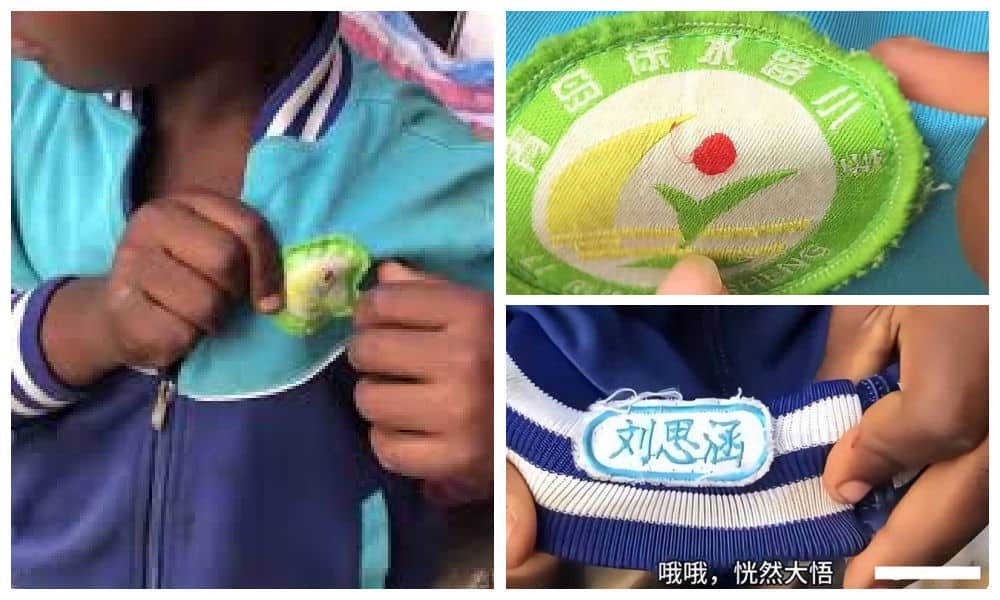
A Chinese school uniform went viral after a Chinese social media user spotted it in Angola.
“Liu Sihan, your schooluniform is hot in Africa” (刘思涵你的校服在非洲火了) is a sentence that unexpectedly trended after a Chinese blogger named Xiao Le (小乐) shared a video of a schoolkid in Angola wearing a Chinese second-hand uniform from Qingdao Xushuilu Primary School, that had the nametag Liu Sihan on it.
The topic sparked discussions about what actually happens to clothing after it’s donated, and many people were surprised to learn how widely Chinese discarded clothing circulates in parts of Africa.
Liu Sihan’s mother, whose daughter is now a 9th grader in Qingdao, had previously donated the uniform to a community clothing donation box (社区旧衣回收箱) after Liu outgrew it. She intended it to help someone in need, never imagining it to travel all the way to Africa.
In light of this story, one netizen shared a video showing a local African market selling all kinds of Chinese school items, including backpacks, and people wearing clothing once belonging to workers for Chinese delivery platforms. “In Africa, you can see school uniforms from all parts of China, and even Meituan and Eleme outfits,” one blogger wrote.
When it comes to second-hand clothing trade, we know much more about Europe–Africa and US–Africa flows than about Chinese exports, and it seems there haven’t been many studies on this specific topic yet. Still, alongside China’s rapid economic transformations, the rise of fast fashion, and the fact that China is the world’s largest producer and consumer of textiles, the country now has an enormous abundance of second-hand clothing.
According to a 2023 study by Wu et al. (link), China still has a long way to go in sustainable clothing disposal. Around 40% of Chinese consumers either keep unwanted clothes at home or throw them away.
But there may be a shift underway. Donation options are expanding quickly, from government bins to brand programs, and from second-hand stores to online platforms that offer at-home pickup.
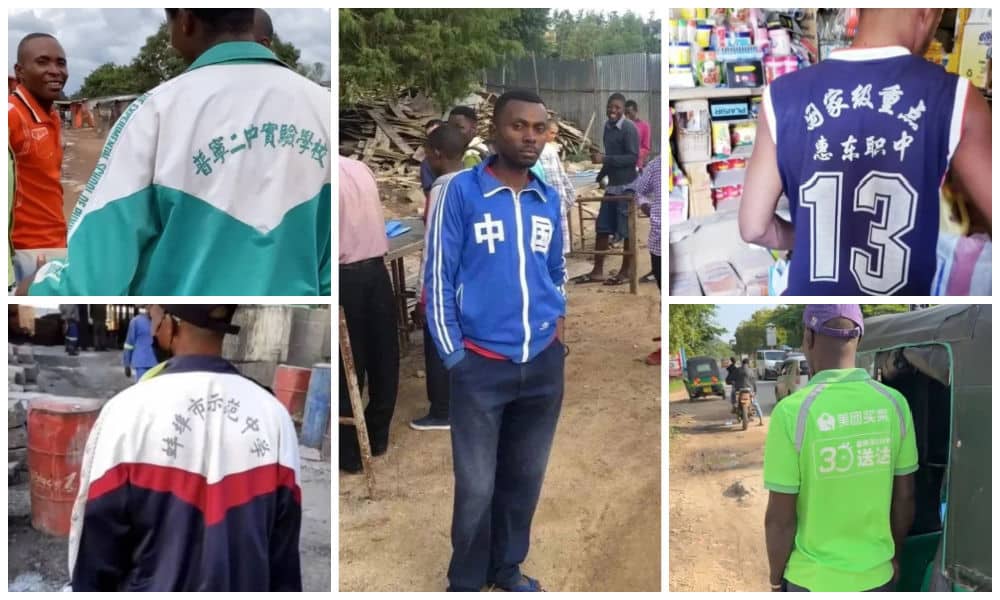
Chinese social media users posting images of school/work uniforms from China worn by Africans.
As awareness grows around the benefits of donating clothing (reducing waste, supporting sustainability, and the emotional satisfaction of giving), donation rates may rise significantly. The story of Liu Sihan’s uniform, which many found amusing, might even encourage more people to donate. And if that happens, scenes of African children (and adults) wearing Chinese-donated clothes may become much more common than they now are.
Laojunshan: New Hotspot in Cold Winter

Images from Xiaohongshu, 背包里的星子, 旅行定制师小漾
Go to Zibo for BBQ, go to Tianshui for malatang, go to Harbin for the Ice Festival, cycle to Kaifeng for soup dumplings, or head to Dunhuang to ride a camel — over recent years, a number of Chinese domestic destinations have turned into viral hotspots, boosted by online marketing initiatives and Xiaohongshu influencers.
This year, Laojunshan is among the places climbing the trending lists as a must-visit spot for its spectacular snow-covered landscapes that remind many of classical Chinese paintings. Laojunshan (老君山), a scenic mountain in Henan Province, is attracting more domestic tourists for winter excursions.
Xiaohongshu is filled with travel tips: how to get there from Luoyang station (by bus), and the best times of day to catch the snow in perfect light (7–9 AM or around 6–6:30 PM).
With Laojunshan, we see a familiar pattern: local tourism bureaus, state media, and influencers collectively driving new waves of visitors to the area, bringing crucial revenue to local industries during what would otherwise be slower winter months.
WeChat New Features & Hong Kong Police on Douyin
🟦 WeChat has been gradually rolling out a new feature that allows users to recall a batch of messages all at once, which saves you the frantic effort of deleting each message individually after realizing you sent them to the wrong group (or just regret a late-night rant). Many users are welcoming the update, along with another feature that lets you delete a contact without wiping the entire chat history. This is useful for anyone who wants to preserve evidence of what happened before cutting ties.

🟦The Hong Kong Police Force recently celebrated its two-year anniversary on Douyin (the Chinese version of TikTok), having accumulated nearly 5 million followers during that time. To mark the occasion, they invited actor Simon Yam to record a commemorative video for their channel (@香港警察). The presence of the Hong Kong Police on the Chinese app — and the approachable, meme-friendly way they’ve chosen to engage with younger mainland audiences — is yet another signal of Hong Kong institutions’ strategic alignment with mainland China’s digital infrastructure, a shift that has been gradually taking place. The anniversary video proved popular on Douyin, attracting thousands of likes and comments.
Why Chinese Elite Rùn to Japan (by ChinaTalk)
Over the past week, Japan has been trending every single day on Chinese social media in light of escalating bilateral tensions after Japanese PM Takaichi made remarks about Taiwan that China views as a direct military threat. The diplomatic freeze is triggering all kinds of trends, from rising anti-Japanese sentiment online and a ban on Japanese seafood imports to Chinese authorities warning citizens not to travel to Japan.
You’d think Chinese people would want to be anywhere but Japan right now — but the reality is far more nuanced.
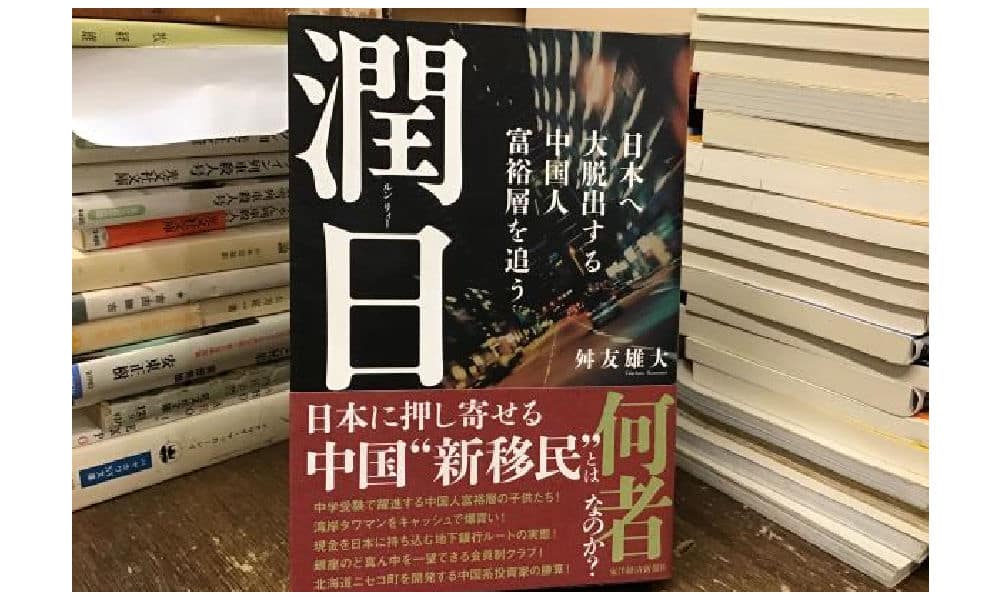
In a recent feature in ChinaTalk, Jordan Schneider interviewed Japanese journalist & researcher Takehiro Masutomo (舛友雄大) who has just published a book about Japan’s new Chinese diaspora, explaining what draws Chinese dissidents, intellectuals, billionaires, and middle-class families to Tokyo.
The book is titled Run Ri: 潤日 Following the Footsteps of Elite Chinese Escaping to Japan (only available in Japanese and Traditional Chinese for now). (The word Rùn 润/潤, by the way, is Chinese online slang and meme expresses the desire to escape the country.)
A very interesting read on how Chinese communities are settling in Japan, a place they see as freer than Hong Kong and safer than the U.S., and one they’re surprisingly optimistic about — even more so than the Japanese themselves.
Thanks for reading this Eye on Digital China Signals. For fast-moving trends and deeper dives, keep an eye on the upcoming newsletters.
And if you just so happen to be reading this without a subscription and appreciate my work, consider joining to receive future issues straight in your inbox.
A small housekeeping note:
This Eye on Digital China newsletter is co-published for subscribers on both Substack and the main site. If you’re registered on both platforms, you’ll receive duplicate emails — so if that bothers you, please pick your preferred platform and unsubscribe from the other.
Many thanks to Miranda Barnes for helping curate some of the topics in this edition.
— Manya
Spotted an error or want to add something? Comment below or email me.
First-time commenters require manual approval.
©2025 Eye on Digital China / What’s on Weibo. Do not reproduce without permission —
contact info@whatsonweibo.com.
China Brands, Marketing & Consumers
House of Wahaha: Zong Fuli Resigns
In the year following her father’s death, Zong Fuli dealt with controversy after controversy as the head of Chinese food & beverage giant Wahaha.

It’s a bit like a Succession-style corporate drama 🍿.
Over the past few years, we’ve covered stories surrounding Chinese beverage giant Wahaha (娃哈哈) several times — and with good reason.
Since the passing of its much-beloved founder Zong Qinghou (宗庆后) in March 2024, the company has been caught in waves of internal turmoil.
Some context: Wahaha is regarded as a patriotic brand in China — not only because it’s the country’s equivalent of Coca-Cola or PepsiCo (they even launched their own cola in 1998 called “Future Cola” 非常可乐, with the slogan “The future will be better” 未来会更好), but also because its iconic drinks are tied to the childhood memories of millions.
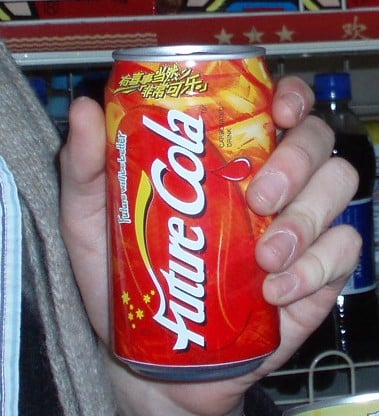
Future Cola by Wahaha via Wikipedia.
There’s also the famous 2006 story when Zong Qinghou refused a buyout offer from Danone. Although the details of that deal are complex, the rejection was widely seen as Zong’s defense of a Chinese brand against foreign takeover, contributing to his status as a national business hero.
After the death of Zong, his daughter Zong Fuli, also known as Kelly Zong (宗馥莉), took over.
🔹 But Zong Fuli soon faced controversy after controversy, including revelations that Wahaha had outsourced production of some bottled water lines to cheaper contractors (link).
🔹 There was also a high-profile family inheritance dispute involving three illegitimate children of Zong Qinghou, now living in the US, who sued Zong Fuli in Hong Kong courts, claiming they were each entitled to multi-million-dollar trust funds and assets.
🔹 More legal trouble arrived when regulators and other shareholders objected to Zong Fuli using the “Wahaha” mark through subsidiaries and for new products outside officially approved channels (the company has 46% state ownership).
⚡️ The trending news of the moment is that Zong Fuli has officially resigned from all positions at Wahaha Group as chairman, legal representative, and director. She reportedly resigned on September 12, after which she started her own brand named “Wa Xiao Zong” (娃小宗). One related hashtag received over 320 million views on Weibo (#宗馥莉已经辞职#). Wahaha’s board confirmed the move on October 10, appointing Xu Simin (许思敏) as the new General Manager. Zong remains Wahaha’s second-largest shareholder.
🔹 To complicate matters further, Zong’s uncle, Zong Wei (宗伟), has now launched a rival brand — Hu Xiao Wa (沪小娃) — with product lines and distribution networks nearly identical to Wahaha’s.
As explained by Weibo blogger Tusiji (兔撕鸡大老爷), under Zong Qinghou, Wahaha relied on a family-run “feudal” system with various family-controlled factories. Zong Fuli allegedly tried to dismantle this system to centralize power, fracturing the Wahaha brand and angering both relatives and state investors.
Others also claim that Zong had already been engaged in a major “De-Wahaha-ization” (去娃哈哈化) campaign long before her resignation.
In August of this year, Zong gave an exclusive interview to Caijing (财经) magazine where she addressed leadership challenges and public controversies. In the interview, Zong spoke more about her views on running Wahaha, advocating long-term strategic growth over short-term results, and sharing her determination to not let controversy distract her from business operations. That plan seems to have failed.
While Chinese netizens are watching this family brand war unfold, many are rooting for Zong after everything she has gone through – they feel her father left her in a complicated mess after his death.
At the same time, others believe she tried to run Wahaha in a modern “Western” way and blame her for that.
For the brand image of Wahaha, the whole ordeal is a huge blow. Many people are now vowing not to buy the brand again.
As for Zong’s new brand, we’ll have to wait for the next episode in this family company drama to see how it unfolds.
By Manya Koetse
(follow on X, LinkedIn, or Instagram)
Spotted a mistake or want to add something? Please let us know in comments below or email us. First-time commenters, please be patient – we will have to manually approve your comment before it appears.
©2025 Whatsonweibo. All rights reserved. Do not reproduce our content without permission – you can contact us at info@whatsonweibo.com.
Eye on Digital China is a reader-supported publication by
Manya Koetse (@manyapan) and powered by What’s on Weibo.
It offers independent analysis of China’s online culture, media, and social trends.
To receive the newsletter and support this work, consider
becoming a paid subscriber.


China Trend Watch: From a Hospital in Crisis to Chaotic Pig Feasts

The “Are You Dead Yet?” Phenomenon: How a Dark Satire Became China’s #1 Paid App

Trump, Taiwan & The Three-Body Problem: How Chinese Social Media Frames the US Strike on Venezuela

China’s 2025 Year in Review in 12 Phrases

China’s 10 Biggest Social Media Stories of 2025

China Trend Watch: Japan Tensions, Nexperia Fallout, Yunnan’s ‘Wild Child,’ & “Modern Opium”

Eye on Digital China: How Chinese Social Media Evolved from the Blog Era to the AI-driven Age

Signals: Hasan Piker’s China Trip & the Unexpected Journey of a Chinese School Uniform to Angola

Trump and Takaichi: The Unexpected Love Affair

China Trend Watch: Hong Kong Fire Updates, Nantong’s Viral Moment & Japanese Concert Cancellations
-

 China Arts & Entertainment6 months ago
Hidden Cameras and Taboo Topics: The Many Layers of the “Nanjing Sister Hong” Scandal
-

 China Insight9 months ago
Understanding the Dr. Xiao Medical Scandal
-

 China Insight6 months ago
“Jiangyou Bullying Incident”: From Online Outrage to Offline Protest
-

 China Insight9 months ago
China Is Not Censoring Its Social Media to Please the West