Chapter Dive
“Dear Li Hua”: The TikTok/Xiaohongshu Honeymoon Explained
As American ‘TikTok Refugees’ flock to China’s Xiaohongshu (Rednote), their encounter with ‘Li Hua’ strikes a chord in divided times.
Published
1 year agoon
FROM THE WEIBO WATCH PREMIUM NEWSLETTER
China’s Xiaohongshu (Rednote) has seen an unprecedented influx of foreign “TikTok refugees” over the past week, giving rise to endless jokes. But behind this unexpected online migration lie some deeper themes—geopolitical tensions, a desire for cultural exchange, and the unexpected role of the fictional character Li Hua in bridging the divide.
Imagine you are Li Hua (李华), a Chinese senior high school student. You have a foreign friend, far away, in America. His name is John, and he has asked you for some insight into Chinese Spring Festival, for an upcoming essay has to write for the school newspaper. You need to write a reply to John, in which you explain more about the history of China’s New Year festival and the traditions surrounding its celebrations.
This is the kind of writing assignment many Chinese students have once encountered during their English writing exams in school during the Gaokao (高考), China’s National College Entrance Exams. The figure of ‘Li Hua’ has popped up on and off during these exams since at least 1995, when Li invited foreign friend ‘Peter’ to a picnic at Renmin Park.
Over the years, Li Hua has become somewhat of a cultural icon. A few months ago, Shangguan News (上观新闻) humorously speculated about his age, estimating that, since one exam mentioned his birth year as 1977, he should now be 47 years old—still a high school student, still helping foreign friends, and still introducing them to life in China.

Li Hua: the connector, the helper, the icon.
This week, however, Li Hua unexpectedly became a trending topic on social media—in a week that was already full of surprises.
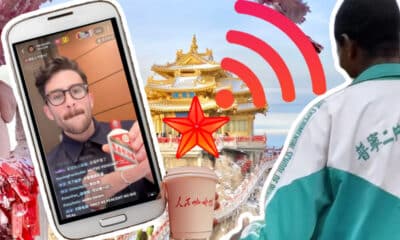
With a TikTok ban looming in the US (delayed after briefly taking effect on Sunday), millions of American TikTok users began migrating to other platforms this month. The most notable one was the Chinese social media app Xiaohongshu (now also known as Rednote), which saw a massive influx of so-called “TikTok refugees” (Tiktok难民). The surge propelled Xiaohongshu to the #1 spot in app stores across the US and beyond.
This influx of some three million foreigners marked an unprecedented moment for a domestic Chinese app, and Xiaohongshu’s sudden international popularity has brought both challenges and beautiful moments. Beyond the geopolitical tension between the US and China, Chinese and American internet users spontaneously found common ground, creating unique connections and finding new friends.
While the TikTok/Xiaohongshu “honeymoon” may seem like just a humorous trend, it also reflects deeper, more complex themes.
✳️ National Security Threat or Anti-Chinese Witchhunt?
At its core, the “TikTok refugee” trend has sprung from geopolitical tensions, rivalry, and mutual distrust between the US and China.
TikTok is a wildly popular AI-powered short video app by Chinese company ByteDance, which also runs Douyin, the Chinese counterpart of the international TikTok app. TikTok has over 170 million users in the US alone.
A potential TikTok ban was first proposed in 2020, amid escalating US-China tensions. President Trump initiated the move, citing security and data concerns. In 2024, the debate resurfaced in global headlines when President Biden signed the “Protecting Americans from Foreign Adversary Controlled Applications Act,” giving ByteDance nine months to divest TikTok or face a US ban.
TikTok, however, has continuously insisted it is apolitical, does not accept political promotion, and has no political agenda. Its Singaporean CEO Shou Zi Chew maintains that ByteDance is a private business and “not an agent of China or any other country.”
🇺🇸 From Washington’s perspective, TikTok is viewed as a national and personal security threat. Officials fear the app could be used to spread propaganda or misinformation on behalf of the Chinese Communist Party.
🇨🇳 Beijing, meanwhile, criticizes the ban as an act of “bullying,” accusing the US of protectionism and attempting to undermine China’s most successful internet companies. They argue that the ban reflects America’s inability to compete with the success of Chinese digital products, labeling the scrutiny around TikTok as a “witch hunt.”

Political cartoon about the American “witchhunt” against TikTok, shared on Weibo in 2023, also published on Twitter by Lianhe Zaobao.
“This will eventually backfire on the US itself,” China’s Foreign Ministry spokesperson Wang Wenbin predicted in 2024.
Wang turned out to be quite right, in a way.
When it became clear in mid-January that the ban was likely to become a reality, American TikTok users grew increasingly frustrated and angry with their government. For many of these TikTok creators, the platform is not just a form of entertainment—it has become an essential part of their income. Some directly monetize their content through TikTok, while others use it to promote services or products, targeting audiences that other platforms like Facebook, Instagram, or X can no longer reach as effectively.
Initially, the mass migration of American users to Xiaohongshu was a symbolic protest against US policies. Users advocated for the right to choose their preferred social media, and voiced their frustration at how their favorite app had become a pawn in US-China geopolitical tensions. Rejecting the narrative that “data must be protected from the Chinese,” many pointed out that privacy concerns were equally valid for US-based platforms. As an act of playful political defiance, these users downloaded Xiaohongshu to demonstrate they didn’t fear the government’s warnings about Chinese data collection.
(If they had the option, by the way, they would have installed Douyin—the actual Chinese version of TikTok—but it is only available in Chinese app stores, whereas Xiaohongshu is accessible in international stores, so it was picked as ‘China’s version of TikTok.’)
Xiaohongshu is actually not the same as TikTok at all. Founded in 2013, Xiaohongshu (literal translation: Little Red Book) is a popular app with over 300 million users that combines lifestyle, travel, fashion, and cosmetics with e-commerce, user-generated content, and product reviews. Like TikTok, it offers personalized content recommendations and scrolling videos, but is otherwise different in types of engagement and being more text-based.
As a Chinese app primarily designed for a domestic audience, the sudden wave of foreign users caused significant disruption. Xiaohongshu must adhere to the guidelines of China’s Cyberspace Administration, which requires tight control over information flows. The unexpected influx of foreign users undoubtedly created challenges for the company, not only prompting them to implement translation tools but also recruiting English-speaking content moderators to manage the new streams of content. Foreigners addressing sensitive political issues soon found their accounts banned.
Of course, there is undeniable irony in Americans protesting government control by flocking to a Chinese app functioning within an internet system that is highly controlled by the government—a move that sparked quite some debate and criticism as well.
✳️ The Sino-American ‘Dear Li Hua’ Moment
While the initial hype around Xiaohongshu among TikTok users was political, the trend quickly shifted into a moment of cultural exchange. As American creators introduced themselves on the platform, Chinese users gave them a warm welcome, eager to practice their English and teach these foreign newcomers how to navigate the app.
Soon, discussions about language, culture, and societal differences between China and the US began to flourish. Before long, “TikTok refugees” and “Xiaohongshu natives” were collaborating on homework assignments, swapping recipes, and bonding through humor.
For instance, Chinese users jokingly asked the “TikTok refugees” to pay a “cat tax” for seeking refuge on their platform, which American users happily fulfilled by posting adorable cat photos. American users, in turn, joked about becoming best friends with their “Chinese spies,” playfully mocking their own government’s fears about Chinese data collection.

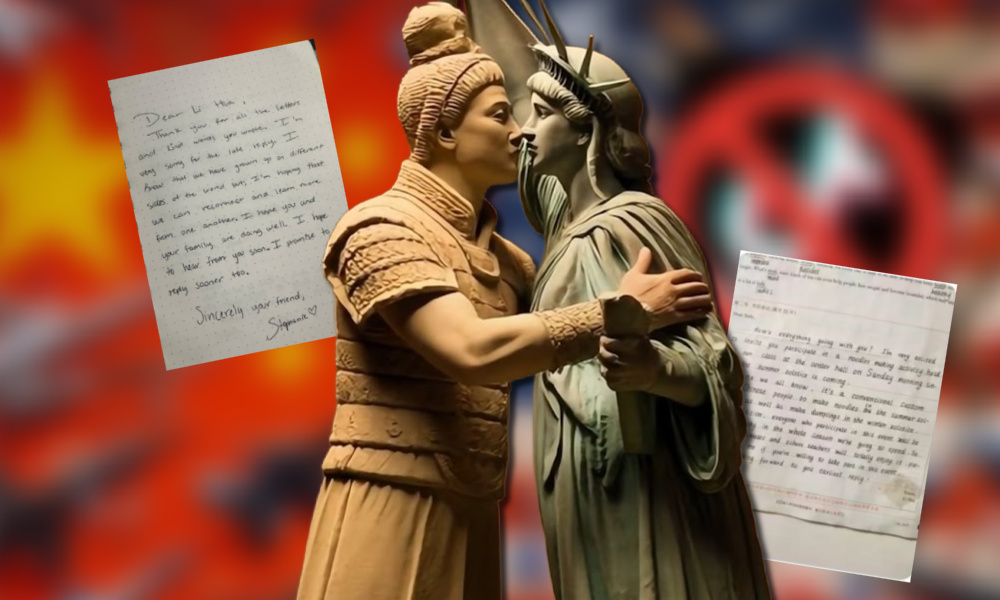
The newfound camaraderie sparked creativity, as users began generating humorous images celebrating the bond between American and Chinese netizens—like Ronald McDonald cooking with the Monkey King or the Terra Cotta Soldier embracing the Statue of Liberty. Later, some images even depicted the pair welcoming their first “baby.”

🇺🇸 At the same time, it became clear just how little Americans and Chinese truly know about each other. Many American users expressed surprise at the China they discovered through Xiaohongshu, which contrasted sharply with negative portrayals they’ve seen in the media. While some popular US narratives often paint Chinese citizens as “brainwashed” by their government, many TikTok users began to reflect on how their own perspectives had been shaped—or even “manipulated”—by their media and government.
🇨🇳 For Chinese users, the sudden interaction underscored their digital isolation. Over the past 15 years, China has developed its own tightly regulated digital ecosystem, with Western platforms like Facebook, Twitter, Instagram, and YouTube inaccessible in the mainland. While this system offers political and economic advantages, it has left many young Chinese people culturally hungry for direct interaction with foreigners—especially after years of reduced exchange caused by the pandemic, trade tensions, and bilateral estrangement. (Today, only some 1,100 American students are reportedly studying in China.)
The enthusiasm and eagerness displayed by American and Chinese Xiaohongshu users this week actually underscores the vacuum in cultural exchange between the two nations.
As a result of the Xiaohongshu migration, language-learning platform Duolingo reported a 216% rise in new US users learning Mandarin—a clear sign of growing interest in bridging the US-China divide.
Mourning the lack of intercultural communication and celebrating this unexpected moment of connection, Xiaohongshu users began jokingly asking Americans if they had ever received their “Li Hua letters.”
What started as some lighthearted remarks evolved into something much bigger as Chinese users dug up their old Gaokao exam papers and shared the letters they had written to their imaginary foreign friends years ago. These letters, often carefully stored in drawers or organizers, were posted with captions like, “Why didn’t you reply?” suggesting that Chinese students had been trying to reach out for years.

Example letters on Xiaohongshu: ‘Li Hua’ writing to foreign friends.
The story of ‘Li Hua’ and the replies he never received struck a chord with American Tiktok users. One user, Debrah.71, commented:
“It was the opposite for us in the USA. When I was in grade school, we did the same thing—we had foreign pen pals. But they did respond to our letters.”
Then, something extraordinary happened: Americans started replying to Li Hua.
One user, Douglas (@neonhotel), posted a heartfelt video of him writing a letter to Li Hua:
📝”Dear Li Hua, I’m sorry I didn’t get your letters. I understand you’ve been writing me for a long time, but now I’m here to reply. Hello, from your American friend. I hope you’re well. Life here is pretty normal—we go to work, hit the gym, eat dinner, watch TV. What about you? Please write back. I’m sorry I didn’t reply before, but I’m here now. Your friend, Douglas.”
Another user, Tess (@TessSaidThat), wrote:
📝”Dear Li Hua, I hope this letter finds you well. I’m so sorry my response is so late. My government never delivered your letters. Instead, they told me you didn’t want to be my friend. Now I know the truth, and I can’t wait to visit. Which city should I visit first? With love, Tess.”

Examples of Dear Li Hua letters.
Other replies echoed similar sentiments:
📝”Dear Li Hua, I’m sorry the world kept us apart.”
📝”I know we don’t speak the same language, but I understand you clearly. Your warmth and genuine kindness transcend every barrier.”
📝”Did you achieve your dreams? Are you still practicing English? We’re older now, but wherever we are, happiness is what matters most.”
These exchanges left hundreds of users—both Chinese and American, young and old, male and female—teary-eyed. In a way, it’s the emotional weight of the distance—represented by millions of unanswered letters—that resonated deeply with both “TikTok refugees” and “Xiaohongshu natives.”

Emotional responses to the Li Hua letters.
The letters seemed to symbolize the gap that has long separated Chinese and American people, and the replies highlighted the unusual circumstances that brought these two online communities together. This moment of genuine cultural exchange made many realize how anti-Chinese, anti-American sentiments have dominated narratives for years, fostering misunderstandings.

Xiaohongshu commenter.
On the Chinese side, many people expressed how emotional it was to see Li Hua’s letters finally receiving replies. Writing these letters had been a collective experience for generations of Chinese students, creating messages to imaginary foreign friends they never expected to meet.
Receiving a reply wasn’t just about connection; it was about being truly seen at a time when Chinese people often feel underrepresented or mischaracterized in global contexts. Some users even called the replies to the Li Hua letters a “historical moment.”
✳️ Unity in a Time of Digital Divide
Alongside its political and cultural dimensions, the TikTok/Xiaohongshu “honeymoon” also reveals much about China and its digital environment. The fact that TikTok, a product of a Chinese company, has had such a profound impact on the American online landscape—and that American users are now flocking to another Chinese app—showcases the strength of Chinese digital products and the growing “de-westernization” of social media.
Of course, in Chinese official media discourse, this aspect of the story has been positively highlighted. Chinese state media portrays the migration of US TikTok users to Xiaohongshu as a victory for China: not only does it emphasize China’s role as a digital superpower and supposed geopolitical “connector” amidst US-China tensions, but it also serves as a way of mocking US authorities for the “witch hunt” against TikTok, suggesting that their actions have ultimately backfired—a win-win for China.
The Chinese Communist Party’s Publicity Department even made a tongue-in-cheek remark about Xiaohongshu’s sudden popularity among foreign users. The Weibo account of the propaganda app Study Xi, Strong Country, dedicated to promote Party history and Xi Jinping’s work, playfully suggested that if Americans are using a Chinese social media app today, they might be studying Xi Jinping Thought tomorrow, writing: “We warmly invite all friends, foreign and Chinese, new and old, to download the ‘Big Red Book’ app so we can study and make progress together!”
Perhaps the most positive takeaway from the TikTok/Xiaohongshu trend—regardless of how many American users remain on the app now that the TikTok ban has been delayed—is that it demonstrates the power of digital platforms to create new, transnational communities. It’s unfortunate that censorship, a TikTok ban, and the fragmentation of global social media triggered this moment, but it has opened a rare opportunity to build bridges across countries and platforms.
The “Dear Li Hua” letters are not just personal exchanges; they are part of a larger movement where digital tools are reshaping how people form relationships and challenge preconceived notions of others outside geopolitical contexts. Most importantly, it has shown Chinese and American social media users how confined they’ve been to their own bubbles, isolated on their own islands. An AI-powered social media app in the digital era became the unexpected medium for them to share kind words, have a laugh, exchange letters, and see each other for what they truly are: just humans.
As millions of Americans flock back to TikTok today, things will not be the same as before. They now know they have a friend in China called Li Hua.
By Manya Koetse
(follow on X, LinkedIn, or Instagram)
Spotted a mistake or want to add something? Please let us know in comments below or email us. First-time commenters, please be patient – we will have to manually approve your comment before it appears.
©2025 Whatsonweibo. All rights reserved. Do not reproduce our content without permission – you can contact us at info@whatsonweibo.com.
Manya Koetse is a sinologist, writer, and public speaker specializing in China’s social trends, digital culture, and online media ecosystems. She founded What’s on Weibo in 2013 and now runs the Eye on Digital China newsletter. Learn more at manyakoetse.com or follow her on X, Instagram, or LinkedIn.
You may like
Chapter Dive
My Mum Has Two Husbands: The OPPO Mother’s Day Fiasco and 7 Other Gender Marketing Fails in China
Inside OPPO’s Mother’s Day PR fiasco and other failed marketing campaigns in China’s gender minefield
Published
3 days agoon
May 12, 2026
The backlash to OPPO’s Mother’s Day ad came from multiple directions, from grassroots netizens to official organizations. Here’s a closer look at the controversy, along with 7 other cases that show how gender-related marketing has become a recurring minefield for brands in China.
Mother’s Day is over, but OPPO is still recovering. The Chinese smartphone brand went viral over the weekend for a Mother’s Day marketing campaign that failed spectacularly. In the campaign, OPPO used the slogan: “My mom has two ‘husbands.’”
The accompanying text read:
“My mom has two ‘husbands.’ One is my dad, and the other one she sees twice a year. She barely dresses up for dates with my dad, but when she sees the other one, she’d wear a wedding dress if she could.” (“我妈有两个‘老公’,一个是我爸,另一个一年见两回。跟我爸约会基本不打扮,见另一个,她恨不得穿婚纱。”)

The OPPO ad was published online on May 8, 2026.
With this ad, OPPO was likely trying to tap into digital culture and resonate with younger consumers by using online slang.
In Chinese fandom subcultures, female fans sometimes refer to their idols as their “husband” (老公, lǎogōng) to express their devotion. It is part of a broader online joke, with some fans even incorporating life-size cardboard cutouts of their favorite celebrities into their weddings.

The phrase “real husband” (真老公) gained wider mainstream attention in late 2025 after a young Chinese bride unexpectedly ran into rapper and singer Jackson Wang on her wedding day and posted:
💬 “Who understands this? I met my real husband on my wedding day!” (“谁懂啊!婚礼当天遇到了真老公!!”)

The ‘real husband’ post that went viral in late 2025 and early 2026.
Although some commenters found it funny, the bride was heavily criticized for publicly calling a celebrity her “real husband” on her wedding day, using the same word (老公) that refers to her literal spouse, as if she were placing her idol above her actual groom.
💬 “This makes it seem as though she does not truly regard the man she is legally marrying as her husband at all,” one among many commenters wrote.
While OPPO was probably aiming for a tongue-in-cheek campaign featuring an energetic and youthful mother who adores her idol, the company appears to have badly misread the room.
After the ad was posted on Weibo and other social media channels ahead of Mother’s Day, backlash quickly followed.
Many netizens were confused and did not understand the reference to fan culture. Some said they were simply “baffled” by what they saw as an inappropriate message suggesting that mom was cheating—and on Mother’s Day, no less!
💬 “Without reading the comments, I thought the ad was saying the mother was cheating and didn’t love her husband, but had a side lover she was crazy about,” one Xiaohongshu commenter wrote.
Others asked whether the creators would have been willing to run a similar Father’s Day campaign with the line: “My dad has two wives.”
Fan culture remains far removed from the everyday experience of many ordinary Chinese netizens, creating not just a gender divide but also a generational and social one.
Even when people understand that an “idol husband” is purely fictional, the term 老公 (lǎogōng) still carries the literal meaning of “husband” and implies emotional devotion to someone outside the marriage. For some, that feels disrespectful.
Many also questioned the contrast at the heart of the campaign: why does mum barely dress up for dates with her husband, yet would supposedly wear a wedding dress to see a celebrity?
Others believe celebrity fandom in China has already gone too far, and felt that using this language in a mainstream advertising campaign was especially misplaced.
As one marketing commentator on Xiaohongshu Cathy聊品牌热点) put it, OPPO had managed to offend almost every relevant audience: male consumers who saw the ad as disrespectful to husbands, fandom communities who did not want their inside jokes dragged into mainstream advertising, women who support gender equality, and many others who hold strong views about traditional family values.
Emotional Infidelity as a Form of Female Self-Expression
The brand quickly took the campaign offline and apologized. But in their initial apology post, OPPO explained that it had merely intended to challenge gender stereotypes and present a “more diverse and multi-dimensional image of today’s mothers,” women who can enjoy celebrity fandoms and pursue hobbies beyond their roles as wives and mothers.
OPPO’s first apology: “Our original intention was to break stereotypes and present a more diverse and multi-dimensional image of today’s mothers.”
That explanation sparked another wave of criticism, with many arguing that OPPO had completely missed the point. Few people objected to the idea that mothers can have celebrity idols or personal passions. What many found problematic was the suggestion of romantic involvement outside the marriage.
One Weibo commenter (@甲申鬼友), who called the entire episode a “PR disaster”, suggested that the problem was that OPPO framed emotional infidelity as a form of female self-expression.
They wrote:
💬 “The controversial slogan “My mom has two husbands” was not about challenging stereotypes about mothers. Instead, it glorified the tacky behavior of a married woman calling a celebrity “husband” and wanting to wear a wedding dress to see him, presenting it as a form of female self-expression. Implicitly, it suggested that a real husband should unconditionally accept his wife’s “emotional infidelity.” (…). The message conveyed by the campaign was clear enough: it alienated men and mothers who still value loyalty and commitment in relationships.”
It soon became clear that OPPO’s handling of the issue was turning into a bigger problem than the ad itself.
As netizens continued to criticize the campaign, the controversy was amplified by blogs, mainstream media, and state-affiliated organizations.
The China Advertising Association (CAA), the country’s leading advertising body operating under state supervision, weighed in, along with the All-China Women’s Federation (ACWF), China’s main state-linked women’s organization.
Both organizations echoed familiar Party messaging, criticizing marketing that crosses the boundaries of public morality, deviates from core socialist values, violates traditional family ethics, or “misleads the public, especially young people, about social values.”
As the controversy escalated, attention also turned to OPPO’s China region brand strategy director, Yu Siyue (余思月), a graduate of Wuhan University’s School of Chinese Language and Literature.
The university itself then entered the discussion by posting a statement on Weibo saying it was “shocked” by the campaign. It said it “strongly disagrees with the content (..) and the values conveyed,” distancing itself from both the campaign and its alumna. (In a detail I found unintentionally amusing, the statement also noted that Yu had once been praised for helping an elderly passenger on a bus.)
Wuhan University itself was also criticized for inserting itself into a controversy that had little to do with the university. Chinese media outlet Yicai asked: “Who forced Wuhan University into this disastrous move?” Even political commentator Hu Xijin called the statement an overreaction and a sign of “public opinion anxiety syndrome” (舆情焦虑症).
In the end, OPPO apologizedc a second time on Monday, this time stating that both the campaign and its initial response reflected serious shortcomings in the company’s values and judgment. The company said it had lost sight of “upholding the boundaries of China’s core socialist values.”
OPPO said the incident had led to disciplinary measures against those responsible, and the company promised it would ensure that future campaigns better align with “mainstream values.”
Lessons to Be Learned
There are a few things to be learned from OPPO’s PR nightmare:
🔍 1. Marketing fails are often about the response
Once a marketing controversy breaks out, the company’s response often matters more than the original mistake. If the response fails to address the actual criticism, the fallout can become much worse than the initial problem.
🔍 2. In China, PR controversies quickly become political issues
In China, public relations is inherently political. What begins as criticism from netizens can quickly be amplified by state media and official organizations. In the process, a relatively minor marketing controversy can be reframed as a broader debate about morality and family values. Once that happens, the issue is no longer just about a poorly judged advertisement but becomes a tool for boosting official narratives and reinforcing broader Party priorities.
🔍 3. In China’s cancel culture, everyone rushes to distance themselves
Chinese online backlash can be intense and unforgiving. Once a controversy takes off, everyone rushes to distance themselves from it. The fact that OPPO’s brand director became a target, and that even Wuhan University felt compelled to issue a public statement, illustrates this dynamic. At the same time, such overreactions can backfire, especially when an organization emphasizes that it is “not involved” by publicly engaging in the controversy. Sometimes, silence really is golden.
🔍 4. Gender-related marketing in China is a minefield
This episode is another reminder of how difficult it can be for brands to engage with gender-related themes in China. Companies eager to appear youthful and relatable may underestimate just how sensitive these issues are, and how quickly a seemingly playful campaign can turn into a major controversy.
Not Just OPPO: When Gender-Related Marketing Goes Wrong
OPPO is far from alone.
In recent years, language, jokes, and messaging related to gender, feminism, and male-female relationships have become some of the most sensitive issues in Chinese advertising.
In a rapidly changing China, gender roles are evolving, identities are shifting, and ideas about what is considered feminine or masculine are increasingly contested.
Expectations around what female consumers want and what male consumers value are also in flux. Younger and older generations, and especially male and female netizens, often disagree about what is socially acceptable amid women’s growing assertiveness, persistent patriarchal attitudes, and changing global trends.
For advertisers and creative directors, this creates a particularly difficult environment. Brands are trying to tap into consumers’ purchasing power and keep up with shifting social norms, while also staying within the bounds of official values and political priorities. As a result, it is easy to misread the mood and miss the mark.
Campaigns can inadvertently reinforce traditional gender hierarchies, sexualize women, portray men in ways that spark backlash, or rely on outdated stereotypes.
And, as the OPPO case shows, even campaigns that genuinely aim to challenge stereotypes can end up provoking criticism instead.
Below are seven other examples of brand campaigns in China that backfired over the past decade.
💥 #1 Blue Moon: Mother’s Day Marketing Backfires
Marketing campaign (2024): “Let Mom Do the Laundry More Easily”
Main problem: Reinforcing outdated gender stereotypes

China’s household cleaning giant Blue Moon (蓝月亮) also found itself at the center of a marketing controversy after a 2024 Mother’s Day elevator ad campaign promoting its premium laundry detergent with the slogans “Let mom do the laundry more easily” (“让妈妈洗衣更轻松”) and “Mom, you use it first” (“妈妈您先用”).
Many users objected to the message, arguing that it portrayed doing laundry as something that naturally belongs to mothers and reinforced traditional gender stereotypes. As part of a Mother’s Day campaign, critics said the messaging was particularly inappropriate.
As in OPPO’s case, Blue Moon’s crisis management made matters worse. The company’s initial response suggested the controversy was merely a “misunderstanding” and said the campaign was intended to express gratitude to mothers. Many netizens disagreed, arguing that Mother’s Day and mothers doing the laundry had nothing to do with each other.
💥 #2 Fuyanjie: “Too Dark and Stinky”
Marketing campaign (2022): “83% of men are unwilling to go down on their partner because it’s too dark and stinky”
Main problem: Straightforwardly sexist

In 2022, the well-known Chinese feminine hygiene brand Fuyanjie (妇炎洁) promoted a pink-colored intimate wash by claiming that “surveys show that 83% of men from South Korea, Japan, and China are unwilling to go down on their partner because it’s too dark and stinky” (“中日韩三国社会调查显示:83%的男性不愿意给伴侣口爱的原因竟然是太黑太难闻下不去嘴”).
Besides promising to make the genital area pinker, the campaign also suggested that hyperpigmentation could be caused by wearing tight pants and having too much sex.
The brand drew widespread criticism for being vulgar, insulting to women, and completely unscientific. Some netizens suggested that the ad makers should focus on turning their own penises pink instead.
Fuyanjie apologized and took both the campaign and the product offline.
(Remarkably, this was the brand’s second major controversy. In 2016, one of its intimate wash products carried the slogan: “I can’t wash away your past, but I can wash your future clean” (“我不能洗掉你的过去,但我能洗干净你的未来”), a line widely criticized as slut-shaming.)
💥 #3 Coconut Palm: Big Boobs, Short Skirts, and a Marketing Strategy Built on Controversy
Marketing campaign (2022): Busty women in tight tops and shorts dancing on livestream
Main problem: Objectification of women & crossing official lines

During China’s National Day holiday in the 2022 Covid & livestream year, Chinese coconut drink brand Coconut Palm (椰树椰汁) found itself at the center of controversy over a series of promotional streams on Douyin.
The company had already been fined twice by authorities for advertisements and packaging suggesting that drinking Coconut Palm could promote breast enlargement.
The 2022 livestreams featured several attractive, busty women in tight tops and short shorts dancing in front of the camera. The broadcasts drew even more attention when they were repeatedly interrupted and cut off by the platform.
There was little new about the campaign. Coconut Palm’s marketing has revolved around voluptuous women and sexually suggestive slogans for more than 25 years.
One of the company’s most famous slogans was “I’ve been drinking it since I was little” (“我从小喝到大”). While literally meaning “I’ve been drinking it since childhood,” the phrase can also be interpreted as “I grew big [breasts] by drinking it.”
The livestreams reignited debate on Chinese social media about the objectification of women in advertising and online culture. Coconut Palm is the only example on this list where controversy appears to be a core part of the brand’s marketing strategy. And while regulators have repeatedly taken issue with its approach, many consumers seem to appreciate the brand precisely for its refusal to change.
💥 #4 Ubras: “Underwear That Helps Women Win in the Workplace”
 
Marketing campaign (2021): Underwear so comfortable that it can “help women lie down and win in the workplace”
Main problem: Sexist and offensive

Popular talk show host and comedian Li Dan (李诞) sparked controversy on Chinese social media in 2021 over a promotional slogan for the Chinese women’s underwear brand Ubras. Their slogan (“让女性轻松躺赢职场”) can be loosely translated as “make it easy for women to win in the workplace lying down.”
The phrase was widely interpreted as suggesting that women could use their bodies or sexuality to gain an advantage at work. According to the brand, the intended message was simply that Ubras bras are so comfortable that women could “lie down and win.” The full slogan was: “一个让女性躺赢职场的装备” — “equipment that helps women lie down and win in the workplace.”
Many people felt it was inappropriate not only for a male celebrity to promote women’s underwear, but also for the campaign to draw a connection between lingerie and workplace success.
Ubras and Li Dan both apologized for the “inappropriate wording,” and all related promotional content was removed.
💥 #5 Intel: When a Brand Ambassador Becomes the Controversy
 
Marketing campaign (2021): “Intel’s standards are even higher than mine when choosing a partner”
Main problem: Caught in China’s gender wars

Tech company Intel sparked controversy in 2021 by appointing Chinese comedian Yang Li (杨笠) as a brand ambassador in China. Yang Li had become a polarizing figure because of her jokes about men, including her famous line: “Men are adorable, but mysterious. After all, they can look so average and yet be so full of confidence.”
In Intel’s campaign, Yang said: “Intel’s standards are so high — even higher than mine when choosing a partner.” (“英特尔的眼光太高了,比我挑对象的眼光都高。”)
The line itself was relatively harmless. What triggered the backlash was Yang’s public persona.
Some male netizens accused Yang of being sexist and argued that Intel, a company selling laptops and computer chips, should not be represented by a comedian known for mocking men — especially when men were seen as a key target audience.
Intel subsequently deleted the advertisement from its social media channels and ended its collaboration with Yang Li.
That decision, however, sparked a second wave of criticism. Many female netizens accused Intel of caving to online pressure and asked what had happened to the company’s commitment to diversity and inclusion. Others mocked Intel for changing its marketing strategy to appease China’s “ordinary yet confident” men.
💥 #6 Juewei Duck Neck: “Tender, Juicy — Want Some?”
 
Marketing campaign (2017): Sexually suggestive Singles’ Day poster
Main problem: Vulgar and objectifying

Ahead of the 2017 Singles’ Day shopping festival, Chinese snack chain Juewei Duck Neck (绝味鸭脖), one of China’s largest duck neck and marinated meat brands, published a promotional poster on its Tmall store showing a cartoon woman in short shorts lying on a bed with chains around her ankles and her legs spread apart, with one of the company’s products placed in front of her.
The slogan read: “Tender, juicy — want some?” (“鲜嫩多汁,想要吗”). The sexually suggestive image triggered immediate controversy and widespread criticism.
Juewei Duck Neck later issued a nationwide apology, and both the company and the advertising agency responsible for the campaign were fined 600,000 yuan (approximately US$88,000) each.
💥 #7 IKEA: “If You Don’t Bring Back a Boyfriend, Don’t Call Me Mom”
Marketing campaign (2017): Turning parental pressure to marry into a lifestyle ad Main problem: Reinforcing social pressure on unmarried women

A 30-second IKEA commercial sparked controversy in China in 2017 for portraying parental pressure on an unmarried daughter to find a boyfriend.
In the ad, a mother tells her daughter at the dinner table: “If you don’t bring back a boyfriend next time, then don’t call me Mom.” (“再不带男朋友回来,就别叫我妈,”)
The doorbell then rings, and a young man holding flowers appears. The parents immediately brighten, make the living room more welcoming, and set out IKEA tableware for a celebratory meal. The tagline reads: “Celebrate everyday life easily” (“轻松庆祝每一天”).
The ad drew widespread criticism, especially because it aired at a time when many women in China were pushing back against intense social pressure to marry by a certain age. Critics argued that IKEA was trivializing this while reinforcing outdated expectations about marriage and filial duty.
IKEA apologized and removed the commercial.\
Eye on Digital China, by Manya Koetse, is co-published on Substack and What’s on Weibo. Both feature the same new content — so you can read and subscribe wherever you prefer. Substack offers community features, while What’s on Weibo provides full archive access.
Chapter Dive
Beyond the “Ching Chong” Controversy: The “Pocket Asian” in The Devil Wears Prada 2
How a niche online debate was amplified into a global “racism” story, and why the real discussion runs deeper
Published
3 weeks agoon
April 26, 2026
The Devil Wears Prada 2 is one of the major blockbusters of China’s popular May Day movie season. However, among Chinese audiences, discussions surrounding the Hollywood film have shifted from “Runway” to “racism”. What’s behind the controversy?
It’s almost the May Day holiday, and seventeen films are lined up for one of the most important box office moments of the year in China. One of them, the only major Hollywood film, is the American movie The Devil Wears Prada 2, the long-awaited sequel to the 2006 blockbuster starring Anne Hathaway and Meryl Streep.
Both actresses visited Shanghai for the film’s China premiere earlier this month, where attendees were shown the first 20 minutes. Early reactions were positive, online fans were enthusiastic, and all signs pointed to a strong box office run.
But that seemed to change this week as the film began facing online backlash. Reports emerged describing it as “racist” and “offensive” in China, focusing on the role played by Chinese American actress Helen J. Shen—namely, the new geeky office assistant, ‘Jin Chao.’
By now, the story of the film drawing “furious reactions” or even “facing a boycott” in China has been picked up by dozens of global media outlets, from The Guardian to the Global Times.

Collection of headlines about the backlash
But how big is the controversy, really?
Let’s first look at the story behind these headlines before diving into the bigger context.
From Niche Discussion to Global “Backlash”
Media reports about The Devil Wears Prada 2 facing backlash in China began circulating around April 17–18, when a promotional clip of the film was officially released, introducing the Asian or Chinese American assistant to Anne Hathaway’s character Andy.

In the clip, the petite and somewhat socially awkward young woman introduces herself as ‘Jin Chao’ and lists her academic credentials, including graduating from Yale with a high grade point average.
One of the earliest reports claiming there was major backlash came from entertainment blogger Mengshen Mumu (萌神木木), published on QQ News on April 18 under the headline: “The Devil Wears Prada 2 embroiled in anti-China controversy! Asian character portrayed stereotypically, name seen as deliberately offensive.”1
China.com republished the same blog under the title “The Devil Wears Prada 2 Asian controversy: stereotypical portrayal sparks public outrage.”2
The article claimed the movie was sparking backlash and calls for a boycott among “netizens” (网友), focusing on the character’s nerdy portrayal and her name, rendered as “Qin Chao” or “Qin Zhou” (秦舟). According to the author, its English pronunciation closely resembled “Ching Chong,” a historically racist term used to mock Chinese people.
It concludes: “At present, the film’s reputation appears to be on shaky ground, and its box office prospects in China may not be promising.”
Notably, the only evidence cited for this supposedly widespread backlash consists of a few screenshots of comments made by Douban users in a discussion group about the film.
That discussion—now private and inaccessible—appears to have been the basis not only for this article, but also for many of the Chinese, Korean, and international reports that followed, as they all trace back to the same China.com source.
This context matters. It suggests that the “backlash” was less organic than portrayed, and that media amplification played a significant role in turning a niche discussion—one that did not trend on major platforms like Weibo—into a narrative of nationwide outrage. That narrative was then picked up by international media and presented as the mainstream view of Chinese audiences.
Earlier, the same source published another article hyping a separate controversy surrounding The Devil Wears Prada 2, this time involving a pair of embroidered shoes gifted to the cast at the Seoul premiere. The piece suggested the design was traditionally Chinese and should not be labeled as Korean, accusing Korea of cultural appropriation. Although this gift had nothing to do with the movie itself, it was dragged into the film’s potential box-office success, creating a storm in a teacup because controversial topics do well in terms of clicks.
Beyond the media’s role in fueling the current “Ching Chong” storm, there are other factors that help explain why this issue remained relatively limited before being amplified.
👉 The name itself is not necessarily offensive.
There is considerable confusion over the character’s name, which plays a key role in the controversy due to its alleged discriminatory connotations.
The Chinese subtitles render the name as Qin Zhou (秦舟), while in the scene it sounds more like ‘Jin Zhao,’ and the role is listed on IMDb as ‘Jin Chao.’ Others have suggested it sounds like ‘Chin Chou,’ which could resemble “Ching Chong.”
One of Weibo’s most influential movie-related accounts (@格兰芬多公共休息室) addressed the issue on April 19 by directly contacting the film’s translation team. According to their report, the correct name is ‘Jin Zhao,’ and the rendering as Qin Zhou (秦舟) appears to be a translation error.
In Chinese naming conventions, the family name comes first, meaning ‘Jin Zhao’ would be written as Zhao Jin (赵瑾)—a fairly standard and unremarkable name.
👉 Many Chinese would not immediately link this name to an offensive slur.
Not only is the character not actually named “ching chong,” the term itself originates as a mocking imitation of Chinese languages within an English-speaking context.
Although in today’s global media environment, many Chinese audiences are aware of the term, it is primarily understood as a form of English-language racism directed at Chinese-speaking people by outsiders, not as something rooted within Chinese linguistic or cultural contexts.
Interestingly, while English-language media reports suggest Chinese audiences are outraged, some Chinese commentators argue that much of the anger is actually coming from Korean and other international internet users. Chinese outlet Guancha even reported—in a now-deleted post—that the controversy itself was largely driven from outside China.
All of this has led to a situation where, despite a week of headlines describing “waves of netizen anger” and “boycotts sweeping the internet,” the “Ching Chong controversy” itself has not, at the time of writing, generated widespread outrage across Chinese social media platforms. Many related posts have received minimal engagement.
Although many viewers agree that the screenwriters might have chosen a more flattering name than Jin Chao or Jin Zhao, there is little to suggest this was deliberately intended as offensive, nor that it was widely interpreted as such by Chinese audiences.
The “Pocket Asian” Problem
However, this initial controversy has prompted many Chinese commenters to look beyond the name and focus on what they see as the real issue with Jin Zhao’s character. In the run-up to the film’s release, these discussions have been gaining traction online.
One Weibo commenter wrote:
💬 “Even if ‘Jin Chao’ and ‘Ching Chong’ don’t sound exactly the same, this Asian character’s portrayal really couldn’t be more outdated… it feels like the director has never seen what real Asian interns in the fashion industry are actually like.”

Another post asking users how they felt about the controversy received thousands of likes, with many commenters expressing disappointment over how the film’s most visible Asian character is portrayed.
This criticism seems to be widely shared. In a fashion-focused film, Jin Zhao stands out as the least fashionable—wearing a plaid shirt and skirt, hair pinned up, thick glasses—making her appear almost like a caricature among the surrounding “urban sophisticates.” For many viewers, this feels like a familiar stereotype that does not reflect the reality of today’s trendy Gen Z city girls.
A recurring sentiment is that while Hollywood—and companies like Disney, the film’s distributor—relies heavily on the Chinese market, Chinese audiences themselves feel they are not being taken seriously.
On April 22, Weibo author Jokielicious published a post (now with over 9,600 likes, 257 comments, and 773 shares) explaining the concept of the “Pocket Asian” (口袋亚洲人), an online slang term that has circulated for some time.
It refers to a type of physically small, non-threatening Asian character often seen on Western social media, where people jokingly describe Asian friends as “small enough to fit in your pocket.”
According to the author, this “Pocket Asian” is also a recurring figure in Hollywood films: typically subordinate to the white protagonist, often cast as an assistant or sidekick, embodying familiar stereotypes—comically awkward, unobtrusive, and non-threatening.
Although The Devil Wears Prada 2 has not yet been officially released in cinemas at the time of writing, assistant Jin Zhao is already seen by some as a textbook example of this trope: petite, deferential, yet also a hardworking overachiever.
In the promotional clip, she introduces herself by listing her credentials:
“If you don’t want me, you can interview someone else. That’s totally fine. I did go to Yale, 3.86 GPA, lead soprano of the Whiffenpoofs, and my ACT score was 36 on the very first time.”

According to Jokielicious, this fits the “Pocket Asian” mold perfectly: depicting Asian women as petite and cute, yet also toy-like or accessory-like, something to be “carried” or “used.” For critics, this goes beyond harmless “cuteness,” reducing a person to a racialized physical symbol: small, agreeable, and easily controlled.
One Weibo commenter (@霄林龙松兆) drew a historical parallel:
💬 “Does everyone remember the standard ‘dwarf’ figure in Elizabethan court dramas? Now this type of role has become a ‘symbolic dwarf,’ but the core function remains the same: obedient, somewhat intelligent and entertaining, small in stature, controllable—summoned at will and dismissed just as easily. The difference is that in the past it was a European dwarf; now it’s a different kind of ‘dwarf.’”
Other commenters pointed out that, with Anne Hathaway herself not being particularly tall (5’8” / 1.73 m), casting an Asian actress significantly smaller than her appeared to be a deliberate choice.
The issue raised by the Weibo blogger is far from new. In academic research, similar patterns have been discussed for decades—and they are not limited to female characters.
One of the most cited examples is the caricatured Japanese neighbor, Mr. Yunioshi, played by Mickey Rooney in Breakfast at Tiffany’s (1961), often cited as a quintessential stereotyped Asian comedic “outsider.” Other examples include Long Duk Dong in Sixteen Candles (1984), Data in The Goonies (1985), Yen (played by Shaobo Qin) in Ocean’s Eleven (2001), Ngoc Lan Tran in Downsizing (2017), Jian Yang in Silicon Valley, and Leslie Chow (Ken Jeong) in The Hangover (2009).

Across these roles, a familiar pattern emerges of the Asian sidekick figure, combining various stereotypes within a broader Western representational framework that “others” and exoticizes Asian characters.
Why The Devil Wears Prada 2 Hits a Nerve in China
Over the past years, there has been significant improvement in Hollywood and beyond when it comes to the representation of Asian characters. From Crazy Rich Asians to the Fresh Off the Boat, Asian and Asian American communities have increasingly been portrayed in more diverse and authentic ways.
Nevertheless, stereotyping and underrepresentation still persist across films, TV series, and commercials.
So why is The Devil Wears Prada 2 in particular igniting these discussions now?
Perhaps it is precisely because of what the film represents: a cosmopolitan, fashion-driven story about ambitious career women navigating elite professional spaces.
Most Chinese millennials did not see the original 2006 film in theaters, but through pirated DVDs bought at corner shops. Later on, Gen Z audiences discovered it via online platforms. Over time, The Devil Wears Prada carved out a special place in the Chinese market, particularly among urban, educated young women navigating career pressures. Its themes of workplace hierarchy, female ambition, and the tension between professional success and personal identity strongly resonated with younger generations.
The film’s fashion element was a key part of its appeal. At the time of its release, China was entering a period of rapid luxury brand expansion, and the film offered a glimpse into a global fashion world that still felt distant for many.

The cultural footprint of The Devil Wears Prada (known in Chinese as “The Queen Wears Prada” 穿普拉达的女王) is also evident in how its sequel is being marketed. China is treated as a primary market: the film is released a day earlier than in North America, the main stars attended the Shanghai premiere, Hathaway wore a Chinese designer, and promotions were tied to Vogue China.
But this is also where it stings.
China is a key market, and Chinese audiences in 2026 are not the same as they were in 2006. Today, Chinese cities are just as—if not more—fashionable, avant-garde, and cosmopolitan as New York or Paris.
So why include a character that the very same audiences you are trying to court may recognize as a stereotype of themselves? This creates a clear disconnect between marketing and content, helping explain why the reaction, whether amplified by media or not, has landed on fertile ground.
One Xiaohongshu user nicknamed ‘Momo’ wrote:
💬 “Despite pouring massive promotional efforts into Asia, the film still reveals outdated thinking in its portrayal. That’s disrespectful to its audience. I’m choosing not to watch it.”
Others echo similar sentiments, with some saying they will skip the film altogether.
Meanwhile, some internet users imagine a reversed scenario: what if Andy, the film’s protagonist, were Chinese or Asian, and her assistant American?

Others have also used AI tools to reimagine the film’s title as “The Racist Wears Prada.”

At the same time, discussions around the film remain mixed. Many viewers are still eagerly anticipating its release and revisiting the 2006 original, while others are more critical.
There are also commercial dynamics at play. Some entertainment bloggers—particularly Mengshen Mumu, who helped trigger the initial wave of reports—claim that the production side has filed complaints across Chinese social media platforms to remove certain critical posts. Weibo has, in fact, taken down at least one hashtag related to the controversy (#穿普拉达的女王2亚裔争议#).
To what extent these controversies will impact the film’s box office performance in China remains to be seen.
What is clear, however, is that these discussions reflect a broader and increasingly visible friction between Hollywood and Chinese audiences in the social media landscape of 2026. It is not just about whether China is represented, but how Chinese characters and cultural elements are integrated and portrayed. Chinese moviegoers are no longer a passive audience. They are increasingly proud, protective, and sensitive to the ways in which they are represented on screen.
As one commenter put it:
“We’re no longer content to be ‘Pocket Asians.’”
🎬 The Devil Wears Prada 2 will be released in Chinese cinemas nationwide on April 30.
-By Manya Koetse
With thanks to Miranda Barnes
Eye on Digital China, by Manya Koetse, is co-published on Substack and What’s on Weibo. Both feature the same new content — so you can read and subscribe wherever you prefer. Substack offers community features, while What’s on Weibo provides full archive access. If you’re already subscribed and want to switch platforms, just get in touch for help. If you no longer wish to receive these newsletters, or are receiving duplicate editions, you can unsubscribe at any time.
-
《穿普拉达的女王2》卷入辱华!亚裔角色造型刻板,名字恶意满满 / QQ News / April 18
↩ -
穿普拉达的女王2亚裔争议 刻板形象引众怒 / China.com / April 19
↩
Subscribe
Eye on Digital China is a reader-supported publication by
Manya Koetse (@manyapan) and powered by What’s on Weibo.
It offers independent analysis of China’s online culture, media, and social trends.
To receive the newsletter and support this work, consider
becoming a paid subscriber.
Get in touch
Have a tip, story lead, or book recommendation? Interested in contributing? For ideas, suggestions, or just a quick hello, reach out here.
My Mum Has Two Husbands: The OPPO Mother’s Day Fiasco and 7 Other Gender Marketing Fails in China
The AI Actor Debate, Tragedy in China’s “Fireworks Capital,” and the Viral Labubu Fridge
Quick Eye: AI Drama Takedowns, Meta’s Blocked Deal, and “Lying Flat” Conspiracy
Beyond the “Ching Chong” Controversy: The “Pocket Asian” in The Devil Wears Prada 2
Su Chao Fever, Mo Yan’s “Scrollable” Book, and Why Li Xiaoran is China’s New Office Icon
Inside Chunwan 2026: China’s Spring Festival Gala
Inside the Great Chinese Debate Over the Iran War
Spring Festival Trend Watch: Gala Highlights, Small-City Travel, and the Mazu Ritual Controversy
Two Sessions, a Celebrity Meltdown, and the Rise of China’s “Forget It” Mindset
The Fake Patients of Xiangyang: Hospital Scandal Shakes Welfare System Trust
Popular Reads
-
Chapter Dive10 months agoHidden Cameras and Taboo Topics: The Many Layers of the “Nanjing Sister Hong” Scandal
-
China Insight9 months ago“Jiangyou Bullying Incident”: From Online Outrage to Offline Protest
-
China Arts & Entertainment7 months agoThe Wong Kar-wai Scandal Explained: The Dark Side of ‘Blossoms Shanghai’
-
Chapter Dive11 months agoInside the Labubu Craze and the Globalization of Chinese Designer Toys