
Newsletter
Ne Zha 2: Making Donghua Great Again
Explaining why the celebration of the success of “Ne Zha 2” goes beyond box office numbers and cinema screens.


PREMIUM NEWSLETTER | ISSUE #47
Dear Reader,
These days, everybody is talking about Ne Zha 2 (哪吒2:魔童闹海), the recent hit film about one of China’s most legendary mythological heroes. With its spectacular visuals, epic battles, funny characters, dragons and deities, and moving scenes, the Chinese blockbuster animation is breaking all kinds of records and has gone from the major hit of this year’s Spring Festival film season to the 7th highest-grossing movie of all time and, with its 13.8 billion yuan ($1.90 billion USD) box office success, now also holds the title of the most successful animated film ever worldwide.
But there is so much more behind this movie than box office numbers alone. There is a collective online celebration surrounding the film, involving state media, brands, and netizens. On Weibo, a hashtag about the movie crossing the 10 billion yuan ($1.38 billion) milestone (#哪吒2破100亿#) has been viewed over a billion times. Social media timelines are filled with fan art, memes, industry discussions, and box office predictions.
The success of Ne Zha 2 is not just a win for China’s animation industry but for “Made in China” productions as a whole. Some argue that Ne Zha‘s triumph is not just cultural but also political, reinforcing China’s influence on the global stage and tying it to the ongoing US-China rivalry: after growing its power in military strength, technology, and AI, China is now making strides in cultural influence as well.
In a recent Weibo post, state broadcaster CCTV also suggested that Hollywood has lost its monopoly over the film industry and should no longer count on the Chinese market—the world’s second-largest movie market—for its box office dominance.
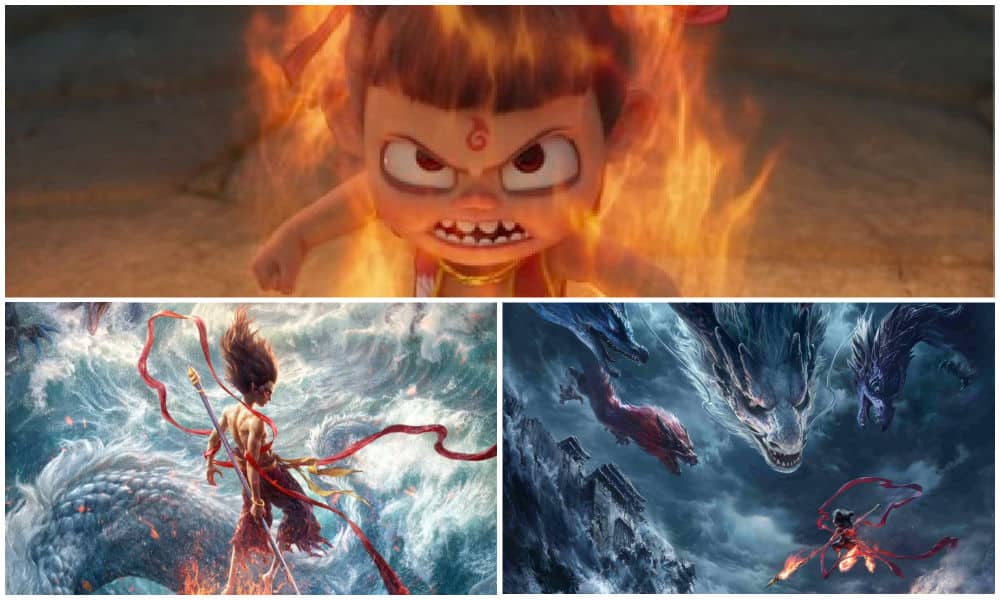
Various images from “Ne Zha 2” 哪吒2:魔童闹海
The success of Ne Zha 2 mainly resonates so deeply because of the past failures and struggles of Chinese animation (donghua 动画). For years, China’s animation industry struggled to compete with American animation studios and Japanese anime, while calls grew louder to find a uniquely Chinese recipe for success—to make donghua great again.
🔹 The Chinese Animation Dream
A year ago, another animated film was released in China—and you probably never heard of it. That film was Ba Jie (八戒之天蓬下界), a production that embraced Chinese mythology through the story of Zhu Bajie, the half-human, half-pig figure from the 16th-century classic Journey to the West (西游记). Ba Jie was a blend of traditional Chinese cultural elements with modern animation techniques, and was seen as a potential success for the 2024 Spring Festival box office race. It took eight years to go from script to screen.
But it flopped.
The film faced numerous setbacks, including significant production delays in the Covid years, limited showtime slots in cinemas, and, most importantly, a very cold reception from the public. On Douban, China’s biggest film review platform, many top comments criticized the movie’s unpolished animation and special effects, and complained that this film—like many before it—was yet another Chinese animation retelling a repetitive story from Journey to the West, one of the most popular works of fiction in China.
“Another mythological character, the same old story,” some wrote. “We’re not falling for low-quality films like this anymore.”
The frustration wasn’t just about Ba Jie—it was about China’s animation industry as a whole. Over the past decade, the quality of Chinese animation films has become a much-discussed topic on social media in China—sometimes sparked by flops, and other times by hits.
Besides Ba Jie, one of those flops was the 2018 The King of Football (足球王者), which took approximately 60 million yuan ($8.8 million) to make, but only made 1.8 million yuan ($267,000) at the box office.
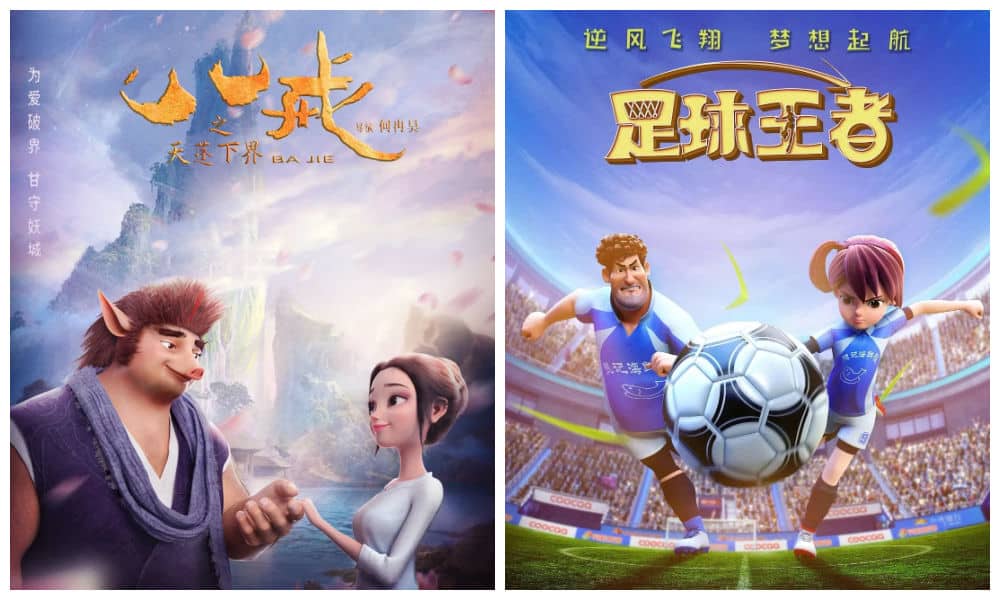
Both Ba Jie, which took years to reach the screen, and King of Football, a high-budget animation, ended up as flops.
One of those successes was the 2019 first Ne Zha film (哪吒之魔童降世), which became China’s highest grossing animated film, or, of the same year, the fantasy animation White Snake (白蛇:缘起), a co-production between Warner Bros and Beijing-based Light Chaser Animation (also the company behind the Ne Zha films). These hits
showed the capabilities and appeal of made-in-China donghua, and sparked conversations about how big changes might be on the horizon for China’s animation industry.
“The only reason Chinese people don’t know we can do this kind of quality film is because we haven’t made any good stories or good films yet,” White Snake filmmaker Zhao Ji (赵霁) said at the time: “We have the power to make this kind of quality film, but we need more opportunities.”
More than just entertainment, China’s animated films—whether successes or failures—have come to symbolize the country’s creative capability. Over the years, and especially since the widespread propagation of the Chinese Dream (中国梦)—which emphasizes national rejuvenation and collective success—China’s ability to produce high-quality donghua with a strong cultural and artistic identity has become increasingly tied to narratives of national pride and soft power. A Chinese animation dream took shape.
🔹 The “Revival” of China’s Animation Industry
A key part of China’s animation dream is to create a 2.0 version of the “golden age” of Chinese animation.
This high-performing era, which took place between 1956 and 1965, was led by the Shanghai Animation Film Studio. While China’s leading animators were originally inspired by American animation (including Disney’s 1937 Snow White and the Seven Dwarfs), as well as German and Russian styles, they were committed to developing a distinctly Chinese animation style—one that incorporated classical Chinese literature, ink painting, symbolism, folk art, and even Peking opera.
Some of the most iconic films from this era include The Conceited General (骄傲的将军, 1956), Why Crows Are Black (乌鸦为什么是黑的, 1956), and most notably, Havoc in Heaven (大闹天宫, 1961 & 1964). Focusing on the legendary Monkey King, Sun Wukong (孙悟空), Havoc in Heaven remains one of China’s most celebrated animated films. On Douban, users have hailed it as “the pride of our domestic animation.”
One of China’s most renowned animation masters, Te Wei (特伟), once explained that the flourishing of China’s animation industry during this golden era was made possible by state support, a free creative atmosphere, a thriving production system, and multiple generations of animators working together at the studio.
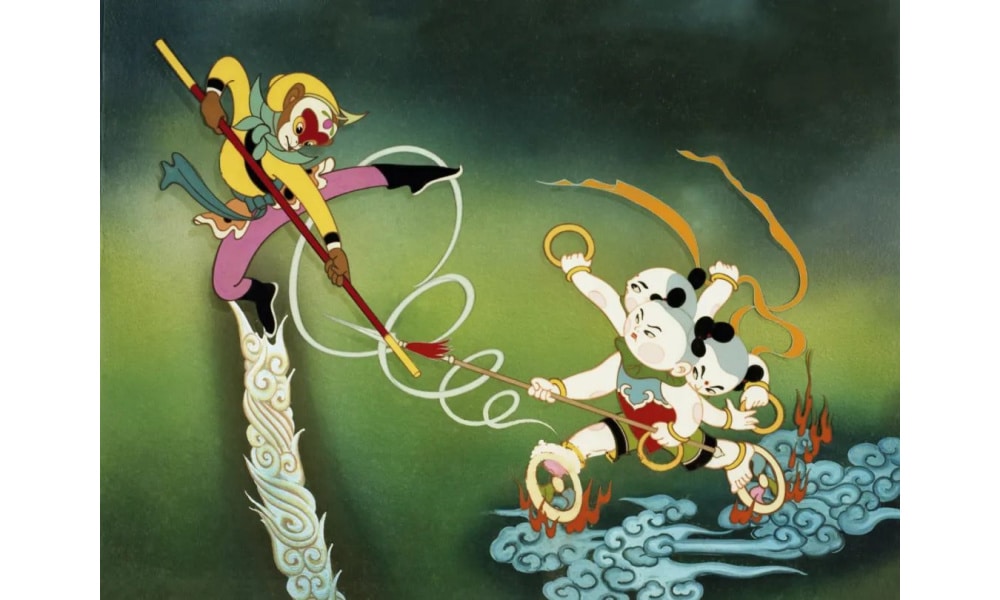
Still from Havoc in Heaven 大闹天宫 via The Paper.
➡️ So what happened to the golden days of Chinese animation?
The decline of this golden era was partly due to the political turmoil of the Cultural Revolution (1966–1976). While there was a second wave of successful productions in the late 1970s and 1980s, the industry lost much of its ‘magic touch’ in the 1990s and 2000s. During this period, Chinese animation studios were pressured to prioritize commercial value, adhere to strict content guidelines, and speed up production to serve the rising domestic TV market—while also taking on outsourcing work for overseas productions.
As the quality and originality of domestic productions lagged behind, the market came to be dominated by imported (often pirated) foreign animations. Japanese series like Astro Boy, Doraemon, and Chibi Maruko-chan became hugely influential among Chinese youth in the 1990s. The strong reaction in China to the 2024 death of Japanese manga artist Akira Toriyama, creator of Dragon Ball, also highlighted the profound impact of Japanese animation on the Chinese market.
This foreign influence also changed viewers’ preferences and aesthetic standards, and many Chinese animations adopted more Japanese or American styles in their creations.
However, this foreign ‘cultural invasion’ was not welcomed by Chinese authorities. As early as 1995, President Jiang Zemin reminded the Shanghai Animation Film Studio of the ideological importance of animation, emphasizing that China needed its “own animated heroes” to serve as “friends and examples” for Chinese youth.
By the early 2010s, the revitalization and protection of China’s animation industry became a national priority. This was implemented through various policies and incentives, including government funding, tax reductions and exemptions for Chinese animation companies, national animation awards, stipulations for the number of broadcasted animations that must be China-made. Additionally, there was an increased emphasis on animation as a tool for cultural diplomacy, focusing on how Chinese animation should reflect national values and history while maintaining global appeal.
It’s important to note that the so-called ‘rejuvenation’ of Chinese animation is not just a cultural and ideological project, there are economic motives at stake too: China’s animation industry is a multi-billion dollar industry.
🔹 “Are We Ne Zha or the Groundhogs?”
The huge success of Ne Zha 2 is seen as a new milestone for Chinese animation and as inspiration for audiences. The film took about five years to complete, reportedly involving 140 animation studios and over 4,000 staff members. The film was written and overseen by director Yang Yu (杨宇), better known as Jiaozi (饺子).
The story is all based on Chinese mythology, following the tumultuous journey of legendary figures Nezha (哪吒) and Ao Bing (敖丙), both characters from the 16th-century classic Chinese novel Investiture of the Gods (Fengshen Yanyi, 封神演义). Unlike Ba Jie or other similar films, the narrative is not considered repetitive or cliché, as Ne Zha 2 incorporates various original interpretations and detailed character designs, even showcasing multiple Chinese dialects, including Sichuan, Tianjin, and Shandong dialects.
One of the film’s unexpected highlights is its clan of comical groundhogs. In this particularly popular scene, Nezha engages in battle against a group of groundhogs (土拨鼠), led by their chief marmot (voiced by director Jiaozi himself). Amid the fierce conflict, most of the groundhogs are hilariously indifferent to the fight itself; instead, they are focused on protecting their soup bowls and continuing to eat—until they are ultimately hunted down and captured.
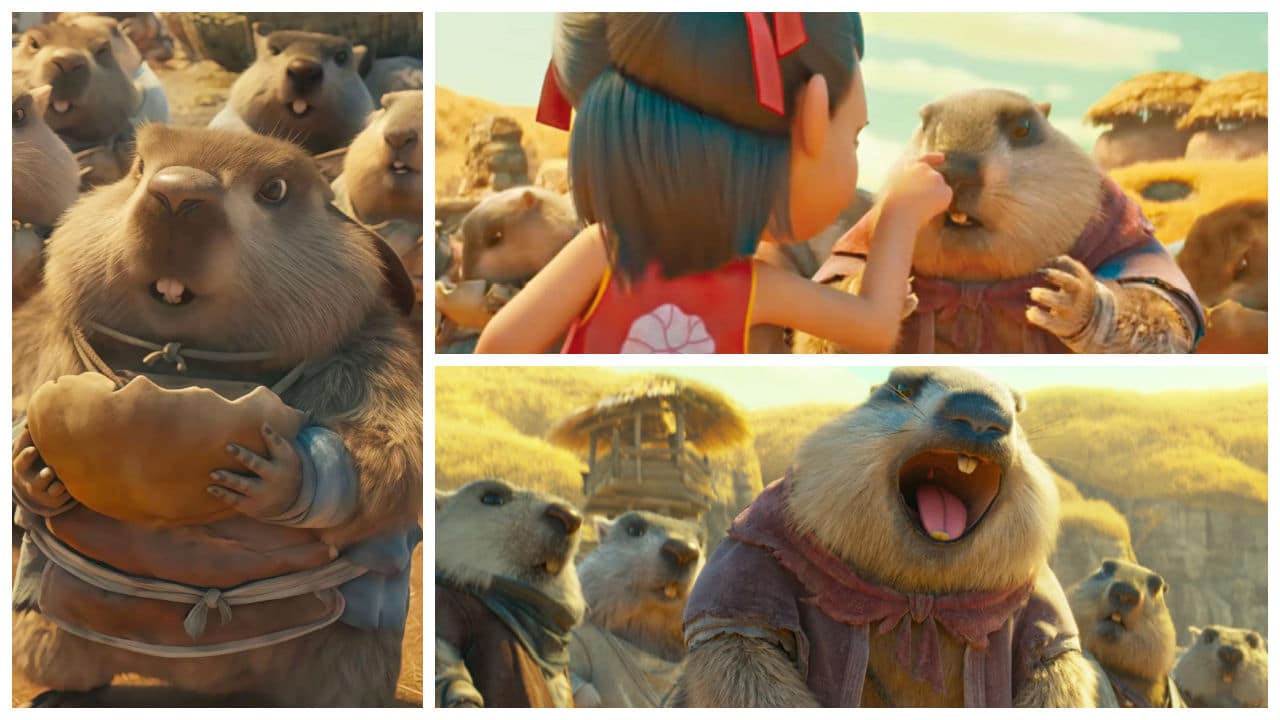
Nezha and the clan of groundhogs.
Besides fueling the social media meme machine, the groundhog scene actually also sparked discussions about social class and struggle. Some commentators began asking, “Are we Ne Zha or the groundhogs?”
Several blogs, including this one, argued that while many Chinese netizens like to identify with Nezha, they are actually more like the groundhogs; they don’t have powerful connections nor super talents. Instead, they are hardworking, ordinary beings, struggling to survive as background figures, positioned at the bottom of the hierarchy.
One comment from a film review captured this sentiment: “At first, I thought I was Nezha—turns out, I’m just a groundhog” (“开局我以为自己是哪咤,结果我是土拨鼠”).
The critical comparisons between Nezha and the groundhogs became politically sensitive when a now-censored article by the WeChat account Fifth Two-Six District (第五二六区) suggested that many Chinese people are so caught in their own information bubbles and mental frameworks that they fail to grasp how the rest of the world operates. The article said: “The greatest irony is that many people think they are Nezha—when in reality, they’re not even the groundhogs.”
While some see a parallel between Nezha’s struggles and their own hardships, others interpret the film’s success as a symbol of China’s rise on the global stage—particularly because the story is so deeply rooted in Chinese culture, literature, and mythology. This has led to an alternative perspective: rather than remaining powerless like the groundhogs, perhaps China—and its people—are transforming into the strong and rebellious Nezha, taking control of their destiny and rising as a global force.
Far-fetched or not, it’s an idea that continues to surface online, along with many other detailed analyses of the film. The nationalist Chinese social media blogger “A Bad Potato” (@一个坏土豆) recently wrote in a Weibo post:
“We were once the groundhog, but today, nobody can make us kneel!” (“我们曾经是土拨鼠,但是今天,没有任何人可以让我们跪下!”)
In another post, the blogger even dragged the Russia-Ukraine war into the discussion, arguing that caring too much about the powerless “groundhogs,” those struggling to survive, does not serve China’s interest. He wrote:
“(..) whether Russia is righteous or evil does not concern me at all. I only care about whether it benefits our great rejuvenation—whoever serves our interests, I support. Only the “traitors” speak hypocritically about love and justice. Speaking about freedom and democracy that we don’t even understand, they wish Russia collapses tomorrow but don’t care if that would lead to us being surrounded by NATO. So, in the end—are we Ne Zha, or are we the groundhog?”
One line from the film that has gained widespread popularity is: “If there is no path ahead, I will carve one out myself!” (“若前方无路,我就踏出一条路!”). Unlike the more controversial groundhog symbolism, this phrase resonates with many as a reflection not only of Nezha’s resilience but also of the determination that has been driving China’s animation industry forward.
The story of Ne Zha 2 goes beyond box office numbers—it represents the global success of Chinese animation, a revival of its golden era, and China’s growing cultural influence. Yet, paradoxically, it’s also all about the numbers. While the vast majority of its earnings come from the domestic market, Ne Zha 2 is still officially a global number-one hit. More than its actual reach worldwide, what truly matters in the eyes of many is that a Chinese animation has managed to surpass the US and Japan at the box office.
While the industry still has room to grow and many markets to conquer, this milestone proves that part of the Chinese animation dream has already come true. And with Ne Zha 3 set for release in 2028, the journey is far from over.
Best,
Manya
(@manyapan)
Some of the research referenced in this text can also be found in an article I published in 2019: The Chinese Animation Dream: Making Made-in-China ‘Donghua’ Great Again. For further reading, see:
►Du, Daisy Yan. 2019. Animated Encounters: Transnational Movements of Chinese Animation, 1940s-1970s. Honolulu: University of Hawaii Press.
►Lent, John A. and Xu Ying. 2013. “Chinese Animation: A Historical and Contemporary Analysis.” Journal of Asian Pacific Communication 23(1): 19-40.
►Saito, Asako P. 2017. “Moe and Internet Memes: The Resistance and Accommodation of Japanese Popular Culture in China.” Cultural Studies Review 23(1), 136-150.
What’s on Weibo Chapters

🚀 In 2025, international media are more focused on Chinese social media apps than ever, especially after January’s “TikTok refugee” phenomenon, where waves of American TikTok users migrated to China’s Xiaohongshu app. This foreign focus on China’s online landscape also highlights some lingering misconceptions, with major media outlets still trying to label Chinese apps as “the Chinese Instagram,” “the Chinese Facebook,” and so on.
Some of these comparisons actually made sense around 2010, when Chinese companies were indeed building domestic versions of Twitter or Pinterest. But since then, these apps have evolved into something far bigger.
China’s online ecosystem is constantly shifting, and some of its biggest social apps are already 15, 20, or even 25 (!) years old. Their secret? It’s not about copying Western platforms anymore—it’s about rejecting a one-size-fits-all approach and embracing change. As Xiaohongshu’s Charlwin Mao (毛文超) puts it:
🗣️”We don’t ask ourselves if we’re a social or commerce company—we ask, what does the consumer want?”
📌 Xiaohongshu is not the “Chinese Instagram.” It also didn’t start as a shopping site that added reviews—it was a review site that added shopping, flipping the traditional e-commerce model on its head.
📌 One of China’s leading livestreaming platforms, Kuaishou, didn’t even begin as a livestreaming app. It started as a GIF-making tool, built its user base through other platforms, then evolved into a short-video app before skyrocketing during the livestreaming boom. Today, Kuaishou is a major player in generative AI, with its Sora competitor, Kling, emerging from this same adaptability.
💡 Chinese social media apps have grown into superapps by thinking outside the box, breaking free from labels, and evolving like chameleons—constantly adapting to user needs.
📱 In such a rapidly changing digital landscape, it’s high time for a short guide to understanding Chinese social media (especially since some subscribers have been requesting one for a while). This overview breaks down the top 10 Chinese social media platforms, their key functions, and what makes them unique. Whether you’re navigating China’s digital space for the first time or keeping up with its evolution, this list should offer a useful snapshot:
What’s Popular

The major box office success of Ne Zha 2 has sparked all kinds of memes and discussions across Chinese social media. In this article, Wendy Huang provides an overview of the hashtags and trends surrounding the film—from the evolution of Nezha to the popularity of the ‘Stone Diva’ character and the booming ‘Ne Zha economy’ that has taken off in the wake of the movie’s success.
What’s Memorable

For this week’s pick from the archive, we revisit how the big Chinese production Creation of the Gods I, despite initial lackluster performance, became a box office hit thanks to the collaborative efforts of the production team and a dedicated group of fans who volunteered to promote the film online, a phenomenon referred to as zìláishuǐ (自来水).
Zìláishuǐ (自来水) literally means ‘tap water’ but it is a label for those netizens who spontaneously promote a film or artist without getting paid for it. Article by Wendy Huang 👇
Weibo Word of the Week
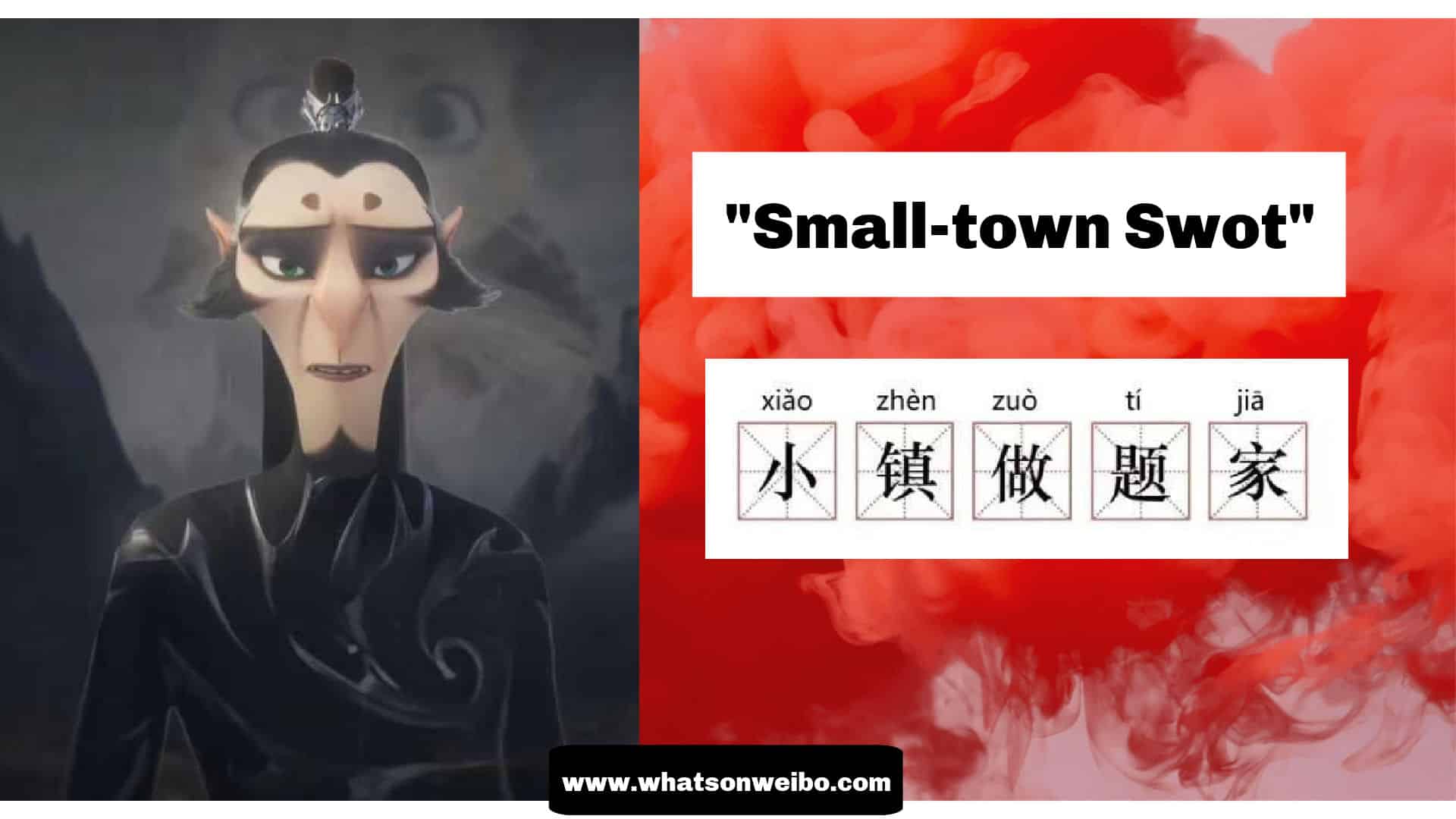
Small-town Swot | Our Weibo phrase of the week is 小镇做题家 (xiǎozhèn zuòtíjiā), which translates to ‘small-town swot.’
“Small-town swot” is a buzzword that has appeared on Chinese social media over the past few years. According to Baike, it first popped up on a Douban forum dedicated to discussing the struggles of students from China’s top universities. Although the term has been part of social media language since 2020, it has recently come back into the spotlight due to a popular character in Ne Zha 2.
“Small-town swot” refers to students from rural areas and small towns in China who put in immense effort to secure a place at a top university and move to bigger cities. While they may excel academically, even ranking as top scorers, they often find they lack the same social advantages, connections, and networking opportunities as their urban peers. The idea that they remain at a disadvantage despite working so hard leads to frustration and anxiety—it seems they will never truly escape their background. In a way, it reflects a deeper aspect of China’s rural-urban divide.
Among Ne Zha 2 fans, one of their most beloved characters is the leopard demon Shen Gongbao (申公豹). He was a villain in the first film, but Ne Zha 2 adds more nuance to his character. By exploring his struggles, the film makes him a more relatable and sympathetic figure.
Unlike many celestial figures in the film, Shen Gongbao was not born into privilege and never became immortal. As a demon who ascended to the divine court, he remains at the lower rungs of the hierarchy in Chinese mythology. He is a hardworking overachiever with a stutter, who perhaps turned into a villain due to being treated unfairly—yet the film also highlights his good qualities. Many viewers resonate with him because, despite his diligence, he will never be like the gods and immortals around him.
Many Chinese netizens suggest that Shen Gongbao represents the experience of many “small-town swots” (xiǎozhèn zuòtíjiā 小镇做题家) in China, making him, in a way, the ultimate small-town swot. As a result, Shen Gongbao has temporarily become China’s most beloved villain.
This is an on-site version of the Weibo Watch newsletter by What’s on Weibo. Missed last week’s newsletter? Find it here. If you are already subscribed to What’s on Weibo but are not yet receiving this newsletter in your inbox, please contact us directly to let us know.



Dear Reader
Eye on Digital China: How Chinese Social Media Evolved from the Blog Era to the AI-driven Age
A look back at the three major phases of China’s social media — and why What’s on Weibo is evolving into Eye on Digital China.
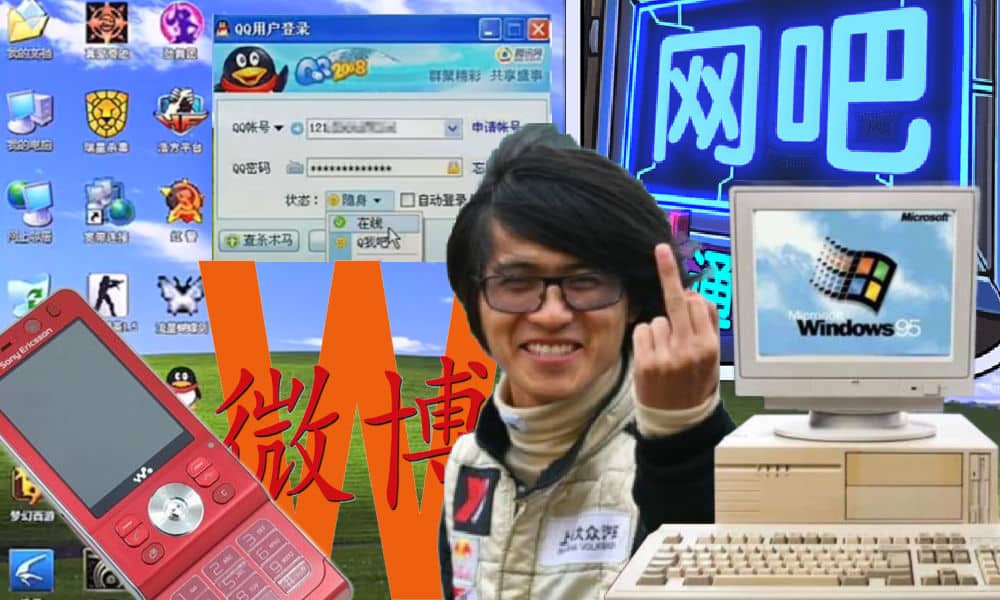
This edition of the Eye on Digital China newsletter by Manya Koetse was sent to premium subscribers. Subscribe now to receive future issues in your inbox.
“Do you still remember going to the internet cafe, paying 2 yuan ($0.30) per hour during the day or 7 yuan ($1) for an all-nighter? Staying up playing games and surfing around?”
It’s the kind of content you’ll often see today on platforms like Douyin or Bilibili — nostalgic videos showing smoky internet cafes (wangba 网吧) from the early 2000s, where people chatted on QQ or played World of Warcraft on old Windows PCs while eating instant noodles. These clips trigger waves of nostalgia, even among internet users too young to remember that era themselves.

Internetcafe in 2005, image via 021zhaopin.com
The current nostalgia wave you see on Chinese social media is indicative of how China’s digital world has evolved over the past 25 years, shifting from one era to the next.
As I welcome a new name for this newsletter and say goodbye to ‘Weibo Watch’— and, in the longer run, to the ‘What’s on Weibo’ title, I’m feeling a bit nostalgic myself. It seems like a good moment to look back at the three major stages of Chinese social media, and at the reason I started What’s on Weibo in the first place.
1. The Blogging Boom (2002–2009): The Early Rise of Chinese Social Media
When I first came to China and became particularly interested in its online environment, it was the final phase of the early era of Chinese social media — a period that followed soon after the country had laid the foundations for its internet revolution. By 1999, the first generation of Chinese internet giants — Alibaba, Tencent, Baidu, and Sina — had already been founded.
China’s blogging era began with the 2002 launch of the platform BlogChina.com (博客中国), followed by a wave of new platforms and online communities, among them Baidu Tieba and Renren. By around 2005, there were roughly 111 million internet users and 16 million bloggers, and the social impact was undeniable. 2005 was even dubbed China’s “year of blogging.” 1
Chinese writer Han Han (韩寒, born 1982), a high-school-dropout-turned–rally car racer, became one of the most-read figures on the Chinese internet with his sharp and witty blogs. He was just one among many who rose to fame during the blog era, becoming the voice of China’s post-1980s youth.
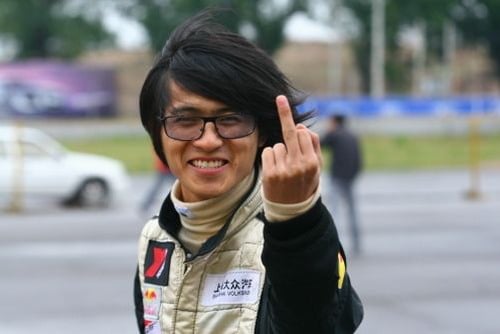
The rebel of China’s blog era, Han Han, became of voice of his generation.
When I moved to Beijing in 2008, I had a friend who was always out of money and practically lived in an internet cafe in the city’s Wudaokou district, not far from where I studied. We would visit him there as if it were his living room — the wangba was a local hangout for many of us.
Not only online forums and blogging sites were flourishing at the time, but there was also instant messaging through QQ (腾讯QQ), online news reading, and gaming. Platforms like the YouTube equivalents Tudou (土豆) and Youku (优酷) were launched, and soon Chinese companies began developing more successful products inspired by American digital platforms, such as Fanfou (饭否), Zuosa (做啥), Jiwai (叽歪), and Taotao (滔滔), creating an online space that was increasingly, and uniquely, Chinese.
That trajectory only accelerated after 2009, when popular Western internet services, including Twitter, Facebook, and YouTube, became inaccessible from within mainland China.
⚡ The launch of Sina Weibo in 2009 came at a crossroads for China’s social media landscape: it was not only a time when many foreign platforms exited China, but also when internet cafes faced major crackdowns.
As a foreigner, I don’t think I ever visited internet bars in Beijing anymore by that point — internet use had largely shifted to home connections. Laptop ownership was rising, and we all had (pre-smartphone) mobile phones, which we used to text each other constantly, since texting was cheaper than calling.

Some of the mobile phones in China’s 2009 top 10 lists.
Weibo came at just the right time. It filled the vacuum left by the online crackdowns across China’s internet while still benefiting from the popularity of blogging. Weibo (微博), after all, literally means “micro-blog” — micro because the number of characters was limited, just like Twitter, making short-form posts the main way of communication.
Weibo quickly became hugely successful, for many more reasons than just timing. Its impact on society was so palpable that its trending discussions often seeped into everyday conversations I had with friends in China.
In English-language media, I kept reading about what was being censored on the Chinese internet, but that wasn’t necessarily what I wanted to know — I also wanted to know what was on Weibo, so I could keep up with my social circles.
That question planted the seed for What’s on Weibo: the simple curiosity of “What are people talking about?” What TV series are popular? What jokes and controversies are everyone discussing (but that I never fully grasped)? I wanted to get a sense of an online world that was, in many ways, intangible to outsiders — including myself. As I had moved back to Europe by then, it was also a way for me to stay connected to those everyday conversations unfolding online in China.
With scissors, glue, and some paper, I started sketching out what a future website might look like.
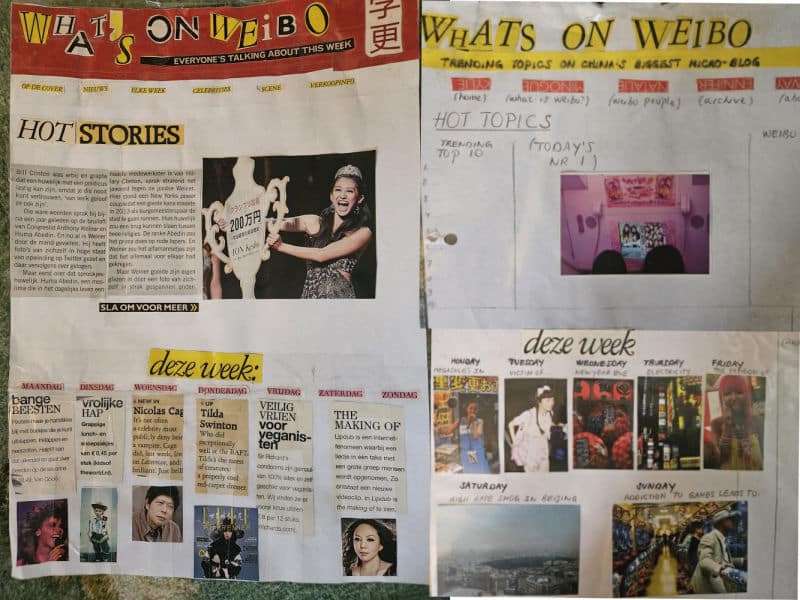
Papercrafting the idea for a website named ‘What’s on Weibo’ in 2012.
And in March 2013, after doing my best to piece it together, I launched What’s on Weibo and began writing — about all kinds of trends, like the milk powder crisis, about China’s many unmarried “leftover men” (shengnan 剩男), and about the word of the moment, “Green Tea Bitch” (lǜchá biǎo 绿茶婊) — a term used to stereotype ambitious women who act sweet and innocent while being seen as calculating or cunning.
2. From Weibo to the Taobao Moment: China’s Mobile Social Era: (2010–2019)
Around 2014–2015, people started saying Weibo was dead. In fact, it hadn’t died at all — some of its most vibrant years were still ahead. It had simply stumbled into the mobile era, along with China’s entire social media landscape.
As mobile internet became more widespread and everyone started using WeChat (launched in 2011), new mobile-first platforms began to emerge.2 In 2012–2013, for example, apps like Toutiao and Xiaohongshu (小红书, RED) were launched as mobile community platforms. With the rapid rise of China’s new tech giants — Bytedance, Meituan, and Didi — a new mobile era was blossoming, leaving the PC-based social media world far behind.
Spending another summer in Beijing in 2014, I called it the “Taobao Moment” — Taobao being China’s most successful online marketplace, a platform for buying and selling practically everything from clothes and furniture to insurance and even Bitcoins. At the time, I thought Taobao captured everything Beijing was at that moment: a world of opportunities, quick decisions, and endless ways to earn and spend money.
On weekends, some of my friends would head to the markets near the Beijing Zoo to buy the latest dresses, purses, jeans, or shoes. They’d buy stock on Saturday, do a photo shoot on Sunday, and sell the goods online by Monday. You could often spot young people on the streets of Beijing staging their own fashion shoots for Taobao — friends posing as models, Canon cameras in hand.
During that period, What’s on Weibo gradually found its audience, as more people became curious about what was happening on Chinese social media.
Around 2016, Weibo entered another prime era as the “celebrity economy” took off and a wave of “super influencers” (超级红人) emerged on the platform. Papi Jiang stood out among them — her humorous videos on everyday social issues made her one of China’s most recognizable online personalities, helping to drive Weibo’s renewed popularity.

Witty Papi Jiang was a breath of fresh air on Weibo in 2016.
People were hooked on social media. Between 2015 and 2018, China entered the age of algorithm- & interest-driven multimedia platforms. The popularity of Kuaishou’s livestreaming and Bytedance’s Douyin signaled the start of an entirely new era.
3. The New Social Era of AI-fication and Diversification (2020–Current)
China’s social media shifts over the past 25 years go hand in hand with broader technological, social, and geopolitical changes. Although this holds true elsewhere too, it’s especially the case in China, where central leadership is deeply involved in how social media should be managed and which direction the country’s digital development should take.
Since the late 2010s, China’s focus on AI has permeated every layer of society. AI-driven recommendation systems have fundamentally changed how Chinese users consume information. Far more than Weibo, platforms like Douyin, Kuaishou, and Xiaohongshu have become popular for using machine-learning algorithms to tailor feeds based on user behavior.
China’s social media boom has put pressure on traditional media outlets, which are now increasingly weaving themselves into social media infrastructure to broaden their impact. This has blurred the line between social media and state media, creating a complex online media ecosystem.
At the same time, it’s not just AI and media convergence that are reshaping China’s online landscape — social relationships now dominate both information flows and influence flows. 3 Not everyone is reading the same headlines anymore; people spend more time within their own interest-based niches. It’s no longer about microblogging but about micro-communities.
China now has 1.12 billion internet users. Among new users, young people (aged 10–19) and the elderly (60+) account for 49% and nearly 21%, respectively. The country’s digital environment has never been more lively, and social media has never been more booming.
As a bit of a dinosaur in China’s social media world, Weibo still stands tall — and its trending topics still matter. But the community that was once at the heart of the Chinese internet has dispersed across other apps, where people now engage in more diverse ways than ever.
In China, I notice this shift: where I once saw the rise of Weibo, the Taobao boom, or the Douyin craze, I now see online and offline media increasingly converging. Social media shapes real-life experiences and vice versa, and AI has become integrated into nearly every part of the media ecosystem — changing how content is made, distributed, consumed, and controlled.
In this changing landscape, the mission of What’s on Weibo — to explain China’s digital culture, media, and social trends, and to build a bridge between Western and Chinese online spaces — has stayed the same. But the name no longer fits that mission.
Over the past few years, my work has naturally evolved from Weibo-focused coverage to exploring China’s digital culture through a broader lens. The analysis and trend updates will continue, but under a new name that better reflects a time when Weibo is no longer at the center of China’s social media world: Eye on Digital China.
For you as a subscriber (subscribe here), this means you can expect more newsletter-based coverage: shorter China Trend Watch editions to keep you up to date with the latest trends, along with other thematic features and ‘Chapter’ deep dives that explore the depth behind fleeting moments.
For now, the main website will remain What’s on Weibo, but it will gradually transition into Eye on Digital China. I’ll keep the full archive alive — more than twelve years of coverage that helps trace the digital patterns we’re still seeing today. After all, the story of China’s past online moments often tells us more about the future than the trends of the day.
Thank you for following along on this new journey.
By Manya Koetse
(follow on X, LinkedIn, or Instagram)
1 Liu, Fengshu. 2011. Urban Youth in China: Modernity, the Internet and the Self. New York: Routledge, 50.
2 Mao Lin (Michael). 2020. “中国互联网25年变迁:两次跃迁,四次浪潮,一次赌未来” [25 Years of China’s Internet: Two Leaps, Four Waves, and a Gamble on the Future]. 人人都是产品经理 (Everyone Is a Product Manager), January 3. https://www.woshipm.com/it/3282708.html.
3 Yang, Shaoli (杨绍丽). 2025. “研判2025!中国社交媒体行业发展历程、重点企业分析及未来前景展望:随着移动互联网兴起,社交媒体开始向移动端转移 [Outlook for 2025! The Development History, Key Enterprises, and Future Prospects of China’s Social Media Industry: With the Rise of Mobile Internet, Social Media Has Shifted to Mobile Platforms].” Zhiyan Consulting (智研咨询), February 7. https://www.chyxx.com/industry/1211618.html.
Spotted a mistake or want to add something? Please let us know in the comments below or email us. First-time commenters, please be patient — we will have to manually approve your comment before it appears.
Eye on Digital China, by Manya Koetse, is co-published on Substack and What’s on Weibo.
Both feature the same new content — so you can read and subscribe wherever you prefer. Substack offers community features, while What’s on Weibo provides full archive access. If you’re already subscribed and want to switch platforms, just get in touch for help. Both feature the same new content — so you can subscribe or read wherever you prefer. If you’re already subscribed on one platform and would like to move your subscription over, just let me know and I’ll help you get set up.
© 2025 Manya Koetse. All rights reserved.
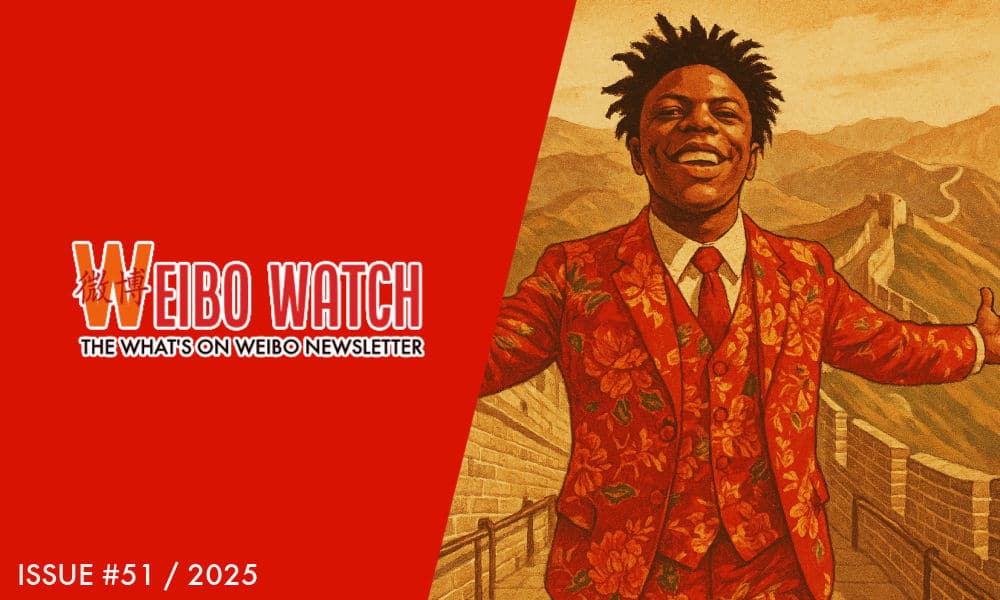
“This man is doing God’s work. In just six hours, he eliminated all Western media propaganda about China,” Chinese influencer Li Sanjin (李三金) said in one of his videos this week. The man he referred to, allegedly doing ‘God’s work,’ is the American YouTuber and online streamer Darren Watkins, better known as IShowSpeed or Speed, who visited China this week and livestreamed from various locations.
With 37 million followers on his YouTube account, Watkins’ visit hasn’t exactly flown under the radar. His streams from China have already accumulated over 17.5 million views on YouTube alone, and he also became the talk of the week on Chinese social media.
In China, the 20-year-old IShowSpeed is known as Jiǎkànggē (甲亢哥), or “Hyper Bro,” since the immensely popular YouTube star is known for being highly energetic.
Although IShowSpeed is originally known for soccer and gaming-related content, he’s been streaming live from various countries over the past year, from Ecuador to Bolivia, from Australia to Indonesia, from Romania to Japan, and also from the Netherlands, where a mob of fans harassed the YouTuber to such an extent that the influencer fled and panicked, until the police intervened and asked him to shut down the livestream for safety reasons — which he did not comply with.
It was not the only time IShowSpeed’s visit got chaotic. He also got into trouble during livestreams from other countries. While streaming from Norway, he injured his ankle and was swarmed by a crowd while trying to get out. In Greece and Indonesia, he had to ask for police support as well. In Thailand, he crashed a tuk-tuk into a temple wall.
In China, IShowSpeed’s livestreams went far more smoothly, and netizens, state media, and other official channels raved about his visit and its favorable portrayal of the country and its culture.
🔹 Symbol of Cultural Exchange & Positive Diplomacy
“Jiǎkànggē” became one of the viral terms of the week, on Weibo, Kuaishou, Douyin, and Toutiao. During his China trip, the livestreamer hit several YouTube milestones — not only breaking the 37 million subscriber mark while on stream, but also surpassing the magic number of 10 million views in total.
Watkins, also known for being (sometimes aggressively) loud and chaotic, suddenly emerged as a symbol of cultural exchange and positive diplomacy. The past week saw hashtags such as:
#️⃣”IShowSpeed gives young foreigners a full-window view into China” (#甲亢哥给国外年轻人开了全景天窗#)
#️⃣”IShowSpeed’s Shanghai livestream breaks Western filter on China” (#甲亢哥上海直播打破西方对中国滤镜#)
#️⃣”American influencer IShowSpeed amazed by stable wifi on China’s high-speed train” (#美国网红甲亢哥被高铁稳定网络震惊#)
#️⃣”IShowSpeed praised deep tried tripe for being incredibly delicious” (#甲亢哥赞爆肚太好吃了#), or
#️⃣ “IShowSpeed bridges the cultural divide” (#甲亢哥弥合文化鸿沟#).
While in Chinese media, Watkins was lauded for shining a positive light on China, this message was also promoted on English-language social media, where he was praised by the Chinese embassy in the US (#驻美大使馆称赞甲亢哥中国行#), writing:
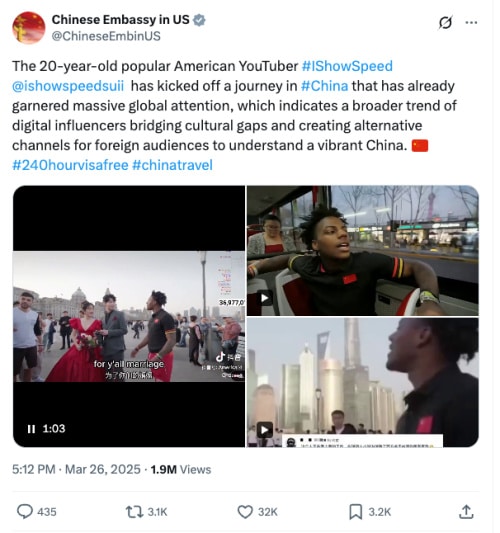
Post by Chinese Embassy in the US on X, March 26.
“This 20-year-old American internet star is bridging cultural gaps through digital means and creating new channels for foreign audiences to better understand China.”
So what exactly did IShowSpeed do while in China?
On March 24, Watkins livestreamed from Shanghai. He wandered around the city center, visited a KFC, danced with fellow streamers, stopped by a marriage market, ate noodles, played ping-pong, had hotpot, joined a dragon dance group and got acquainted with some traditional Chinese opera performance, and walked along the Bund.
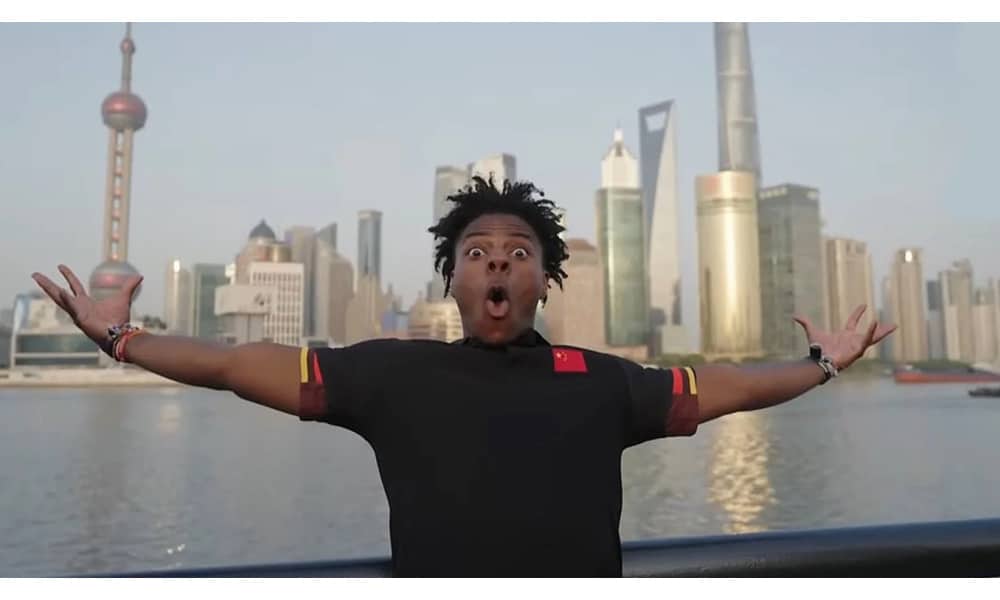
On March 26, he streamed from Beijing, starting in Donghuamen before briefly entering the Forbidden City—dressed in a Dongbei-style floral suit. He later took a stroll around Nanluoguxiang and the scenic Houhai lake, rode a train, and finally visited the Great Wall, where he did backflips.

In his stream on March 28, Watkins traveled to Henan to visit the famous Shaolin Temple in Dengfeng, hoping to find a master to teach him kung fu. He trained with Shaolin monks—footage that quickly went viral.
Lastly, on March 29, he opened his own Weibo account and published his first post. On Douyin, he shared a video of his visit to Fuxi Mountain in Zhengzhou, featuring the popular “Stairway to Heaven” tourist spot.
On social media, many viewers were captivated by the content. One major talking point was the remarkably strong internet connection that allowed him to livestream for six-hour stretches without losing signal in Shanghai. (Though his Beijing stream started off patchier, the drop was minor.) For many, it symbolized the quality of China’s 5G services.
Foreign viewers also praised how safe, friendly, and clean the country appeared, and how his streams highlighted various aspects of Chinese culture—from everyday people to traditional arts and local cuisine.
🔹 Telling & Spreading China’s Stories Well
It is no wonder the success of the Jiǎkànggē livestreams is celebrated by Chinese official media in an age where China’s foreign communication aims to increase China’s international discourse power, shaping how the world views China and making that image more credible, more respectable, and more lovable.
That’s not just an observation — it’s an official strategy. Introduced by Xi Jinping in 2013, “Telling China’s Story Well” (“讲好中国故事”) is a political slogan that has become a key propaganda strategy for China and continues to be a priority in finding different ways of promoting Chinese culture — new ways of telling China’s story in the social media age – while countering Western dominant narratives about China.
In increasingly digitalized times, it is not just about telling China’s story well, but also spreading China’s message effectively — preferably through genuine and engaging stories (Cai 2013; Qiushi 2021).
Especially young, non-official ‘storytellers’ can make China’s image more relatable and dynamic. One major example, highlighted in a 2022 case study by Zeng Dan (曾丹), is Chinese influencer Li Ziqi (李子柒). You’ve probably heard of her, or seen snippets of her videos: she creates soothing, cinematic content depicting China’s countryside lifestyle, focused on cooking, crafts, and gardening. With 26 million followers on YouTube, Li Ziqi became a viral sensation who successfully communicated an authentic and appealing ‘China story’ to a broad global audience.

Li Ziqi in one of her YouTube videos.
Although the calm and composed Li Ziqi and the loud, chaotic IShowSpeed couldn’t be more different, they have some things in common: both have large international fanbases, including their millions of YouTube subscribers; they offer perspectives that differ from Chinese state media or official channels; and they have the capacity not just to tell China’s story well, but to spread it effectively through videos and livestreams.
🔹 Spontaneous Stream or Scripted Propaganda?
IShowSpeed’s China streams have triggered a wave of responses from fans and viewers, sparking discussions across international social media and even making newspaper headlines.
In English-language online media spheres, there appear to be a range of perspectives on Watkins’ China trip:
📌 One prominent view—also echoed by various foreign influencers on YouTube and other platforms—is that IShowSpeed’s visit counters “Western media lies” about China and has successfully shown the “real China” through his livestreams. The Shanghai-based media outlet Radii claimed that “IShowSpeed’s China Tour is doing more for Chinese Soft Power than most diplomats ever could.”
📌 Others challenge this narrative, questioning which dominant Western portrayals of China IShowSpeed has actually disproven. Some argue that the idea of China being a “bleak place with nothing to do where people live in misery” is itself a false narrative, and that presenting IShowSpeed’s livestreams as a counter to that is its own form of propaganda (see: Chopsticks and Trains).
📌 There are also those who see Watkins’ trip as a form of scripted propaganda. To what extent were his livestreams planned or orchestrated? That question has become one of the central points of debate surrounding the hype around his visit.
These rumors have been addressed by cameraman Slipz (@shotbyslipz), who took to X on March 28, 2025. Slipz posted that the team is “(..) not making political content, not any documentary and no journalism,” and later added: “Fact: amount of money IShowSpeed has received from Chinese Government = $0.”
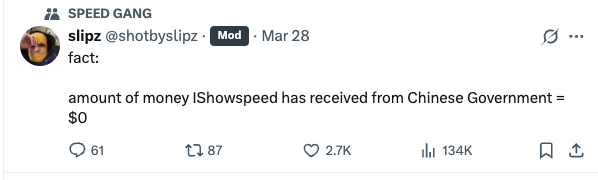
But does the fact that IShowSpeed did not receive money from the Chinese government mean that it wasn’t also a form of China promotion?
➡️ Organized — it definitely was. Any media trip in China has to be. IShowSpeed would have needed a visa, he had translators with him, and throughout the streams it’s evident that local guards and public security officers were present, walking alongside and helping to keep things under control, especially in crowded areas and at major tourist spots — from Nanjing Road in Shanghai to an entire group of guards seemingly accompanying the entourage in the Forbidden City.
One logistical “advantage” to his visit was the fact that YouTube is blocked in China. While some Chinese fans do bypass the Great Firewall to access the platform, IShowSpeed remains far less known in China than in many other countries — a factor that likely contributed to how smoothly the streams went and helped prevent chaos. The team also launched a Douyin account during the trip, where he now has over two million followers. (To stream directly to their 37 million followers on YouTube, Watkins’ team either needed a VPN to access WiFi or had arranged roaming SIM cards to stay connected.)
➡️ Was it staged? Many parts clearly weren’t: casual public conversations, spontaneous barber visits in both Shanghai and Beijing (with barbers looking unsure of how to handle the situation), and wholesome fan encounters. There was even a moment when Watkins walked into a public restroom and forgot to mute the sound.
But other parts of the trip were undeniably staged — or at least framed to appear spontaneous. When visiting a marriage market in Shanghai, for instance, two actors appeared, including one woman with a sign stating she was looking for someone “capable of doing backflips.”
When Watkins took a “random” ride in what was described as the fastest car in China — the Xiaomi SU7 Ultra — the vehicle appeared to be conveniently parked and ready.
Similarly, when the streamer “ran into” Chinese-American TikTok influencer Miles Moretti (李美越) in Beijing, it turned out to be the person who would give him the now-iconic bright Dongbei flower suit and accompany him on his journey.

The ping-pong, the kung fu, the Peking opera, the hotpot, the Forbidden City tour — it all plays into the kinds of experiences that official channels also like to highlight. While likely planned by Watkins’ team in coordination with local partners, it was all far more orderly and tourism-focused than, for example, Watkins’ chaotic visit to the Netherlands.
Watkins and his entourage were also well-informed about the local dos and don’ts. At one point, Watkins even mentions “following the rules,” and when Moretti tells him mid-stream that “somebody very important lives on our left,” Watkins asks “Who?” — but the camera zooms out and the question goes unanswered, suggesting they may have been reminded that certain names or topics were off-limits (judge the moment for yourself here).
The livestream didn’t always go exactly the way Watkins wanted, either. When he attempted to take more random walks around the city, the crew appeared to be informed that some areas were off-limits, and he was asked to return to the car to continue the trip (clips here and here).
🔹 The “Nàge” Song
One major talking point surrounding IShowSpeed’s China livestreams was “the N-word.” No, not that N-word — but the Chinese filler word “nàge” or “nèige” (那个). Like “uhm” in English or “eto” in Japanese, “nàge” is a hesitation marker commonly used in everyday Mandarin conversation. It also functions as a demonstrative pronoun meaning “that.”
The word has previously stirred controversy because of its phonetic resemblance to a racial slur in English. In 2020, an American professor at the University of Southern California’s Marshall School of Business was even temporarily suspended after using the word during an online communications class — some students misunderstood its context and took offense.
The word — and the song “Sunshine, Rainbow, White Pony” (阳光彩虹小白马) by Chinese singer Wowkie Zhang (大张伟), which repeatedly features the word nàge in its chorus — popped up multiple times during Watkins’ trip. The catchy tune essentially became the theme song of his visit.
The first nàge moment actually already appeared within the first five minutes of Watkins’ Shanghai stream, when a Chinese comedian approached him on the street, trying to recall a joke. “What?!” Watkins reacted, with laughter in the background. “That’s not a joke, you said n**! It’s my first five minutes in China!” he exclaimed, before patting the man’s back in a friendly gesture, clearly not offended.
🔄 It resurfaced again within the first hour when Watkins visited a marriage market and one of the performers sang the Wowkie Zhang song. Watkins initially acted shocked, then demanded they sing it again — only to burst out laughing and start singing along.
🔄 Later, he sang the song again with a street saxophonist and encouraged others to join in.
🔄 At other moments, he played up the drama again, feigning anger when a crowd broke into the chorus, and it became a recurring gag throughout the streams.
These incidents all seem staged. One of the main reasons Watkins is known to many netizens in China is because of an older video clip showing his exaggerated reaction to the nàge song — dating back to at least 2022. So while it may have looked spontaneous, Watkins was already familiar with the word and the viral song long before his China trip.The attention given to the nàge ‘controversy’ was likely amplified for views and engagement.
While Watkins was clearly in on this part of the show — as with others — he also seemed genuinely, and at times amusingly, unaware of many things in China. He repeatedly referred to RMB as “dollars,” mistook elderly women for retired YouTube streamers, and even assumed that a woman livestreaming near the Forbidden City was reading his chat and trying to collaborate with him — although she seemed totally uninterested and was just minding her own business.
🔹 A Win-Win Situation
In the end, IShowSpeed’s visit highlighted two sides effectively doing their job. Watkins and his team successfully arranged a YouTube trip that generated high ad revenue, attracted millions of new subscribers, and boosted his brand and global fame.
On the Chinese side, there was clearly coordination behind the scenes to ensure the trip went smoothly: avoiding controversy, ensuring safety, and showcasing positive aspects of Chinese culture. From traditional opera and kung fu to ping pong, IShowSpeed’s content gave center stage to the kinds of cultural highlights that align closely with China’s official narratives and tourism goals. Even if the government didn’t pay the YouTuber directly, as his team has emphasized (and there’s no reason to doubt them), the trip still fit seamlessly into China’s soft power strategy.
IShowSpeed’s China visit has created a unique media moment that resonates for several reasons: it’s the encounter of a young modern American with old traditional China; it is a streamer known for chaos visiting a nation known for control. And it brings different benefits to both sides: clicks and ad revenue for IShowSpeed, and free foreign-facing publicity for China.
No, IShowSpeed didn’t undo years of critical Western media coverage on China. But what his visit shows is that we’ve entered a phase where China is becoming more skilled at letting others help tell its story — in ways that resonate with a global, young, online audience. He didn’t do “God’s work.” He simply did what he always does: stream. And with China’s help, he streamed China very well.
There’s so much more I want to share with you this week — from Chinese reactions to the devastating Myanmar earthquake, to a recent podcast I joined with Dutch newspaper De Telegraaf (link in Dutch, for those interested). But it also happens to be my birthday today, and I’m really hoping to still grab some birthday hotpot — so I’ll wrap this up here. I’ll keep you informed on the other trends in the next newsletter.📨.
Best,
Manya
(@manyapan)
References:
Cai, Mingzhao 蔡名照. 2013. “Telling China’s Stories Well and Spreading China’s Voice: Thoroughly Studying and Implementing the Spirit of Comrade Xi Jinping’s Important Speech at the National Conference on Propaganda and Ideological Work [讲好中国故事,传播好中国声音——深入学习贯彻习近平同志在全国宣传思想工作会议上的重要讲话精神].” People’s Daily 人民日报, October 10. http://politics.people.com.cn/n/2013/1010/c1001-23144775.html. Accessed March 29.
Qiushi 求是网. 2021. “Xi Jinping: Telling China’s Story Well, Spread China’s Voice Well [习近平:讲好中国故事,传播好中国声音].” Qs Theory, June 6. http://www.qstheory.cn/zhuanqu/2021-06/02/c_1127522386.htm. Accessed March 29.
Zeng Dan 曾丹. 2022. “How to Tell China’s Story Well: Taking Li Ziqi as an Example [如何讲好中国故事——以李子柒为例].” Progress in Social Sciences 社会科学进展 4 (1): 10–19. https://doi.org/10.35534/pss.0401002.
What’s Featured

Quite terrifying and interesting, as this trending story touched upon so many different issues.
What started as a single snarky comment on Weibo spiraled into an online witch hunt, exposing not just some dark sides of online Kpop fandom but also, most importantly, the vulnerabilities in China’s digital privacy.
Read the story, the latest by Ruixin Zhang 👀
This is an on-site version of the Weibo Watch newsletter by What’s on Weibo. Missed last week’s newsletter? Find it here. If you are already subscribed to What’s on Weibo but are not yet receiving this newsletter in your inbox, please contact us directly to let us know.
-

 China Arts & Entertainment7 months ago
Hidden Cameras and Taboo Topics: The Many Layers of the “Nanjing Sister Hong” Scandal
-

 China Insight9 months ago
Understanding the Dr. Xiao Medical Scandal
-

 China Insight6 months ago
“Jiangyou Bullying Incident”: From Online Outrage to Offline Protest
-
 China Insight9 months ago
China Is Not Censoring Its Social Media to Please the West