
In Conversation
North Korea: Connecting To The World? (Live Blog)
North Korea remains one of the most isolated countries in the world, yet it appears in international headlines every day. Understanding the North Korean situation and its moves in foreign diplomacy are not just important for its neighbours – it’s of great significance to the international community.

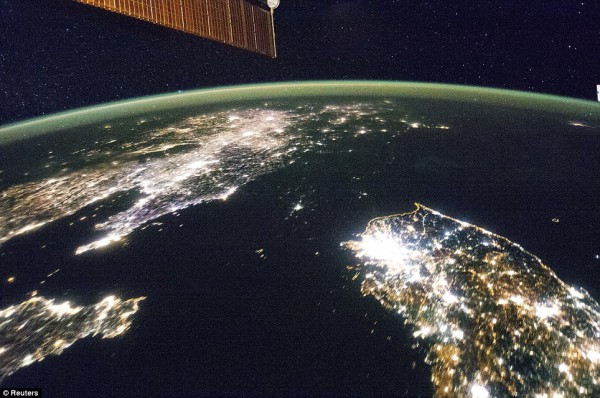
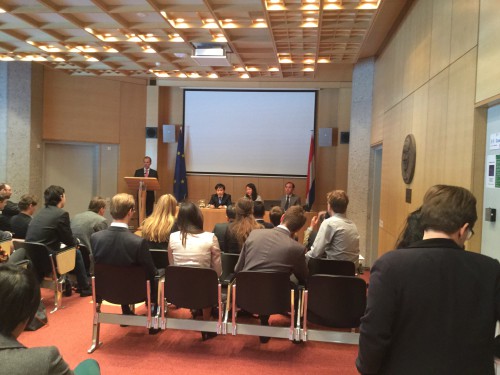
As a North Korean soldier defected to the South on Monday (June 15), more and more Chinese tourists are curious to go to North Korea to see the reality of China’s mysterious neighbour, while former US Security Council member Jamie Metzl writes about the coming collapse of the nation. Although North Korea remains one of the most isolated nations, it is still connected to the world in various ways – foreign diplomacy being one of them. Today, Leiden University and the Dutch Ministry of Foreign Affairs hold a special lecture on North Korea’s diplomatic relations (June 15th, 12:00–14:00 hours), with two former top officials from North and South Korea talking about their first-hand experiences with North Korean foreign diplomacy. What moves this isolated country to stay connected to the world?
“I dare say North Korea’s regime will collapse”
Dr. Kwang-Cheol Kim, former South Korean top official, is the first to address today’s audience in The Hague to talk about the foreign policy of South Korea towards North Korea, the so-called ‘Sunshine Policy’ being a pivotal part of it: “The goal of the Sunshine Policy was to advance the interaction between South and North. One of its main principles was no tolerance of North Korea’s provocation,” Dr. Kwang-Cheol Kim says.
Although the Sunshine Policy had many successes, it also had downsides: the nuclear problem and human rights situation was often ignored by South Korean officials. Kim Jong-il also misused the policy to strengthen the position of North Korea.
“If I talk about the future of the North Korean regime,” Dr. Kim says: “I dare to say it will one day collapse.” The collapse of the regime would not necessarily mean the collapse of North Korea. “A democratic regime would improve the situation and peace in the entire region.”
“There are three different North Korea’s”
Professor Jin-Sung Jang, former North Korean top official, now addresses the audience (in Korean, with an English interpreter): “There are three North Koreas,” he says: “The real North Korea, the projection of North Korea created by the regime and the theoretical North Korea created by the outside world.” Many countries worldwide, including European ones, form their policies on North Korea on the third North Korea – the theoretical one.
“The Korean Workers Party controls the system. Although the outside world sees the military as central influence, but really in NK it is quite simple: there is 1) Party Organization and 2) Party Life Conduct. There is a totalitarian oversight on people – their personal lives and their work.”
Jang explains how people need to submit themselves to the conduct of the Party. Clapping too loud or dozing off in a meeting could have serious consequences, as the conduct is centrally overbearing within every institutional entity. “The absolute power of the Supreme Leader is only ensured by everyone’s adherence to the Party organization.” Not many people remain in their positions for a long time, Jang explains, due to a system of punishment and purging.
“North Korea should not be approached as a nation state.”
“When Kim Il-sung died (1994), many people predicted the regime would collapse, but it did not. Because by that time, the actual running of the country was concentrated in the organizational secretary. The whole system continued.” The OGD (Organization and Guidance Department of the Worker’s Party of North Korea) has been building on its power since the 1970s; it’s not some new power, although many people think that because they hear about it for the first time, Jang says: “For Kim Jung-un to influence the people in the OGD, he needs to have his own people in this OGD – not only those of his father’s. For power to work in North Korea, your own people need to be in the OGD.” Kim Jong-il when preparing for hereditary succession would have known this problem very well, which explains why his family was suddenly given big governmental positions as a way to counter the power of the OGD network, says Jang.
Jang addresses the issue of European approaches to North Korea: “It’s time to move on from critical engagement,” Jang says: “Separative engagement is a better way – to see North Korea as a place with several stakeholders. Not approaching North Korea as a nation state, but addressing the several institutions or the people. It is based on a misunderstanding to see North Korea as a regime with national interests – the regime only secures the economic interests of the Supreme Leader, not that of the people.”
To break the centrality of the leader, there needs to be engagement with the people. “There are a myriad ways to do this,” Jang says, but dealing with people’s economies instead of dealing with central authority is the most essential.
“North Korea and China are actually not close allies.”
On the relations with China, Jang says: “Ever since China pursued reform and opening, it was no longer a political but regional ally of North Korea. Shared security interests became more important than economic or political interests. They are often perceived as close allies, but they are actually not.”
Dr. Kim goes on to talk about the relations between North Korea and Europe: “Different from Russia and China, the European Union has consistently talked about human rights with regards to North Korea,” he says: “That has provoked North Korean reactions, creating a potential problem. They are unhappy about the way Europe is talking about North Korea. With Europe now within missile range distance, this could form a potential problem in the future.”
Should we all go to North Korea?
One participant of today’s event asks about tourism in North Korea and how Professor Jang feels about it. “I see it as a perfect manifestation of making separative engagement choices” Mr. Jang says: “If it helps separative engagement, we should all go to North Korea. But if it only helps to strengthen the central government, it does not help – and then it has major downsides.” Jang continues: “Going to North Korea for tourism can be like going to a movie set. I would fully support it if there were more possibilities to shake hands and engage with locals.”
What would happen if Kim Jong-un loses his position? – one participant asks. “In North Korea a Supreme Leader regime cannot exist without a Supreme Leader. If he would disappear or die they would need to find a replacement,” Jang says: “North Korean officials are not stupid or brainwashed- they do not entrust their entire life just to anybody. In terms of stability, the central authority figures are stable, maybe more so than during Kim Jong-il. During Kim Jong-il nobody in the OGD enclosed themselves, but now they expose themselves to the public and take up various positions. Before it was very secretive; which is one of the reasons why the world knew so little of them.”
“Dialogue alone is not enough.”
Dr. Kim talks about the future and the demilitarization of North Korea: “We cannot just do nothing,” he says: “But dialogue alone is not enough. We need to pressure them and have different methods to force them to give up their military weapons. But to create these conditions is very difficult.”
He continues: “From the South Korean position – we don’t want instability, war or casualties, so we cannot do much alone. It needs to be an international effort.” Conclusively, he says: “In the long run, I believe the best way to find a solution for the North Korea problem ultimately would be to transform the regime itself.”
(This live blog is now closed).
– by Manya Koetse


Chinese New Year
Inside Chunwan 2026: China’s Spring Festival Gala
Watch the CGM Spring Festival Gala with us. It’s that special annual evening show that captures millions of viewers on the night of the Chinese New Year. Loved by many, hated by some, it always generates social media buzz.
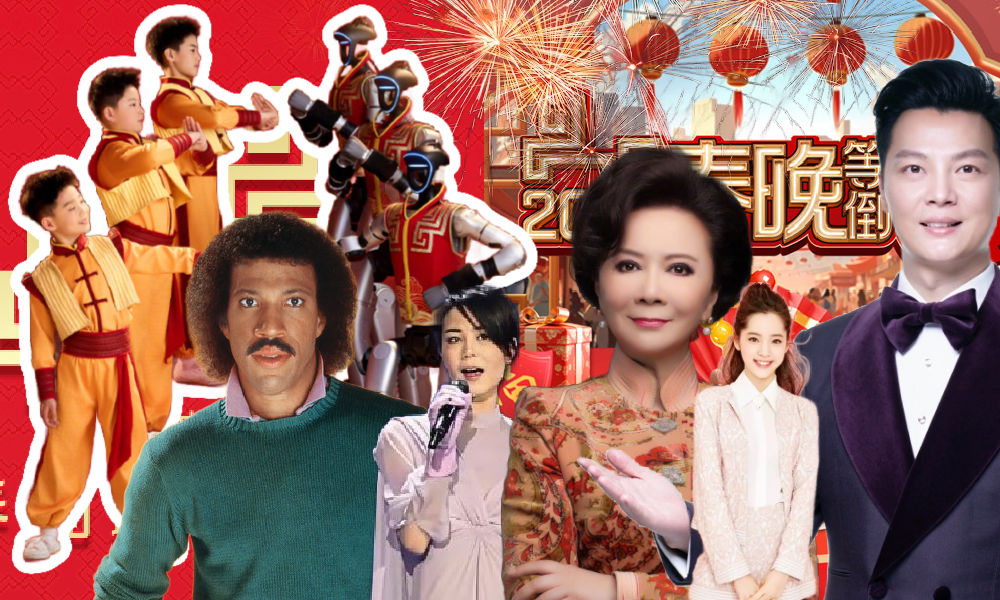
It is time again for the China Media Group Spring Festival gala – better known as the ‘Chunwan’ (春晚) – one of China’s most significant televised cultural events of the year, organized and produced by the state-run CCTV since 1983 and broadcast across dozens of channels, watched by millions.
What can we expect a typical Chunwan to look like? The programme usually runs for about four hours, from 20:00 China Standard Time to a little past midnight, and features around 30 acts: acrobatics, singing, dance, comic sketches (xiaopin 小品), crosstalk (xiangsheng 相声), magic, Peking Opera, public service segments, and tributes to national heroes. This year, however, some things will be different — more on that soon.
Liveblogging the show has become something of a personal tradition. You can explore more of my Gala coverage on the website here, spanning the past ten years, during which I liveblogged eight editions.
Tonight, I’m watching the Gala together with Miranda Barnes and Ruixin Zhang, so follow along in the liveblog below. Keep the page open and you should hear a ping when new updates arrive.
Update: This liveblog is now closed. You can still read all updates below, sorted from oldest to newest.
🕒 Updated: Feb 16, 19:06
About an hour to go — about the final version of the program
As we’re waiting for the event to kick off, a little bit about the show’s background. Because it’s not just the Gala night itself that has become a tradition, both online and offline, but also the discussions and buzz surrounding it.
As every year, the final version of the programme is only released quite last-minute, even though the full show — behind the scenes — has already gone through multiple rehearsals and generated plenty of anticipation.
There is likely some risk calculation behind this, as things can still change at the last minute. But the element of surprise in the final performance lineup also adds to the excitement and helps boost viewership, with discussions over who will perform what continuing well into the evening as the show begins.
The full program is typically distributed by China Media Group (CMG) as an extremely long, scrollable image designed for phone viewing, which also makes it a bit harder to copy and paste (though easier in the AI era).
By the way, CMG, the main organizer of the Gala, is an umbrella media powerhouse that includes the national television broadcaster China Central Television (CCTV), the national radio network China National Radio (CNR), and international broadcaster China Radio International (CRI).
🕒 Updated: Feb 16, 19:35
What can we expect to stand out at this 2026 CMG Gala?
Half an hour to go. There are a few things that already stand out about this year’s Gala — the 44th edition — even before it has begun. Three short observations:
1– Especially AI & Tech-focused
The Gala has traditionally been a blend of culture, commerce, and politics, with Party-state ideology woven into popular entertainment, from aesthetics to messaging, including through skits. Over the past decade, the Gala has increasingly focused on showcasing China’s technological power. I often think back to that iconic 2016 performance featuring 540 dancing robots, which helped set the stage for the Gala as an annual showcase of robotics and other state-backed media technology.
This year, with China’s AI stronger than ever and ByteDance’s Seedance 2.0 among the major talking points, we will likely see technology everywhere. There will be AI-generated imagery responding to stage elements in real time, hyper-realistic digital humans, and more.
Robots are also still very present. The Gala reportedly features its largest robot lineup to date, including dancing humanoid robots from Unitree Robotics (宇树科技) and other companies. Some martial arts segments are also expected to feature robot participation.
2– Foreign-focused
Following the Year of the Snake (2025) — when China became “cool” (see my piece on Becoming Chinese) — this soft-power effect is being fully embraced by Chinese state media. The Gala is now promoted internationally, including on YouTube, with messaging such as: “This is where it gets cool, this is where the future meets timeless Eastern aesthetics. This is where we feel warmth, where everyone belongs. When the CMG Spring Festival Gala begins, you are coming home.”
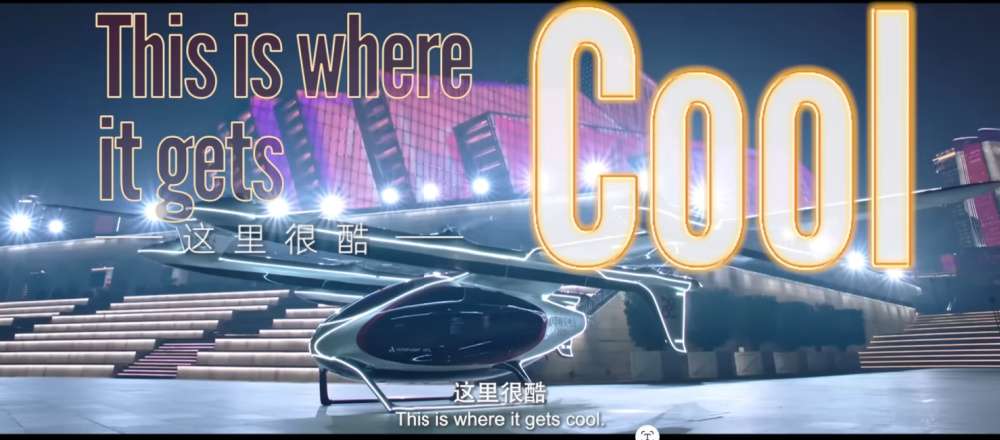
This outward-facing promotion also aligns with the Spring Festival being added to UNESCO’s Intangible Cultural Heritage list in late 2024. Beijing is increasingly positioning the event as a global celebration rather than only a national one.
The participation of Lionel Richie is particularly noteworthy. Together with John Legend, Jackie Chan, and others, he will perform in what is expected to be the most international segment of the night, highlighting China’s global cultural appeal. The performance will be staged from Yiwu, China’s wholesale capital, which produces an estimated 60–80% of the world’s Christmas decorations, among many other goods.
Other international performers appearing tonight include John Legend, Hélène Rollès, Westlife, the Hungarian National Folk Ensemble, Spanish dancer Jesús Carmona, and Austrian acrobatic troupe Jonglissimo.
3 – Taiwan
Lastly, Taiwan-related performances will inevitably carry political significance, especially given current cross-strait tensions. There is a strong sense of cultural nostalgia in the programme, emphasizing connection and shared heritage. For example, in the song “Treasure Island Love Song” (宝岛恋歌), with “Treasure Island” being an affectionate term for Taiwan may become the clearest expression of this theme. Will let you know when it comes up!
🕒 Updated: Feb 16, 20:02
Instant Magic
Ok, we’re kicking off with instant magic. That’s the name of this opening song in English, but its Chinese name is 马上有奇迹, which means “there will immediately be a miracle”, but since “immediately” also means “on horseback” there’s a double meaning (“On the horse, there are miracles.”) There are a lot of word jokes this Year of the Horse, and they’re all meant to be both funny and lucky at the same time.

A little more context for tonight’s show: it is clearly horse-themed as we welcome the Year of the Horse, and carries the title “Galloping Steeds, Unstoppable Momentum” (骐骥驰骋 势不可挡). The title itself feels meaningful. In previous years, themes were often more closely tied to tradition, family, fulfilling dreams, and cherishing reunion, while the emphasis on speed this year seems to signal China’s rapid rise and growing global influence — at least, that’s how I read the idea of “unstoppable momentum.”
The show is directed by Yu Lei (于蕾), who has long been associated with the Gala and is now directing it for a fourth consecutive year, that’s a first in the Gala’s 44-year history.
🕒 Updated: Feb 16, 20:08
Different venues
We’re now seeing a showcase of all the different venues participating tonight. The main show is broadcast from Beijing, but there are always multiple venues outside of Beijing. This year:
• Harbin (ice-themed stage)
• Yiwu (Global Digital Trade Center, international performers)
• Hefei
• Yibin (“First City on the Yangtze” skyline)

🕒 Updated: Feb 16, 20:10
Start of Spring
We’re watching the “Start of Spring”: the gala’s first major song-and-dance stage, featuring an all-female ensemble with AR technology enhancing the theme of the start of the Chinese New Year.

The performers come from mainland China, Taiwan, and Hong Kong, combining some more famous older faces with newer mainland performers.
A little note: this Gala is broadcast on all kinds of channels and platforms, including on BiliBili – which is where the youth is. The Gala has lost a lot of younger viewers, so this is one way to try and reach the audiences who are less used to watching traditional tv. This will be the second year Bilibili and the Chunwan are cooperating for the live broadcast, also allowing for “bullet comments” that appear in the screen.

🕒 Updated: Feb 16, 20:18
Grandma’s Favorite
This is the first comedy sketch of the night, featuring Cai Ming (蔡明), the beloved 64-year-old comedy veteran.
This sketch is much-awaited! Not only because of Cai Ming herself, but also because of the theme. In 1996, the famous actress also did a sketch featuring a robot (机器人趣话)- or actually, it was she herself who played a robot wife.

Now, after 30 years, she again returned, and this time not just meeting robots in the new AI era, there is also another robot version of herself.

The robots are by the Beijing-based humanoid robotics startup Songyan Power (松延动力/Noetix Robotics), and in this sketch, they are portrayed as taking care of the elderly – washing her clothes and doing other chores, while also keeping her company – because her own grandchild won’t visit her.

The sketch is a comedy one, obviously, but (as every year), there are always young people on social media who struggle to find it particularly funny.
Regardless, the sketch touches upon some important social issues in a rapidly aging China, perhaps seeing a future where more elderly will use tech and AI.
🕒 Updated: Feb 16, 20:29
武BOT — Martial Arts Robots
Quite amazing, this performance featuring robots by the Hangzhou-based humanoid robotics company Unitree Technology (宇树科技) doing actual martial arts together with students from the Henan Tagou Martial Arts School.
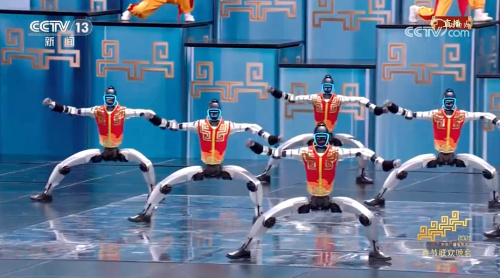

Turning this into a robot vs human battle, it’s really quite Bruce Lee goes 2026, and an excellent showcase for Unitree Tech and China’s AI robot development at large.
🕒 Updated: Feb 16, 20:34
Made in China
Made in China, created in China – a song is about futuristic made-in-China inventions that are now in people’s daily lives.
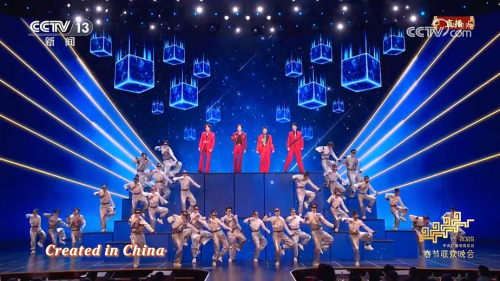
The English name of this song is “Smart Creation of the Future” (智造未来), featuring many popular male singers: Jordan Chan/Chen Xiaochun (陈小春), Jerry Yan/Yan Chengxu (言承旭), Luo Jiahao (罗嘉豪), Jackson Yee/Yi Yangqianxi (易烊千玺), performing together wih Magic Atom (魔法原子, another Chinese robotics company. (One of the four companies, if I’m correct, that is participating in this year’s Gala).
🕒 Feb 16, 20:38
Celebrating the Flower Goddess

Lovely segment featuring many special technologies and showing that Chinese traditional culture and modern technologies can blend together. This is in line with show elements that we’ve seen over the past few years, especially in the Gala’s directed by Yu Lei.
🕒 Updated: Feb 16, 20:44
Dazzle and Move
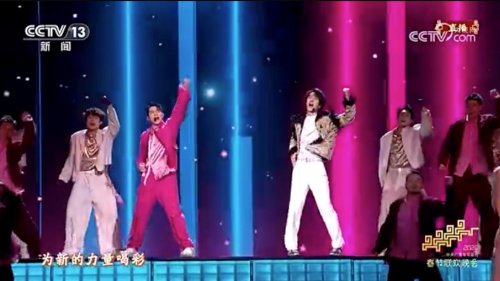
This segment, featuring Aaron Kwok/Guo Fucheng (郭富城, born 1965) and Wang Yibo (王一博, born 1997), has been among some of the songs that have been highly anticipated online, mostly due to the millions of fans these super popular singers/popstars have among both older and younger audiences.
Wang Yibo’s outfit (a Saiid Kobeisy 2026 spring/summer couture feather-embroidered jacket) leaked hours before broadcast and immediately went viral. Netizens are framing it as a “passing of the torch” moment between two generations of Chinese stage performers.
🕒 Feb 16, 20:49
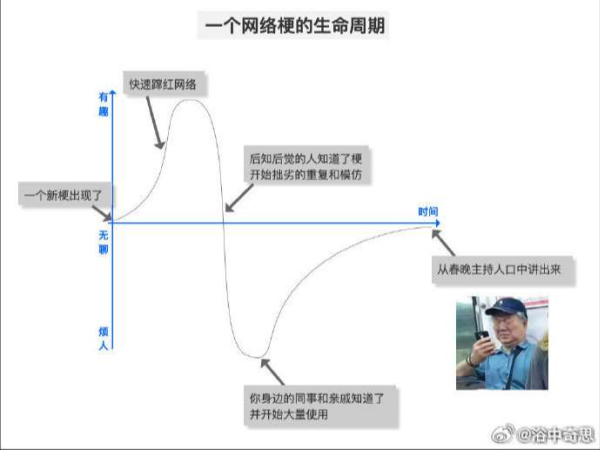
Once a viral word hits the Gala, it’s officially “washed”
The gala always features internet hit words and slang that people have forgotten about throughout the year. But because they use the slang awkwardly, according to many young viewers, it gives off the impression of a traditional show trying too hard to fit into to online life.
One meme posted shows the ““The Life Cycle of an Internet Meme/Slang””: a new meme appears, it’s fresh and funny, then it suddenly goes viral, and then when your co-workers and parents start using it, it’s basically dead.
However, when it then finally appears in the Gala, it’s officially over, and the meme is “washed.”
Some netizens are counting the number of “slang words” used by the Gala that can now (tongue-in-cheek) be removed from the popular online lexicon.
🕒 Updated: Feb 16, 20:55
Whose Dish?
We’ve arrived at the stand-up segment, which is interesting — traditionally, xiangsheng (相声) acts on the Gala tend to come from the north, while these two performers have a strong southern (Hunan) accent.
The Gala’s comedy shows have long been criticized for being too northern China–centric, with many viewers in the south, especially in Cantonese-speaking regions, feeling less connected to them. This shift may reflect an effort to strike a better balance between northern and southern comedy traditions.

By the way, the performers are Xu Haolun (徐浩伦) and Tan Xiangwen (谭湘文).
🕒 Updated: Feb 16, 21:18
Sorry for some tech problems > Back now
Back online! Had some tech problems, so missed the last performance, but we’re back. Watching “Lucky Steed” (吉量), featuring singer Zhou Shen (周深). The kids come from Guizhou, doing a fashion show featuring their local traditional costumes.
They’re part of the ‘Village T-stage’ (村T) of Southeast Guizhou, which is a grassroots fashion troupe. You could spot traditional attire of the Miao, Dong, Buyi, Sui, and Yao peoples. The Gala has always placed a heavy focus on ethnic and regional representation (emphasizing national unity and ethnic solidarity), and there will be more songs later on showing this.

What did we miss?
1. There was one segment shown from Yibin (宜宾) one of the four venues besides Beijing for the 2026 Gala, chosen to showcase Sichuan’s cultural identity. Here, you could also spot Li Ziqi, the influencer who had great success in popularizing Chinese traditional culture abroad.
2. The other spectacular dance afterward featured the Xinjiang Arts Theater Song and Dance Troupe, transporting viewers onto the ancient Silk Road through Dunhuang-inspired visual design. More about that later.

🕒 Updated: Feb 16, 21:28
“You’ll Like This for Sure”
After a song about the “Autumn Harvest” (来晒秋) featuring the massively popular Phoenix Legend pop duo together with the Ningxia Zhongning County Farmer Choir, we’re now arriving at the “comedy short drama.”

This is called “You’ll like this for sure” (喜剧短剧).

Interestingly, you see that the Spring Gala is choosing to cast faces from different talent pools, and many more are coming from China’s short drama industry. This is a gradual shift, where the directors are really aiming at younger audiences, mixing the older faces with young talent.
This whole sketch is about the addictive attraction of algorithm-driven content feeds on Chinese platforms like Douyin or Kuaishou. And although a lot of it is meant to be funny, there’s always a more serious undertone. In this case, reflecting on a generation of netizens who can’t even have dinner without watching short videos. This sketch seems to be quite well-received.
🕒 Feb 16, 21:32
Human Resonance — Li Jian
This song was released a few days before the Gala.


This song also marks Li Jian’s first return to Chunwan for the first time in 13 years, something many fans seemed happy about.
🕒 Updated: Feb 16, 21:40
The Yiwu Stage
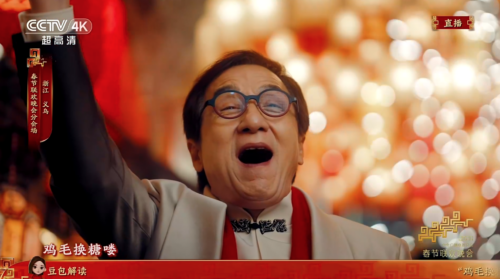
The Yiwu stage – pay attention! This segment fetures Lionel Richie next to Jackie Chan, which is a very deliberate meeting of the stars, a meeting of East-West kind of narrative.
Why Yiwu? Yiwu is practically a factory of the world, and aso called China’s most cosmopolitan small city, since it’s a place where people from all over the world come together – you can hear Arabic, Spanish, and Uyghur on the same street.

Well here’s Lionel! Singing “We are the World” with Jackie Chan. I somehow envisioned him to be THERE in Yiwu, but it’s a studio recording and does not appear to be live, which, I’ll admit is a bit of a disappointment.
🕒 Feb 16, 21:46
Galloping Sea-Bay Horse
This is a song by Wurina and Aruna together with grassland performance group Wulanmuqi.
Here we see the beautiful AI-generated horses in the background, which I had been reading about before the Gala.

Apparently, the horses sometimes galloped too quickly or too slowly, so it was a challenge to integrate the AI visuals with what was happening on stage.
🕒 Updated: Feb 16, 22:03
Too much tech?
After a VERY high-energy song about “Fortune at your fingertips” (手到福来), featuring Hong Kong film legend Tony Leung Ka-fai (梁家辉) and mainland actress Liu Tao (刘涛), we’ve arrived at the next comedy sketch.
Meanwhile, online, there are people complaining about the lack of funny jokes in the show (it’s a complaint every year) and the abundance of robots. Some even suggest that many of the songs sound like they were written by AI.
Noteworthy is not just how much AI & robots appear in this show, but the sponsors of the Gala are also overwhelmingly from the tech environment. Out of nine announced sponsors, only two were traditional liquor brands.
The companies behind the robots reportedly invested around 100 million yuan (14 million usd) to get their robots on stage. This is the first time we’re not just seeing dancing robots, they’re also in the martial arts sketches, and even in the comedy skits. For many, it’s just too much. Another problem: they lack comical skills.
Another unexpected effect of this robotization of the Gala is that while many viewers are usually watching to see if any of the singers or actors make mistakes, they’re now waiting for a robot to do something wrong.
🕒 Updated: Feb 16, 22:14
Tears for Mum
The “jellyfish dance” with the beautiful colors is called “Joyful Rain” (喜雨) featuring lead dancer Meng Qingyang (孟庆旸) together with the Zhejiang Conservatory of Music – these are the kinds of dances Miranda and I always love the most,

The song with the tearful audiences is called “Mom Has a Cinema” (妈妈有座电), and was made with guidance of the famous Zhang Yimou.The singer was Deng Chao (邓超), and I’m not sure if the lady on stage was their actual mother. Correction: it’s the actress Chi Peng (迟蓬).
The song showed the milestones of a child’s growth and the unbreakable connection between mother and child.


🕒 Updated: Feb 16, 22:22
Faye Wong and Taiwan Nostalgia
Here we have arrived at Faye Wong’s performance, which was one of the songs that people looked forward to the most, mainly just because she is such a beloved singer. It’s titled “The Moment We Experienced Together” (你我经历的一刻)


Before Faye Wong: the song “Treasure Island Love Song”, the song invoking the most Taiwan Nostalgia of the night, although there was less political visual messaging than I expected.
This performance also included the Taipei-born Ouyang Nana, alongside a stacked cast of Taiwan-born artists.

🕒 Updated: Feb 16, 22:31
Meanwhile on Douyin & Bilibili
The platform Bilibili just posted about the most frequently sent bullet comment (danmu) during their Spring Festival Gala livestream. It is not “great”, “wonderful”, or “spectacular,” but: “Ah?” / “Huh?” The peak moment was apparently during one of the sketches, leaving viewers a bit confused rather than humored, apparently.

Also, meanwhile, some netizens are noting that Douyin users are complaining that criticising the Gala is apparently not allowed on the platform. On On Weibo, criticism of the Gala seems to have already been restricted for several years.

This censorship and control of the narrative surrounding the Gala makes it extra noteworthy that Bilbili has opened up its on-screen commenting for the Gala – although it does take some time for the comments to show up on screen (they are filtered, as well).
🕒 Updated: Feb 16, 22:50
From Harbin to “Let Me Be Young Again”
Harbin is one of the sub-venues this year, and in its Gala segment, the city was portrayed as a cold place with an unexpectedly warm heart. It has become very popular in recent years during the Spring Festival travel season for its snow attractions and famously friendly locals. (Unfortunately, it’s also been quite literally warm — just this weekend, an 18-meter-high snowman had to be demolished after temperatures rose above 0°C, creating the risk that the entire sculpture might collapse.)

The mother-and-child duet featured a song from the 2024 feminist film Her Story (好东西), which is noteworthy. The film faced considerable backlash from some men online, and the actors were subjected to waves of slander. Its inclusion in the Gala feels meaningful.
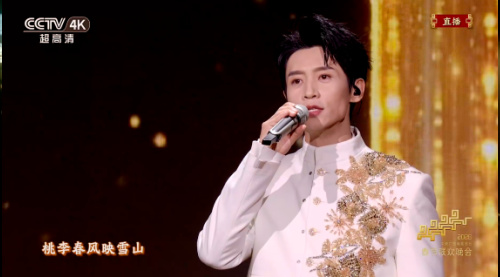
“Let Me Be Young Again” (许我再少年), performed by Wei Chen (魏晨) and Liu Yuning (刘宇宁), is a Gala-commissioned original song, meaning it was written specifically for the 2026 Spring Festival Gala and kept fully unreleased before the broadcast. Its placement is deliberate. Appearing in the later segment of the program, close to 11 PM, the song is an hour before midnight in the “emo-core” of the Gala, a moment typically reserved for more reflective and sentimental songs.

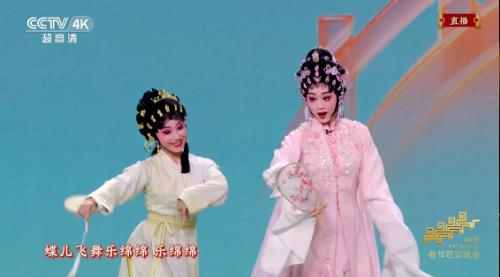
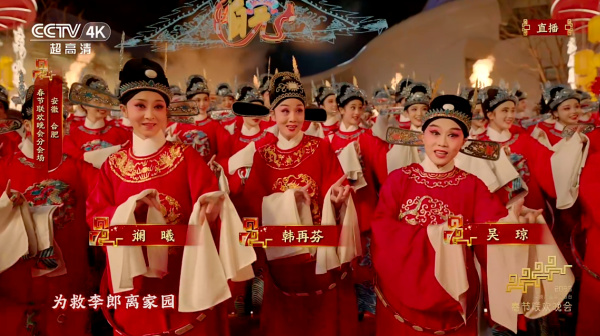
Following this song is the Gala’s annual xiqu (戏曲, traditional Chinese opera) showcase segment. According to reports released before the show, the segment brings together excerpts from multiple major regional opera forms, specifically Jingju/Beijing opera (京剧), Pingju (评剧), Yueju/Shaoxing opera (越剧), Yueju/Cantonese opera (粤剧), and Yuju/Henan opera (豫剧), fused into 1 single creative medley.
🕒 Updated: Feb 16, 22:54
We just noticed..
Those who have followed the Gala for many years may recall that performers from Taiwan, Macau, or Hong Kong were typically always introduced with on-screen credits noting where they were from. It is unclear whether this is the first year that practice has been dropped, but it appears to have changed and they no longer do that. The shift may reflect a subtle move in emphasis from highlighting “two systems” toward a stronger focus on the idea of “one China.”
🕒 Updated: Feb 16, 23:03
A little joke when watching the magic segment. This post said, “When you show your tongue piercing to your relatives.”
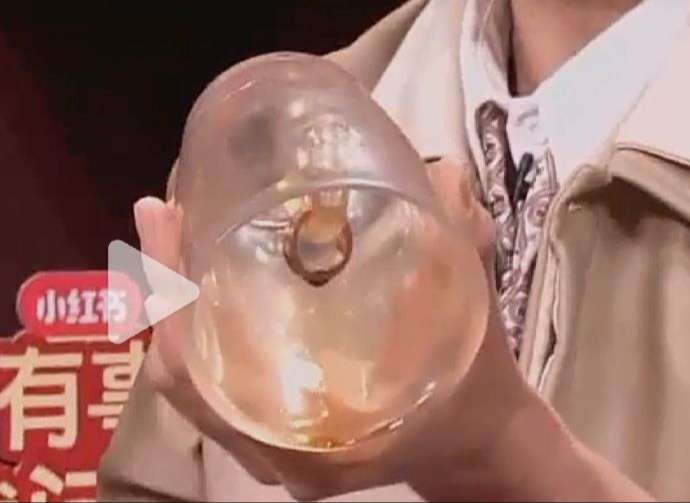

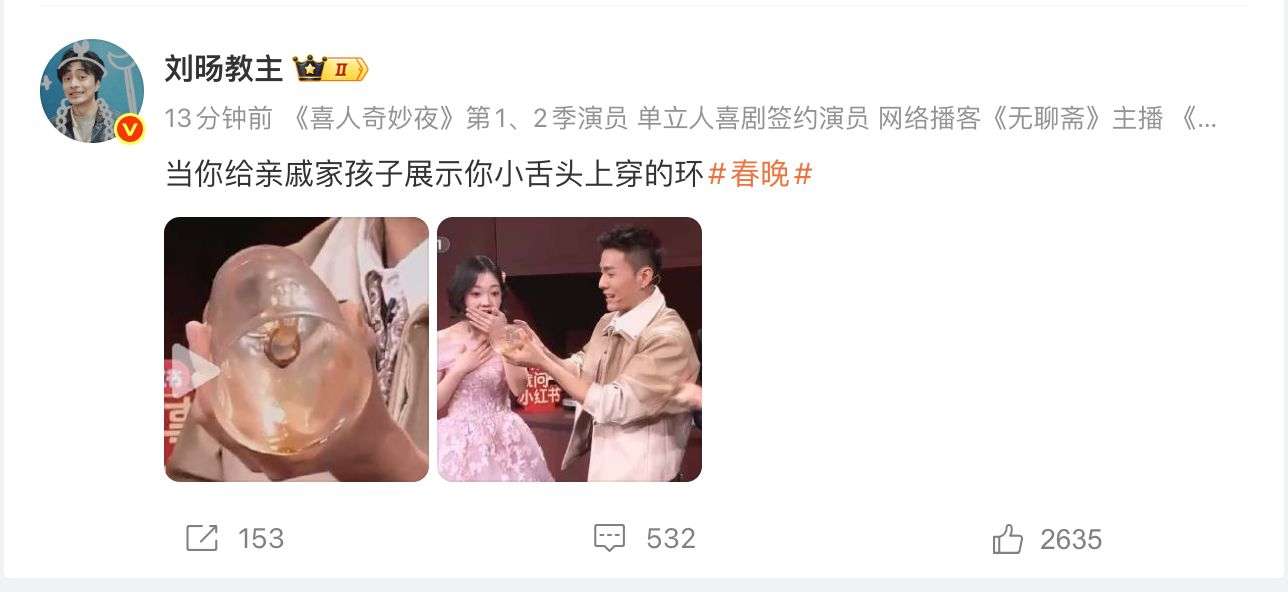
Another general sentiment was also that the magic tricks were more funny that the skits, which were meant to be comical.

🕒 Updated: Feb 16, 23:11
The night is suddenly going so fast! We’ve seen a so-called “micro-musical”, titled “Every Ray of Light” (每道光), which is meant as a tribute to all the workers. That’s why you saw delivery guys, factory workers – many of them actually also really doing these jobs and thus mixing the celebrities with the real-life workers.

The song afterwards (小家年年) mixed some elements of singing art from Suzhou with pop song format.

The short movie or “micro movie” was introduced a few years back as a recurring part of the Gala. This one, titled “My Most Unforgettable Tonight”, features China’s most famous comic duo Shen Teng (沈腾) and Ma Li (马丽). In the “behind-the-scenes” movie, they’re joined by robots from Galaxy Universal, one of the four major companies sponsoring the Gala this year.
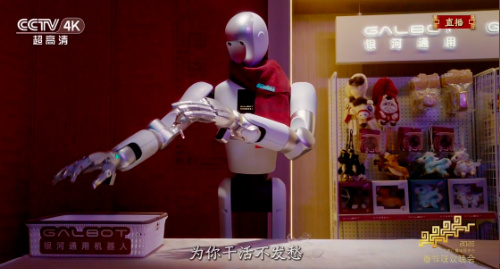
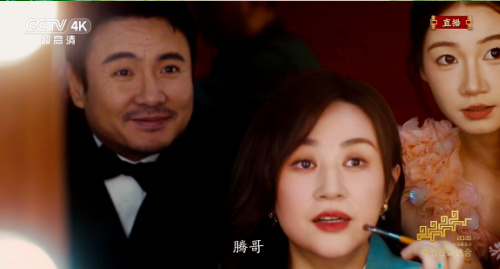
🕒 Updated: Feb 16, 23:17
How serious is criticizing the Gala, really?
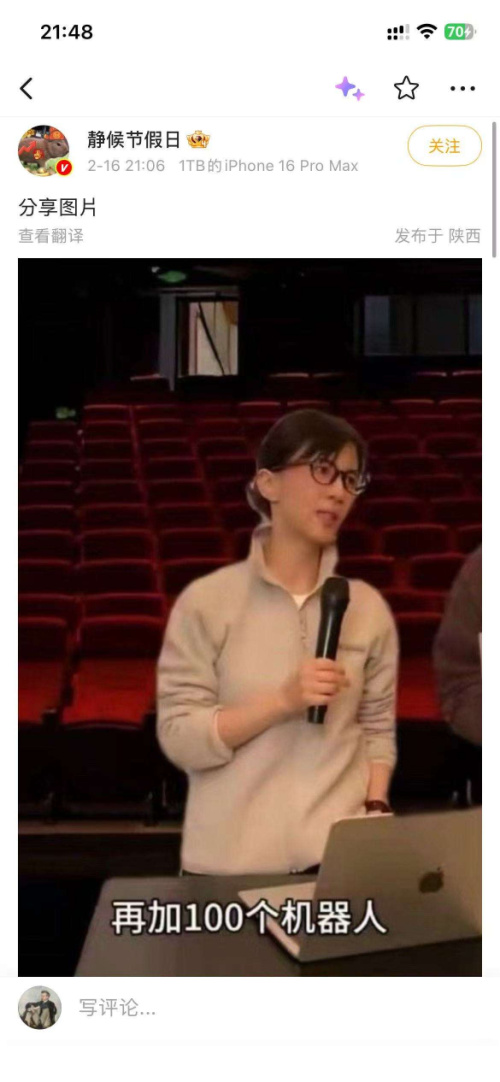
Since we’re seeing quite a lot of people criticizing the Gala, often in soft ways, it raises the question of how restricted criticism really is. As is often the case with China’s online dynamics, it’s not entirely black and white. Still, posting a strongly critical video on Douyin does not seem very feasible this year. Even a video by well-known Chinese comedy star Papi Jiang, posted before the Gala, was taken down. In a humorous tone, she had made some predictions about how the Gala might feel less creative or a bit cringe this year. Apparently, that was a step too far. (Link to video: https://youtu.be/zF9R5ry-gVY?si=ub7UFKA4ax21eRUV)
🕒 Updated: Feb 16, 23:26
Poking fun at lazy local authorities
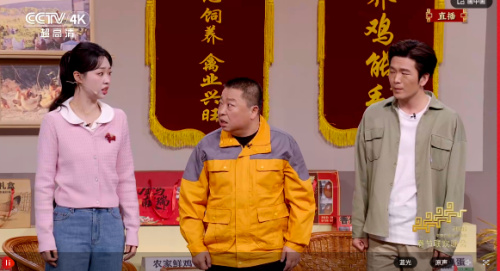
The sketch “Here Again” (又来了) is described as rather “brave” by some viewers. It pokes at local authorities doing fake “field visits” yet not solving any substantial issues for the people.
This strikes a chord with people who can recognize this as a real issue of different departments trying to avoid their own responsibilities, and trying to leave it to others. Some viewers appreciate a sketch like this pointing at real frustrations in society.
🕒 Updated: Feb 16, 23:34
Hefei is in the spotlight
This is the first time for Hefei to be featured as a sub-venue during the Chunwan. As for every city featured in the mega show, it’s an important moment for city marketing.
The venue featured is Luogang Park (骆岗公园), a repurposed former airport transformed into what is described as the world’s largest urban park.

Hefei, capital of Anhui, has a booming drone industry, which is also why you see so many drones in this segment.
At the same time, Anhui is one of China’s most invisible provinces online. Many people don’t know that the University of Science and Technology of China is in Hefei; they all think it’s in Beijing. So a bit more publicity for Hefei definitely can’t hurt.
🕒 Updated: Feb 16, 23:38
“Bottom of the Dream” (梦底)
We just saw “Bottom of the Dream” (梦底), featuring singer Hai Lai Amu (海来阿木) in his third consecutive Spring Festival Gala appearance. As a result, some commenters joked that he was “treating the Gala like his regular workplace” (把春晚当工位了).
Some people are joking about the dancer in the performance, because she seemed to overshadow the singer.

🕒 Updated: Feb 16, 23:48
Stamping the Rhythm
We just saw an unlikely combination of performers, which is pretty cool: the Minzu University of China together with the Hungarian National Folk Ensemble and the Jesús Carmona Spanish Dance Company,
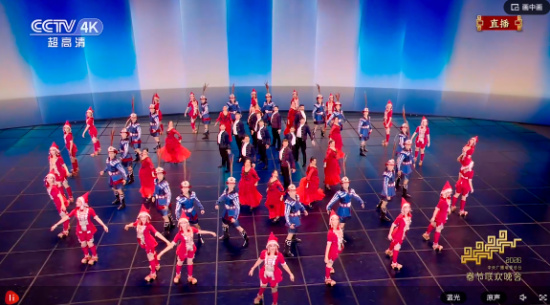
Then it’s time for a more childlike and playful song: “Happy Little Horse” (快乐小马).

The next performance is titled “Painting the New Spring” (绘新春) and it’s quite spectacular, featured performers from Austria together with the Henan Provincial Acrobatic Troupe.


🕒 Updated: Feb 16, 23:56
The only military song of the night
Every Gala usually features one military song (军歌). This is “My Post, My Watch” (战位有我在), the only PLA-dedicated song at the Gala this year. The performers are from the PLA Cultural Arts Center, which was established in April 2018 through the merger of the former August First Film Studio, the PLA Song and Dance Troupe, Drama Troupe, Opera Troupe, and Military Band under the Central Military Commission Political Work Department.

This segment appears to mostly emphasize duty, vigilance, and each soldier’s personal commitment to their post, highlighting different roles across the military.

🕒 Updated: Feb 17, 0:00
Positive energy
So far, ethnic minorities, farmers, and traditional opera have all been featured as unmissable elements of every Gala night. The song “Searching for Dreams Across Mountains and Seas” (山海寻梦), is described by Chinese media as a tribute to all Chinese people who strive, persevere, and dedicate themselves welcoming a new spring where “hearts find joy and careers find success” (心有所悦、业有所成).
A classic Gala genre of inspirational zhengnengliang (“positive energy”) songs that usually appear just before the finale, which is where we are now!

🕒 Updated: Feb 17, 0:02
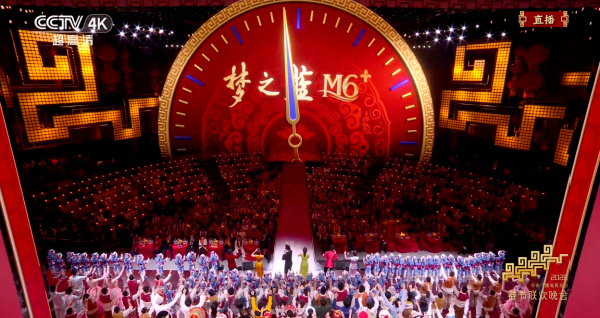
It’s midnight! Happy Year of the Horse!

🕒 Updated: Feb 17, 0:13
It’s not over yet
As it’s past midnight, we’ve reached the final stretch of the show, though there’s still a bit to go.
After a cheerful song about visiting family (“A Guide to Visiting Relatives,” 串门指南), we now see the beautiful performance “Riding the Wind” (驭风歌) featuring Jason Zhang.
Meanwhile, online criticism of this year’s Gala also seems to be growing. Is it really this year’s show, or is this simply the usual annual debate? Perhaps it’s both, as a common saying goes: “There’s never a worst, only worse than last year,” (中央春晚,没有最烂,只有更烂.) Much of the criticism right now is directed at the heavy use of robots. Among the different sub-venues, Yiwu is also drawing critique for highlighting the city’s commercial/capitalist side while choosing the song “We Are the World” which is meant to emphasize collective goodwill and charity and is one of the most famous charity songs ever made.

🕒 Updated: Feb 17, 0:18
Guaranteed Satisfaction
This is the final comedy sketch of the night, titled “Guaranteed Satisfaction” (包你满意). (There used to be many more of these, but with greater focus on song, dance, and tech, there is now less room for sketches, which are also often less popular among younger viewers.)
You might notice a format called “three-and-a-half sentences” (三句半), which sometimes appears in sketch comedy and crosstalk (including in the opening lines here). The first three lines are rhythmic or rhymed, while the fourth is only half a sentence — usually a short, punchy, rhyming tag. This is one of the most common opening formats in language-based performances on the Gala, a style that traces its origins to Beijing.
This particular sketch is described as a grassroots comedy centered on everyday consumer disputes, featuring Sha Yi, one of China’s veteran comic actors.

🕒 Updated: Feb 17, 0:22
The most meme-worthy moment of the night
It seems the Gala moment many people are joking about most is the Cai Ming sketch, in which she plays a little grandma employing robots in her home for all kinds of tasks. Funnily enough, many netizens, tired of being asked when they will finally settle down, have found an unlikely hero in Cai Ming, sharing:
“My parents: If you don’t have children in the future, who will take care of you when you’re old?”
“Me:”

🕒 Updated: Feb 17, 0:40
Brother Legend


Unlike Lionel, John Legend is present at the Gala itself. In Chinese, he is called 传奇哥: “Brother Legend.” This “Love Medley” also features Hélène Rollès (France) and Westlife (Ireland).

Westlife the band is still very popular in China. In 2024 they even allowed a Chinese AI platform to use their voices for singing.
🕒 Updated: Feb 17, 0:43
“Chasing Shadows” (追影)
Still want to briefly return to the act we saw before the street dance number “Sounds of Spring” (新春之声), which is “Chasing Shadows” (追影).
A truly beautiful piece, led by dancer Zhang Han (张翰) from Hubei. Zhang is best known for his role as the male lead Xi Meng in the dance-drama “Only This Green” (只此青绿), inspired by the Song dynasty painting A Thousand Li of Rivers and Mountains (千里江山图). The production was adapted into a film in 2024 starring Zhang.
The 2022 Gala actually also included a dance that was inspired by the painting which was stunning.


The other song that followed, Gongxi Facai (恭喜发财), can be seen as the Chinese New Year version of “All I Want for Christmas Is You”: every New Year season, it’s the song you hear everywhere, from the streets to the supermarkets, and it has become a meme in much the same way.
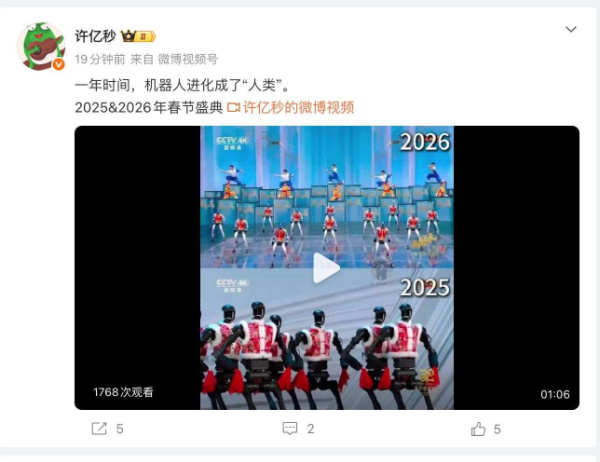
Meanwhile, there have also been some online comparisons between the robot shows in 2025 versus 2026, showing just how fast development is going. At this speed, wonder what the Gala will look like in 2027 and beyond!
🕒 Updated: Feb 17, 0:45
A different “Unforgettable Tonight”
Legendary singer Li Guyi (李谷一), who first performed “Unforgettable Tonight” (难忘今宵) in 1984 as the Gala’s signature closing song, has confirmed she will miss the show again due to health issues, marking her fourth consecutive absence since 2023.
Instead, we are seeing a different kind of “Unforgettable Tonight” (难忘今宵). The Gala appears to be shaping a new closing tradition without Li Guyi, this time featuring children and performers with disabilities, incorporating sign language and creating a more inclusive, human ending to an otherwise highly “robotic” show.
Performers include the Beijing Philharmonic Choir (北京爱乐合唱团), the Galaxy Youth TV Art Troupe (银河少年电视艺术团), and the China Disabled People’s Performing Art Troupe (中国残疾人艺术团).

Thank you for reading along, and I wish you a very happy and healthy Year of the Horse!
If you appreciate what we do and would like to receive the next newsletter on the latest Spring Festival trends, please don’t forget to subscribe. Signing off now, and thanks to Miranda and Ruixin for staying glued to the screen with me tonight. Until next time!
China and Covid19
CCTV New Year’s Gala 2020: Highlights and Must-Knows (Liveblog)
What is Chinese New Year without the CCTV Spring Gala? What’s on Weibo reports the must-knows of the 2020 ‘Chunwan.’

WHAT’S ON WEIBO ARCHIVE | PREMIUM CONTENT ARTICLE
As the Year of the Rat is just around the corner, millions of people in China and beyond are starting the countdown to the Chinese New Year by watching the CCTV Spring Festival Gala, commonly abbreviated in Chinese as Chunwan (春晚).
The role of social media in watching the event has become increasingly important throughout the years, with topics relating to the Chunwan becoming trending days before.
Making fun of the show and criticizing it is part of the viewer’s experience, although the hashtag used for these kinds of online discussions (such as “Spring Festival Gala Roast” #春晚吐槽#) are sometimes blocked.
The Gala starts at 20.00 China Central Time on January 24. Follow live on Youtube here, or see CCTV livestreaming here.
About the CCTV New Year’s Gala
Since its very first airing in 1983, the Spring Festival Gala has captured an audience of millions. In 2010, the live Gala had a viewership of 730 million; in 2014, it had reached a viewership of 900 million, and in 2019, over a billion people watched the Gala on TV and online, making the show much bigger in terms of viewership than, for example, the Super Bowl.
The show lasts a total of four hours, and has around 30 different acts, from dance to singing and acrobatics. The acts that are both most-loved and most-dreaded are the comic sketches (小品) and crosstalk (相声); they are usually the funniest, but also convey the most political messages.
As viewer ratings of the CCTV Gala in the 21st century have skyrocketed, so has the critique on the show – which seems to be growing year-on-year.
According to many viewers, the spectacle generally is often “way too political” with its display of communist nostalgia, including the performance of different revolutionary songs such as “Without the Communist Party, There is No New China” (没有共产党就没有新中国).
To take a look at what was going on during the Spring Gala’s previous shows, also see how What’s on Weibo covered this event in 2016, in 2017, in 2018, and in 2019.
Live updates
Check for some live updates below. (We might be quiet every now and then, but if you leave this page open you’ll hear a ping when we add a new post). (Update: Live blog closed)
Happy New Year Wishes from Wuhan People’s Hospital
[Jan 24 / 17:30 CST]
Medical staff at the dedicated isolation ward of Wuhan’s People’s Hospital wish everyone a Happy New Year, saying: “We’re here, don’t worry [and celebrate Spring Festival]” – a hashtag that’s now propagated online to ease the #coronavirus panic. #有我们在大家安心过年
Medical staff at the dedicated isolation ward of Wuhan’s People’s Hospital wish everyone a Happy New Year, saying: “We’re here, don’t worry [and celebrate Spring Festival]” – a hashtag that’s now propagated online to ease the #coronavirus panic. #有我们在大家安心过年 pic.twitter.com/byWLd8DJ1i
— Manya Koetse (@manyapan) January 24, 2020
Director of the Gala: Yang Dongsheng
[Jan 24 / 17:57 CST]
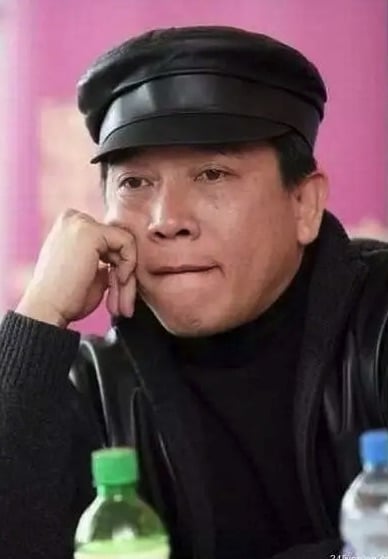
This year’s director is Yang Dongsheng (杨东升) from Guangdong (see picture below), who also directed the Gala in 2017 and 2018. With Avatar-like settings for dance and singing acts in 2017, spectacular light and dance show in 2018, we can also expect tonight’s show to be colorful and big.
Jiayou Wuhan, Jiayou China!
[Jan 24 / 19:57 CST]
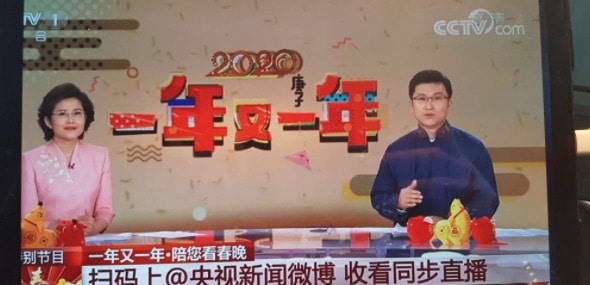
In the ten minutes leading up to the CCTV Gala, it is clear that the coronavirus outbreak in Wuhan is not a news topic that will be ignored tonight.
The presenters have a strong message showing their support to the patients and people in Wuhan and beyond, saying: “Jiayou Wuhan, Jiayou China!” – Come on Wuhan! Come on China!
It just started and the first memes are here
[Jan 24 / 20:10 CST]
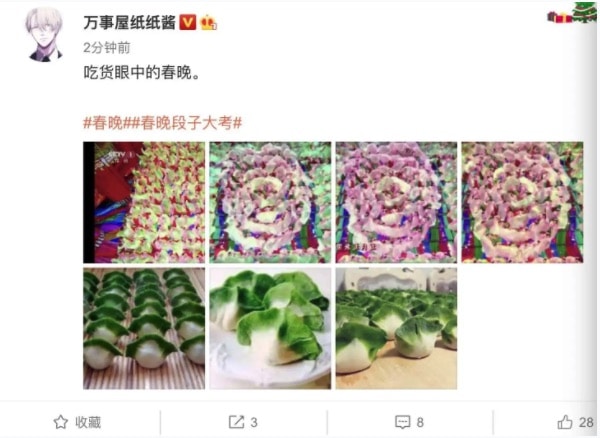
The first act has only just completed and already there are memes going around Chinese social media, comparing the dancers in the act to Chinese cabbages..
Time to have a “live look” inside the main hospital in Wuhan!
[Jan 24 / 20:40 CST]

A special moment during the CCTV Gala as the show switched to one of Wuhan’s main hospitals right now to get an update from the nurses there who are spending their Chinese New Year night taking care of the many people infected with the coronavirus.
According to the presenter, the switch was “very last minute.”
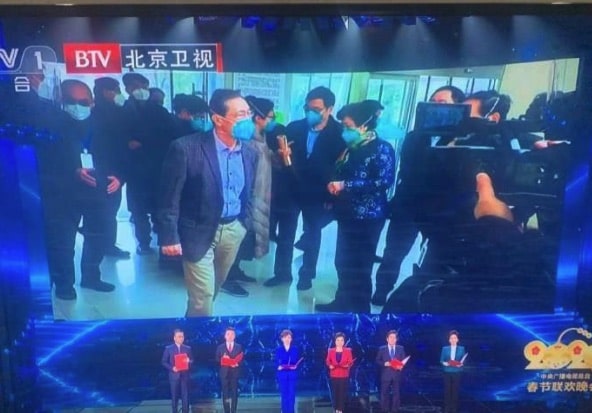
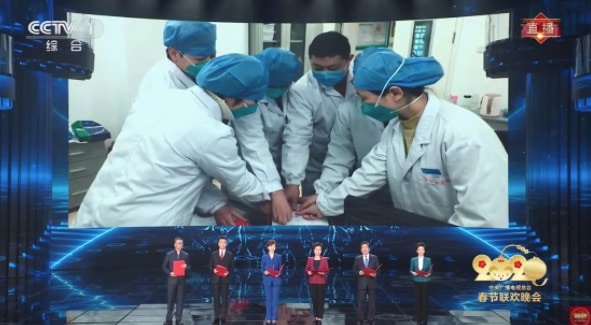
The presenters also take this time to thank all of those people sacrificing their time and energy to take care of the ill.
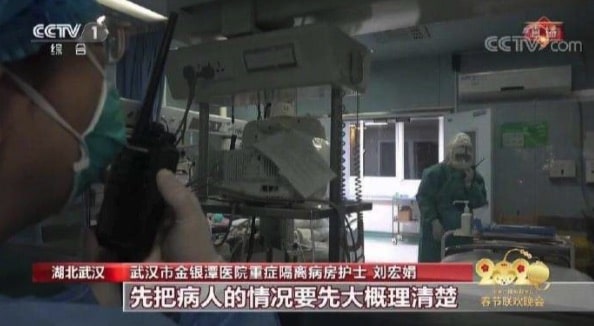
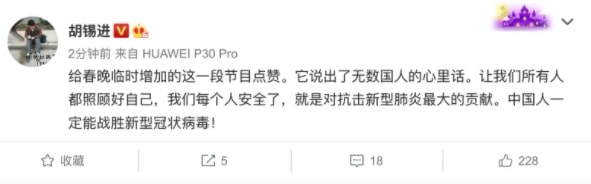
Global Times editor Hu Xijin also posted about the “last minute” Wuhan segment, and praised it for communicating the feelings and worries of Chinese people.
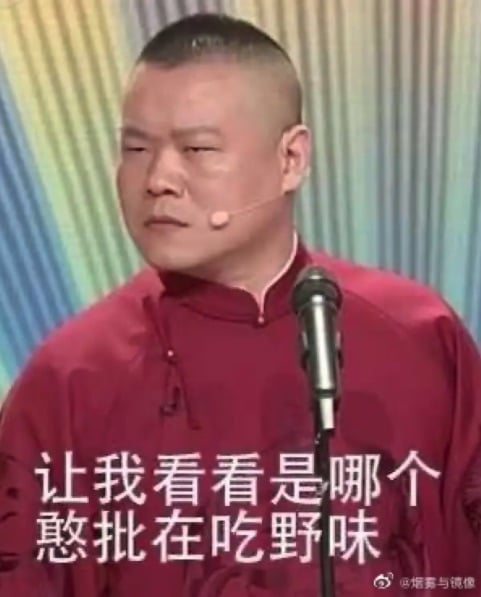
“Who has been eating wild game?!”
[Jan 24 / 20:44 CST]
With the outbreak of the coronavirus, the eating of wild game has been severely criticized on Weibo these days. This meme of the sketch performed by actor Yue Yunpeng (岳云鹏) during tonight’s Gala says: “Let’s see which idiot still dares to eat wild game?!”
Read more about the backlash against wild game eating here.
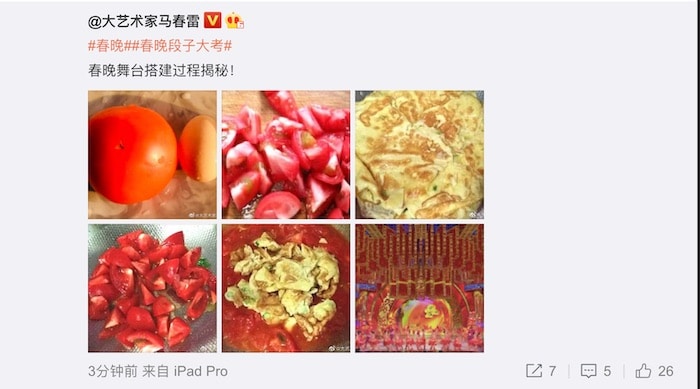
Some people only think about food during Chinese New Year…
[Jan 24 / 20:53 CST]
We already said that this CCTV Gala, directed by Yang Dongsheng, would be a colorful one. For some viewers, the dance performance set up at the start of this night just looks like food.
[Jan 24 / 21:03 CST]
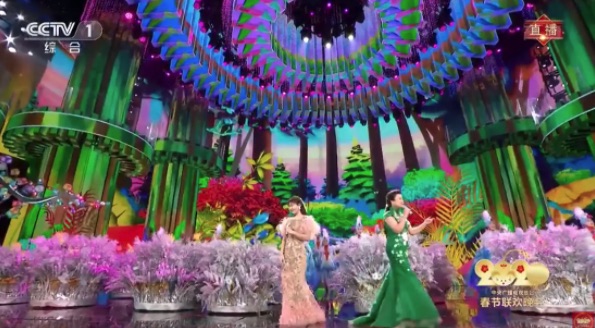
#春晚历史上首次没有彩排的片段#
[Jan 24 / 21:18 CST]
As the night continues, people on Weibo are still talking about the segment in the show that cut to the Wuhan hospital. For the first time since 1983, the CCTV Gala included a segment that was not rehearsed. The topic is making its way around social media under the hashtag “For the first time in history, the CCTV Gala airs unrehearsed segment” (#春晚历史上首次没有彩排的片段#).
How much is live?
[Jan 24 / 21:45 CST]
Although this Gala is a live broadcast from CCTV’s No.1 Studio in Beijing, combined with broadcasting from different other venues (this year: Guangdong, HK, Zhengzhou, Macao). every year’s show has a taped version of the full dress rehearsal. The tape runs together with the live broadcast, so that in the event of a problem or disruption, the producers can seamlessly switch to the taped version without TV audiences noticing anything.
Because of the outbreak of the coronavirus, Beijing seems to be the only location that is actually aired live tonight, with the other locations using pre-recorded versions.
What’s tonight’s theme?
[Jan 24 / 21:53 CST]
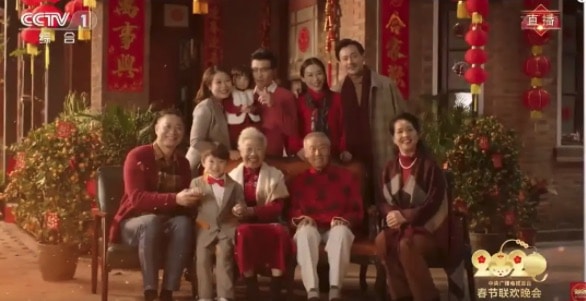
Every year, the CCTV Gala has a different theme. Sometimes, these themes are very clear, such as the “Chinese Dream” in 2016, or “National Unity” in 2017.
This year marked the 70th anniversary of the People’s Republic of China, and the Gala seems to have an umbrella theme capturing issues such as the celebration of 70 years ‘New China,’ the fight against poverty, unity among all languages and ethnic groups within China, and China’s important role in international society (especially marked by the first act, showing dancing and performances from different One Belt, One Road countries).
2020, I Love You
[Jan 24 / 21:53 CST]
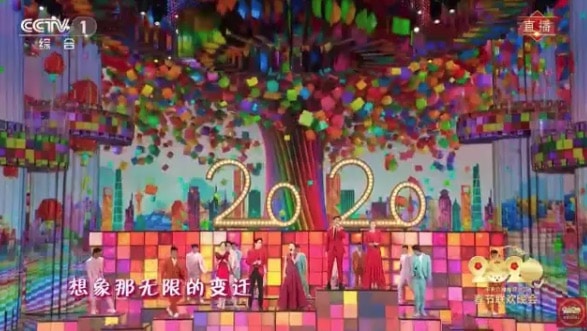
This catchy poppy song is called “Hello 2020″(你好2020), performed by various artists.
Stunning Dance “Morning Light”
[Jan 24 / 22:02 CST]
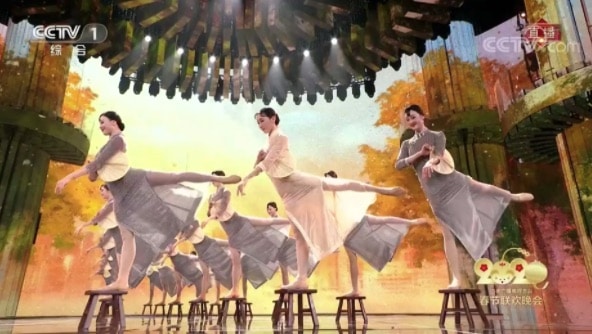
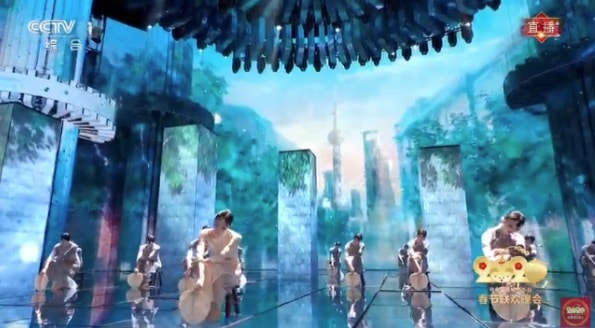
This is one of the dance performances of tonight, called “Morning Light” and led by Zhu Jiejing. The performance is by the Shanghai Song and Dance Troupe. Zhu Jiejing was born in October, 1985 in Jiaxing of Zhejiang Province. She won a top award for dance in China.
Kuaishou x CCTV Gala
[Jan 24 / 22:06 CST]
Tonight’s show is done in cooperation with Kuaishou, a hugely popular Chinese video sharing app. The CCTV Gala usually has different social media and/or online partners – which usually means a boost for these online platforms.
“My Motherland”
[Jan 24 / 22:32 CST]
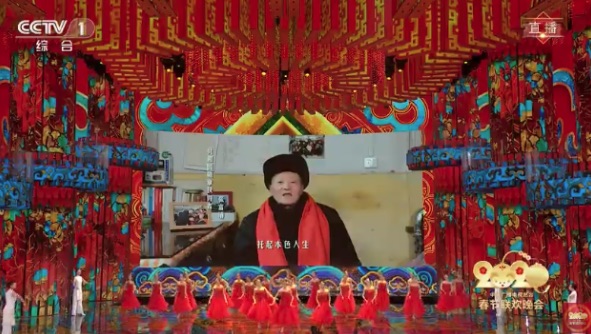
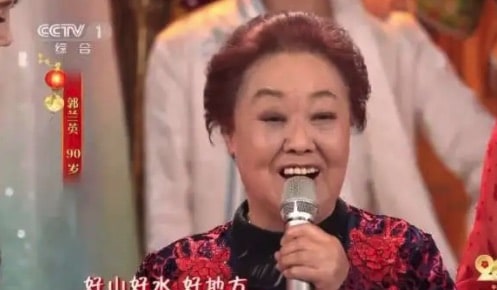
The inevitable patriotic song “My Motherland” is here, including a segment with the 90-year-old singer Guo Lanying (郭兰英).
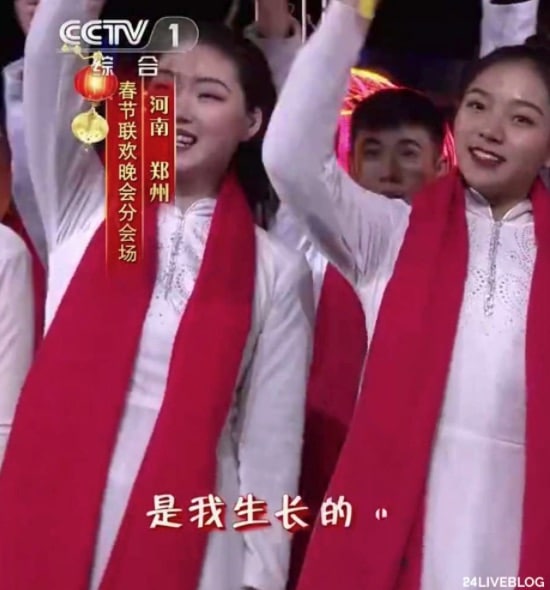
BUT WHERE ARE THE DANCING ROBOTS?!
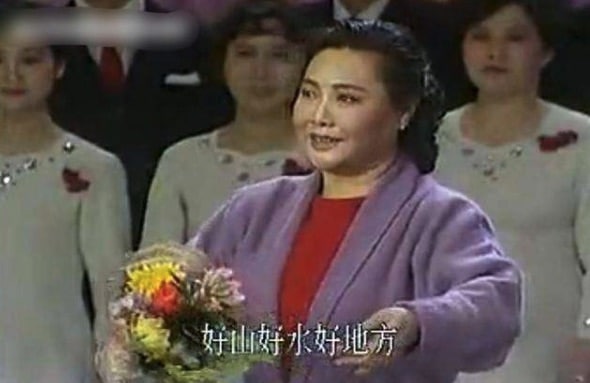
This is Guo Lanying singing the song for the first time at the Chunwan in her younger years, 30 years ago:
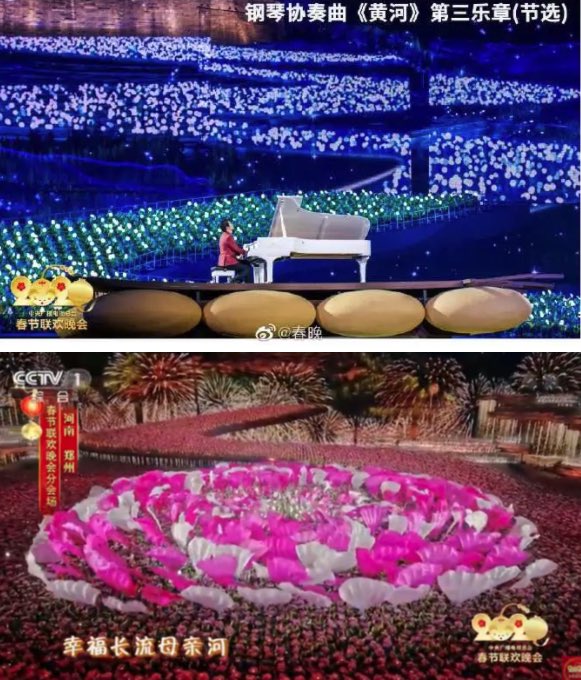
Spectacular footage from Zhengzhou
[Jan 24 / 23:03 CST]
We’re moving to one of the venues outside of Beijing – this is one of the prerecorded segments including piano play by the renowned Lang Lang, followed up with a song by Sun Nan (孙楠) and Li Yuchun (李宇春).
Meanwhile on Weibo
[Jan 24 / 23:04 CST]
Seen on Weibo: running out of proper face protection masks, these medical workers are using file folders to make their own face masks. #coronarovirus pic.twitter.com/gHtbAkHeu7
— Manya Koetse (@manyapan) January 24, 2020
Mixed feelings: CoronaVirus and Chunwan share the Weibo stage
[Jan 24 / 23:18 CST]
On Weibo, there are many netizens sharing their mixed feelings about tonight and going on social media, with some posts being about the CCTV Gala and happiness, and the others being about the situation in Wuhan and the despair. “I am laughing and crying,” some write.
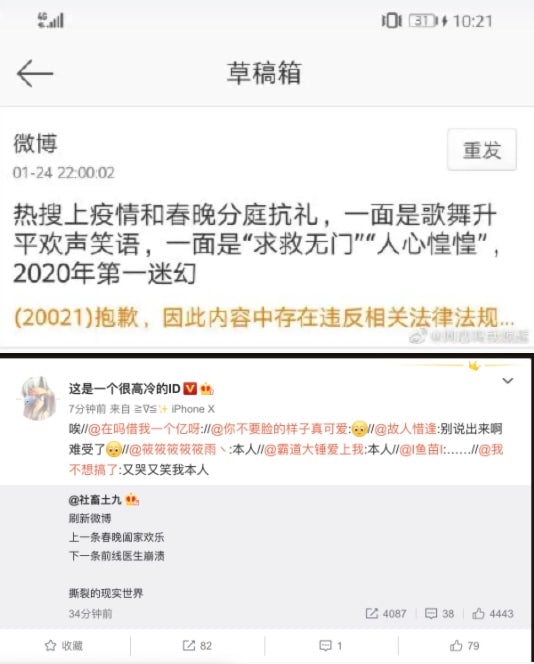
[Jan 24 / 23:39 CST]
On Weibo, @HuXijin_GT posted some of the photos that are now being shared of the army coming in to offer (medical) help amidst #coronavirus outbreak. Many people on Weibo address their mixed feelings: happiness over #Chinesenewyear, worry and fear over the Wuhan situation. pic.twitter.com/6YVmA3GHkL
— Manya Koetse (@manyapan) January 24, 2020
A ‘Yellow River’ of humans
[Jan 24 / 23:47 CST]
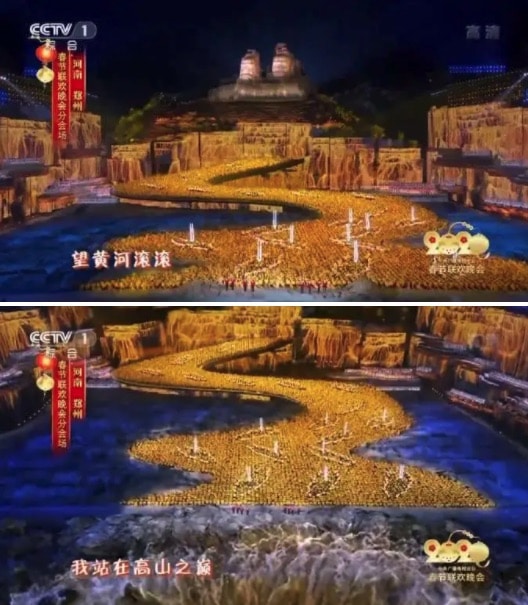
Chunwan and Coronavirus: stark contrast night
[Jan 24 / 23:52 CST]
While Miranda and Manya are watching the CCTV Gala and keeping an eye on social media developments, editor-in-chief Manya just joined BBC World News to briefly address the current social media developments regarding the coronavirus outbreak. See embedded tweet below.
In between watching the #CCTVGala and staying glued to Weibo, I just joined BBC World News live to comment on the social media environment in China during the #coronavirus outbreak. Segment of interview 👇 pic.twitter.com/dzwzI8zYnm
— Manya Koetse (@manyapan) January 24, 2020
Will tonight’s show break viewership records (again)?
[Jan 25 / 00:24 CST]
Over the past few years, the number of people watching the CCTV Gala has increased because of the many people watching the event via online platforms. Youtube is one of the platforms outside of China where the event is being livestreamed, and where over 105,000 people are joining.
Together with the traditional TV audiences, the CCTV online viewership, and the total number of people watching via other apps, will tonight’s show cross the one billion record again?
If you’re not watching the #cctvgala livestream on YouTube: there’s over 105,000 people watching this right now and the chat is going crazy. pic.twitter.com/vGCENUZ7dM
— Manya Koetse (@manyapan) January 24, 2020
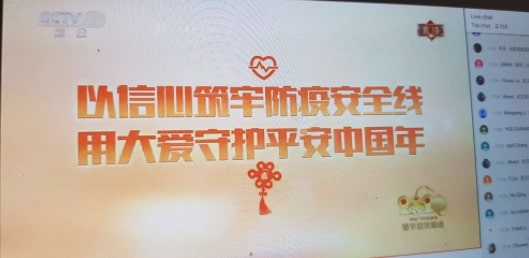
Wear your facemask
[Jan 25 / 00:26 CST]
Just before the end of the show, a public service announcement reminds viewers to wear a face mask in times of the Corona virus outbreak.
It’s a wrap
[Jan 25 / 00:59 CST]
It’s a wrap for tonight, so we will close our updates here, but stay tuned the coming days and weeks as we will keep a finger on the pulse of everything happening on Chinese social media and online discussions regarding the Chinese New Year travel season and the outbreak of the coronavirus. Thanks for joining, and a Happy New Year of the Rat!
By Manya Koetse and Miranda Barnes
Follow @whatsonweibo
Do you like what we do? You can donate here to keep this site alive & kicking.
Spotted a mistake or want to add something? Please let us know in comments below or email us. First-time commenters, please be patient – we will have to manually approve your comment before it appears.
©2020 Whatsonweibo. All rights reserved. Do not reproduce our content without permission – you can contact us at info@whatsonweibo.com.
Eye on Digital China is a reader-supported publication by
Manya Koetse (@manyapan) and powered by What’s on Weibo.
It offers independent analysis of China’s online culture, media, and social trends.
To receive the newsletter and support this work, consider
becoming a paid subscriber.

Quick Eye: XChat, Orbán, and a Very Questionable Tripe-Strawberry Hotpot

Cancel-Proof: The Rise of China’s AI Actors

Chinese Postdoc Death Raises Questions as Key Details Remain Missing

“Auntie Mei” Captured After 20 Years, China’s Train-Stain Scandal, and Zhang Xuefeng’s Final Lesson

Raising Lobsters, 6G Coming, and China’s DIY Deity Trend

Inside Chunwan 2026: China’s Spring Festival Gala

Inside the Great Chinese Debate Over the Iran War

Chinamaxxing and the “Kill Line”: Why Two Viral Trends Took Off in the US and China

Spring Festival Trend Watch: Gala Highlights, Small-City Travel, and the Mazu Ritual Controversy

From a Hospital in Crisis to Chaotic Pig Feasts
-

 Chapter Dive9 months ago
Hidden Cameras and Taboo Topics: The Many Layers of the “Nanjing Sister Hong” Scandal
-
 China Insight9 months ago
“Jiangyou Bullying Incident”: From Online Outrage to Offline Protest
-
 Chapter Dive12 months ago
Understanding the Dr. Xiao Medical Scandal
-

 China Arts & Entertainment7 months ago
The Wong Kar-wai Scandal Explained: The Dark Side of ‘Blossoms Shanghai’