
China Field Guide
Top 5 of China’s Most Popular Short Video and Live Streaming Apps
An overview of the most-watched apps in China of this moment.

China is the world’s largest smartphone market, and the mobile app business is booming. In August of last year, it was reported that approximately 800 million people are actively using the internet in China, about 58 percent of the country’s population. What is especially noteworthy is that some 788 million people are accessing the internet via mobile – a total of 98 percent of the China’s total online population.
To attract business from this immense number of mobile internet users, who on average spend some 4.2 hours per day on their phone, thousands of news apps are launched every year. In 2018, Chinese internet users could download 7.3 million different apps – 900.000 more than the year before.
To provide more insight into China’s mobile app market, What’s on Weibo has listed some of the most popular and noteworthy apps in China today. For this selection, we chose to avoid the most obvious popular apps, such as Weibo or WeChat, that are already frequently covered in English-language media.
Instead, we chose to feature those apps that are arguably not as well-known outside of mainland China, within five popular categories, namely: education, health, news, games, and short video & live streaming.
We made our selection based on the data from the Android app stores Tencent, Baidu, Huawei, and Zhushou360. We tried our best to give you a representative overview of various apps that are currently most used in China, but want to remind you that these lists are by no means absolute nor official “top 5” charts.
We will start with our top short video & live streaming list, stay tuned for the other categories that will follow shortly and will be listed below this article!
#1 Douyin Short Video 抖音短视频
Douyin, which literally means “trembling sound” (抖音), is a short video social networking app. The app is part of the ByteDance Inc. empire and was first launched in September 2016.
If the logo looks familiar, that may be because you know the popular international version of the app named ‘TikTok,’ which was the fourth most downloaded non-game app worldwide in 2018.
Douyin allows its users to live stream and to upload and view 15-second videos. The app provides several tools to finetune videos by adding various kinds of music, fast forwarding, or adding filters and stickers.
More than just a video and broadcasting app, Douyin is very much interactive, which inherently makes it a social media platform. Videos can be liked, shared and commented on, and people can follow each other. Through its broadcasting feature, users can also send each other money or virtual gifts.
The major ‘magic’ formula behind Douyin is its use of the AI algorithm of its parent company Bytedance Inc (the same company that runs the super popular news app Toutiao). This means the app constantly provides users with suggested content based on user profile and preferences. Adding to this, Douyin is the only app in this selection that automatically plays the next video if the current video you are watching has ended, increasing user engagement with the app.
Douyin’s approach is highly successful. In 2018, Douyin ranked as the tenth most popular app in China, and its popularity continues to grow. From September to December 2018, Douyin’s daily active users increased from 118.7 to 138.5 million.
Douyin currently is the most popular short video app in the Chinese Apple store, and in both the Huawei and Zhushou360 app stores, Douyin ranks second most popular app overall.
Also see our previous article exploring the difference between Douyin and its international version TikTok.
#2 Kuaishou 快手
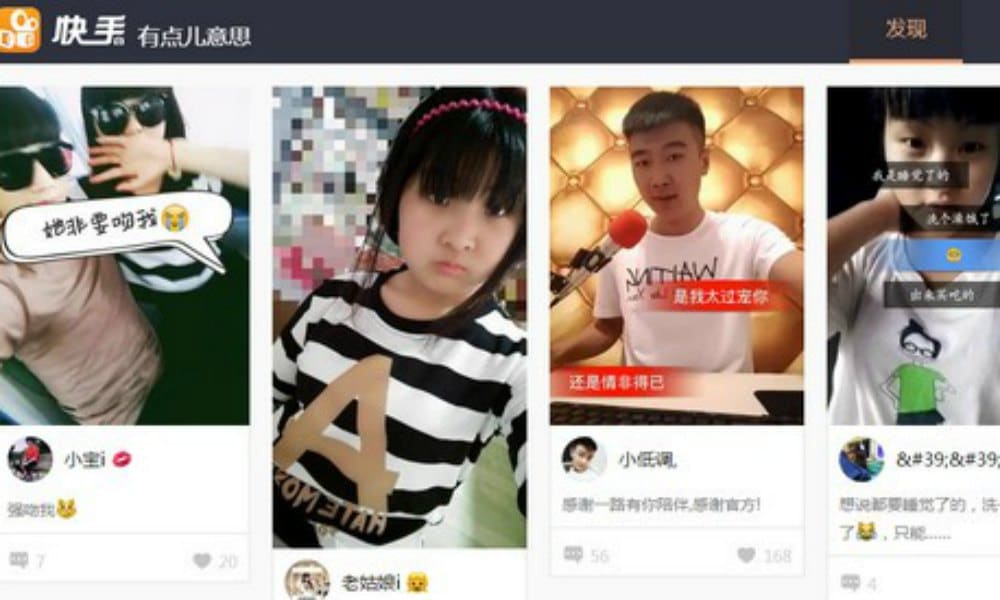
Kuaishou, literally meaning “fast hand,” is also known as ‘Kwai’ and was first launched in 2011 as GIF Kuaishou (GIF快手) and changed its name and function to the current one in 2014.
In 2018, Kuaishou received various investments from Chinese tech giants Tencent, Alibaba, and Baidu, that also sought to profit from China’s growing market of short-video and live stream apps. As with Douyin, Kuaishou has also been successful outside of mainland China. In 2018, the app briefly ranked first in several Apple stores including those in Russia, Turkey, South Korea, Taiwan, and Indonesia.
With Kuaishou, just like Douyin, users can live stream and upload short videos. There are, however, some small differences between the apps. In Kuaishou, videos can be as long as 57 seconds, and the next video will not play automatically; meaning that users have to manually pick the next video they want to watch. Also in the video editing, its functions are different. In the Kuaishou app, users can specifically add filters to faces, and there is also a karaoke function.
In the fourth quarter of 2018, Kuaishou reached the miracle barrier of 100 million monthly active users, showing a modest 2,45 percent growth compared to the third quarter. Currently, Kuaishou is ranking second most popular video app in the Chinese Apple Store, and fifth in the Zhushou360 app store.
#3 Xigua Video 西瓜视频
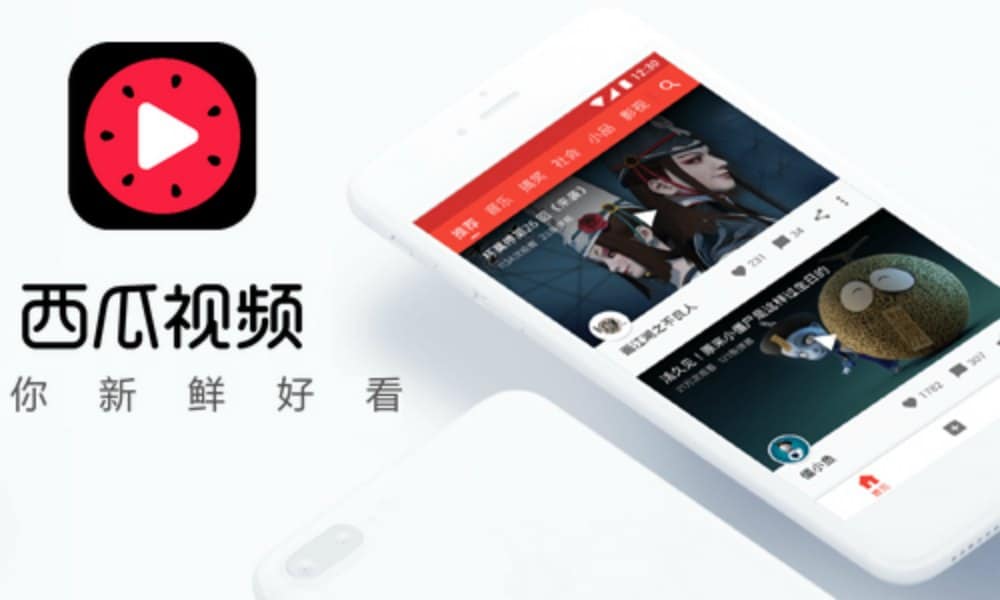
Xigua, which means ‘watermelon,’ is the second-most popular short video app by Bytedance. ‘Eating watermelons’ or ‘the watermelon-eating masses’ (吃瓜群众) is a Chinese idiom that is frequently used by Chinese netizens, meaning that onlookers are interested in watching an (online) spectacle or discussion unfold without intervening.

Being a Bytedance product, Xigua also uses artificial intelligence and machine learning algorithms to recommend videos to its users. What is different from Douyin, is that Xigua categorizes its videos based on their contents. There are, for example, the categories handicraft, culture, square dancing, cuisine, and fashion. Adding to this, Xigua also offers a live streaming service and a wide variety of television programs and games.
Despite a small decrease in daily active viewers in the last quarter of 2018 from 41.2 million to 38.7 million, Xigua was still the third most popular video app in the Chinese Apple store, closely followed by another app by Bytedance called Huoshan (火山), a short video platform for people to share their stories and showcase their talent.
#4 MOMO 陌陌
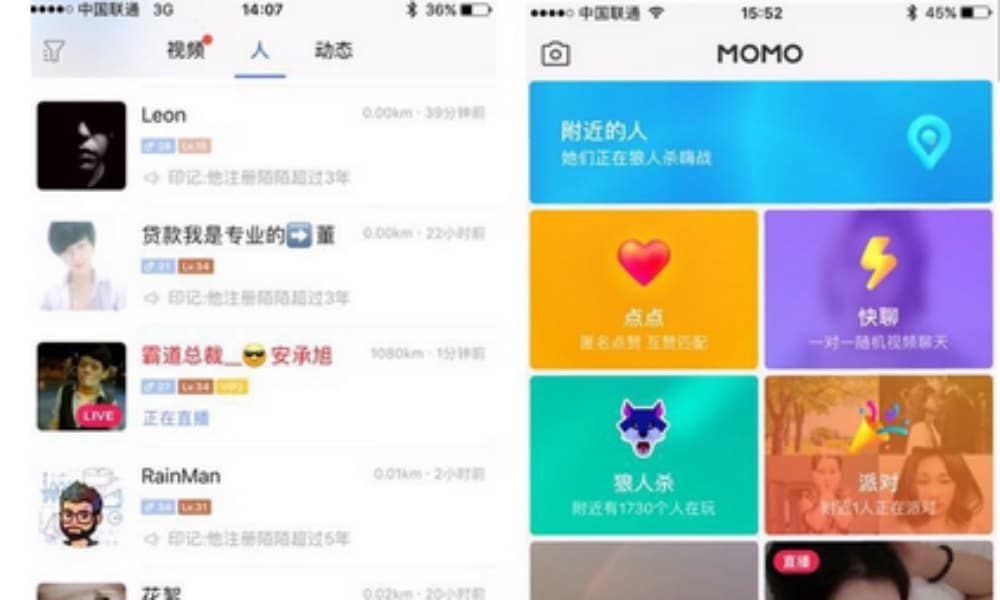
MOMO is a location-based social networking app where users can show themselves through video, text, voice, and pictures, and discover nearby people based on their geographic location. Despite the company calling the app a social networking platform, for many Chinese netizens, MOMO is simply known as a dating app.
Different from apps such as Douyin and Xigua, MOMO does not show content based on user preference but based on its geographic location. The main page of MOMO shows profiles of people around you, featured with picture and videos. If you see a person that you like, you can add the person or leave a ‘like’ or comment. In addition, the app also provides other functions such as a swipe function, a chat room and a place where you can play games with other users.
MOMO which is part of the Beijing MOMO Technology company, that first launched their app in 2011. Little than a year later, people all over the globe were introduced to MOMO’s international version. But in 2014, when the Chinese version started to gain a significant market share, the company decided to cancel its international edition and focus on its domestic business instead.
In 2018, MOMO acquired the Tinder-like dating app Tantan (探探), which had 6.3 million daily active users in the fourth quarter of 2018.
In the meantime, MOMO has also been growing in popularity, registering 16 million daily active users in 2018, making it the most popular app in the category live streaming and the 88th the most popular app overall – that may not sound too impressive, but within China’s booming app market, it actually is.
#5 DouYu Livestream 斗鱼直播
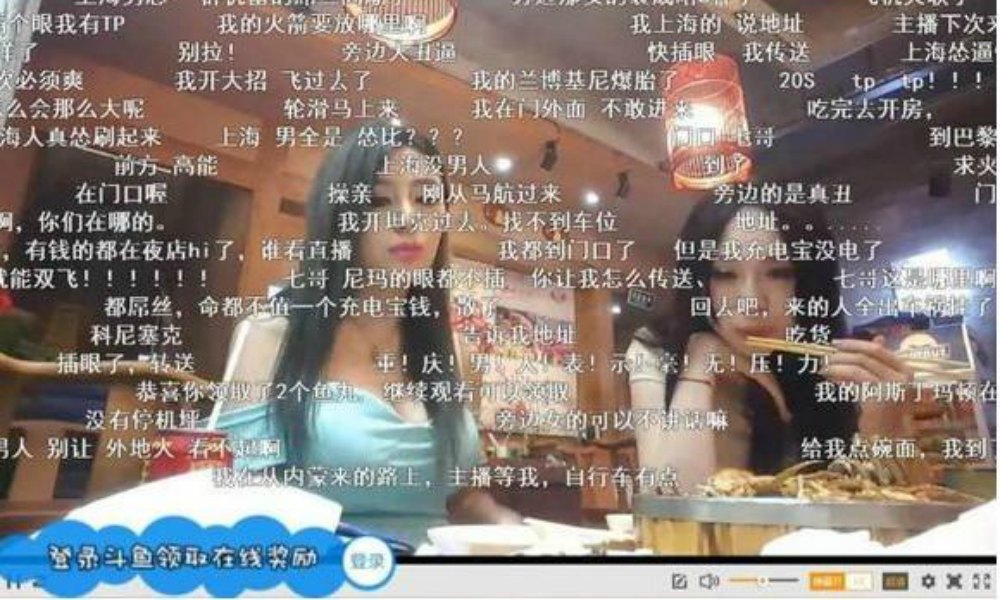
DouYu is an app by DouYu TV and was first launched in 2014. In 2016, DouYu received investments from both Tencent and Phoenix Media.
What mainly sets DouYu apart from other live stream apps, is that it provides its users with live streaming games such as Honor of Kings, Player Unknown’s Battlefield, DOTA and League of Legend. In addition, it also features practical videos such as cooking lessons or camping tutorials.
In 2018, DouYu was the second most popular live streaming app of China, right behind MOMO, with 7.2 daily active users at the end of the year. Currently, the app ranks among the most popular video apps in the Tencent Appstore.
Also see: Top 5 of Popular News Apps
By Gabi Verberg
Spotted a mistake or want to add something? Please let us know in comments below or email us.
©2019 Whatsonweibo. All rights reserved. Do not reproduce our content without permission – you can contact us at info@whatsonweibo.com



China and Covid19
The Big List of Chinese Covid-19 Pandemic Lexicon: Before, During, and After ‘Zero Covid’
China’s Covid-19 Vocabulary: a glossary of key terms that matter in China’s Covid era, from start to end [premium content].

PREMIUM CONTENT
There are so many words and terms that are used on Chinese social media and in official media in the past years that are new and only make sense in the context of the pandemic and China’s fight against the virus.
Now that China’s epidemic situation is seeing a new phase, and the country is going from one extreme to the other, new words are again being introduced.
It is therefore high time to make up the balance of the words that were used, the terms that were important and have become ingrained in China’s present-day vocabulary, and the recent terms that have been added to the ever-growing Chinese (Mandarin) epidemic lexicon.
Please note that this list does not necessarily give literal translations of each word, but tries to explain what these words mean in the context of the epidemic situation. Many words have taken on a new meaning during the Covid era.
The dictionary translation for the word 清零 qīnglíng, for example, is ‘to clear’ something or ‘to reset.’ But in the context of China’s Covid situation, it has come to be used to refer to the country’s Zero Covid policy, even if the word ‘Covid’ or ‘policy’ are not even included in the term.
The same goes for many other terms in this list. The term 躺平 tǎngpíng basically just means to ‘lie flat’ and it was initially used for a trend among Chinese young people who are fed up with the competitive rat race in China’s job market and education, and only want to do the bare minimum because they believe that upward social mobility has become an unattainable goal.
But since ‘Zero Covid,’ the word ‘lying flat’ was adopted by Chinese state media and started to be used in a different way from when it was used by young people to address their views on life. Instead, it was used as a word that referred to completely giving up the fight against Covid, and taking no measures at all (something which definitely had to be avoided at all costs) (for more about ‘Lying Flat’, read this article.)
And so, simple words such as ‘sheep’ [Covid-positive person] or ‘graduation’ [being allowed to leave a quarantine location], have come to mean wildly different things in the context of China’s epidemic situation.
Here’s our list (which is still being updated, so please bear with us!).
1. THE START OF THE EPIDEMIC AND THE ‘NEW NORMAL’
2019冠狀病毒 2019 Guānzhuàng bìngdú
2019 Coronavirus; Covid-19.
本土新增病例 Běntǔ xīnzēng bìnglì
New Local Infections.
常态化 Chángtàihuà
Normalize.
重启 Chóngqǐ
Restart; reopen. This term was also used when Wuhan ‘restarted’ in spring of 2020 (read more).
复工复产 Fùgōng fùchǎn
Resumption of work and production. After the Wuhan outbreak, Chinese authorities started talking about a resumption of work and production in February of 2020. In April of that year, the central government held a meeting and stated that the resumption of work and production was almost back to normal.
公共卫生 Gōnggòng wèishēng
Public health.
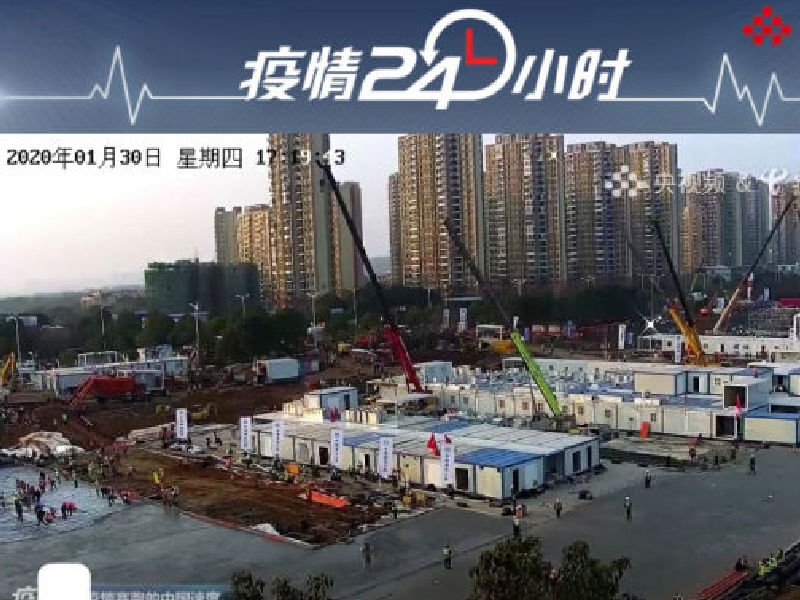
方舱医院 Fāngcāng yīyuàn
Square-cabin hospital; makeshift hospitals. In February of 2020, the impressive construction of two enormous emergency field hospitals in Covid-stricken Wuhan captured the world’s attention. The Huoshenshan and Leishenshan Hospitals were constructed in a matter of days and combined they could take in 2,500 patients. After Wuhan, the ‘fangcang’ became a new phenomenon in Covid China, referring to centralized isolation sites for Covid-positive patients (read more here).
防疫检查 Fángyì jiǎnchá
Epidemic prevention inspection.
防疫人员 Fángyì rényuán
Epidemic prevention staff (later also nicknamed 大白 dàbái).
封城 Fēngchéng
City lockdown.
国务院联防联控工作机制 Guówùyuàn liánfáng liánkòng gōngzuòjīzhì
The Joint Prevention and Control Mechanism of the State Council, launched in Jan 2020;
an institutional arrangement made by the Chinese government, focusing on the mission of epidemic prevention and control.
健康管理 Jiànkāng guǎnlǐ
Health management.
健康码 Jiànkāng mǎ
Health Code. Within eight weeks after the start of the initial Wuhan Covid outbreak, Alibaba (on Alipay) and Tencent (on WeChat) developed and introduced the ‘Health Code,’ a system that gives individuals colored QR codes based on their exposure risk to Covid-19 and serves as an electronic ticket to enter and exit public spaces, restaurants, offices buildings, etc., and to travel from one area to another (read more here).
解封 Jiěfēng
Lift the lockdown. “Wuhan Lifts the Lockdown” (#武汉解封#) went trending on Chinese social media in April of 2020 after the city reopened, celebrating the event with a spectacular midnight light show.
就地过年 Jiùdì guònián
Staycation; staying put for the holidays. Refers to people staying home for Chinese New Year instead of traveling long distance to spend the Spring Festival with their family. This word became especially relevant during the Spring Festival of 2021 (read more).

口罩 Kǒuzhào
Face mask.
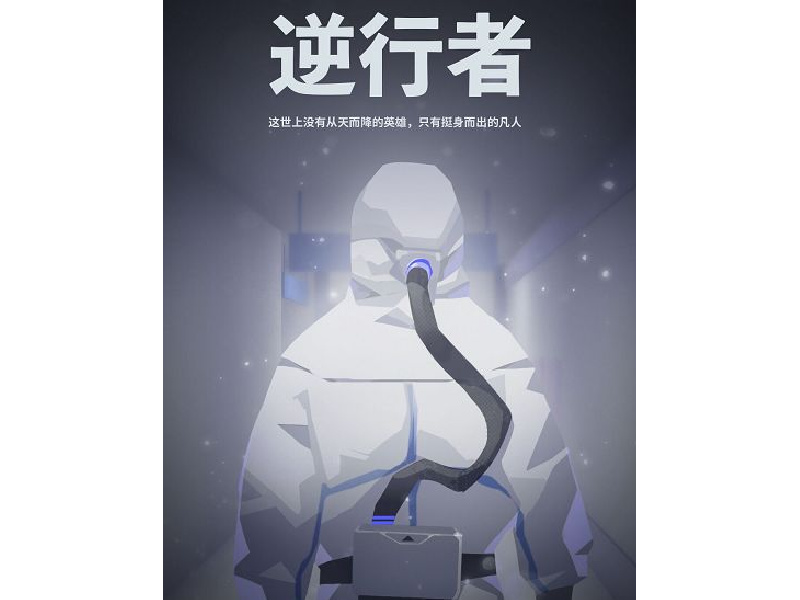
逆行者 Nìxíngzhě
Those fighting back. This is a buzzword from 2020 often used by state media to describe frontline workers and others as the ‘people going backward’, referring to those who dare to go back and face problems when everyone else is turning away.
气溶胶 Qìróngjiāo
Aerosols.
人际交往 Rénjì jiāowǎng
Interpersonal Interaction; Social contact.
人民至上 Rénmín zhìshàng
“Put the people in the first place.” As explained in this article by What’s on Weibo, Chinese President Xi Jinping made a speech in May of 2020 including a segment about “our people come first, people’s lives come first, and the safety and health of our people should be secured at all costs.” “Put the people in the first place” has since become a widely circulated slogan and guiding principle for government and society to combat Covid-19 across the country.
社交距离 Shèjiāo jùlí
Social distance.
新冠肺炎 Xīnguān fèiyán
Novel Coronavirus; New Corona pneumonia.
新型冠状病毒 Xīnxíng guānzhuàng bìngdú
New Coronavirus; Covid-19.
疫情 Yìqíng
Epidemic.
疫情期间 Yìqíng qíjiān
During the epidemic.
远程办公 Yuǎnchéng bàngōng
Working from home.
娱乐场所 Yúlè chǎngsuǒ
Places of entertainment.
云监工 Yún jiāngōng
‘Cloud Supervisor.’ This a new word to refer to the people “supervising” (i.e. witnessing and cheering for) the rapid construction of the Huoshenshan and Leishenshan makeshift hospitals in Wuhan via the government’s cloud online streaming of the construction site.
网课 Wǎng kè
Online classes.
无接触配送 Wú jiēchù pèisòng
Contactless delivery.
无症状 Wúzhèngzhuàng
Asymptomatic.
无症状感染者 Wúzhèngzhuàng gǎnrǎnzhě
Asymptomatic infected person. This refers to people who test positive for Covid but show no clinical symptoms (this is different from 确诊病例 quèzhěn bìnglì, a confirmed Covid case showing symptoms).
行程码 Xíngchéngmǎ
Travel Code. Full word is 通信大数据行程卡, ‘Telecommunications Big Data Travel Card,’ better known as the ‘green arrow code,’ which tracks users’ travel history and is also available inside WeChat or can be downloaded as a standalone app. Its goal is to track if you’ve been to any medium or high-risk areas over the past 14 days. The Travel Code was officially taken offline on December 13, 2022.
直播带货 Zhíbò dàihuò
Livestream commerce. Live streaming commerce was already popular in China, and the epidemic pushed the popularity of shopping by watching livestreams to the next level.
2. ZERO COVID ERA
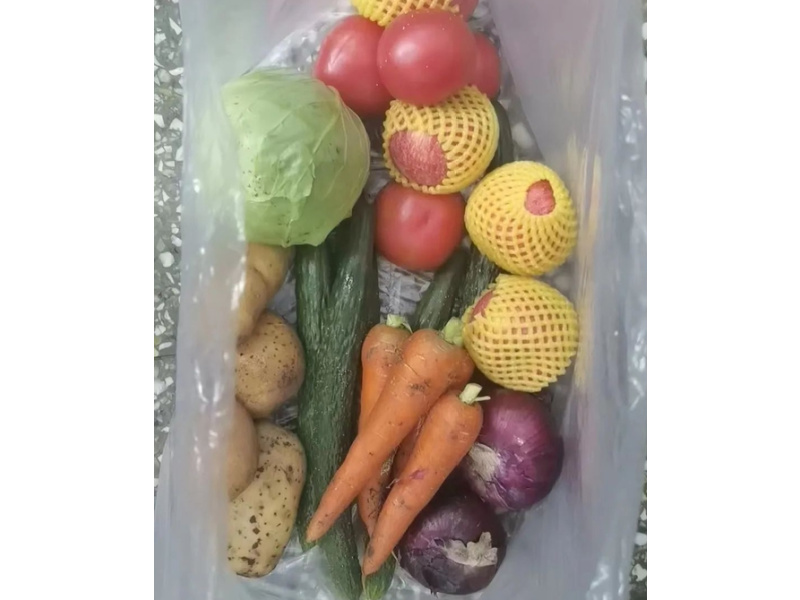
爱心蔬菜礼包 Àixīn shūcài lǐbāo
So-called ‘Grocery care packages,’ also 大礼包 dàlǐbāo, are some grocery supplies provided by the government. These ‘care packages’ became a ubiquitous phenomenon in many areas across China where people were in high-risk, locked-down areas. While many struggled to get (online) groceries at normal prices, local governments sent out boxes or bags filled with vegetables, meat, noodles, fruit and snacks to make sure households had some food to get them through the next few days.
被封闭 Bèi fēngbì
Being locked down.
被弹窗 Bèi dànchuāng
Getting popped up. This phenomenon happens when residents receive a much-dreaded “pop-up message” on their mobile phone via their Health Code app. This means that the app – through the use of big data and the monitoring of people’s status and movements – has determined that you’re a possible contagion risk based on where you went at what time. People who received the pop-up message are supposed to report to their community/hotel/school so that the relevant departments can conduct a “risk check.” The pop-up window will not disappear until individuals are officially no longer considered a contagion risk (read more).

被拉走 Bèi lāzǒu
Being dragged away; taken off. This word was especially used during the Xi’an lockdown when people expressed fears of being taken away to a centralized quarantine location after the sudden quarantine of the city’s Mingde Bayingli Community.
闭环管理 Bìhuán guǎnlǐ
Closed loop management. The ‘Covid-19 closed-loop management’ (新冠疫情闭环管理) has been applied to various areas when there were new local cases of COVID-19. It means that people belonging to a certain (work) group are only allowed to move between designated venues for work, living, eating, through a dedicated transport system. This word became especially known because the 2022 Olympics in China also used this style (read here).
闭环作业的高风险岗位 Bìhuán zuòyè de gāo fēngxiǎn gǎngwèi
High-risk positions in closed-loop operations.
毕业 Bìyè
‘Graduate.’ In Covid times, this term was used by patients who were allowed to leave the Fangcang (quarantine hospital).
仓主 Cāngzhǔ
Someone who is at a Fangcang (quarantine hospital).
出舱 Chūcāng
Leaving the fangcang. Also referred to as a ‘graduation’ 毕业 (Bìyè).
春耕证 Chūngēngzhèng
‘Spring Ploughing Permit.’ This is a permit that was introduced in rural areas in Covid lockdown times to allow local farmers to go out into the fields to work despite epidemic restrictions.
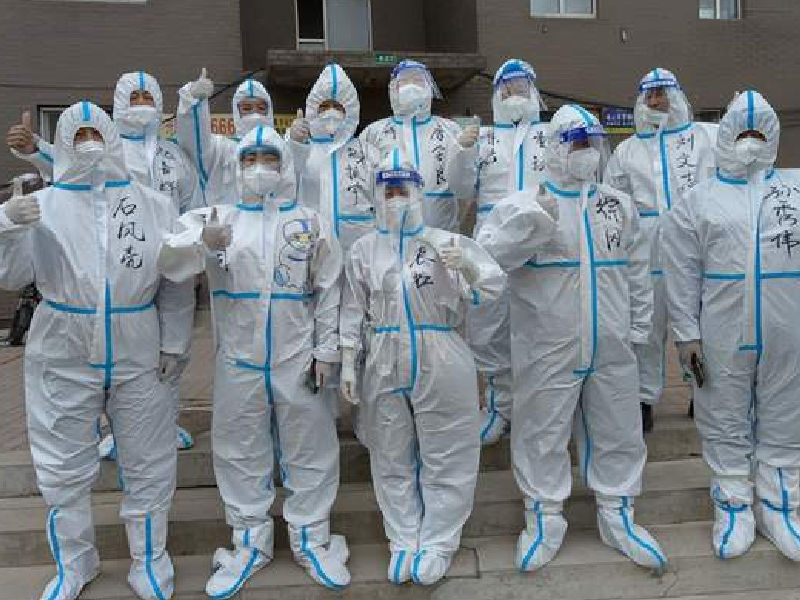
大白 Dàbái
Big white; anti-epidemic worker. In early 2022, the anti-epidemic workers dressed in white hazmat suits were more commonly referred to as ‘dàbái,’ an and affectionate nickname that literally means “big white.” In the Chinese version of the 2014 Disney movie Big Hero 6, the healthcare-robot Baymax is also called Dàbái. For more about public attitudes toward dabai in early 2022, see this article.
单独舱室的集中隔离点 Dāndú cāngshì de jízhōng gélídiǎn
‘Separate Compartment Concentrated Isolation Point’; isolation site with separated cabins. Also known as “单人单间”集中隔离 [“Dānrén dānjiān” jízhōng gélí, lit “Single room” Centralized Isolation] or 单人单间隔离 [Dānrén dānjiàn gélí, Single Room Isolation].
单人单管 Dānrén dānguǎn
Individual test; single tube test. This is a single, individual Covid test whereas ‘pooled sample testing’ (see 混合采样 hùnhé cǎiyàng) takes samples from multiple people, storing the result in batches, or pools, and then testing each pool.
点式复工 Diǎnshì fùgōng
Point-based work resumption. An active policy introduced in spring of 2022 for people holding key positions at companies within the non-manufacturing sector that are resuming work. According to the ‘point-to-point’ (点对点) strategy, employees are either staying within the closed loop of their workplace or within the premises of their community. They can only return to their workplace once a month, and are not allowed to stay longer than one week (read more).
低风险地区 Dī fēngxiǎn dìqū
Low risk area, which is the lowest classification compared to “medium-risk areas” 中风险地区 and “High-risk areas” 高风险地区.
动态清零 Dòngtài qīnglíng
Dynamic zero; Dynamic Zero Covid policy.
囤货模式 Dùnhuò móshì
Hoarding mode. Referring to the panic buying taking place in several places, such as in Chengdu, right before a lockdown.
方舱隔离点 Fāngcāng gélídiǎn
Fangcang isolation point; quarantine center.
放毒 Fàngdú
Spreaders. Negative online slang word to refer to ‘spreaders’, those Covid-positive persons who infect others. The word fàngdú literally means to poison or to spread malicious rumors.
非必要不出门 Fēi bìyào bù chūmén
Do not go out unless necessary.
封锁式隔离 Fēngsuǒshì gélí
Locked isolation.
高风险地区 Gāo fēngxiǎn dìqū
High-risk district.
高风险区外溢人员 Gāo fēngxiǎnqū wàiyì rényuán
People who come from a high-risk area (return).
隔离点 Gélí diǎn
Isolation point.
隔离方舱 Gélí fāngcāng
Isolation Fangcang.
隔离围挡 Gélí wéidǎng
Isolation fence.
共存派 Gòngcúnpài or 开放派 Kāifàng pài
The group of people in society who want to open up and live together with the virus. They’re the opponents of the 清零派 qīnglíngpài, who oppose opening up the country and advocate persisting in the fight against Covid.
核酸检测 Hésuān jiǎncè
Nucleic acid test; RT-PCR test. Not to be confused with the Rapid PCR test or antigen test (抗原检测 kàngyuán jiǎncè).
核酸点位 Hésuān diǎnwèi
Nucleic acid test site.
核酸地图 Hésuān dìtú
Nucleic acid test map. A map that shows where you can get a nucleic test. Officially launched by Gaode in May of 2022.
核酸亭 Hésuān tíng
Nucleic acid booth. Also called: hésuān cǎiyàng xiǎowū (核酸采样小屋), ‘nucleic acid sampling cabin’
核酸阴性检测证明 Hésuān yīnxìng jiǎncè zhèngmíng
Negative nucleic acid test certificate.
混合采样 Hùnhé cǎiyàng
Pooled sample testing; Mixed testing; also called 混采 hùncǎi. Nucleic acid testing is done as single or mixed according to the risk level of the target population. For example, those in quarantine locations or high-risk areas will always be tested individually but when the area is low risk, ten or twenty results can be mixed and tested together. When paying for own tests, pooled testing is also cheaper.
检查站 Jiǎncházhàn
Checkpoint.
静默管理 Jìngmò guǎnlǐ
Quiet management; silent management. This concept was introduced as a ‘soft lockdown’ but it is actually also a pretty strict, region-wide static management, which allows people to only leave their homes, units, or communities for nucleic acid testing, or unless absolutely necessary. The purpose is to prevent people to leave their homes for non-essential matters in order to quickly trace down new infections and to prevent Covid from spreading beyond a high-risk area.
静态管理 Jìngtài guǎnlǐ
Static management. This is a kind of lockdown that is stricter than ‘quiet management’ (静默管理 jìngmò guǎnlǐ) and severely limits the flow of people and vehicles in a high-risk area, and suspends all businesses in the area except for supermarkets, pharmacies, and medical institutions.
精准防控 Jīngzhǔn fángkòng
Precise prevention and control.
集中隔离 Jízhōng gélí
Centralized isolation.
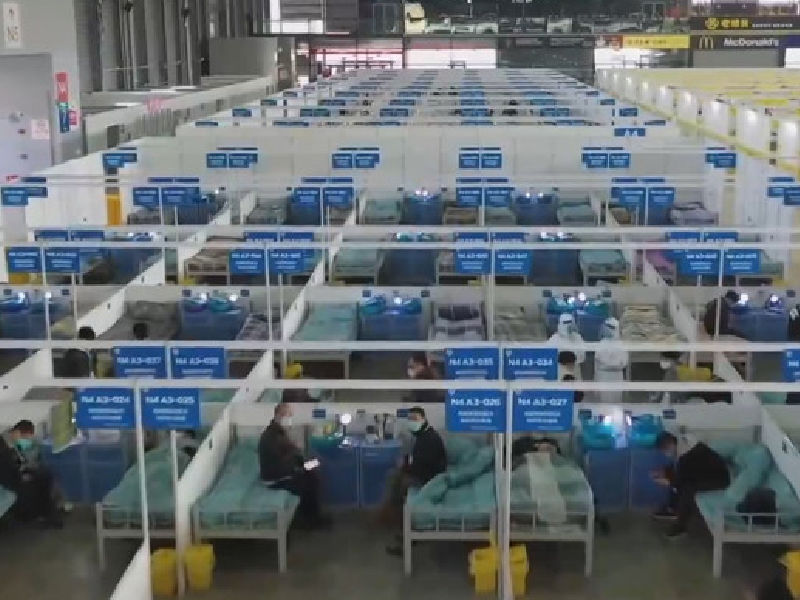
居家静止 Jūjiā jìngzhǐ
‘Home lockdown’; ‘Home standstill.’ Another word to describe a lockdown during China’s Zero Covid, where there have been many different words to describe similar measures (also: 全域静默, 静态管理, 停止一切非必要人员流动).
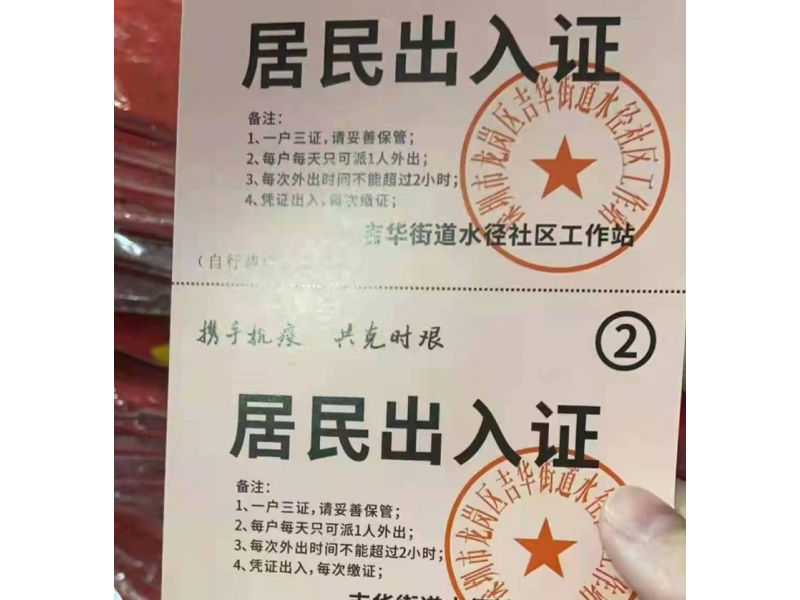
居民出入证 Jūmín chūrù zhèng
Residents’ entrance and exit permit. During lockdowns, this permit allowed residents to go out once per day (one person per household) for two hours, allowing residents to do essntial shopping or other activities.
科学精准 Kēxué jīngzhǔn
Scientific and precise. Used in the context of carrying out epidemic prevention measures in a scientific and precise manner.
临时被封闭 Línshí bèi fēngbì
Temporarily locked down.
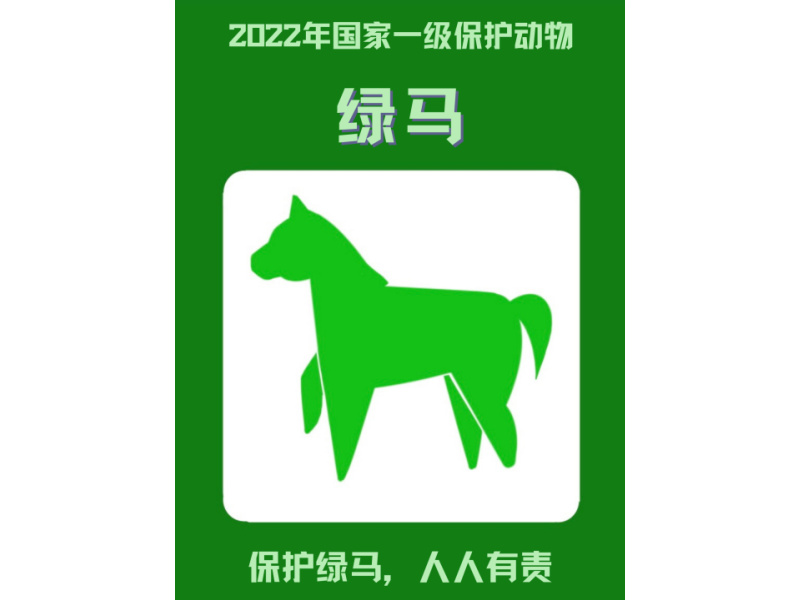
绿马 Lǜmǎ
Green horse. ‘Green Horse’ in Chinese sounds exactly the same as the word for ‘green code’ (绿码), referring to the green QR code in China’s Covid health apps. The phrase “Bàozhù lǜmǎ” (抱住绿码/马) became popular on Chinese social media, a wordplay meant to mean both “Keep your code green” as well as “Hold on to your Green Horse” (read more).
密切接触者 Mìqiè jiēchùzhě
Close contact.
密接的密接 Mìqiè de mìqiè
Close contacts of close contacts. This is just one among the many words to label those who have might come across someone who tested positive for Covid in various ways (密接、二代密接、次次密接、次次次密接、一般接触者、同性密接、异性密接、同城密接、同层密接、同楼密).
强制隔离 Qiángzhì gélí
Mandatory quarantine.
清零 Qīnglíng or 清零政策 Qīnglíng zhèngcè
Zero Covid policy.
清零派 Qīnglíngpài
The “Zero School”, or the “Zero Covid Faction”, referring to those people who oppose opening up the country and advocate persisting in the fight against Covid. They’re the opponents of the 共存派 gòngcúnpài or 开放派 kāifàng pài, who advocate opening up and living together with the virus.
气泡式管理 Qìpào shì guǎnlǐ
Bubble-style management. This term was especially used for the Winter Olympics, where participants were only allowed to move between Games-related venues for their training, catering, accommodation, etc. through a dedicated Games transport system. Participants were not allowed to leave their designated areas. But the term also popped up again in May of 2022 to announce new measures in order to allow production to continue at factories and other businesses (read more).
全员核酸筛查 Quányuán hésuān shāichá
Nucleic screenings for Covid.
入境航班熔断机制 Rùjìng hángbān róngduàn jīzhì
Circuit breaker measures for scheduled international passenger flights. To prevent the cross-border spread of Covid-19, the Civil Aviation Administration of China (CAAC) issued an official notice on the Adjustment of the Circuit Breaker Measures for International Passenger Flights, which imposed circuit-breaker measures on scheduled international passenger flights with a high risk of spreading the pandemic, from 8 June 2020. The so-called “circuit breaking mechanism” under which China-bound flight routes were suspended for two weeks if an airline was found to carry a certain number of passengers testing positive for Covid was abolished in November of 2022.
社会面清零 Shèhuìmiàn qīnglíng
Zero covid on the society level; safe social surface. This is a word that was mainly used during ‘zero Covid’ in 2022 and refers to a degree of control on the spread of Covid within the communities. This means that all those who test positive are in isolation or within closed-loop systems and that they are unable to infect others, which is equivalent to a ‘safe social surface.’ This word was also used when the big Xi’an outbreak was largely contained in the city’s main communities after two weeks of lockdown, during which over 42,000 people were quarantined and brought to other locations.
时空伴随者 Shíkōng bànsuízhě
‘Time-space Company.’ Refers to those who have been near a confirmed Covid patient in time and space; meaning that within a time frame of fourteen days a person has spent more than ten minutes with a confirmed Covid case within a distance of 800 meters. This means the ‘Health Code’ could turn to yellow.
四早 Sì zǎo
Four early: early detection, early reporting, early isolation, early treatment
躺平派 Tǎngpíngpài
The ‘lie flat group,’ referring to those who want to give up all measures and give up the fight against Covid. ‘Lying flat’ (tǎngpíng) is a word that has been around for much longer but it has come to take on a different meaning during the pandemic. For more about China’s Lying Flat momevement, check our article here.
铁网 Tiěwǎng
Fenced.
通行证 Tōng xíng zhèng
Pass to enter. In Covid times, this mainly refers to a permit to allow cross-provincial travel and business (i.e. freight vehicles and such).
围合管理 Wéi hé guǎnlǐ
Enclosed managament. This officially is not a ‘lockdown’ but it means that a certain residential area of community is fenced off, with checkpoints at the community entrance and exit. Both people and vehicles can enter and exit with a permit. People who do not live or work in the enclosed area are not allowed to enter.
严防 Yánfáng
Take strict measures.
羊/🐑 Yáng
Literally means ‘sheep’ but has come to be used to refer to someone who tested positive for Covid, since the word for ‘positive’ (阳) sounds the same.
阳了 Yáng le
Tested positive.
阳性 Yángxìng
Covid Positive.
疑似病例 Yísì bìnglì
Suspected case.
永久性方舱医院 Yǒngjiǔxìng fāngcāng yīyuàn
Permanent shelter hospitals; permanent fangcang hospitals. This term was introduced in May of 2022 and is somewhat contradictory as a concept, since ‘Fangcang hospitals’ are actually defined by their temporary nature. The term came up when Chinese authorities emphasized the need for China’s bigger cities to build or renovate existing makeshift Covid hospitals, and turn them into permanent sites (read more).
原则居家 Yuánzé jūjiā
Stay at home in principle; Ordered stay-at-home. Term used authorities instead of ‘lockdown’ in the second half of 2022.
硬隔离 Yìng gélí
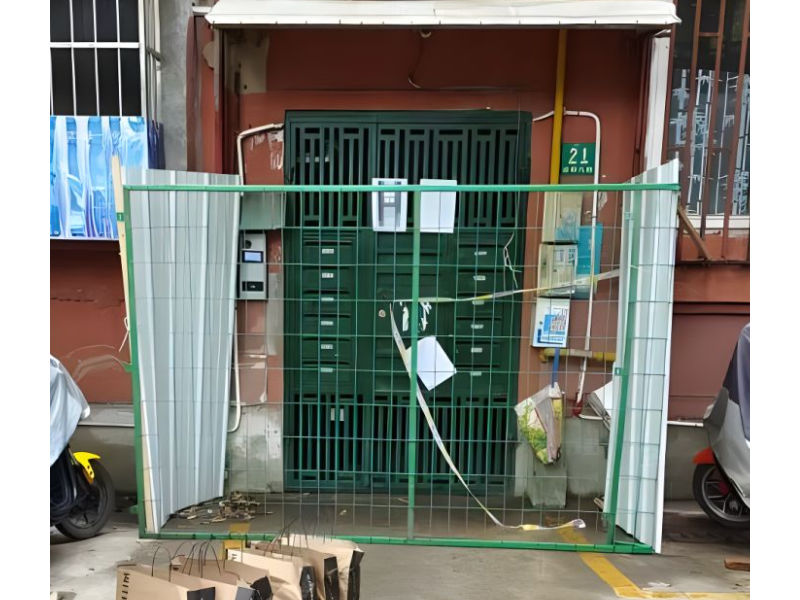
Hard isolation; Fenced isolation. While some Shanghai households had already endured weeks of isolation, a new word was added to their epidemic vocabulary in April of 2022: ‘hard isolation’ or ‘strong quarantine.’ The word popped up on Chinese social media on April 23rd after some Shanghai netizens posted photos of fences being set up around their community building to keep residents from walking out. Read more about ‘hard isolation’ here.
应检尽检 Yīng jiǎn jǐn jiǎn
Whoever should be tested, should be tested as much as possible; all those who need it, need to be tested.
医院非绿码医疗救治 Yīyuàn fēi lǜmǎ yīliáo jiùzhì
Non-green code medical treatment. Referring to the medical treatment of those whose Health Code apps do not show a ‘green code’, meaning they potentially are at risk of having been in contact with someone who is Covid-positive. (Also: “非绿码”患者的医疗救治.)
小阳人 Xiǎo yángrén
Little positive people, also little sheep people; used to refer to people who tested positive for Covid in a joking and somewhat deregatory way.
新冠肺炎疫情地图 Xīnguān fèiyán yìqíng dìtú
Covid outbreak map, also: ‘epidemic map’ 疫情地图 yìqíng dìtú.
暂时隔离 Zhànshí gélí
Temporary isolation / lockdown.
中风险地区 Zhòng fēngxiǎn dìqū
Medium-risk area.
自我隔离点 Zìwǒ gélí diǎn
Self-isolation site.
做核酸 Zuò hésuān
Do a nucleic acid test.
3. POST ZERO COVID
奥密克戎病毒 Àomìkèróng bìngdú
Omicron Virus.
布洛芬 Bùluòfēn
Ibuprofen.
长期新冠 Chángqí xīnguān
Long Covid.
初阳权 Chū yáng quán
‘The privilege to infect someone.’ This word, which went trending on Chinese social media in December of 2022, consists of three characters literally meaning ‘first positive right.’ At a time when one person after the other tests positive for Covid, it is an ongoing joke about who has the privilege to infect another person with Covid. It is a wordplay on 初夜权 chūyè quán, ‘right of the first night’ (droit du seigneur), and – tongue in cheek – suggests that nobody else but the husband has the right to infect their wife with Omicron. The main idea is that everyone will inevitably get infected anyway, so it’s better the be infected by someone you love.
毒株 Dúzhū
Virus strain.
发烧 Fāshāo
Run a fever.
复阳 Fùyáng
To test positive again. This word, which literally means ‘repeat positive,’ is not the same as being ‘reinfected’ or getting Covid a second time. Instead it refers to testing positive after initially testing negative, with a likely reason being that the body has not cleared the virus yet.
发热门诊 Fārè ménzhěn
Fever clinics.
感染高峰 Gǎnrǎn gāofēng
Infection peak.
黄桃罐头 Huángtáo Guàntóu
Canned yellow peaches. One of the ‘food remedies’ that became exceptionally popular during the Covid outbreak (read more).
加强针 Jiāqiáng zhēn
Booster shot.
检测结果呈阳性 Jiǎncè jiéguǒ chéng yángxìng
Positive Covid test.
急诊室 Jízhěn shì
Emergency room.
急转弯 Jízhuǎnwān
Sudden turn; sharp turn. Often used in the context of the shift from zero Covid policy to easing measures.
居家隔离 Jūjiā gélí
Home isolation; home quarantine.
居家健康监测 Jūjiā jiànkāng jiāncè
Home health monitoring.
抗原检测 Kàngyuán jiǎncè
Antigen test.
连花清瘟 Lianhua Qingwen
Traditional Chinese medicine Lianhua Qingwen (连花清瘟), a herbal pill by Yiling Pharmaceuticals which is used for the treatment of influenza as well as Covid.
盲目囤药 Mángmù dùnyào
Blindly hoarding medicine.
临时接种点 Línshí jiēzhǒngdiǎn
Temporary vaccination sites.
流动接种车 Liúdòng jiēzhǒngchē
Mobile vaccination vans.
绿色通道 Lǜsè tōngdào
Green channels (for vaccination). Meant to speed up vaccination rates among the eldery by giving them priority status.
盲目吃药 Mángmù chī yào
Take medicine blindly; take too many medicines or to take them the wrong way.
免疫系统 Miǎnyì xìtǒng
Immune system.
免疫力 Miǎnyìlì
Immunity.
前疫情时代 Qián yìqíng shídài
Pre-pandemic era.
全面放开 Quánmiàn fàngkāi
Full liberalization; complete opening-up.
唐飞 Tángfēi
This word refers to the two sides in Chinese society when it comes to Covid policies, with one supporting ‘zero Covid’ while the other side advocates living together with the virus and opening up. The first group calls the others 躺匪 tǎngfěi, ‘lying bandits’ (who support ‘lying flat’ and living with the virus), of which the pronunciation in standard Chinese is similar to 唐飞 tángfēi, a homophone which has come to be used as online slang.
退烧 Tuìshāo
Reduce fever.
吞刀片 Tūn dāopiàn
Swallowing blades. One of the well-known Covid-19 symptoms where the throat feels so painful that netizens have come to describe it as “swallowing blades,” which has now become a common way to describe the symptom.
新十条 Xīn shítiáo
Ten new rules. Referring a 10-point plan addressing changes in Covid measures, and basically annoucning the end of ‘Zero Covid’ (read more here).
阳康 Yángkāng
Recover from Covid. This word is a combination of 阳 yáng, meaning [to test] ‘positive,’ and the word 康 kāng meaning ‘healthy.’ The word is also a pun based on a fictional character in Jin Yong’s The Legend of the Condor Heroes martial novel, namely 杨康 Yáng Kāng (read more).
优化核酸检测 Yōuhuà hésuān jiǎncè
Optimized nucleic acid testing.
政治出柜 Zhèngzhì chūguì
Political coming-out. This term came up after the protests of November 2022 and refers to people showing their political position or views to those around them, usually in social media settings. It mostly refers to ‘coming out’ about being pro-opening up or for sticking with ‘zero Covid.’ Read more here.
自费采样点 Zìfèi cǎiyàng diǎn
Self-paid testing point.
(This article is still being updated.)
By Manya Koetse
Get the story behind the hashtag. Subscribe to What’s on Weibo here to receive our newsletter and get access to our latest articles:
Spotted a mistake or want to add something? Please let us know in comments below or email us. First-time commenters, please be patient – we will have to manually approve your comment before it appears.
©2022 Whatsonweibo. All rights reserved. Do not reproduce our content without permission – you can contact us at info@whatsonweibo.com.
China Field Guide
Explainer: Ten Key Terms and Concepts of the 20th CPC National Congress
Take a look at the essential keywords and concepts surrounding the 20th Party Congress.
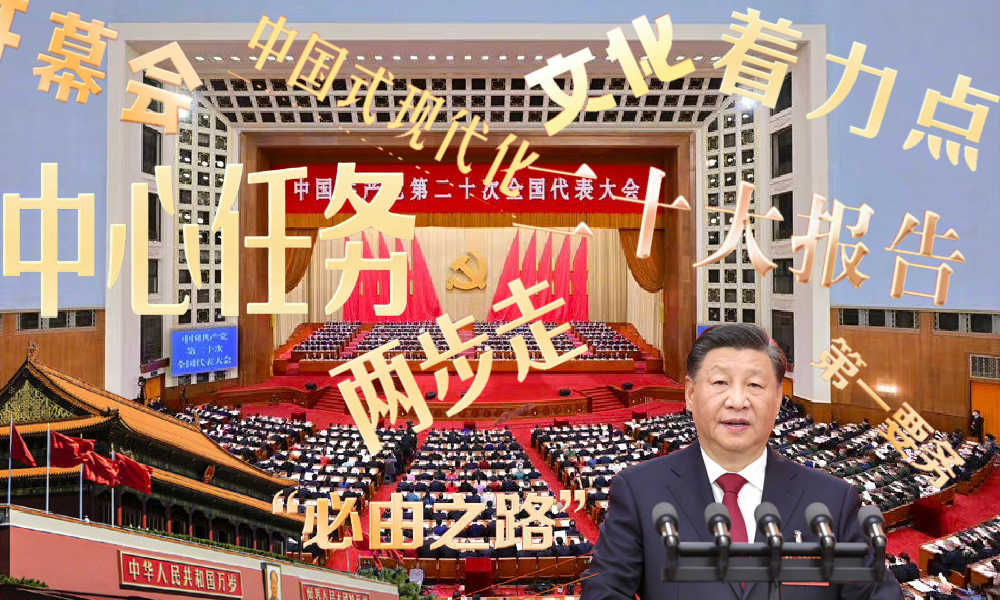
It is the week of the 20th CPC National Congress, China’s quinquennial major political event that is all about discussing and deciding on important Party issues, appointing Party leadership and officially announcing new governance concepts, thoughts and strategies proposed by the CPC Central Committee.
The Party Congress opened on Sunday, October 16, when Chinese leader Xi Jinping delivered his nearly two-hour-long speech reflecting on the recent past and the future of the Communist Party and the country at large, signalling the direction China will be heading.
In our earlier article covering Xi Jinping’s speech, we focused on how Chinese official channels turned parts of the work report into hashtags that were promoted on social media and then became trending topics.
Here, we will go over some of the terms and words that were used in the political report delivered by Xi and were propagated on Chinese social media as ‘key terms’ through general hashtags such as “Understanding These Key Terms from the 20th Party Congress Report,” “Studying the Essence of the 20th Party Congress” or “The New Era and Journey of the 20th Party Congress” (#看懂二十大报告中这些关键词#, #学习二十大精神#, #党的二十大新时代新征程#).
During the 19th CPC National Congress in 2017, Party newspaper People’s Daily published a vocabulary list containing 100 relevant words and terms. That list included terms such as “5G Era” (5G时代), “Sharing Economy” (分享经济), “The 20th anniversary of Hong-Kong’s return to China” (香港回归祖国20周年), “Made in China 2025” (中国制造2025), and other key terms that were deemed relevant in 2017 for China’s nearing future.
This Congress, there has not been a comparable official vocabulary list, but there have been various shorter lists and hashtags encouraging netizens to study key terms that are important to this year’s Congress and the Party goals. Many of these terms are visualized in infographics or explained in online posts and articles.
We’ve gathered some of these key terms from Xi’s speech here that are important to understand, not just for the fact that they are mentioned in Xi’s speech but also because they are specifically highlighted by various official channels.
1. Modernizing the Chinese Way 中国式现代化
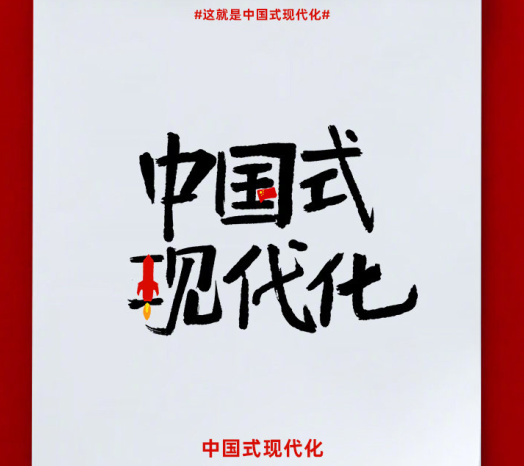
This concept was mentioned at least five times throughout Xi Jinping’s address and it is one of most important themes of this Party Congress: “Chinese modernization” or “Chinese-style modernization” (中国式现代化 Zhōngguóshì xiàndàihuà).
While the 19th Party Congress was all about China’s ‘new era’ (新时代), this 20th Party Congress term grasps the idea of further modernizing the country in a ‘Chinese way,’ meaning a type of modernization in which typically Chinese features and characteristics (“中国特色”) are maintained.
This is a relatively new term. A tool that shows searches on the Chinese search engine Baidu indicates that it did not receive any significant amount of searches before spiking during the week 20th Party Congress.
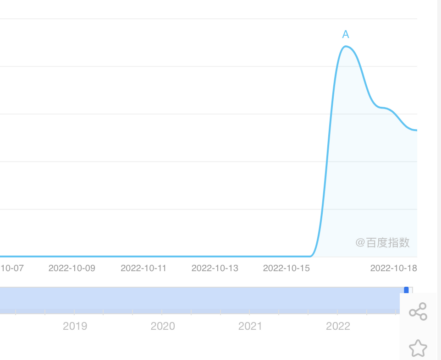
Baidu trend search shows that the term “Chinese-style modernizarion” “中国式现代化” did not receive any significant searches before October 2022.
The concept, however, did pop up in Chinese official media discourse since late 2021, such as in one article published by Xinhua News on September 27 in 2021 titled “Grasping the Main Features of the New Path of Chinese-Style Modernization” (把握中国式现代化新道路的主要特征)
The idea of Chinese-style modernization is closely related to other key concepts such as “common prosperity for all” (全体人民共同富裕 quántǐ rénmín gòngtóng fùyù) and “harmony between humanity and nature” (人与自然和谐共生 rén yǔ zìrán héxié gòngshēng).
2. The Central Mission 中心任务
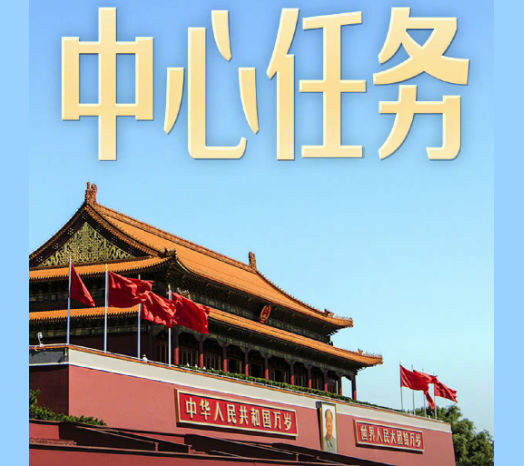
The term “central mission” (中心任务 zhōngxīn rènwù) was mentioned at least once in Xi Jinping’s address to convey how the central task of the CPC is to “unite and lead the people of all nationalities to build a strong socialist modern country,” and to “promote the great rejuvenation of the Chinese nation with Chinese-style modernization.”
Although the term “central mission” itself is not particularly tied to the 20th Party Congress at all, it is now because of how it is being used in the new context of the Party’s ‘main goal’ in China’s ‘new era.’ People’s Daily also promoted a hashtag including this term: “The Communist Party of China’s Central Task from Now On” (#从现在起中国共产党的中心任务#”).
3. Top Priority 第一要务
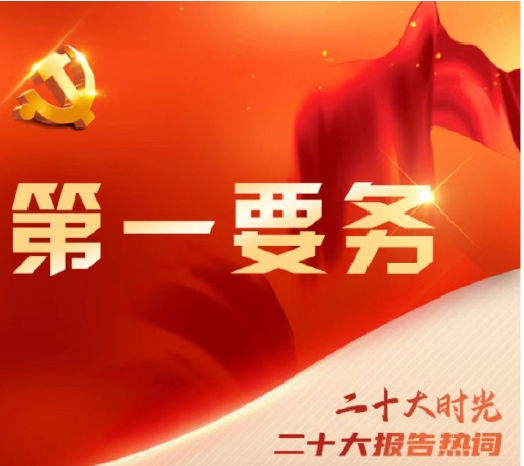
The key term ‘top priority’ (第一要务 dì yī yàowù) refers to the Party pursuing the kind of “high-quality development” (“高质量发展”) that will lead to the further modernization of the country.
“High-quality development” was also mentioned in the 19th Party Congress report in 2017 to indicate a shift and a new phase in China’s economic development from a focus on high-speed growth to a focus on more high-quality development, which is also outlined in the 14th Five-Year Plan (2021-2025).
This means, among others, that there will be more focus on innovation-driven industries and technological advancement.
4. The “Two-Steps” Strategy “两步走”战略安排

In the segment of Xi’s speech where he addresses China-style modernization in the new era, he also mentions the “two steps” strategy (“两步走”战略安排 “liǎng bù zǒu” zhànlüè ānpái). This is not a new term and it has been previously introduced as part of China’s journey to becoming a strong, rejuvenated country – making China great again.
The two steps of this strategy are to realize ‘socialist modernization’ by 2035 and then to enter the next phase from 2035-2050 to build China into a “strong, democratic, civilized, harmonious and beautiful socialist modernization country.” The year 2049 will mark the 100th anniversary of the People’s Republic of China, and this is the moment when China’s “great rejuvenation” should be completed.
5. The Road to Follow 必由之路

At the end of Xi Jinping’s speech, he mentioned “the road to follow” (必由之路, bìyóuzhīlù) five times. On social media, the “road to follow” has been reiterated multiple times as well by official channels, including in a propaganda video published by CCTV.
The five ‘roads to follow’ mentioned in the Party Congress and in the state media videos are the following that are together presented as “the only road” the country and the Party must take. They are all linked together and are actually somewhat circular, namely:
– to develop socialism with Chinese characteristics, they must adhere to the overall leadership of the Party
– to achieve the “great rejuvenation” of China they must stick to socialism with Chinese characterics
– to reach this historic undertaking, they must be united in struggle
– to allow China to grow and develop in the ‘new era,’ they must implement the new concepts for development
– to be able to take this new road together & keep the Party full of vitality, they must follow the way of comprehensive and strict Party governance
6. Building Beautiful China 建设美丽中国

In the 20th CPC National Congress report, the idea of “building beautiful China” (建设美丽中国, jiànshè měilì Zhōngguó) was mentioned in the segment dedicated to the “green development” of China as part of its overall modernization. This includes environmental protection, pollution control, carbon reduction, and climate change awareness.
‘Beautiful China’ as a concept was first introduced during the 18th Party Congress in November of 2012 as part of China’s long-term environmental protection plan within the context of people’s welfare and the future of China.
7. Whole-process People’s Democracy 全过程人民民主
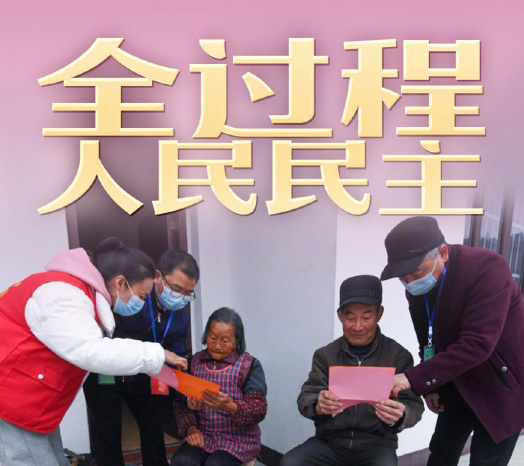
This concept of ‘whole-process people’s democracy’ (全过程人民民主, quán guòchéng rénmín mínzhǔ) is mentioned at least five times in Xi Jinping’s 20th Party Congress speech and it is one of the political concepts and terms proposed by Xi himself as part of Xi Jinping’s Socialist Thought with Chinese Characteristics for a New Era. It was mentioned in the speech Xi gave during the celebration of the Party’s 100-year anniversary in 2021.
This so-called ‘whole-process people’s democracy’ is officially presented as a ‘process-oriented’ democracy that, despite being different from Western democracy, supposedly “covers all aspects of the democratic process and all sectors of society” through a combination of elections, consultations, decision-making, management and oversight.
This idea of China having its own particular kind of democracy – or perhaps having invented a Chinese version of what ‘democracy’ actually means – also suits the idea of Chinese-style modernization, in which China’s path to the future will not be like the route Western countries are taking, but instead combining modernization with Chinese features.
8. Socialist Culture 社会主义文化
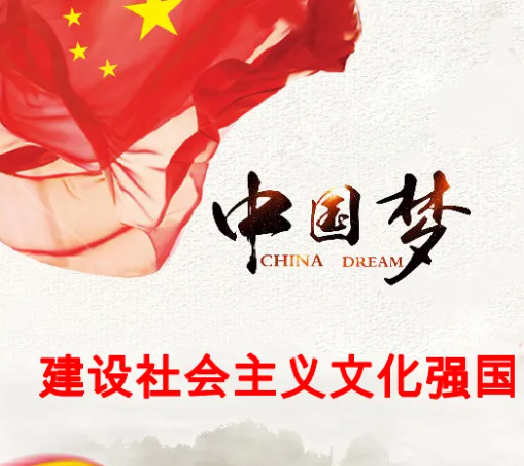
‘Socialist Culture’ (社会主义文化, shèhuì zhǔyì wénhuà) comes up at least four times in the 20th Party Congress report. The term represents a cultural side of China’s modernization, and emphasizes that, in order to build a strong socialist country, there must also be a strong socialist culture.
Although not explicitly stated, official media propaganda inescapably plays an important part in the cultivation of a strong ‘socialist culture’ that is all about cultural self-confidence, cultural innovation, creativity, and ‘spiritual energy.’
At time of writing, the Baidu Trends tool did not have enough information to show any relevant data on the search engine interest in this particular term, but the idea of ‘socialist culture’ is by no means a new one. “Socialist culture with Chinese characteristics” was already proposed by Jiang Zemin (江泽民) at the 15th CPC National Congress in 1997.
The idea that building a strong socialist culture is important for the further development of China has been further cultivated over the past few years under Xi’s leadership. Also read this article in English titled “How to build a strong socialist culture” in Qiushi, the CPC Central Committee bimonthly.
9. Improve the Distribution System 完善分配制度

This phrase comes up once in the part of the 20th Party System report that disusses a fairer economic system with more equal employment & income opportunities and regulated wealth accumulation, encouraging hard work to get rich.
Although it is the first time that a regulation of wealth accumulation has come up in this way (and it is not explained what this actually means), the idea behind these concepts of the distribution system and wealth accumulation standardization is that of ‘common prosperity,’ one of the most important concepts guiding China’s recent policymaking.
‘Improve the distribution system’ (完善分配制度, wánshàn fēnpèi zhìdù) was explicilty mentioned as one of the key concepts for this week’s meeting by various channels, but it mainly is ‘the regulation of wealth accumulation’ that is featured in social media hashtags (#中国将规范财富积累机制#).
10. Focus 着力点

Many of the words or phrases propagated as ‘key terms’ for this 20th Party Congress are insignificant by themselves but are merely used to represent a bigger body of thoughts. The aforementioned “Top Priority,” “Central Mission,” and “Road to Follow” are all just words that only mean something within the context of Xi Jinping’s speech.
Another example is “Major Principles” (“重大原则” zhòngdà yuánzé) which is also included by CCTV in this list of most important keywords, but which actually just goes back to the same ideas that are referred to in the other terms, namely strengthing the overall leadership of the Party, adhering to the road of socialism with Chinese characteristics, emphasizing people-centered ideology, etc. – which is similar to the idea behind the “Road to Follow” (必由之路) keyword.
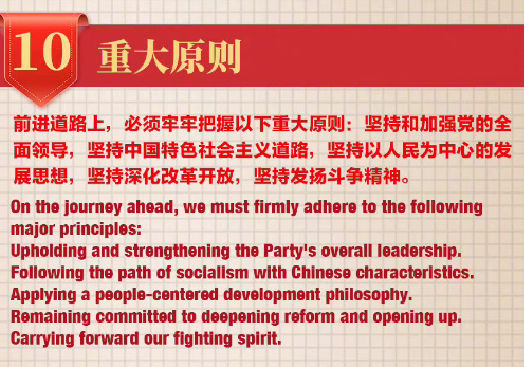
Explanation of ‘Major Principle’ concept in English and Chinese by People’s Daily, posted on Weibo.
Then there is the keyword “focus,” 着力点 (zhuólìdiǎn), which is about the focus of China’s economic development.
In China’s coming years, the economic focus should be placed on the real economy (实体经济). This literally is also a hashtag promoted on Weibo by CCTV this week (“Put the Focus of Economic Development on the Real Economy” #把发展经济的着力点放在实体经济上#).
Different from the Financial Economy, the Real Economy is the realm of economy that is about businesses, production, and the direct exchange/purchase of goods or services.
Also part of this ‘focus’ is China’s new industrialization, manufacturing, product quality, aerospace, transportation, new technology, and digital China. Another related term that is proposed as one of the keywords of this Party Congress is ‘innovation’ (创新, chuàngxīn).
Please check in with us again this week as we will keep an eye on social media trends surrounding the CPC National Congress. Don’t forget to subscribe. For previous posts on the Party Congress, check here.
By Manya Koetse
Get the story behind the hashtag. Subscribe to What’s on Weibo here to receive our newsletter and get access to our latest articles:
Images via Weibo account of Communist Youth League, CCTV, and People’s Daily.
Spotted a mistake or want to add something? Please let us know in comments below or email us. First-time commenters, please be patient – we will have to manually approve your comment before it appears.
©2022 Whatsonweibo. All rights reserved. Do not reproduce our content without permission – you can contact us at info@whatsonweibo.com.
Eye on Digital China is a reader-supported publication by
Manya Koetse (@manyapan) and powered by What’s on Weibo.
It offers independent analysis of China’s online culture, media, and social trends.
To receive the newsletter and support this work, consider
becoming a paid subscriber.


Spring Festival Trend Watch: Gala Highlights, Small-City Travel, and the Mazu Ritual Controversy

Inside Chunwan 2026: China’s Spring Festival Gala

The Fake Patients of Xiangyang: Hospital Scandal Shakes Welfare System Trust

China Trend Watch: Takaichi’s Win, Olympic Tensions, and “Tapping Out”

Spending the Day in China’s Wartime Capital

From a Hospital in Crisis to Chaotic Pig Feasts

Trump, Taiwan & The Three-Body Problem: How Chinese Social Media Frames the US Strike on Venezuela

Hong Kong Fire Updates, Nantong’s Viral Moment & Japanese Concert Cancellations

Chinamaxxing and the “Kill Line”: Why Two Viral Trends Took Off in the US and China

China’s 2025 Year in Review in 12 Phrases
-

 Chapter Dive7 months ago
Hidden Cameras and Taboo Topics: The Many Layers of the “Nanjing Sister Hong” Scandal
-
 Chapter Dive10 months ago
Understanding the Dr. Xiao Medical Scandal
-

 China Insight7 months ago
“Jiangyou Bullying Incident”: From Online Outrage to Offline Protest
-
 Chapter Dive10 months ago
China Is Not Censoring Its Social Media to Please the West
Ruangwith Viwathanatepa
May 9, 2019 at 11:56 am
Thank you for you article