
Newsletter
Tuning Into the Year of the Snake


Featured image created by Xiaohongshu user “小罗Design”, title:《🥟饺子里的温暖 —— 回家过年》/ “The Warmth of a Dumpling – Going home for the Chinese New Year”
PREMIUM NEWSLETTER | ISSUE #45
Overview:
▶ Dear Reader – Watching the CMG Gala
▶ What’s on Weibo Chapters – 15 Years of Weibo
▶ What’s Popular – The “China Chic Girl” & Sketchy Takeout Food
▶ What’s Noteworthy – China’s Artificial Sun
▶ What’s Memorable – “The Spring Festival Survival Toolkit”
▶ Weibo Word of the Week – Fake Foreigners
Dear Reader,
This week, trending topics in China were dominated by two themes: Trump and the Chinese New Year. Unsurprisingly, it’s clear which of the two is the most significant for most people: the Spring Festival and the journey home. The phrase “回家” (huí jiā), meaning “returning home,” has been flooding social media in recent days.
The Chinese New Year, or the Spring Festival, falls on January 29 this year, welcoming the Year of the Snake. Spring Festival is the most important time of the year for family reunions, and for some, it’s the only time of the year to be together. The travel home, whether by car, plane, or train, often comes with sentimentality and melancholy. Adult children who lead important and busy professional lives suddenly find themselves transformed into their parents’ “babies” again, getting stuffed with food and peppered with endless questions.

“Going home” visualized by Xiaohongshu users through AI and digital images.
Although it is a joyous occasion, the social aspect of the Chinese New Year is not welcomed by everyone. On apps like Xiaohongshu, netizens are publishing guides on how to survive the celebrations, and the term “Spring Festival Social Anxiety” (春节社交焦虑) pops up frequently. Younger people, in particular, who want to avoid questions about their personal lives—such as their work, marital status, or income—often feel stressed out by family reunions and the pressure of not meeting their family’s expectations. For years, netizens have been sharing the questions they dread the most.
Spring Festival Gala: The Ultimate Distractor
But there is one major ray of light during the long Chinese New Year’s Eve, it’s the show everybody loves to hate but still watches—the China Media Group (CMG) Spring Festival Gala. As the ultimate distractor, it captivates millions of households, providing a much-needed escape from awkward conversations and family pressures.
Better known as Chunwan (春晚), the Spring Festival Gala is one of the world’s most-watched live televised events. Lasting a total of four hours, roughly from 8pm to 1am Beijing time, it has been annually broadcasted since 1983 and has become an integral part of the Chinese New Year’s Eve. While many young people consider the show corny and old-fashioned, it has become deeply ingrained in China’s social media culture, where complaining about the show on Weibo has become its own New Year tradition.
Since 2016, I’ve annually live-blogged the entire show from start to finish. Unfortunately, I won’t be able to do so this year as I’ll be on the road, but here are some key pointers on what to pay attention to.
Mixing Official Propaganda with Entertainment
📺 First, you might ask: why should you watch the Gala at all? One reason is its sheer viewership and the chance to be part of a collective experience. Last year, over 420 million people reportedly watched the show, generating billions of mentions across social media platforms.
🇨🇳 An even better reason, though, is to see what the show is highlighting. As CMG is under the direct control of the Central Propaganda Department of the Chinese Communist Party, the Gala serves as an important moment for the Party to convey its official ideology, promote traditional culture, and showcase the nation’s top performers. While it’s also a commercial event, the Gala remains highly political, mixing official propaganda with entertainment.
Watching the entire show from start to finish be a bit much, but keeping an eye on the key highlights and noteworthy moments is definitely worth your time. It offers insights into important themes across culture, entertainment, politics, diplomacy, and even military affairs.
🪖 For example, last year’s Gala drew attention with the performance of the PLA song “Decisive Victory” (决胜). Delivered by artists from the PLA Cultural and Artistic Center, the performance featured soldiers in combat gear marching and dancing, with a backdrop of rockets, tanks, and war-like scenes. Taiwanese media framed the song as a reflection of mainland China’s military stance toward Taiwan, and some Weibo users interpreted it similarly. The performance gained further attention because it followed a duet of the song “Etiquette” (礼序) sung by performers from both Taiwan and mainland China, interpreted by some as a statement of “diplomacy comes before violence” (先礼后兵).
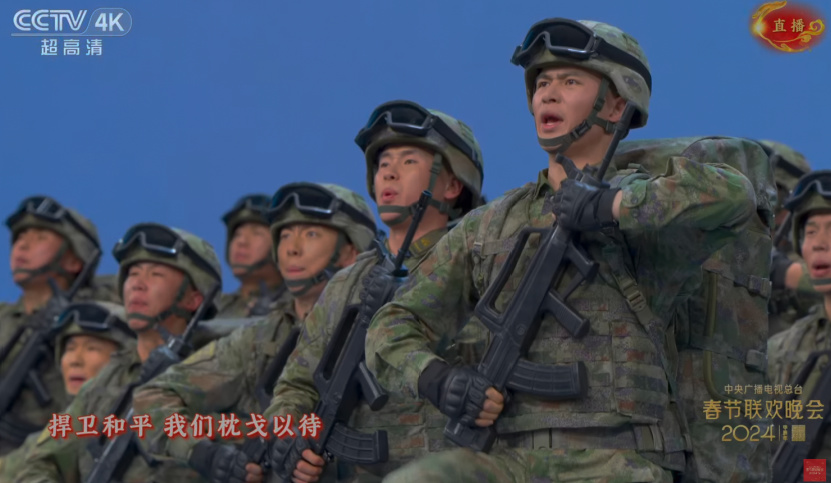
🏔️ This year’s Gala will not only feature performances from Beijing but also sub-venues in Wuhan, Lhasa, Wuxi, and Chongqing. For these cities, it’s a valuable opportunity to promote local culture and attract more tourists.
🤖 In recent years, the Gala has also become a platform to showcase China’s innovative digital technologies. In 2021, the show explicitly branded itself as a “tech innovation event” by incorporating 8K ultra-high-definition video, AI+VR studio technologies, and cloud-based performance coordination. This year, expect even more cutting-edge tech, including virtual production, 3D effects, and advanced AI, to bring Chinese cultural performances to life while underscoring China’s role as a global tech leader.
🧏♂️ Notably, this year’s Gala will feature audio-described and sign language versions for the first time, making it accessible to visually and hearing-impaired audiences. Sign language interpreters, using AR virtual technology, will appear in the Gala studio alongside the live broadcast. A split-screen feature will show both the live program and the interpreters, supported by AI-generated subtitles for hearing-impaired viewers. This marks a significant step toward a more inclusive approach by state media.
📕 One of this year’s key sponsors is Xiaohongshu (aka Rednote), an app that has recently dominated headlines as a surge of “TikTok refugees” migrated to its platform. Partnering with the Spring Festival Gala is a major traffic and visibility boost, making this one of Xiaohongshu’s most commercially successful years since its 2013 launch.
👩🏻 Also noteworthy: for the third time in a row, the Gala is directed by female director Yu Lei (于蕾), who also directed the 2024 and 2023 Gala. The 46-year-old Yu Lei previously also served as the general scriptwriter and overall designer for the Gala. The past year has really been a flourishing year for female directors in China, from cinema to TV, where female directing talent has been more visible and successful than ever before. This rise of female talent is also reflected in the Gala’s top creative team consists of 19 people: 11 of them are female.
📽 By now, the last rehearsal of the show has already been completed. The entire show is usually completely rehearsed a total of five times before Chinese New Year’s Eve. These rehearsals are recorded and almost nothing ever goes wrong during the live show – besides some bad lipsyncing here and there – since the recording is running at the same time so that producers can always switch to a pre-recorded act.
🔶️ On January 28, the show will also air via various channels, from CCTV to Bilibili, and also via Youtube here. The entire programme is usually released a day before.
Happy watching! Wishing you all joy, prosperity, plenty of dumplings, and good health in the Year of the Snake.
Best,
Manya
(@manyapan)
What’s on Weibo Chapters

Last week, I shared the first deep dive of What’s on Weibo Chapters with you. This month, our theme is 15 Years of Weibo. This week, Sinologist and China correspondent Casper Wichmann shares his insights on Weibo’s evolving role in shaping public opinion, its key moments, and whether it can remain a major platform for public discourse in China’s increasingly crowded digital landscape. At the University of Copenhagen, Wichmann previously researched Sina Weibo as a new public sphere on the Chinese internet.
With Weibo now 15 years old, we asked Wichmann about three things:
📌 Weibo’s evolving role in shaping public opinion: Has it become more or less effective, and has its social impact shifted? Which news stories highlight Weibo’s continued relevance or its changing influence?
📌 Changing government strategies on the Weibo platform: What pivotal moments stand out when Weibo emerged as a political tool?
📌 Weibo’s present & future in a crowded digital landscape: Can it still compete as a major platform for public discourse, or is it transitioning into a new role altogether?
Read this feature article to find out what Casper had to say about this:
What’s Popular

– by Ruixin Zhang
“What should we order for dinner?” is a daily dilemma for millions of Chinese consumers in one of the world’s largest food delivery markets. With numerous platforms, cuisines, menus, and discount options, choosing the right takeout—one that is tasty, affordable, and safe—can feel like a daunting task.
But these days, many Chinese people follow a simple rule to identify bad takeout: if your delivery comes in packaging featuring a playful young woman wearing sunglasses, a traditional Peking opera headdress, and holding a fan—often with the bold trendy character “潮” (cháo, meaning “trend”)—it’s likely to be an unhealthy meal with potential food safety risks.

As one netizen joked, “I was so excited for my takeout, only to see this lady on the package and feel my heart sink.” Why does this seemingly cheerful cartoon figure has come to evoke so much distrust and dislike?
This story starts in 2020, when digital illustrator @YUMI created the “China-chic Girl” image in response to a client’s request for a design that embodied the “China-chic” (国潮, guócháo) aesthetic.
China-chic, or guócháo—literally meaning “national tide”—refers to the rise of Chinese domestic (fashion) brands that often incorporate culturally Chinese elements into contemporary designs. This trend emerged as a reflection of growing nationalist sentiment in China, offering a Chinese counterpart to popular Japanese or Korean-inspired styles. From fashion and makeup to milk tea, ‘China-chic’ quickly became a defining element of China’s consumer culture (read more here).
However, when YUMI’s client failed to pay, she chose to release the design for free public use. YUMI’s creation—a blend of traditional Peking opera elements and modern sunglasses—struck a chord with its simple yet iconic charm. Its accessibility made it even more appealing, and the China-chic Girl soon became the go-to design for restaurants looking for affordable, visually striking takeout packaging.
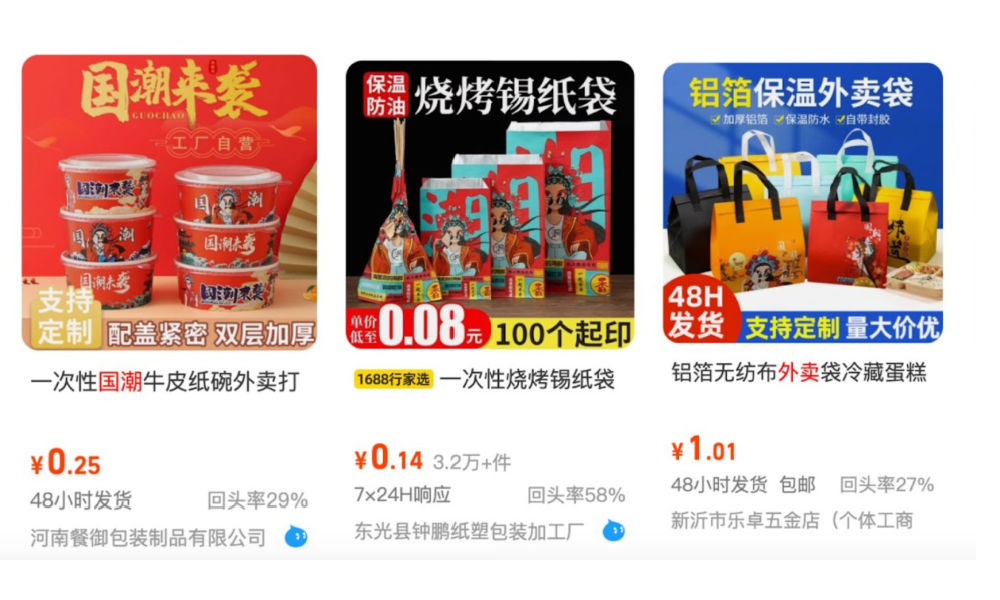
On China’s wholesale website 1688, you can find a wide range of cheap takeout packaging with the “China-chic girl” on it.
The China-chic Girl was all the rage, until last fall.
Starting in September, some delivery drivers began exposing filthy kitchen conditions on social media, warning customers to avoid takeout from certain restaurants after witnessing food safety issues and kitchen hazards while waiting for orders.
Over time, people began noticing a pattern: the dirtiest kitchens were often small, non-chain establishments with no physical storefronts—just cramped spaces dedicated solely to takeout. Operating on tight budgets, these businesses often chose the inexpensive China-chic girl packaging to cut costs, unintentionally associating the China-chic girl with unsanitary and unsafe food practices.
As a result, netizens—especially young people who heavily rely on food delivery—started compiling guides to help each other avoid sketchy takeout options. The warning signs? Restaurants offering “cashback for good reviews” or those that lack a proper storefront, often listing only food items instead of a real restaurant name. These red flags point to private kitchens, poorly managed spaces, or even unregulated food safety practices. Additionally, many of these ‘China-chic takeouts’ thrive within the “group-buying” model on food delivery platforms.
The “group-buying” model, popularized by platforms like Temu and its Chinese counterpart Pinduoduo (拼多多), allows users to invite friends, family, or colleagues to purchase a product together at a discounted price.
This strategy has since evolved into a pseudo-group-buying model, where even without inviting others, the group-buying discount is still applied. These discounts are carefully calculated by platforms to ensure that, even at reduced prices, profits can still be made due to the high sales volume.
Both Meituan (美团) and Eleme (饿了么)—the two largest food delivery platforms in China—have adopted this approach by introducing budget-friendly services such as Pinhaofan (拼好饭) and Pintuan (拼团) to target lower-tier markets.
For example, a typical 30 RMB ($4.15) takeout might cost only half that price through these services, with additional platform coupons and new user discounts making it almost irresistibly affordable.
But, of course, there’s no such thing as a free lunch. As many users have discovered, getting a full meal for under 10 RMB ($1.40) often comes at the expense of quality. These Pinhaofan takeouts commonly feature pre-made dishes with indistinguishable ingredients, flimsy utensils that can’t even scoop rice, a box of suspicious juice full of artificial coloring, low-grade packaging, and, of course, that cheap, once-iconic China-chic design.
(Want to know more? There’s more to know on how “China chic girl” has gone from being a playful symbol of pride in domestic products to representing the problems of China’s fast and cheap takeout industry: read the rest of the article here.)
What’s Noteworthy

Since the week was filled with headlines about Trump’s inauguration, you might have missed another major event: the breakthrough of China’s “Artificial Sun,” a nuclear fusion reactor, which broke its own record and brought humanity closer to achieving near-limitless clean energy. Online, this milestone was celebrated as a sign of China’s growing technological and scientific leadership, with many envisioning a future of carbon-free energy led by China.
The record was set on January 20, when the Chinese Experimental Advanced Superconducting Tokamak (先进实验超导托卡马克实验装置), or EAST, operated stably for 1,066 seconds. EAST is a nuclear fusion reactor located at the Hefei Institute of Physical Science in Anhui province, designed to generate clean and sustainable nuclear energy.
EAST is often called the “Artificial Sun” because it mimics the process that powers stars—fusing hydrogen atoms to release vast amounts of energy in the form of heat. During this experiment, EAST generated temperatures exceeding 100 million degrees Celsius—around seven times hotter than the Sun’s core. This new record surpassed the previous one of 403 seconds, also set by EAST in 2023, by more than double.
This “triumph” sparked widespread excitement on platforms like Weibo. Hashtags such as “Artificial Sun Sets 1 Billion Degrees for 1,000 Seconds” (#人造太阳创1亿摄氏度1000秒纪录# ) and “China’s Artificial Sun Makes Major Breakthrough” (#中国的人造太阳有重大突破#) made it into the top trending lists. Notably, some netizens framed the achievement within the context of global technology competition, proudly highlighting China’s progress as surpassing that of the US and EU.
What’s Memorable

As the 2017 Chinese New Year approached, a humorous and unique song went viral on Chinese social media. It captured the pressure young people face when bombarded with nagging questions from family and relatives during the Spring Festival.
Composer Jin Chengzhi (金承志) and his choir, The Rainbow Chamber Singers (上海彩虹合唱团), won the hearts of Chinese netizens with their hit song “What I Do Is For Your Own Good” (春节自救指南, literally: The Spring Festival Survival Toolkit). A perfect pick for this week’s archive spotlight—check out the explanation and video via the link below.
Weibo Word of the Week

Fake Foreigners | Our Weibo phrase of the week is 仿冒外国用户账号, fǎngmào wàiguó yònghù zhànghào, meaning “fake foreign user accounts” or “user accounts that pretend to be foreigners.”
The phrase came up in a Weibo hashtag last week that attracted over 210 million views (#抖音已处理1万多仿冒外国用户账号#), about Douyin, the Chinese version of TikTok, having dealt with more than 10,000 fake foreign accounts in the wake of the “TikTok Refugee” trend.
In case you missed it (though you probably didn’t): With a TikTok ban looming in the US (briefly taking effect last Sunday before being delayed), millions of American TikTok users began migrating to other platforms this month. The most notable was the Chinese social media app Xiaohongshu (also known as Rednote), which saw a huge influx of so-called “TikTok refugees” (TikTok难民). Many were searching for what they believed to be a “Chinese version of TikTok” (read more about the story here). Seeing Xiaohongshu’s success, Douyin, the actual Chinese version of TikTok, also opened its registration process to international users.
What started as a protest against the TikTok ban and US policies turned into a surprising celebration of cultural exchange. Chinese and American netizens found a digital space to interact and connect—on the Chinese internet.
However, the hype also brought its downsides. Black market groups quickly jumped on the trend, looking to profit by gaining followers and click traffic. They created thousands of fake “foreign” accounts by reposting videos or even crafting AI-generated foreign personas.

Is the painting moving, or is this just another fake foreigner?
This phenomenon has fueled skepticism among Chinese internet users—already wary of online scams—about connecting with strangers online. One netizen joked, “Don’t buy anything from people and don’t make new friends, and you’ll never be scammed.”
Others commented: “Xiaohongshu and Douyin’s teams must be swamped these days. Meanwhile, Weibo is nice and quiet in comparison!”
This is an on-site version of the Weibo Watch newsletter by What’s on Weibo. Missed last week’s newsletter? Find it here. If you are already subscribed to What’s on Weibo but are not yet receiving this newsletter in your inbox, please contact us directly to let us know.



Chapter Dive
Eye on Digital China: How Chinese Social Media Evolved from the Blog Era to the AI-driven Age
A look back at the three major phases of China’s social media — and why What’s on Weibo is evolving into Eye on Digital China.

This edition of the Eye on Digital China newsletter by Manya Koetse was sent to premium subscribers. Subscribe now to receive future issues in your inbox.
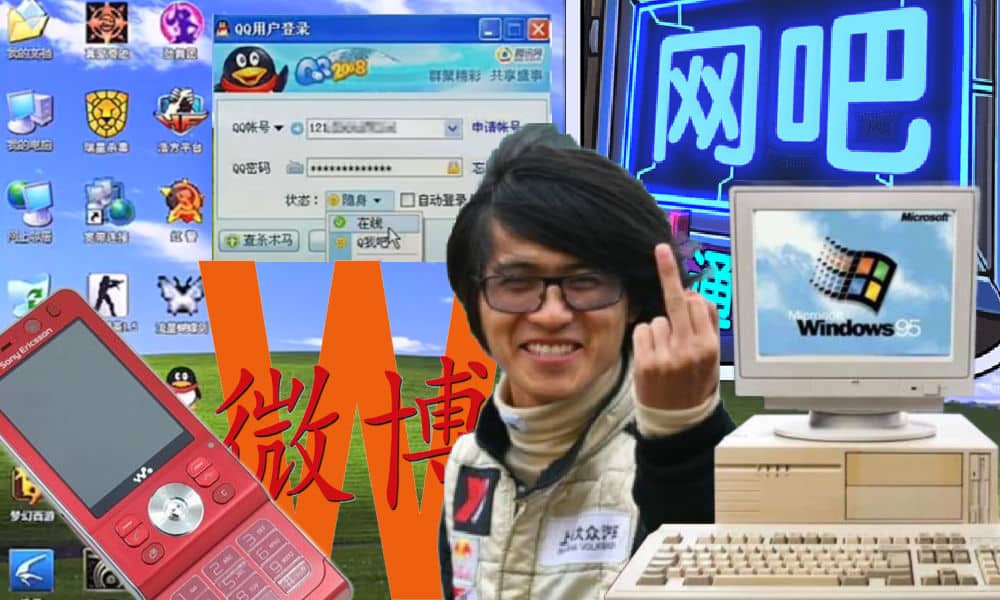
“Do you still remember going to the internet cafe, paying 2 yuan ($0.30) per hour during the day or 7 yuan ($1) for an all-nighter? Staying up playing games and surfing around?”
It’s the kind of content you’ll often see today on platforms like Douyin or Bilibili — nostalgic videos showing smoky internet cafes (wangba 网吧) from the early 2000s, where people chatted on QQ or played World of Warcraft on old Windows PCs while eating instant noodles. These clips trigger waves of nostalgia, even among internet users too young to remember that era themselves.

Internetcafe in 2005, image via 021zhaopin.com
The current nostalgia wave you see on Chinese social media is indicative of how China’s digital world has evolved over the past 25 years, shifting from one era to the next.
As I welcome a new name for this newsletter and say goodbye to ‘Weibo Watch’— and, in the longer run, to the ‘What’s on Weibo’ title, I’m feeling a bit nostalgic myself. It seems like a good moment to look back at the three major stages of Chinese social media, and at the reason I started What’s on Weibo in the first place.
1. The Blogging Boom (2002–2009): The Early Rise of Chinese Social Media
When I first came to China and became particularly interested in its online environment, it was the final phase of the early era of Chinese social media — a period that followed soon after the country had laid the foundations for its internet revolution. By 1999, the first generation of Chinese internet giants — Alibaba, Tencent, Baidu, and Sina — had already been founded.
China’s blogging era began with the 2002 launch of the platform BlogChina.com (博客中国), followed by a wave of new platforms and online communities, among them Baidu Tieba and Renren. By around 2005, there were roughly 111 million internet users and 16 million bloggers, and the social impact was undeniable. 2005 was even dubbed China’s “year of blogging.” 1
Chinese writer Han Han (韩寒, born 1982), a high-school-dropout-turned–rally car racer, became one of the most-read figures on the Chinese internet with his sharp and witty blogs. He was just one among many who rose to fame during the blog era, becoming the voice of China’s post-1980s youth.
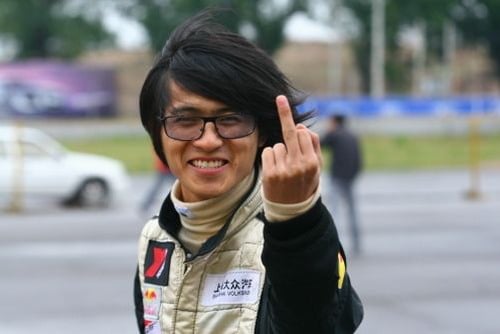
The rebel of China’s blog era, Han Han, became of voice of his generation.
When I moved to Beijing in 2008, I had a friend who was always out of money and practically lived in an internet cafe in the city’s Wudaokou district, not far from where I studied. We would visit him there as if it were his living room — the wangba was a local hangout for many of us.
Not only online forums and blogging sites were flourishing at the time, but there was also instant messaging through QQ (腾讯QQ), online news reading, and gaming. Platforms like the YouTube equivalents Tudou (土豆) and Youku (优酷) were launched, and soon Chinese companies began developing more successful products inspired by American digital platforms, such as Fanfou (饭否), Zuosa (做啥), Jiwai (叽歪), and Taotao (滔滔), creating an online space that was increasingly, and uniquely, Chinese.
That trajectory only accelerated after 2009, when popular Western internet services, including Twitter, Facebook, and YouTube, became inaccessible from within mainland China.
⚡ The launch of Sina Weibo in 2009 came at a crossroads for China’s social media landscape: it was not only a time when many foreign platforms exited China, but also when internet cafes faced major crackdowns.
As a foreigner, I don’t think I ever visited internet bars in Beijing anymore by that point — internet use had largely shifted to home connections. Laptop ownership was rising, and we all had (pre-smartphone) mobile phones, which we used to text each other constantly, since texting was cheaper than calling.

Some of the mobile phones in China’s 2009 top 10 lists.
Weibo came at just the right time. It filled the vacuum left by the online crackdowns across China’s internet while still benefiting from the popularity of blogging. Weibo (微博), after all, literally means “micro-blog” — micro because the number of characters was limited, just like Twitter, making short-form posts the main way of communication.
Weibo quickly became hugely successful, for many more reasons than just timing. Its impact on society was so palpable that its trending discussions often seeped into everyday conversations I had with friends in China.
In English-language media, I kept reading about what was being censored on the Chinese internet, but that wasn’t necessarily what I wanted to know — I also wanted to know what was on Weibo, so I could keep up with my social circles.
That question planted the seed for What’s on Weibo: the simple curiosity of “What are people talking about?” What TV series are popular? What jokes and controversies are everyone discussing (but that I never fully grasped)? I wanted to get a sense of an online world that was, in many ways, intangible to outsiders — including myself. As I had moved back to Europe by then, it was also a way for me to stay connected to those everyday conversations unfolding online in China.
With scissors, glue, and some paper, I started sketching out what a future website might look like.
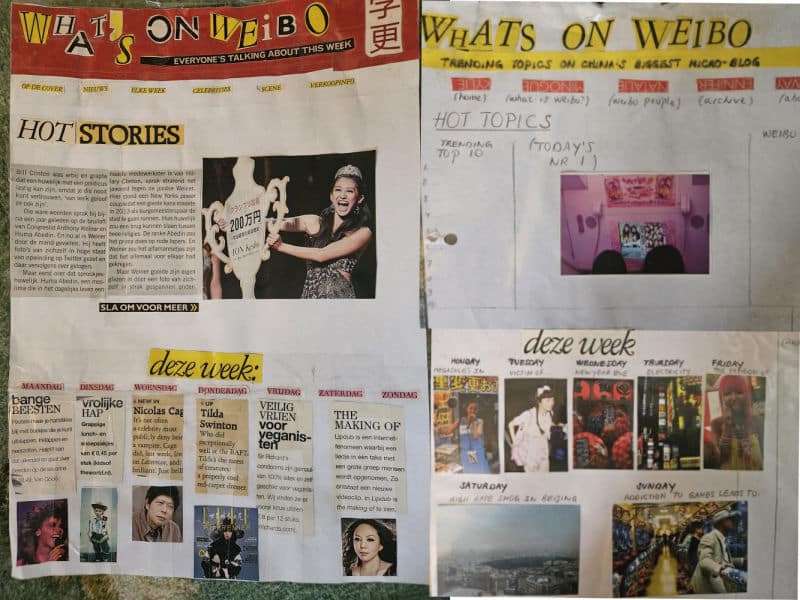
Papercrafting the idea for a website named ‘What’s on Weibo’ in 2012.
And in March 2013, after doing my best to piece it together, I launched What’s on Weibo and began writing — about all kinds of trends, like the milk powder crisis, about China’s many unmarried “leftover men” (shengnan 剩男), and about the word of the moment, “Green Tea Bitch” (lǜchá biǎo 绿茶婊) — a term used to stereotype ambitious women who act sweet and innocent while being seen as calculating or cunning.
2. From Weibo to the Taobao Moment: China’s Mobile Social Era: (2010–2019)
Around 2014–2015, people started saying Weibo was dead. In fact, it hadn’t died at all — some of its most vibrant years were still ahead. It had simply stumbled into the mobile era, along with China’s entire social media landscape.
As mobile internet became more widespread and everyone started using WeChat (launched in 2011), new mobile-first platforms began to emerge.2 In 2012–2013, for example, apps like Toutiao and Xiaohongshu (小红书, RED) were launched as mobile community platforms. With the rapid rise of China’s new tech giants — Bytedance, Meituan, and Didi — a new mobile era was blossoming, leaving the PC-based social media world far behind.
Spending another summer in Beijing in 2014, I called it the “Taobao Moment” — Taobao being China’s most successful online marketplace, a platform for buying and selling practically everything from clothes and furniture to insurance and even Bitcoins. At the time, I thought Taobao captured everything Beijing was at that moment: a world of opportunities, quick decisions, and endless ways to earn and spend money.
On weekends, some of my friends would head to the markets near the Beijing Zoo to buy the latest dresses, purses, jeans, or shoes. They’d buy stock on Saturday, do a photo shoot on Sunday, and sell the goods online by Monday. You could often spot young people on the streets of Beijing staging their own fashion shoots for Taobao — friends posing as models, Canon cameras in hand.
During that period, What’s on Weibo gradually found its audience, as more people became curious about what was happening on Chinese social media.
Around 2016, Weibo entered another prime era as the “celebrity economy” took off and a wave of “super influencers” (超级红人) emerged on the platform. Papi Jiang stood out among them — her humorous videos on everyday social issues made her one of China’s most recognizable online personalities, helping to drive Weibo’s renewed popularity.

Witty Papi Jiang was a breath of fresh air on Weibo in 2016.
People were hooked on social media. Between 2015 and 2018, China entered the age of algorithm- & interest-driven multimedia platforms. The popularity of Kuaishou’s livestreaming and Bytedance’s Douyin signaled the start of an entirely new era.
3. The New Social Era of AI-fication and Diversification (2020–Current)
China’s social media shifts over the past 25 years go hand in hand with broader technological, social, and geopolitical changes. Although this holds true elsewhere too, it’s especially the case in China, where central leadership is deeply involved in how social media should be managed and which direction the country’s digital development should take.
Since the late 2010s, China’s focus on AI has permeated every layer of society. AI-driven recommendation systems have fundamentally changed how Chinese users consume information. Far more than Weibo, platforms like Douyin, Kuaishou, and Xiaohongshu have become popular for using machine-learning algorithms to tailor feeds based on user behavior.
China’s social media boom has put pressure on traditional media outlets, which are now increasingly weaving themselves into social media infrastructure to broaden their impact. This has blurred the line between social media and state media, creating a complex online media ecosystem.
At the same time, it’s not just AI and media convergence that are reshaping China’s online landscape — social relationships now dominate both information flows and influence flows. 3 Not everyone is reading the same headlines anymore; people spend more time within their own interest-based niches. It’s no longer about microblogging but about micro-communities.
China now has 1.12 billion internet users. Among new users, young people (aged 10–19) and the elderly (60+) account for 49% and nearly 21%, respectively. The country’s digital environment has never been more lively, and social media has never been more booming.
As a bit of a dinosaur in China’s social media world, Weibo still stands tall — and its trending topics still matter. But the community that was once at the heart of the Chinese internet has dispersed across other apps, where people now engage in more diverse ways than ever.
In China, I notice this shift: where I once saw the rise of Weibo, the Taobao boom, or the Douyin craze, I now see online and offline media increasingly converging. Social media shapes real-life experiences and vice versa, and AI has become integrated into nearly every part of the media ecosystem — changing how content is made, distributed, consumed, and controlled.
In this changing landscape, the mission of What’s on Weibo — to explain China’s digital culture, media, and social trends, and to build a bridge between Western and Chinese online spaces — has stayed the same. But the name no longer fits that mission.
Over the past few years, my work has naturally evolved from Weibo-focused coverage to exploring China’s digital culture through a broader lens. The analysis and trend updates will continue, but under a new name that better reflects a time when Weibo is no longer at the center of China’s social media world: Eye on Digital China.
For you as a subscriber (subscribe here), this means you can expect more newsletter-based coverage: shorter China Trend Watch editions to keep you up to date with the latest trends, along with other thematic features and ‘Chapter’ deep dives that explore the depth behind fleeting moments.
For now, the main website will remain What’s on Weibo, but it will gradually transition into Eye on Digital China. I’ll keep the full archive alive — more than twelve years of coverage that helps trace the digital patterns we’re still seeing today. After all, the story of China’s past online moments often tells us more about the future than the trends of the day.
Thank you for following along on this new journey.
By Manya Koetse
(follow on X, LinkedIn, or Instagram)
1 Liu, Fengshu. 2011. Urban Youth in China: Modernity, the Internet and the Self. New York: Routledge, 50.
2 Mao Lin (Michael). 2020. “中国互联网25年变迁:两次跃迁,四次浪潮,一次赌未来” [25 Years of China’s Internet: Two Leaps, Four Waves, and a Gamble on the Future]. 人人都是产品经理 (Everyone Is a Product Manager), January 3. https://www.woshipm.com/it/3282708.html.
3 Yang, Shaoli (杨绍丽). 2025. “研判2025!中国社交媒体行业发展历程、重点企业分析及未来前景展望:随着移动互联网兴起,社交媒体开始向移动端转移 [Outlook for 2025! The Development History, Key Enterprises, and Future Prospects of China’s Social Media Industry: With the Rise of Mobile Internet, Social Media Has Shifted to Mobile Platforms].” Zhiyan Consulting (智研咨询), February 7. https://www.chyxx.com/industry/1211618.html.
Spotted a mistake or want to add something? Please let us know in the comments below or email us. First-time commenters, please be patient — we will have to manually approve your comment before it appears.
Eye on Digital China, by Manya Koetse, is co-published on Substack and What’s on Weibo.
Both feature the same new content — so you can read and subscribe wherever you prefer. Substack offers community features, while What’s on Weibo provides full archive access. If you’re already subscribed and want to switch platforms, just get in touch for help. Both feature the same new content — so you can subscribe or read wherever you prefer. If you’re already subscribed on one platform and would like to move your subscription over, just let me know and I’ll help you get set up.
© 2025 Manya Koetse. All rights reserved.
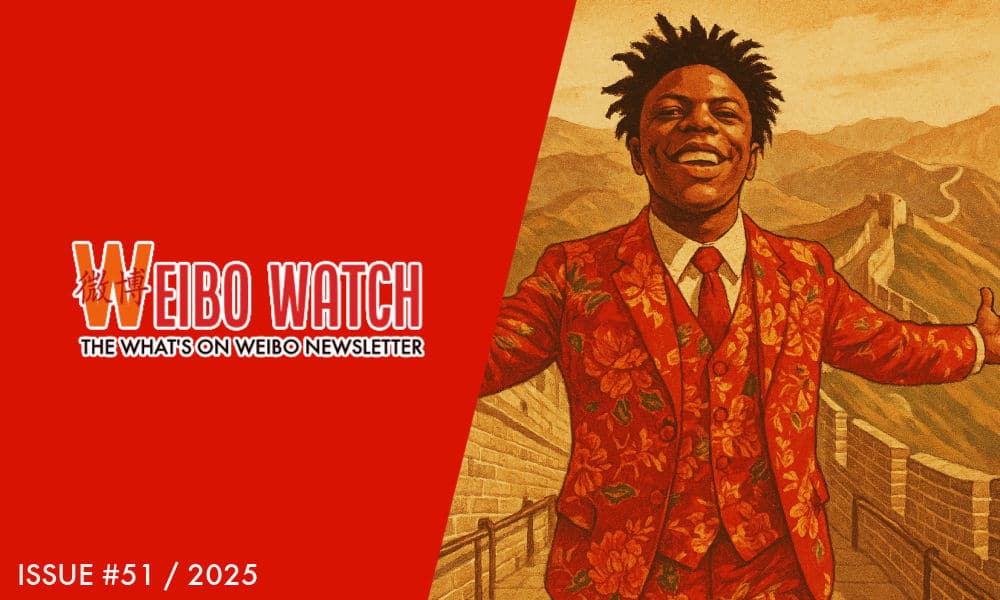
“This man is doing God’s work. In just six hours, he eliminated all Western media propaganda about China,” Chinese influencer Li Sanjin (李三金) said in one of his videos this week. The man he referred to, allegedly doing ‘God’s work,’ is the American YouTuber and online streamer Darren Watkins, better known as IShowSpeed or Speed, who visited China this week and livestreamed from various locations.
With 37 million followers on his YouTube account, Watkins’ visit hasn’t exactly flown under the radar. His streams from China have already accumulated over 17.5 million views on YouTube alone, and he also became the talk of the week on Chinese social media.
In China, the 20-year-old IShowSpeed is known as Jiǎkànggē (甲亢哥), or “Hyper Bro,” since the immensely popular YouTube star is known for being highly energetic.
Although IShowSpeed is originally known for soccer and gaming-related content, he’s been streaming live from various countries over the past year, from Ecuador to Bolivia, from Australia to Indonesia, from Romania to Japan, and also from the Netherlands, where a mob of fans harassed the YouTuber to such an extent that the influencer fled and panicked, until the police intervened and asked him to shut down the livestream for safety reasons — which he did not comply with.
It was not the only time IShowSpeed’s visit got chaotic. He also got into trouble during livestreams from other countries. While streaming from Norway, he injured his ankle and was swarmed by a crowd while trying to get out. In Greece and Indonesia, he had to ask for police support as well. In Thailand, he crashed a tuk-tuk into a temple wall.
In China, IShowSpeed’s livestreams went far more smoothly, and netizens, state media, and other official channels raved about his visit and its favorable portrayal of the country and its culture.
🔹 Symbol of Cultural Exchange & Positive Diplomacy
“Jiǎkànggē” became one of the viral terms of the week, on Weibo, Kuaishou, Douyin, and Toutiao. During his China trip, the livestreamer hit several YouTube milestones — not only breaking the 37 million subscriber mark while on stream, but also surpassing the magic number of 10 million views in total.
Watkins, also known for being (sometimes aggressively) loud and chaotic, suddenly emerged as a symbol of cultural exchange and positive diplomacy. The past week saw hashtags such as:
#️⃣”IShowSpeed gives young foreigners a full-window view into China” (#甲亢哥给国外年轻人开了全景天窗#)
#️⃣”IShowSpeed’s Shanghai livestream breaks Western filter on China” (#甲亢哥上海直播打破西方对中国滤镜#)
#️⃣”American influencer IShowSpeed amazed by stable wifi on China’s high-speed train” (#美国网红甲亢哥被高铁稳定网络震惊#)
#️⃣”IShowSpeed praised deep tried tripe for being incredibly delicious” (#甲亢哥赞爆肚太好吃了#), or
#️⃣ “IShowSpeed bridges the cultural divide” (#甲亢哥弥合文化鸿沟#).
While in Chinese media, Watkins was lauded for shining a positive light on China, this message was also promoted on English-language social media, where he was praised by the Chinese embassy in the US (#驻美大使馆称赞甲亢哥中国行#), writing:
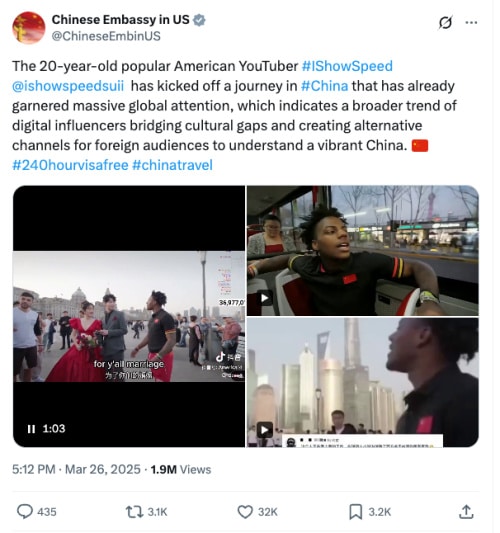
Post by Chinese Embassy in the US on X, March 26.
“This 20-year-old American internet star is bridging cultural gaps through digital means and creating new channels for foreign audiences to better understand China.”
So what exactly did IShowSpeed do while in China?
On March 24, Watkins livestreamed from Shanghai. He wandered around the city center, visited a KFC, danced with fellow streamers, stopped by a marriage market, ate noodles, played ping-pong, had hotpot, joined a dragon dance group and got acquainted with some traditional Chinese opera performance, and walked along the Bund.
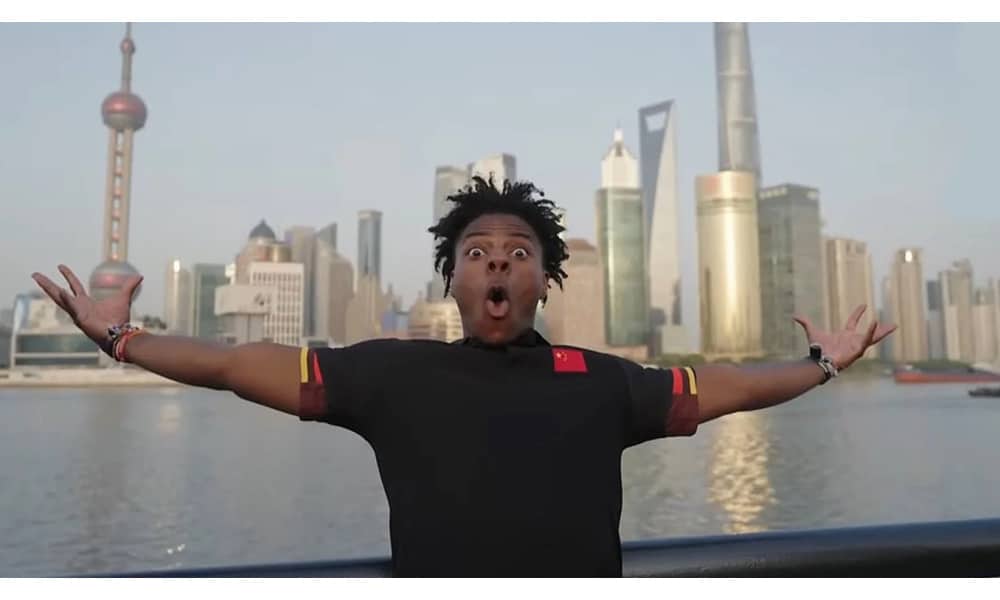
On March 26, he streamed from Beijing, starting in Donghuamen before briefly entering the Forbidden City—dressed in a Dongbei-style floral suit. He later took a stroll around Nanluoguxiang and the scenic Houhai lake, rode a train, and finally visited the Great Wall, where he did backflips.

In his stream on March 28, Watkins traveled to Henan to visit the famous Shaolin Temple in Dengfeng, hoping to find a master to teach him kung fu. He trained with Shaolin monks—footage that quickly went viral.
Lastly, on March 29, he opened his own Weibo account and published his first post. On Douyin, he shared a video of his visit to Fuxi Mountain in Zhengzhou, featuring the popular “Stairway to Heaven” tourist spot.
On social media, many viewers were captivated by the content. One major talking point was the remarkably strong internet connection that allowed him to livestream for six-hour stretches without losing signal in Shanghai. (Though his Beijing stream started off patchier, the drop was minor.) For many, it symbolized the quality of China’s 5G services.
Foreign viewers also praised how safe, friendly, and clean the country appeared, and how his streams highlighted various aspects of Chinese culture—from everyday people to traditional arts and local cuisine.
🔹 Telling & Spreading China’s Stories Well
It is no wonder the success of the Jiǎkànggē livestreams is celebrated by Chinese official media in an age where China’s foreign communication aims to increase China’s international discourse power, shaping how the world views China and making that image more credible, more respectable, and more lovable.
That’s not just an observation — it’s an official strategy. Introduced by Xi Jinping in 2013, “Telling China’s Story Well” (“讲好中国故事”) is a political slogan that has become a key propaganda strategy for China and continues to be a priority in finding different ways of promoting Chinese culture — new ways of telling China’s story in the social media age – while countering Western dominant narratives about China.
In increasingly digitalized times, it is not just about telling China’s story well, but also spreading China’s message effectively — preferably through genuine and engaging stories (Cai 2013; Qiushi 2021).
Especially young, non-official ‘storytellers’ can make China’s image more relatable and dynamic. One major example, highlighted in a 2022 case study by Zeng Dan (曾丹), is Chinese influencer Li Ziqi (李子柒). You’ve probably heard of her, or seen snippets of her videos: she creates soothing, cinematic content depicting China’s countryside lifestyle, focused on cooking, crafts, and gardening. With 26 million followers on YouTube, Li Ziqi became a viral sensation who successfully communicated an authentic and appealing ‘China story’ to a broad global audience.

Li Ziqi in one of her YouTube videos.
Although the calm and composed Li Ziqi and the loud, chaotic IShowSpeed couldn’t be more different, they have some things in common: both have large international fanbases, including their millions of YouTube subscribers; they offer perspectives that differ from Chinese state media or official channels; and they have the capacity not just to tell China’s story well, but to spread it effectively through videos and livestreams.
🔹 Spontaneous Stream or Scripted Propaganda?
IShowSpeed’s China streams have triggered a wave of responses from fans and viewers, sparking discussions across international social media and even making newspaper headlines.
In English-language online media spheres, there appear to be a range of perspectives on Watkins’ China trip:
📌 One prominent view—also echoed by various foreign influencers on YouTube and other platforms—is that IShowSpeed’s visit counters “Western media lies” about China and has successfully shown the “real China” through his livestreams. The Shanghai-based media outlet Radii claimed that “IShowSpeed’s China Tour is doing more for Chinese Soft Power than most diplomats ever could.”
📌 Others challenge this narrative, questioning which dominant Western portrayals of China IShowSpeed has actually disproven. Some argue that the idea of China being a “bleak place with nothing to do where people live in misery” is itself a false narrative, and that presenting IShowSpeed’s livestreams as a counter to that is its own form of propaganda (see: Chopsticks and Trains).
📌 There are also those who see Watkins’ trip as a form of scripted propaganda. To what extent were his livestreams planned or orchestrated? That question has become one of the central points of debate surrounding the hype around his visit.
These rumors have been addressed by cameraman Slipz (@shotbyslipz), who took to X on March 28, 2025. Slipz posted that the team is “(..) not making political content, not any documentary and no journalism,” and later added: “Fact: amount of money IShowSpeed has received from Chinese Government = $0.”
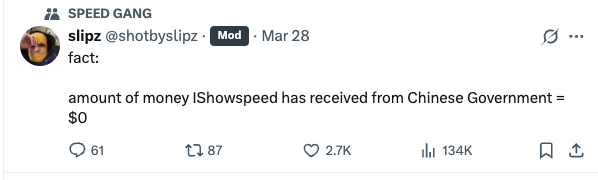
But does the fact that IShowSpeed did not receive money from the Chinese government mean that it wasn’t also a form of China promotion?
➡️ Organized — it definitely was. Any media trip in China has to be. IShowSpeed would have needed a visa, he had translators with him, and throughout the streams it’s evident that local guards and public security officers were present, walking alongside and helping to keep things under control, especially in crowded areas and at major tourist spots — from Nanjing Road in Shanghai to an entire group of guards seemingly accompanying the entourage in the Forbidden City.
One logistical “advantage” to his visit was the fact that YouTube is blocked in China. While some Chinese fans do bypass the Great Firewall to access the platform, IShowSpeed remains far less known in China than in many other countries — a factor that likely contributed to how smoothly the streams went and helped prevent chaos. The team also launched a Douyin account during the trip, where he now has over two million followers. (To stream directly to their 37 million followers on YouTube, Watkins’ team either needed a VPN to access WiFi or had arranged roaming SIM cards to stay connected.)
➡️ Was it staged? Many parts clearly weren’t: casual public conversations, spontaneous barber visits in both Shanghai and Beijing (with barbers looking unsure of how to handle the situation), and wholesome fan encounters. There was even a moment when Watkins walked into a public restroom and forgot to mute the sound.
But other parts of the trip were undeniably staged — or at least framed to appear spontaneous. When visiting a marriage market in Shanghai, for instance, two actors appeared, including one woman with a sign stating she was looking for someone “capable of doing backflips.”
When Watkins took a “random” ride in what was described as the fastest car in China — the Xiaomi SU7 Ultra — the vehicle appeared to be conveniently parked and ready.
Similarly, when the streamer “ran into” Chinese-American TikTok influencer Miles Moretti (李美越) in Beijing, it turned out to be the person who would give him the now-iconic bright Dongbei flower suit and accompany him on his journey.

The ping-pong, the kung fu, the Peking opera, the hotpot, the Forbidden City tour — it all plays into the kinds of experiences that official channels also like to highlight. While likely planned by Watkins’ team in coordination with local partners, it was all far more orderly and tourism-focused than, for example, Watkins’ chaotic visit to the Netherlands.
Watkins and his entourage were also well-informed about the local dos and don’ts. At one point, Watkins even mentions “following the rules,” and when Moretti tells him mid-stream that “somebody very important lives on our left,” Watkins asks “Who?” — but the camera zooms out and the question goes unanswered, suggesting they may have been reminded that certain names or topics were off-limits (judge the moment for yourself here).
The livestream didn’t always go exactly the way Watkins wanted, either. When he attempted to take more random walks around the city, the crew appeared to be informed that some areas were off-limits, and he was asked to return to the car to continue the trip (clips here and here).
🔹 The “Nàge” Song
One major talking point surrounding IShowSpeed’s China livestreams was “the N-word.” No, not that N-word — but the Chinese filler word “nàge” or “nèige” (那个). Like “uhm” in English or “eto” in Japanese, “nàge” is a hesitation marker commonly used in everyday Mandarin conversation. It also functions as a demonstrative pronoun meaning “that.”
The word has previously stirred controversy because of its phonetic resemblance to a racial slur in English. In 2020, an American professor at the University of Southern California’s Marshall School of Business was even temporarily suspended after using the word during an online communications class — some students misunderstood its context and took offense.
The word — and the song “Sunshine, Rainbow, White Pony” (阳光彩虹小白马) by Chinese singer Wowkie Zhang (大张伟), which repeatedly features the word nàge in its chorus — popped up multiple times during Watkins’ trip. The catchy tune essentially became the theme song of his visit.
The first nàge moment actually already appeared within the first five minutes of Watkins’ Shanghai stream, when a Chinese comedian approached him on the street, trying to recall a joke. “What?!” Watkins reacted, with laughter in the background. “That’s not a joke, you said n**! It’s my first five minutes in China!” he exclaimed, before patting the man’s back in a friendly gesture, clearly not offended.
🔄 It resurfaced again within the first hour when Watkins visited a marriage market and one of the performers sang the Wowkie Zhang song. Watkins initially acted shocked, then demanded they sing it again — only to burst out laughing and start singing along.
🔄 Later, he sang the song again with a street saxophonist and encouraged others to join in.
🔄 At other moments, he played up the drama again, feigning anger when a crowd broke into the chorus, and it became a recurring gag throughout the streams.
These incidents all seem staged. One of the main reasons Watkins is known to many netizens in China is because of an older video clip showing his exaggerated reaction to the nàge song — dating back to at least 2022. So while it may have looked spontaneous, Watkins was already familiar with the word and the viral song long before his China trip.The attention given to the nàge ‘controversy’ was likely amplified for views and engagement.
While Watkins was clearly in on this part of the show — as with others — he also seemed genuinely, and at times amusingly, unaware of many things in China. He repeatedly referred to RMB as “dollars,” mistook elderly women for retired YouTube streamers, and even assumed that a woman livestreaming near the Forbidden City was reading his chat and trying to collaborate with him — although she seemed totally uninterested and was just minding her own business.
🔹 A Win-Win Situation
In the end, IShowSpeed’s visit highlighted two sides effectively doing their job. Watkins and his team successfully arranged a YouTube trip that generated high ad revenue, attracted millions of new subscribers, and boosted his brand and global fame.
On the Chinese side, there was clearly coordination behind the scenes to ensure the trip went smoothly: avoiding controversy, ensuring safety, and showcasing positive aspects of Chinese culture. From traditional opera and kung fu to ping pong, IShowSpeed’s content gave center stage to the kinds of cultural highlights that align closely with China’s official narratives and tourism goals. Even if the government didn’t pay the YouTuber directly, as his team has emphasized (and there’s no reason to doubt them), the trip still fit seamlessly into China’s soft power strategy.
IShowSpeed’s China visit has created a unique media moment that resonates for several reasons: it’s the encounter of a young modern American with old traditional China; it is a streamer known for chaos visiting a nation known for control. And it brings different benefits to both sides: clicks and ad revenue for IShowSpeed, and free foreign-facing publicity for China.
No, IShowSpeed didn’t undo years of critical Western media coverage on China. But what his visit shows is that we’ve entered a phase where China is becoming more skilled at letting others help tell its story — in ways that resonate with a global, young, online audience. He didn’t do “God’s work.” He simply did what he always does: stream. And with China’s help, he streamed China very well.
There’s so much more I want to share with you this week — from Chinese reactions to the devastating Myanmar earthquake, to a recent podcast I joined with Dutch newspaper De Telegraaf (link in Dutch, for those interested). But it also happens to be my birthday today, and I’m really hoping to still grab some birthday hotpot — so I’ll wrap this up here. I’ll keep you informed on the other trends in the next newsletter.📨.
Best,
Manya
(@manyapan)
References:
Cai, Mingzhao 蔡名照. 2013. “Telling China’s Stories Well and Spreading China’s Voice: Thoroughly Studying and Implementing the Spirit of Comrade Xi Jinping’s Important Speech at the National Conference on Propaganda and Ideological Work [讲好中国故事,传播好中国声音——深入学习贯彻习近平同志在全国宣传思想工作会议上的重要讲话精神].” People’s Daily 人民日报, October 10. http://politics.people.com.cn/n/2013/1010/c1001-23144775.html. Accessed March 29.
Qiushi 求是网. 2021. “Xi Jinping: Telling China’s Story Well, Spread China’s Voice Well [习近平:讲好中国故事,传播好中国声音].” Qs Theory, June 6. http://www.qstheory.cn/zhuanqu/2021-06/02/c_1127522386.htm. Accessed March 29.
Zeng Dan 曾丹. 2022. “How to Tell China’s Story Well: Taking Li Ziqi as an Example [如何讲好中国故事——以李子柒为例].” Progress in Social Sciences 社会科学进展 4 (1): 10–19. https://doi.org/10.35534/pss.0401002.
What’s Featured

Quite terrifying and interesting, as this trending story touched upon so many different issues.
What started as a single snarky comment on Weibo spiraled into an online witch hunt, exposing not just some dark sides of online Kpop fandom but also, most importantly, the vulnerabilities in China’s digital privacy.
Read the story, the latest by Ruixin Zhang 👀
This is an on-site version of the Weibo Watch newsletter by What’s on Weibo. Missed last week’s newsletter? Find it here. If you are already subscribed to What’s on Weibo but are not yet receiving this newsletter in your inbox, please contact us directly to let us know.
-

 Chapter Dive8 months ago
Hidden Cameras and Taboo Topics: The Many Layers of the “Nanjing Sister Hong” Scandal
-
 China Insight8 months ago
“Jiangyou Bullying Incident”: From Online Outrage to Offline Protest
-
 Chapter Dive11 months ago
Understanding the Dr. Xiao Medical Scandal
-

 China Arts & Entertainment6 months ago
The Wong Kar-wai Scandal Explained: The Dark Side of ‘Blossoms Shanghai’