
China Arts & Entertainment
Chinese Celebrities with Most Weibo Followers: A Top 10 of 2017
They have a larger online following than Oprah, yet you might not know their name. These are Chinese celebrities with the most fans on Sina Weibo. A 2017 top 10 by What’s on Weibo.


While American pop stars Justin Bieber and Katy Perry are the leaders of Twitter in terms of followers, there are celebrities with an equally large fanbase on China’s biggest social media platform Weibo – although these are names that are less well-known outside of China.
Many of the names in this updated list also appeared in our 2015 list of Weibo’s biggest celebrities, but some things have changed over the past 1,5 years. For one, Chinese actress Xiena has skyrocketed from the fourth to the first place, as she gained an astonishing 18 million (!) fans within a relatively short time frame.
The 28-year-old ‘AngelaBaby’ is new to the list. Although she already started her acting career back in 2007, she has become especially popular over the past few years, along with another newcomer to this top 10, Yang Mi.
One of the reasons why four big names have exited this list, including the super popular actress Fan Bingbing, is not necessarily that they are not popular anymore, but just that the numbers of followers for other popular stars on Weibo have increased so dramatically.
In 2015, our ‘number 10’ had 38 million fans on Weibo; now the last name in this list has an incredible 66 million followers.
These numbers show the heightened popularity of Sina Weibo as a social media platform over the past year. Having been predicted to be ‘on its way out’ some time ago, Weibo has actually seen a huge revival in in 2016.
What is noteworthy about this list is that it does not contain any ‘internet celebrities’ (网红 wanghong), meaning people who have become self-made online influencers through the internet, for which Weibo has become known over the past 1-2 years. One example is comedian Papi Jiang, who became famous by posting funny videos of herself. Nevertheless, the biggest Weibo stars are still the ‘traditional celebrities’ in the sense that they have made their big breakthrough through TV or cinema.
Many of them simply have become so big on Weibo because they were among the first celebrities to join the platform since its beginning in 2009. Big names in this list, including Yao Chen, Chen Kun, and Guo Degang, already had over 54 million followers on the platform in 2013.
Here we go with our updated list of Weibo’s biggest stars of 2017:
1.
Xie Na 谢娜
90.485.623 followers.
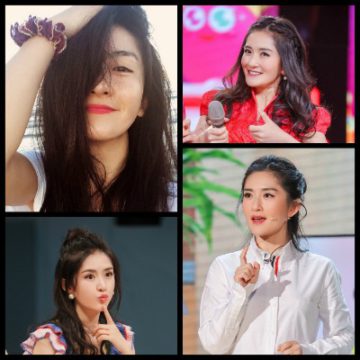
The absolute number one this list is the ‘Queen of Weibo’ Xie Na (1981), also nicknamed ‘Nana’ – an extremely popular Chinese singer, actress and designer. One of the reasons she has become so famous in mainland China is that she is the co-host of Happy Camp (快乐大本管), which is one of China’s most popular variety TV shows. She presents the show together with, amongst others, colleague He Jiong, who is the number two in this list.
Xie Na stars in many popular Chinese films and television series. She has also released several albums, founded a personal clothing line, and published two books.
Before getting married to Chinese singer Zhang Jie, Xie Na was in a 6-year relationship with her Happy Camp colleague Liu Ye.
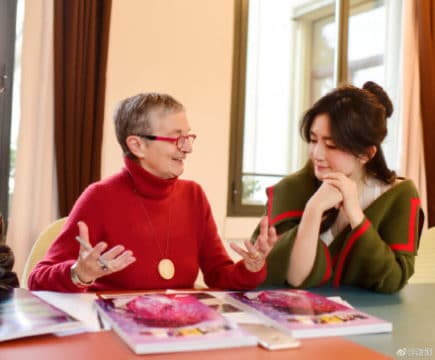
Xiena made headlines in March 2017, becoming #1 trending topic on Weibo, when she announced she would go to Italy as an overseas student to study design.
2.
He Jiong 何炅
83.883.937 followers
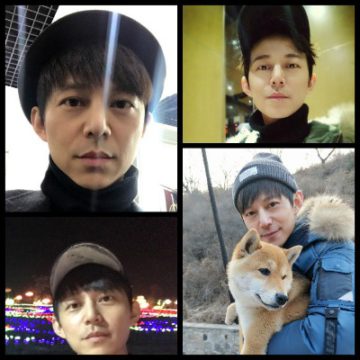
He Jiong (1974) has been the host of China’s popular Happy Camp TV show for over ten years. He is also a singer, actor, and used to be an Arabic teacher at Beijing’s Foreign Studies University. Chinese media have called He Jiong “a key figure in China’s entertainment industry.”
‘Happy Camp’ (快乐大本馆) is a prime time variety show aired by Hunan TV. It is one of China’s most popular TV shows in China. With a viewership of tens of millions, it often holds first place in China’s total viewing ratings.
3.
Chen Kun 陈坤
81.067.976 followers.
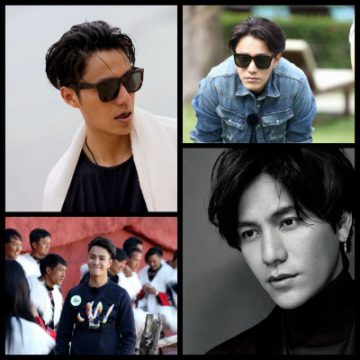
Chinese top actor and singer Chen Kun (1979, Chongqing) is known for his roles in, amongst others, Painted Skin and Balzac and the Little Chinese Seamstress.
Chen Kun, sometimes also known as Aloys Chen, is not only popular because of his acting work, but also for his looks – he is known to have a large gay fanbase. He is not shy about his looks, and likes to post a lot of photos of himself on his Weibo page.
4.
AngelaBaby 杨颖
80.660.742 followers.
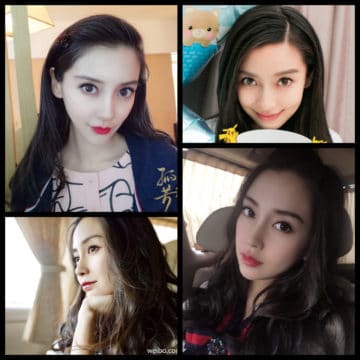
‘Angelababy’ (nickname for Yang Ying, 1989) has practically become a household name in China over the past few years. The actress and model started her acting career in 2007 and has taken on many roles in different movies and TV dramas.
Angelababy especially made headlines when she married Chinese famous actor Huang Xiaoming in 2015 and took extravagant pre-wedding photos in Paris. In the same year, she also set off a firestorm of debate when she underwent a medical examination to prove that she did not have facial plastic surgery to defend herself in a court case against a beauty clinic.
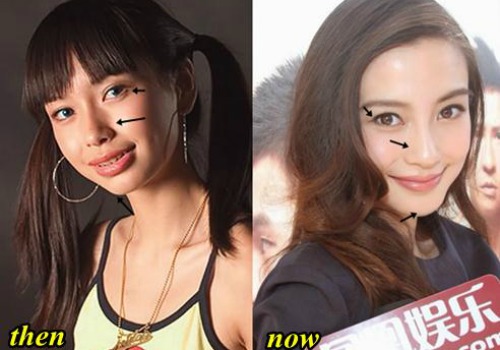
Angelababy is one of China’s “New Four Dan Actresses” according to the 2013 Southern Metropolis Daily, meaning she is generally perceived as one of China’s most bankable actresses.
5.
Yao Chen 姚晨
80.570.259 followers.

In our 2015 list of Weibo’s biggest celebrities, Yao Chen was ranking first with 78 million followers. Although she has gained two million fans since then, she has dropped a few places in this list.
Fujian-born Yao Chen (1979) is a Chinese actress and Weibo celebrity, who was mentioned as the 83rd most powerful woman in the world by Forbes magazine in 2014. Being the first-ever Chinese UNHCR Goodwill Ambassador, she is also called ‘China’s answer to Angelina Jolie’ (Telegraph).
Yao Chen was featured on the 2016 Pirelli Calendar.
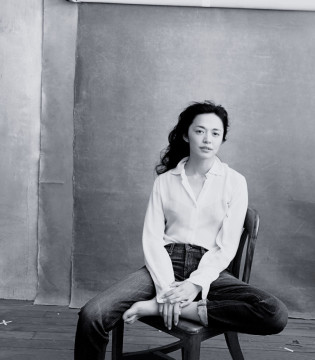
Yao Chen is not necessarily China’s number one actress, but she was one of the first celebrities to share her personal life on Weibo since 2009, and interact with her fans. On Weibo, she talks about her everyday life, family, news-related issues, work, and fashion. She posts personal pictures every day.
The combination of her popularity due to acting work, combined with her frequent Weibo updates and closeness to her fans, have made Yao Chen a huge Weibo celebrity.
6.
Zhao Wei aka Vicky Zhao 赵薇
79.420.172 followers.

Vicky Zhao (1976) is a Chinese film star, singer, entrepreneur and director. She is also known for her work as the face for various brands, which has added to her wealth: she was named the world’s wealthies working actress by Forbes in 2015 .
Together with actresses Zhang Ziyi, Zhou Xun and Xu Jinglei, she belongs to China’s ‘Four Dan Actresses’ (四大花旦, the four greatest actresses of mainland China) from the early 2000s. In the list of the ‘New Four Dan actresses’, there is Angelababy, number 4 in this list, who ironically is now the wife of Zhao’s former partner.

Zhao is now married to Huang Youlong. The couple made it to a list of the world’s wealthiest young billionaires in 2016.
Zhao Wei regularly updates her Weibo, where she posts about her work as an actress, her photoshoots, and her ambassador work for good causes.
7.
Ruby Lin / Lin Xinru 林心如
74.488.043 followers.

Ruby Lin Xinru (1976) is the first Taiwanese name in this list. She is an actress, producer, and singer, who especially became famous because of her role in TV drama My Fair Princess (1998). Since then she has starred in many different TV series.
Ruby was recently married to actor Wallace Huo, who currently stars in popular Chinese TV drama Ruyi’s Royal Love in the Palace (如懿传). They just had their first baby.
8.
Yang Mi 杨幂
70.988.043 followers.

The beautiful actress and singer Yang Mi (1986) gained fame and popularity through her various roles in Chinese hit tv dramas. Born in Beijing, Yang started her acting career at the age of 4.

She is currently starring in Eternal Love (三生三世十里桃花) and previously played in the tv hit The Interpreters (亲爱的翻译官). Yang is now seen as one of China’s biggest actresses. She recently became the brand ambassador for Estee Lauder (雅诗兰黛).
9.
Guo Degang 郭德纲
67.599.282 followers.

Guo Degang is a Chinese comedian (1973) and known for his ‘xiangsheng‘ (相声), a traditional Chinese comedic performance in the form of a dialogue between two performers. He is also known for appearing at China’s CCTV New Year’s Gala.
Throughout the years, Guo has become a trending topic on Sina Weibo multiple times, undoubtedly adding to his popularity on the social media platform.
One of Guo Degang’s Weibo posts caused controversy in 2013, when the comedian posted a poem about karma the day after Beijing TV director Wang Xiaodong passed away.
Guo Degang also caused a Weibo hype when he announced on Weibo in 2015 that he would venture into the wine business.
In 2016, the comedian had a public falling-out with his student Cao Yunjin, who accused him of exploiting his students. The huge public row attracted much attention, with many netizens supporting Guo in the ordeal.
10.
Jimmy Lin 夢想家林志穎
66.969.957 followers.

Jimmy Lin (Lin Zhiying, 1974) is a famous Taiwanese actor and singer and race car driver. He is one of the top rally racers of China, but is also very successful in his showbiz career as actor and singer.
Over the past few years, Lin’s participation in the Chinese hit reality show Where Are We Going, Dad? has contributed to his success on Weibo.
For some time Lin dated Ruby Lin, number 7 on this list. Now he is married to model Kelly Chen with whom he has three children.
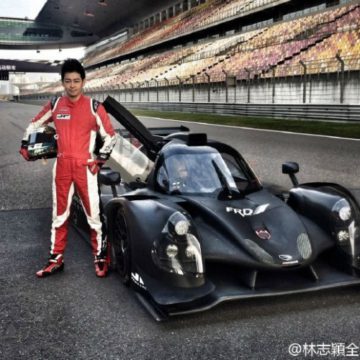
He regularly updates his Weibo profile, talking about his work, his personal life, and posting pictures of him with his race cars.
– By Manya Koetse
Follow @WhatsOnWeibo
©2017 Whatsonweibo. All rights reserved. Do not reproduce our content without permission – you can contact us at info@whatsonweibo.com.


China Brands, Marketing & Consumers
Starbucks Goes Xinjiang & The Kardashians in China
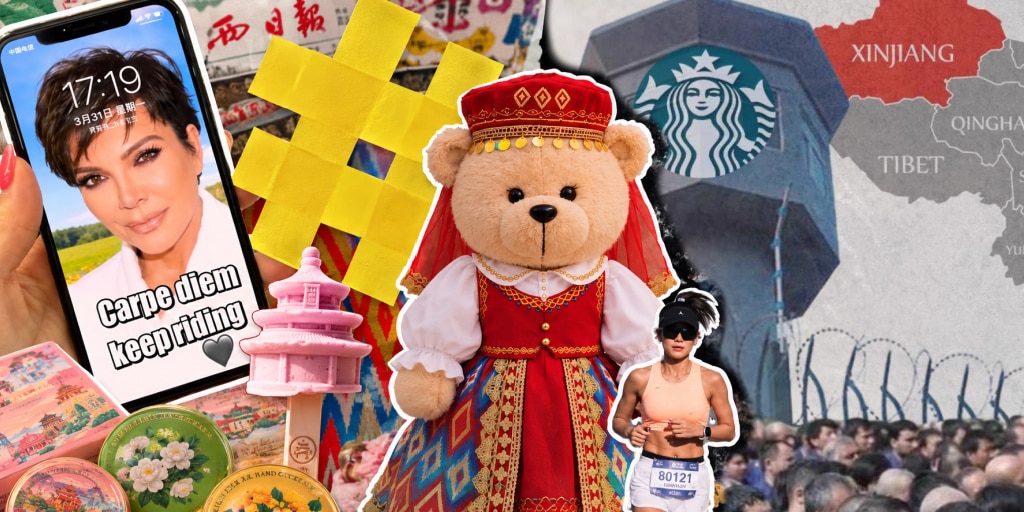
Starbucks rebrands as “Star-Bazaar” in Urumqi—what does it say about shifting perceptions of Western brands in China? Also: a cheating sports influencer and the souvenirs that became most hated.
Originally published in the Eye on Digital China newsletter on Sunday, October 4, 2026.
In this edition:
- Quick scrolls: A Chinese athlete cheated her way to the Berlin Marathon’s finish
- Zooming in: When Localization Gets Political: Starbucks Goes Xinjiang
- On the Feed: The Kardashians in China
- Phrase of the Week: The 3 souvenirs sold everywhere, but nobody wants them
🗞️ QUICK SCROLLS
🇯🇵 The National Day holiday has begun, but nobody’s going to Japan. Although Japan was the number one outbound destination for Chinese travelers during last year’s October holiday, it has now dropped out of the top ten destinations entirely. According to data from Chinese tour operator Tuniu (途牛), Indonesia, Turkey, and South Korea are among this year’s most-booked overseas destinations.
🚲 Chinese fitness influencer “Abeeeer” was caught cheating during the Berlin Marathon after she posted about running her “personal best.” The sport-blogger (530k+ followers on Xiaohongshu) was photographed riding on the back of a bicycle around the 38-kilometer mark. On Saturday, she publicly apologized and admitted that she had broken the rules and that she was “feeling unwell.”
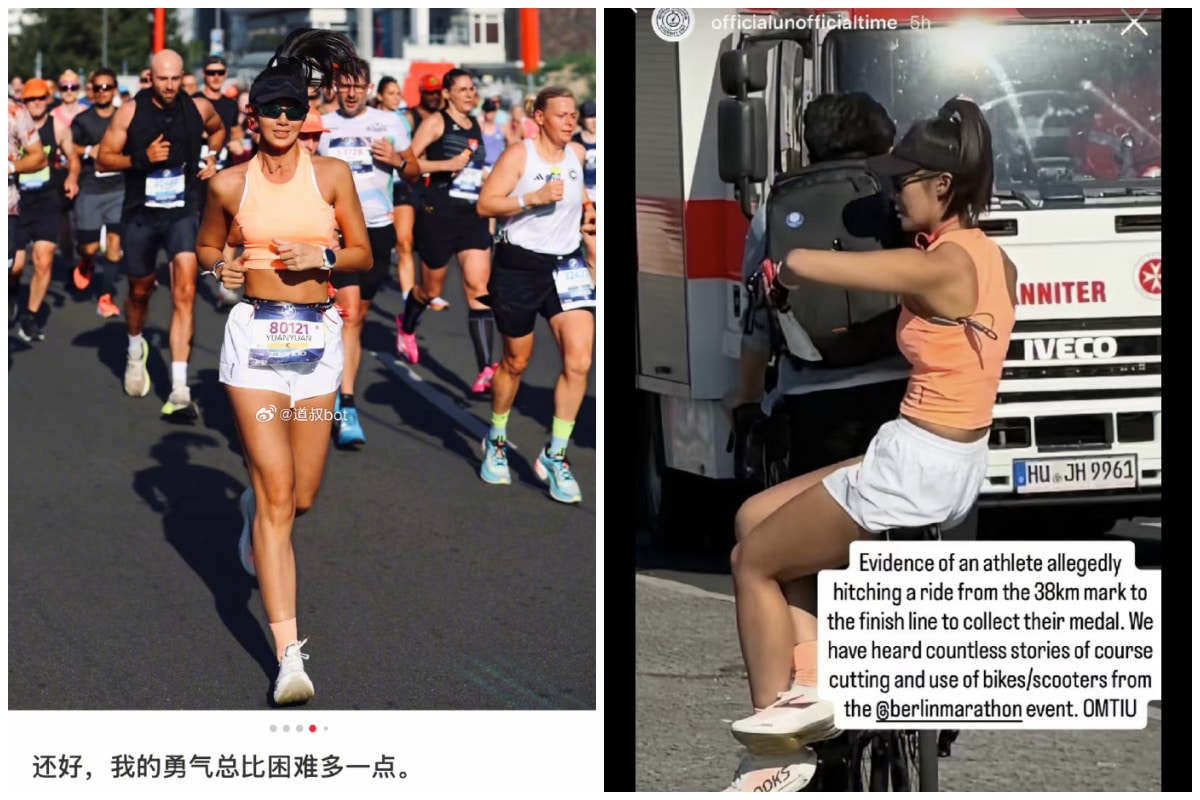
The sports influencer was caught hitching a ride to the finish line.
🏳️🌈 Japanese volleyball player Rui Takahashi came out as gay on Tuesday, saying he wanted to help others struggling with their sexuality by coming out publicly. On Douyin, many Chinese fans and commenters praised Rui for his bravery.
🤖 Former Global Times editor-in-chief Hu Xijin (胡锡进) published a National Day essay praising the country’s achievements but forgot to delete the AI chatbot’s closing follow-up question (”Would you like me to read through the whole text again and check it for omissions?”). Hu quickly deleted the AI prompt, but “Hu Xijin’s National Day AI ghostwriting fail” had already gone trending.
⚽ Chinese football produced its best and worst result of the year nineteen hours apart. On Friday, the senior men’s national team lost 0–5 to Palestine – a first-ever loss to that opponent – in a friendly in Chongqing. On Saturday, the under-23 team China took the men’s football bronze medal at the 2026 Asian Games, beating Uzbekistan 4-3 on penalties.
🎵 One of China’s most influential singers, composers and music educators has passed away. Liu Huan (刘欢) died of illness in Shanghai on September 25. Internationally, he is best remembered for singing “You and Me,” the official theme song of the 2008 Beijing Olympics.
📱 Chinese internet users now spend more time watching mini-dramas than scrolling social media. Bytedance’s Hongguo app, the short-drama platform, reports 168 million daily active users and an average of 125 minutes per user per day, exceeding Douyin (which itself overtook WeChat for the first time in July).
👁️ ZOOMING IN
Starbucks Goes Xinjiang: When Localization Gets Political
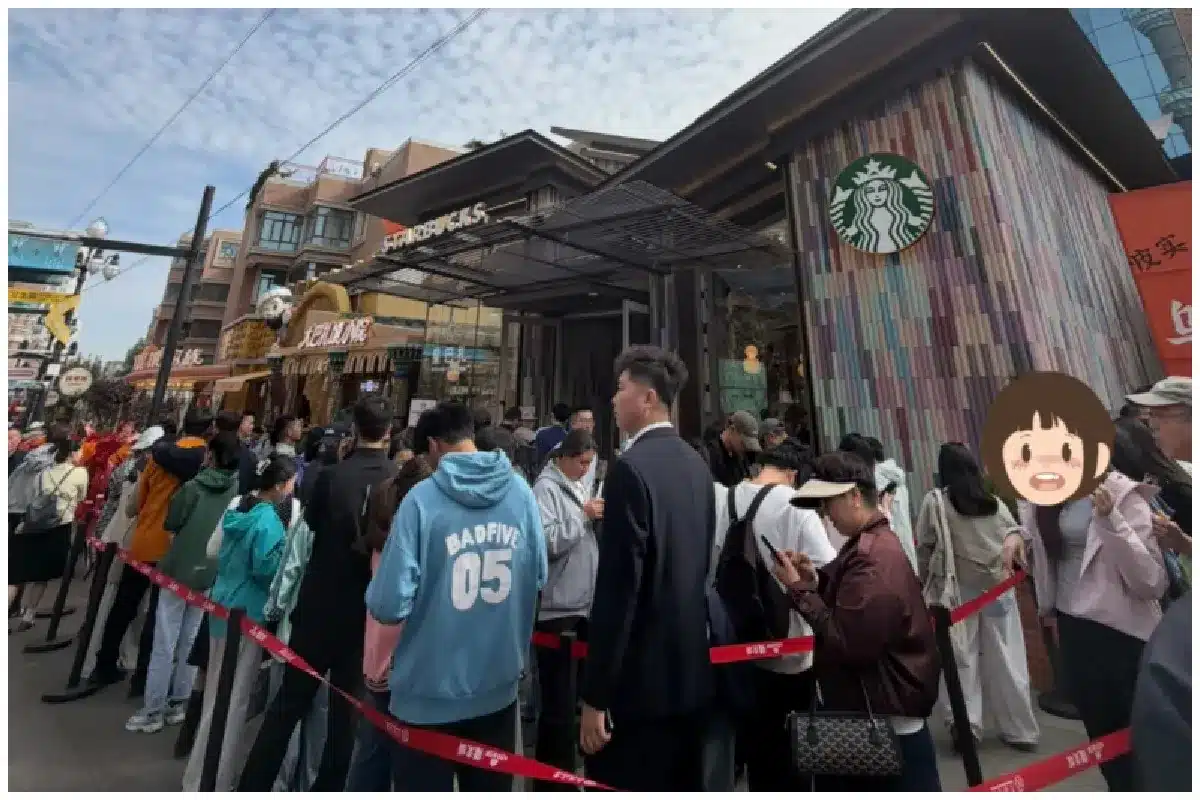
Just ahead of the National Day holiday, Starbucks opened in Xinjiang. The opening of the two stores in the capital, Urumqi, became a big topic of discussion both in China and across English-language social media, but for very different reasons, and viewed through very different lenses.
The brand’s Urumqi debut marks its first expansion into the region since entering the Chinese market over 26 years ago. Back then, Starbucks mostly targeted white-collar workers, focused on first- and second-tier cities, and, for many, symbolized cosmopolitan, urban life.
Starbucks’ move into Xinjiang comes as part of the company’s new Chinese investment and ownership structure: in April of this year, Chinese company Boyu Capital (博裕资本) became 60% owner of Starbucks’ China operations.
Starbucks Becomes ‘Starbazaar’
On Chinese social media, on the opening days of September 28–29 and in the days that followed, conversations were largely consumer-focused. The new stores, long queues, special menu, and merchandise created online excitement surrounding Starbucks’ Xinjiang debut.
The promotion of the new stores — particularly the Xinjiang International Grand Bazaar flagship store (the second store is located at Tianshan International Airport) — has also taken a distinctly local approach. Rather than emphasizing the arrival of a foreign brand in a new frontier market, Starbucks has presented itself as a brand adapting to, and becoming part of, its new local surroundings.
The flagship store incorporates Xinjiang elements throughout its design and marketing, from local patterns and music to a special menu featuring items such as baklava and lamb pastries, along with limited-edition merchandise. Its mascot is a Starbucks bear dressed in stylized Uyghur traditional attire.
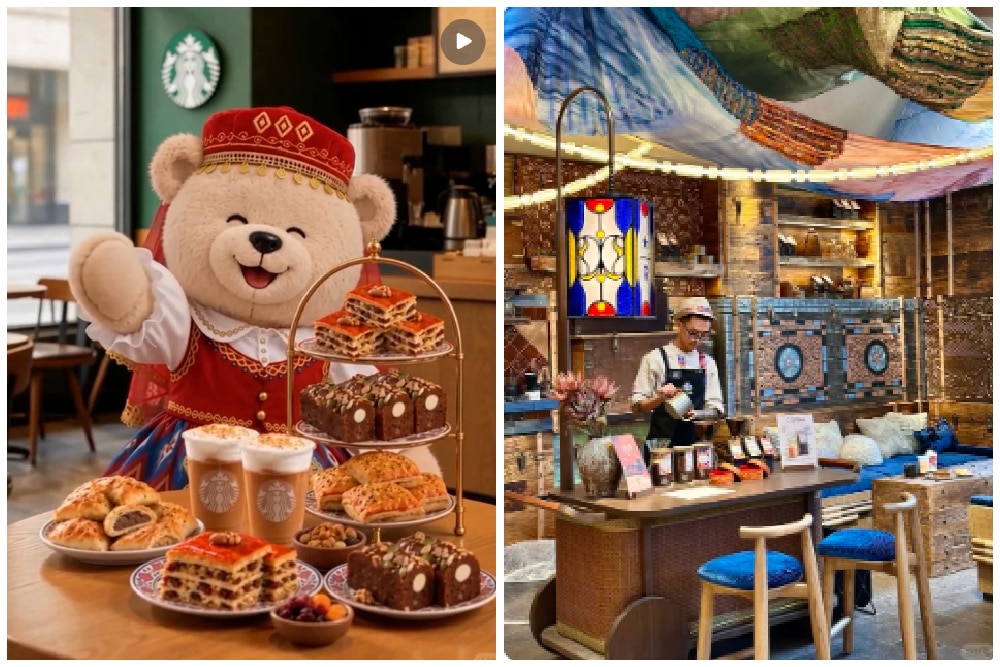
Promotional visuals by Starbucks
The Urumqi Starbucks even has a unique store name: “Star-Bazaar” (星巴扎, Xīng Bāzhā), a play on Starbucks’ Chinese name, 星巴克 (Xīngbākè), and 巴扎 (bāzhā), “bazaar.” The nickname captures this broader marketing approach: not simply bringing Starbucks to Xinjiang, but giving Starbucks a distinctly Xinjiang identity.
This distinct approach resonates with Chinese consumers, who have been posting photos of the enormous lines in front of the stores and showing off their online “check-ins” at the new local hotspot.
Over the past years, Xinjiang has acquired positive associations in various Chinese consumption contexts. At one point, “made with Xinjiang cotton” even generated a buycott and became a popular slogan among online sellers sourcing cotton from the region.
Starbucks in China apparently has a lot of confidence in the positive appeal of Xinjiang-themed products: for the National Day holiday, it is rolling out Xinjiang-themed menu items to more than 2,700 Starbucks stores across 41 Chinese cities.
From Coffee to Controversy
On X and in Western media, however, reactions to the Xinjiang Starbucks have been far less positive. The opening was framed primarily as a political and human-rights story and faced much criticism.
Among these critical voices is US Congressman John Moolenaar, who chairs the House Select Committee on China. He called it a “morally bankrupt decision” to open stores in Xinjiang amid ongoing concerns about human rights abuses in the region, and called on Starbucks to close the cafes, arguing that “every cup sold in these stores ties an iconic American brand to the CCP’s brutal campaign against the Uyghurs.”
“There is no justifiable reason for an American company to do business in a region where the Chinese Communist Party has detained more than a million Uyghurs and is stripping them of their faith, language and culture,” he said.
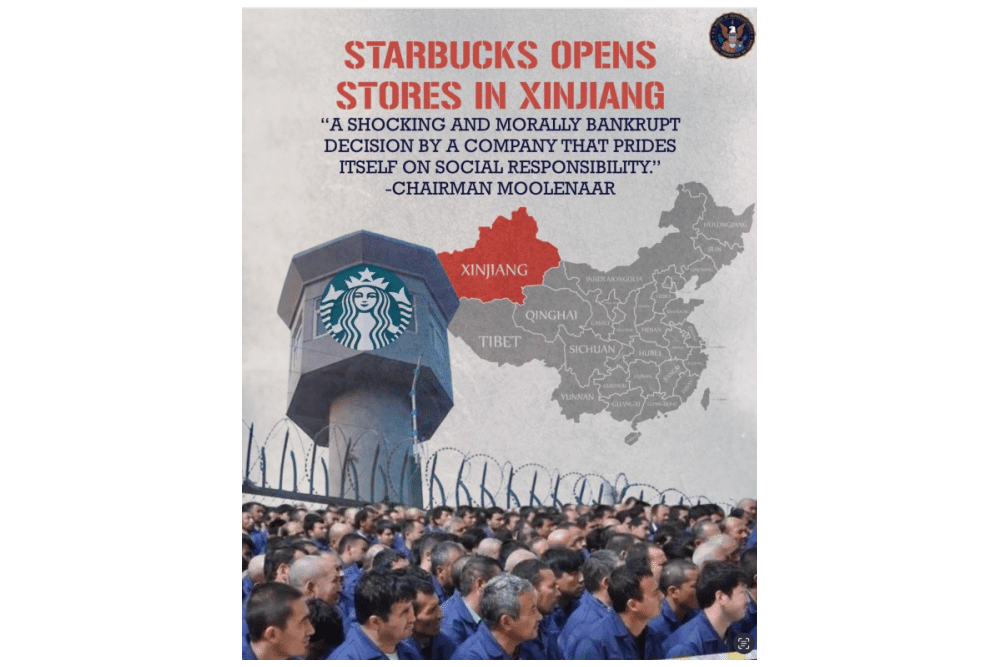
Image spread by US lawmakers
American criticism of Starbucks in Xinjiang soon reached Chinese social media, becoming a number-one trending topic on Weibo on Sunday, October 4.
“Xinjiang” used to be a highly sensitive and heavily censored word on Chinese social media, but since around 2018–2021, when the region increasingly became part of the ordinary national development agenda, online discussions have been allowed and steered in different directions.
The controversial internment camps widely reported on in Western media were officially described as “vocational skills education and training centers” (职业技能教育培训中心): “people-oriented” facilities intended to “fundamentally eliminate the environment and soil that breeds terrorism and religious extremism.”
Following the 2021 sanctions on Chinese officials over alleged human rights abuses and the Xinjiang cotton controversy — when Western brands distanced themselves from Xinjiang cotton over forced-labor concerns — Chinese online narratives surrounding the region shifted further.
A major “support Xinjiang cotton” social media campaign, launched by state media and official channels, symbolized a defense of China’s sovereignty against Western interference. International criticism was cast as an attack on China’s dignity, rallying the public around national pride. Since then, foreign criticism of policies in Xinjiang has often not been censored, but instead published and reframed as another attack on China.
This time, too, these dynamics unfolded, although in a different form. The criticism was discussed in the context of America, once again, “digging up its tired old lies about Xinjiang” (#美方又翻出老掉牙的涉疆谎言#). China’s Ministry of Foreign Affairs spokesperson Guo Jiakun said that US institutions habitually fabricate accusations and attack and smear China for political purposes, “without any credibility whatsoever.”
Netizens blamed critics for being hypocritical and for “denying the people of Xinjiang the chance to drink Starbucks.” Many others also pointed out that ‘Starbucks China’ is no longer quite the same thing as ‘Starbucks.’
Meanwhile, netizens also seem to appreciate the fact that Starbucks had not responded to the controversy — at least, not at the time of writing. Instead, its response has simply been to keep posting promotional material and videos about the Xinjiang stores, an approach some described as “defiant.”
The Starbucks opening in Xinjiang brings two very different sides of the same discussion into view. On one side, there is a consumer perspective; on the other, a human-rights angle. One emphasizes local culture, while the other focuses on international politics. And while one side stresses the responsibility of a Western multinational operating in Xinjiang, the other appreciates precisely how much this foreign company is localizing itself.
It also shows how Western rejection of Xinjiang-linked business can actually increase the symbolic value of Xinjiang-linked consumption in China. People may appreciate the local flavors, ethnic elements, colors, and design, but there is another layer to it, too: consuming Xinjiang can become an expression of national solidarity, especially when foreign criticism turns an otherwise ordinary consumer choice into something political.
In the end, perhaps the most striking thing is the shift in how Starbucks itself is perceived. When Starbucks first entered China, part of its appeal was precisely how foreign it was, offering access to an imagined Western, cosmopolitan way of life. More than two decades later, in Urumqi, Starbucks is being appreciated for almost the opposite reason: for how local it is becoming, selling an imagined Xinjiang experience back to Chinese consumers.
📱ON THE FEEDS
The Kardashians in China: “Manifesting” and Magic Mushrooms
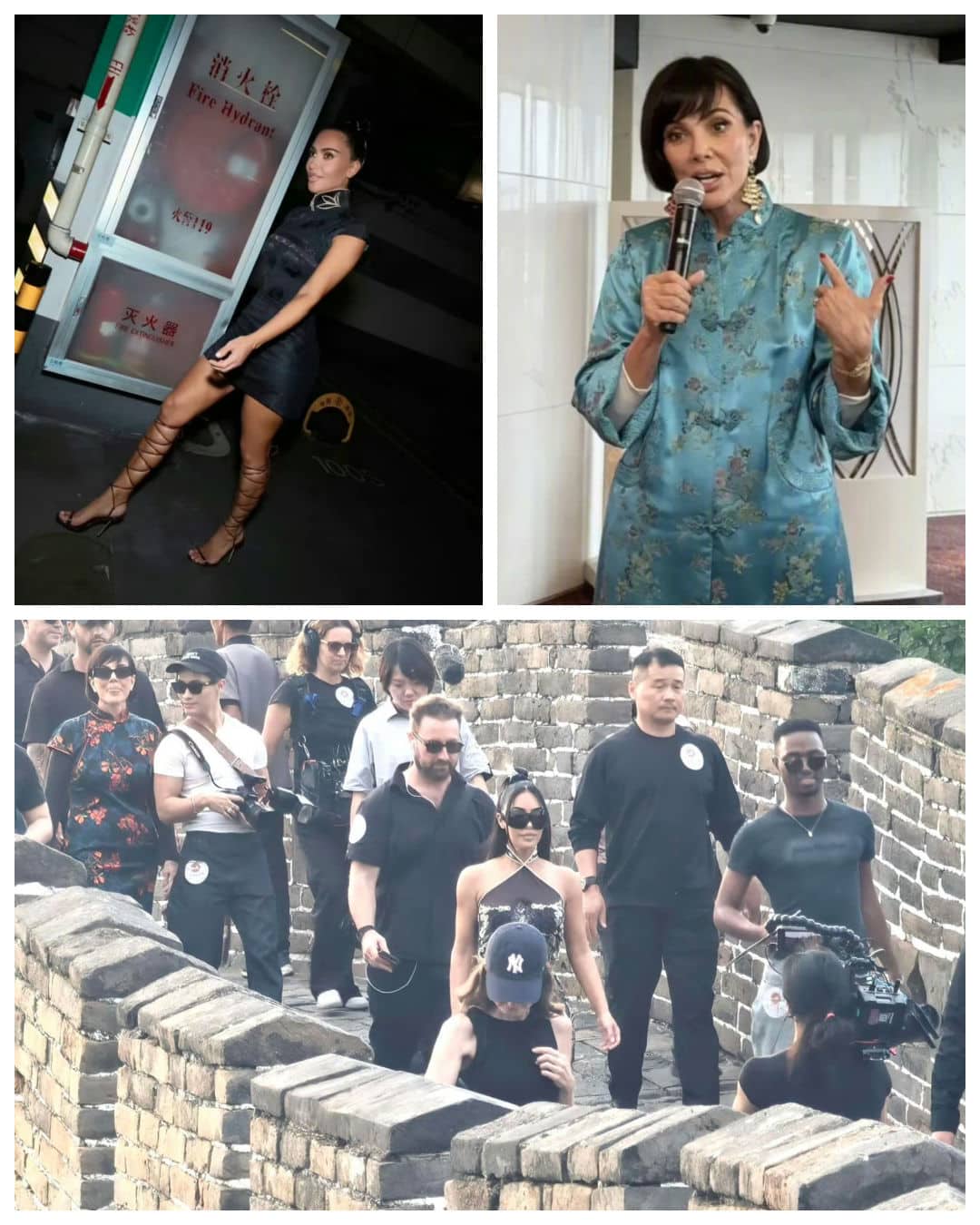
The Kardashians have been on my feeds this week due to their recent China visit.
First: the Kardashians in the US are not what they are in China. Many people in China have never heard about them, but they did reach many people in corners of the internet due to fan-subtitled uploads of Keeping Up With the Kardashians or through clips cirulating online. What also matters: Kim Kardashian was one of the first major Western celebrities to open an official Xiaohongshu account back in 2018, and also one of the first to sell products directly from there.
What attracted attention in their China visit is that, after doing sightseeing and visiting the Great Wall, Kim Kardashian – who came to China for the NikeSKIMS sportswear event in Shanghai – went for dinner with her entire entourage at the well-known Yunnan restaurant In & Out (Yī zuò Yī wàng 一坐一忘).
That is the same restaurant where US secretary Yellen had her “magic mushrooms” back in 2023. The Kardashians had those same mushrooms with their orders.
They are called jiànshǒuqīng (见手青), which literally means “see hand blue”, in reference to turning blue when handled. It is the lanmaoa asiatica mushroom species that grows in China’s Yunnan region and is considered hallucinogenic (nothing happens when properly prepared though).
The restaurant quickly tapped into the buzz by launching a “let’s manifest” or “Let’s 显化” set menu containing the dishes they had.
The Kardashians, but mostly mum Kris Jenner, is famous among netizens as a lucky charm for wealth. Jenner believes in the power of manifestation: focusing on what you want through visuals and prayer in order to actually get what you want.
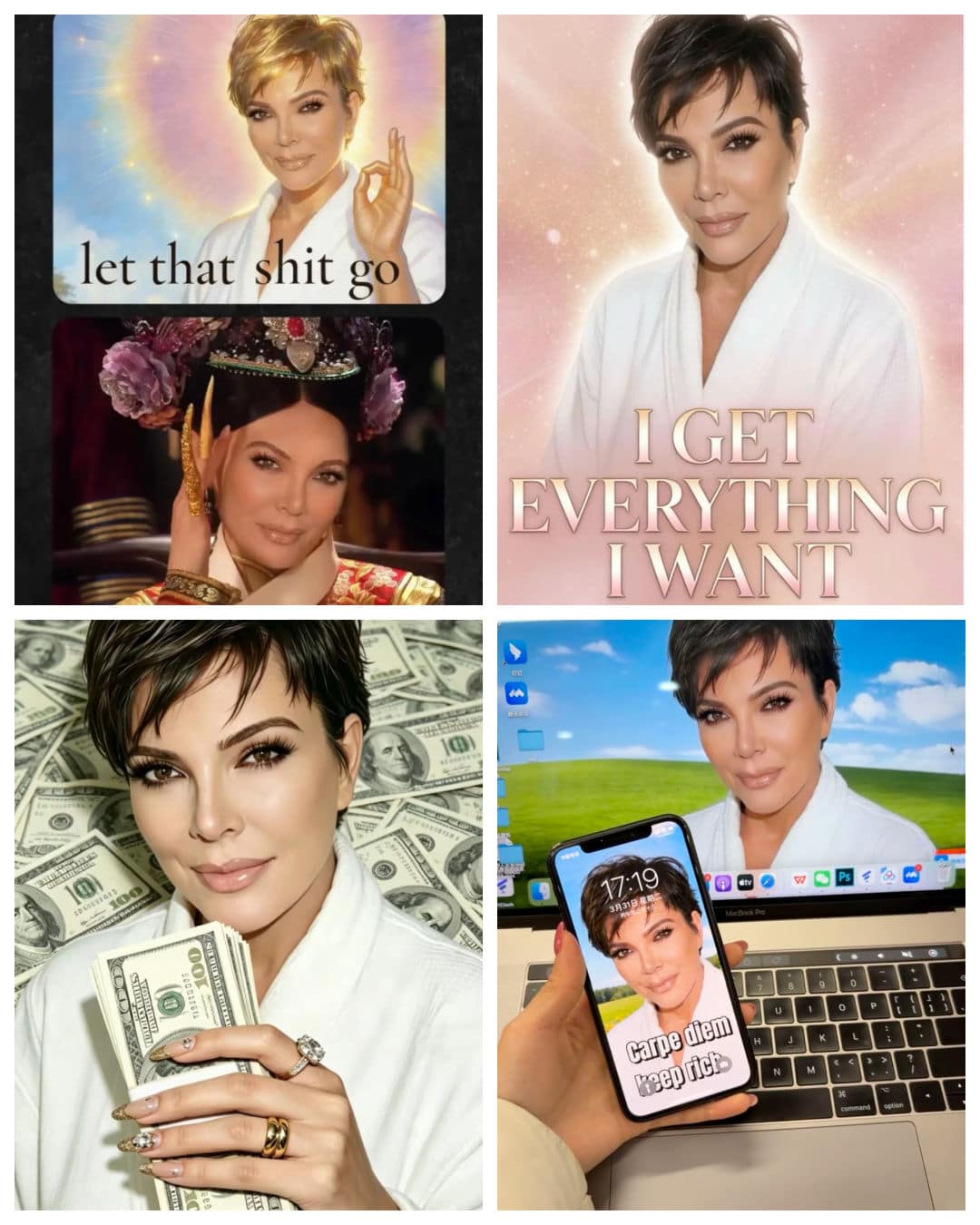
Some of the images used by Chinese netizens to “manifest” good luck through Kris Jenner visuals
The fact that mum Kris Jenner, more than Kim herself, became popular in China has to do with the perception of her as the driving force behind the family’s success, pushing everyone to where they are today and coordinating their careers. In doing so, she is the one who’s seen as the “symbol of wealth” and — through her own belief in the power of manifestation — became the perfect image for Chinese netizens to make their own wishes visible, like a digital good luck charm.
Kris wore a blue Tang suit (唐装, tángzhuāng) to the Shanghai launch event, which Chinese commentators read as a friendly gesture toward the Chinese market.
For In & Out, the “manifesting” formula seems to work. Their “Let’s Manifest” menu is popular and resonates online, where people mostly find it funny to see the restaurant capitalizing on its VIP guests so quickly.
🀄 WORD OF THE WEEK
Sucker’s Souvenirs Starter Pack: The Three Things Everyone Sells and Nobody Wants
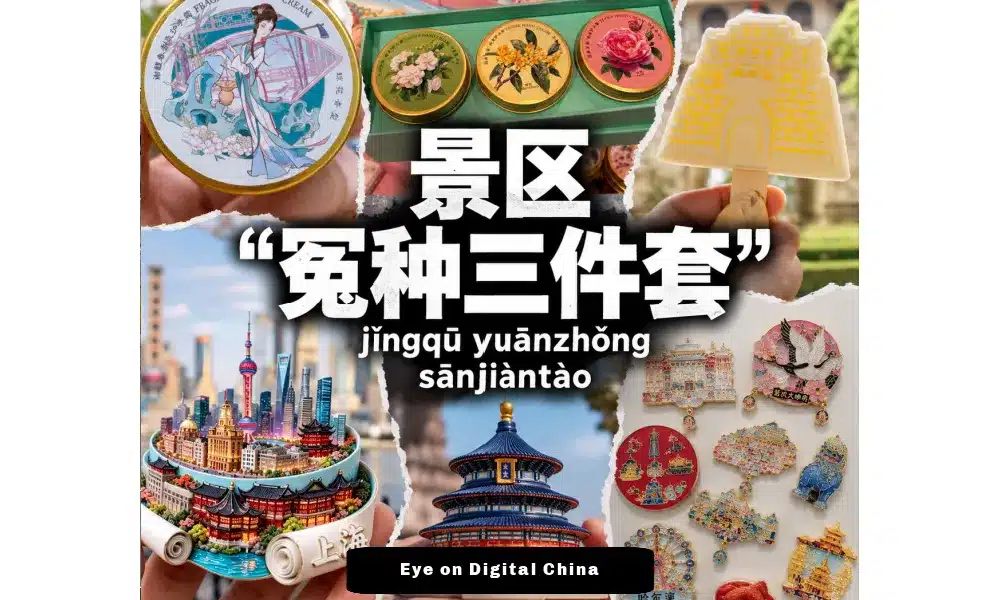
景区”冤种三件套” jǐngqū yuānzhǒng sānjiàntào
Lit.: Scenic Area Sucker’s Three-Piece Set
Meaning: The “Tourist-Trap Trio”: generic souvenirs you see everywhere
During this National Day holiday, when so many Chinese are traveling all over the country, one phenomenon being discussed (also on Zhihu) is the scenic site’s 冤种三件套 (yuānzhǒng sānjiàntào), roughly “the sucker’s three-piece set,” or more loosely, the “tourist-trap trio.”
This refers to those three things that every Chinese tourist site sells nowadays, yet nobody really wants: scenic-spot hand creams, fridge magnets, and cultural-themed ice cream.
The formula is the same everywhere, repeated in the same kinds of shops, and is part of China’s wénchuàng (文创 – culturally creative) boom that started in the 2010s, where local cultural elements and symbols are turned into commercially attractive products that aren’t even produced locally. Even though the landmarks and texts may change, they all follow the same cookie-cutter model reproduced across the country.
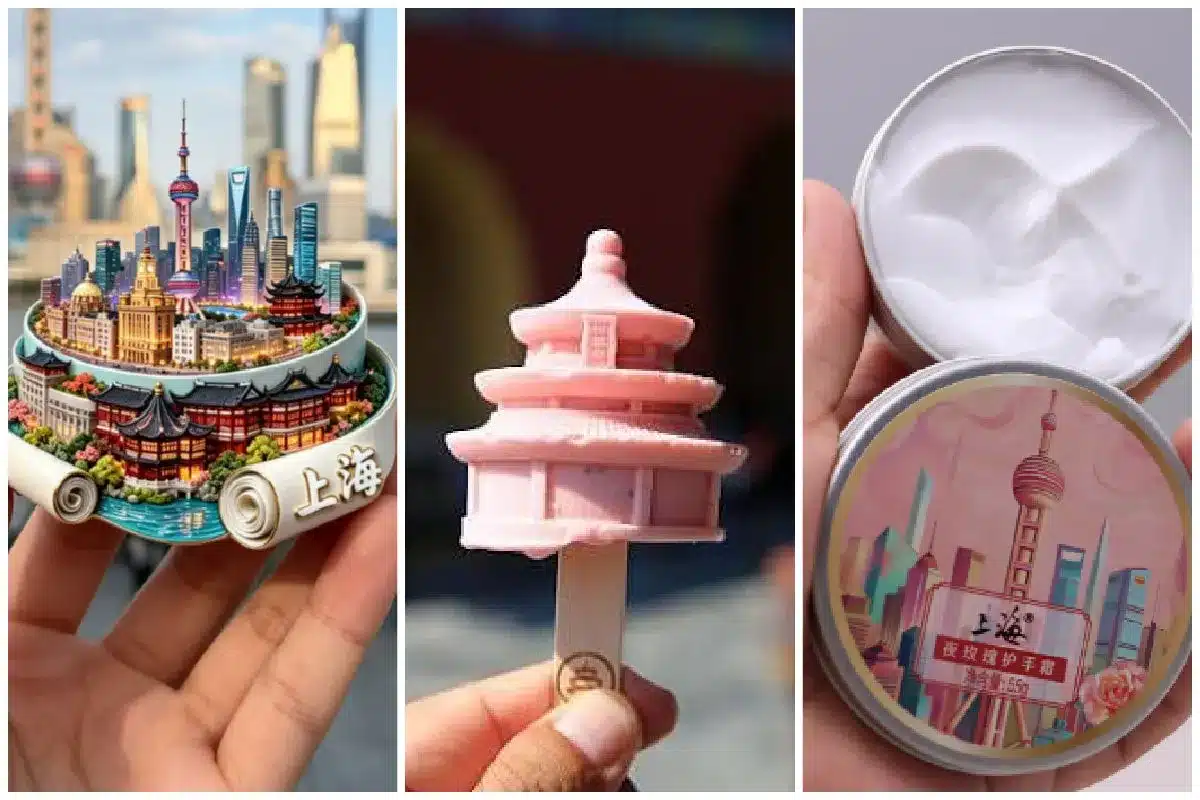
Examples of the same souvenirs sold at every scenic site.
But these kinds of common tourist-attraction purchases are becoming less popular among younger Chinese. One reason is that they are more critical of overconsumption and unwilling to buy overpriced stuff they don’t need anyway. They are willing to spend money on more genuine, locally made items, like pottery or DIY products.
Another reason is that these products have also become the ultimate sign of the lamentable homogenization of Chinese tourist sites (景区同质化), where you’ll find the same shops, foods, signs, and souvenirs whether you’re up north or down south.
Another reason is that online shopping has become so mainstream that most shoppers now recognize they can buy the same products for much less on sites like Taobao.
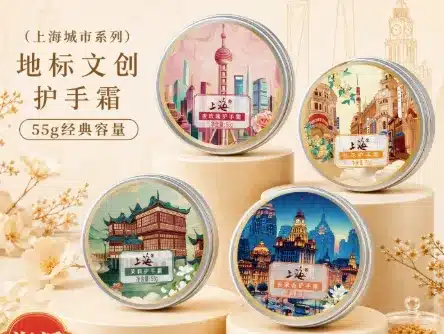
Tourist hand cream sold on Taobao.
💬 On Xiaohongshu, one commenter wrote: “A fridge magnet that costs 9.9 yuan with free shipping online suddenly sells for 28 yuan once you’re inside a tourist attraction. And the ice cream is the funniest one: five seconds to take a photo, ten seconds to melt, and whether it actually tastes good is anyone’s guess.”
💬 Another commenter on Zhihu wrote: “Really good cultural-creative products should try to put the place into the product, rather than simply putting the name of the place onto the product. Because what people really want to take home when they travel is some small connection that existed between themselves and that place. When your product can achieve that, then it truly becomes a souvenir.”
That’s a wrap!
Best,
Manya
🔚
Eye on Digital China, by Manya Koetse, is co-published on Substack and What’s on Weibo. Both feature the same new content — so you can read and subscribe wherever you prefer. Substack offers community features, while What’s on Weibo provides full archive access.
Spotted a mistake or want to add something? Please let us know in comments below or email us. First-time commenters, please be patient – we will have to manually approve your comment before it appears.
©2026 Eye on Digital China/Whatsonweibo. All rights reserved. Do not reproduce our content without permission – you can contact us at info@whatsonweibo.com.
Chapter Dive
The Power of Ugly: Why Niu Lai Became China’s Unlikeliest Box-Office Hit
How the two-person animated film Niu Lai turned its “ugly” visuals, dreamcore nostalgia, and remarkable cinema journey into a nationwide participatory meme.

Something extraordinary has happened in Chinese cinemas this month. A tiny animated film about a yellow cow on a dreamlike adventure opened in a few hundred Chinese theaters on August 5, 2026, with zero promotion and no trailer. On its first day, the movie’s box office revenue totaled just 342 yuan (US$50).
Nobody could have expected that this microbudget indie movie, initially playing to empty seats, would become a nationwide viral hit—not because people thought it was good, but because they found it so aesthetically ugly.
The 86-minute 3D animation is titled Niu Lai (牛来, literally “Here Comes the Cow/The Cow Comes”). It was produced by just two people from Dalian: 34-year-old Xin Yumeng (信雨萌) and his mother, Sun Lifang (孙丽芳). The pair spent five years making it.
The plot follows a young calf named Niu Lai, who is too afraid to stand. In his dreams, he befriends a skylark and a young leopard on a sometimes-scary adventure, during which he grows up, loses his mother in a wolf attack, and eventually wakes up with new life lessons.
Despite being complete newcomers to the film industry, Xin and his mother handled everything themselves, from directing and writing to animation, voice acting, and music—theirs were the only two names in the end credits.
They registered the script in 2021 and, after passing the content review, received a public-screening permit in 2024. The narrative contained no apparent sensitivities, and all the paperwork was in order. A film distributor they knew reportedly helped them secure screenings at a few hundred cinemas (even though, after seeing the film’s quality, he had advised them against a theatrical release).
Around August 13-14, the movie went viral when a few netizens who saw it shared their disbelief at the primitive visuals, which contrasted sharply with the original film poster featuring a Chinese-style ink-wash aesthetic.
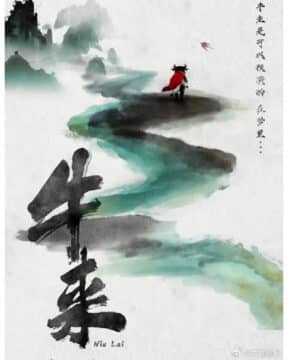
The poster for Niu Lai contrasted sharply with the film’s aesthetics.
One commenter wrote:
💬 “Niu Lai is bad. Everyone knows it’s bad. It really is an enormous flop, top-tier in how shitty it is. It could be classified as a public-toilet-level terrible film.”
The low-resolution 3D animation, awkward characters, questionable dialogue, and slow voice acting immediately triggered curiosity and set the meme machine in motion. Soon, the first Chinese media outlets also began reporting on the “flop.”
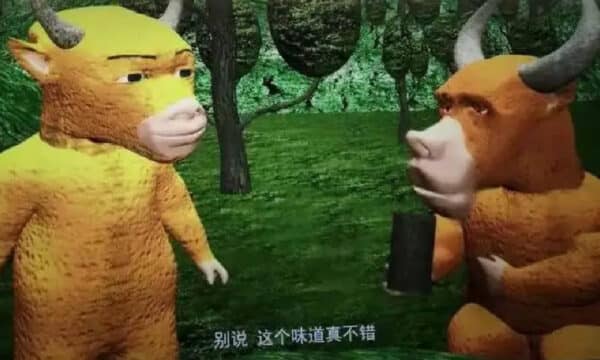
Scene from Niu Lai
On social media, netizens shared compilations of their favorite scenes. In one, Niu Lai awkwardly cries out for his mother—“Maaaa… maaaa!” (妈~妈~)—after spotting a snake, reacts with an extraordinary delay, and then floats through the air like a large yellow blob. Commenters said the scene had them “laughing hysterically.”
Netizens began drawing their own versions of Niu Lai, sharing humorous clips, remixing the content, publishing AI-generated posters, imagining merchandise, and producing alternative trailers. Companies and brands soon joined in with intentionally “ugly” ad campaigns inspired by the film. (Unexpectedly, even foreign companies did, like the Dutch National Railways launching a TikTok campaign inspired by Niu Lai.)
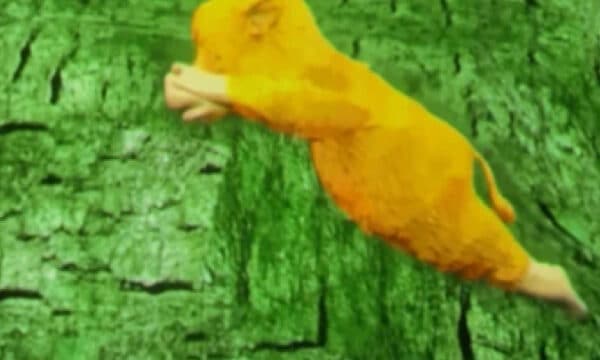
One popular entertainment account on Weibo wrote that the movie was “kept alive entirely by people who refuse to believe it could really be that bad.” Among them was Chinese political commentator Hu Xijin (胡锡进), who went to see Niu Lai after hearing it was already considered a “cult classic” (邪典经典).
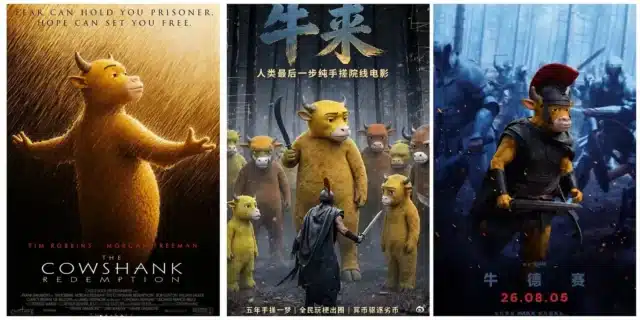
Parody film posters made by netizens to joke about how Niu Lai has already become a “cult classic” competing with major blockbusters.
Hu later said that “it looks as though a kindergarten teacher made it together with a class of older preschoolers.” Despite devoting no fewer than four posts to the film’s surprise success, Hu concluded:
💬 “Niu Lai is meaningless, and there is no real meaning to its sudden explosion in popularity either. It merely shows that extremely unlikely coincidences can happen in any situation; that people sometimes develop contrarian tastes and marginal, curiosity-driven interests; and that the internet can magnify such coincidences.”1
I disagree with Hu here. Niu Lai may be meaningless, but its success is not. For a movie that virtually everyone agrees is poorly made—or, more bluntly, hideous and bad—to become even a moderate hit in China’s fiercely competitive film market cannot simply be dismissed as a coincidence magnified by the internet.2
Instead of merely looking at how it went viral, I want to focus here on why it resonated with so many, providing insights into China’s digital culture, attitudes toward aesthetics, authenticity, and AI, and the changing relationship between films and their audiences.
● (1) The Power of Ugly
The rise of quirky designer toys such as Labubu or Wakuku, along with this year’s popularity of a wrongly stitched plush horse, has led to more media coverage of “ugly-cute” (丑萌, chǒuméng) as a particular Chinese Gen Z aesthetic. It can be understood as a playful rejection of conformity and a celebration of personal expression, authenticity, and self-acceptance.
But Niu Lai goes beyond “ugly cute.” It’s deemed “ugly,” but not “cute.” It is not chic, charismatic, or technically polished either.
The spectacle surrounding Niu Lai sits at the intersection of two currents that have become especially prominent in Chinese youth-oriented online subcultures: the “appreciation of ugliness” (审丑, shěnchǒu) and “abstract culture” (抽象文化 chōuxiàng wénhuà).
🔹 “Appreciation of ugliness” is an online aesthetic & attention phenomenon in which roughness, tackiness, and awkwardness are pursued, circulated, and enjoyed because they break with polished mainstream content and provide entertainment and offer a form of psychological release.3
🔹 “Abstract culture” is the meme-making process that develops around content considered strange, awkward, yet still humorous or relatable. Through sharing, remixing, and repeated references, people deconstruct the original and give it new meanings. Precisely because such content is so strange and open to interpretation, it can take on a mood of its own and come to reflect how people feel.4
►Together, these dynamics create opportunities for community-building and shared humor, turning private feelings of pressure and fatigue into something collectively recognizable.
Although this may not be unique to Chinese youth subcultures, China’s political and social context today—including internet censorship, propaganda, and strong patriotic education—has given them characteristics that cannot be directly compared with those in, for example, American or European contexts.5
Self-mockery and self-satire are central to many Chinese online subcultures, where grotesque or amateurish visuals and modes of expression have long been popular. Whatever is deemed ugly or awkward—and clearly deviates from the norm—falls outside established social categories. That is precisely where the power of ugly lies.
On the one hand, it feels relatable to younger generations who often feel they are falling behind in a highly competitive society. “I’m ugly” or “I’m a loser” becomes a shared mode of joking among people pressured to climb a social ladder whose lowest rungs they can barely reach.
At the same time, ugly and abstract aesthetics turn nonconformity into a way of expressing what might otherwise be difficult to say. Once such expression becomes part of an online movement, these feelings become collectively shareable– like a tacit understanding among people6– and are no longer about personal expression but about community connection.
🔁 The deliberately ugly visuals of China’s so-called “rage comics” (Bàozǒu Mànhuà 暴走漫画) for example, have provided urban Chinese youth with a particularly effective way to vent their frustrations about the inequalities and pressures they face in daily life—from rising unemployment and the high cost of living to the difficulty of gaining admission to Chinese universities through the gaokao (national college entrance examination) system.7
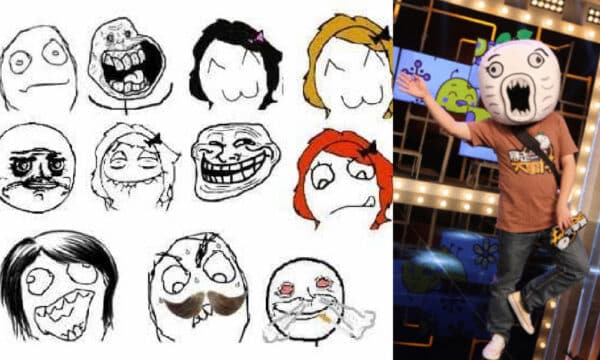
Examples of the “rage comics” on the left and on the right Wang Nima (王尼玛), the fictional mascot of Baozou Manhua (暴走漫画). Image source.
🔁 My Skateboard Shoes (我的滑板鞋) —an incredibly quirky song sung by the equally quirky Pangmailang —became a generational anthem in 2014 partly because of its unvarnished, self-deprecating quality.
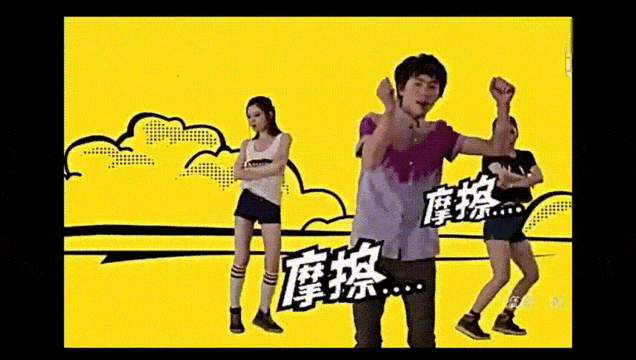
From the My Skateboard Shoes (我的滑板鞋) clip
🔁 Another example came in 2024, when a small residential park in Chengdu became a buzzing hotspot after a local rapper filmed a music video there. Because his line “I am going to diss you,” delivered in a Sichuan accent, sounded like “I want Disney,” netizens collectively “Disneyfied” the park and turned up in crude Mickey Mouse costumes. The phenomenon seemed inexplicable to many, but its absurdity bridged the gap between online and offline worlds, transforming a digital joke into a tangible community.
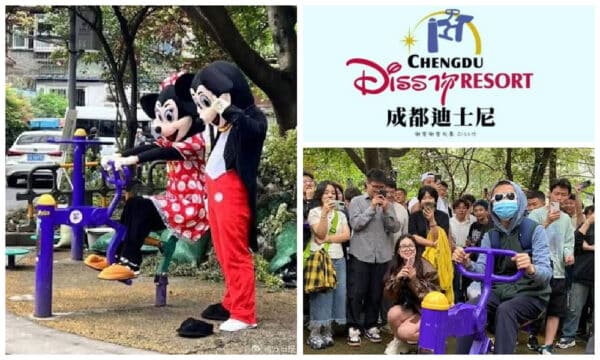
The “Chengdu Disney” hype of 2024
Amid the flood of discussions now surrounding Niu Lai on Chinese social media, many commenters—Hu Xijin among them—have expressed irritation at seeing the film embraced and elevated into something profound or meaningful, comparing it to “carving flowers into a pile of shit” (屎上雕花, shǐ shàng diāo huā).
One commenter who called Niu Lai “an enormously terrible film,” wrote:
💬 “People today are so desperate to present themselves as different and so afraid of conformity that they will forcibly deconstruct even a pile of shit. To me, that phenomenon is the real absurdism.”
But there is also a form of social resistance in embracing things that the majority dismisses as worthless, ugly, or incoherent. Research by Zhu and colleagues (2025) describes the temporary refuge created through abstract culture as an “emotional utopia.”8
►There is so much societal expectation placed on young people today to extract value and meaning from everything they do. Meaningless and abstract expressions give them room to choose nonconformity and resist the oppression these societal expectations bring.
The power of ugly is, I believe, the main force driving Niu Lai’s success. But several overlapping factors have helped turn that initial fascination into a nationwide phenomenon.
● (2) A Participatory Cinema Experience
The Niu Lai meme was not only about the online world.By buying a ticket, entering the theater, and joining the collective viewing experience, netizens physically stepped inside the joke.
Beijing Daily reported that some traveled across the city to catch an early morning showing just to “witness it in person.”
They then shared those experiences online through new posts, photos, and videos. Seeing Niu Lai in cinemas was therefore not the endpoint of the meme, but another stage in its circulation and development.
Nothing about Niu Lai seemed “normal,” and the cinema experience changed accordingly. Because many theaters had no official marketing materials, cinema staff helped moviegoers make their own posters. Hundreds of these homemade creations were then shared online, while the process of making and posing with them also became part of the experience.
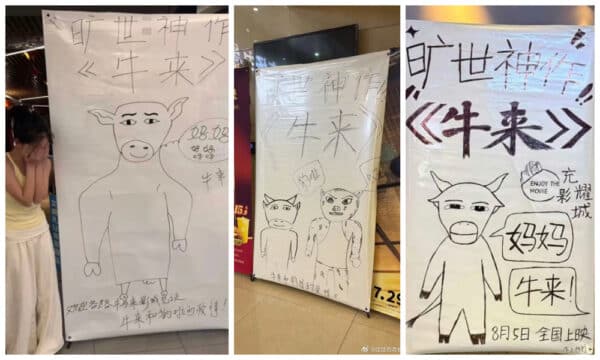
Just a few examples of the posters made by moviegoers in China
Inside the theater, this was not about silently watching a film. Audiences arrived giggling and excited; some wore cow costumes, and many recorded the screen. They laughed at each anticipated new “failure”—an awkward line of dialogue, for example, or the introduction of another “ugly” character—and applauded at the end.
Some videos showed audiences remaining in their seats for the credits, laughing and applauding again when they realized that virtually every role had been performed by the same two people, Xin Yumeng and Sun Lifang. Even the recorded sound of cinema audiences laughing became part of the online phenomenon.
“An absurd film gets absurd viewers,” one Douyin user commented.
Viewers were not passive recipients of an existing joke. Much like in the “Chengdu Disney” hype of 2024, watching Niu Lai became a form of meme production in its own right.9
On another level, it also says something about how young moviegoers perhaps increasingly want to experience cinema: not necessarily as a place for silent, passive viewing, but as a far more social space where they can connect, participate, laugh, and collectively respond to film as part of a wider community within the context of what’s happening online.
● (3) Chinese Dreamcore Nostalgia
Another factor in Niu Lai’s success isn’t just its “ugly” aesthetics, but its resemblance to nostalgia core, or “Chinese-style dreamcore” (中式梦核, Zhōngshì mènghé).
Dreamcore is an internet aesthetic that blends nostalgia, surrealism, and subconscious imagery. By mixing retro images with fantasy, it evokes a sense of familiarity yet often feels unsettling.
The Chinese-style dreamcore (中式梦核), which has become increasingly popular on platforms like Bilibili and Douyin over the past two years, differs from its Western counterpart in how it incorporates distinctly Chinese elements and specifically evokes the childhood experiences of the millennial generation and older Gen Z.
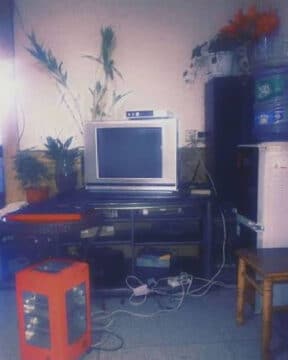
Typical Chinese-style dreamcore aesthetic.
The computer-animated 3D cartoon look, with bright gradients, low-resolution textures, slow-responding animation, and clumsy voice-overs, belongs to an early-digital media environment that many Chinese millennials and older Gen Z remember with great nostalgia, recalling days spent in the internet café during summer holidays, the curtains moving gently in the breeze from the open window.
Visuals like these, now often created with AI, are widely shared on Chinese social media as evidence of a vanished childhood world.
►This particular focus on millennial childhood can partly be explained by the fact that the generation’s formative years coincided with a decade of extraordinarily rapid social change in China, leaving little in today’s modern cities that still evokes that period. Dreamcore offers a soothing sense of familiarity at a time when change remains fast-paced, and people are looking for creative ways to cope with daily pressures.
Niu Lai captures some of that dreamcore nostalgia.
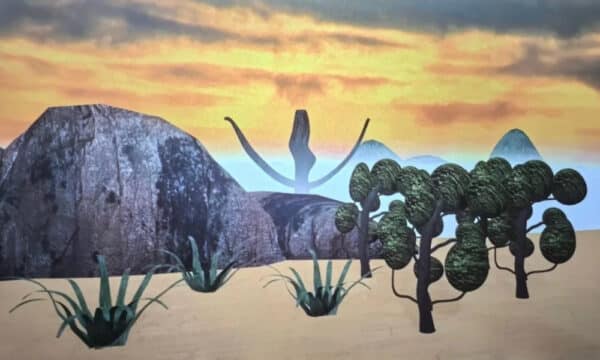
Visuals from Niu Lai. One commenter on Xiaohongshu posted this scene from Niu Lai and wrote: “I think some of the scenes in Niu Lai have a genuinely artistic quality.”
“This dialogue is just too dreamcore,” one Weibo commenter said: “It just hit me – it’s actually a good film.”
Another person said:
💬 “Some people see something crudely made, while others see a kind of Chinese dreamcore… It might even become the animation world’s equivalent of My Skateboard Shoes…”
● (4) Anti-AI Sentiment and Handmade Authenticity
While some viewers appreciate Niu Lai for its dreamcore qualities, others see it as an authentic human production in an era flooded with AI-generated visuals.
The term shǒu cuō (手搓), literally “hand-rubbed,” meaning made entirely by hand without automation) has become a keyword in discussions about Niu Lai, reframing its crude visuals as evidence of human labor at a moment when audiences are saturated with AI-generated animation. They see Niu Lai itself as a statement against AI (“反AI的创作”).
Xin Yumeng and Sun Lifang, previously a landscape and interior designer, spent half a decade creating Niu Lai – frame by frame, mostly using secondhand computers, outsourcing nothing, and staying far away from AI tools.
But it’s not just the anti-AI narrative that resonated with Chinese netizens. The story of the film’s creation has struck a chord of its own.
It’s not just that Xin Yumeng had no formal training and started making the film simply because it had always been his dream, without receiving a dime in outside investment. What especially resonated with people was how his mother, Sun Lifang, supported her son throughout. She taught herself screenwriting and voice acting, wrote the lyrics and music, and even performed the closing song herself.
On screen, the young calf Niu Lai embarks on his adventure with his mother stepping forward to protect him. Off-screen, Xin’s mother helped make her son’s dream possible. Both versions of the story are ultimately about maternal love.
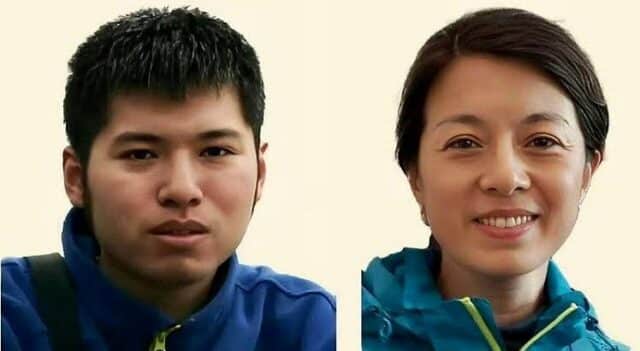
Xin Yumeng (信雨萌) and his mother, Sun Lifang (孙丽芳)
Despite the movie’s clumsiness, the sincere story behind it genuinely struck a chord with many netizens.
On his Weibo account, director Xin Yumeng acknowledged the movie’s “shortcomings” and accepted all criticism, calling the project “an ordinary person’s clumsy attempt to pursue a dream.”10
One commenter wrote on Weibo:
💬 “Niu Lai, the worst film in Chinese cinematic history, has been born—and so has the film with the highest return on investment in all of human history. The box office of the biggest flop has surged ten-thousandfold, proving that what the film industry lacks is sincerity.”
● (5) Rooting for the Box-Office Underdog
Niu Lai is undoubtedly the darkest horse that China’s summer box office has ever seen. But it is not the first to benefit from audiences who feel an underdog deserves their support.
Since the mid-2010s, the Chinese film industry has become closely tied to social media amplification mechanisms, in which netizens – sometimes very actively – become unofficial promoters for the movies they want to see succeed.
They are known as zìláishuǐ (自来水), “tap water”: netizens who spontaneously promote a film or artist without being paid, out of love and admiration. (The three characters 自来水 are actually an abbreviation of the term zìfāérlái de wǎngluò shuǐjūn 自发而来的网络水军: “self-organized internet water army”).
The “tap water” label is itself also a meaningful claim of authenticity because it distinguishes unpaid time, effort, and enthusiasm from China’s shuǐjūn (水军), or “water armies”—which refers to paid or coordinated promotional accounts.
In several cases, these dynamics have brought movies from the lowest ranks of the box office lists to the top.
Earlier this year, the Teochew-language regional film Love Letters to Grandma (给阿嬷的情书), featuring a local cast of non-professional actors and made without special effects or a promotional budget, went from barely watched to holding the number-one position in cinemas for 22 days and becoming the year’s highest-rated Chinese release.
Social platforms such as Xiaohongshu (RED) were crucial to its success. Audiences became zìláishuǐ, promoting the film because they loved its regional flavor and cultural detail.
That film’s success also highlighted an interesting countercurrent: while major platforms push more toward AI-generated content and clip-based hype, audiences are increasingly embracing stories that feel more human and emotionally real.
►Although these social media dynamics matter for film industries globally, the Chinese market conditions – which include concentrated holiday release windows, censorship, and both major commercial and official propaganda blockbusters with huge marketing potential – give particular intensity and symbolic meaning to zìláishuǐ promotion. It’s a low-risk way to express consumer and aesthetic judgment in a highly networked, reputation-sensitive ticket market and a very politically managed sphere.
The scale of Niu Lai’s sudden success has inevitably triggered rumors (none of them substantiated so far) that the phenomenon may not be entirely organic, leading more people to investigate the story behind this bizarre hit. One commenter concluded:
💬 “If this whole wave of Niu Lai memes was deliberately engineered through paid promotion and marketing, and then managed to trigger nationwide organic support and attract the attention of mainstream media, then I have to say: this campaign is a fucking phenomenal, textbook example of success.”
Niu Lai is still screening across mainland China. Its box office has surpassed 30 million yuan (US$4.4 million), and it’s already being called “the most profitable film of all time.” Chinese ticketing platform Maoyan predicts a final total of 135 million yuan (US$20 million). More than a third of that could go to Xin and his mother, turning them into millionaires and making a planned sequel—which would feature a goat, undoubtedly not a pretty one either—much more feasible.
I wouldn’t call that meaningless or coincidental—just the power of ugly.
– By Manya Koetse
🔔 See my main video thread on Niu Lai on my X account here to check out all the relevant clips mentioned in this newsletter. Alternatively, see on BlueSky.
Footnotes
- Original: “《牛来》没意义,它突然爆火也没啥意义,只反映了任何事情都可能有挺极端的偶然性,人还会有口味的逆反、猎奇的边缘兴趣,而互联网能够把这种偶然性放大。重要的是,这些道理一点都不新鲜。” ↩
- This becomes especially clear when compared with Three Kingdoms: The Beginning (三国第一部:争洛阳). While Niu Lai flourished, this other domestic animation movie has struggled to find an audience this summer movie season and was pulled from theaters. The movie was generally praised and is the result of the efforts of a team of over 1,000 people who worked on it for three years. The stark contrast between these two films suggests that conventional ideas about animation quality and production value alone cannot explain what audiences choose to embrace. ↩
- For a discussion of this phenomenon with a clearly negative moral framing, see Ding Huimin (丁慧民) and Pan Chenyu (潘陈钰), “网络‘审丑’现象研究的梳理及现实反思” [“A Review and Critical Reflection on the Online ‘Appreciation of Ugliness’ Phenomenon”], Jin Media (今传媒), December 2015. ↩
- See Suheng Zhu, Zhaoyu Zhu, and Thomas William Whyke, “From Live-Streaming to Memes: An Exploratory Study of the Chinese Abstract Culture as a Structure of Feeling among Chinese Youth,” Journal of Youth Studies, published online July 31, 2025, 6–8, https://doi.org/10.1080/13676261.2025.2541106. ↩
- Zhu, Zhu, and Whyke, “From Live-Streaming to Memes,” 3. ↩
- Lin Aijun (林爱珺), “青年为何爱玩‘抽象’” [“Why Young People Love ‘Playing with Abstraction’”], People’s Tribune (人民论坛), December 17, 2025, 5, https://paper.people.com.cn/rmlt/pc/content/202512/17/content_30130629.html. ↩
- See Xiaojuan Ma, “From Internet Memes to Emoticon Engineering: Insights from the Baozou Comic Phenomenon in China,” in Human-Computer Interaction: Novel User Experiences, ed. Masaaki Kurosu, Lecture Notes in Computer Science 9733 (Cham: Springer, 2016), 18, 20–22, https://doi.org/10.1007/978-3-319-39513-5_2. ↩
- Suheng Zhu, Zhaoyu Zhu, and Thomas William Whyke, “From Live-Streaming to Memes: An Exploratory Study of the Chinese Abstract Culture as a Structure of Feeling among Chinese Youth,” Journal of Youth Studies, published online July 31, 2025, 12, https://doi.org/10.1080/13676261.2025.2541106. ↩
- For more on how producing, sharing, and remixing Chinese memes can become a form of identity performance within a “light community,” see Freek Olaf de Groot, “Multimodal Creativity and Identity in Digital Discourse: Meme Practices in China,” Multimodal Communication 14, no. 1 (2025): 37–51, especially 38–40, 43, and 49–50, https://doi.org/10.1515/mc-2024-0101. ↩
- Original: “这部电影是普通人的笨拙追梦” ↩
Spotted a mistake or want to add something? Please let us know in comments below or email us. First-time commenters, please be patient – we will have to manually approve your comment before it appears.
©2026 Eye on Digital China/Whatsonweibo. All rights reserved. Do not reproduce our content without permission – you can contact us at info@whatsonweibo.com.
Eye on Digital China is a reader-supported publication by
Manya Koetse (@manyapan) and powered by What’s on Weibo.
It offers independent analysis of China’s online culture, media, and social trends.
To receive the newsletter and support this work, consider
becoming a paid subscriber.


Mbappé, Mao, and the Joke That Shall Not Be Named

The French Protests, Viewed from China: Five Narratives on Chinese Social Media

What Does 20 Yuan ($3) Mean Anymore? China’s Disappearing Living Rooms & the Great Laundry Debate

Starbucks Goes Xinjiang & The Kardashians in China

Red Carpet, Pandas, and Power: How China Read the Trump-Xi Summit

How Chinese AI Videos Turned Foreigners into Villains

Why Japan Has So Many Surnames, China’s Back-to-School Shifts & Taiwan Pavilion Trouble

The Power of Ugly: Why Niu Lai Became China’s Unlikeliest Box-Office Hit

The Rise of “Shuaqi-ism,” Taking Starbucks to the Fields, and Pretending to Go to Work

AI Actress Ad Pulled, Baihaitun Disrupts Shanghai and Cicada Meme Bugs Huawei
-
 Chinese New Year9 months ago
Inside Chunwan 2026: China’s Spring Festival Gala
-
 China Brands, Marketing & Consumers11 months ago
Hasan Piker’s China Trip & the Unexpected Journey of a Chinese School Uniform to Angola
-

 Chapter Dive8 months ago
Inside the Great Chinese Debate Over the Iran War
-

 China Trend Watch12 months ago
Japan Tensions, Nexperia Fallout, Yunnan’s ‘Wild Child,’ & “Modern Opium”
FirstTania
November 23, 2017 at 3:55 am
I see you don’t monetize your website, don’t waste your traffic, you can earn additional cash every month because you’ve got hi
quality content. If you want to know how to make extra bucks, search for: Boorfe’s tips best adsense alternative
https://celebritywitty.com
March 16, 2018 at 5:01 pm
Good day! This post could not be written any better! Reading through this
post reminds me of my good old room mate! He always kept talking about this.
I will forward this write-up to him. Pretty sure he will have a good read.
Thank you for sharing!
Brandon
May 11, 2018 at 3:07 pm
Great celebrities is trading topic now a days.Everyone are looking for the latest update of celebrities, For more Celebrities related news follow https://nexter.org/category/celebrities