
China Books & Literature
Finding Gobi – Story of Gobi The Dog Turned Into (Children’s) Book
Gobi became the most famous dog of the summer of 2016 when marathon runner Dion Leonard moved heaven and earth to find the stray dog who had joined him on his marathon journey. The story of Dion and Gobi will now be turned into a book, including a version for children.


All of Twitter, Facebook and Weibo was rooting for little dog Gobi in the summer of 2016. Australian marathon runner Dion Leonard met the stray dog at the start of the Gobi March, a 250-kilometer event across the Gobi Desert in China.

The stray dog joined the runner on his run after he hung around the runners’ camp on the first day of the march. The two became inseparable after running for days on end together. The love grew so big that Leonard decided to set up a crowdfunding campaign to cover the costs for bringing the dog he named Gobi back with him to Scotland, where Leonard resides.
But during the first period of quarantine in the city of Urumqi, Gobi unexpectedly run away and went missing. Leonard did not hesitate and flew to China to look for his friend.
The search started on August 15 and continued for nine days, with chances and hopes of finding Gobi growing smaller every day. Leonard and his helpers pushed through, spread flyers everywhere and asked the help of Weibo netizens, who also shared the news about the missing dog.

The hashtag #FindingGobi was shared among netizens all across the world, as everyone anxiously waited for some good news about the little dog. On August 24, Dion finally announced that Gobi had been found. She was spotted in a local park by a man and his son who recognized Gobi from the flyers. They brought her home and contacted Leonard, who came over and was finally reunited with Gobi, who seemed equally elated to see him.

Leonard announced today that the story of him and Gobi will now be turned into a book published through the Harper Collins Global Publishing Program. The book is to be released in 2017 in English, Spanish, Japanese and Dutch.
In addition to the regular book, there will be additional products including a young adult edition and a children’s board book.
The book, that will be simply titled Finding Gobi, is scheduled to be released in June 2017 in the U.S., Canada, Latin America, Australia, United Kingdom, Holland, Japan, and Spain.

As for Gobi, she is now still in China together with Dion Leonard awaiting to finish quarantine so she can start her new life and another adventure in the UK before Christmas.
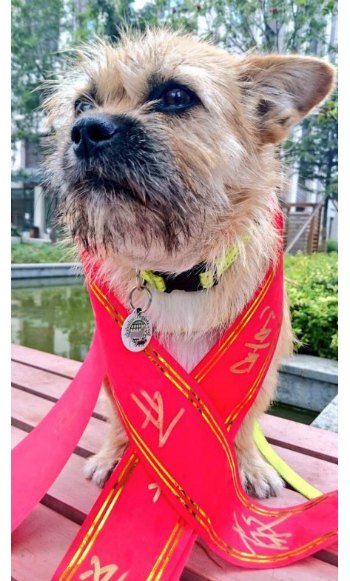 Recent picture of Gobi from the Bring Gobi Home Facebook Page.
– By Manya Koetse
Follow on Twitter or Like on Facebook
©2016 Whatsonweibo. All rights reserved. Do not reproduce our content without permission – you can contact us at info@whatsonweibo.com.



China Arts & Entertainment
The Reunification with Taiwan is Hitting Chinese Cinemas This Summer
A new state-backed epic about the Qing conquest of Taiwan is stirring debate. Plus: the Shanxi mine disaster, a controversial prison film, hukou reform, and China’s top 5 rising books.

China Arts & Entertainment
Su Chao Fever, Mo Yan’s “Scrollable” Book, and Why Li Xiaoran is China’s New Office Icon
This week in China: Grassroots football fever, a Nobel laureate writes for the TikTok era, France’s cultural relic bill, and a 19-year-old’s blind box obsession bankrupts her father’s company.

🔥 China Trend Watch (week 16/17 | 2026) Part of Eye on Digital China by Manya Koetse, China Trend Watch is an overview of what’s trending and being discussed on Chinese social media.
Dear reader,
Hope you’re having a good week. Time for an update on what’s been trending.
In this newsletter:
👉Victor Hugo’s day has come
👉China’s grassroots football couldn’t get more viral
👉A scrollable new book by Mo Yan
👉The Chinese office meme of the moment
..and more.
Let’s dive in.
Quick Scroll
-
- 📱 China’s National Security Ministry has joined Chinese Tiktok app Douyin. The high-profile Douyin debut is part of a broader trend of Chinese government agencies and security bodies joining the app.
- 🐺 A feel-good wildlife story from Inner Mongolia: a pregnant wild wolf descended from the mountains to give birth at a wildlife conservation station where she had been previously fed. The noteworthy move shows she had apparently developed trust in the station workers, and felt safe there.
- 🐖 Pork prices hit historic lows but spare ribs still cost 20 yuan (US$3) – this became a topic of discussion this week. Despite the drop in pig prices, retail pork still feels expensive because added costs across the supply chain haven’t changed.
- 🍿 Movie alert. The May Day (五一) cinema content explosion is incoming. Seventeen films have already been slotted for the Golden Week holiday window.
- 🚔 A 31-year-old man from Guangzhou has been detained under anti-cyberbullying regulations after repeatedly posting insulting comments targeting Olympic champion diver Quan Hongchan (全红婵) on WeChat.
- 🤖 Unitree’s humanoid robot is almost as fast as Usain Bolt. The company announced that the H1 humanoid robot achieved a peak sprint speed of 10 meters per second during a 100-meter test.
- ⚡️ Another robot, “Lightning” (闪电) by Honor, also went viral because he won the Beijing Yizhuang Half Marathon on Sunday, April 19, running a half-marathon distance faster than any human ever has, completing it in 50 minutes and 26 seconds (the human record: 56:42). (See video here).
- 🎁 A 19-year-old woman from Zhengzhou has made headlines for allegedly embezzling around 17 million yuan (nearly $2.5 million) from her father’s company, spending it on blind boxes and livestream tipping (dashang 打赏). Her father, now bankrupt, ended up taking his daughter to the police himself.
What Really Stood Out
The Jiangsu Super League (Su Chao) Fever
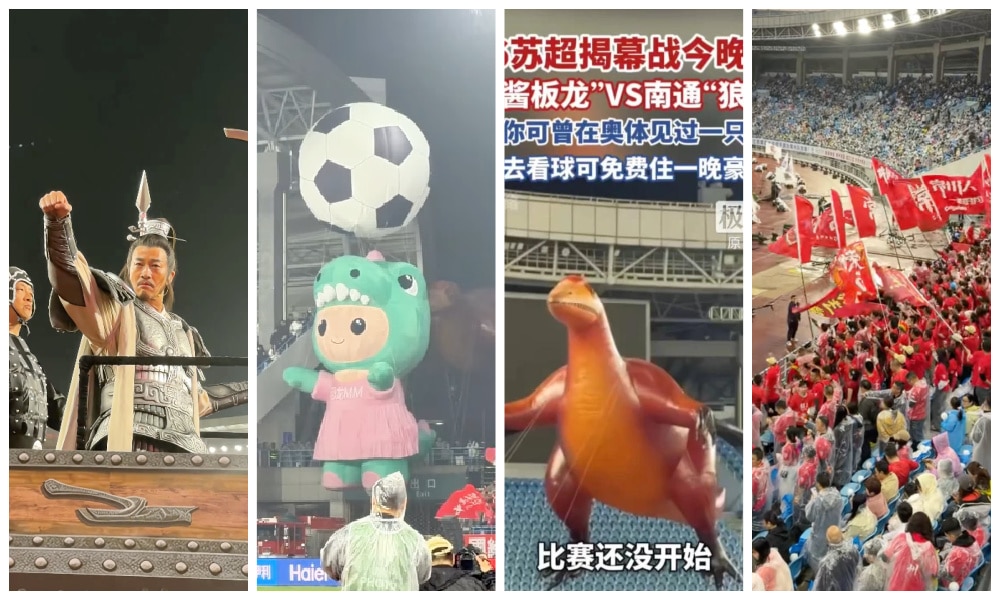
The Jiangsu Football City League, better known as the Su Chao (苏超: “the Su Super”), has become a major source of trending topics, memes, and news analyses over the past week.
The “Su Super” is a provincial amateur football tournament launched in 2025 that features 13 teams, one representing each of Jiangsu’s 13 prefecture-level cities. Teams consist predominantly of amateur players, from primary school teachers to office employees, but it’s been seriously successful: last year, some games regularly drew crowds of over 30,000, with a record 60,396 fans for a Nanjing–Suzhou match.
This year, the season’s opening on April 11 was sensational, almost like a mini Spring Festival Gala of its own, with 300 robots from tech company Magic Atom (魔法原子) performing a perfectly synchronized routine—unbothered by the heavy rain—and popular pop singer Zhou Shen (周深) delivering a much-discussed live performance where he hit some incredibly high notes.
It’s the entertainment and creative memes that seem to matter more than the sport itself.
⚽ When Changzhou won 3–0 in its opening match against Nantong, in a stadium filled with more than 40,800 people, the running joke was that the city of “Changzhou” (常州) could add more “strokes” to its name. This is all part of a bigger meme that started last year, when netizens would ‘deduct’ a character stroke from Changzhou’s name after every time it lost, with its Chinese name going from 常州 to 巾州 to 丨州, until netizens joked there were no strokes left to remove (0州)—Changzhou performed quite terribly.

The “chang” character kept losing strokes as Changzhou lost in the 2025 Su Chao (edited image by netizens).
But with this year’s unexpected win, Changzhou struck back, and the official city account flipped the joke by temporarily renaming itself 常洲, with the three-water-drop radical added to the zhou 州, symbolizing its three goals scored (#常州暂时改名常洲#).
⚽ More than that, Changzhou city officials announced a one-day citywide holiday on April 12, with free public buses and metro for all residents. It was almost like a New Year’s night: major landmarks also stayed lit throughout the night.
⚽ Another meme sprang from a giant inflatable dinosaur that was set up before the match, part of Changzhou’s dino-city branding (it is home to China Dinosaur Park). It was meant to look cool and majestic, but netizens thought it resembled a shiny, greasy, reddish-brown soy-braised duck (酱板鸭) instead, leading to the “Soy-braised dragon” meme (酱板龙).
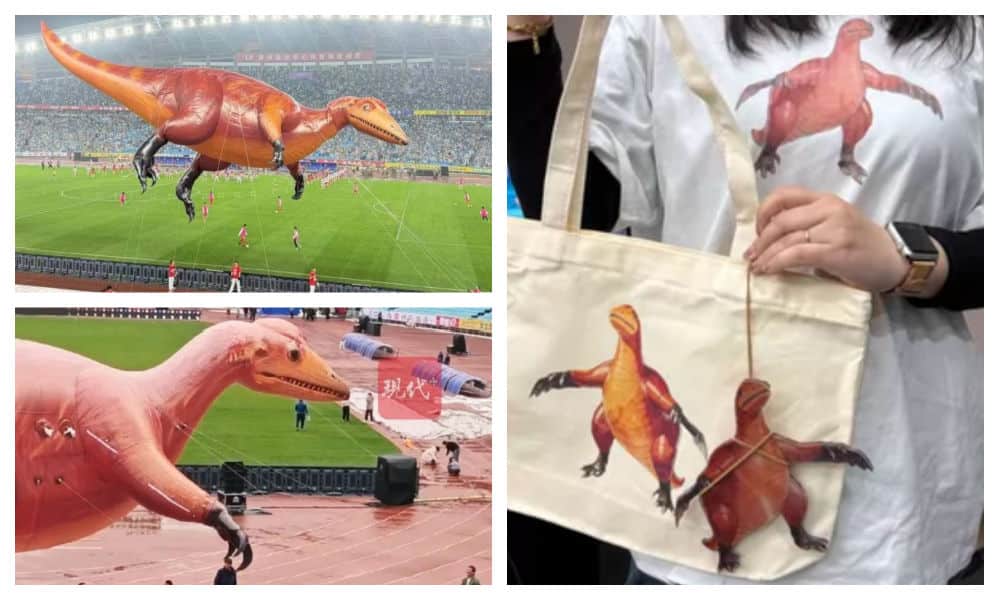
The dino that looked more like a soy-braised duck and “soy-braised dragon” merchandise sold on Taobao.
⚽ During the Suqian vs. Nanjing match on April 18, another highlight featured actor He Rundong (何润东), who appeared dressed in full armor and surrounded by guards and horses, revisiting his famous role as the ancient warlord Xiang Yu (项羽)—the historical figure associated with Suqian as his birthplace. He shouted “Xiang Yu has returned!” (“我项羽回来啦”), a moment that became even more significant after Suqian won 2–0.
⚽ What also stands out in the marketing surrounding the Su Chao is how, alongside the official mascots, Jiangsu media, companies, and fans have been producing AI-generated “city personification” figures featured in images and short videos, with storylines about winning, losing, friendship, and rivalry between the 13 cities in a virtual world. Changzhou is a little dino, Nanjing is a little duck, Nantong is a wolf, etc.

The success of the Jiangsu Super League does not appear out of nowhere: for the past few years, China’s grassroots football has seen a wave of success, with local governments and companies using these leagues and matches to boost local cultural identity and community cohesion, while city-vs-city rivalry and banter consistently trends on social media.
Within this bigger picture, the Village Super League (村超, Cun Chao)—a community football tournament held in Rongjiang County in Guizhou—is a frontrunner. What started as a self-organized village event in 2023 became one of the most-watched grassroots sports stories in recent years.
With China’s national football plagued by underperformance, corruption, and other scandals, more voices are suggesting that the future of Chinese soccer might lie in regional and local super leagues.
Regardless of whether that is true, it is undeniable that phenomena like the Su Chao are bringing a lot of online fun, memes, banter, commercial success, and positive community energy. In doing so, they generate more authentic online engagement than any professional league matches currently do.
France Returning Cultural Relics: “Hugo’s Day Has Come”
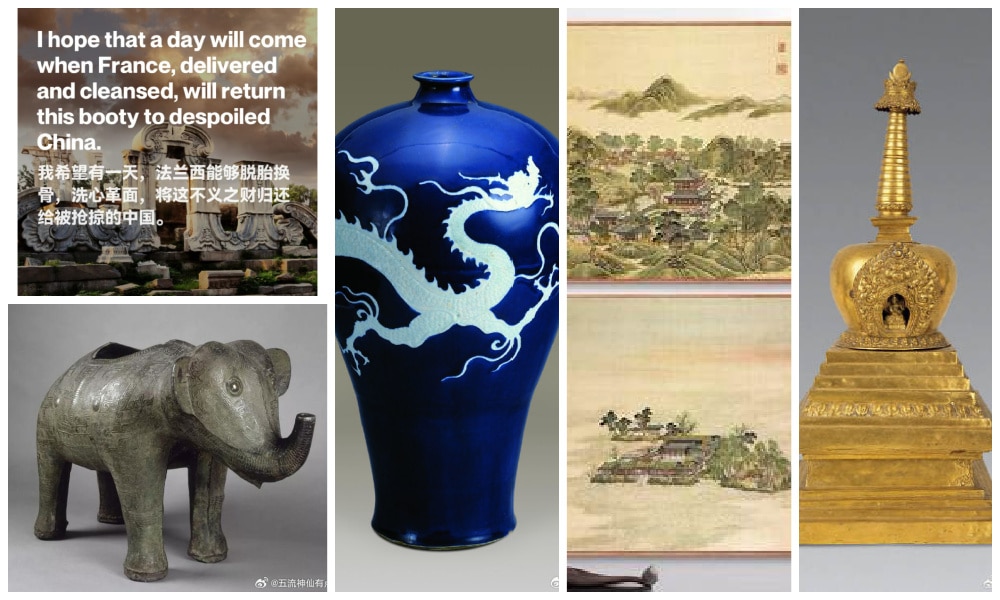
It is not often that the French National Assembly goes trending in China, but it did after unanimously passing a cultural restitution bill that makes it easier to return looted colonial-era objects.
The new bill allows countries to request the return of objects taken between 1815 and 1972, provided they can show the items were acquired by force or other illegitimate means. It marks a shift from the previous, slower, case-by-case restitution system, where every single return required a separate parliamentary vote.
In Chinese media, the news was highlighted through a quote by French politician Jérémie Patrier-Leitus, who in his speech cited Victor Hugo’s famous 1861 letter about the sacking of the Old Summer Palace (Yuanmingyuan), in which he expressed hope that a renewed France would one day return the goods it had plundered from China. Patrier-Leitus said: “The day Hugo longed for has finally arrived.”

Screenshot of the tweet by Jérémie Patrier-Leitus, in translation.
For Chinese audiences, the story carries strong emotional resonance. The looting of the Old Summer Palace in 1860 by French and British forces is widely taught at school as part of the so-called “Century of Humiliation,” the period from the mid-1800s to the mid-1900s during which China was attacked, weakened, and torn by foreign powers. The four-character slogan “wù wàng guóchǐ” (勿忘国耻), “Never forget national humiliation”, is frequently repeated in Chinese media, museums, schools, documentaries, and popular culture.
Besides state media and nationalist commentary, other discussions also emerged online. Some threads focused on which artifacts could potentially be returned to China, mainly linked to the burning of the Old Summer Palace in 1860 and the 1908 Dunhuang removals (although this remains contested as “looting”: it concerns French scholar Paul Pelliot, who acquired thousands of invaluable ancient manuscripts and artworks from a monk guarding a cave at Dunhuang for very little money, and took them to Paris, where they have remained ever since).
Other comments expressed hope that France would set an example for other countries.
Although the news went big in China, French media coverage itself did not mention China at all and instead focused on Benin, Senegal, Côte d’Ivoire, Mexico, and Algeria.
On the Feed
A Scrollable New Book by Mo Yan

Mo Yan (莫言), China’s first Nobel laureate in literature, has been praised as a “meme king” for quickly adapting to China’s online Xiaohongshu community since joining the app in November 2025.
Now, the famous author—known for epic works like Red Sorghum (红高粱)—has again become a hot topic for publishing a new book inspired by his own social media and short-video scrolling “addiction.”
The novel, titled Oh, People (Rén Na 人呐), is his first new fiction in six years and immediately hit the top of major bestseller lists upon release. It’s a collection of 81 ultra-short pieces, the briefest of which runs just 200 characters, and is designed, in Mo Yan’s own description, so that readers can “scroll through it” the way they scroll TikTok.
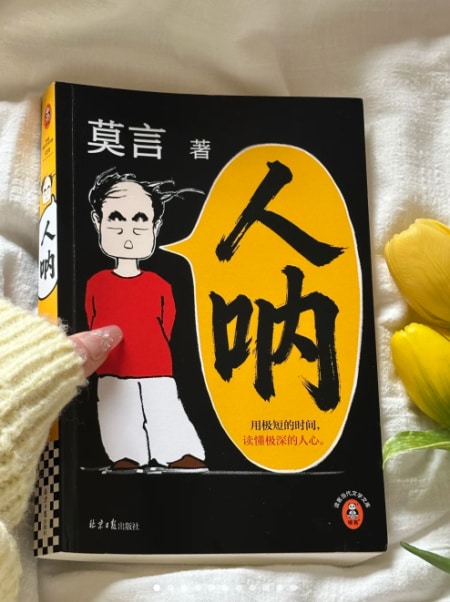
This format is sparking discussion across Chinese social media, especially because it comes from a writer of Mo Yan’s stature.
One core question is whether a Nobel laureate should be writing “fast literature” that mimics short-video logic, and whether this suggests that even China’s most lauded authors are giving in to platform-driven attention economics.
Others argue that the book’s format is not entirely new, and could just as easily be traced back to classical Chinese literary traditions rather than the TikTok era.
These debates may be precisely the point of Mo Yan’s new book. Is it merely scrollable, or is it serious? Through these discussions, his work already engages with two important aspects of contemporary Chinese society: the country’s changing reading culture and the dominance of short-video platforms.
Word of the Week
The Office Li Xiaoran

The phrase of the week is “the Office Li Xiaoran” (Bàngōngshì Lǐ Xiǎorǎn 办公室李小冉).
The phrase comes from the 7th season of the super popular reality/talent show Sisters Who Make Waves (乘风2026), where the 50-year-old Chinese actress Li Xiaoran (李小冉) performed with her group, which also included Olympic skater Wang Meng (王濛).
Li Xiaoran was completely and painfully off-key, off-tempo, forgetting lyrics, and stiff in her choreography — but she stayed calm and cheerfully smiled through it all.
The dreadful performance of the song—officially titled “Wish Sticky Note” (心愿便利贴)—was soon dubbed Wantong Jingutai (万通筋骨贴) by netizens, referring to a Chinese medicinal patch for joint pain. (It’s a wordplay on the title, sharing the same final character: “这不是心愿便利贴,这是万通筋骨贴”).
Ironically, Li was professionally trained at the prestigious Beijing Dance Academy, but dropped out to become an actress—prompting some netizens to joke that instead of saying “the dance world lost a great talent,” it “lost someone completely irrelevant” (#舞蹈界失去了一个无关紧要的人#).
But it wasn’t all meant in a mean way. Because people actually very much appreciated Li Xiaoran’s performance. Although it didn’t go very well, she seemed unbothered and positive, which is why viewers eventually voted her to the number one spot on the show that night.
In the aftermath, office workers started collectively joking that they’ve been “diagnosed as the Office Li Xiaoran.”
The phrase “Office Li Xiaoran” (bàngōngshì Lǐ Xiǎorǎn, 办公室李小冉) has become a viral self-label for workers who feel they are underperforming and barely surviving, but maintain a smile and stoically carry on regardless.
There’s now also a trend where people in the office signal to colleagues that they’re “Office Li Xiaoran” by putting a sign on their chairs.
In the example below it says:
“Officially diagnosed as ‘Office Li Xiaoran’
First to arrive every day, last to leave. Submit my work, and the boss asks: ‘What is this even supposed to be?’
Me: ‘No lip-syncing, not afraid of the stage, not pretending, doesn’t sound good—but I really did try!’

In a way, Li Xiaoran has become the perfect vehicle for office emotional catharsis—an unexpected idol for how to carry on in stressful situations. The ultimate lesson she taught us: even if everything’s going wrong, a good attitude, a splash of confidence, and a bright smile can take you surprisingly far.
See the videos here.
—That’s a wrap.
See you next edition.
Best,
Manya
Eye on Digital China, by Manya Koetse, is co-published on Substack and What’s on Weibo. Both feature the same new content — so you can read and subscribe wherever you prefer. Substack offers community features, while What’s on Weibo provides full archive access. If you’re already subscribed and want to switch platforms, just get in touch for help. If you no longer wish to receive these newsletters, or are receiving duplicate editions, you can unsubscribe at any time.
Eye on Digital China is a reader-supported publication by
Manya Koetse (@manyapan) and powered by What’s on Weibo.
It offers independent analysis of China’s online culture, media, and social trends.
To receive the newsletter and support this work, consider
becoming a paid subscriber.


Keeping Score of History: The Mukden Incident and China’s Basketball Defeat to Japan

The Rise of “Shuaqi-ism,” Taking Starbucks to the Fields, and Pretending to Go to Work

Why Japan Has So Many Surnames, China’s Back-to-School Shifts & Taiwan Pavilion Trouble

Blame Games & Bad Signs: Nepal–Tibet Floods, Huawei’s Toilet Trouble, “Screwed” Graduates

The Power of Ugly: Why Niu Lai Became China’s Unlikeliest Box-Office Hit

China’s CITIC Tower Crash: The Story That Never Trended

“Even Pigs Have AC”: The European Heatwave Through Chinese Eyes

“God Won’t Save Us, but the PLA Will”: Floods, Faith, and Kung Fu Soccer Nostalgia

How Chinese AI Videos Turned Foreigners into Villains
The Power of Ugly: Why Niu Lai Became China’s Unlikeliest Box-Office Hit
-

 China Arts & Entertainment12 months ago
The Wong Kar-wai Scandal Explained: The Dark Side of ‘Blossoms Shanghai’
-

 Chinese New Year7 months ago
Inside Chunwan 2026: China’s Spring Festival Gala
-

 China Brands, Marketing & Consumers10 months ago
Hasan Piker’s China Trip & the Unexpected Journey of a Chinese School Uniform to Angola
-

 Chapter Dive7 months ago
Inside the Great Chinese Debate Over the Iran War