SubscribeLog in
Connect with us

China Insight

The ‘Two Sessions’ Suggestions: Six Proposals Raising Online Discussions

These are some of the proposals that triggered online discussion during China’s annual Two Sessions.

Manya Koetse

Published

on

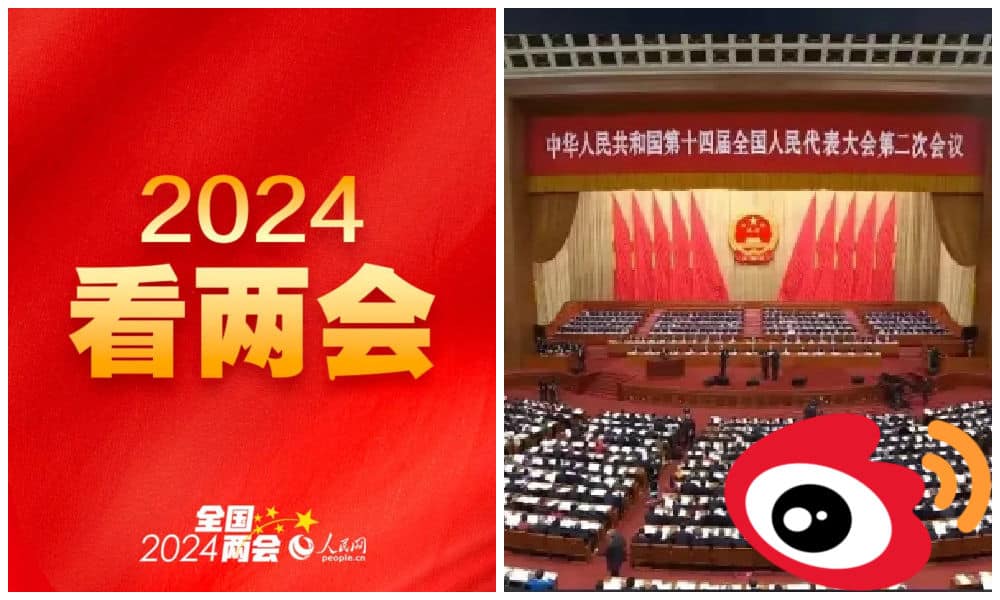
The ‘Two Sessions’ (liǎnghuì 两会), China’s annual parliamentary meetings, are always a significant topic on Chinese social media. This year, the second session of China’s 14th National People’s Congress (NPC) and the second session of the 14th National Committee of the Chinese People’s Political Consultative Conference (CPPCC) opened at the Great Hall of the People in Beijing on March 4th and will continue until March 10.

The annual gathering of the NPC and CPPCC is a major political event closely watched by both domestic and foreign media as it outlines policy priorities for the upcoming year. The 2023 Two Sessions garnered considerable attention as it marked the first full sessions since the end of the Covid pandemic and the 20th Party Congress.

This year, the ‘Lianghui’ holds particular significance due to China’s post-pandemic economic challenges, including the prolonged downturn in the real estate market, lower demand for Chinese exports worldwide, and reduced confidence among consumers and businesses.

On Chinese social media, smaller topics that emerge during the Two Sessions are often more likely to become trending topics than the broader themes. Besides the fact that the Two Sessions are an important moment because they offer a glimpse into China’s strategical direction, it’s also important because it is a time when delegates from across the country can make their voices heard by elite leaders.

The proposals and “suggestions” (建议) raised by National People’s Congress delegates often turn into trending topics on Chinese social media. In previous years, for example, a proposal to prohibit single women from freezing their eggs in order to encourage them to “marry and reproduce at the appropriate age” raised discussions on Weibo. Another controversial proposal was about shortening the education period as a means to promote China’s birth rates.

This year, there are a few new proposals that received considerable attention online.


#1 Improving Paid Annual Leave

#霍启刚回应建议完善带薪年假制度#


One suggestion that went trending concerned the improvement of China’s paid annual leave system. The proposal was raised by Hong Kong businessman and politician Kenneth Fok (霍启刚). Fok argues that paid time off should be increased as a way to boost domestic tourism and consumption and “increase people’s sense of happiness.”

Although mainland China already has regulations regarding working hours and paid annual leave, they are often not strictly implemented. Fok therefore not only advocates that there should be an increase in entitled leave days for employees, but also that these policies should be enforced more strictly.

Fok’s suggestion is to gradually extend paid annual leave days according to the duration of employment. Employees who have worked at a Chinese company for more than 1 year but less than 10 years would get 5 days off for the first two years, then an extra day each year, up to a maximum of 10 days. In the current system, employees with 1-10 years’ tenure get 5 days off. Only after 10 years, it is increased and becomes 10 days.

One Weibo post by Fok about the proposal received over 67,000 likes. While many young workers support the idea of getting one or more extra days off, some also indicate that changing their working hours is more important to them than getting an extra day off. China’s overtime work culture has been a contentious topic of discussion for years.


#2 Less Focus on Undergraduate Degrees

#建议消除简历第一学历概念#


A second proposal that gained significant attention on Weibo this week was presented by National People’s Congress delegate Pan Fusheng (潘复生). Pan, an academic, argues that in China’s current academic and labor environment, there is excessive emphasis placed on the very first college educational background of applicants. When their first diploma was obtained in non-prestigious universities or colleges, they are often disqualified.

Pan suggests that it is unjust for the entire career trajectory of graduate students and job seekers to be determined solely by the evaluation of their undergraduate degree by potential employers. He therefore proposes to get rid of the graduate degree assessment as a primary criterion in the admission and employment processes for applicants. This also means that graduates from certain prestigious schools, such as Tsinghua or Peking University, should not be favored over others.

Although people do agree that there is unfairness and bias in how applicants are assessed based on their first educational degree, some commenters also remark that this is a social issue, not a legal one.


#3 Supporting Fertility Treatment for Older Women

#多部门建议支持大龄女性生育力保存#​


At this year’s Two Sessions, there were multiple proposals jointly submitted by various delegates or groups. Among them is a proposal to provide more fertility treatment options for older women and female cancer patients who are experiencing infertility or have difficulties conceiving.

The proposal, put forward by the National Health Commission and the All-China Women’s Federation, suggests that improving and standardizing fertility treatment procedures is of “strategic importance” to help boost China’s falling birth rates and improving the overall population health.

This proposal raised some discussions online, as many see this as another way for authorities to make women’s fertility and child raising a political issue. Others wonder why the focus is always on on women’s reproductive capabilities instead of focusing on enhancing male fertility.


#4 Harsher Punishment for Online Influencers

#建议加大对网红违法违规的处罚力度#


National People’s Congress delegate Geng Funeng (耿福能) proposes that China’s online influencers, whether they are celebrities or e-commerce stars, should face harsher penalties for involvement in illegal activities.

Geng argues that various incidents involving online influencers and livestreamers in recent years have set a wrong example. To deter others, those engaging in illegal acts, from tax evasion to slander, should be severely punished.

Furthermore, Geng suggests establishing an “Online Celebrity Industry Association” (网红行业协会) to establish clearer norms and rules for those operating within China’s booming internet economy.

However, a thread on Weibo by Chinese news outlet The Paper (澎湃新闻) indicates that Geng’s proposal is not particularly popular among commenters. “They should increase the punishment for civil servants engaging in illegal behavior instead,” one top comment said.


#5 More Protection for Elderly Migrant Workers

#建议关注第一代农民工养老医疗问题#


National People’s Congress delegate Yang Juan (杨娟) has proposed improving policies and data systems to better assist and protect the first generation of Chinese migrant workers.

China is home to approximately 300 million migrant workers who have migrated from rural areas to larger cities in pursuit of better job opportunities. However, due to China’s household registration system, known as the hukou system, they often lack access to various urban public services.

Premier Li Qiang also highlighted the need to enhance social benefits for Chinese migrant workers in the government work report during the Two Sessions in the government work report delivered on March 5th.

Yang Juan’s proposal specifically addresses the challenges faced by elderly migrant workers who were among the first to migrate from rural areas to cities. They now encounter difficulties due to the lack of social safety nets, especially when it comes to healthcare and pensions. One way Yang aims to assist them is by establishing clearer data systems to identify the first generation of migrant workers who are not covered by insurance.

On Weibo, this proposal received a lot of praise since many people feel this is a relevant issue and that Yang is serving as a voice for those vulnerable groups at the lowest rung of society.


#6 Criminal Liability for Owners of Biting Dogs

#建议对伤人犬只饲养者追刑责#


With his proposal, delegate Tuo Qingming (庹庆明) has addressed a sensitive issue that has repeatedly made headlines in China over the past year: the problem of biting incidents involving people’s pet dogs.

Tuo suggests that dog owners should be held criminally responsible if their dog bites, and that this responsibility should be explicitly incorporated into the Criminal Law Amendment.

Various dog biting incidents have recently captured attention in China. While many believe there should be more legislation to prevent such incidents, as they cause significant harm to victims, there is also debate surrounding local crackdowns on dogs, as they are sometimes viewed as unnecessarily cruel.

There is also disagreement in the comment sections regarding this proposal, although the majority of people do agree that there should be better regulation to manage the problem of aggressive dogs. In current dog biting incidents, owners often compensate victims, but it’s considered a civil issue – they usually do not face legal consequences. Some Weibo commenters suggest that dog owners will be more careful in restraining their dogs once they also bear criminal liability.

By Manya Koetse

Spotted a mistake or want to add something? Please let us know in the comments or email us. First-time commenters, please be patient – we will have to manually approve your comment before it appears.

©2024 Whatsonweibo. All rights reserved. Do not reproduce our content without permission – you can contact us at info@whatsonweibo.com.

Manya is the founder and editor-in-chief of What's on Weibo, offering independent analysis of social trends, online media, and digital culture in China for over a decade. Subscribe to gain access to content, including the Weibo Watch newsletter, which provides deeper insights into the China trends that matter. More about Manya at manyakoetse.com or follow on X.

Continue Reading
Click to comment

Leave a Reply

Your email address will not be published. Required fields are marked *

China Insight

“Jiangyou Bullying Incident”: From Online Outrage to Offline Protest

“You think we’re scared of you? It’s not like we haven’t been to jail before.”

Manya Koetse

Published

on

These days have been filled with tension and anger in the city of Jiangyou (江油市), Sichuan, after a rare, large-scale protest broke out following public outrage over a severe bullying incident and how it was handled.

The bullying incident at the center of this story happened outside school premises in Mianyang on the afternoon of July 22. Footage of the assault, recorded by bystanders at the scene, began circulating widely online on August 2, sparking widespread outrage among concerned netizens, many of them worried parents.

The violent altercation involved three girls between the ages of 13 and 15 who ganged up on another minor, a 14-year-old girl named Lai (赖).

After Lai and a 15-year-old girl named Liu (刘) reportedly had a dispute, Liu gathered two of her friends—the 13-year-old also named Liu (刘) and a 14-year-old named Peng (彭)—to gang up on Lai.

The three underage girls lured Lai to an abandoned building, where they subjected her to hours of verbal and physical violence. The footage showed how they took turns in kicking, slapping, and pushing her.

At one point, after Lai said she would call the police, one of the bullies yelled: “You think we’re scared of you? It’s not like we haven’t been to jail before. I’ve been in more than ten times—it doesn’t even take 20 minutes to get out” (“你以为我们会怕你吗?又不是没进去过,我都进去十多次了,没二十分钟就出来了”).

That same night, the incident was reported to police. It took authorities until August 2 to bring in all involved parties for questioning, and a police report was issued on the morning of Monday, August 4.

Police report by Jiangyou Public Security Bureau, confirming the details of the incident and the (legal) consequences for the attackers.

Two of the girls (the 15- and 14-year-old) were given administrative penalties and will be sent to a specialized correctional school. The younger Liu and other bystanders were formally reprimanded.

 
“Parents Speak Out for the Bullied Girl”
 

The way the incident was handled—not just the relatively late official report, but mostly the perceived lenient punishment—triggered anger online.

Many people who had seen the video responded emotionally and felt that the underage girls should be stripped of their rights to take their exams, and that the bullying incident should forever haunt them in the same way it will undoubtedly haunt their victim.

Especially the phrase “It’s not like I haven’t been taken in [to jail] before” struck a chord, as it showed just how calculated the bullies were—and how, by counting on the leniency of the Chinese judicial system for minors, they made the system complicit in their determination to turn those hours into a living hell for Lai.

China has been dealing with an epidemic of school violence for years. In 2016, Chinese netizens were already urging authorities to address the problem of extreme bullying in schools, partly because minors under the age of 16 rarely face criminal punishment for their actions.

Since 2021, children between the ages of 12 and 14 can be held criminally responsible for extreme and cruel cases resulting in death or disability—but their legal prosecution must first be approved by the Supreme People’s Procuratorate (SPP).

It has not done much to stop the violence.

Discussions around extreme bullying like this have repeatedly flared up over the years, such as in 2020, when a 15-year-old schoolboy named Yuan (袁) in Shaanxi was fatally beaten and buried by a group of minors.

Last year, a young boy named Wang Ziyao (王子耀) was killed by three classmates after suffering years of bullying. His body was found in a greenhouse just 100 meters from the home of one of the suspects, and the case shocked and enraged local residents.

But the problem is widespread among girls, too.

In 2016, we already reported on how so-called ‘campus violence videos’ (校园暴力视频) had become a concerning trend. In these kinds of videos—often showing multiple bullies beating up a single victim on camera—it’s not uncommon to see girls as the aggressors.

Girls often form cliques to gang up on a victim to show that they are in control or to gain popularity. They also tend to be more inclined than boys to make cruel jokes or stage pranks meant to embarrass or humiliate their target. This may partly explain why there seem to be more campus violence videos on Chinese social media showing girls bullying girls than boys bullying boys.

In the case of Lai, she appears to have been particularly vulnerable. One of her relatives posted online that her mother is deaf and mute, and her father allegedly is disabled. This fact may have contributed to why Lai was repeatedly targeted and bullied by the same group of girls, who reportedly took away her phone and socially isolated her at school.

In response to the incident, netizens started posting the hashtag “Parents Speak Up for the Bullied Girl” (“#家长们为被霸凌女孩发声#), not only to support Lai and her family, but to demand harsher punishments for school bullies and for stricter crackdown on this nationwide problem.

 
From Online Anger to Offline Protest
 

While many people spoke out for Lai online, hundreds also wanted to show up for her in person.

On August 4, dozens of people gathered in front of the Jiangyou Municipal Government building (江油市人民政府) to demand justice and support Lai’s parents, who had come to express their grievances to the authorities—at one point even bowing to the ground in a plea for justice to be served for their daughter.

Footage and images circulating on social media showing the parents of Lai, the victim, bowing on the ground to demand justice from authorities.

As the crowd grew larger, tensions escalated, eventually leading to clashes between protesters and police.

The arrests at the scene did little to ease the situation. As night fell, the mood grew increasingly grim, and some protesters began throwing objects at the police.

Images of the protest, posted on Weibo.

Near the east section of Shixian Road (诗仙路东段), more people gathered. Hundreds of individuals filming and livestreaming captured footage of the police crackdown—officers beating protesters, dragging them away, and deploying pepper spray.

Netizens’ digital artwork about the bullying incident, the parents’ grievances, and the public protest and its crackdown in Jiangyou. Shared by 程Clarence.

Although the protests briefly gained traction on social media and became a trending topic on Weibo, the search term was soon removed from the platform’s trending list.

 
Lasting Mental Scars
 

On Tuesday, August 5, several topics related to the Jiangyou bullying incident began trending again on Chinese social media.

On the short video app Kuaishou, a collective demand for justice surged to the number one spot, under the tag “A large number of Jiangyou parents demand justice for the victim” (江油大批家长为受害学生讨公道).

As of now, none of the perpetrators’ families have come forward to apologize.

As for Lai—according to the latest reports, she did not suffer serious physical injuries from the bullying incident, but according to her own parents, the mental scars will last. She will need continued mental health support and counseling going forward.

Although many posts about the incident and the ensuing protests have been taken offline, ‘Jiangyou’s Bullying Incident’ has already become one more case in the growing list of brutal school bullying incidents that have surfaced on Chinese social media in recent years. The heat of local anger may fade over time, but the rising number of such cases continues to fuel public frustration nationwide—especially if local authorities fail to do more to address and prevent school bullying.

“Not being able to protect our children, that’s a disgrace to our schools and the police,” one commenter wrote: “I want to thank all those mothers who have raised their voices for the bullied child. Each of us must say no to bullies, and we must do all we can to stop them. I hope the lawmakers agree.”

By Manya Koetse

(follow on X, LinkedIn, or Instagram)

Spotted a mistake or want to add something? Please let us know in comments below or email us. First-time commenters, please be patient – we will have to manually approve your comment before it appears.

©2025 Whatsonweibo. All rights reserved. Do not reproduce our content without permission – you can contact us at info@whatsonweibo.com.

Follow What’s on Weibo on

Continue Reading

China Insight

The Secret Life of Monks: Shi Yongxin’s Shaolin Scandal Casts a Shadow on Monastic Integrity

“To put it bluntly, temples have been places of deception, corruption, opportunism, and exploitation since ancient times.”

Manya Koetse

Published

on

This week, news about a well-known Chinese monk going off the Buddhist path has triggered many discussions on Chinese social media.

The story revolves around Shi Yongxin (释永信), the head monk at China’s famous Shaolin Temple (少林寺) in Dengfeng, Henan. Shi is suspected of embezzlement of temple funds and illicit relationships, and is currently under investigation.

In recent days, wild rumors have been circulating online claiming that Shi fled to the United States after being exposed. On July 26, a supposed “police bulletin” began circulating, alleging that Shi Yongxin had attempted to leave the country with seven lovers, 21 children, and six temple staff. It also claimed he was stopped by authorities before exiting China, that he had secretly obtained U.S. citizenship a decade ago, and that he had misused donations and assumed fake identities.

Although that specific report has since been refuted by Chinese official media, it quickly became clear that there was real fire behind all that smoke.

The report that circulated online and was later confirmed to be fake

Because despite all the sensationalized gossip (some posts even claimed Shi had 174 illegitimate children!), what’s certain is that Shi Yongxin seriously crossed the line. On July 27, 2025, the Shaolin Temple Management Office (少林寺管理处) issued an official statement through its verified channels, including its WeChat account. The statement read:

The report that circulated online and was later confirmed to be fake.

Shi Yongxin, the Abbot of Shaolin Temple, is suspected of criminal offenses, including misappropriating and taking project funds and temple assets. He seriously violated Buddhist discipline, maintained improper relationships with multiple women over a long period and fathered illegitimate children. He is currently under joint investigation by multiple departments. Relevant information will be made public in due course.

Shaolin Temple Management Office
July 27, 2025

China’s Buddhist Association (中国佛教协会) also released a statement on July 28, in which it stated that, in coordination with the Henan Provincial Buddhist Association (河南省佛教协会), Shi Yongxin has been officially stripped of his monastic status.

Various Chinese media sources report that Shi Yongxin was taken away by police on Friday, July 25. Chinese media outlet Caixin suggests that it must not have come as a complete surprise, since Shi had allegedly already been restricted from leaving the country since around the Spring Festival period (late January 2025) (#释永信春节前后已被限制出境#).

 
About Shi Yongxin
 

Shi Yongxin is not just any abbot. He’s the abbot of the Shaolin Monastery (少林寺), which is one of the most famous Buddhist temples in the world and is known as the birthplace of Shaolin Kung Fu. The temple was founded in 495 CE. Besides being a Buddhist monastery, it also operates as a popular tourist attraction, a kung fu school, and a cultural brand.

Shi has been running the monastery for 38 years, a fact that also went trending on Weibo these days (#释永信已全面主持少林寺38年#, 140 million views by Monday).

Shi Yongxin is the monastic name of Liu Yingcheng (刘应成), born in Yinshang county in Fuyang, Anhui, in 1965. He came to Shaolin Temple in 1981 and became a disciple of abbot Shi Xingzheng (释行正), who passed away in 1987. Shi Yongxin then followed in his footsteps and managed the temple affairs. He formally became head monk in 1999.

Moreover, Shi Yongxin reportedly served as President of the Henan Provincial Buddhist Association since 1998 and as Vice President of the Buddhist Association of China since 2002.

Shi Yongxin, photos via Weibo.

Shi Yongxin was thus an incredibly powerful figure—not only because of the decades he spent overseeing temple affairs, but also due to his influence within public, institutional, and religious spheres.

Holding such a visible role, Shi Yongxin (释永信) also had (or has—though it’s unlikely he’ll ever post again) a Weibo account with over 882,000 followers (@释永信师父). His last post, made on July 24, was a Buddhist text about the ‘Pure Land’ (净土)—a realm said to make the path toward enlightenment easier.

That post has since attracted hundreds of replies. While some devoted followers express disbelief over the scandal, many others respond with cynicism, questioning whether anything about Buddhism remains truly ‘pure.’

One widely shared post shows an artist sitting in front of a painting of Shi Yongxin, writing, “Worked on this painting for six months, just finished late last night—feels like the sky’s collapsed.” The second picture, posted by someone else, says, “Just change it a bit.”

One aspect of the scandal fueling online discussions is the fact that Shi Yongxin had led the monastery for so long. Rumors about his “chaotic private life” and unethical behavior surfaced years ago, going back to at least 2015 (#释永信10年前就曾被举报私生活混乱#; #释永信曾被举报向弟子索要供养钱#). One of the questions now echoing across social media is: why wasn’t he held accountable sooner? “Who was protecting him?”

 
“The Tip of the Iceberg”
 

The Shi Yongxin scandal does not just hurt the reputation and cultural brand of the Shaolin Monastery; it also damages a certain image of Buddhist monks as a collective of people with true faith and integrity.

According to well-known knowledge blogger Pingyuan Gongzi Zhao Sheng (@平原公子赵胜), many people’s understanding of abbots or Buddhist masters (“方丈大师们”) is flawed, since it’s generally believed they attained their high positions within the monasteries due to their moral virtue or deep understanding of Buddhism. In reality, Zhao Sheng argues, these individuals often rise to power because they are skilled at earning money and gaining influence.

“To put it bluntly,” Zhao Sheng writes, “temples have been places of deception, corruption, opportunism, and exploitation since ancient times.”

The blogger argues that much of the influence and power of Buddhist masters was stripped away under Mao Zedong, but that some new famous monks rose in the 1980s, using their skills and connections to rebuild temples and turn them into thriving enterprises.

“If you want to find a few people in temples who truly have faith, who truly have personal integrity, and who are truly dedicated to saving all living things, it’s not that they don’t exist—but it’s rather difficult, like finding a needle in a haystack,” Zhao Sheng wrote.

Some commenters suggest that Shi Yongxin is just the tip of the iceberg (“冰山一角”). They believe that if someone as influential as him can be involved in such misconduct—despite whistleblowers having tried to expose him for over a decade—there must be many more cases of power abuse and corruption within China’s monasteries.

“I previously donated money to the temple,” one commenter on Xiaohongshu wrote: “Although it wasn’t much, it does make me a bit uncomfortable now.”

Another person posted that the Shi Yongxin scandal gave them a sense of despair.

Some older posts about the extravagant lifestyles of head monks — including their luxury cars — have also resurfaced online and are once again making the rounds, suggesting that netizens are actively revisiting other potential instances of misconduct within the monastic world.

Abbot Guangquan Fashi (光泉法师) with a Ferrari California T, Kaihao Fashi (开豪法师) with a Porsche Panamera, Shi Yongxin (释永信) linked to an Audi Q7, and Huiqing (慧庆) and a BMW 7 Series.

One image that resurfaced online shows Shi Yongxin—allegedly driving an Audi Q7—alongside other abbots, such as Guangquan Fashi (光泉法师), the head monk of Lingyin Temple (灵隐寺), who is associated with a Ferrari.

More images like these are now circulating, as people delve into the ‘secret lives of monks’ beyond the spiritual, shifting focus to their material lives instead.

Monks from major temples, including Qin Shangshi (钦尚师) of Famen Temple, E’erdeni (鄂尔德尼) of Jokhang Temple in Lhasa, Yin Le (印乐) of Baima Temple, and Huiqing (慧庆) of Baishou Temple, are rumored to be associated with high-end cars like BMWs, a Porsche Cayenne, and a Range Rover.

While the results of the investigation into Shi Yongxin are still pending, many netizens are already looking beyond him. One person writes: “Are you realizing now? It’s not just Shaolin Temple that has money, other temples aren’t exactly short on money either.”

Another person wonders: “Are the monks in today’s temples actually still truly devoted to spiritual practice at all?”

By Manya Koetse

(follow on X, LinkedIn, or Instagram)

Spotted a mistake or want to add something? Please let us know in comments below or email us. First-time commenters, please be patient – we will have to manually approve your comment before it appears.

©2025 Whatsonweibo. All rights reserved. Do not reproduce our content without permission – you can contact us at info@whatsonweibo.com.

Follow What’s on Weibo on

Continue Reading

Popular Reads