
China Arts & Entertainment
Karaoke in the Digital Age: China’s M-Bar Public Karaoke Rooms
Chinese company M-Bar has thought of a new solution for people who love karaoke but are too shy to sing in front of a crowd. M-Bar’s private self-service karaoke booths, located in shopping malls across the country, are all the rage in China now. More than just a karaoke box, it’s a recording studio and a place to take a break from the hustle and bustle of the big city.


A new trend is taking mainland China by storm as private karaoke boxes are popping up in malls and others places. The so-called M-Bar (友唱Mbar) karaoke rooms allow people to sing along to their favorite music and record themselves to share their own songs with friends.

The rooms are more than just a karaoke box; they offer a place for people to step away from the hustle and bustle of the big city life. The tiny rooms are air-conditioned and have a mobile charge station.


The M-Bar karaoke boxes are fully based on China’s super app WeChat (Weixin in Chinese). M-Bar users need to have Wechat, WeChat wallet, and access to wifi or 4G in order to connect with the computer. The booth’s main touchscreen shows a QR-code that can be scanned with WeChat, after which your profile will pop up on the screen.


WeChat and M-Bar are fully integrated. After connecting with your profile, M-Bar automatically stores your recordings in the app during your KTV session.

The KTV booths offer a large selection of songs in multiple languages (Chinese, English, Korean, Japanese). After selecting a song, you scan its QR code and pay through WeChat pay. Songs can be separately selected (12 RMB/1.7$ per song/recording) or you can pay for all-you-can-sing per half hour or hour.

Your song recordings can be played from with WeChat. You can also share them with friends or delete them from within the app.

From home you can keep enjoying your M-Bar experience, as you can connect with other M-Bar users through the M-Bar WeChat home and listen to your friend’s singing. The app also shows the nearest M-Bars in your neighbourhood and allows users to book a booth in advance.

The M-Bar WeChat app shows the nearby booths and allows users to book a room in advance.
Chinese media started reporting about the newest “digital karaoke trend” at the beginning of this year, although it has been around for longer.
The karaoke booths were first launched in 2015, backed by the Ubox group (友宝集团). The M-Bar company (@友唱Mbar) is based in Xiamen, China. It is an entertainment brand that focuses on games and KTV.

The recent popularity of M-Bar is clearly visible on Chinese social media. On Weibo, hundreds of netizens share pictures and recordings of their recent M-Bar visits.
Besides all of its digital entertainment 2.0 features, one of the reasons why the mini KTV booth have become so popular is its game element. Friends can compete in singing contests as their skills are rated; M-Bar awards points for hitting the good points at the end of every song. It also shows a big “bad” when you are singing out of tune.


Now that the mini KTV booths have become a hype in mainland China, M-Bar will also go abroad. According to United Daily News, the company will also launch its booths in Singapore, Taiwan, and Japan.
Check out our latest Weivlog on this new trend in the featured video.
– By Manya Koetse
Follow @WhatsOnWeibo
[showad block=1]
©2017 Whatsonweibo. All rights reserved. Do not reproduce our content without permission – you can contact us at info@whatsonweibo.com.




China Brands, Marketing & Consumers
Starbucks Goes Xinjiang & The Kardashians in China
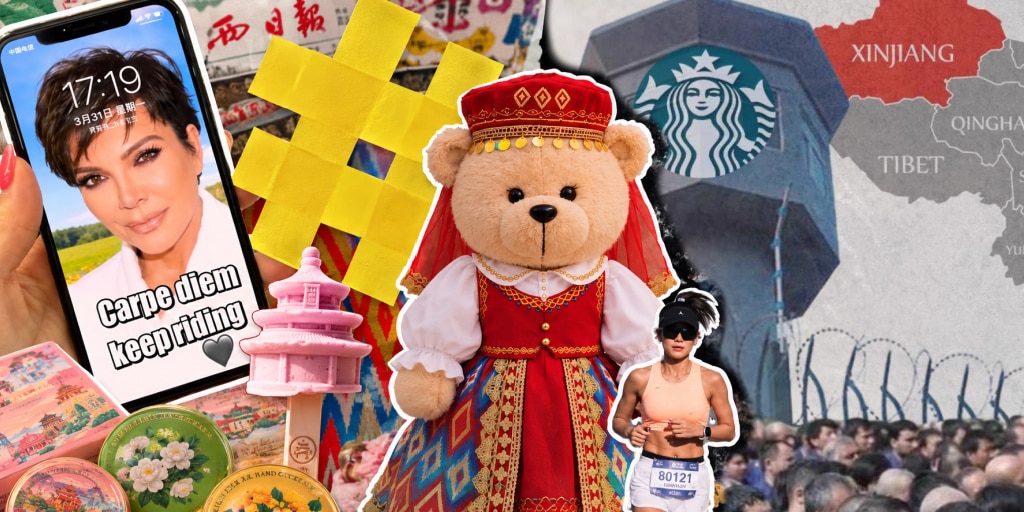
Starbucks rebrands as “Star-Bazaar” in Urumqi—what does it say about shifting perceptions of Western brands in China? Also: a cheating sports influencer and the souvenirs that became most hated.
Originally published in the Eye on Digital China newsletter on Sunday, October 4, 2026.
In this edition:
- Quick scrolls: A Chinese athlete cheated her way to the Berlin Marathon’s finish
- Zooming in: When Localization Gets Political: Starbucks Goes Xinjiang
- On the Feed: The Kardashians in China
- Phrase of the Week: The 3 souvenirs sold everywhere, but nobody wants them
🗞️ QUICK SCROLLS
🇯🇵 The National Day holiday has begun, but nobody’s going to Japan. Although Japan was the number one outbound destination for Chinese travelers during last year’s October holiday, it has now dropped out of the top ten destinations entirely. According to data from Chinese tour operator Tuniu (途牛), Indonesia, Turkey, and South Korea are among this year’s most-booked overseas destinations.
🚲 Chinese fitness influencer “Abeeeer” was caught cheating during the Berlin Marathon after she posted about running her “personal best.” The sport-blogger (530k+ followers on Xiaohongshu) was photographed riding on the back of a bicycle around the 38-kilometer mark. On Saturday, she publicly apologized and admitted that she had broken the rules and that she was “feeling unwell.”
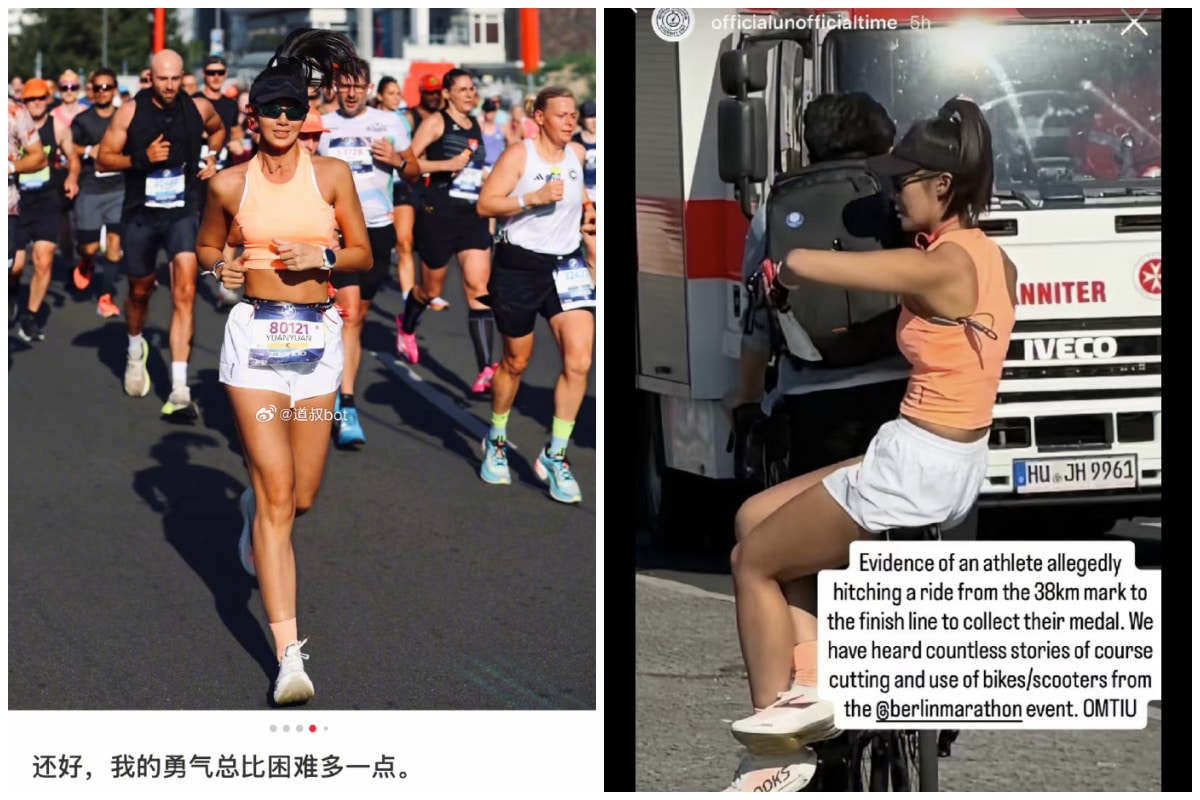
The sports influencer was caught hitching a ride to the finish line.
🏳️🌈 Japanese volleyball player Rui Takahashi came out as gay on Tuesday, saying he wanted to help others struggling with their sexuality by coming out publicly. On Douyin, many Chinese fans and commenters praised Rui for his bravery.
🤖 Former Global Times editor-in-chief Hu Xijin (胡锡进) published a National Day essay praising the country’s achievements but forgot to delete the AI chatbot’s closing follow-up question (”Would you like me to read through the whole text again and check it for omissions?”). Hu quickly deleted the AI prompt, but “Hu Xijin’s National Day AI ghostwriting fail” had already gone trending.
⚽ Chinese football produced…
Chapter Dive
The Power of Ugly: Why Niu Lai Became China’s Unlikeliest Box-Office Hit
How the two-person animated film Niu Lai turned its “ugly” visuals, dreamcore nostalgia, and remarkable cinema journey into a nationwide participatory meme.

Eye on Digital China is a reader-supported publication by
Manya Koetse (@manyapan) and powered by What’s on Weibo.
It offers independent analysis of China’s online culture, media, and social trends.
To receive the newsletter and support this work, consider
becoming a paid subscriber.


Starbucks Goes Xinjiang & The Kardashians in China

Red Carpet, Pandas, and Power: How China Read the Trump-Xi Summit

Keeping Score of History: The Mukden Incident and China’s Basketball Defeat to Japan

The Rise of “Shuaqi-ism,” Taking Starbucks to the Fields, and Pretending to Go to Work

Why Japan Has So Many Surnames, China’s Back-to-School Shifts & Taiwan Pavilion Trouble

“God Won’t Save Us, but the PLA Will”: Floods, Faith, and Kung Fu Soccer Nostalgia

How Chinese AI Videos Turned Foreigners into Villains
Why Japan Has So Many Surnames, China’s Back-to-School Shifts & Taiwan Pavilion Trouble

The Power of Ugly: Why Niu Lai Became China’s Unlikeliest Box-Office Hit

AI Actress Ad Pulled, Baihaitun Disrupts Shanghai and Cicada Meme Bugs Huawei
-

 Chinese New Year8 months ago
Inside Chunwan 2026: China’s Spring Festival Gala
-

 China Brands, Marketing & Consumers11 months ago
Hasan Piker’s China Trip & the Unexpected Journey of a Chinese School Uniform to Angola
-

 Chapter Dive7 months ago
Inside the Great Chinese Debate Over the Iran War
-

 China Trend Watch11 months ago
Japan Tensions, Nexperia Fallout, Yunnan’s ‘Wild Child,’ & “Modern Opium”