
China Arts & Entertainment
Taipei-Born Actress Vivian Sung Causes Social Media Storm for Calling Taiwan Her “Favorite Country”
When celebrities speak out about Taiwan, drama ensues.

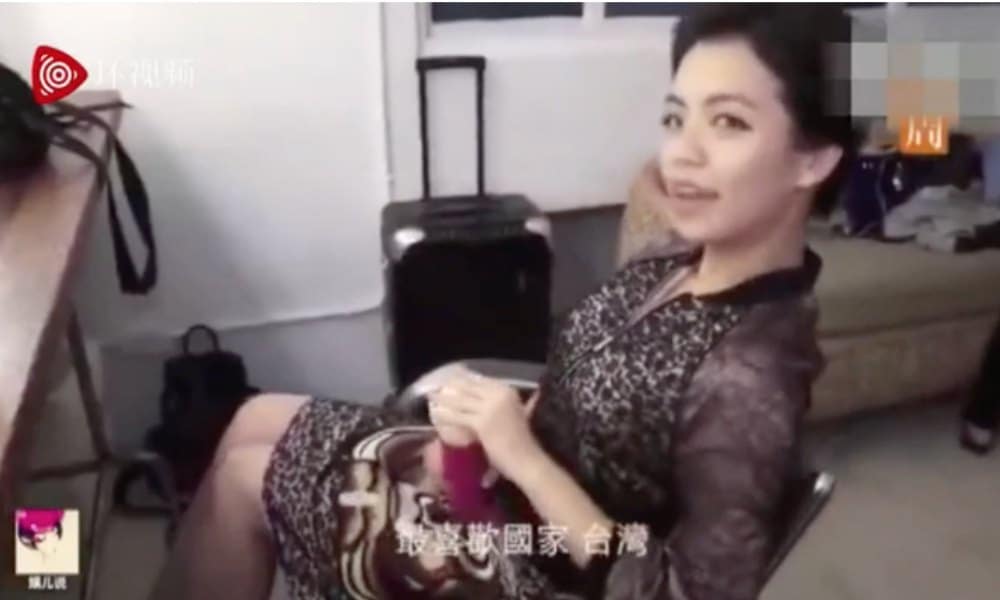
The actress Vivian Sung, who stars in China’s hit movie Hello Mr. Billionaire (西虹市首富), has caused quite the social media storm this week for saying Taiwan is her “favorite country” in a short interview clip that resurfaced on Chinese social media.
In the short clip, the young actress (b. 1992), is asked several short questions, one being: “What is your favorite country?” The actress then cheerfully answers: “My favorite country is Taiwan!”
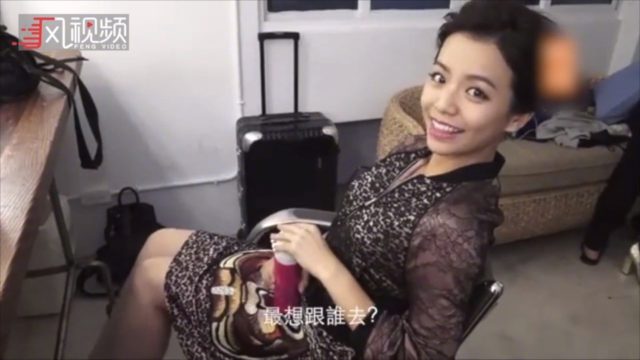
According to Chinese publication The Observer (Guancha/观察者), the clip comes from 2015 and was made by Taiwanse entertainment channel MING WEEKLY, which often features quick fire question interview clips with celebrities – the interviewer asks short simple questions which the celebrities have to answer immediately.
Chinese media reporting on the issue said that by her answer, the actress was “casting doubts over a ‘Taiwanese independence'” (“台独”质疑); in other words, saying she was openly refuting the principle of “one country, two systems,” which, as Hong Kong, also defines Taiwan as part of China.
“What a low level mistake,” some commenters wrote: “How can you answer ‘Taiwan’ when you’re being asked about your favorite ‘country’?” Some crude comments called Sung a ‘sl*t’ who needs to “go back to where she came from.”
Despite much backlash, there were also many people on social media who said: “I bet if you ask most people from Taiwan what country they like most, they’ll answer Taiwan. In case they strongly identify with China, they’ll just say “the Republic of China.” (Taiwan is officially also called the Republic of China (ROC), whereas mainland China is the People’s Republic of China (PRC).)
“How can you blame her for loving the place where she comes from?”, others said.
Vivian Sung became popular after starring in Taiwanese movies such as Our Times (我的少女时代, 2015) and Café·Waiting·Love (等一个人咖啡, 2014). The recent Hello Mr. Billionaire, which has been dominating the Chinese box offices, was produced in mainland China.
“I love my native place, I love my motherland – the Cross-Straits will be one family forever.”
On August 2nd, the actress responded to the controversy on her Weibo account with self-critique and an emphasis on Taiwan and China being one country. She wrote:
“Recently I’ve received a lot of attention and it has really shaken me up. I am Chinese, a post-90s Chinese girl. I come from Taiwan, and China is my home country. I am deeply sorry for [what I said during] that fast question interview before. Over recent years, it is because of your support that I’ve been able to work in mainland China. The variety of cultures and customs in different cities and regions [in China] deeply interest me and I have come to realize my love and respect for this rich country. Taiwan is where I was born, and mainland China is where my dreams came true. It is because of the favor-granting policies issued by the country this year that I’ve been given more room for development and learning opportunities. I still have a lot to learn, and I am open-minded in doing so. I feel proud as a Chinese in receiving your criticism and guidance. I love my native place, I love my motherland – the Cross-Straits will be one family forever.”
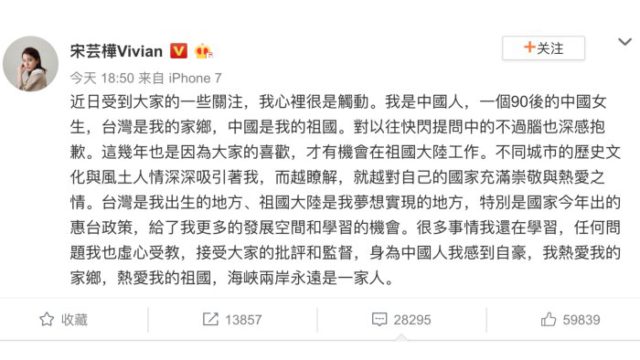
Sung’s post, which was shared nearly 14,000 times in the hours following its publication, also became a topic of debate.
“I just hope you’re not saying this to earn [more] money,” a typical comment said.
“She’s always been taught about Taiwanese independence, so it’s not a problem when she says she loves Taiwan,” one popular comment said: “We’ve always been taught that Taiwan is an inseparable part of China, so it’s also okay [for us] to resist.”
Sung is not the first celebrity causing a social media storm over Cross-Straits relations. In 2016, popular Taiwanese model ‘Stella’ (史黛拉) stirred controversy for calling mainlanders ‘426’, a Taiwanese term for scolding people from the PRC. (The pronunciation of ‘426’ [死阿陆] sounds similar to ‘damned mainlanders‘ [死大陆人] in Taiwan’s Hokkien dialect.)
In that same year, two other celebrities from Taiwan also became the victim of ongoing political tensions between mainland China and Taiwan.
Pop star Chou Tzuyu (周子瑜) angered netizens from mainland China by waving a Taiwanese national flag on a Korean reality show, and actor Show Luo (罗志祥) angered netizens from Taiwan by saying that Taiwanese and mainland actors “are all Chinese.”
In this latest controversy, there are also many people who refuse to take a side.
“Just be yourself, then you’ll always be better,” one popular comment said. Other comment sections had been closed for viewing by Thursday night.
By Manya Koetse
Follow @whatsonweibo
Spotted a mistake or want to add something? Please let us know in comments below or email us.
©2018 Whatsonweibo. All rights reserved. Do not reproduce our content without permission – you can contact us at info@whatsonweibo.com.

China Brands, Marketing & Consumers
Starbucks Goes Xinjiang & The Kardashians in China
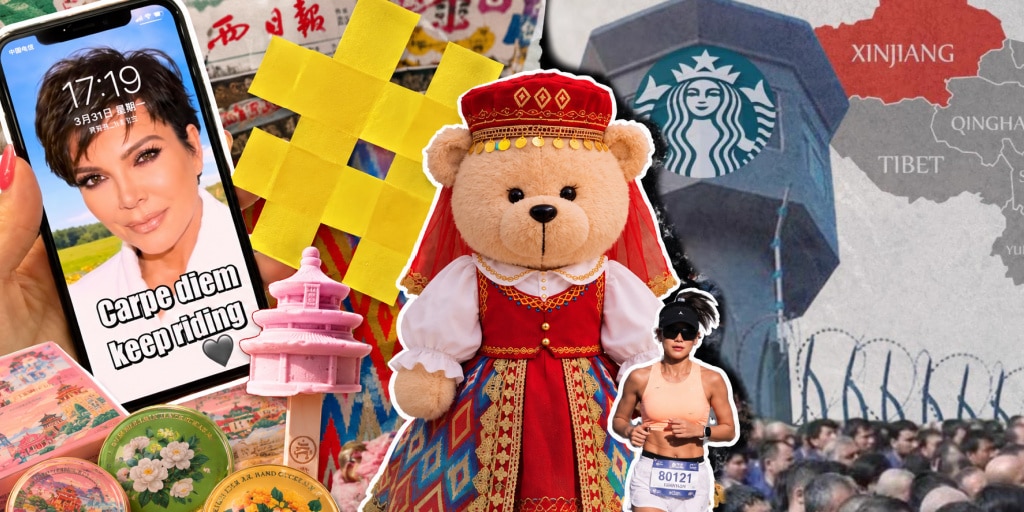
Starbucks rebrands as “Star-Bazaar” in Urumqi—what does it say about shifting perceptions of Western brands in China? Also: a cheating sports influencer and the souvenirs that became most hated.
Originally published in the Eye on Digital China newsletter on Sunday, October 4, 2026.
In this edition:
- Quick scrolls: A Chinese athlete cheated her way to the Berlin Marathon’s finish
- Zooming in: When Localization Gets Political: Starbucks Goes Xinjiang
- On the Feed: The Kardashians in China
- Phrase of the Week: The 3 souvenirs sold everywhere, but nobody wants them
🗞️ QUICK SCROLLS
🇯🇵 The National Day holiday has begun, but nobody’s going to Japan. Although Japan was the number one outbound destination for Chinese travelers during last year’s October holiday, it has now dropped out of the top ten destinations entirely. According to data from Chinese tour operator Tuniu (途牛), Indonesia, Turkey, and South Korea are among this year’s most-booked overseas destinations.
🚲 Chinese fitness influencer “Abeeeer” was caught cheating during the Berlin Marathon after she posted about running her “personal best.” The sport-blogger (530k+ followers on Xiaohongshu) was photographed riding on the back of a bicycle around the 38-kilometer mark. On Saturday, she publicly apologized and admitted that she had broken the rules and that she was “feeling unwell.”
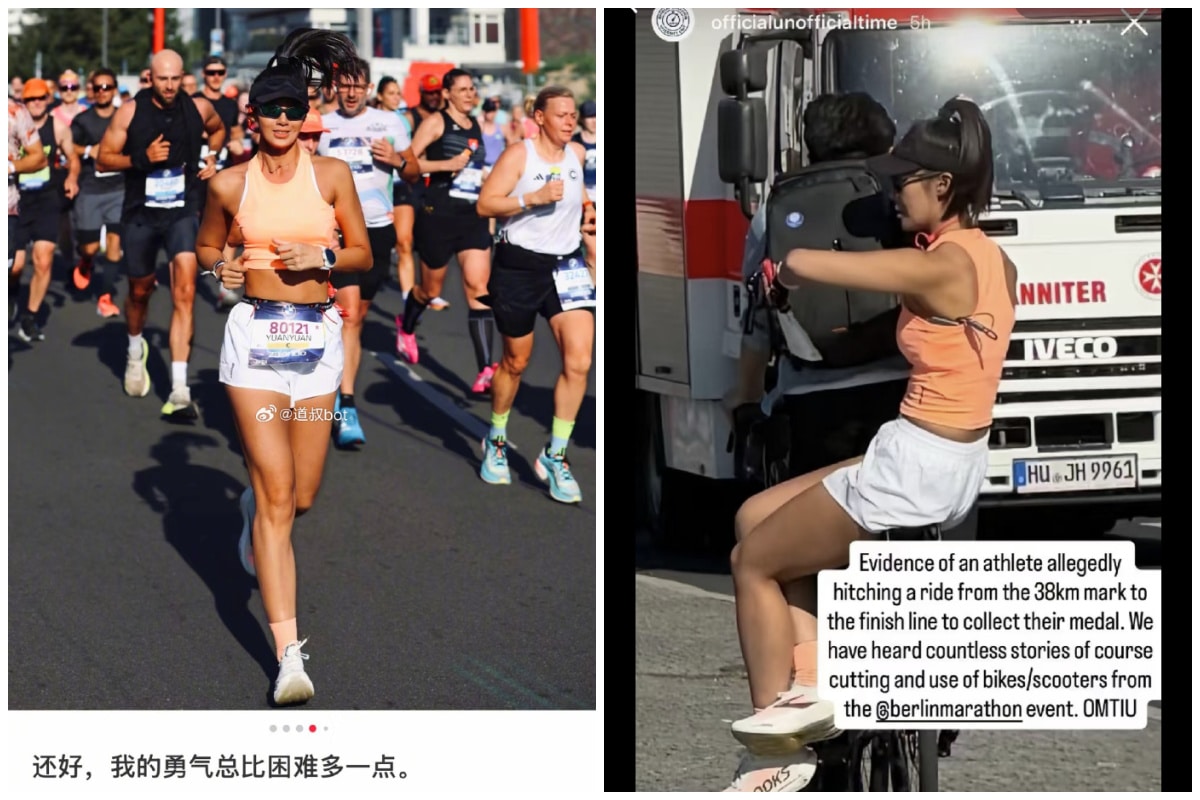
The sports influencer was caught hitching a ride to the finish line.
🏳️🌈 Japanese volleyball player Rui Takahashi came out as gay on Tuesday, saying he wanted to help others struggling with their sexuality by coming out publicly. On Douyin, many Chinese fans and commenters praised Rui for his bravery.
🤖 Former Global Times editor-in-chief Hu Xijin (胡锡进) published a National Day essay praising the country’s achievements but forgot to delete the AI chatbot’s closing follow-up question (”Would you like me to read through the whole text again and check it for omissions?”). Hu quickly deleted the AI prompt, but “Hu Xijin’s National Day AI ghostwriting fail” had already gone trending.
⚽ Chinese football produced…
Chapter Dive
The Power of Ugly: Why Niu Lai Became China’s Unlikeliest Box-Office Hit
How the two-person animated film Niu Lai turned its “ugly” visuals, dreamcore nostalgia, and remarkable cinema journey into a nationwide participatory meme.

Eye on Digital China is a reader-supported publication by
Manya Koetse (@manyapan) and powered by What’s on Weibo.
It offers independent analysis of China’s online culture, media, and social trends.
To receive the newsletter and support this work, consider
becoming a paid subscriber.


Starbucks Goes Xinjiang & The Kardashians in China

Red Carpet, Pandas, and Power: How China Read the Trump-Xi Summit

Keeping Score of History: The Mukden Incident and China’s Basketball Defeat to Japan

The Rise of “Shuaqi-ism,” Taking Starbucks to the Fields, and Pretending to Go to Work

Why Japan Has So Many Surnames, China’s Back-to-School Shifts & Taiwan Pavilion Trouble

“God Won’t Save Us, but the PLA Will”: Floods, Faith, and Kung Fu Soccer Nostalgia

How Chinese AI Videos Turned Foreigners into Villains

The Power of Ugly: Why Niu Lai Became China’s Unlikeliest Box-Office Hit

AI Actress Ad Pulled, Baihaitun Disrupts Shanghai and Cicada Meme Bugs Huawei

Blame Games & Bad Signs: Nepal–Tibet Floods, Huawei’s Toilet Trouble, “Screwed” Graduates
-
 Chinese New Year8 months ago
Inside Chunwan 2026: China’s Spring Festival Gala
-

 China Brands, Marketing & Consumers11 months ago
Hasan Piker’s China Trip & the Unexpected Journey of a Chinese School Uniform to Angola
-

 Chapter Dive7 months ago
Inside the Great Chinese Debate Over the Iran War
-

 China Trend Watch11 months ago
Japan Tensions, Nexperia Fallout, Yunnan’s ‘Wild Child,’ & “Modern Opium”