Weiblog
China’s Post ’95 Generation’s Average Age for First Love is 12
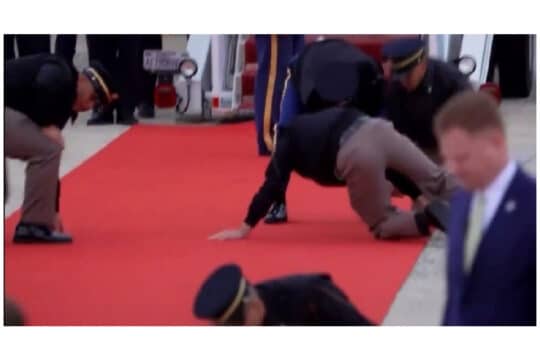
According to recent research by Beijing University, China’s post-1995 adolescents are 12 when they first fall in love. On average, they have their first sexual experience at the age of 17.
Published
10 years agoon
According to recent research by Beijing University, China’s post-1995 adolescents are 12 when they first fall in love. On average, they have their first sexual experience at the age of 17. China’s post-95ers are early bloomers compared to the generations before them.

A recent survey by the Beijing Sociology Research Center in cooperation with Chinese dating site Baihe, published in the Chinese Love and Marriage Report (中国人婚恋状况调查报告), reveals that the post-95 generation on average have their first love experiences at the age of 12, and their first sexual experience at the age of 17, Chinese media report.
The average age to fall in love for the first time for those born between 1980-1985 on average is 18.54. For those born after 1990, it is 15.18, and for the post 1995-ers, it is 12.17.
The first sexual experience of the post-95ers is also much earlier than those of the previous generations; for the post-1980ers, it is at the average age of 22, instead of 17.
The topic became trending on Weibo under the hashtag of “Chinese Love and Marriage Survey” (#中国人婚恋调查#), with thousands of people commenting on it.
Most netizens who respond do not seem to recognize themselves in the statistics. “I am thirty, where is my first love?!” one Weibo user wonders. “I’m lagging behind,” one netizen responds: “I am 22 and still single, I’ve never hooked up with anyone.” Another Weibo user also seems worried: “I am 26 and my sex life is non-existent,” he says with crying emoticons.
For one netizen, reading all comments on this topic has done much good: “After seeing so many people of 21 who also don’t have a boyfriend or girlfriend, I feel quite relieved,” he says.
– By Manya Koetse
Follow @WhatsOnWeibo
Image: http://v.baidu.com/cube/68084.htm
©2016 Whatsonweibo. All rights reserved. Do not reproduce our content without permission – you can contact us at info@whatsonweibo.com.
Manya Koetse is a sinologist, writer, and public speaker specializing in China’s social trends, digital culture, and online media ecosystems. She founded What’s on Weibo in 2013 and now runs the Eye on Digital China newsletter. Learn more at manyakoetse.com or follow her on X, Instagram, or LinkedIn.
You may like
Featured
Quick Eye: AI Drama Takedowns, Meta’s Blocked Deal, and “Lying Flat” Conspiracy
Catch up on the week’s most critical China trends in 3 minutes.
Published
22 hours agoon
April 29, 2026
This is Quick Eye, a brief scan of what’s been trending across Chinese social media.
The Big Stories
📌 The Major May Day Holiday The upcoming May Day holiday is about to start, and because it runs from May 1–7 this year, it’s being called a “super holiday” and a time for “cultural tourism spending” (文旅消费). China’s Ministry of Transport is expecting a massive travel surge with an estimated 1.52 billion cross-regional trips.
📌 Japan’s “long-term war” Japanese Prime Minister Sanae Takaichi convened a high-level security meeting on April 28 to revise Japan’s National Security Strategy documents, during which she called for preparations for “new styles of warfare” and “long-term war.” In Beijing, these developments are being framed as Japan rebuilding its “war machine” and “repeating the mistakes of history.”
📌 China blocks Meta’s $2 billion Manus acquisition Seen as an AI sovereignty move, Chinese authorities have called on Meta to unwind its acquisition of Manus, the AI agent startup founded in Beijing in 2022 that relocated to Singapore last year. Meta announced the deal in December 2025, with reports valuing it at roughly $2–3 billion. China’s National Development and Reform Commission (NDRC) said in a statement that it is prohibiting the foreign acquisition and requires all parties to withdraw.
The Quick Eye
👁 Mass Takedown of AI Short Dramas
[#红果回应下架多部AI短剧#] [#红果回应菩提临世下架原因#] [#红果回应菩提临世下架原因#]
Over the past days, users of the Chinese apps Douyin and Hongguo (a short-form drama platform) discovered that many AI-generated short dramas have been taken down. One of those is Bodhi Comes to the World (菩提临世), a massively popular AI-generated fantasy short drama—based on the Chinese classic Journey to the West—that was recently launched and has gained millions of views.
It has not been officially disclosed why the drama was taken down, beyond “complying with platform content governance requirements,” but it is possible that the AI depiction of religious figures played a role, or that there was potential ‘borrowing’ from copyrighted visual designs (such as Black Myth: Wukong).
Regardless, the large-scale takedown of various AI dramas signals a structural shift in China’s AI short drama industry (read more about that here): AI-generated content now faces the same scrutiny as conventionally produced dramas.
👁 Lying Flat Subculture Blamed on Foreign Forces
[#境外组织大力资助网红煽动躺平#]
On the same day China’s Politburo held its quarterly economic meeting, where “involution-style competition” (内卷式竞争) was condemned, China’s Ministry of State Security published a noteworthy article claiming that foreign organizations have been systematically funding Chinese online influencers to promote the “Lying Flat” culture (tangping 躺平) among young people.
“Lying Flat” is a subculture or trend among demotivated youth facing intense social and economic pressures, especially among generations dealing with “involution”—a hyper-competitive system in work and education where people work harder without actually getting ahead. In response, some choose to opt out of the rat race and become passive: “lie flat.”
Now, it is argued that this trend—ongoing for years—is not organic, but rather hyped up and driven by “hostile anti-China forces.” (Read more about Lying Flat here).
👁 14-Year-Old Boy Sentenced to Life in Prison[#女子遭法官猥亵16分钟录音曝光#] [#山西猥亵当事人法官被停职#]
In what’s probably the most discussed legal case of the week, a 14-year-old boy from Yunnan has been sentenced to life imprisonment with permanent deprivation of political rights by a Qujing court on April 28. The boy was found guilty of raping and killing a 15-year-old female classmate in July 2025.
The ruling has drawn national attention due to the severity of the crime and the age of the defendant. As China has seen waves of violent incidents at schools for years, netizens have been calling for tougher criminal laws “to protect minor victims instead of juvenile offenders.”
Although Chinese criminal law prohibits the application of the death penalty under the age of 18, some laws have been amended in 2021 to lower the age of criminal responsibility from 14 to 12 in extremely cruel cases or violence that results in death. Life imprisonment is the maximum penalty available under the current legal framework for juvenile offenders.
A Different Note
⭐ McDonald’s Becomes “Peony Tower”
A Guangzhou McDonald’s recently transformed itself into a Cantonese classic by changing its name to “Peony Tower,” which in Cantonese sounds very similar to “McDonald’s” (牡丹楼 mou5 daan1 lau4 → 麦当劳 mak6 dong1 lou4).
The temporary name change, which went viral, stems from an old local joke: a northern tourist in Guangdong takes a taxi and asks for a good restaurant recommendation, and the driver suggests a place called “Peony Tower.” The tourist assumes it’s a fancy Cantonese restaurant, only to arrive at a McDonald’s.
The fact that McDonald’s embraced the word joke and went all the way—adding a retro sign, red plastic stools, and antique-style stained-glass Manchurian “windows”—was very much appreciated by netizens, who were happy to see this ultra-global fast-food brand fully “localized.”

The campaign was organized to promote a new Cheese Pineapple Chicken Burger. This “Hey Pineapple” burger is called 嘿凤梨 (hei1 fung6 lei4) in Cantonese, another wordplay, as it sounds very close to “I like you” (喜欢你 → hei2 fun1 nei5).
On My Feed
🍲 Durian Chicken Stew
You either love it or you hate it. If it’s the latter, hopefully you’ve forgiven me for introducing the Tripe-Strawberry Hotpot (毛肚草莓火) to you in the last Quick Eye. The latest viral fruit-meat combination is Durian Chicken Stew, also known as Durian Chicken Soup (榴莲炖鸡汤).
It’s a slow-braised stew where durian and chicken are cooked together until soft, with the sweet and savory flavors blending together. The strong smell of raw durian apparently also mostly disappears when cooked (according to online discussions).

It’s already a popular combination in some regions, and many netizens say they love the freshness of the broth, brought out by the milky sweetness of durian and the juicy chicken, often paired with a lime-chili-garlic sauce. Some call it “a forbidden love between fruit and chicken,” while others say it ruins the chicken — but if you love both durian and chicken, it’s probably a hit!
❗Beginner’s Course Mandarin / Special note:
Perhaps you’re already familiar with RealTimeMandarin by Andrew Methven (we previously shared some of our content on Substack). Andrew’s now starting a 12-week intensive course for those at beginner level Mandarin (HSK1-3). It’s a fully interactive program that teaches you Chinese characters, reading, listening, & speaking together through real Chinese news, with feedback from native Chinese speakers and community support.
It kicks off on Sunday, 3 May, and the deadline to join is midnight Saturday, 2 May. You can find more information and apply here. In case you’re joining: Jiāyóu (加油)! (meaning: you’ve got this!)
P.S. If you find this useful and aren’t a paying subscriber yet, subscribe for full access and join a growing community of journalists, researchers, and policy professionals who rely on Eye on Digital China for deeper context and early signals from Chinese social media.
Chapter Dive
Beyond the “Ching Chong” Controversy: The “Pocket Asian” in The Devil Wears Prada 2
Published
4 days agoon
April 26, 2026
The Devil Wears Prada 2 is one of the major blockbusters of China’s popular May Day movie season. However, among Chinese audiences, discussions surrounding the Hollywood film have shifted from “Runway” to “racism”. What’s behind the controversy?
It’s almost the May Day holiday, and seventeen films are lined up for one of the most important box office moments of the year in China. One of them, the only major Hollywood film, is the American movie The Devil Wears Prada 2, the long-awaited sequel to the 2006 blockbuster starring Anne Hathaway and Meryl Streep.
Both actresses visited Shanghai for the film’s China premiere earlier this month, where attendees were shown the first 20 minutes. Early reactions were positive, online fans were enthusiastic, and all signs pointed to a strong box office run.
But that seemed to change this week as the film began facing online backlash. Reports emerged describing it as “racist” and “offensive” in China, focusing on the role played by Chinese American actress Helen J. Shen—namely, the new geeky office assistant, ‘Jin Chao.’
By now, the story of the film drawing “furious reactions” or even “facing a boycott” in China has been picked up by dozens of global media outlets, from The Guardian to the Global Times.

Collection of headlines about the backlash
But how big is the controversy, really?
Let’s first look at the story behind these headlines before diving into the bigger context.
From Niche Discussion to Global “Backlash”
Media reports about The Devil Wears Prada 2 facing backlash in China began circulating around April 17–18, when a promotional clip of the film was officially released, introducing the Asian or Chinese American assistant to Anne Hathaway’s character Andy.

In the clip, the petite and somewhat socially awkward young woman introduces herself as ‘Jin Chao’ and lists her academic credentials, including graduating from Yale with a high grade point average.
One of the earliest reports claiming there was major backlash came from entertainment blogger Mengshen Mumu (萌神木木), published on QQ News on April 18 under the headline: “The Devil Wears Prada 2 embroiled in anti-China controversy! Asian character portrayed stereotypically, name seen as deliberately offensive.”1
China.com republished the same blog under the title “The Devil Wears Prada 2 Asian controversy: stereotypical portrayal sparks public outrage.”2
The article claimed the movie was sparking backlash and calls for a boycott among “netizens” (网友), focusing on the character’s nerdy portrayal and her name, rendered as “Qin Chao” or “Qin Zhou” (秦舟). According to the author, its English pronunciation closely resembled “Ching Chong,” a historically racist term used to mock Chinese people.
It concludes: “At present, the film’s reputation appears to be on shaky ground, and its box office prospects in China may not be promising.”
Notably, the only evidence cited for this supposedly widespread backlash consists of a few screenshots of comments made by Douban users in a discussion group about the film.
That discussion—now private and inaccessible—appears to have been the basis not only for this article, but also for many of the Chinese, Korean, and international reports that followed, as they all trace back to the same China.com source.
This context matters. It suggests that the “backlash” was less organic than portrayed, and that media amplification played a significant role in turning a niche discussion—one that did not trend on major platforms like Weibo—into a narrative of nationwide outrage. That narrative was then picked up by international media and presented as the mainstream view of Chinese audiences.
Earlier, the same source published another article hyping a separate controversy surrounding The Devil Wears Prada 2, this time involving a pair of embroidered shoes gifted to the cast at the Seoul premiere. The piece suggested the design was traditionally Chinese and should not be labeled as Korean, accusing Korea of cultural appropriation. Although this gift had nothing to do with the movie itself, it was dragged into the film’s potential box-office success, creating a storm in a teacup because controversial topics do well in terms of clicks.
Beyond the media’s role in fueling the current “Ching Chong” storm, there are other factors that help explain why this issue remained relatively limited before being amplified.
👉 The name itself is not necessarily offensive.
There is considerable confusion over the character’s name, which plays a key role in the controversy due to its alleged discriminatory connotations.
The Chinese subtitles render the name as Qin Zhou (秦舟), while in the scene it sounds more like ‘Jin Zhao,’ and the role is listed on IMDb as ‘Jin Chao.’ Others have suggested it sounds like ‘Chin Chou,’ which could resemble “Ching Chong.”
One of Weibo’s most influential movie-related accounts (@格兰芬多公共休息室) addressed the issue on April 19 by directly contacting the film’s translation team. According to their report, the correct name is ‘Jin Zhao,’ and the rendering as Qin Zhou (秦舟) appears to be a translation error.
In Chinese naming conventions, the family name comes first, meaning ‘Jin Zhao’ would be written as Zhao Jin (赵瑾)—a fairly standard and unremarkable name.
👉 Many Chinese would not immediately link this name to an offensive slur.
Not only is the character not actually named “ching chong,” the term itself originates as a mocking imitation of Chinese languages within an English-speaking context.
Although in today’s global media environment, many Chinese audiences are aware of the term, it is primarily understood as a form of English-language racism directed at Chinese-speaking people by outsiders, not as something rooted within Chinese linguistic or cultural contexts.
Interestingly, while English-language media reports suggest Chinese audiences are outraged, some Chinese commentators argue that much of the anger is actually coming from Korean and other international internet users. Chinese outlet Guancha even reported—in a now-deleted post—that the controversy itself was largely driven from outside China.
All of this has led to a situation where, despite a week of headlines describing “waves of netizen anger” and “boycotts sweeping the internet,” the “Ching Chong controversy” itself has not, at the time of writing, generated widespread outrage across Chinese social media platforms. Many related posts have received minimal engagement.
Although many viewers agree that the screenwriters might have chosen a more flattering name than Jin Chao or Jin Zhao, there is little to suggest this was deliberately intended as offensive, nor that it was widely interpreted as such by Chinese audiences.
The “Pocket Asian” Problem
However, this initial controversy has prompted many Chinese commenters to look beyond the name and focus on what they see as the real issue with Jin Zhao’s character. In the run-up to the film’s release, these discussions have been gaining traction online.
One Weibo commenter wrote:
💬 “Even if ‘Jin Chao’ and ‘Ching Chong’ don’t sound exactly the same, this Asian character’s portrayal really couldn’t be more outdated… it feels like the director has never seen what real Asian interns in the fashion industry are actually like.”

Another post asking users how they felt about the controversy received thousands of likes, with many commenters expressing disappointment over how the film’s most visible Asian character is portrayed.
This criticism seems to be widely shared. In a fashion-focused film, Jin Zhao stands out as the least fashionable—wearing a plaid shirt and skirt, hair pinned up, thick glasses—making her appear almost like a caricature among the surrounding “urban sophisticates.” For many viewers, this feels like a familiar stereotype that does not reflect the reality of today’s trendy Gen Z city girls.
A recurring sentiment is that while Hollywood—and companies like Disney, the film’s distributor—relies heavily on the Chinese market, Chinese audiences themselves feel they are not being taken seriously.
On April 22, Weibo author Jokielicious published a post (now with over 9,600 likes, 257 comments, and 773 shares) explaining the concept of the “Pocket Asian” (口袋亚洲人), an online slang term that has circulated for some time.
It refers to a type of physically small, non-threatening Asian character often seen on Western social media, where people jokingly describe Asian friends as “small enough to fit in your pocket.”
According to the author, this “Pocket Asian” is also a recurring figure in Hollywood films: typically subordinate to the white protagonist, often cast as an assistant or sidekick, embodying familiar stereotypes—comically awkward, unobtrusive, and non-threatening.
Although The Devil Wears Prada 2 has not yet been officially released in cinemas at the time of writing, assistant Jin Zhao is already seen by some as a textbook example of this trope: petite, deferential, yet also a hardworking overachiever.
In the promotional clip, she introduces herself by listing her credentials:
“If you don’t want me, you can interview someone else. That’s totally fine. I did go to Yale, 3.86 GPA, lead soprano of the Whiffenpoofs, and my ACT score was 36 on the very first time.”

According to Jokielicious, this fits the “Pocket Asian” mold perfectly: depicting Asian women as petite and cute, yet also toy-like or accessory-like, something to be “carried” or “used.” For critics, this goes beyond harmless “cuteness,” reducing a person to a racialized physical symbol: small, agreeable, and easily controlled.
One Weibo commenter (@霄林龙松兆) drew a historical parallel:
💬 “Does everyone remember the standard ‘dwarf’ figure in Elizabethan court dramas? Now this type of role has become a ‘symbolic dwarf,’ but the core function remains the same: obedient, somewhat intelligent and entertaining, small in stature, controllable—summoned at will and dismissed just as easily. The difference is that in the past it was a European dwarf; now it’s a different kind of ‘dwarf.’”
Other commenters pointed out that, with Anne Hathaway herself not being particularly tall (5’8” / 1.73 m), casting an Asian actress significantly smaller than her appeared to be a deliberate choice.
The issue raised by the Weibo blogger is far from new. In academic research, similar patterns have been discussed for decades—and they are not limited to female characters.
One of the most cited examples is the caricatured Japanese neighbor, Mr. Yunioshi, played by Mickey Rooney in Breakfast at Tiffany’s (1961), often cited as a quintessential stereotyped Asian comedic “outsider.” Other examples include Long Duk Dong in Sixteen Candles (1984), Data in The Goonies (1985), Yen (played by Shaobo Qin) in Ocean’s Eleven (2001), Ngoc Lan Tran in Downsizing (2017), Jian Yang in Silicon Valley, and Leslie Chow (Ken Jeong) in The Hangover (2009).

Across these roles, a familiar pattern emerges of the Asian sidekick figure, combining various stereotypes within a broader Western representational framework that “others” and exoticizes Asian characters.
Why The Devil Wears Prada 2 Hits a Nerve in China
Over the past years, there has been significant improvement in Hollywood and beyond when it comes to the representation of Asian characters. From Crazy Rich Asians to the Fresh Off the Boat, Asian and Asian American communities have increasingly been portrayed in more diverse and authentic ways.
Nevertheless, stereotyping and underrepresentation still persist across films, TV series, and commercials.
So why is The Devil Wears Prada 2 in particular igniting these discussions now?
Perhaps it is precisely because of what the film represents: a cosmopolitan, fashion-driven story about ambitious career women navigating elite professional spaces.
Most Chinese millennials did not see the original 2006 film in theaters, but through pirated DVDs bought at corner shops. Later on, Gen Z audiences discovered it via online platforms. Over time, The Devil Wears Prada carved out a special place in the Chinese market, particularly among urban, educated young women navigating career pressures. Its themes of workplace hierarchy, female ambition, and the tension between professional success and personal identity strongly resonated with younger generations.
The film’s fashion element was a key part of its appeal. At the time of its release, China was entering a period of rapid luxury brand expansion, and the film offered a glimpse into a global fashion world that still felt distant for many.

The cultural footprint of The Devil Wears Prada (known in Chinese as “The Queen Wears Prada” 穿普拉达的女王) is also evident in how its sequel is being marketed. China is treated as a primary market: the film is released a day earlier than in North America, the main stars attended the Shanghai premiere, Hathaway wore a Chinese designer, and promotions were tied to Vogue China.
But this is also where it stings.
China is a key market, and Chinese audiences in 2026 are not the same as they were in 2006. Today, Chinese cities are just as—if not more—fashionable, avant-garde, and cosmopolitan as New York or Paris.
So why include a character that the very same audiences you are trying to court may recognize as a stereotype of themselves? This creates a clear disconnect between marketing and content, helping explain why the reaction, whether amplified by media or not, has landed on fertile ground.
One Xiaohongshu user nicknamed ‘Momo’ wrote:
💬 “Despite pouring massive promotional efforts into Asia, the film still reveals outdated thinking in its portrayal. That’s disrespectful to its audience. I’m choosing not to watch it.”
Others echo similar sentiments, with some saying they will skip the film altogether.
Meanwhile, some internet users imagine a reversed scenario: what if Andy, the film’s protagonist, were Chinese or Asian, and her assistant American?

Others have also used AI tools to reimagine the film’s title as “The Racist Wears Prada.”

At the same time, discussions around the film remain mixed. Many viewers are still eagerly anticipating its release and revisiting the 2006 original, while others are more critical.
There are also commercial dynamics at play. Some entertainment bloggers—particularly Mengshen Mumu, who helped trigger the initial wave of reports—claim that the production side has filed complaints across Chinese social media platforms to remove certain critical posts. Weibo has, in fact, taken down at least one hashtag related to the controversy (#穿普拉达的女王2亚裔争议#).
To what extent these controversies will impact the film’s box office performance in China remains to be seen.
What is clear, however, is that these discussions reflect a broader and increasingly visible friction between Hollywood and Chinese audiences in the social media landscape of 2026. It is not just about whether China is represented, but how Chinese characters and cultural elements are integrated and portrayed. Chinese moviegoers are no longer a passive audience. They are increasingly proud, protective, and sensitive to the ways in which they are represented on screen.
As one commenter put it:
“We’re no longer content to be ‘Pocket Asians.’”
🎬 The Devil Wears Prada 2 will be released in Chinese cinemas nationwide on April 30.
-By Manya Koetse
With thanks to Miranda Barnes
Eye on Digital China, by Manya Koetse, is co-published on Substack and What’s on Weibo. Both feature the same new content — so you can read and subscribe wherever you prefer. Substack offers community features, while What’s on Weibo provides full archive access. If you’re already subscribed and want to switch platforms, just get in touch for help. If you no longer wish to receive these newsletters, or are receiving duplicate editions, you can unsubscribe at any time.
-
《穿普拉达的女王2》卷入辱华!亚裔角色造型刻板,名字恶意满满 / QQ News / April 18
↩ -
穿普拉达的女王2亚裔争议 刻板形象引众怒 / China.com / April 19
↩
Subscribe
Eye on Digital China is a reader-supported publication by
Manya Koetse (@manyapan) and powered by What’s on Weibo.
It offers independent analysis of China’s online culture, media, and social trends.
To receive the newsletter and support this work, consider
becoming a paid subscriber.

Get in touch
Have a tip, story lead, or book recommendation? Interested in contributing? For ideas, suggestions, or just a quick hello, reach out here.
Quick Eye: AI Drama Takedowns, Meta’s Blocked Deal, and “Lying Flat” Conspiracy
Beyond the “Ching Chong” Controversy: The “Pocket Asian” in The Devil Wears Prada 2
Su Chao Fever, Mo Yan’s “Scrollable” Book, and Why Li Xiaoran is China’s New Office Icon
Quick Eye: XChat, Orbán, and a Very Questionable Tripe-Strawberry Hotpot
Cancel-Proof: The Rise of China’s AI Actors
Inside Chunwan 2026: China’s Spring Festival Gala
Inside the Great Chinese Debate Over the Iran War
Chinamaxxing and the “Kill Line”: Why Two Viral Trends Took Off in the US and China
Spring Festival Trend Watch: Gala Highlights, Small-City Travel, and the Mazu Ritual Controversy
Two Sessions, a Celebrity Meltdown, and the Rise of China’s “Forget It” Mindset
Popular Reads
-
Chapter Dive10 months agoHidden Cameras and Taboo Topics: The Many Layers of the “Nanjing Sister Hong” Scandal
-
China Insight9 months ago“Jiangyou Bullying Incident”: From Online Outrage to Offline Protest
-
Chapter Dive12 months agoUnderstanding the Dr. Xiao Medical Scandal
-
China Arts & Entertainment7 months agoThe Wong Kar-wai Scandal Explained: The Dark Side of ‘Blossoms Shanghai’