
China Insight
“Witness to China’s Diplomatic History” – Netizens Commemorate Diplomat Wu Jianmin
Chinese diplomat Wu Jianming was killed in a car accident on June 18, at the age of 77. Although Wu has been criticized to be a “dove diplomat”, netizens generally remember him as a sincere and truthful man. His death is widely commemorated on Chinese social media.

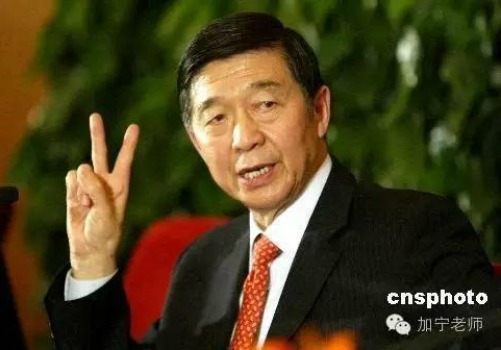
Wu Jianmin (吴建民) was a prominent Chinese diplomat in China. He was trained in French language and literature in Beijing Foreign Studies University, and has since then played an important role in Chinese diplomacy.
During the 1971-1977 period, Wu was one of the first Chinese diplomats residing in the United Nations. He worked at the Chinese Embassy in Belgium, and was ambassador to the Netherlands and France. He was the first Asian president to the International Exhibition Bureau.
Wu was killed in a car accident on his way back home from the airport in Wuhan. The accident was believed to have been caused by driver fatigue. Wu was scheduled to have a meeting the next day for the publication of China’s Peaceful Development White Paper 2016.
Wu’s Diplomatic Ideas
As a diplomat, Wu was an advocate of China’s non-conflictual interaction with the world. Acknowledging that the world’s knowledge of China is asymmetric to China’s knowledge of the world, Wu believes that the proper manner to increase mutual understanding lies in sincere communication. China should also stick to its ancient philosophy of harmony and peace.
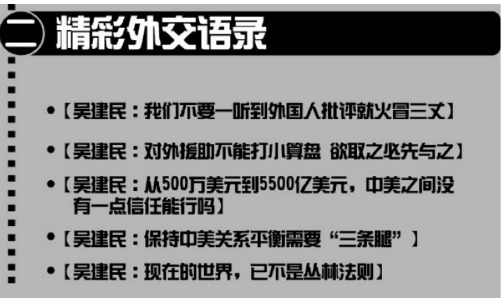
A list of Wu’s quotations by People’s Daily provides a brief look into Wu’s diplomatic thoughts:
His Death is a Loss to the Country
Wu was particularly anxious about the rise of nationalism combined with popularism in China. He believed both trends to be deceptive, as they could potentially lead China and its people back to an inward looking, self-centered worldview – a perspective that would not benefit China’s role in the international society.
[rp4wp]
Wu’s take on China’s role in the world was also why some criticized him. Some deemed him a “dove diplomat” with a naive believe in peace and too soft to stand up to the world. Wu himself reacted to such criticism by stating that those who view global politics as dangerous and confrontational no longer understand the world today. This view has brought Wu to the centre of the national debate on China’s diplomatic strategies.
Although not everybody agreed with his views, most netizens see Wu as a truth-speaking diplomat. Many lit candles for the deceased diplomat under the Sina Weibo topic “Wu Jianmin Killed in Car Accident” (#吴建民车祸去世).
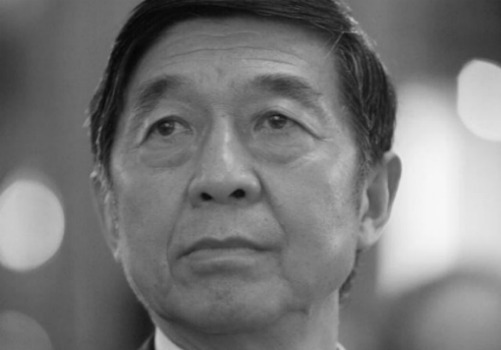
“Mr. Wu was a witness of Chinese diplomatic history. He had a rational and distinct view of the world. He was an excellent diplomat and his death is a loss to the country”, writes one netizen.
Some netizens show sympathy with Wu’s diplomatic ideas and worry that China’s future foreign policy will become less peaceful: “Does the death of Ambassador Wu suggest the end of a diplomatic époque? Must the national discourse be diverted to international fractures in a time of economic pressure? Now many are propagating war on line. This is not a good phenomenon.”
Netizens Show Concern over China’s Diplomacy
This is not the first time Chinese netizens express concerns over China’s diplomatic strategy. Last month, Minister of Foreign Affairs Wang Yi sharply berated a journalist during a state visit in Canada.
When the journalist questioned why Canada pursued closer ties with China despite the PRC’s human rights situation, Wang Yi interrupted and criticized the journalism for being too prejudiced: ““I have to say that your question is full of prejudice against China and arrogance … I don’t know where that comes from. This is totally unacceptable,” he said. He also stated that only Chinese can comment on its human rights situations.
Wang Yi’s reaction triggered much discussion on Chinese social media. While some felt proud that Wang spoke out against foreign criticism, there were also those who did not agree with the manner in which he did this. A video clip of Saudi Arabia Minister of Foreign Affairs Adel Al Jubeir was widely shared as a contrasting example to Wang Yi. Al Jueir, when confronted with a journalist’s statement that Islam and terrorism cannot be separated, answered with grace and reason.
“A man is a true man not because he persists he’s right even when he knows he is wrong”, says one netizen, “he is a true man because he has the courage to own up to his mistakes. Look at our foreign minister. Patriotism is horrible; it can deprive a nation of its sense of right and wrong”.
Many Chinese netizens are increasingly concerned about China’s diplomacy in the world today. Their stance is different from the public sentiment that was reported on some years ago when China’s Foreign Ministry claimed they were under pressure of the public and frequently received packages of “calcium tablets”, allegedly intended to “strengthen their spine against foreign pressures” (Shambaugh 2013, chapt 3).
Although many Chinese might have believed the diplomatic strategy of their country was far too soft, the foreign minister declared in 2014 that they’ve been receiving far less packages of calcium tablets.
The growing online discussions and lessening calcium deliveries might be an indication that China’s public opinion is slowly changing into questioning a too assertive tone in China’s foreign affairs.
– By Diandian Guo
Follow @WhatsOnWeibo
Shambaugh, David. 2013. “Chapter 3: China’s Diplomatic Pressure”, in China Goes Global: The Partial Power. Oxford and New York: Oxford University Press (Google Books).
©2016 Whatsonweibo. All rights reserved. Do not reproduce our content without permission – you can contact us at info@whatsonweibo.com.



China Insight
Blame Games & Bad Signs: Nepal–Tibet Floods, Huawei’s Toilet Trouble, “Screwed” Graduates
How the Nepal–Tibet floods are being discussed on Chinese social media. From solidarity and sadness over Gyirong to censorship and anger at Taiwanese, Indian, and Western media.


In this edition:
- Teachers get shamed for their students’ bad grades
- Why the Nepal–Tibet floods sparked arguments about blame, BBC reporting, and Chinese censorship
- Huawei doesn’t appreciate viral toilet humor
- Dads are carrying mattresses into Peking University
- Chinese graduates are getting “screwed” by a million-dollar company
🗞️ QUICK SCROLLS
🧑🏫 A teacher “shame photo” taken at a local education meeting in Liangshan, Sichuan, has sparked nationwide outrage. A group of primary school teachers was forced to pose in front of a giant “SHAME” sign because their classes’ average final exam scores were below 30. “This isn’t merely ‘shame’—it’s outright public humiliation,” one commenter wrote. Liangshan’s education bureau confirmed the photo was real and said it was “puzzled” by the practice; the Leibo County government has apologized and launched an investigation.

Teachers lined up in front of a big screen that says: “Group photo of primary-school teachers whose classes averaged below 30 points in the 2025–2026 end-of-year examinations”
🥬 “Chemical cabbages” (药水白菜) or “formaldehyde cabbages” (甲醛白菜) have been a major topic on Chinese social media after a Chinese investigative vlogger captured workers in Kangbao, Hebei, dipping cabbages into formaldehyde solution before loading them onto trucks. This procedure, which allegedly adds 2–3 extra days of shelf life, is illegal: formaldehyde is a Group 1 carcinogen.
🍫 It’s been a bad week for Mars-owned chocolate brand Dove. A marketing campaign suggesting that a girl received a box of chocolates from a man she was flirting with while her boyfriend was away (“趁男友不在”) drew anger online. Then the brand’s apology also became a massive failure: when it was flagged as 100% AI-generated, Chinese netizens had little sympathy left for the brand.
💸 A “century-old” shark fin soup served by a Shanghai restaurant for no less than 4,800 yuan (US$715) per bowl (!) has gone viral for its exorbitant price and claims that it has been “simmering for more than 100 years,” since the late Qing dynasty. There was plenty of skepticism about the soup, but also disbelief that anyone would spend an ordinary person’s entire monthly living budget on a single bowl of soup.
👩💻 An eighth-grader from Shanghai earned 18,000 yuan (US$2,678) in three days using AI. Despite her limited programming experience, the 13-year-old placed third in a marketing hackathon, where teams had 48 hours to develop and market an entire AI product. She launched a study-companion app called “Being There” (在场) that 92 people bought. Although Chinese media praised her, commenters were critical, suggesting she received help from her mother, an influencer on Douyin.
💍 In an aging society where marriage rates have AGAIN dropped, more and more places are making it easier than ever to tie the knot. Registration services are popping up in…
Chapter Dive
The Power of Ugly: Why Niu Lai Became China’s Unlikeliest Box-Office Hit
How the two-person animated film Niu Lai turned its “ugly” visuals, dreamcore nostalgia, and remarkable cinema journey into a nationwide participatory meme.

Eye on Digital China is a reader-supported publication by
Manya Koetse (@manyapan) and powered by What’s on Weibo.
It offers independent analysis of China’s online culture, media, and social trends.
To receive the newsletter and support this work, consider
becoming a paid subscriber.


Keeping Score of History: The Mukden Incident and China’s Basketball Defeat to Japan

The Rise of “Shuaqi-ism,” Taking Starbucks to the Fields, and Pretending to Go to Work

Why Japan Has So Many Surnames, China’s Back-to-School Shifts & Taiwan Pavilion Trouble

Blame Games & Bad Signs: Nepal–Tibet Floods, Huawei’s Toilet Trouble, “Screwed” Graduates

The Power of Ugly: Why Niu Lai Became China’s Unlikeliest Box-Office Hit

China’s CITIC Tower Crash: The Story That Never Trended

“Even Pigs Have AC”: The European Heatwave Through Chinese Eyes

“God Won’t Save Us, but the PLA Will”: Floods, Faith, and Kung Fu Soccer Nostalgia

How Chinese AI Videos Turned Foreigners into Villains
The Power of Ugly: Why Niu Lai Became China’s Unlikeliest Box-Office Hit
-

 China Arts & Entertainment12 months ago
The Wong Kar-wai Scandal Explained: The Dark Side of ‘Blossoms Shanghai’
-

 Chinese New Year7 months ago
Inside Chunwan 2026: China’s Spring Festival Gala
-

 China Brands, Marketing & Consumers10 months ago
Hasan Piker’s China Trip & the Unexpected Journey of a Chinese School Uniform to Angola
-

 Chapter Dive7 months ago
Inside the Great Chinese Debate Over the Iran War