
China Insight
“Too Loud, Too Rude”: Switzerland Introduces Separate Trains for Chinese Tourists
“They’re loud and rude, and spit on the floor.”

WHAT’S ON WEIBO ARCHIVE | PREMIUM CONTENT ARTICLE
According to China’s National Tourism Administration (中国国家旅游管理局), China now sends more tourists abroad than any other country in the world. The number of Chinese outbound tourists exceeded 100 million in 2014, spending $155 billion.
Although destination countries welcome the money spent by Chinese travelers, locals often can’t stand the chaos and hassle some Chinese tourists bring to their countries. They consider them to be loud, rude, pushy, and all over the place.
“They’re loud and rude, and spit on the floor.”
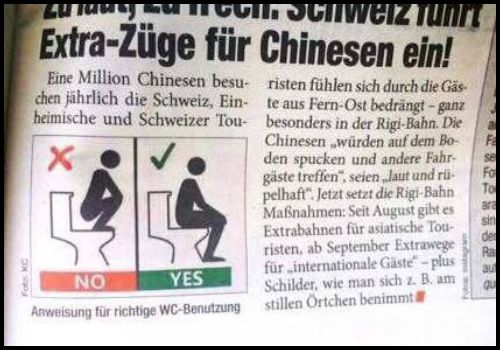
Such is the case in Switzerland, visited by one million Chinese tourists every year. Locals and Swiss tourists often feel harassed by the Chinese, Heute reports, especially on the famous Rigi Railways. Chinese tourists are said to be “loud and rude”, and they “spit on the floor”. Their misbehavior has lead Rigi Railways to take special measures: since August there are extra trains for ‘Asian tourists’, and from September extra ones for ‘international guests’. There are also special signs on the toilet explaining tourists how (not) to use the toilet, according to Heute.
Although Rigi Railways officially has opened extra train carriages for ‘Asian guests’, a local Swiss newspaper clearly stated they were especially meant for Chinese, its headline being: “Zu laut, zu frech – Schweiz führt Extra-Züge für Chinesen ein” (“Too Loud, Too Rude: Switzerland Introduces Extra Trains for Chinese Tourists”).
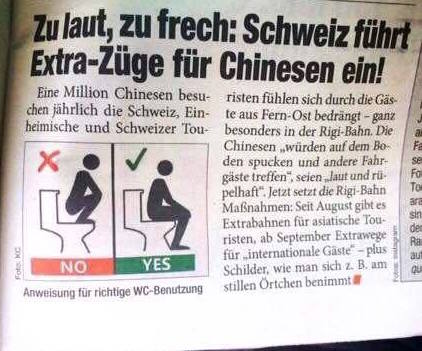
The newspaper also published one of the train’s illustrations that instruct tourists to sit on toilet seats rather than to squat on them. The railway company assumes that Chinese tourists often stand on the toilet, and don’t clean their footprints afterwards.
“Some Chinese have bad manners, but we’re not all like that.”
Once the news was posted on Sina Weibo on August 25th, it gained nearly 2000 comments in one day. The reactions were mixed.
Many users consider it to be discrimination against Chinese tourists. User “Shiya” doubts Europeans can tell the differences between Asians: “They can’t distinguish the different Asians from different countries. Chinese, Japanese and Koreans probably look the same to them. Why are they so sure that the footprints are left by Chinese? The news says that the extra coaches are meant for Asians. However, it tried to draw the public’s attention by emphasizing it is for Chinese in the title. This is discrimination.”
User “Luoluo” follows: “I thought people from western countries advocate freedom and equality, and that they oppose to discrimination. But to me, this [the news] is pure and simple discrimination. I admit that some Chinese don’t really have good manners, but it doesn’t mean we are all like that. I’m fed up that we are blamed for all the uncivilized behavior by Asians. Of course we need to stand up against misbehaviour, but we can’t endure the discrimination.”
“If you’re used to squatting, you just can’t poo by sitting on the toilet.”
Some users try to explain the culture of squatting on the toilet in China. Although ‘western-style’ toilets are popular in China’s bigger cities and airports, there are still lots of squatting toilets, especially in rural areas. Weibo user “JaneyPan” says that from a physiological standpoint, squatting is the best toilet position. “If you are used to squatting, you just can’t poo by sitting on the toilet. But I agree that we need to clean the footprints afterwards.” She then adds: “Maybe the Switzerland railway should consider building squatting toilets on the carriages meant for Chinese tourists.”
“They think they can do anything they want because they have money.”
A large number of netizens also self-reflect, saying it is high time to promote civilized behaviour amongst Chinese travelers, and restore the country’s image. User “Beer Happiness” comments: “Many Chinese now want to travel abroad to see the world as we are getting wealthy. Yet, a small amount of Chinese tourists with low quality have damaged our nation’s image. Most foreigners haven’t been to China. They know things about China through the news. That’s why they think all Chinese people are rude.”
The Switzerland railway issue is not the first case where Chinese tourists are treated differently. Earlier this year, Mainland Chinese tourists were temporarily banned from entering the Wat Rong Khun temple, one of the top tourist destinations in Chiang Rai, Thailand, because of inappropriate toilet usage. The temple was reopened to Chinese tourists on the condition that their tour guides would be held responsible for cleaning the toilets. As user “Xj” suggests: “The tour guide should give etiquette lessons to its clients, especially to the middle-aged tourists. They think can do anything they want because they have money. This is wrong.”
The Chinese government has taken actions to stop the uncivilized behaviour of Chinese tourists abroad. The National Tourism Administration has started to track the actions of Chinese citizens abroad since last year April. Provincial and national authorities will be in touch with unruly citizens upon their return to China. This measurement came into effect after a group of Chinese travelers scalded a flight attendant with hot water and threatened to blow up a plane from Bangkok to Nanjing.
“The saddest thing when traveling abroad is to witness the bad behaviour of our people. They really harm China’s reputation,” says user “FPA”: “I understand the intention of these foreign countries who treat Chinese tourists differently. I mean, who wants to travel with Chinese tourists who are loud, rude and fight over small things?” In the end, like a lot of other netizens, user “FPA” calls on Chinese travelers to respect the locals and their culture: “We are making progress on this. I just hope foreign countries won’t discriminate against us.”







China Insight
The Tragic Story of “Fat Cat”: How a Chinese Gamer’s Suicide Went Viral
The story of ‘Fat Cat’ has become a hot topic in China, sparking widespread sympathy and discussions online.

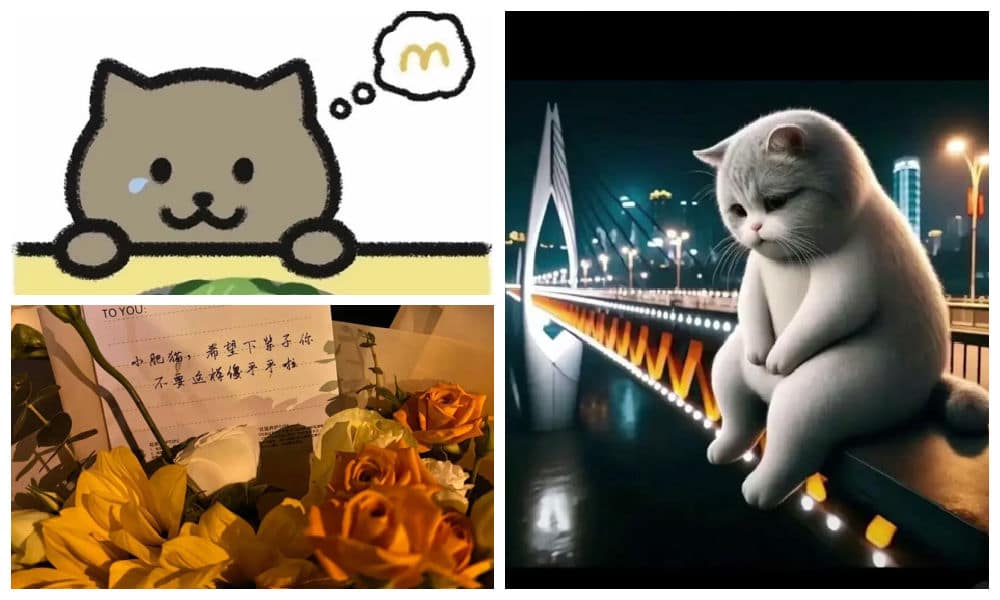
The story of a 21-year-old Chinese gamer from Hunan who committed suicide has gone completely viral on Weibo and beyond this week, generating many discussions.
In late April of this year, the young man nicknamed ‘Fat Cat’ (胖猫 Pàng Māo, literally fat or chubby cat), tragically ended his life by jumping into the river near the Chongqing Yangtze River Bridge (重庆长江大桥) following a breakup with his girlfriend. By now, the incident has come to be known as the “Fat Cat Jumping Into the River Incident” (胖猫跳江事件).
News of his suicide soon made its rounds on the internet, and some bloggers started looking into what was behind the story. The man’s sister also spoke out through online channels, and numerous chat records between the young man and his girlfriend emerged online.
One aspect of his story that gained traction in early May is the revelation that the man had invested all his resources into the relationship. Allegedly, he made significant financial sacrifices, giving his girlfriend over 510,000 RMB (approximately 71,000 USD) throughout their relationship, in a time frame of two years.
When his girlfriend ended the relationship, despite all of his efforts, he was devastated and took his own life.
The story was picked up by various Chinese media outlets, and prominent social and political commentator Hu Xijin also wrote a post about Fat Cat, stating the sad story had made him tear up.
As the news spread, it sparked a multitude of hashtags on Weibo, with thousands of netizens pouring out their thoughts and emotions in response to the story.
Playing Games for Love
The main part of this story that is triggering online discussions is how ‘Fat Cat,’ a young man who possessed virtually nothing, managed to provide his girlfriend, who was six years older, with such a significant amount of money – and why he was willing to sacrifice so much in order to do so.
The young man reportedly was able to make money by playing video games, specifically by being a so-called ‘booster’ by playing with others and helping them get to a higher level in multiplayer online battle games.
According to his sister, he started working as a ‘professional’ video gamer as a means of generating money to satisfy his girlfriend, who allegedly always demanded more.
He registered a total of 36 accounts to receive orders to play online games, making 20 yuan per game (about $2.80). Because this consumed all of his time, he barely went out anymore and his social life was dead.
In order to save more money, he tried to keep his own expenses as low as possible, and would only get takeout food for himself for no more than 10 yuan ($1,4). His online avatar was an image of a cat saying “I don’t want to eat vegetables, I want to eat McDonald’s.”
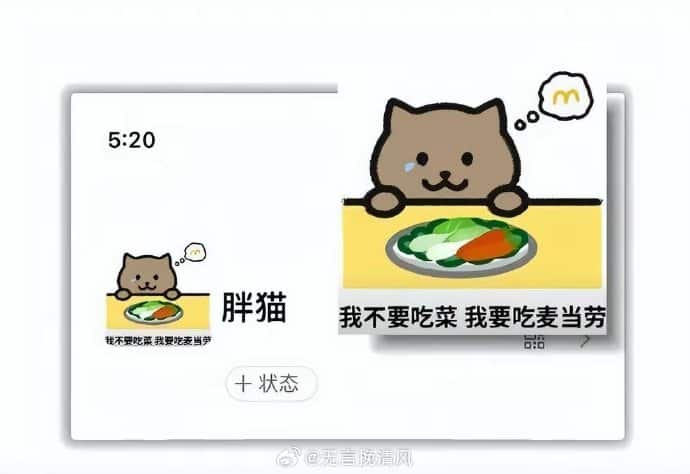
The woman in question who he made so many sacrifices for is named Tan Zhu (谭竹), and she soon became the topic of public scrutiny. In one screenshot of a chat conversation between Tan and her boyfriend that leaked online, she claimed she needed money for various things. The two had agreed to get married later in this year.
Despite of this, she still broke up with him, driving him to jump off the bridge after transferring his remaining 66,000 RMB (9135 USD) to Tan Zhu.
As the story fermented online, Tan Zhu also shared her side of the story. She claimed that she had met ‘Fat Cat’ over two years ago through online gaming and had started a long distance relationship with him. They had actually only met up twice before he moved to Chongqing. She emphasized that financial gain was never a motivating factor in their relationship.
Tan additionally asserted that she had previously repaid 130,000 RMB (18,000 USD) to him and that they had reached a settlement agreement shortly before his tragic death.
Ordering Take-Out to Mourn Fat Cat
– “I hope you rest in peace.”
– “Little fat cat, I hope you’ll be less foolish in your next life.”
– “In your next life, love yourself first.”
These are just a few of the messages left by netizens on notes attached to takeout food deliveries near the Chongqing Yangtze River Bridge.
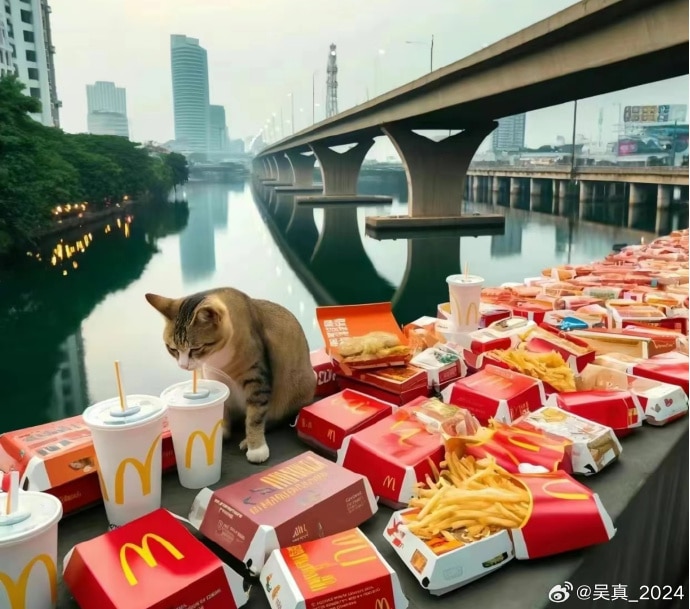
AI-generated image spread on Chinese social media in connection to the event.
As Fat Cat’s story stirred up significant online discussion, with many expressing sympathy for the young man who rarely indulged in spending on food and drinks, some internet users took the step of ordering McDonalds and other food delivery services to the bridge, where he tragically jumped from, in his honor.
This soon snowballed into more people ordering food and drinks to the bridge, resulting in a constant flow of delivery staff and a pile-up of take-out bags.
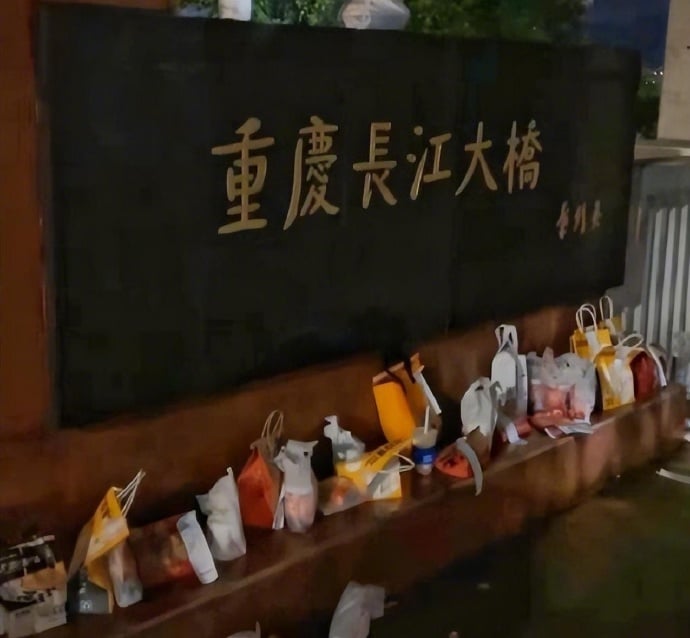
Delivery food on the bridge, photo via Weibo.
However, as the food delivery efforts picked up pace, it came to light that some of the deliveries ordered and paid for were either empty or contained something different; certain restaurants, aware of the collective effort to honor the young man, deliberately left the food boxes empty or substituted sodas or tea with tap water.
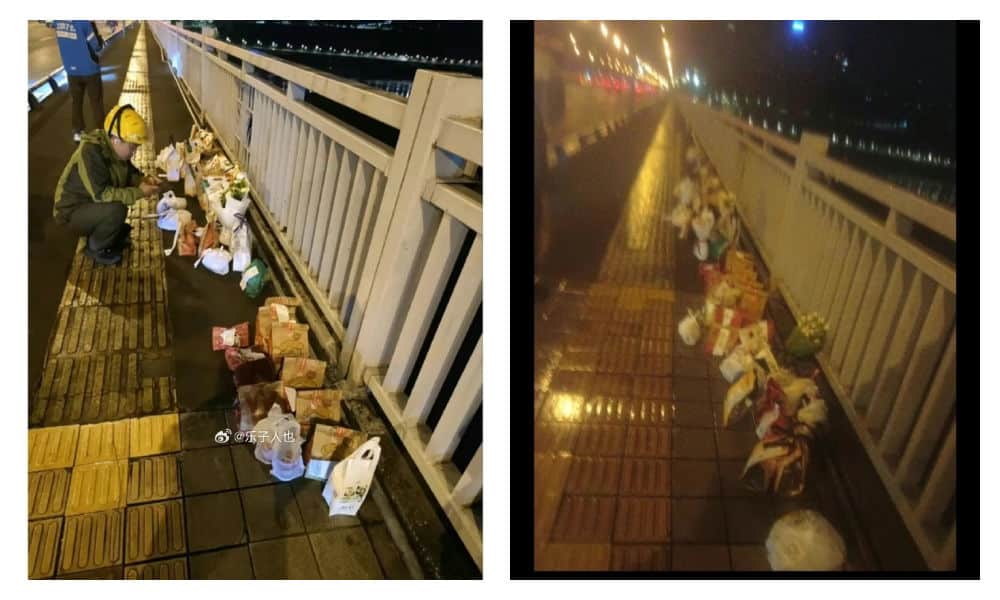
At least five restaurants were caught not delivering the actual orders. Chinese bubble tea shop ChaPanda was exposed for substituting water for milk tea in their cups. On May 3rd, ChaPanda responded that they had fired the responsible employee.
Another store, the Zhu Xiaoxiao Luosifen (朱小小螺蛳粉), responded on that they had temporarily closed the shop in question to deal with the issue. Chinese fast food chain NewYobo (牛约堡) also acknowledged that at least twenty orders they received were incomplete.
Fast food company Wallace (华莱士) responded to the controversy by stating they had dismissed the employees involved. Mixue Ice Cream & Tea (蜜雪冰城) issued an apology and temporarily closed one of their stores implicated in delivering empty orders.
In the midst of all the controversy, Fat Cat’s sister asked internet users to refrain from ordering take-out food as a means of mourning and honoring her brother.
Nevertheless, take-out food and flowers continued to accumulate near the bridge, prompting local authorities to think of ways of how to deal with this unique method of honoring the deceased gamer.
Gamer Boy Meets Girl
On Chinese social media, this story has also become a topic of debate in the context of gender dynamics and social inequality.
There are some male bloggers who are angry with Tan Zhu, suggesting her behaviour is an example of everything that’s supposedly “wrong” with Chinese women in this day and age.
Others place blame on Fat Cat for believing that he could buy love and maintain a relationship through financial means. This irked some feminist bloggers, who see it as a chauvinistic attitude towards women.
A main, recurring idea in these discussions is that young Chinese men such as Fat Cat, who are at the low end of the social ladder, are actually particularly vulnerable in a fiercely competitive society. Here, a gender imbalance and surplus of unmarried men make it easier for women to potentially exploit those desperate for companionship.
The story of Fat Cat brings back memories of ‘Mo Cha Official,’ a not-so-famous blogger who gained posthumous fame in 2021 when details of his unhappy life surfaced online.
Likewise, the tragic tale of WePhone founder Su Xiangmao (苏享茂) resurfaces. In 2017, the 37-year-old IT entrepreneur from Beijing took his own life, leaving behind a note alleging blackmail by his 29-year-old ex-wife, who demanded 10 million RMB (±1.5 million USD) (read story).
Another aspect of this viral story that is mentioned by netizens is how it gained so much attention during the Chinese May holidays, coinciding with the tragic news of the southern China highway collapse in Guangdong. That major incident resulted in the deaths of at least 48 people, and triggered questions over road safety and flawed construction designs. Some speculate that the prominence given to the Fat Cat story on trending topic lists may have been a deliberate attempt to divert attention away from this incident.
‘Fat Cat’ was cremated. His family stated their intention to take necessary legal steps to recover the money from his former girlfriend, but Tan Zhu reportedly already reached an agreement with the father and settled the case. Nevertheless, the case continues to generate discussions online, with some people wondering: “Is it over yet? Can we talk about something different now?”

Fat Cat images projected in Times Square
However, given that images of the ‘Fat Cat’ avatar have even appeared in Times Square in New York by now (Chinese internet users projected it on one of the big LED screens), it’s likely that this story will be remembered and talked about for some time to come.
UPDATE MAY 25
On May 20, local authorities issued a lengthy report to clarify the timeline of events and details surrounding the death of “Fat Cat,” which had attracted significant attention across China.
The report concluded that there was no fraud involved and that “Fat Cat” and his girlfriend were in a genuine relationship. Tan did not deceive “Fat Cat” for money; the transfers were voluntary. Furthermore, Tan returned most of the money to his parents.
The gamer’s sister is reportedly still being investigated for potentially infringing on Tan’s privacy by disclosing numerous private details to the public.
In the end, one thing is clear in this gamer’s tragic story, which is that there are no winners.
By Manya Koetse
– With contributions by Miranda Barnes and Ruixin Zhang
Independently reporting China trends for over a decade. Like what we do? Support us and get the story behind the hashtag by subscribing:
Spotted a mistake or want to add something? Please let us know in comments below or email us. First-time commenters, please be patient – we will have to manually approve your comment before it appears.
©2024 Whatsonweibo. All rights reserved. Do not reproduce our content without permission – you can contact us at info@whatsonweibo.com.
China Brands, Marketing & Consumers
A Brew of Controversy: Lu Xun and LELECHA’s ‘Smoky’ Oolong Tea
Chinese tea brand LELECHA faced backlash for using the iconic literary figure Lu Xun to promote their “Smoky Oolong” milk tea, sparking controversy over the exploitation of his legacy.
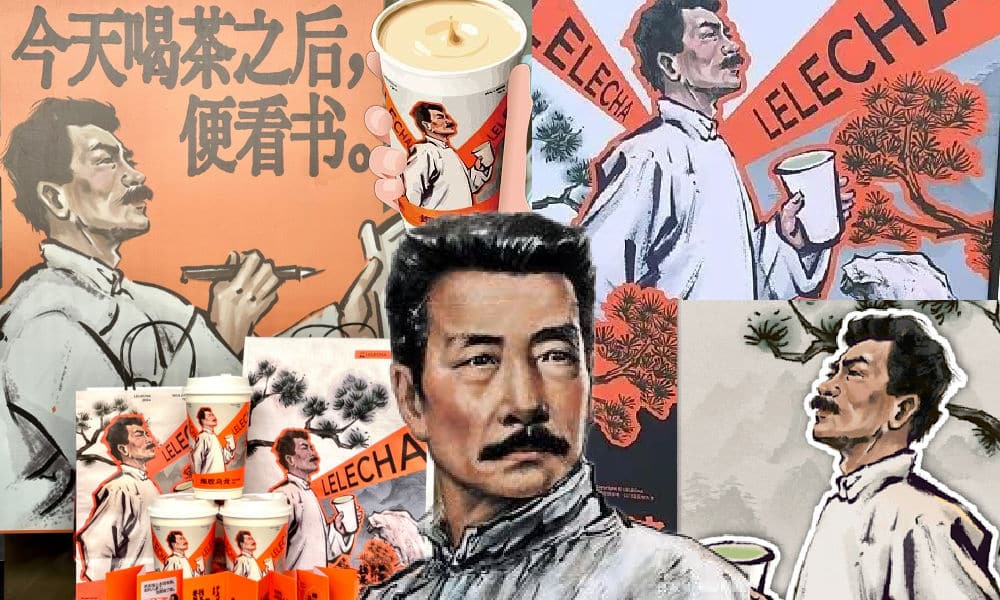
It seemed like such a good idea. For this year’s World Book Day, Chinese tea brand LELECHA (乐乐茶) put a spotlight on Lu Xun (鲁迅, 1881-1936), one of the most celebrated Chinese authors the 20th century and turned him into the the ‘brand ambassador’ of their special new “Smoky Oolong” (烟腔乌龙) milk tea.
LELECHA is a Chinese chain specializing in new-style tea beverages, including bubble tea and fruit tea. It debuted in Shanghai in 2016, and since then, it has expanded rapidly, opening dozens of new stores not only in Shanghai but also in other major cities across China.
Starting on April 23, not only did the LELECHA ‘Smoky Oolong” paper cups feature Lu Xun’s portrait, but also other promotional materials by LELECHA, such as menus and paper bags, accompanied by the slogan: “Old Smoky Oolong, New Youth” (“老烟腔,新青年”). The marketing campaign was a joint collaboration between LELECHA and publishing house Yilin Press.
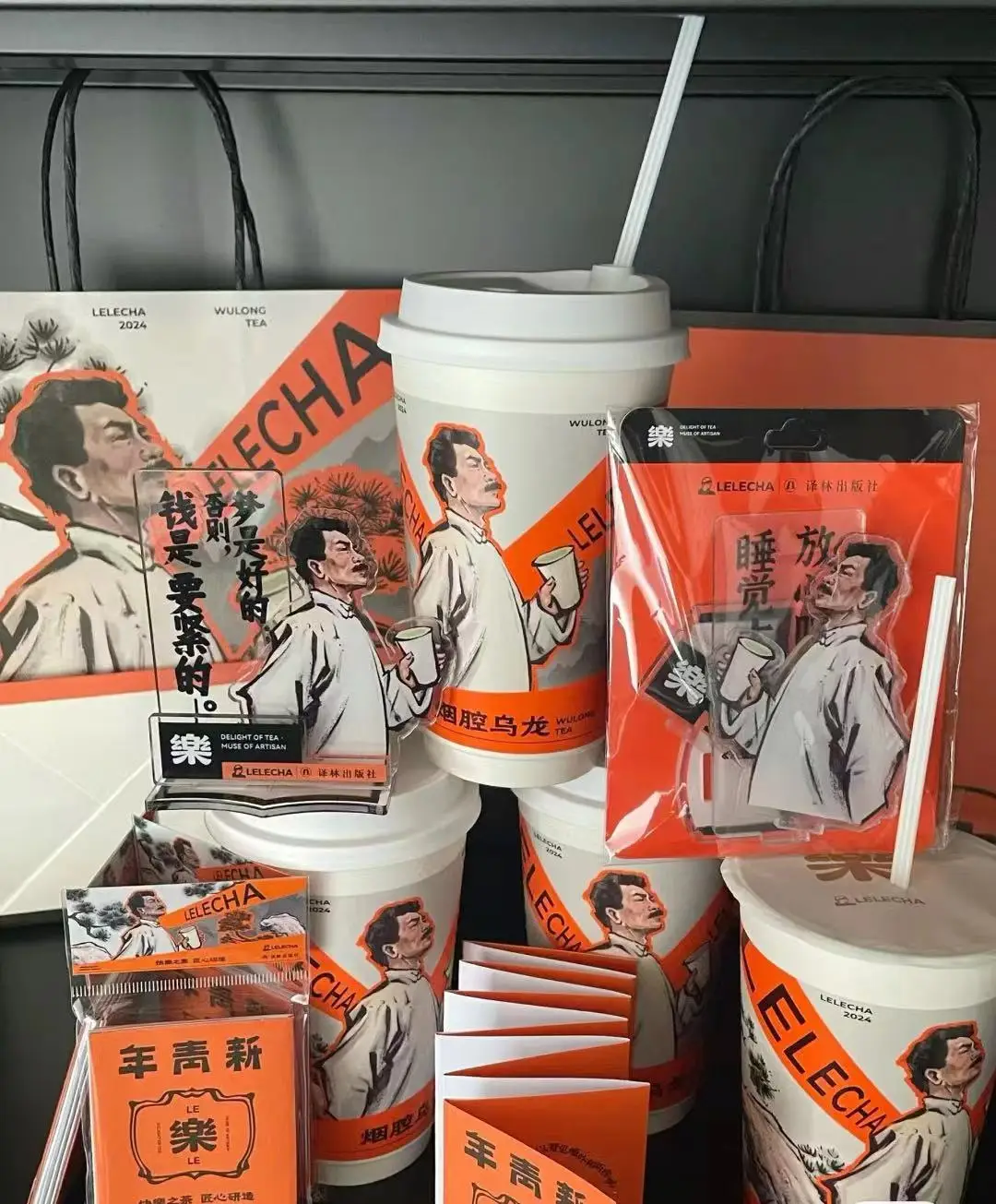
Lu Xun featured on LELECHA products, image via Netease.
The slogan “Old Smoky Oolong, New Youth” is a play on the Chinese magazine ‘New Youth’ or ‘La Jeunesse’ (新青年), the influential literary magazine in which Lu’s famous short story, “Diary of a Madman,” was published in 1918.
The design of the tea featuring Lu Xun’s image, its colors, and painting style also pay homage to the era in which Lu Xun rose to prominence.
Lu Xun (pen name of Zhou Shuren) was a leading figure within China’s May Fourth Movement. The May Fourth Movement (1915-24) is also referred to as the Chinese Enlightenment or the Chinese Renaissance. It was the cultural revolution brought about by the political demonstrations on the fourth of May 1919 when citizens and students in Beijing paraded the streets to protest decisions made at the post-World War I Versailles Conference and called for the destruction of traditional culture[1].
In this historical context, Lu Xun emerged as a significant cultural figure, renowned for his critical and enlightened perspectives on Chinese society.
To this day, Lu Xun remains a highly respected figure. In the post-Mao era, some critics felt that Lu Xun was actually revered a bit too much, and called for efforts to ‘demystify’ him. In 1979, for example, writer Mao Dun called for a halt to the movement to turn Lu Xun into “a god-like figure”[2].
Perhaps LELECHA’s marketing team figured they could not go wrong by creating a milk tea product around China’s beloved Lu Xun. But for various reasons, the marketing campaign backfired, landing LELECHA in hot water. The topic went trending on Chinese social media, where many criticized the tea company.
Commodification of ‘Marxist’ Lu Xun
The first issue with LELECHA’s Lu Xun campaign is a legal one. It seems the tea chain used Lu Xun’s portrait without permission. Zhou Lingfei, Lu Xun’s great-grandson and president of the Lu Xun Cultural Foundation, quickly demanded an end to the unauthorized use of Lu Xun’s image on tea cups and other merchandise. He even hired a law firm to take legal action against the campaign.
Others noted that the image of Lu Xun that was used by LELECHA resembled a famous painting of Lu Xun by Yang Zhiguang (杨之光), potentially also infringing on Yang’s copyright.
But there are more reasons why people online are upset about the Lu Xun x LELECHA marketing campaign. One is how the use of the word “smoky” is seen as disrespectful towards Lu Xun. Lu Xun was known for his heavy smoking, which ultimately contributed to his early death.
It’s also ironic that Lu Xun, widely seen as a Marxist, is being used as a ‘brand ambassador’ for a commercial tea brand. This exploits Lu Xun’s image for profit, turning his legacy into a commodity with the ‘smoky oolong’ tea and related merchandise.
“Such blatant commercialization of Lu Xun, is there no bottom limit anymore?”, one Weibo user wrote. Another person commented: “If Lu Xun were still alive and knew he had become a tool for capitalists to make money, he’d probably scold you in an article. ”
On April 29, LELECHA finally issued an apology to Lu Xun’s relatives and the Lu Xun Cultural Foundation for neglecting the legal aspects of their marketing campaign. They claimed it was meant to promote reading among China’s youth. All Lu Xun materials have now been removed from LELECHA’s stores.
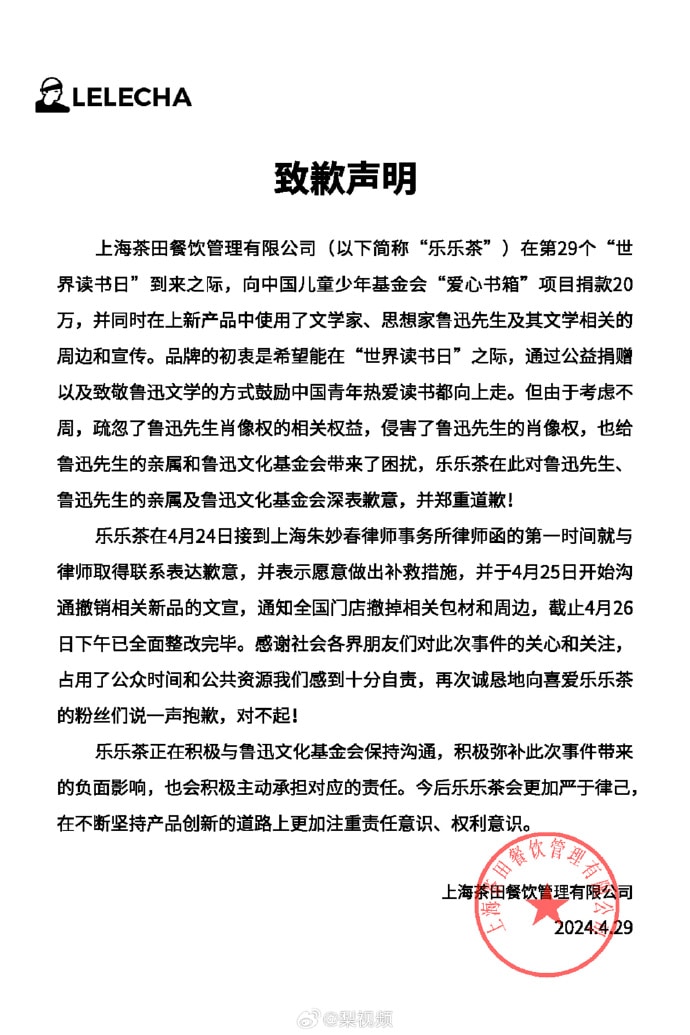
Statement by LELECHA.
On Chinese social media, where the hot tea became a hot potato, opinions on the issue are divided. While many netizens think it is unacceptable to infringe on Lu Xun’s portrait rights like that, there are others who appreciate the merchandise.
The LELECHA controversy is similar to another issue that went trending in late 2023, when the well-known Chinese tea chain HeyTea (喜茶) collaborated with the Jingdezhen Ceramics Museum to release a special ‘Buddha’s Happiness’ (佛喜) latte tea series adorned with Buddha images on the cups, along with other merchandise such as stickers and magnets. The series featured three customized “Buddha’s Happiness” cups modeled on the “Speechless Bodhisattva” (无语菩萨), which soon became popular among netizens.
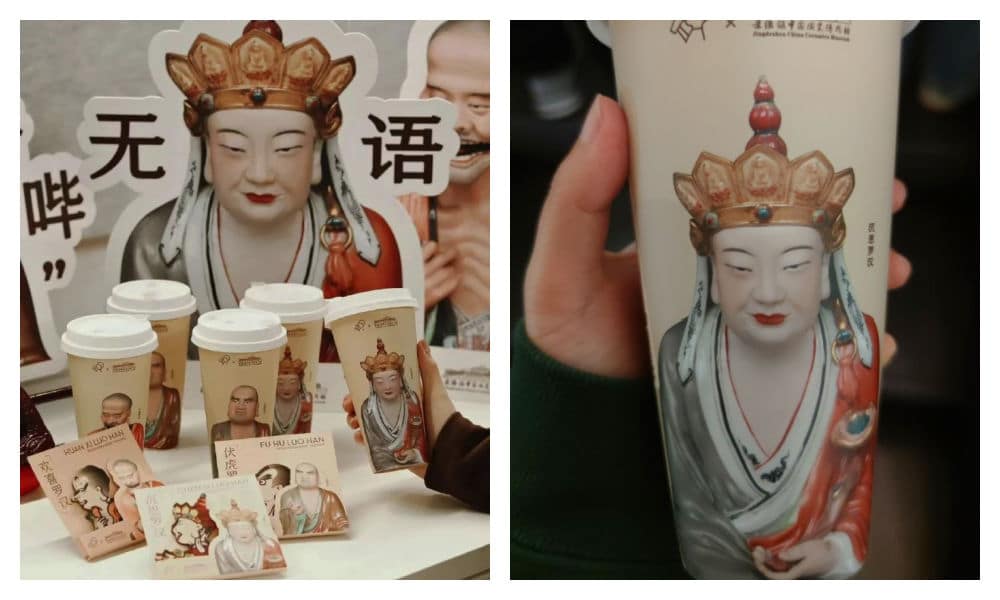
The HeyTea Buddha latte series, including merchandise, was pulled from shelves just three days after its launch.
However, the ‘Buddha’s Happiness’ success came to an abrupt halt when the Ethnic and Religious Affairs Bureau of Shenzhen intervened, citing regulations that prohibit commercial promotion of religion. HeyTea wasted no time challenging the objections made by the Bureau and promptly removed the tea series and all related merchandise from its stores, just three days after its initial launch.
Following the Happy Buddha and Lu Xun milk tea controversies, Chinese tea brands are bound to be more careful in the future when it comes to their collaborative marketing campaigns and whether or not they’re crossing any boundaries.
Some people couldn’t care less if they don’t launch another campaign at all. One Weibo user wrote: “Every day there’s a new collaboration here, another one there, but I’d just prefer a simple cup of tea.”
By Manya Koetse
[1]Schoppa, Keith. 2000. The Columbia Guide to Modern Chinese History. New York: Columbia UP, 159.
[2]Zhong, Xueping. 2010. “Who Is Afraid Of Lu Xun? The Politics Of ‘Debates About Lu Xun’ (鲁迅论争lu Xun Lun Zheng) And The Question Of His Legacy In Post-Revolution China.” In Culture and Social Transformations in Reform Era China, 257–284, 262.
Independently reporting China trends for over a decade. Like what we do? Support us and get the story behind the hashtag by subscribing:
Spotted a mistake or want to add something? Please let us know in comments below or email us. First-time commenters, please be patient – we will have to manually approve your comment before it appears.
©2024 Whatsonweibo. All rights reserved. Do not reproduce our content without permission – you can contact us at info@whatsonweibo.com.
-
 China Insight3 months ago
The Tragic Story of “Fat Cat”: How a Chinese Gamer’s Suicide Went Viral
-

 China Music4 months ago
The Chinese Viral TikTok Song Explained (No, It’s Not About Samsung)
-

 China Digital10 months ago
Too Sexy for Weibo? Online Discussions on the Concept of ‘Cābiān’
-

 China Arts & Entertainment12 months ago
Behind 8 Billion Streams: Who is Dao Lang Cursing in the Chinese Hit Song ‘Luocha Kingdom’?
Scott Thomas
February 27, 2016 at 1:03 am
Comedian Ralphie May had a great joke about his expirence with Chinese tourist. I’m sure he’ll breath a sigh of relief knowing he’s not wrong
Peter
January 28, 2017 at 11:01 am
All too true I’m married to a mainland Chinese lady the problem is the sense of “me” with no respect of the common good . It’s your country let them respect it , if the push in push them out if they spit make it clear they’re pigs etc . My wife’s unusually clean and shudders at her fellow country men .
Jimbo
June 3, 2018 at 7:31 pm
At least they dont come to other countries and steal resources and artifacts. Only people with manners do that, right?
T
November 23, 2018 at 11:03 pm
Isn’t stealing other countries’ resources something Chinese are good at.
Using their banks, labour, etc
Jill Pichardo
January 18, 2019 at 8:46 am
Sure, but what about Benghazi?
FOC
June 29, 2019 at 4:32 pm
They just come to other countries to buy shit loads of baby formulas and sell them back in their country. Oh! And they produced a lot of imitation goods too!
Peter Jones
April 5, 2016 at 10:44 am
When you go to other countries you respect their rules and cultures. True that not all Chinese are like that but that does not mean you, as a country, is not held responsible for the actions of your citizens. If your citizens are not ready then don’t let them go abroad. Create some kind of filtering system to filter out those people who behave badly, for example having at least a decent degree of education, or passing an etiquette exam. If after all those and they still misbehave then impose a three strike out policy with heavy fines for each strike. Install bathrooms especially for Chinese people? There’s a joke. You don’t go to other people’s house and demand that your different behaviour be, not only tolerated, but also accommodated. ‘I used to have a lamp in my house, therefore you must have a lamp in your house so I feel good’. No that is not how it works. The host country, has every right to discriminate if it deems fit, much like how you have a right in your house to put a guest in a separate room if they are annoying other family member of yours. Cultural difference? Not anyone else’s problem, you need to sort your citizens out.
Diandian GUO
April 7, 2016 at 1:09 pm
Hey I think two aspects of your respond troubles me
1) I don’t think being “civilized” can be a criteria to restrain individual mobility. That is violation of human rights. While I agree that etiquettes while travelling needs to be better observed, this is simply not a reason to DENY people’s right to travel.
2) While China is often accused of having too strong a government, it is strange that when it comes to civic issues, the state is called upon to “sort things out”. It is paradoxical that a discourse that urge Chinese government to be less nosy requires its steadfast measures in socio-cultural issues. I don’t think government intervention is the ultimate solution. It relies on travelling businesses’ sense of responsibility, to organize their trips in a more plausible way. But it also relies on individuals. It is those who DO observe the etiquettes that may gradually influence the rest. “Discriminating” will only create an environment that encourage improper behaviour.
I admit that as a Chinese studying in Europe, I sometimes feel awkward to see Chinese tourist groups. I think due to historical and indeed cultural reasons, China’s social life is organized around the self instead of the us, thus there is no clear definition of “public sphere” in traditional Chinese discourse. Therefore some people may do the same things in public as they do at home, like shouting, without even register the improperness of such action. But with urban life flourishing, “public sphere” is becoming a more and more clear concept in China, and is defining new code of behaviours for citizens.
I do hope situations will change, without implementing extreme measures.
Eli Arakian
May 11, 2016 at 10:39 am
Just admit that the Chinese are rude and wrong to behave in such a manner.
There is no logical sense in bringing in government policy. We are not talking about governments here.
This is plain simple common sense. I have been to China more than 20 times the past decade. I know the kind of savages existing there
Shabetti Bashazz
January 3, 2019 at 7:30 pm
Exactly
Cheng
May 30, 2016 at 11:38 am
one thing for sure, the chinese tourist are no manner and extremely rude. so be nice and respect to local law. I met a chinese tourist in our local bank that they didnt want to queue and it was so chaotic because the security of this bank dragged the tourist out from the bank. Just queue and respect local law is easy, and why they should ignore it? I am chinese also but I live and grow in Indonesia. So we are also dislike with chinese tourist because of all their manners!
octobercabbages
July 23, 2016 at 11:34 pm
IMO, one issue with what you are saying is that traveling is not a “right”, it’s a privilege. A country has every right to enforce policies to shield their citizens against foreigners they feel interrupt their social norms. I live in a highly populated Chinese area and even though socially they aren’t as bad as mainlanders who are traveling for their first times, they still do things that aren’t okay in western culture. No sense of personal space, usually very loud, and usually a bit pushy. It’s not on the level as a city in China but still needs to be remedied. Chinese people need to adapt to western culture if they are going to earn and do business and live in western culture. It’s that simple. When you move to another country the intention should be to learn their cultures and customs instead of inundating them with yours. Learn the language and adapt and you will soften people’s perceptions towards you.
T
November 23, 2018 at 11:09 pm
There is no debate necessary here, for every non-Chinese who has never experienced being around Chinese go and stay in China for 1 month…. I promise you won’t be able to stay for that long…. The rudeness and u civilization is real.
HateThemButObsessedWithThem
July 23, 2019 at 6:27 am
Tell that to Youtubers like Poppy, Mark Wolter, and Syifa Adriana. But thanks, we all know you’re an ignorant troll.
ImnotchineseBUTYOUSHOULDBESMART
May 31, 2016 at 7:41 pm
not if I contributed a huge amount of money to your household income, then you might think to have the lamp for the sake of me to visit your house more often. Economically chinese tourists does give a good impact to the hosting countries and I agree that some of them behave very badly. The tour agency (they usually grouping in tour) should give manner and cultural education before going abroad. and the embassy (I agree with you) should give handbook for their country information (do and donts) before they go abroad. Its also applicable if the host country issue several FINES (yes, its your own home anyway, feel free to fine everyone who missbehave) in term of cleanliness or being loud in public transport, etc.
Andrew
January 12, 2017 at 5:29 am
Isn’t that against “human right” and “freedom” which your countries in the West so thoroughly cherished? Your western countries have always criticized the former Soviet bloc for limiting the freedom of movement of their citizens.
Tony
June 4, 2017 at 6:55 pm
Chinese think human rights only apply to Westerners so why should they apply to you? That’s too ironic. You played yourself. Chinese tourists are unbearably crass and need to adapt to the rest of the world’s standard.
Max
April 7, 2016 at 5:21 pm
Chinese people are extremely nice and friendly. Our western world is very different to them but calling them rude because of laud talks is simply stupid. Go and visit Asia – you will see why they spit, why they squat and you will never call them rude. I wonder what kind of train cars you will provide for the nations that like to blow up TNT or shoot passengers on trains…
JM
April 22, 2016 at 7:25 pm
I’ve lived in Asia for 5 years now, Mainland China for 3 of those years. I’m leaving in 40 days and I’m never coming back.
They’re rude. They’re pigs, in fact. They push to the front of the line when they know they can get away with it. They chew loudly and slurp, they cough without covering their mouths, they belch and fart and smoke in elevators, they get on trains before letting people off them, they shit on the floor if the toilet is a Western style one, and they have no idea it’s fucking disgusting behaviour.
I’m not talking about a few of them. I’m talking about 99.9% of them. And there are a billion and a half of them.
They’re brewing the Superbug within their disgusting habits which will wipe out the world, and they’re coming in droves.
ImnotchineseBUTYOUSHOULDBESMART
May 31, 2016 at 7:46 pm
calm down. You showing us how intolerant you are to cultural differences. I never really saw those you have mentioned above (I am asian who have lived in many asian countries and also western countries). Many countries are still in developing phase and not as advance as it is in the west. You might think how we see western people who are “rude” as theyre not talking to each other, always COMPLAINING about their life and everything around them, death staring other people from different race, etc. But I am not gonna bash them as I know everybody is different regardless where they come from.
Emmons
June 26, 2017 at 10:01 am
I have been here for 1 month and have witnessed the same behaviors. I am also looking forward to returning to my country and have no plans of ever coming back here.
Dan
October 28, 2018 at 3:25 am
Lol this reminds me of two incidents I saw while in China. I walked into a washroom and there was a guy squatting going to the washroom with the door open and smoking while he was taking a dump and didn’t seem to care that the door was open then I could see them. Another incident the parents just opened up the split in a babies pants and let the baby poop in the garbage can and another just pee on the outside public floor at a Chinese historical tourist site. It’s almost like primal and low civility.
CJ
June 3, 2016 at 8:57 pm
I’m Asian and its not true that “Asians” spit. Its predominantly people from the mainland China. I lived in Singapore and Malaysia and the Chinese Singaporeans and Malaysians hates being associated with the people from Mainland. The reason is that a lot of them (not all mind you) don’t have manners and very disrespectful. And there are cases where tourists defecate in train stations, not on the toilet, but on the platform.
jim duncan
December 12, 2016 at 10:58 pm
they are rude and obnoxious at best and that is the majority of them…the polite ones are rare
James
September 18, 2018 at 10:58 am
It is a very complicated feeling that Chinese have for westerners. But let’s be honest, they may respect you while you there, they will talk disrespectfully behind your back. I’m from mainland China, and I never wanted to ever talk to most of the uneducated people there.
J.K
April 27, 2016 at 7:21 am
If mainland Chinese can’t sit on the western toilet, then they need to think twice before travelling overseas. I can’t squat, don’t like people spitting and loud, therefore I will never consider to travel to mainland China. Travelling should be pleasant and with pleasure, and it is a chance for most of us to rewind ourselves. We travel to other countries because we appreciate their culture and sceneries, not because that’s what others do. Unfortunately we had so many unpleasant experiences with the Mailand Chinese tourists. In one instance, while I was shopping in a boutique, I pulled out of one parka from the rack, suddenly one mainland Chinese man came to grab from me and didn’t want to let go. Luckily the shop assistance saw it and told him to stop it. We were so shocked, because I don’t think anything would be more embarrassing than that kind of behaviour. For those reasons we would try our best to avoid the mainland Chinese while we travel as their behaviours does affect us enormously, and we are sure they are from mainland China; they are not Singaporians, Malaysian or Taiwanese. The westerners can differentiate clearly as mainland Chinese looks, talks, behaves and dresses different from others especially the males spit and clear their throat constantly. Also some of those men would constantly stare at the women and even walk extremely close to them. I don’t think Switzerland government is discriminating them as the tourism is very important to the country. Their tourists are from all over the world not just from mainland China. People from other places don’t need to put up with the mainland Chinese’s bad behaviours just because they don’t want to change. There are rules to follow everywhere, if we travel to China, we are expected to follow their rules as well. If they don’t like it, don’t come! That simple! Just don’t expect other people to tolerate them.
May Ho
April 28, 2016 at 5:48 pm
I agree. You have the right to invite who gets to visit your house!
Clatterbuck
May 11, 2016 at 6:52 pm
I guess tourists from the U.S. don’t seem so awful now, do they? We might be loud and a little pushy but we know how to use a toilet.
PI
May 13, 2016 at 5:52 am
You are absolutely right, ten years ago we used to complained about Yankees in this way except those part about toilet but today Chinese are far worse in every ways .
Abc123
May 18, 2016 at 4:30 am
This is interesting. I am currently learning about the Civil Rights Movement in my history class, but an issue or a topic like this we never discussed. What Switzerland is doing sounds like what America did in the late 1890s, and that is, separate but equal facilities. For Switzerland, that may just have to be done if we don’t want Chinese tourists trying to spoil the beautiful country (thank goodness nothing like that happened). They should exclude the bad tourists. In America, Asians are known as the model minority, but tourists? Not so much. They think that just because they are not residents that they can do whatever like breaking rules and such. Sooner or later, we’ll see countries banning tourists and then what will the Chinese government do? We can only anticipate defense! 🙂
Anoymous
June 3, 2016 at 7:57 pm
So when you have some bad apples in the mix you blame the entire race or country. So can we blame ALL Americans are rapist and murderer “The civilian employee of a U.S. military base in Okinawa Prefecture who was arrested Thursday over the death of a Japanese woman has admitted raping her before strangling and stabbing her to death and transporting her body in a suitcase, investigative sources said Saturday”, ALL British as pedophiles and child rapist “UK’s ‘worst pedophile’ faces multiple life sentences for raping children in Malaysia, Cambodia” , ALL Mexicans are drug dealers, “Chapo Guzman, Net Worth: $1 Billion. Until his arrest in 2014, Loera was considered the most powerful drug trafficker in the world by the United States Department of Treasury. He was the leader of the most powerful cartel in the world today; the Sinaloa Cartel in Mexico” and so on and on?
Talking about respecting other country laws, believe it or not it goes both ways. Here is an example, police in Malaysia have arrested four foreigners believed to have been part of a group of tourists who stripped naked at the summit of Mount Kinabalu.
The arrested tourists were two Canadian brothers, a Dutch woman and a British woman aged between 20 and 33″. What do you have to say about that.
Ross
August 29, 2016 at 9:03 am
I have to say that’s awesome they were arrested for nudity and you just proved yourself wrong! They WERE punished for there inconsiderate, stupid and rude actions and should be banned from Malaysia. The other points mentioned are very extreme cases. Chinese being rude travelling is not an extreme case and happens more often than not, maybe not to the extreme of deficatng on the floor but loud, pushy, spitting and obnoxious behaviour are common.
chinese are rude
June 9, 2016 at 6:47 am
they are loud
they don’t know how to queue
they push and elbow and they don’t say sorry
they slurp and eat loudly
they don’t wash their hands
they spit everywhere
they throw their trash everywhere
they are just plain rude and uncivilized
you are not the only tourists in the world. take your corruption money somewhere else!
over canada
September 21, 2016 at 1:03 pm
generalize much? let’s just match taht for a bit….
americans incest much? White trash much? war monger much?
hispanics illegal much?
blacks criminal much? Loud?
germans nazi much?
generalizing…maybe you can comprehend or maybe not… that this generalizing thing is little much?
Bart Tucker
June 9, 2016 at 11:58 pm
I live in Vancouver which has been taken over and hijacked by Chinese immigrants in the past 25 years. I grew up with a few Chinese who had a good reputation and most Caucasians respected them. Twenty five years later having had exposure to the worst elements of Hong Kong and now Mainland Chinese people, I have absolutely no desire to visit either China or Hong Kong. The worst ones are the nouveau rich who think that they own the world, everyone hates them. Our house prices have skyrocketed because they are speculating in our real estate market with their criminally obtained money. Nobody except the rich can afford to own property. Our politicians won’t do anything about it because they have been bribed to the hilt by Chinese interests.
Canadian
August 5, 2016 at 3:25 am
I’m from Vancouver as well and seriously resent my hometown for what it’s become. They make no efforts to assimilate into our community. They come, buy up our property at ridiculously inflated prices, send their children to our schools, use our health care resources, and then make their money overseas resulting in no benefit to our job creation and economy. Half of the disgustingly overpriced homes in Vancouver don’t even have anyone actively living in them! They don’t seem to have any respect for Canada and the people who live there, they just see it as something that’s theirs because they have money. As mentioned they’re rude, they spit, I once saw a Chinese woman let her toddler grandson openly relive himself into a trash can in a mall when a bathroom was only a few more feet away. They have no respect for personal space, they wander aimlessly and have no care whether they’re blocking the way. Even if you say ‘excuse me’ to them they’ll hardly act like they even noticed. They only associate with other mainlanders so many of them, especially the older generation, come to Canada and don’t even bother learning a word of English. Given that they comprise such a large part of the Vancouver population it has made for a very unfriendly and isolating vibe in the city. No one talks to each other. No one even notices you exist.
over canada
September 21, 2016 at 1:06 pm
Envious? Jealous much? Maybe you are old enough to understand that cash is king not “your individual opinion” on a given matter. “vancouver according to how tucker wants it” is not how vancouver operates. lol
Ping Pong
February 11, 2017 at 8:00 pm
I agree with you bro. I also live in bc….
I hate to say it… but..
All i can see on here is
He says
She says
Lets see what Isis
🙂
Please go away. And if not… well.. this allows us to figure out how to lets say… cut our losses quickly. Eh?
Xiexie!
Unioncityblue
February 14, 2019 at 10:00 pm
Ugh this just makes me think westerners are idiots. Firstly as we have learned over and over again separate is not equal, maybe if you made more of an effort to educate Chinese tourists and befriend them they would not be rude or loud or isolate themselves. Secondly, you Vancouver have no clue how economics in your city works. Firstly if the Chinese did not buy property at exorbant prices you idiots would not be able to speculate and make millions of untaxed dollar flipping your properties. Speculation is the MAIN cash cow for Canadians living in Vancouver and the only way most of you can afford to stay in that market at all, this is made obvious if you compare the mean income to the housing prices and rate of speculation. If your government actually taxed that income you would all be much better off. Don’t blame the Chinese for bad policy and your own greed. Also it is the Canadians in Cancouver that repeatedly vote against affordable housing initiatives, not the Chinese, mainly because they are afraid of devaluing their properties. Instead you shove your massive homeless population on one side of the city and forget about them while pretending to be progressive people who “care”. In truth the Canadians in Vancouver have become classist, greedy racist douches who blame “Chinese interests” or “global warming” for problems they create themselves.
Sasha
June 24, 2016 at 12:48 pm
I also would like to mention the attitude of the chinese travellers to a local guide, that can be extremely rude, impolite and ignorant and not respectful to a different culture at all! I have an example of a Chinese girl arriving in St Petersburg, which is acknowledged to be one of the most beautiful cities in the world. All places of interest were not beautiful, the map of the Hermitage was drawn by silly people as she couldn’t figure out where we were. The local guide overworked regularly (15 hours per day), but all that she heard was some grumbling. This girl’s name is 王愉媛, the next year she is going to the US. Perhaps this info might be helpful to a guide who will google her name. Each nation has tourists, who do form the wrong kind of impression about the whole nation. For the positive image of a country on the international arena, these tourists really should be kept away from travelling abroad.
John
July 6, 2016 at 5:48 am
Hi Folks,
Well I see you have covered everything I have observed about the Chinese both here in my country and in other countries.
I travel to a few Asian countries about four times a year.
But what really drives me mad about the arrogant filthy Chinese men is their attitude towards women in general.
When I travelled overseas to be with my pregnant girlfriend I noticed not one Chinese man would allow her to enter the lift first and the same when leaving a lift. These arrogant little men are so full of their own importance.
The Chinese find it quite acceptable to push women aside. Please remember the golden rule….LADIES FIRST.
Regards to everyone.
Russian
July 10, 2016 at 8:02 pm
The farting and burping in public, spitting in the public pools and scrubbing your dead skin off in the community hot tub, double parking those 300k cars because 1 spot isn’t good enough (I don’t do that in my range rover). That’s what comes to my mind from my experience living in Vancouver. The mainlanders that come here don’t even bother to learn the language, open businesses that sometimes don’t have a single person who’s fluent in English to accommodate the ACTUAL locals, or properly pay taxes (many sources say the richest Chinese here offshore their money and don’t better our economy just cause inflation, and literally pay less taxes than actual citizens even though they’re multimillionaires (I.e. Sneaky and cheap)). I’ve talked to many Hong kongers (who actually attempt to learn English, usually) and they agree that a lot of mainlanders have no class or respect for anyone beyond their immediate social circle.
So I challenge you mainlanders who disagree with me, to encourage your fellow brothers and sisters to come here to assimilate and respect the societal infrastructure that is here. Don’t fart and floss your teeth at restaurants, use turn signals, etc.
Brit
August 12, 2016 at 8:46 am
Chinese people are hated everywhere it seems. I’m currently in the city of Nah Trang in Vietnam and the place is overrun with them. As well as being rude, arrogant, bad mannered, loud, ignorant and obnoxious I just find them incredibly tacky and cheap. No other race, apart from the miserable Russians, give me such negative vibes. They have ruined Thailand as my favourite holiday destination. Being around Chinese people on holiday just makes me feel cheap. Giving Chinese people money is like giving strawberries to pigs. Thank god the British government makes it hard for them to holiday in Britain with very restrictive visa applications. Long may it continue I say.
Canadian
September 3, 2016 at 2:38 am
I just spent six weeks in Chiang Mai and was ready to lose my mind! The locals there are at their wits end as well!
I’m now in Ho Chi Minh City. Yesterday we had lunch at Saigon Centre and while giving our order and paying at the cash register, a Chinese woman came up to the front of the line, started pushing us out of the way, while waving her money at the cashier. My husband had to physically resist her with his arm and tell her to relax and wait her turn. I don’t understand. What did she expect to happen? That mid transaction the cashier would stop what she was doing to take their order instead? Rudeness is one thing but it seems there is also a total absence of logic as well.
We’re traveling with our toddler and they also seem to think it’s okay to approach her unexpectedly and without warning, in large groups, while shoving their cameras in her face without any care that it makes her visibly uncomfortable. When they do this we’ve began giggling loudly and filming them back. Weird how they don’t enjoy us doing that.
over canada
September 21, 2016 at 12:53 pm
Went to canada before, never again….canadians are more rude and “white trash” than most americans. The sense of entitlement Canadians portray is beyond unwarranted. (we are beyond kings and queens folks) Canada is a joke in many ways. It’s sad but if you look at canada what are they known for? Making “good products”? Where is your Mercedes? It’s ok if can’t produce cars not many can..then what about electronic? Blackberry? lol What can canada produce besides maple syrup? Hysterical if you consider canada is a “developed country” and looking at what consumer products you want when at a shopping center nothing is from canada.
Another Canadian
October 23, 2016 at 7:51 am
Both hockey and basketball were invented by Canadians. We export oil, most of the worlds French fries and lentils, we mint he coins for over 60 countries, most of the worlds water slides are designed and built in Canada, and lots of paper/wood products. Also Canada is a world leader is restoring and assembling dinosaur bones for museums around the world. Canada also has a number of important inventions to its name. Why are you attacking Canada? They did not say “all Asians are horrible and trashy”; they talked about their specific experiences. You went way too defensive
Peanut
June 4, 2017 at 12:27 pm
Canada has a huge auto manufacturing industry, idiot. Do your research before you sound off. Where do you think Magna International was founded?
over canada
September 21, 2016 at 12:56 pm
your husband had to resist her with his arm……. isn’t that just as rude as the Chinese lady. Using physical force to stop another as if you were some sort of law enforcement?
Tim
August 23, 2016 at 11:24 am
I can vouch for Brit in respect to Thailand.
Spent one night in a supposedly 4 star hotel east of Bangkok that was over run with Chinese tourists.
They were pushy, noisy at all hours of the night and day slamming room doors and the breakfast buffet had to be seen to be believed.
Hotel staff battled to keep up with the demands they were making, emptying hot water and coffee vessels into personal thermos to take on excursions with them the list goes on it was quiet comical.
S.K.
September 18, 2016 at 6:32 am
When you go to another country, you should adhere to that culture’s norms. No squatting on the toilet in Sweden, no spitting in the train and please don’t pick your nose indiscreetly either. If I go to China, I will learn everything I can to adhere to their cultural norms though I can’t help but keep loud arguing to a minimum and I won’t be picking my nose or spitting. I probably will eventually go to China because my BF is learning Mandarin for fun.
Some of my family used to live in Japan and though the Japanese have different and some really awesome cultural differences as I learned, love the bathing culture, I always followed suit. In the train station toilets, I squatted for the first time like a good tourist, at restaurants, I politely slurped my noodles and never plunged chopsticks into the rice like a death symbol.
I recognize Chinese, Taiwanese, Japanese, Korean as very different cultures and I can tell the difference not only in how people look, but the sound of their language. I’m just an ordinary white American person.
I now live in a neighborhood with lots of Chinese immigrants and many of them appear to act as if they are still in China, not the U.S. I realize it would be hard to change habits, but the people I encounter seem to be completely oblivious that they are in a place where they should behave differently.
What’s most irritating is the terrible jaywalking habits, aggressive driving habits and overall disregard for other people’s spaces, like illegal parking and line cutting for example. Please don’t cut in line (queue) in a Western country! It’s a big big taboo!
I adore many of my neighbors, mainly their children, but I agree the cultural clash is a lot to take!
phuck pham
September 21, 2016 at 12:48 pm
it’s interesting because americans used to be the “top dog” when it comes to being rude guess others have taken that title? Amazing how ignorant americans are considering america is the origin of “white trash”. What other country has tv programs such as “Jerry Spring”, “Maury”? Ever seen a wshh compliation video? It’s mainly just americans acting”american”. Germans are extremely rude as well. Any tourist whose traveled to germany can attest to that. They yell and get angry so easily lol it’s rather comedic. What whatever, white privilege much?
Concerned Asian
September 22, 2016 at 9:32 pm
Chinese tourists are actually creating a huge problem for Asians because they bring “racism” from people around the world. This Swiss train is a prime example.
Let me share my experience. I am a non-Chinese East Asian who lived in US for almost 15 years. I also lived in Europe and several Asian countries. I never really felt racism during all those years. Sure, there was always some underlying discrimination against foreigners, but I didn’t experience any outright racial or ethnic discrimination.
I am now back to Asia (not China), but I travel a lot both for business and for pleasure. During the past few years, I began to feel racism everywhere. Many show apparent disgust when interacting with me. In Germany last year, for example, I went into a store, and the store clerk asked me out! He was speaking something in Chinese. This is apparently because people, especially Westerners who cannot tell the difference between Chinese, Korean, and Japanese, automatically assume all Asians are Chinese. Our family had a vacation in US this summer, and we could feel the discrimination. It’s funny because we are all American citizens, educated in US and paying ridiculous US tax!
Although many are trying to advocate the behavior of Chinese tourists, they should see how they really behave. Once you do, you’ll understand. They’ve completely ruined many moments of my vacations. I am NOT trying to discriminate Chinese or Chinese tourists. I am simply saying how they are affecting the status of other Asians. It may be their freedom to poop in the plane or in front of a Burberry store. But they should know how they are influencing other Asians. I am considering to order and wear a T-shirt saying “I am NOT Chinese” when I travel. Seriously.
Terence Egan
January 28, 2017 at 1:13 am
The T-shirt will work. Canadian T-shirts worked for US citizens in China during the Bush era.
Abc
October 13, 2016 at 3:12 am
They only spit because China has horrible pollution so there used to it so they spit in different countries too . They’re only loud because either they’re to many people there and it’s hard to be heard or it’s there natural accent .
small businessman
October 20, 2016 at 9:27 pm
Chinese are no match for Japanes or Koreans when it comes to respect and noise volume. Japanese people are very respectful in any public environment (in Japan or otherwise). Koreans are a bit louder than Japanese, but they are still generally very respectful.
Individuals on the whole from Mainland China are simply loud, rude, pushy, obnoxious, and it’s a challenge having them enter my place of business.
I'm fed up!
October 30, 2016 at 12:23 pm
I’m tired of both Chinese and Japanese tourists being rude and disrespectful when visiting the United States. No matter where you’re from, you are to be respectful in the country and location where you are visiting. They don’t seem to be getting that memo.
Visit any national park in the United States and you will very quickly see what I mean. When you visit the Lincoln Memorial in Washington, DC, the sign says “Quiet, Respect Please”, yet I have recently experienced both Chinese and Japanese tourists talking loudly, walking in front of people trying to take pictures, and ‘camping out in the front row’ preventing others from taking a photo. The same thing occurs when you’re in the Canadian Rockies and a bear or sheep is seen. Here’s a tip: whisper, otherwise it might run away!
Furthermore, most of these tourists arrive via a huge bus. So why aren’t the tour operators educating the tourists on the proper manners when visiting a particular country or location? Their commercial license should be taken away if they can’t operate their business respectfully.
Personally, I’ve had enough of it, so I’m pushing back and letting them know. This is MY country. If you can’t be respectful, stay home!
Jenny
November 9, 2016 at 6:13 pm
I stayed at the W in BKK and it was overrun with China tourists. I kept reminding myself they are human too but it is very difficult to ignore the outright selfish, unhygienic, obnoxious bad behaviour. I am Singaporean Chinese and must admit Singaporeans aren’t the most refined lot, but the PRC (that’s what we call them here in Singapore, PRC = People’s Republic of China) really take the cake omfg. I felt so sorry for the long-suffering hotel staff (you know how tolerant Thai people are).
The PRCs were especially awful at the breakfast buffet. Very very unnecessarily loud and noisy. Talked down to the staff. Refused to queue. Pushy. Nasty. Ate with mouths open and loud slurping noises. Kudos to the W management, they cleverly created a separate dining area at the breakfast buffet and discreetly screened the guests: normal folk into the main area, PRCs into the separate room. I really appreciated the W’s effort to quarantine the PRCs, but it wasn’t big enough to hold them all so they still managed to overrun the civilised side of the breakfast hall. Don’t talk to me about discrimination. Why should the rest of civilised society have to respect the so-called rights of these savages if they don’t respect others’ rights to a peaceful stay?
They seem to travel in packs, with up to 3 generations in tow: Daddy PRC, Mummy PRC, Granny PRC, Junior PRC. The entire family somehow manages to squeeze into one single hotel suite (the cheapskates). I wonder how they deal with the fact that W has glass panels instead of walls for the bathroom?
I won’t stay at the W again during PRC peak season.
Ping Pong
February 11, 2017 at 8:51 pm
Actually… there is new evidemce stating they are infact… aliens. Ill find the link and post it
G Wang
November 9, 2016 at 6:14 pm
One would have thought that a country that could produce someone like Confucius should also produce produce people who exhibit polite behavior of the highest calibre. So much for Confucius.
I think if he knew how poorly the mainland Chinese are behaving today, he would turn in his grave so many times he could be used as a dynamo.
Huy V
December 25, 2016 at 7:23 am
I am currently visiting Nha Trang, Vietnam. My birth place and a city once I considered retiring. Now it’s over-ran by Chinese tourists. They don’t have any manner. Personal space is not understood and respected. I was constantly bumped, and brushed in the elevator. The hotel breakfast area are extremely noisy and loud. They cough without covering their mouth in the food area. The beach is ruined by noise from Chinese tourists and their constant infactuation with selfies wherever they go.
Four Chinese tourists stay in a room next to ours. They talked in a very loud voice and played loud music in their room. We called the hotel staff and complained. They retaliated by playing loud pornography next to our room.
After thousand of years of revolution in China where all the decent, smart and educated population were exterminated, China are now left with descedents from the worst kind. I wish nation would start banning Chinese tourists. They singe handedly drove all tourists from other civilized nation away.
lolbye
April 1, 2017 at 5:50 am
Once I was about to board a flight from Zurich to London. A group of Swiss people opened a bottle of vodka and started taking shots before the flight. During the flight, they were extremely loud, sloppy, and annoying. The stewards asked them to be quiet, which made them laugh harder. They were banned from buying beer on the flight, but they were able to sneak some cans from the cart and drank up. This must mean that all Swiss people are pigs and deserve to die painful deaths. How dare they get on a British plane and make noise, don’t they know how to behave when visiting another country??
I’ve also seen a drunk Swiss man vomit on the floor of a train, a Swiss man pee in a stranger’s garden, another stole a loaf of bread from a bakery, and one dared stand in my way at the grocery store, even after I cleared my throat and tapped my foot. Rude, uneducated, ignorant culture. In fact, all white people behave like this, and I’ve lived in western countries for 30 years. The white race will soon be eliminated, taken over by a new, sophisticated mixed race. Good riddance, bitches.
Drifter
April 26, 2017 at 10:05 pm
You’re projecting and their will never be a mixed race in the end.
Guess you’ll just have to cling on to your hypocrisy and racism from that lofty position of yours.
er
May 17, 2017 at 6:42 pm
You just perfectly demonstrated how chinese has no shame nor Self – reflective ability
but always accusing other are worst occasionally. That is why people like japanese better .
Gunter
May 21, 2017 at 3:11 pm
Hahaha…yup…the world over people are just HORRIFIED by the SWISS and their barbaric behaviour.
Sure…keep dreaming. Now go spit, cut in on someone and yammer in your loudest voice elsewhere. The rest of us civilised folk are trying to understand you animals.
Tom
May 21, 2017 at 3:06 pm
One of the Weibo respondees says somethibg like ‘how do they know itsthe Chinese and not the Japanese or the Koreans?’. Its simply you halfwit…because the Japanese and Koreans (particularly the Japanese) are cultured people with respectful societies and social structures and ettiquette. The Chinese commentators can whine all day and feel hard done by but there is a simple reason why Chinese are reviled the world over; you people (on the whole – of course there must be exceptions…i think ive only ever been blessed to meet ONE though in all my years of travel and business) are uncouth, ill-mannered, loud, filthy, dishonest and would generally step on your owb mother’s face to get a leg up. I live in a western country that recently (lets say the last 20 years) has seen a huge influx of chinese migrants. Even when they come to LIVE in another culture, they dont learn the language, dont care to understand the culture or manners, hangout in noisy, filthy ghettos that they seem hellbent on turning into ‘little china’ cesspools just like home….and dont even get me started on the spitting, hawking of phlegm, pissing, screeching and inability to grasp the fundamentals of the queueing system (heres a clue – WAIT YOUR F@CKING TURN YOU SAVAGES).
As ive mentiones, ive travelled extensively amongst MANY cultures and have done business with many too and have always found plenty of positives and things to like or enjoy in even the most far-removed cultures from my own…but the Chinese? Aside from some of their food (the real stuff mind you…not the baby formula bulked out with kitchen laminate…seriously people…WTF?? BABIES DRINK IT. And u want to make a few extra bucks?!?) im at a loss to find much.
Ron
June 25, 2017 at 10:56 am
It’s June 2017 and what brought me to this article? The loud mainland Chinese at the next room. They don’t talk in normal volumes, they shout, whether it’s 5 o’clock in the morning or 12 midnight. Am not sure hotel management would be happy to talk to them about it. I’m in Hong Kong. Hong Kongers are so polite and tend to be well educated, especially the long time, pre-turnover HK residents. Am pretty sure they’ve encountered this problem with mainland guests before and are sick of it. Am hoping they’ll just transfer me to another room.
Spen
July 21, 2017 at 4:50 pm
I read through these comments with much interest. It is all true folks. Mainland Chinese are something of an abomination and insult to all humanity. They are without doubt the rudest, most vulgar, ignorant, obnoxious, irritating people in the entire world. You have to ‘experience’ it to believe just how revolting and horrifying the behaviour of your average Chinese citizen is! Its not just the shouting everywhere – even in ‘upmarket’ restaurants the noise is unbearable. It not even all the spitting, pissing and shitting everywhere….or indeed all the pushing and shoving, or the total absence of anything like etiquette! What is really disturbing about the mainland Chinese is the total moral vacuum that is their crowning glory – and generally it is just the Mainlanders that seem to have undergone this moral frontal lobotomy at birth. The total absence of compassion, empathy or morality makes living in China something of a nightmare for anyone from outside this hell on earth. It is impossible to build anything like a trustful relationship with any Mainland Chinese person – even if you ‘believe’ with all your heart – they will turn out to betray your trust and shock you with their total disregard for the consequences of their own actions/behaviours. They are singularly the most materialistic selfish ignorant and arrogant people I have ever encountered.
I have struggled to ‘understand it’ – thought it may be a consequence of communism – but this makes no sense because you see nothing quite like this in eastern Europe or other places influenced by communism – and it can’t be a cultural thing either because Chinese from outside the mainland do not behave this way at all. I just don’t get it – living in China you notice that their appalling attitudes and behaviours do not bother any other chinese person at all…..in fact ALL Chinese people will defend the most obnoxious revolting behaviour IF you point it out to them. They will defend their fellow ‘chinese’ and you soon realise highlighting anything ‘negative’ about china or chinese people is viewed as a direct insult to ALL CHINA.
On a personal level the average Chinese citizen seems to exist in a twilight world where the constant irritations of their fellow citizens behaviour just washes over them – They are totally atomised and isolated from their environment (its the weirdest thing). Conversely, the regular eruptions of aggressive violent behaviour, usually while surrounded by a mob of equally emotional ‘citizens’ can happen anywhere at any time in such random fashion it’s always a shock to witness – and these usually will revolve around an issue of ‘face’ – and will invariably end when the police get involved….its so odd.
I have come to the conclusion that the last 70-80 years have left the Chinese people mentally damaged – there really is something very wrong with the inside of their heads….its like a form of collective insanity. It scares me – because you cannot ‘reason’ with the Chinese – they are not rational nor objective….and appear to have built their own sense of self esteem on the most degenerate base concepts surrounding material whim worship and fake social status predicated on power and nothing else. It’s creepy.
Lara Kentt
January 25, 2018 at 12:45 pm
I just recently got a horrifying experience of my life as a transit passenger in Beijing (my destination being in LA). The people at the temporary 72 visa shunned me eveb though I had an American passport! One of the douche bags who called himself a manager told me America isnt part of countries that China gives 72 hours visa to. There went my booking to a hotel outside of the airport as I wasnt allowed to leave! It begged me to think of the appalling rude, un civilised and retard mentality of the Chinese who think they can do as they please. This of course means 1- he knew as an American citizen I was by law allowed to get a 72 hour visa to China yet he was a racist bastard OR 2- he was not taught basic laws and regulations at one the biggest Asian airports!
Then I had to go on and sit in one of the lounges offered by the airline which was a revelation to say the least! Upon entering there we r no smile or hello or a simple how can I help (btw the Chinese anywhere at the airport never greet or smile or offer help) instead after being on the phone for 5 mins the receptionist continued to ignkre me until i asked her for myself!
Then a manager with black uniform was roaming around in the toilet taking selfies in the toilet and doing make up (so professional these people are!) and gave me a glare as I used the toilet (alright madam! You ain’t hotter than me so i get your frustration )
There is an essay I can write on the mannerisms and general attitude of the Chinese people in their own country but now I think it is suffice to think having been travellered to Singapore, India, Pakistan, Canada, England, Turkey and Papua New Guinea (meaning from 3rd world to 1st world countries). I have NEVER encountered such rude, callous, sub-human, snob and un professional behavior as I have in China.
Safe to say I will never set foot there!
Amy leung
June 6, 2018 at 9:06 pm
I am Chinese American. I hate Chinese travelers. Loud, rude and broadcast their status even if little. Like a Chinese saying, a frog at the bottle of the well. Their view of the sky is the size of the opening. They are loud and they don’t care. They jump in lines. The minute the plane touched ground, they are up grapping their belongings out of the compartments. I don’t know where they are going.since you can’t get out until the plane is at the gate and the plane was still in motion.
I traveled frequently. I saw these ibehaviors frequently. Such an embarrass to chinese, especially those grew up in the chairman Mao era,. They are disgusting
It is not discrimination. They are bad apples who ruined for everyone. Can’t use the discrimination card the minute your behavior caused someone to take action. Self examine.
Silver
August 1, 2018 at 2:57 am
I don’t care where people are from and how they behave at home. When you are abroad, RESPECT their rules and customs! Full stop.
I need to add I work in a hotel in the UK and we don’t like Chinese tourists. I don’t know how people are in China but when they turn into a tourist, they are a nightmare. They are loud, they don’t care about other guests, had to call the police a couple of times to remove them.
They book their room but don’t read the details of the booking. We are a self-check in hotel, we send the information, door codes via email and they just can’t be bothered. We send 3 emails, and a text on the day of the arrival but they still can’t get in the hotel, they remove the kettle from the breakfast room, they keep running the hot water, I don’t know, for steam? and then they are surprised that the fire alarm goes off.
Basically 95% of the Chinese tourists who stay with us are like entitled children with this me me me mentality.
It’s NOT discrimination to protect your local people. Nobody wants to live like that constantly annoyed by people who visit their country and not able to be civilised and not able to consider other people around them.
Khannea
September 6, 2018 at 11:33 pm
Over here we implemented a special rule and it works extremely well – chinese tourists MUST be accompanied by one tour guide per 12 chinese wearing a visible vest with a visible number. If one of the tourists in that group acts in an unacceptable manner (and this can be proven with pics or video) the agency managing the tour guide is fined with a stiff fine and can lose their licence. Evidence for it having not happened then lies with the agency. Chinese tourists MUST be in company of a tour guide if they do not speak english, or the local language. Chinese businessmen are easily distinguished from tourists and need a visum. In case of crimes the tour guide loses their license and the entire group who was involved is banned from the EU, for life.
John
December 25, 2018 at 12:08 pm
I’m Asian American and I do a lot of traveling. Definitely for the most part, Mainland Chinese tourists are the worst although I’ve seen some improvement lately probably due to their government’s advice for traveling abroad. We, Americans used to be known as the worst tourists due to our obnoxiousness and ignorance. Hopefully, Mainland Chinese behaviors will improve in time but currently they are riding a nationalistic high which will continue to encourage selfish behavior. China is the country where Confucius was born and Buddhism is practiced. I’m hoping the next generation will be better.
B3hr
January 16, 2019 at 11:42 pm
I don’t understand it, there are more Chinese living here (CA) than before and they are just so rude and self-centered. I was walking my dog and met another Chinese man who had a dog on a leash. His leash was very long and his dog walked circles around my dog and got her all wrapped up. My leash was going to get tangled up but I made an effort to keep it free and untangled the whole time. Then at the end he did nothing and I had to specifically ask him to unwrap his leash from my dog (wrapped all around her body and legs 3-4 times!) I just don’t understand. I am wanting to think there is some cultural miscommunication but I just don’t see how it can be interpreted other than rude, lazy, unaware and/or selfish!
alien
January 21, 2019 at 4:15 am
i live in china. and not all r bad. but most here have 0 courtesy
Daisy
February 5, 2019 at 10:14 pm
True
One time I work with Chinese family in America
It was a nightmare they were rude to everybody and wanted to use me like a Labour and had no manners even to say hello bye ect
Swayze
February 19, 2019 at 8:59 am
I’m American and I can most definitely tell the difference between Japanese, Korean, Thai, and even Vietnamese people. Chinese are by far the worst, ignorant tourists!!! They cause accidents all the time and have no consideration for personal space. Since I’m a bigger guy I will just walk through them even knocking them over now. I’m done with be stampeded by rude chinese. They need potty trained like a puppy.
Peach
May 16, 2019 at 10:33 pm
I discriminate Chinese mainland China not due to the race but their behaviors. If parents are unaware of the social etiquette and manner how can they teach their kids?
Straight A students but not works class citizen.
Yes, I am an Asian .
John Louterfeld
July 2, 2019 at 7:45 pm
I was about time those uncivilized people get what they deserved! You should be banned from travelling to the whole word.
The constant spying you get from your government back home is just 1/10 of what you deserve!
Odessa
March 14, 2020 at 9:30 am
“…they shit on the floor if the toilet is a Western style one, and they have no idea it’s fucking disgusting behaviour. I’m not talking about a few of them. I’m talking about 99.9% of them. And there are a billion and a half of them. They’re brewing the Superbug within their disgusting habits which will wipe out the world, and they’re coming in droves..”
That comment was posted FOUR YEARS AGO, by JM on this very thread., whatsonweibo.com, and now we have the Chinese coronavirus, courtesy of those filthy savages..
Of course, one can’t point out that fact without having to hear the tiresome and intellectually lazy “R“ response, but we all know the above comments as it relates to the virus to be true. It is, indeed, astonishing, the Chinese people’s incessant focus on even the slightest perceived negative reaction (such as a passenger daring to change their seat or giving a purportedly hostile side look) and the “pain” it causes these people. In fact, there’s far more media focus on that aspect of the pandemic they’ve caused than on the actual victims of their filthy ways themselves.
Moreover, aside from their disgusting lack of hygiene, barbaric animal cruelty and revolting menu, the Chinese people’s self-centeredness and complete refusal to acknowledge their behaviors in the face of the virus, now means being bombarded with incessant media scoldings and chinese victim-whining whenever one speaks the truth about how, why and from WHOM this virus emanated.
Because, you see, it’s all about them-the rest of us can just shut it, so, you’d better not even think of saying anything even remotely critical (especially if it’s the truth) or engaging in anything but the most subtle and discrete preventative measures.
What a revolting group of people.