
Chapter Dive
Anorexia in China – Same, But Different
What’s on Weibo gives an overview of how anorexia nervosa is discussed in China and on Chinese social media.

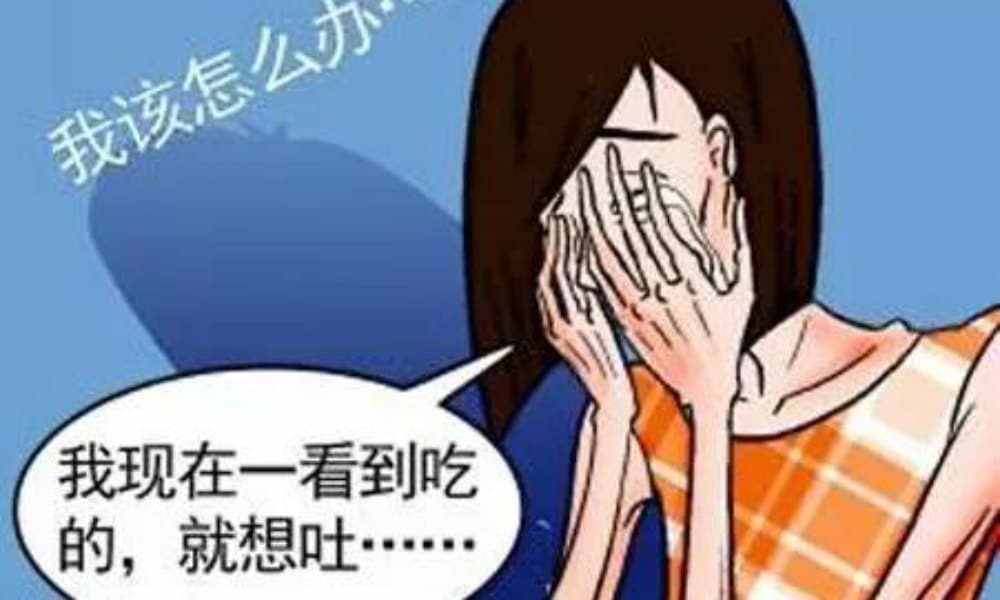
“Does anorexia exist in China?” is one amongst the millions of questions recently posted on the Chinese Quora-like platform Zhihu.com. It is a question that pops up on Chinese social media every now and then, as the eating disorder is not often discussed in a Chinese context.
The empty dialogue page on Zhihu.com is telling for the general discussion of anorexia in China today. Anorexia nervosa, commonly called anorexia, is an eating disorder characterized by low weight that receives relatively little attention on Chinese online and social media compared to the English-language online environment, where there are countless support groups, discussion forums, and even the so-called unhealthy ‘Pro Ana’ communities where the behaviors related to anorexia are promoted.
Both anorexia in general, and the pro-ana communities in specific, received ample attention from Western media over the past few years. ITV recently reported about an “alarming rise in social media sites encouraging anorexic sufferers to starve themselves,” and that social media worsens the condition of people with anorexia who flock to these kinds of websites.
How come that on Chinese social media platforms, which see a different ‘skinny hype’ every year (from the ‘iPhone6 legs‘ to ‘A4 waist‘), there are few online discussions about anorexia nervosa?
A “WESTERN” PHENOMENON
“Eating disorders seem to be an exotic phenomenon to many Chinese, but it actually is not.”
General discussions of anorexia nervosa on Weibo, China’s biggest social media platform, mostly relate to cases of the disease in Western, Caucasian women. The young Australian model and performer Phoebe Combes attracted some attention on Weibo in 2017 for suffering from anorexia. “How come every time I read about [this disease] it concerns foreign women?”, one netizen wondered.
Sporadically, speculative discussions do arise on social media about Chinese celebrities who may or may not be suffering from anorexia. Talk show host Chen Luyu (陈鲁豫), for example, became a topic of discussion when netizens started worrying about her frail appearance and said she was “too thin.”

Online commenters often call talk show host Chen Luyu (陈鲁豫) “too thin.”

Talk show host Chen Luyu.
For many netizens, however, the issue is often simplified to a mere “they should just eat more.” Despite general public unawareness about anorexia in China, more doctors and specialists are stepping forward to talk about the issue.
“When a Chinese doctor raised the issue of anorexia in China some twenty years ago at an international conference, foreign experts doubted if eating disorders existed in China,” one professional support site dedicated to anorexia and bulimia in China says: “We now want to promote awareness about eating disorders to patients and their families.”
In 2017, deputy director Ma Yongchun (马永春) of a hospital in Tongde, Zhejiang, spoke out to Chinese media website AcFun.com, saying that although eating disorders seem to be an exotic phenomenon to many Chinese, it actually is not. She also warned about the negative effects of social media platforms promoting unhealthy body images or unhealthy eating patterns.
THE STORY OF YUN
“Her condition spiraled out of control when she spent days on end watching live streams on Chinese social media that promote unhealthy eating habits.”
The AcFun article featured the story of one of Ma’s patients named Yun (alias), a 33-year-old former athlete from Zhejiang who weighed only 36 pounds with a height of 160 cm when she was at her lowest point – and on the verge of death.
She told AcFun that she became anorexic after being forced to eat a restrictive diet by her grandparents during her teens. When her entire athlete team suffered from gastroenteritis, her grandmother only allowed to her to eat bean curds and rice for months on end.

The story of ‘Yun’ who suffered from severe anorexia was featured in Chinese media.
Unable to continue eating her forced diet and not allowed to eat anything else, the young Yun developed an eating disorder. At the age of 19, she was diagnosed with anorexia by doctors at the Tongde hospital – a diagnosis that was followed by years of ups and downs. Yun’s condition spiraled out of control when she spent days on end watching live streams on Chinese social media that promote unhealthy eating habits.
Weighing only 36 pounds at her low point, Yun was barely able to move. One day, when she was alone with her sister’s small baby, she found herself too weak to pick up the infant went it was desperately crying. For Yun, it was a turning point in her decision to beat the illness.
Although many doctors gave Yun low chance of survival, a team of doctors including Ma Yongchun eventually were able to give Yun the help she needed. She now maintains a healthy weight.
UNHEALTHY ONLINE TRENDS
“Vomit Bars are online forums where netizens nicknamed ‘Rabbits’ encourage each other to vomit after eating.”
Doctors such as Ma Yongchun are part of a growing group of specialists in China raising awareness on eating disorders in China and warning against unhealthy online trends – which are on the rise.
Over the last years, online discussion boards such as Baidu Tieba have seen the phenomenon of ‘Vomit Bars’ (催吐吧) – a phenomenon somewhat comparable to the online ‘pro-ana’ movement on English-language internet sites.
‘Vomit Bars’ are online forums where netizens nicknamed ‘Rabbits’ (兔子) encourage each other to vomit after eating. Several live streaming sites also have people promoting weird or unhealthy eating habits, such as eating non-food products or binge eating – something Dr. Ma strongly condemns.

A girl binge eating on a live stream.
On Chinese social media, organizations helping those suffering from anorexia or other eating disorders are present, but not popular.
Although the Chinese Eating Disorder Recovery Web (@进食障碍康复网) only has a weak following online, their offline mission is strong: “China’s health care system can no longer ignore the growing group of eating disorder patients in China.”
ANOREXIA ON THE RISE OR NOT?
“There are no official statistics on the occurrence of anorexia nervosa or other eating disorders in China in the past and present.”
The topic of anorexia in China has also received more attention in international media and academic publications over the past decade.
Some English-language media, such as the LA Times, suggest that with changing beauty standards, skinny trends, and more influence from Western popular culture, eating disorders are “on the rise” in China.
Whether or not this is actually true is hard to say; there are no official statistics on the occurrence of anorexia nervosa or other eating disorders in China in the past and present. A study from 2013 among Chinese female college students in Wuhan, considered one of the best estimates of national rates, however, found levels similar to Western countries (Tong et al 2014).
In Fat China: How Expanding Waistlines are Changing a Nation, the authors (French & Crabbe 2010) also suggest that eating disorders such as anorexia are indeed present in society and that an increasing number of urban Chinese, mainly young women, are suffering from it (171).
Even if anorexia were to occur as much in China as in the West – which has neither been refuted nor confirmed – the way in which the disease is described and/or experienced seems to be significantly different.
SAME DISEASE, DIFFERENT MANIFESTATIONS
“Chinese patients showed few, if any, of the classical concerns associated with anorexia.”
Various studies over the past years have established that there are differences between Western countries and China in how anorexia develops with regards to patients’ preoccupations concerning appearance and body image.
In “The Myth of Chinese Barbies: Eating Disorders in China including Hong Kong” (2014), researcher M. Getz writes that eating disorders are traditionally conceptualized as a Western mental health issue, specifically because the ‘fat phobia’ aspects of the illness are often stressed the most. According to study, this attention towards appearance seems to be less important to Chinese patients (746-747).
This idea is further strengthened by Sing Lee, an expert in eating disorders in Chinese communities, who argues that Chinese patients “showed few, if any, of the classical concerns associated with anorexia” (747).
A major way in how anorexia in China is often different than in other (Western) countries is that it is somaticized. This relates to the fact that mental illnesses in China still carry a stigma and often go undiagnosed due to the lack of mental health care institutions.
Since physical problems are more socially accepted in China than mental health issues, people who suffer from anorexia in China are more prone to talk about their problems in the form of somatic symptoms such as distaste for food and not being hungry, or abdominal problems (Getz 2014, 750).
Levels of industrialization, media influence, eating habits, societal pressure to be thin, family pressure to succeed, etc., all may play a role in the occurrence of anorexia. Especially One-Child Policy generation children allegedly experience more pressure in their lives to perform.
As the development of anorexia in China goes hand in hand with social stigmas and superstitions regarding mental health issues, a traditionally strong food culture, a general unawareness on eating disorders, and many other cultural factors that may influence the manifestation of the disease, one can see why studies have found that “eating disorders are not culture-bound or culture-specific, but rather culture-reactive.” The reasons why patients develop anorexia and how it is manifested can, therefore, radically differ per culture (Pike & Dunne 2015).
ONLINE DISCUSSIONS
“I simply can’t eat any food. I have no interest in food. Even if I am starving I still do not want to eat.”
These findings are also apparent on the various anorexia support message boards in China, where people suffering from the disease share their experiences. Rather than talking about fear of being fat, many commenters only discuss their loss of appetite and stressful lives.
One netizen on Zhihu.com writes:
“I am suffering from anorexia right now. The pressure at school is too much for me. I don’t have any time to relax. It’s all about studying. I simply can’t eat any food. I have no interest in food. Even if I am starving I still do not want to eat.”
Another person writes:
“I think I have anorexia. But I am not sure. (..) I simply do not want to eat. If I see food, I have no desire to eat it. I only eat some breakfast and some dinner, an egg at 7.30 and some rice at 17.30.”
A new study on anorexia in China by Zaida Aguera et al (2017) confirms the idea that anorexia in Chinese patients is often experienced or communicated physical rather than psychological, as they are “culturally encouraged to use denial and minimization to cope with conditions deemed taboo” (9).
Because the way anorexia presents itself is different, researchers argue that its treatment also requires a different approach in China than in other countries that have developed own national standards on treating eating disorders.
The treatment options in China, however, are still limited. The first and only closed ward for eating disorders opened in Beijing six years ago. But the recent increased media attention raised by doctors such as Ma Yongchun and heightened focus on mental health care in China indicate that there will be more options for Chinese anorexia patients in the future.
As for the Zhihu poster who asked about anorexia in China – they are still waiting for an answer. In the meantime, they have suggested an own solution in the underline, writing: “There just is so much tasty food in China, that anorexia in China is probably is much rarer here than in any other country in the world.” No one else responded.
By Manya Koetse
Follow @whatsonweibo
References
Agüera, Z., Brewin, N., Chen, J., Granero, R., Kang, Q., Fernandez-Aranda, F., & Arcelus, J. 2017. “Eating Symptomatology and General Psychopathology in Patients with Anorexia Nervosa from China, UK and Spain: A Crosscultural Study Examining the Role of Social Attitudes.” PLoS ONE, 12(3), 1–13.
French, Paul, and Matthew Crabbe. 2010. Fat China: How Expanding Waistlines are Changing a Nation. Imprint: Anthem Press.
Getz, M.J. 2014. “The Myth of Chinese Barbies: Eating Disorders in China including Hong Kong.” Journal of Psychiatric and Mental Health Nursing 21: 746-754.
Pike, Kathleen M., and Patricia E. Dunne. 2015. “The Rise of Eating Disorders in Asia: a Review.” Journal of Eating Disorders 3:33. Available online https://jeatdisord.biomedcentral.com/articles/10.1186/s40337-015-0070-2 [17.1.18].
Tong, J., Miao, S., Wang, J. et al. 2014. “A Two-stage Epidemiologic Study on Prevalence of Eating Disorders in Female University Students in Wuhan, China.” Social Psychiatry and Psychiatric Epidemiology 49(3): 499-505.
Are you suffering from an eating disorder and need help? For information on eating disorders and how to help if you are worried about someone, Beat (UK) or ANAD (US) has advice for sufferers, friends and family.
Spotted a mistake or want to add something? Please let us know in comments below or email us.
©2018 Whatsonweibo. All rights reserved. Do not reproduce our content without permission – you can contact us at info@whatsonweibo.com.






Chapter Dive
Keeping Score of History: The Mukden Incident and China’s Basketball Defeat to Japan
China’s defeat against Japan at the Asian Games trended on the same day as the commemoration of the Mukden Incident—not as a separate event, but as a painful reminder of the humiliation of war.
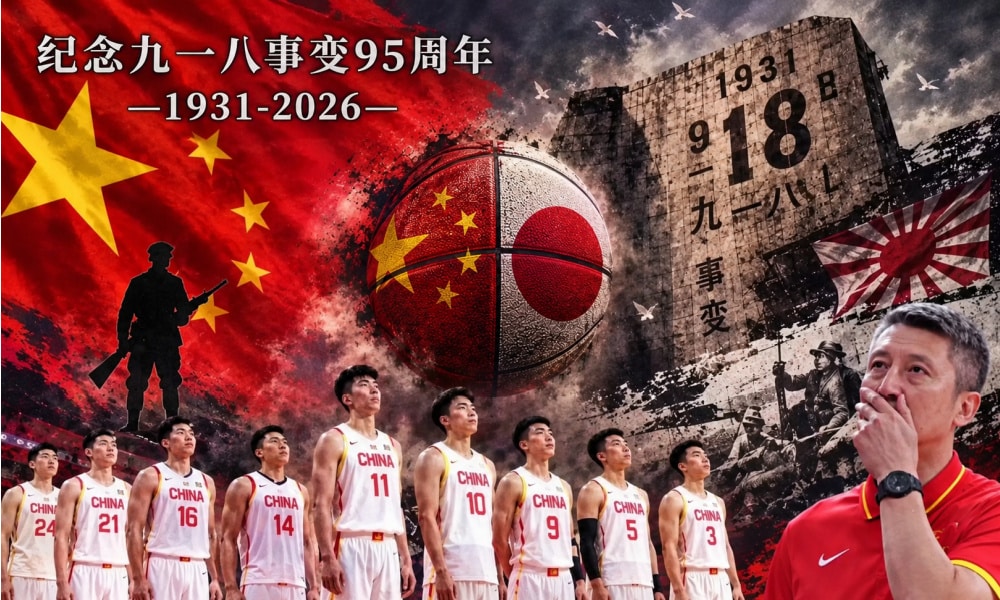
Football can be a useful way to gauge the state of nations.1 So can basketball, apparently.
One of the most discussed topics on Chinese social media on September 18 was the China vs. Japan men’s basketball semifinal at the Asian Games, a topic that was collectively viewed not merely through a sports angle, but through the lens of history and WWII – especially on an important commemoration day that was all about China’s war against Japanese aggression.
September 18 marks the anniversary of the Mukden Incident in 1931. Right next to the basketball game, that topic became one of the top keywords on Weibo and other Chinese platforms on Friday.2
The Mukden Incident —a staged explosion that damaged a section of Japanese railway in Shenyang [Mukden] on September 18, 1931—was used as a pretext for Japan’s invasion of Manchuria and has come to be widely regarded by Chinese historians and officials as the true starting point of the Second Sino-Japanese War.
On this significant day, the China vs. Japan game in Nagoya ended in a major 77-97 loss for the Chinese team, which critics attributed to a lack of speed and tactical weaknesses that left them defenseless against the Japanese team’s swift attacks. Making it worse, the Chinese had the advantage of taller players, and the Japanese weren’t even playing with their best team.
“Like a top-grade horse losing to a bottom-grade horse,” one sports columnist wrote (“是我们的上等马输给了对方的下等马”).
Prior to the game, many commenters already questioned why a China-Japan face-off should take place on such a sensitive date, while others suggested that the Chinese team “could not afford to lose on this day.”

Posted by Weibo user 君见理5, this AI poster transforms…
Chapter Dive
The Power of Ugly: Why Niu Lai Became China’s Unlikeliest Box-Office Hit
How the two-person animated film Niu Lai turned its “ugly” visuals, dreamcore nostalgia, and remarkable cinema journey into a nationwide participatory meme.

Eye on Digital China is a reader-supported publication by
Manya Koetse (@manyapan) and powered by What’s on Weibo.
It offers independent analysis of China’s online culture, media, and social trends.
To receive the newsletter and support this work, consider
becoming a paid subscriber.


Keeping Score of History: The Mukden Incident and China’s Basketball Defeat to Japan

The Rise of “Shuaqi-ism,” Taking Starbucks to the Fields, and Pretending to Go to Work

Why Japan Has So Many Surnames, China’s Back-to-School Shifts & Taiwan Pavilion Trouble

Blame Games & Bad Signs: Nepal–Tibet Floods, Huawei’s Toilet Trouble, “Screwed” Graduates

The Power of Ugly: Why Niu Lai Became China’s Unlikeliest Box-Office Hit

China’s CITIC Tower Crash: The Story That Never Trended

“Even Pigs Have AC”: The European Heatwave Through Chinese Eyes

“God Won’t Save Us, but the PLA Will”: Floods, Faith, and Kung Fu Soccer Nostalgia

How Chinese AI Videos Turned Foreigners into Villains
The Power of Ugly: Why Niu Lai Became China’s Unlikeliest Box-Office Hit
-

 China Arts & Entertainment12 months ago
The Wong Kar-wai Scandal Explained: The Dark Side of ‘Blossoms Shanghai’
-

 Chinese New Year7 months ago
Inside Chunwan 2026: China’s Spring Festival Gala
-

 China Brands, Marketing & Consumers10 months ago
Hasan Piker’s China Trip & the Unexpected Journey of a Chinese School Uniform to Angola
-

 Chapter Dive7 months ago
Inside the Great Chinese Debate Over the Iran War