China Media
“Tyrant Train Woman” Goes Trending on Weibo and Unleashes Flood of New Memes
The hashtag “High-Speed Tyrant Woman” (#高铁霸座女#) already received a staggering 450 million views on Weibo today.
Published
3 years agoon
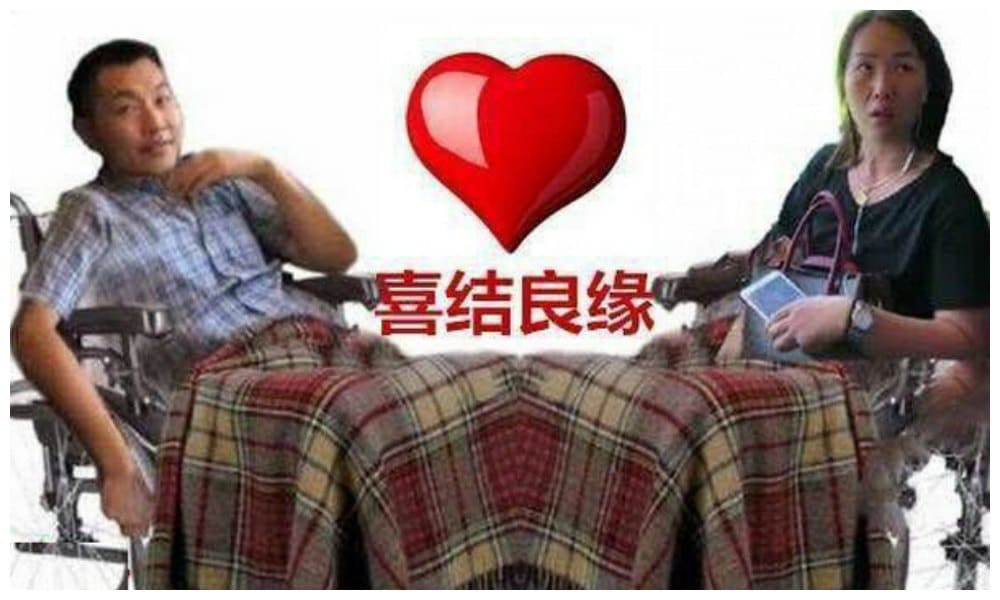
While the bizarre behavior of a male passenger went viral in late August, this time, it is a female passenger’s rude behavior that’s become trending on Chinese social media. Some netizens think the two ‘high-speed train tyrants’ (高铁霸座) deserve each other, creating memes putting them together.
In late August of this year, one rude man from Shandong who refused to give up the seat he took from another passenger became known as the “High-Speed Train Tyrant” (高铁霸座男 gāotiě bà zuò nán) on Chinese social media.
A video showing the man’s bizarre behavior went viral, and netizens were especially angry because the man pretended he could not get up from the stolen seat and needed a wheelchair – although he did not need one when boarding the train.

The man pretended he needed a wheelchair, but actually did not want to give up the window seat.
The man was later temporarily blacklisted for his actions. Although he apologized in a public video, a newer video (Youtube link) made clear the man was everything but remorseful, as it showed him laughing, using an office chair as a ‘wheelchair,’ and joking around about his own behavior.

The “train tyrant” from Shandong.
The train bully that is now going viral, is a woman from Hunan who has been dubbed ‘High-Speed Train Tyrant Woman’ (高铁霸座女 gāotiě bà zuò nǚ”) by Weibo netizens. She had taken a seat assigned to another passenger while riding the train from Yongzhou to Shenzhen.
A video (YouTube link here) – that has become one of the most-discussed topics on Weibo today – shows how a woman on a high-speed train makes a scene when the train conductor tells her she is in the wrong seat. She refuses to get up from her window seat to return to her own seat.
Instead, she raises her voice, talks rudely to the conductor, and simply claims she has bought a ticket and will not change to another seat until she has reached her final destination.
The hashtag “High-Speed Tyrant Woman” (#高铁霸座女#) already saw a staggering 450 million views at time of writing.
According to a Weibo statement that has been issued by Hengyang Railway Security (@衡阳铁路公安处) since the topic has become trending, the incident occurred on Wednesday, September 19, on a G6078 train. The stubborn passenger is the 32-year-old Ms. Zhou. She has now been fined 200 RMB (±$30) for “disturbing the order.”

Weibo statement.
“Couldn’t you fine these passengers a bit more?”, some netizens wonder: “If the fine were higher, it might not happen that often anymore.”
Many netizens are simply outraged: “Isn’t this a society that is ruled by law? What do we do with these people?”
“How can people be so shameless?”, a typical comment says.
While the incident is a source of anger for many, it is a source of banter for some; the incident has triggered a wave of new memes today that put the Shandong train tyrant and the woman together.
Some examples here:
Here:
…here:
Or here:
Meanwhile, Guangzhou Railways (@广州铁路) has also responded to the issue on Weibo, stating that in cases such as these (when passengers are fined for their behavior), passengers can expect a 180-day ban from purchasing train tickets.
Just as in the case with the male ‘train tyrant,’ this time as well, the so-called human flesh search engine has come into action once the video went viral, meaning many netizens went digging to reveal the woman’s identity. Her personal details have since been exposed on social media – a burden that will probably weigh much heavier on her than a temporary train ban or a 200 RMB fine.
By Manya Koetse
Follow @whatsonweibo
Spotted a mistake or want to add something? Please let us know in comments below or email us.
©2018 Whatsonweibo. All rights reserved. Do not reproduce our content without permission – you can contact us at info@whatsonweibo.com.
Manya Koetse is the editor-in-chief of www.whatsonweibo.com. She is a writer and consultant (Sinologist, MPhil) on social trends in China, with a focus on social media and digital developments, popular culture, and gender issues. Contact at manya@whatsonweibo.com, or follow on Twitter.
You may like
China Arts & Entertainment
‘Call Me By Fire’ All-Male Variety Show Becomes Social Media Hit
‘Call Me By Fire’ is the male version of ‘Sister Who Make Waves’ and it’s an instant hit.
Published
1 week agoon
August 18, 2021
A Chinese reality show starring 33 male celebrities titled Call Me By Fire (披荆斩棘的哥哥) has become an instant hit after its premiere on Mango TV last week.
The show is considered the male version of the hit variety show Sisters Who Make Waves (乘风破浪的姐姐, read more here) but with different rules. The contestants, ranging from age 27 to 57, are all in the entertainment industry; the group includes pianists, singers, dancers, actors, hosts, and rappers.

List of contestants, Mango TV.
They are required to perform individually and in a team for the first episode’s performances. Chinese viewers were surprised to see some of the high-quality performances, which then went viral on social media.
Li Chengxuan (@李承铉 a.k.a. Nathan Lee), who was previously mostly known for being the husband of Chinese actress Qi Wei (戚薇), rapped in a low voice and wowed the audience. The hashtag about his first stage performance on the show garnered more than 120 million views ( #李承铉天上飞舞台#). A video of his performance can be found here.
Li is a former member of the South Korean boy band TAKE. In 2014, the Korean-American pop star married Qi, who later gave birth to their first daughter Lucky. When Qi went back to focusing on her career, Li decided to be a stay-at-home dad.
Just like some of the other show contestants, Li also appeared on the talk show Definition (定义), where he spoke to the female journalist Yi Lijing about his life as a full-time father. In that show, he expressed how he used to think being a full-time parent would be easy. “It takes a lot of time and energy to take care of the baby and the family, but as a result, it always looks like you haven’t done anything all day.”
He describes how he experienced a time of depression during which he tried his best to be a good parent but sometimes just could not control his temper. Li explains how he would regret these moments of anger and then would cry at night when his daughter was asleep. (Interview video here.)
Li’s experiences as a full-time parent struck a chord among Chinese netizens, especially among stay-at-home moms. The hashtag “Li Chengxuan Was Depressed for Over a Year As a Full-Time Dad” (#李承铉当全职爸爸抑郁了一年多#) received more than 600 million views on Weibo. Under the hashtag, commenters shared their experiences and struggles in being full-time parents.
One netizen wrote: “This is so true. We do so much when taking care of our children, but other people often feel like it’s nothing. When you lose your temper in front of the kid, you feel terrible inside and start to question yourself about why you failed to control yourself, and then you make another promise not to lose your temper anymore.”
Another Weibo user wrote: “See, when a mom looking after her kids feels depressed, it is not because she is weak and sensitive! It is because the job itself will make any human being depressed.”
Li later responded on his Weibo account, saying he just did his part as a parent, and this is what any new mom or new dad will face. That post also received thousands of comments and over 285,000 likes.
So far, the hashtag of the Call me By Fire TV show has received a staggering 4.4 billion views on Weibo (#披荆斩棘的哥哥#).

Image via Sina News.
The show’s performances and Li sharing his struggles as a stay-at-home dad are not the only reasons for the show’s massive success on Chinese social media. Some other related issues also made the show gain more attention.
Even before Call Me By Fire aired, the show already made headlines when the 55-year-old Taiwanese singer Terry Lin Zhixuan (林志炫) reportedly fell off the stage while filming.
Later, one of the contestants left the show after some social media drama. Chinese singer Huo Zun (霍尊) announced his withdrawal from the show after his ex-girlfriend accused him of being a cheater and leaking some WeChat conversation screenshots to prove that he actually disliked the show.
The remaining 32 contestants will enter the real ‘elimination stages’ in the following episodes. The show and highlight clips can be viewed on the Mango TV official site here.
By Wendy Huang
Follow @whatsonweibo
Spotted a mistake or want to add something? Please let us know in comments below or email us. Please note that your comment below will need to be manually approved if you’re a first-time poster here.
©2021 Whatsonweibo. All rights reserved. Do not reproduce our content without permission – you can contact us at info@whatsonweibo.com
China Insight
Social Media in Times of China’s Flood Disaster: Participation, Profits, and Propaganda
Published
3 weeks agoon
August 7, 2021
The social media trends during China’s heavy rainfall and floods in July of 2021 show the multidimensionality of online communication in times of disaster. Facing the devastating downpours, Weibo became a site for participation, propaganda, and some controversial profiting.
This is the “WE…WEI…WHAT?” column by Manya Koetse, original publication in German by Goethe Institut China, visit Yi Magazin: WE…WEI…WHAT? Manya Koetse erklärt das chinesische Internet. Read this article in German here.
Starting on July 17, 2021, China’s Henan Province experienced extreme rain that led to record-breaking flooding and soon forced thousands of people to leave their homes, completely disrupting normal life.
Several places in the region saw unprecedented rainfall. From 8pm on July 19 to 8pm on July 20, the provincial capital Zhengzhou experienced 552.2 mm of rainfall, which is 3.5 times more rain than Germany saw during its heaviest rainfall in 75 years on July 14-15 of this year.
The death toll from the torrential rainfall has risen to at least 302 people, with many remaining missing.
As emergency situations occurred across the region, social media came to play an important role in the response to the natural disaster. Weibo, one of China’s biggest social media sites, was utilized as a communication tool during the floods by regular netizens, official channels, and companies.
While the extreme weather continued, the Henan flood disaster played out on social media in various ways. There were those helping, those profiting, and then there were those profiting from helping. We will highlight some of these dimensions within the social media responses to Henan’s catastrophic floods here.
People Helping People
There is one hashtag on Weibo that was breaking records in July: ‘Help Each Other During Henan Rainstorm’ (#河南暴雨互助#) received a staggering 16.9 billion clicks just a week after it was first launched.
By creating an online ‘Henan Help’ community, Weibo facilitated active public participation in providing immediate assistance to those affected by the extreme weather and flooding.
As described by Wendy Huang for What’s on Weibo (link), an enormous volume of messages starting pouring in on Chinese social media since the start of the heavy rainfall from people disseminating relevant information on available resources and from those seeking and providing assistance.
Rather than being a messy collection of individual posts, netizens collectively participated in verifying, summarizing, highlighting, and spreading the online help requests posted by people from different locations. In doing so, they helped in speeding up the rescue work.
This is not the first time for Weibo to play an important role during a crisis or emergency. When Sichuan Province was hit by a deadly earthquake in 2013, social media enabled a fast and free grass-roots response to the disaster. The Sina Weibo platform allowed for efficient, immediate crisis communication, leading to teams of volunteers – organized via Weibo – heading out to the disaster zone to deliver donated tents, blankets, water, etc. and provide other forms of assistance (Levin 2013).
During the early stages of the Wuhan COVID19 outbreak, social media platforms such as Weibo and WeChat were also used as practical communication tools for organizations and individuals to spread information or to ask for help. One example is how Weibo helped local volunteers organize teams to assist in taking care of people’s left-behind pets when they were unable to return to their homes due to quarantine or hospitalization.
As soon as the scale of the floods in Henan province became clear, social media users started donating money for flood relief efforts. By July 21st, while the videos of the devastating impact of the heavy rainfalls went viral, Weibo users had already contributed 20 million yuan ($3 million). That number soon rose significantly as more netizens, social influencers, and celebrities also started to donate and promote charity foundations.
Simply posting, replying, forwarding, and making comments itself was also a way of public participation during the Henan floods. While many news reports and social media posts were focused on what was going on in the provincial capital of Zhengzhou, the people in the more rural areas such as Weihui in Xinxiang started sounding the alarm by July 21st, pleading for netizens to pay more attention to their situation so that it would also enter the top trending lists. Sharing these posts to draw more attention to them also became a way of providing assistance.
By July 21st, half of Weibo’s top trending topics were related to the Henan floods.
Showing Support and Showing Off
Chinese netizens made a huge impact on how the Henan flood disaster was handled in the early stages, but companies in China also contributed to flooding relief efforts in many ways, while their actions simultaneously served PR goals.
On July 21st, one major company after the other announced its donation via social media. Tech giants Pinduoduo, Tencent, Meituan, Didi, and Bytedance all donated 100 million yuan ($15.4 million) each to help the rescue operations in Henan. Alibaba topped the list with a 150 million ($23 million) donation.
Besides donating 30 million yuan ($4.6 million), Chinese tech giant Huawei also sent a team of 187 engineers to provide assistance on the front line and 68 of their R&D experts worked on helping local operators in their network repair and maintenance work to ensure a smooth communication network in the disaster area.
The Henan floods also provided an opportunity for Western brands in China to win back public favor. Many Western companies triggered outrage in China earlier this year over their ban on cotton from Xinjiang (link). In light of the Henan catastrophe, Nike and Adidas each contributed 20 million yuan ($3 million), Uniqlo 10 million ($1.5 million), PUMA 5 million ($773,000), Burberry 1.5 million yuan ($230,000), and Zara and H&M each donated 1 million ($155,000).

Adidas, Nike, and Burberry announcing their donations via social media.
Their contributions, however, did not seem to do much for their public image. The donations barely received media coverage, and some social media users who did know about them complained that Zara and H&M did not give enough money. There were also many netizens who praised Chinese sportswear brands for donating money and condemned Nike for giving “zero yuan,” even though the company had already announced donating 20 million yuan.
The company that really managed to win the public’s favor through their Henan donation is Erke (鸿星尔克 ), a relatively small and low-key Chinese sportswear company that seemingly was not doing too well over the past year facing great domestic competition.
When Erke donated 50 million yuan ($7.7 million) to the Henan flood relief efforts, it attracted major attention on Chinese social media. The sportswear brand donated an amount that was ten times higher than, for example, the donation made by major coffee company Starbucks.

Erke announcing its donation via social media (Weibo).
After people found out that the Erke brand donated such a high amount of money to help the people in Henan despite its own losses, its sales went through the roof – everyone wanted to support this generous ‘patriotic brand.’ While netizens rushed to the online shops selling Erke, the brand’s physical shops also ran out of products with so many people coming to buy their sportswear. Some sales assistants were moved to tears when the store suddenly filled up with customers.

People lining up at an Erke shop, photo via UDN.com.
The Erke hype even went so far that Chinese livestream sellers of Nike and Adidas notified their viewers that they actually supported the domestic Erke brand.

Adidas livestream sellers supporting Erke.
Erke profited from helping Henan, but there were also those companies that wanted to profit from the Henan floods without actually helping.
One ad by the local real estate company Kangqiao Real Estate promoting its ‘high lands’ properties led to online controversy. The Kangqiao Group poster highlighted the height advantage to its real estate locations, using the slogan: “Highland – live in the highland and only let the wind and rain be your scenery.”
The company apologized for its insensitive marketing campaign on July 21st, the hashtag (#康桥地产致歉#) received over 130 million views, but the damage to its reputation had already been done. In a similar fashion, two other companies also promoted their “safe” real estate and parking lots during the Henan floodings, with one company using a photo of a flooded car in Henan to suggest what could happen when not using their services. It led to online outrage that these companies would use such a disastrous time for their own marketing purposes.
Other examples of people using the floods for their own publicity also went trending on social media, such as a group of Chinese online influencers who came to affected areas to record themselves, making a show out of the floods (photos below).
On July 27, some online influencers even went one step further to promote their channels and boost viewership. They traveled to Weihui, one of the province’s worst affected areas, and shamelessly stole a rescue boat, and headed into the waters without actually helping anyone. The incident prevented actual aid workers from doing their job and delayed the rescue work by four hours. It caused controversy on Weibo (#网红为拍视频偷救生艇谎称去救人#), with many wondering why these people would want to profit from a situation that was still so critical.
There were also online discussions on situations in which it was less clear to what extent people were in it for ‘the show.’ Chinese celebrities Han Hong (韩红) and Wang Yibo (王一博) both traveled to the affected areas for their charity work, but they were then accused of using the disaster for their own PR benefits. Many did not agree, saying they were “moved by their patriotism.”
Official Media Promoting National Solidarity
Most hashtags, videos, and trending topics on Weibo from the early moments of the rainfall and floods were initiated by regular netizens. Many people in the affected regions posted photos and videos of the local scenes themselves.
When the cars of the Zhengzhou subway line 5 were submerged in water due to flash floods on July 20, over 500 passengers were trapped. Footage of people in the carriages standing in chest-deep water that was still rising circulated on social media as rescue efforts were underway. Some hours later, rescuers managed to get people out safely, but 14 people did not make it out alive.
These kinds of unfolding events and tragedies were posted and reported on social media in real time by bloggers. Although official media channels and government accounts were also active in reporting incidents and releasing timely information, they soon focused on sending out a message of national unity and emphasized successful rescue operations and the competency of China’s relief efforts.
A similar approach to crisis communication on social media was seen during the outbreak of COVID19 and in other emergency situations – it is a route that has been taken for many years in the Party’s partnership with the media. In Media Politics in China (2017), author Maria Repnikova writes about the response to the Wenchuan earthquake (2008) when she points out how most official coverage concerning crisis management positively portrays the state’s rescue efforts and utilizes emotional projection of national unity and resilience, conveying an overall positive and people-centered narrative (118-121).
This patriotic discourse was also adopted in the social media coverage of the Henan floods by official channels. State media outlets were in unison in promoting hashtags such as “Stand Strong, Henan, We’re Coming” (#河南挺住我们来了#), “Zhengzhou, Hold On!” (#郑州挺住#), or “Shouldering Together with Henan” (#和河南一起扛#).

Online posters for the Henan Floods by CCTV, People’s Daily, and Xinhua.
In their news reporting, official media channels especially spotlighted people-centered stories. Some examples include the story of a 17-year-old boy who cried as he hugged the firefighter who rescued him, the news item on a 3-month old baby who was pulled from the ruins of a collapsed house in Xingyang, or the account of a Zhengzhou policeman who was so dedicated to his work that he hadn’t returned home in over 30 hours.
By July 21st, official Party newspaper People’s Daily had launched a hashtag titled “Touching Scenes of People Helping Each Other” (#河南暴雨中的感人互助画面#), which showed photos and videos of citizens working together in rescuing people from the water.
Another Weibo hashtag was titled “The Power of China during the Henan Rainstorms” (#河南暴雨中的中国力量#), which focused on the solidarity and compassion of the thousands of volunteers and rescue workers, stressing the idea that the people of China are able to get through difficulties together.

“We can get through this together,” online posters by People’s Daily.
The main message that is propagated by Chinese official media and government on social media is one that resonates with the general Weibo audience. Standing together with Henan and uniting in times of disaster is a sentiment that is strongly supported, not just by official channels, but by netizens, celebrities, and companies alike.
As the floods and relief efforts are still continuing in various parts of Henan Province, the messages of support and online assistance are ongoing. “Come on, Henan!” is the slogan that is sent out everywhere on Weibo, with people staying positive: “We can do this together. Everything is going to be alright.”
By Manya Koetse
Follow @whatsonweibo
References:
Levin, Dan. 2013. “Social Media in China Fuel Citizen Response to Quake.” New York Times, May 11 https://www.nytimes.com/2013/05/12/world/asia/quake-response.html [7.30.21].
Repnikova, Maria. 2017. Media Politics in China: Improvising Power under Authoritarianism. Cambridge: Cambridge University Press.
This text was written for Goethe-Institut China under a CC-BY-NC-ND-4.0-DE license (Creative Commons) as part of a monthly column in collaboration with What’s On Weibo.
Spotted a mistake or want to add something? Please let us know in comments below or email us. First-time commenters, please be patient – we will have to manually approve your comment before it appears.
NIKE vs ERKE: Two Sportswear Brands Trending on Weibo for Totally Different Reasons
The Legendary Lao Gan Ma: How Chili Sauce Billionaire Tao Huabi Became a ‘Chinese Dream’ Role Model
“You Can Have Four Kids Now!” – Draft to China’s Population Planning Law No Longer Penalizes Having More Children
‘Call Me By Fire’ All-Male Variety Show Becomes Social Media Hit
“I Deeply Love My Motherland!” – Chinese Actor Zhang Zhehan Under Fire for Yasukuni and Nogi Shrine Photos
This ‘Chinese Lego’ Brand Takes Its Toy Space Mission VERY Seriously
Adapted to the Desert: This Yurt-Style KFC Opened in Inner Mongolia
Japanese Gold Medalist Becomes a Meme in China after Controversial Men’s Gymnastics All-Around
China’s ‘Three Child Era’ Announcement Is Met with Banter and Backlash on Weibo
Billionaire Bachelor Wang Sicong’s Desperate Unrequited Love Drama Exposed Online
Support What’s on Weibo
Contribute
Popular Reads
-
China Memes & Viral2 months ago
This ‘Chinese Lego’ Brand Takes Its Toy Space Mission VERY Seriously
-
China Food & Drinks2 months ago
Adapted to the Desert: This Yurt-Style KFC Opened in Inner Mongolia
-
China Memes & Viral4 weeks ago
Japanese Gold Medalist Becomes a Meme in China after Controversial Men’s Gymnastics All-Around
-
China Insight3 months ago
China’s ‘Three Child Era’ Announcement Is Met with Banter and Backlash on Weibo